Link in Bio: Strategy, Tools, and Best Practices
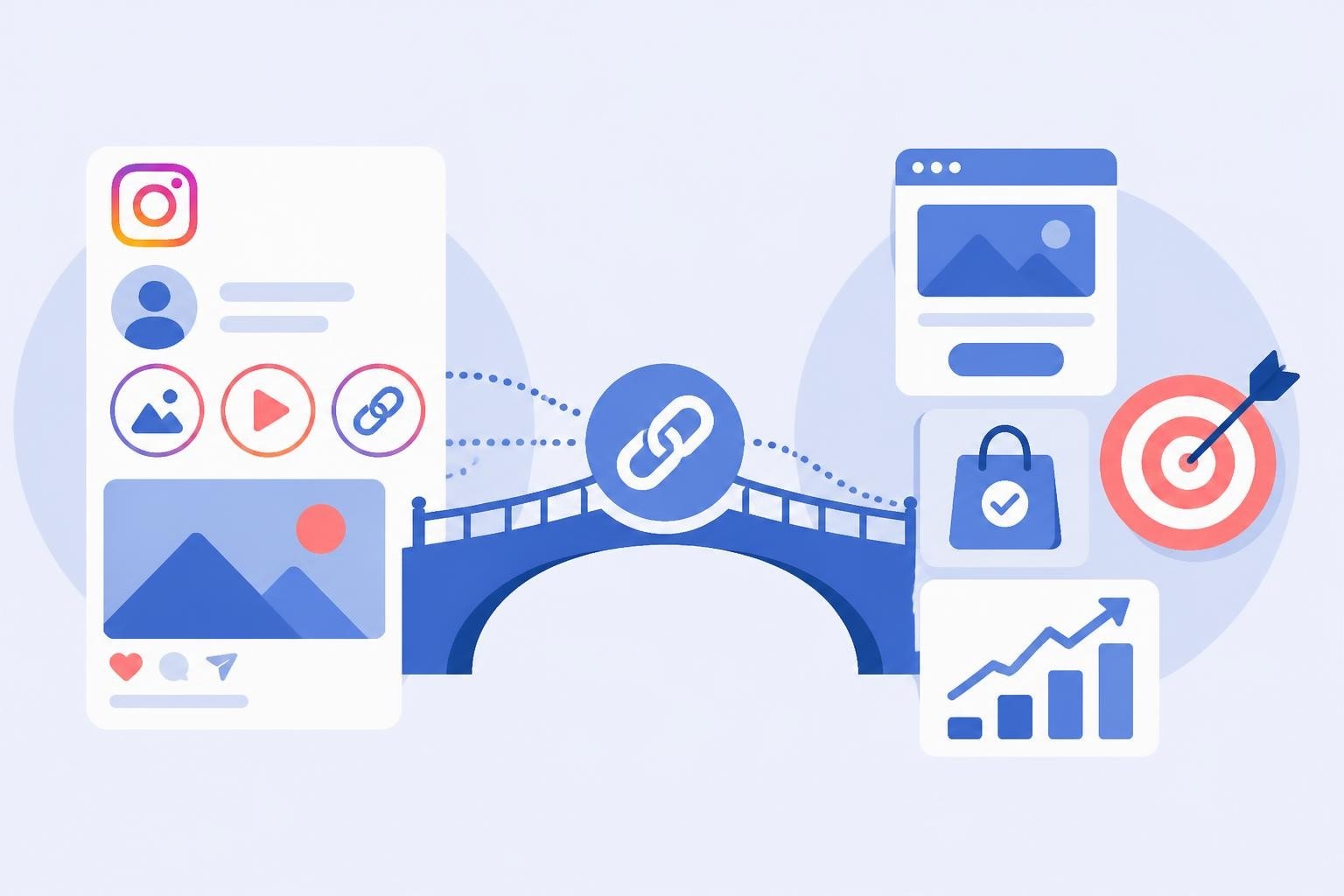
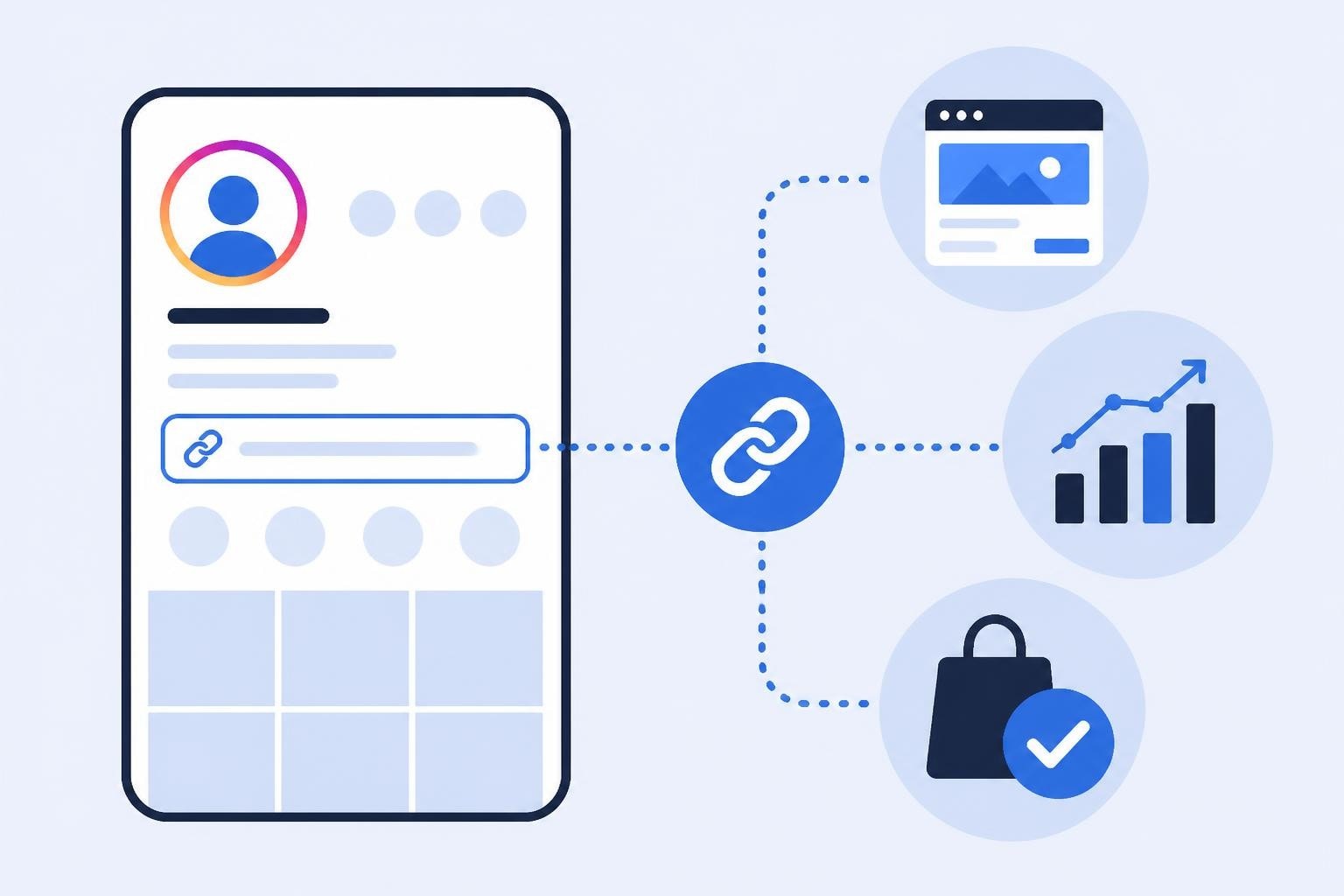
Social media platforms have fundamentally changed how businesses and creators connect with audiences, but most platforms restrict profile links to a single URL. This limitation has turned the "link in bio" into one of the most valuable pieces of digital real estate available today. What started as a simple workaround for Instagram's single-link restriction has evolved into a sophisticated marketing channel that drives traffic, generates leads, and creates measurable revenue. Understanding how to optimize your link in bio strategy can transform this small profile field into a powerful conversion tool that connects your social presence to your business goals.
The Evolution of Bio Link Strategy
The link in bio phenomenon emerged from necessity. When Instagram launched in 2010, the platform allowed only one clickable link in user profiles. As businesses and influencers recognized Instagram's marketing potential, they needed a way to direct followers to multiple destinations: product pages, blog posts, YouTube videos, and promotional campaigns.
Early adopters simply updated their bio link frequently, changing it whenever they posted new content. This manual approach created friction. Followers who discovered older posts found broken links or irrelevant destinations. The disconnect between content and destination reduced conversion rates and frustrated audiences.
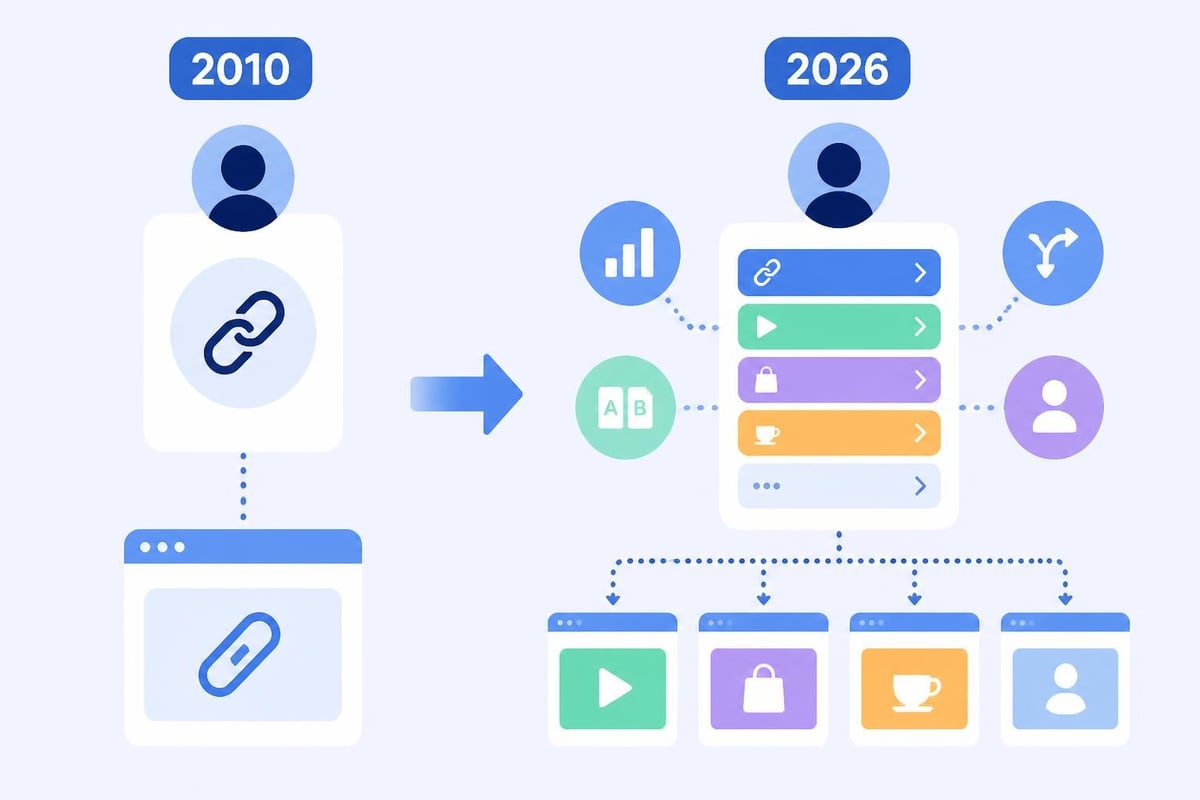
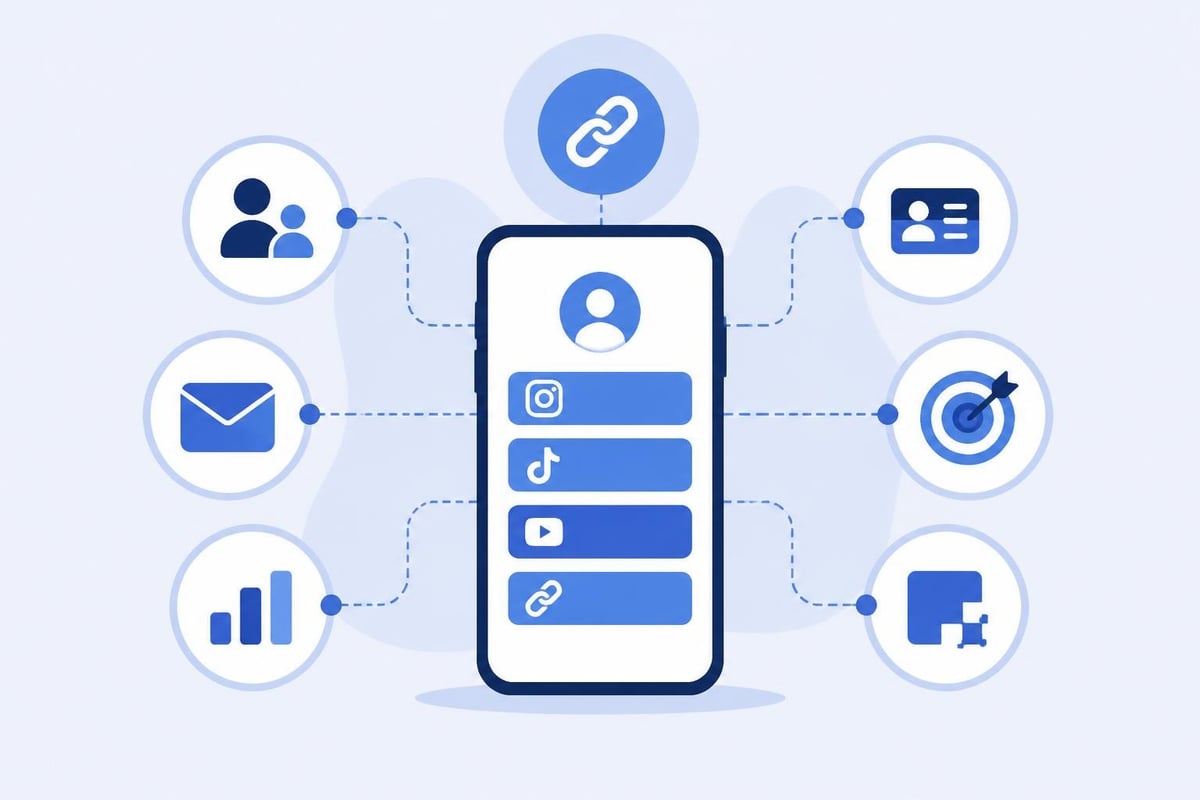
Third-party solutions emerged to solve this problem. Landing pages designed specifically for social media bios allowed users to create a single permanent URL that housed multiple links. These pages evolved from simple link lists to sophisticated micro-sites with branding, images, embedded content, and conversion tracking.
Platform-Specific Constraints
Different social platforms impose varying restrictions on links. Research from Pew Research Center shows that platform demographics and usage patterns differ significantly, making it essential to understand where your audience engages most actively.
| Platform | Bio Link Limits | In-Post Links | Key Demographics |
|---|---|---|---|
| 1 profile link | Stories only (10k+ followers) | 18-49, visual content consumers | |
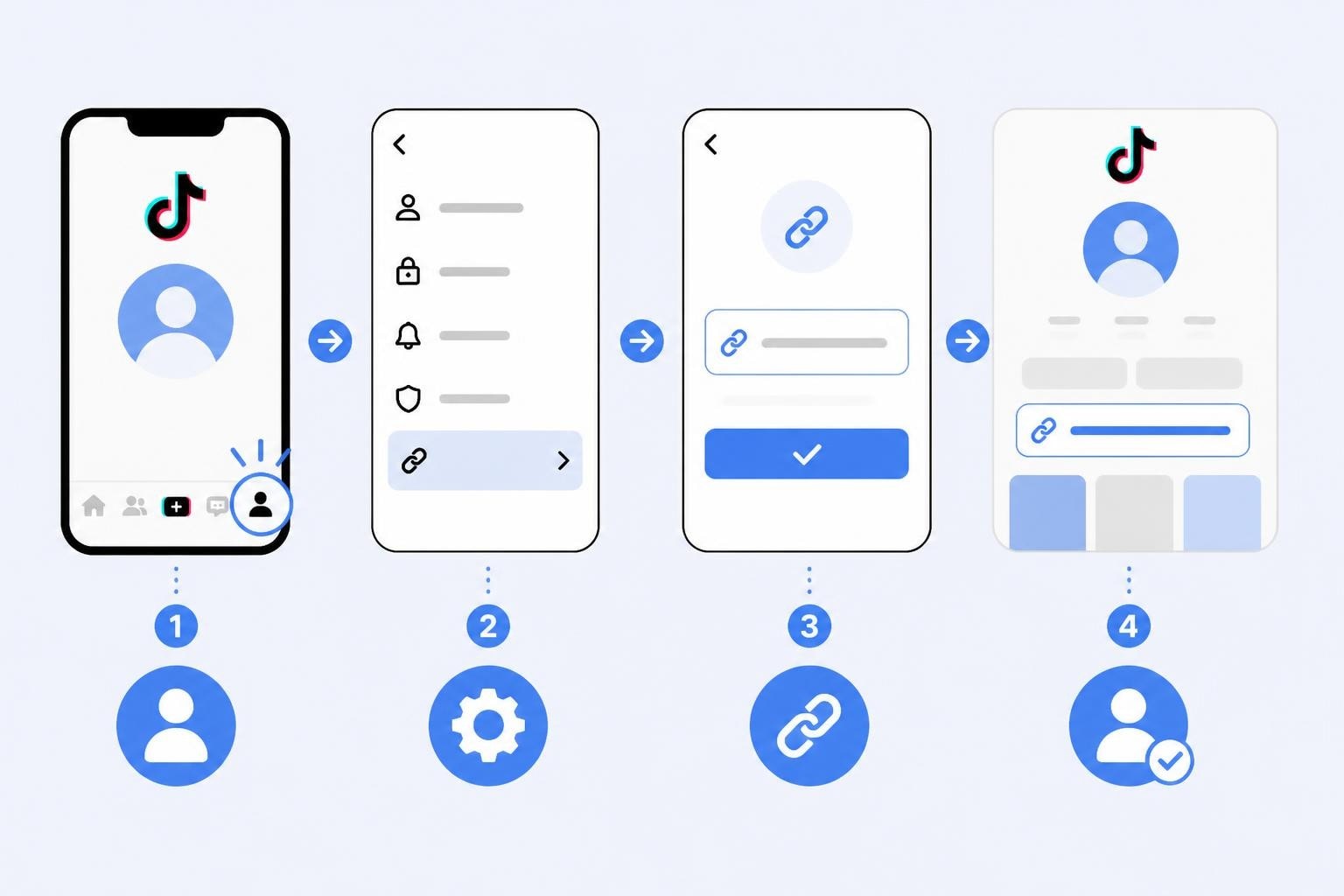
| TikTok | 1 profile link | No clickable post links | Gen Z, short-form video audience |
| Twitter/X | 1 profile link | Unlimited in posts | News-focused, broad demographics |
| 3 profile links | Unlimited in posts | B2B, professionals, decision-makers | |
| 1 profile link | Every pin can link | Product discovery, predominantly female |
Instagram and TikTok present the greatest challenges. Users cannot click links in post captions, forcing creators to direct traffic through the bio. This constraint makes bio link optimization critical for these platforms. The phrase "link in bio" has become so ubiquitous that it functions as a call-to-action recognized across social media.
Strategic Link Management Fundamentals
Effective bio link strategy extends far beyond simply creating a landing page. The difference between basic link listing and strategic link management lies in data intelligence, user experience design, and continuous optimization.
Analytics and Attribution
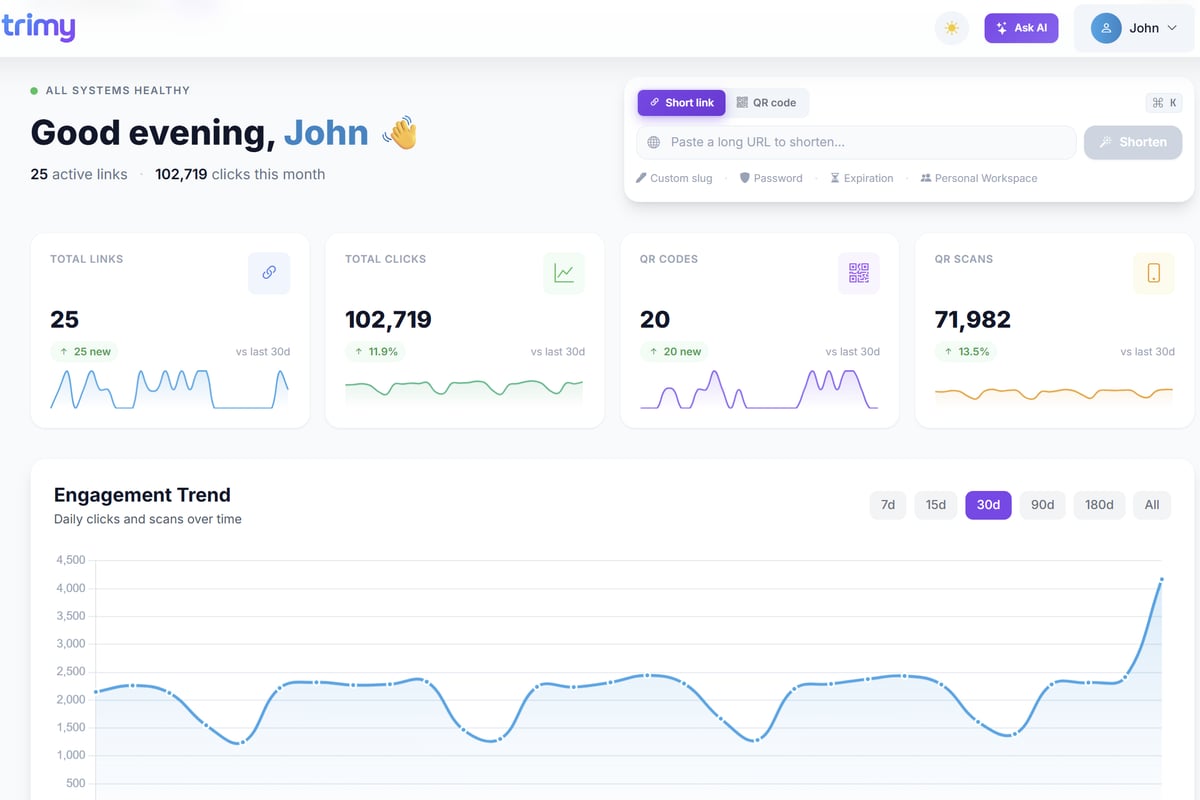
Understanding which links drive conversions requires robust tracking. Basic click counting provides limited value. Strategic marketers need to know:
- Traffic source attribution: Which social platform and specific post drove each click
- Conversion tracking: How many clicks result in desired actions (purchases, signups, downloads)
- Audience segmentation: Demographics, devices, and geographic locations of clickers
- Temporal patterns: Time-of-day and day-of-week performance variations
- Campaign ROI: Revenue generated relative to promotional spend
According to Web Content Accessibility Guidelines (WCAG), tracking implementations must respect user privacy and provide accessible experiences. This creates a tension between data collection and user rights that modern link management must navigate carefully.
The FTC's 2024 report on social media data practices highlights privacy concerns around tracking pixels and third-party redirects. Ethical link management platforms provide transparency about data collection while giving users control over their information.
Smart Routing and Personalization
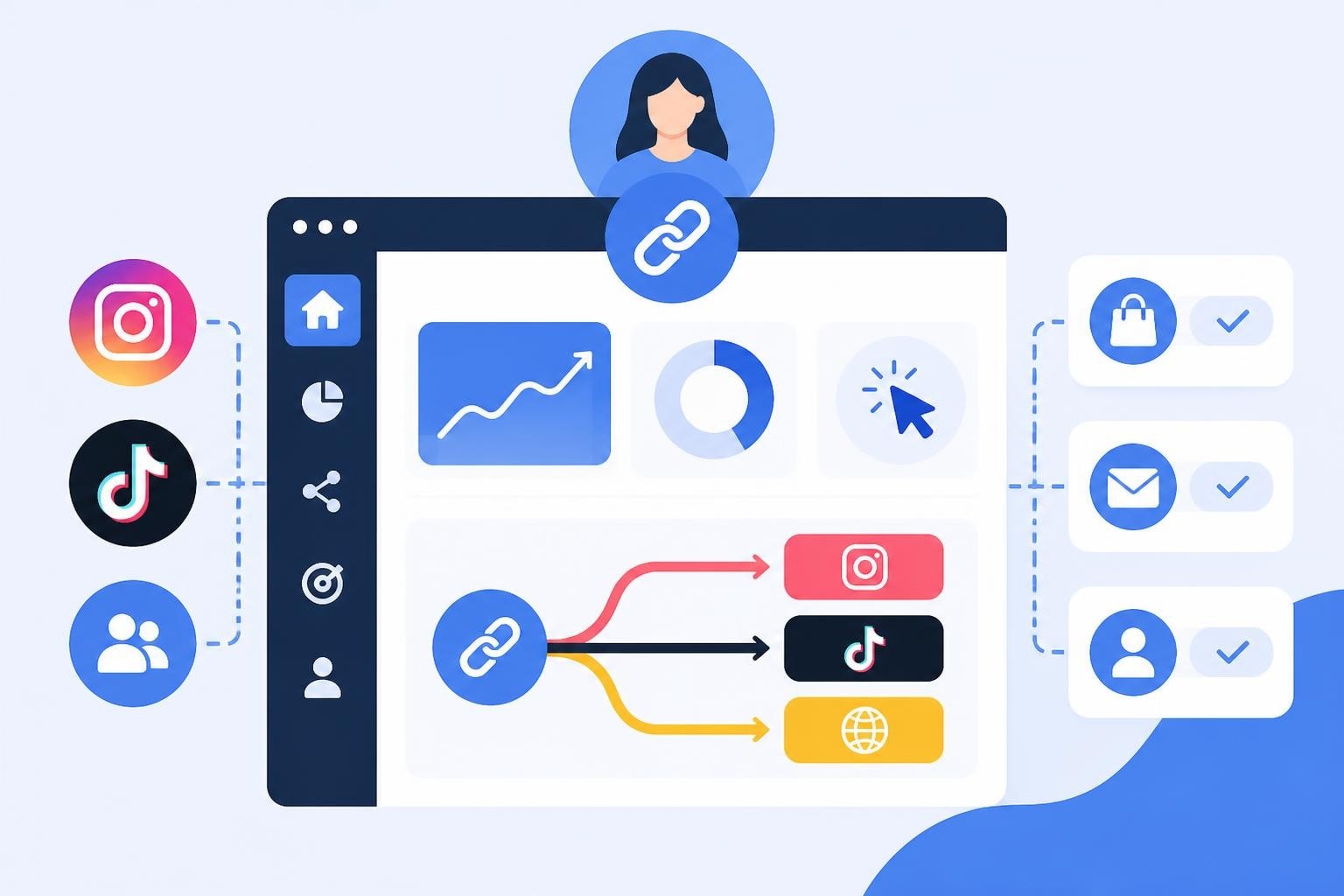
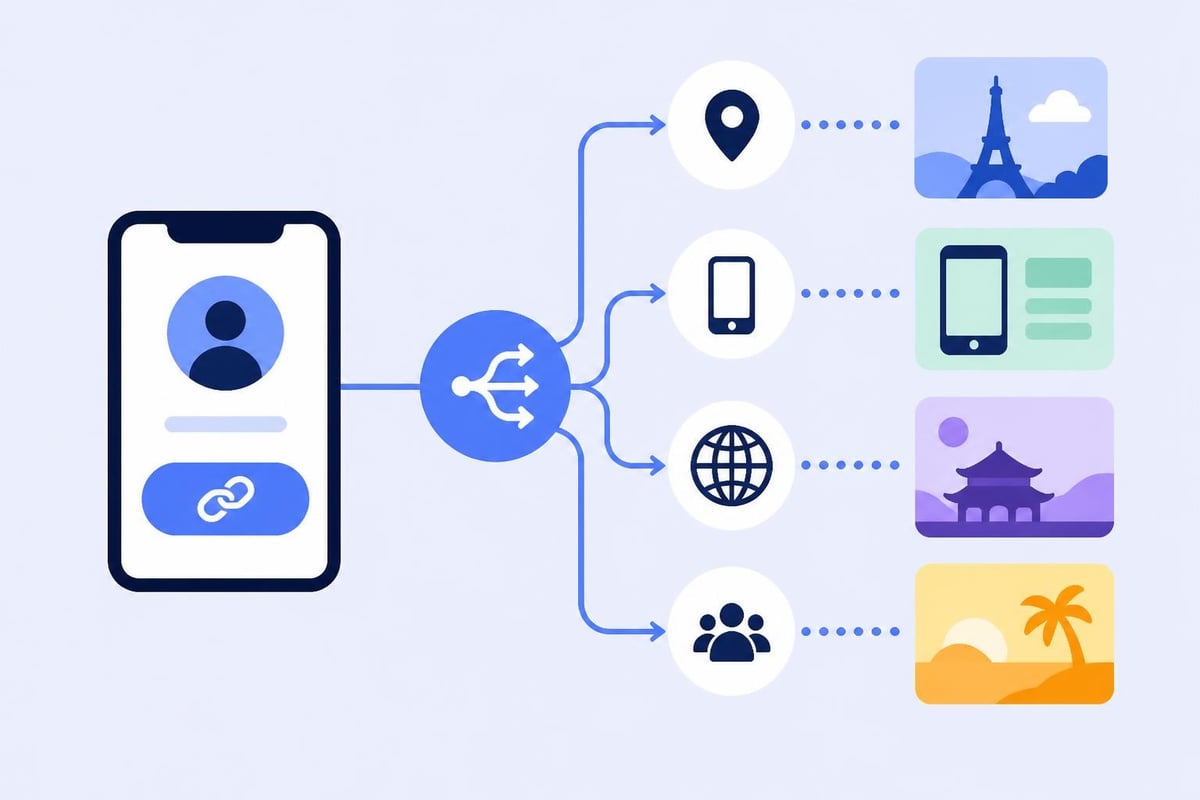
Advanced link in bio strategies use intelligent routing to send different users to different destinations based on context. Smart routing considers:
- Geographic location: Send European visitors to EU-compliant stores, North American visitors to US warehouses
- Device type: Route mobile users to app download pages, desktop users to full websites
- Language preferences: Detect browser language and serve appropriate content versions
- Referral source: Customize landing pages based on which social platform sent the traffic
- User behavior: Return visitors see different content than first-time clickers
This level of sophistication transforms a static link in bio into a dynamic traffic distribution system. Rather than forcing all users through identical experiences, smart routing optimizes the journey for each visitor's context.
A/B Testing for Continuous Improvement
Data-driven marketers test assumptions rather than relying on intuition. A/B testing applies to every element of link in bio strategy:
- Link order and positioning: Does the primary CTA perform better at the top or bottom?
- Copy and messaging: Which headlines drive more clicks?
- Visual elements: Do thumbnail images increase engagement?
- Number of links: Does offering more choices reduce decision-making and conversions?
- Page design: Which layouts convert browsers into clickers?
Running controlled experiments reveals what actually works for your specific audience. Industry best practices provide starting points, but your audience may behave differently than aggregated data suggests.
Technical Implementation Considerations
The technical architecture of your link in bio affects performance, analytics accuracy, and user experience. Poorly implemented solutions create frustration and lose conversions.
Redirect Chains and Performance
Every redirect adds latency. When a user clicks your bio link, their browser must:
- Request the short link URL
- Receive a redirect response
- Request the landing page URL
- Receive the landing page content
- Download assets (images, scripts, stylesheets)
Google's PageSpeed Insights documentation emphasizes avoiding redirect chains because each hop adds hundreds of milliseconds. Mobile users on slower connections experience this delay acutely.
The MDN Web Docs guide to HTTP redirections explains the technical differences between redirect types. Using appropriate HTTP status codes (301 for permanent, 302 for temporary) ensures browsers and search engines handle your links correctly.
| Redirect Type | Use Case | Caching Behavior | SEO Impact |
|---|---|---|---|
| 301 Permanent | Moved content, brand changes | Browsers cache aggressively | Passes link equity |
| 302 Temporary | A/B tests, seasonal campaigns | Limited browser caching | Does not pass link equity |
| 307 Temporary | Preserve HTTP method | No automatic caching | Maintains original request type |
| Meta refresh | JavaScript-disabled fallback | Not recommended | Search engines may ignore |
In-App Browser Limitations
Social media apps increasingly open links in embedded browsers rather than the device's default browser. The UK Government's research on in-app browsing documents how these restricted environments affect user experience and analytics.
In-app browsers present several challenges:
- Cookie restrictions: Limited ability to track returning users across sessions
- Reduced functionality: Some JavaScript features may be disabled or restricted
- Analytics disruption: Traffic may not be attributed correctly to social sources
- Authentication issues: Login flows can fail in restricted browser contexts
- Performance variations: Rendering engines differ from standard mobile browsers
Optimizing for in-app browsers requires testing your link in bio experience within Instagram, TikTok, LinkedIn, and other platforms' embedded browsers. What works perfectly in Safari or Chrome may break in these constrained environments.
Content Strategy and Link Curation
The links you choose to feature and how you organize them directly impact conversion rates. Strategic curation balances multiple objectives: driving immediate sales, building long-term relationships, and providing value to your audience.
Prioritization Framework
With limited screen real estate, prioritization matters. Consider these factors when deciding which links to feature prominently:
- Business goals alignment: Does this link directly support revenue, growth, or strategic objectives?
- Time sensitivity: Limited-time offers and event registrations deserve top placement
- Audience demand: What do followers most frequently ask about or search for?
- Content freshness: Recent posts generate more interest than older content
- Conversion probability: Some offers convert at higher rates than others
Many creators update their link in bio weekly or even daily, rotating featured links based on current campaigns and content calendars.
Call-to-Action Optimization
The language you use to describe each link affects click-through rates significantly. Generic labels like "My Website" or "Shop Now" underperform compared to specific, benefit-focused copy.
Effective link descriptions:
- Specify the value: "Get 30% off sustainable sneakers" beats "Shop"
- Create urgency: "Early bird tickets ending Friday" drives faster action
- Use active voice: "Download the free template" is clearer than "Free template available"
- Match content expectations: If your post discusses a specific topic, your bio link should promise related content
- Keep it concise: Mobile screens display limited characters before truncation
Testing different copy variations reveals which messages resonate with your specific audience. What works for fashion influencers may fall flat for B2B consultants.
Integration with Marketing Infrastructure
Your link in bio should not exist in isolation. It connects to your broader marketing ecosystem: email platforms, CRM systems, e-commerce stores, content management systems, and advertising channels.
UTM Parameter Management
Consistent UTM parameter usage enables accurate attribution across your marketing stack. When building bio links, systematically apply:
- utm_source: The social platform (instagram, tiktok, linkedin)
- utm_medium: The channel type (social, bio_link)
- utm_campaign: Specific campaign identifiers (spring_sale_2026, product_launch)
- utm_content: Link position or variation (top_link, cta_button)
- utm_term: Keywords or audience segments (if applicable)
Proper UTM implementation allows Google Analytics, advertising platforms, and marketing automation tools to track which bio links drive the most valuable traffic.
Trimy simplifies UTM campaign management by providing templates and bulk editing tools that ensure consistency across hundreds of links. Rather than manually crafting UTM parameters for each new link, marketers can apply standardized naming conventions automatically, reducing errors and improving data quality.
Retargeting Pixel Integration
The visitors who click your link in bio represent warm traffic: people who already know your brand and took action to learn more. Retargeting these users with paid advertising typically delivers higher ROI than cold prospecting.
Strategic link management platforms allow you to:
- Attach retargeting pixels to specific links or entire landing pages
- Build custom audiences based on which links users clicked
- Create sequential campaigns that serve different ads based on bio link engagement
- Measure pixel effectiveness to optimize retargeting spend
- Respect privacy preferences while maximizing legitimate tracking
Privacy regulations and browser restrictions increasingly limit third-party tracking. First-party data collection through owned link infrastructure becomes more valuable as cookies deprecate and platform tracking deteriorates.
Mobile-First Design Principles
Over 85% of social media usage occurs on mobile devices. Your link in bio landing page must prioritize mobile user experience above desktop presentation.
Speed Optimization
Mobile users abandon slow-loading pages quickly. Every second of load time reduces conversion rates measurably. Optimization tactics include:
- Minimize image file sizes: Compress images without sacrificing visual quality
- Lazy load below-fold content: Only load visible elements initially
- Reduce HTTP requests: Combine resources and eliminate unnecessary scripts
- Implement browser caching: Allow returning visitors to load cached assets
- Use CDN distribution: Serve content from geographically distributed servers
The goal is sub-two-second load times on 4G mobile connections. Test your link in bio page using real mobile devices on cellular networks, not just desktop simulators.
Touch-Friendly Interaction
Fingers are less precise than mouse cursors. Mobile interface design requires larger tap targets, increased spacing between interactive elements, and consideration for one-handed use.
Accessibility guidelines specify minimum touch target sizes of 44×44 pixels. Smaller buttons create frustration and accidental clicks. Adequate spacing prevents users from tapping the wrong link unintentionally.
Consider vertical thumb reach on large smartphones. Place primary calls-to-action in the center portion of the screen, easily accessible without hand repositioning. Secondary links can occupy top and bottom zones.
Compliance and Accessibility
Professional link management addresses legal compliance and ensures all users can access your content regardless of ability.
Disclosure Requirements
When your bio links lead to affiliate offers, sponsored content, or commercial relationships, disclosure requirements apply. The Federal Trade Commission mandates clear, conspicuous disclosure of material connections.
For link in bio pages, this means:
- Clear labeling of affiliate links, partnerships, and sponsored content
- Prominent placement of disclosures near relevant links
- Plain language that typical users understand
- Visibility on mobile devices without requiring scrolling or interaction
Generic footer disclaimers often fail to meet FTC standards. Each commercial link should carry its own clear disclosure.
Universal Design
Accessibility standards ensure people with disabilities can use your link in bio effectively. Key requirements include:
- Keyboard navigation: All links must be reachable and activatable without a mouse
- Screen reader compatibility: Proper semantic HTML and descriptive link text
- Color contrast: Text and backgrounds must meet minimum contrast ratios
- Focus indicators: Visible outlines showing which element currently has focus
- Alternative text: Descriptive alt text for images and icons
- Responsive text sizing: Content remains readable when users increase font sizes
Accessibility benefits everyone, not just users with disabilities. Clear link purposes, logical tab order, and sufficient contrast improve usability for all visitors.
Performance Measurement and KPIs
What gets measured gets managed. Effective link in bio strategy requires defining success metrics and tracking progress toward goals.
Beyond Click Counting
Total clicks provide a starting point but tell an incomplete story. Sophisticated measurement tracks:
Engagement metrics:
- Click-through rate (clicks divided by profile views)
- Bounce rate (users who immediately leave after clicking)
- Time on page (engagement duration)
- Scroll depth (how far users scroll through your bio page)
Conversion metrics:
- Conversion rate (desired actions divided by total clicks)
- Revenue per click (total revenue divided by clicks)
- Cost per acquisition (if running paid social campaigns)
- Customer lifetime value from bio link traffic
Comparative metrics:
- Performance by traffic source (Instagram vs. TikTok vs. LinkedIn)
- Link position effectiveness (top vs. bottom placement)
- Time-based trends (weekly patterns, seasonal variations)
- Campaign attribution (which campaigns drive the highest-value traffic)
Segment your data to uncover actionable insights. Aggregate numbers hide important patterns. Breaking down performance by device, geography, and referral source reveals optimization opportunities.
Competitive Analysis
Understanding how competitors use their link in bio provides strategic context. Regular audits should examine:
- How frequently do competitors update their bio links?
- What types of content do they prioritize?
- Which calls-to-action do they emphasize?
- How do they structure their landing pages?
- What tools and platforms do they use?
Research from Ahrefs suggests that while direct SEO benefits from bio links are minimal, the traffic and brand awareness they generate can indirectly improve search visibility. Competitors investing heavily in bio link optimization likely see measurable returns worth investigating.
Common Mistakes to Avoid
Even experienced marketers make preventable errors that undermine link in bio performance. Awareness of these pitfalls helps you avoid them.
Overcrowding and Decision Paralysis
Offering too many choices overwhelms users and reduces overall conversion rates. The paradox of choice demonstrates that excessive options lead to decision fatigue and abandonment.
Optimal link counts vary by industry and use case, but most successful bio pages feature between three and seven primary links. Organize secondary options in submenus or category pages rather than displaying everything simultaneously.
Neglecting Mobile Testing
Assuming your bio page works correctly because it looks good on your laptop is dangerous. In-app browsers, different operating systems, various screen sizes, and network conditions create inconsistent experiences.
Regular testing should include:
- Current iOS and Android versions
- Instagram, TikTok, and LinkedIn in-app browsers
- Different screen sizes (small phones through tablets)
- Slow network conditions (3G simulation)
- Accessibility tools (screen readers, keyboard-only navigation)
Automated testing tools help, but nothing replaces actually clicking your own link in bio on multiple real devices.
Static Content That Never Changes
Your link in bio should evolve with your content strategy and business priorities. Static bio pages that point to the same destinations month after month miss opportunities to drive timely traffic.
HubSpot's Instagram profile optimization guide recommends updating your bio link whenever you publish important new content, launch campaigns, or run promotions. This keeps your bio aligned with your current messaging and gives followers reasons to click repeatedly.
Ignoring Load Speed
Beautiful design means nothing if users never see it because your page loads too slowly. Heavy images, unnecessary scripts, and unoptimized code create abandonment.
Budget strict performance requirements: pages should load completely in under two seconds on 4G mobile connections. Use performance monitoring tools to track real-world load times and identify optimization opportunities.
The link in bio has evolved from a simple workaround into a sophisticated marketing channel that deserves strategic attention and continuous optimization. Success requires balancing user experience, technical performance, analytics intelligence, and business objectives while maintaining compliance and accessibility standards. Trimy transforms basic bio links into revenue-generating assets through advanced analytics, A/B testing capabilities, smart routing logic, and deep performance insights that help marketers make data-driven decisions. Start optimizing your link strategy today to turn profile clicks into measurable business results.