What Is Cross Selling: Strategy Guide for 2026
Cross selling represents one of the most powerful yet underutilized strategies in modern sales and marketing. At its core, understanding what is cross selling unlocks opportunities to increase revenue while simultaneously delivering more value to your customers. As businesses navigate increasingly competitive markets in 2026, the ability to strategically recommend complementary products or services has become essential for sustainable growth.
Understanding the Fundamentals of Cross Selling
What is cross selling? Cross-selling is the practice of selling additional, complementary products or features to an existing customer, with the goal of increasing the customer's overall value to the business. Unlike upselling, which encourages customers to purchase a higher-tier version of the same product, cross selling focuses on expanding the breadth of products within a customer's purchase basket.
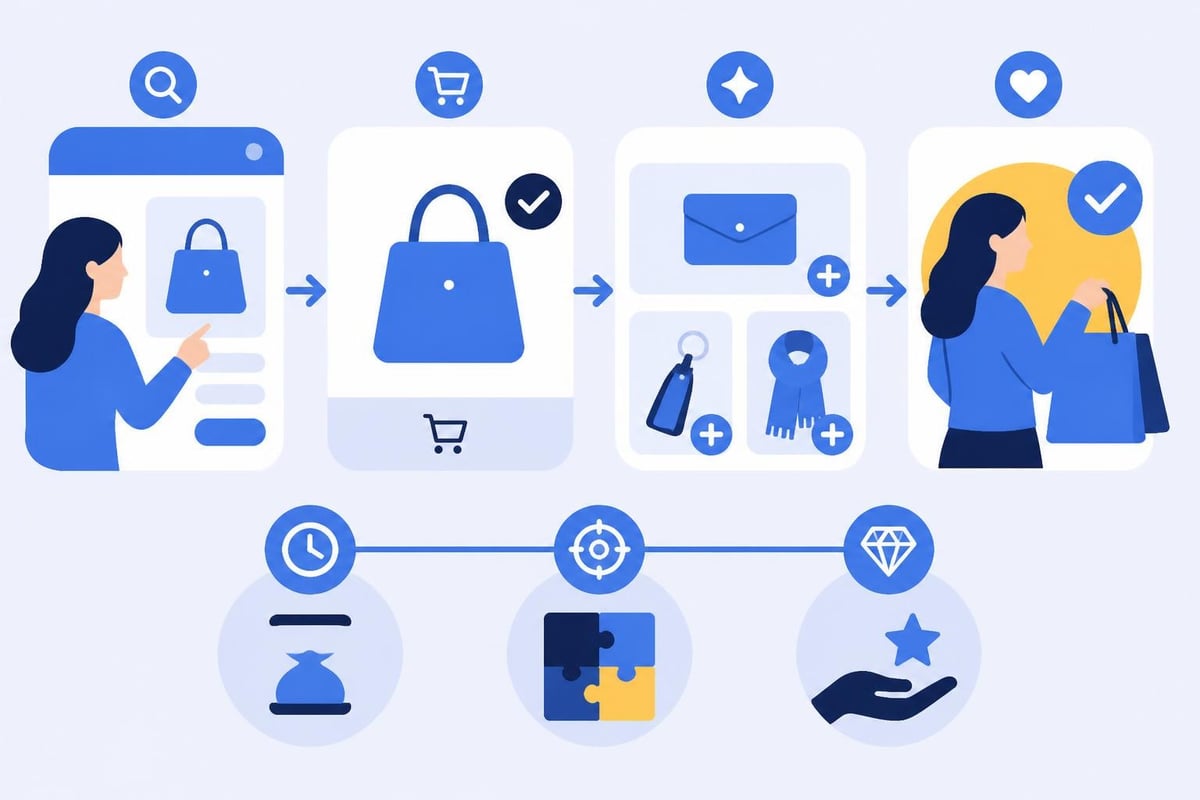
The concept is straightforward: when a customer demonstrates interest in or purchases a specific product, you present them with related items that enhance, complement, or complete their original selection. This approach benefits both parties. Customers discover products they genuinely need but might not have considered, while businesses increase average order value and strengthen customer relationships.
Core Characteristics That Define Cross Selling
Cross selling operates on several fundamental principles that distinguish it from other sales techniques:
- Complementary nature: The additional products genuinely enhance or work alongside the original purchase
- Timing relevance: Recommendations appear when customers are already in buying mode
- Customer value focus: Suggestions solve real problems or improve the customer experience
- Relationship building: Success depends on understanding customer needs and behavior patterns
According to the Cambridge English Dictionary, cross-selling is formally defined as the activity of selling a different product to someone who is already buying a product from the same company. This definition emphasizes the critical element: working with existing customers who have already demonstrated trust in your brand.
Why Cross Selling Matters for Business Growth
The strategic importance of cross selling extends far beyond simple revenue increases. When implemented thoughtfully, it transforms customer relationships and creates competitive advantages that compound over time.
Financial Impact and Revenue Optimization
Cross selling directly impacts your bottom line through multiple channels:
| Metric | Impact | Timeframe |
|---|---|---|
| Average Order Value | 15-30% increase | Immediate |
| Customer Lifetime Value | 25-95% increase | 6-24 months |
| Profit Margins | 10-30% improvement | Ongoing |
| Customer Acquisition Cost | Reduced relative burden | Long-term |
These numbers reflect documented outcomes across SaaS, retail, and service industries. The mathematics are compelling: acquiring a new customer costs five to seven times more than selling to an existing one. Cross selling leverages relationships you've already built, dramatically improving return on marketing investment.
Revenue predictability improves when you successfully cross sell. Customers who purchase multiple products show significantly higher retention rates and become less price-sensitive. This loyalty creates stable, recurring revenue streams that support business planning and investment decisions.
Customer Experience and Satisfaction Enhancement
Contrary to outdated sales stereotypes, effective cross-selling enhances customer experience rather than detracting from it. When done correctly, customers appreciate relevant recommendations that save them time and improve outcomes.
Consider a customer purchasing project management software. If they're managing a team, they likely need time tracking, resource allocation, and reporting capabilities. Proactively offering integrated solutions demonstrates that you understand their workflow and want to help them succeed. This consultative approach builds trust and positions your business as a strategic partner rather than just a vendor.
The psychological principle of "shopping momentum" also plays a role. Customers who have already decided to purchase are in an action-oriented mindset. They're more receptive to additional suggestions that align with their goals and complement their initial decision.
Cross Selling vs. Upselling: Critical Distinctions
While often mentioned together, cross selling and upselling represent distinctly different strategies that serve different purposes in your revenue optimization toolkit.
Strategic Differences in Application
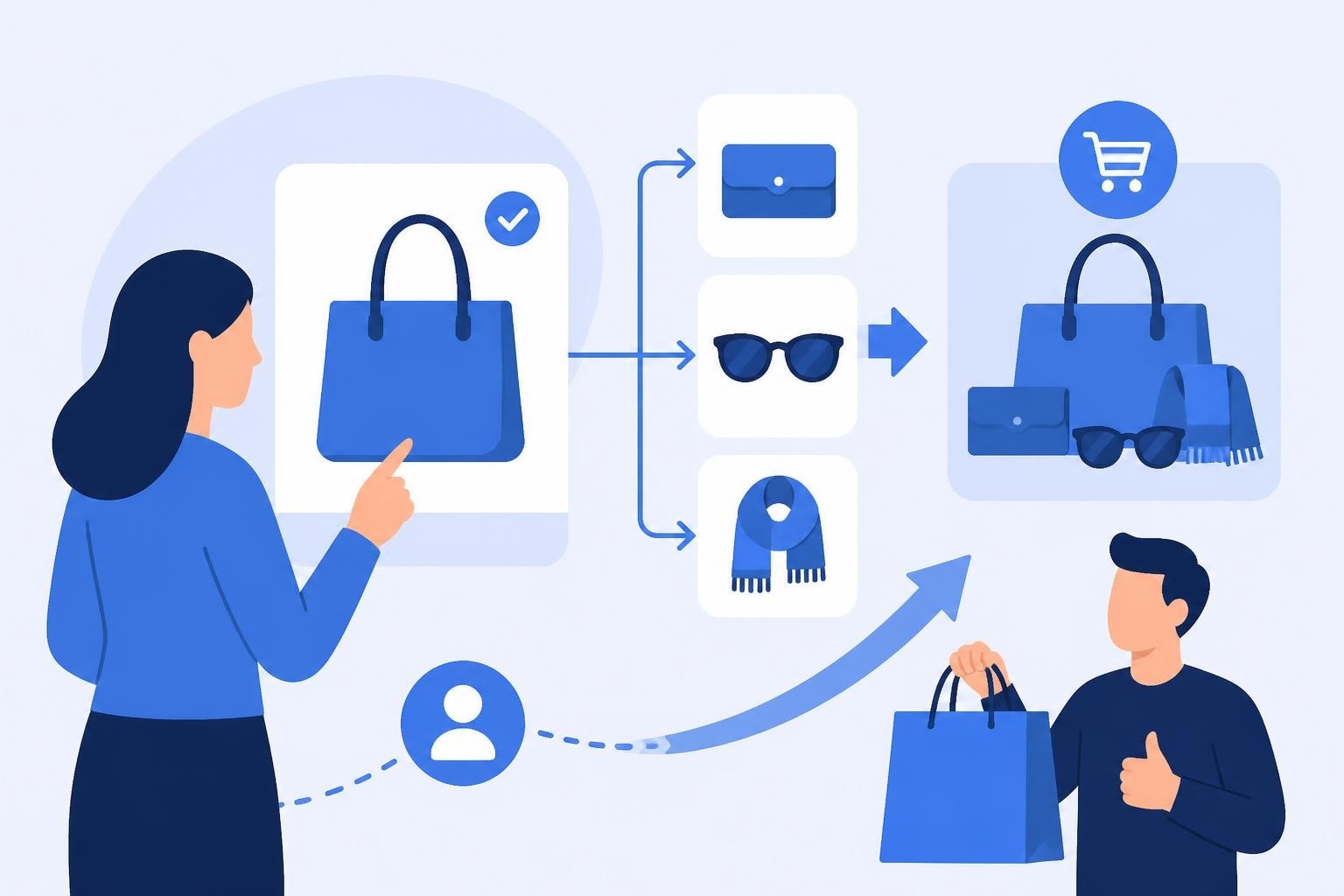
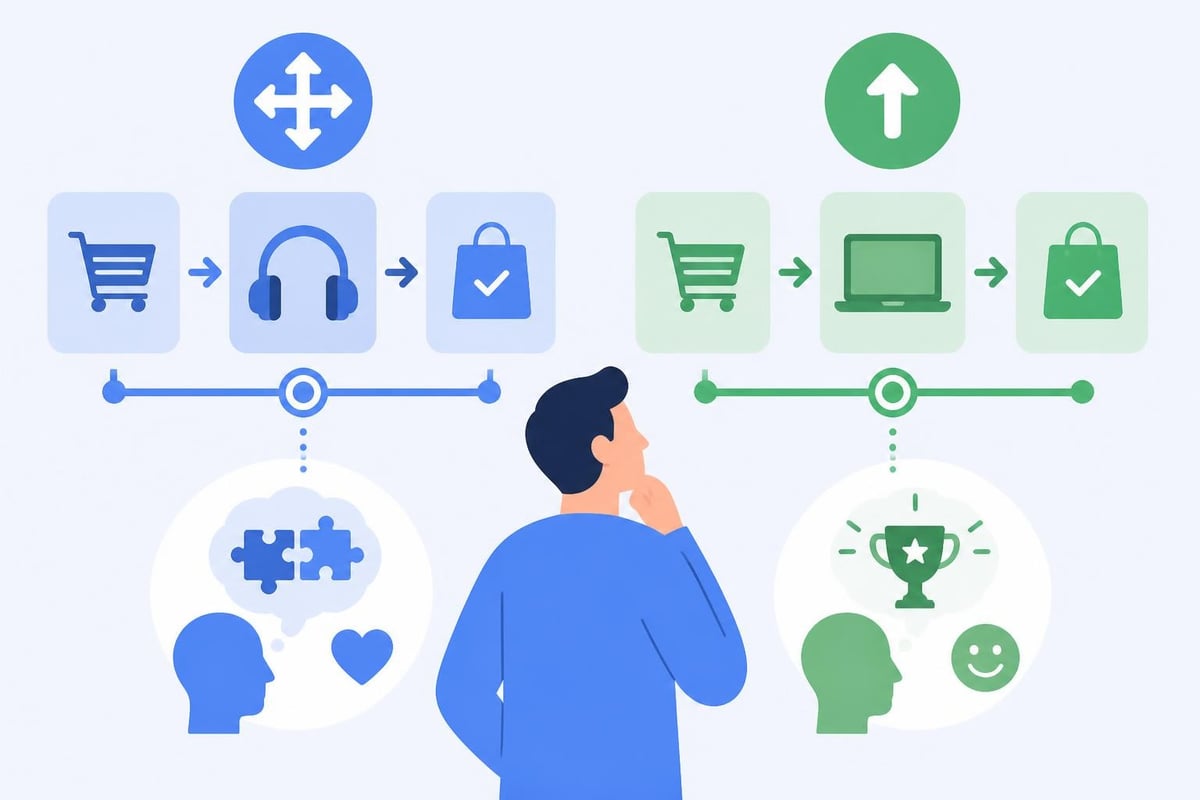
Cross selling recommends different product categories that complement the original purchase. A customer buying a laptop might be cross-sold on accessories like a laptop bag, external mouse, or software subscriptions. Each item serves a distinct function but enhances the overall value proposition.
Upselling encourages customers to purchase a premium version of the same product category. That same laptop customer might be upsold from a basic model to one with more memory, faster processing, or extended warranty coverage.
Both strategies increase revenue, but they tap into different customer motivations:
- Cross selling addresses breadth of needs and complete solutions
- Upselling addresses quality concerns and feature requirements
- Cross selling works best early in the customer relationship
- Upselling often succeeds after customers experience initial value
When to Deploy Each Strategy
| Scenario | Best Strategy | Reason |
|---|---|---|
| New customer first purchase | Cross selling | Build relationship breadth |
| Customer facing limitations | Upselling | Address capability gaps |
| Seasonal or campaign-based buying | Cross selling | Capture immediate opportunity |
| Renewal or upgrade cycle | Upselling | Natural timing for tier movement |
| High satisfaction scores | Both | Customer receptivity is high |
Understanding what is cross selling means recognizing these contextual differences. The most sophisticated businesses develop playbooks that specify when to emphasize each approach based on customer signals, purchase history, and behavioral indicators.
Proven Cross Selling Strategies That Drive Results
Implementing cross selling successfully requires more than simply displaying related products. The most effective approaches combine data analysis, customer psychology, and strategic timing.
Data-Driven Product Pairing
Modern cross selling relies heavily on analytical insights to identify which products naturally complement each other. This goes beyond intuition to examine actual purchase patterns, customer segments, and behavioral data.
Purchase frequency analysis reveals which products customers commonly buy together. If 40% of customers who purchase Product A also purchase Product B within 60 days, that's a strong signal for immediate cross-sell recommendations.
Customer segmentation allows you to tailor recommendations based on industry, company size, use case, or other relevant factors. A marketing agency and an e-commerce retailer might both use your analytics platform, but they need different complementary tools.
Sequential purchase patterns show the natural progression customers follow. New users might need basic features initially, then expand to advanced capabilities as they mature. Understanding this journey helps you recommend the right products at the right time.
Personalization and Behavioral Triggers
Generic recommendations fail. Customers expect personalized experiences based on their specific context and behavior. Strategic cross-selling involves convincing customers to buy additional products that enhance their overall experience.
Effective behavioral triggers include:
- Cart composition: What products are currently selected?
- Browsing history: What categories has the customer explored?
- Previous purchases: What have they bought before?
- Time since last purchase: Are they in an active buying cycle?
- Engagement patterns: Which emails, features, or content resonate?
These signals enable real-time recommendation engines that present relevant options at decision points. A customer viewing campaign analytics might benefit from A/B testing capabilities. Someone managing multiple brands could need additional workspace or user seats.
Timing and Channel Optimization
When you present cross-sell offers matters as much as what you offer. Different channels and moments in the customer journey create varying receptivity levels.
High-conversion timing strategies:
- During initial purchase: Add-ons at checkout when buying intent is highest
- Post-purchase follow-up: Within 24-48 hours while excitement is fresh
- Usage milestones: When customers hit feature limits or thresholds
- Renewal periods: Natural moments to expand service scope
- Success moments: After achieving results with existing products
Channel effectiveness varies by customer preference and product type. Email works well for considered purchases. In-app prompts succeed for immediate add-ons. Sales team outreach suits enterprise accounts. Testing and optimization reveal what works for your specific audience.
Common Cross Selling Mistakes to Avoid
Even experienced marketers and sales professionals stumble when implementing cross selling programs. Avoiding these pitfalls significantly improves your success rate.
Overwhelming Customers With Too Many Options
Decision paralysis is real. When customers face excessive choices, they often choose nothing. Limiting cross-sell recommendations to two or three highly relevant options produces better results than displaying dozens of possibilities.
Research in behavioral economics consistently shows that more options decrease conversion rates after a certain threshold. The optimal number varies by context, but three to five recommendations typically maximize both consideration and completion.
Focus on quality over quantity. One perfectly matched recommendation converts better than ten mediocre suggestions. Use your data to identify the single best complement, then offer one or two alternatives for customers with different preferences.
Ignoring Customer Context and Journey Stage
A customer who signed up yesterday has different needs than one who's been with you for two years. Cross-selling is a strategy of selling additional products to an existing customer to increase the customer's value, but value means different things at different stages.
New customers need help getting started and achieving initial wins. Cross selling advanced features or enterprise capabilities is premature and potentially overwhelming. Instead, focus on complementary tools that accelerate time-to-value.
Mature customers, conversely, may have outgrown basic offerings. They're ready for sophisticated capabilities that unlock new use cases or improve efficiency. Missing these opportunities leaves revenue on the table and creates openings for competitors.
Prioritizing Revenue Over Customer Success
The fastest way to damage customer relationships is obvious revenue-focused cross selling that ignores whether recommendations genuinely help. Customers recognize when you're pushing products versus solving problems.
Successful cross selling aligns additional purchases with customer goals. Ask yourself: "Does this recommendation help the customer achieve their objectives faster, easier, or more completely?" If the answer isn't clearly yes, reconsider the offer.
Building a customer-first cross selling culture requires:
- Training teams on customer needs assessment
- Incentivizing long-term customer value over immediate sales
- Gathering feedback on recommendation relevance
- Regularly reviewing which cross-sells drive retention versus churn
Measuring Cross Selling Effectiveness
What gets measured gets improved. Establishing clear metrics for your cross selling initiatives enables continuous optimization and demonstrates business impact.
Key Performance Indicators to Track
| KPI | What It Measures | Target Benchmark |
|---|---|---|
| Attach Rate | % of transactions including cross-sold items | 20-40% |
| Average Order Value | Revenue per transaction | 15-30% increase |
| Take Rate | % of customers accepting offers | 10-25% |
| Revenue Attribution | Sales directly from cross-sell | 15-30% of total |
| Customer Satisfaction | Impact on NPS/CSAT scores | Neutral to positive |
Attach rate specifically measures how often customers add recommended products to their purchase. Low attach rates suggest poor product matching or timing issues. High rates indicate you're successfully identifying customer needs.
Take rate differs slightly, measuring how many customers who see an offer actually accept it. This metric helps evaluate the effectiveness of your presentation, messaging, and value communication.
Attribution and Impact Analysis
Understanding which cross selling efforts drive results requires sophisticated attribution modeling. Customers interact with multiple touchpoints before purchasing, making single-touch attribution misleading.
Multi-touch attribution assigns credit across the customer journey. A customer might see an email recommendation, encounter an in-app prompt, then complete the purchase after a sales conversation. All three touchpoints contributed to the outcome.
Incrementality testing determines whether cross-sell offers actually increase revenue or simply shift timing. Create control groups who don't see specific offers, then compare purchase behavior. True incremental revenue comes from sales that wouldn't have occurred otherwise.
Long-term impact metrics matter most. Track:
- Retention rates of cross-sell customers versus single-product customers
- Lifetime value differences between segments
- Expansion revenue growth over time
- Customer health scores and engagement levels
Cross Selling in Digital and SaaS Environments
Software and digital products create unique opportunities and challenges for cross selling. The absence of physical constraints enables creative bundling and integration strategies that weren't possible in traditional retail.
Leveraging Usage Data and Product Analytics
SaaS businesses possess unprecedented visibility into how customers use their products. This behavioral data powers highly targeted cross-sell recommendations based on actual needs rather than assumptions.
Feature utilization patterns reveal gaps in customer workflows. If a user frequently exports data to external tools, they might benefit from integrated reporting capabilities. Someone hitting plan limits clearly needs expansion options.
Integration points identify where customers connect your product to complementary tools. These connections signal broader technology stacks and potential cross-sell opportunities within your ecosystem.
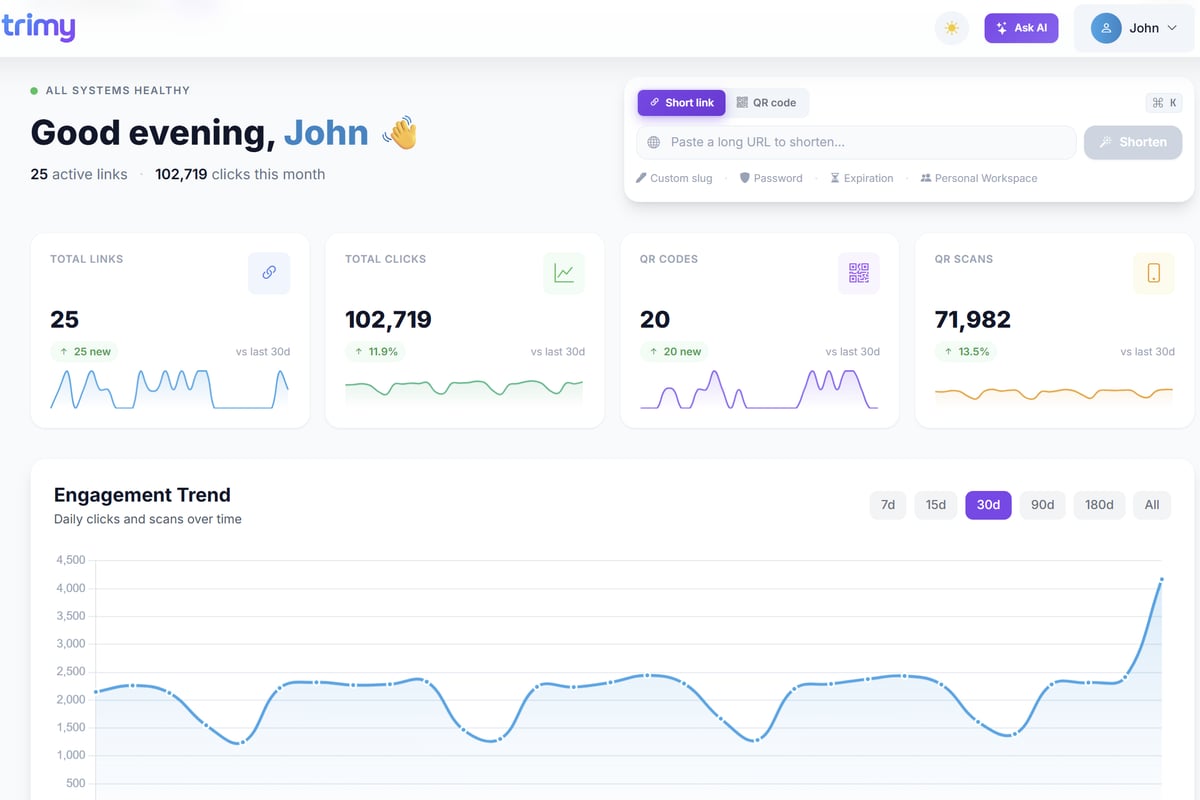
For businesses focused on marketing optimization, link and campaign data provides particularly rich cross-sell signals. Customers running multiple campaigns likely need advanced testing capabilities. Those managing diverse traffic sources might benefit from routing and targeting features. Understanding what is cross selling in this context means recognizing how campaign performance metrics reveal customer sophistication and growth potential.
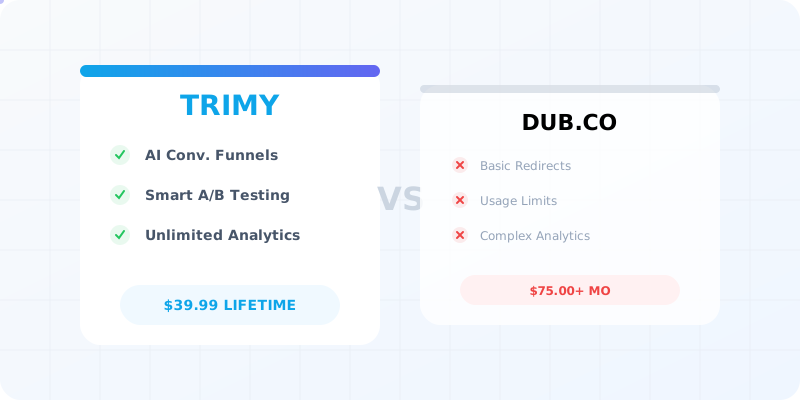
Trimy's platform helps marketers identify these opportunities by providing deep insights into click patterns, conversion paths, and audience segmentation. When you can see which customer segments engage with which campaign types, you can intelligently recommend complementary features that enhance results.
Creating Natural Product Ecosystems
The most effective SaaS cross selling doesn't feel like selling at all. Products in your portfolio should naturally complement each other, solving related problems within a unified workflow.
Workflow integration ensures that using multiple products together creates more value than using them separately. Shared data, unified interfaces, and automated handoffs between tools reduce friction and increase adoption.
Tiered feature access allows customers to start with basic capabilities and expand as needs grow. This approach combines elements of upselling and cross selling, creating a natural progression path.
Platform thinking positions your core product as a foundation onto which customers add specialized capabilities. Rather than purchasing completely separate tools, they're expanding their existing investment.
Industry-Specific Cross Selling Applications
Different industries apply cross selling principles in ways tailored to their unique customer dynamics and purchase patterns.
E-Commerce and Retail Cross Selling
Online retailers pioneered many cross selling techniques now used across industries. The "customers who bought this also bought" recommendation engine has become ubiquitous because it works.
E-commerce cross-selling involves suggesting related products to add to a shopper's main purchase, creating a seamless discovery experience that increases cart value while helping customers find everything they need.
Effective e-commerce strategies include:
- Product bundles offering discounts for purchasing complementary items together
- Accessory recommendations based on the primary product category
- Consumables and refills for products requiring ongoing supplies
- Extended warranties and services that protect or enhance the purchase
B2B and Enterprise Cross Selling
Business-to-business sales cycles are longer and involve multiple stakeholders, requiring different cross selling approaches than consumer markets.
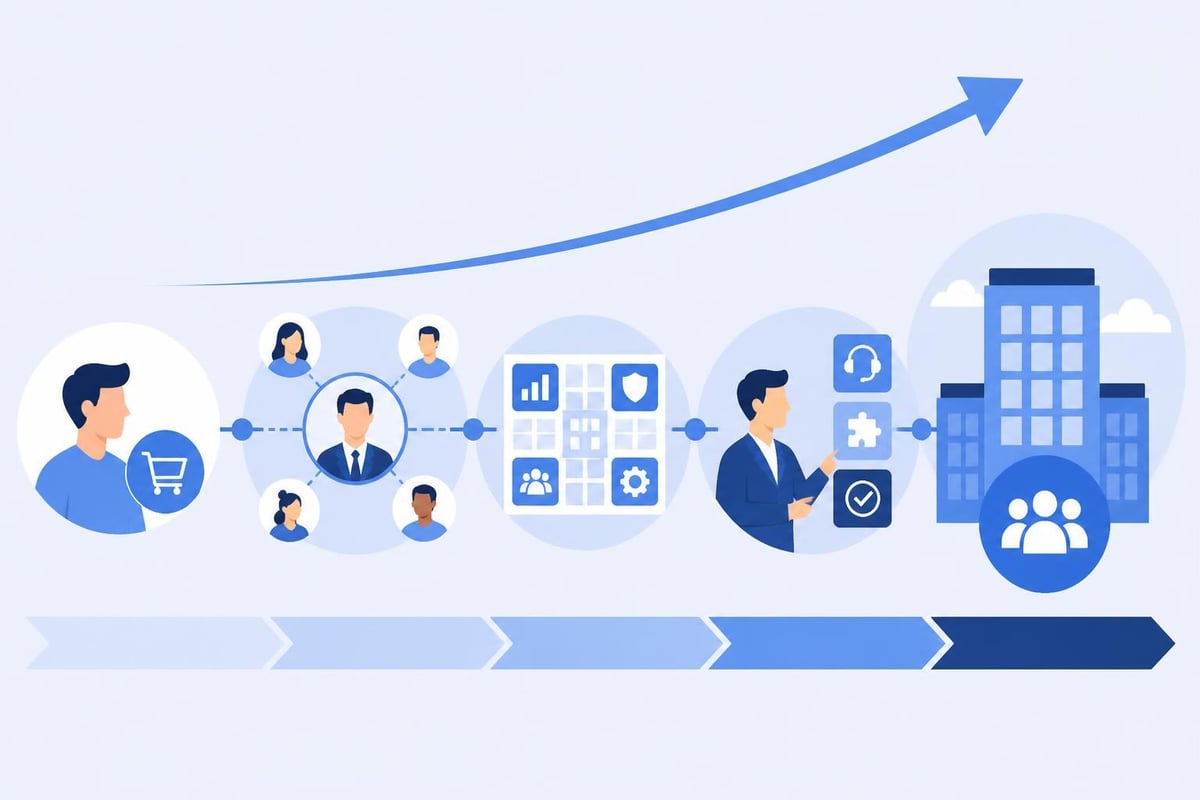
Account-based strategies identify expansion opportunities within existing customer organizations. A department using your software successfully creates credibility for expansion to other divisions.
Professional services complement software products by helping customers achieve faster implementation and better outcomes. Training, consulting, and custom development naturally cross-sell alongside platform subscriptions.
Integration and API access enable technical customers to build on your platform, creating stickiness while opening cross-sell conversations about premium tiers or specialized modules.
Optimizing Cross Selling Through Testing and Iteration
No cross selling program succeeds immediately. The best results come from systematic testing, learning, and optimization over time.
A/B Testing Recommendation Strategies
Different customers respond to different approaches. A/B testing reveals which strategies work best for your specific audience and context.
Test variables include:
- Recommendation timing: Immediate versus delayed offers
- Presentation format: Grid versus carousel versus list
- Messaging approach: Feature-focused versus benefit-focused
- Discount structure: Bundled savings versus individual pricing
- Number of options: Two versus three versus five recommendations
Run tests for statistically significant durations and sample sizes. Quick conclusions based on limited data lead to poor decisions. Most tests require at least two weeks and several hundred conversions to produce reliable insights.
Segmented testing recognizes that different customer groups may respond differently. New versus returning customers, small businesses versus enterprises, different industries or use cases-each segment deserves specific optimization.
Creating Feedback Loops for Continuous Improvement
Build systems that capture why cross-sell attempts succeed or fail. This qualitative insight complements quantitative metrics.
Customer feedback mechanisms:
- Post-purchase surveys asking about recommendation relevance
- Sales team debriefs on objections and questions
- Customer support analysis of confusion or dissatisfaction
- User testing sessions observing recommendation interactions
Proven sales techniques emphasize continuous learning and adaptation based on customer response patterns. Your cross selling approach should evolve as your product portfolio, customer base, and market conditions change.
Regular review cycles ensure cross selling remains effective. Quarterly analysis of performance metrics, customer feedback, and competitive dynamics keeps your strategy fresh and responsive.
Building a Cross Selling Culture Across Your Organization
Sustainable cross selling success requires organizational alignment beyond marketing and sales teams. When everyone understands and supports the strategy, execution improves dramatically.
Cross-Functional Collaboration Requirements
Product teams need visibility into which features and products naturally pair. Their roadmap decisions should consider cross-sell opportunities, building integration points and complementary capabilities.
Customer success teams interact regularly with existing customers, positioning them perfectly to identify expansion opportunities. Equipping them with recommendation frameworks and enablement tools turns every customer interaction into a potential cross-sell moment.
Marketing creates awareness and demand for the full product portfolio. Content, campaigns, and positioning should educate customers about complementary solutions, not just promote individual products in isolation.
Finance and operations ensure pricing, packaging, and contract structures support cross selling. Complex approval processes or incompatible billing systems create friction that kills deals.
Training and Enablement Best Practices
Teams need specific skills and knowledge to cross sell effectively without being pushy or inappropriate.
Essential training components:
- Understanding the full product portfolio and how pieces fit together
- Identifying customer signals that indicate cross-sell readiness
- Communicating value propositions for complementary products
- Handling objections and questions about additional purchases
- Knowing when not to cross sell to protect relationships
Role-playing exercises help teams practice cross selling conversations in low-stakes environments. Feedback and coaching improve confidence and technique before customer-facing interactions.
Playbooks and frameworks provide structure for consistent execution. Documented best practices, talking points, and decision trees ensure everyone follows proven approaches while allowing flexibility for individual situations.
Future Trends Shaping Cross Selling Evolution
Cross selling continues evolving as technology advances and customer expectations shift. Staying ahead of these trends creates competitive advantages.
AI and Machine Learning Applications
Artificial intelligence dramatically improves cross selling precision by analyzing patterns humans can't easily detect. Machine learning algorithms identify non-obvious product affinities and predict customer receptivity with increasing accuracy.
Predictive modeling forecasts which customers are most likely to purchase specific products based on hundreds of behavioral signals. This enables prioritization and resource allocation, focusing efforts where they'll generate the best returns.
Natural language processing analyzes customer communications-support tickets, chat conversations, email exchanges-to identify unstated needs and opportunities. A customer asking how to accomplish a specific task might be signaling readiness for a product that makes it easier.
Dynamic personalization adjusts recommendations in real-time based on immediate context and behavior. The same customer might see different cross-sell offers depending on time of day, device, recent actions, or even current events.
Privacy and Personalization Balance
Increasing privacy regulations and consumer awareness create tension with personalization requirements. Successful cross selling in 2026 and beyond must respect privacy while still delivering relevant recommendations.
First-party data strategies become essential as third-party cookies disappear. Building direct relationships with customers and collecting data through value exchanges (useful tools, content, services) creates sustainable personalization foundations.
Transparency and control help customers feel comfortable with data usage. Clear explanations of how recommendations are generated and options to control data sharing build trust that enables more sophisticated targeting.
Contextual recommendations that rely on immediate behavior rather than historical profiles reduce privacy concerns while still providing relevance. Someone viewing a specific product page can receive related suggestions without requiring extensive personal data.
Understanding what is cross selling transforms it from a simple sales tactic into a strategic growth driver that benefits both your business and your customers. The most successful implementations focus on genuine value creation rather than transaction maximization, building long-term relationships that compound over time. For marketing teams optimizing campaigns and traffic, platforms like trimy provide the deep analytics and customer insights needed to identify cross-sell opportunities based on actual behavior patterns and conversion data, turning every link into intelligence that drives smarter recommendations and stronger results.