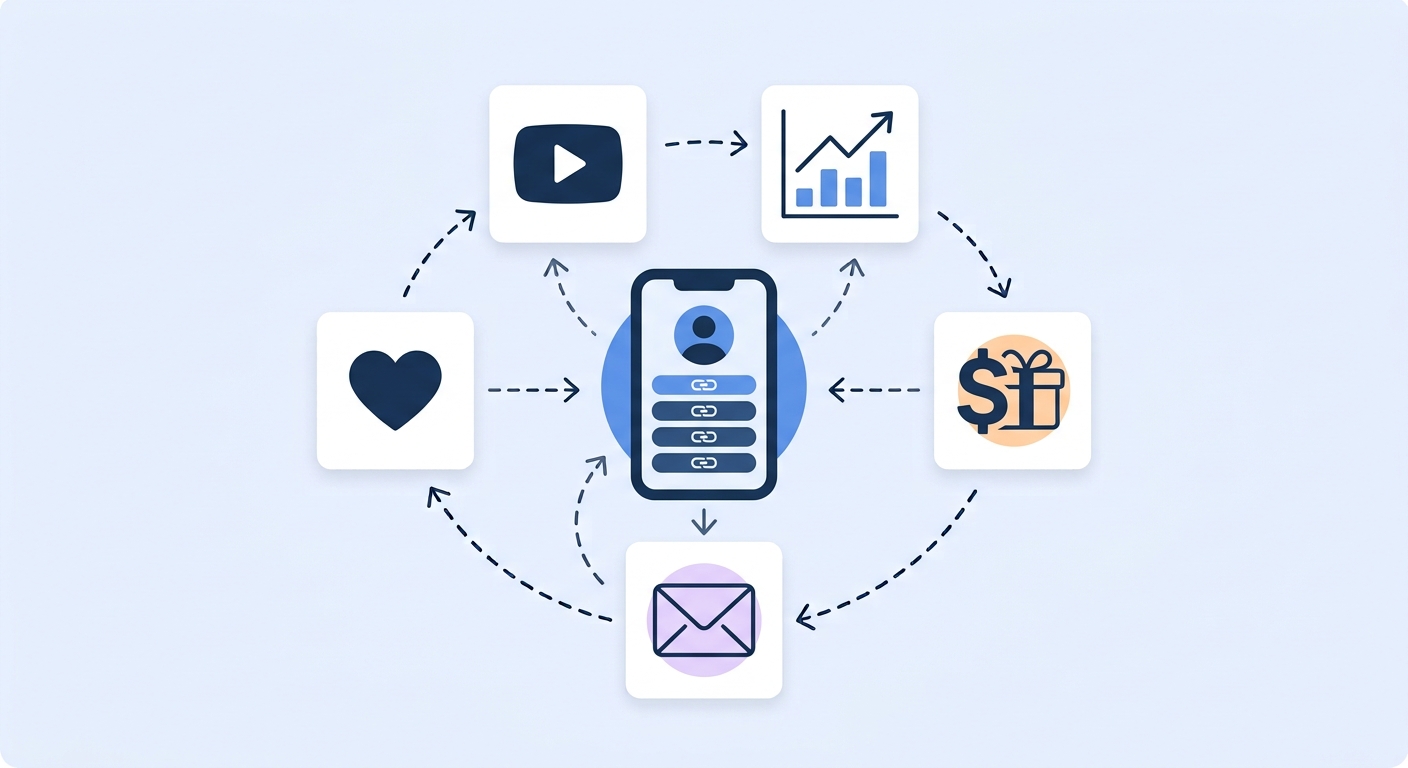
Performance Marketing Platforms: Complete 2026 Guide

Performance marketing has evolved from a niche advertising approach into the dominant strategy for digital marketing teams worldwide. Unlike traditional brand awareness campaigns where success metrics remain vague, performance marketing platforms enable businesses to track every dollar spent against concrete outcomes like conversions, leads, and revenue. These sophisticated tools have transformed how marketers allocate budgets, optimize campaigns, and demonstrate return on investment to stakeholders who demand accountability.
Understanding Performance Marketing Platforms
Performance marketing platforms serve as centralized command centers for running, tracking, and optimizing campaigns where advertisers pay only for specific actions. These actions might include clicks, conversions, leads, or sales. The fundamental difference between these platforms and traditional advertising tools lies in their accountability structure and measurement capabilities.
Modern performance marketing platforms integrate multiple data sources, channels, and attribution models into unified dashboards. They connect advertising networks, analytics tools, CRM systems, and conversion tracking to provide marketers with complete visibility into campaign performance. This integration enables teams to make data-driven decisions quickly and adjust strategies based on real-time performance metrics.
Core Components of Effective Platforms
The most powerful performance marketing platforms share several essential features that distinguish them from basic advertising tools:
- Multi-channel campaign management across search, social, display, affiliate, and native advertising networks
- Advanced attribution modeling that tracks customer journeys across multiple touchpoints
- Real-time performance analytics with customizable dashboards and automated reporting
- Conversion tracking and pixel management for accurate measurement of desired actions
- Budget optimization tools that automatically allocate spending toward highest-performing channels
- A/B testing capabilities for creative assets, landing pages, and audience segments
- Fraud detection systems to identify and eliminate invalid traffic or fake conversions

Each component plays a specific role in the performance marketing ecosystem. Attribution modeling, for instance, helps marketers understand which touchpoints deserve credit for conversions. Without accurate attribution, teams risk over-investing in last-click channels while undervaluing important awareness and consideration touchpoints that contribute to eventual conversions.
Types of Performance Marketing Platforms
The performance marketing landscape includes several platform categories, each designed for specific use cases and marketing objectives. Understanding these distinctions helps businesses select tools that align with their goals and technical capabilities.
Demand-Side Platforms (DSPs)
DSPs enable advertisers to purchase digital ad inventory programmatically across multiple ad exchanges and supply sources. These platforms use real-time bidding technology to evaluate and purchase ad impressions in milliseconds, optimizing for specific performance goals like cost per acquisition or return on ad spend.
Leading DSPs offer sophisticated audience targeting capabilities, leveraging first-party data, contextual signals, and lookalike modeling to reach high-value prospects. They provide granular control over bidding strategies, frequency capping, and creative rotation while maintaining transparency into where ads appear and how budgets are allocated.
Affiliate Marketing Platforms
Affiliate networks connect advertisers with publishers who promote products in exchange for performance-based commissions. These platforms handle tracking, reporting, payment processing, and relationship management between merchants and affiliates.
Modern affiliate platforms have evolved beyond simple commission tracking to include advanced features like:
- Multi-tier commission structures that reward top-performing affiliates
- Deep linking capabilities for product-specific promotions
- Real-time fraud detection to prevent invalid affiliate activity
- Automated compliance monitoring for brand safety and regulatory requirements
- Performance analytics that identify high-value affiliate partnerships
| Platform Type | Best For | Primary Metric | Integration Complexity |
|---|---|---|---|
| DSP | Programmatic display advertising | CPM, CPA | High |
| Affiliate Network | Partner-driven sales | CPA, Revenue Share | Medium |
| Social Advertising | Audience-based targeting | CPM, CPC, Conversions | Low |
| Search Marketing | Intent-driven traffic | CPC, Conversion Rate | Medium |
| Analytics Platform | Cross-channel attribution | ROAS, Customer LTV | High |
Social Media Advertising Platforms
Facebook Ads Manager, LinkedIn Campaign Manager, TikTok Ads, and other social platforms have developed robust performance marketing capabilities. These platforms excel at audience targeting based on demographics, interests, behaviors, and lookalike modeling from existing customer data.
Social advertising platforms provide native conversion tracking through pixels and APIs that monitor on-site actions after users click ads. Their self-service interfaces make campaign creation accessible while offering advanced features like dynamic creative optimization and automated bidding strategies for experienced marketers.
Key Features Driving Marketing Performance
Performance marketing platforms differentiate themselves through specific capabilities that directly impact campaign outcomes. These features transform raw data into actionable insights and automated optimizations that improve efficiency at scale.
Advanced Analytics and Attribution
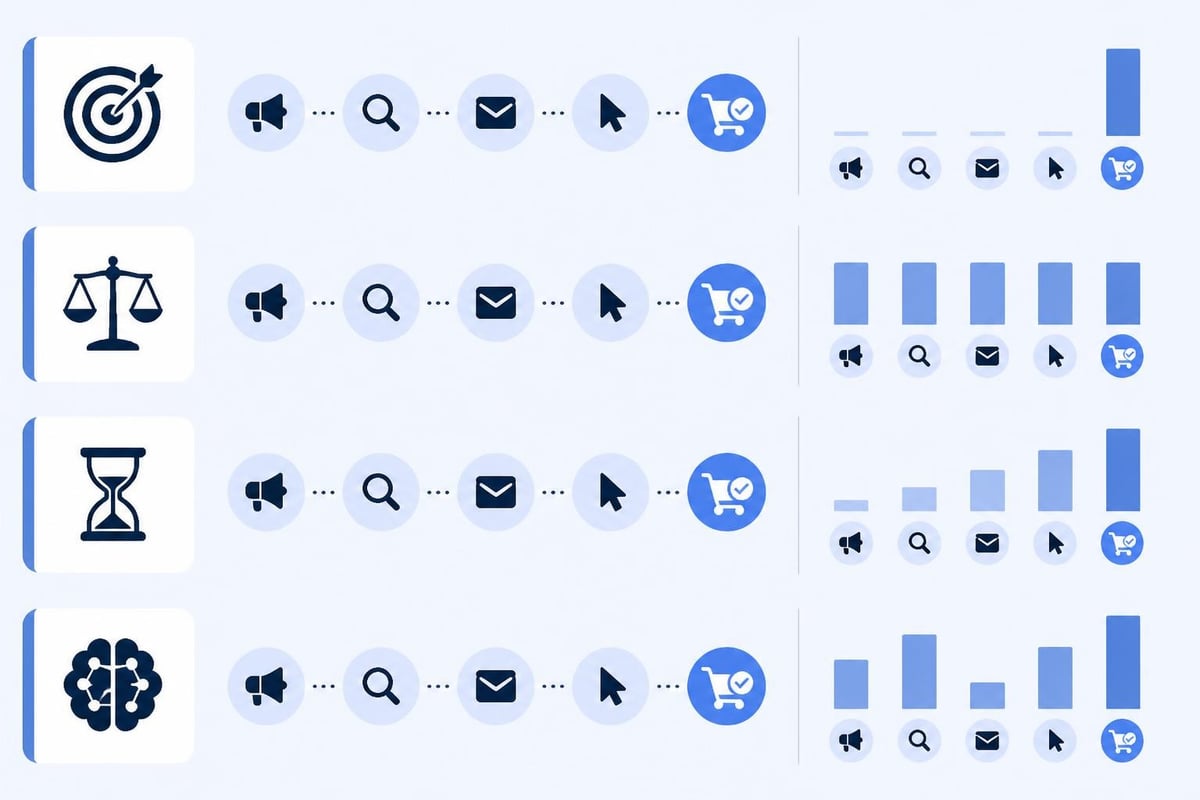
The foundation of any performance marketing platform is its ability to accurately measure and attribute conversions. Single-touch attribution models like first-click or last-click provide simplistic views that miss the complexity of modern customer journeys. Multi-touch attribution distributes credit across all touchpoints that contributed to conversions, offering more nuanced insights into channel effectiveness.
Data-driven attribution takes this further by using machine learning algorithms to assign credit based on each touchpoint's actual statistical contribution to conversion likelihood. This approach helps marketers understand the true value of awareness, consideration, and decision-stage interactions. Brands leveraging first-party data operations have achieved significant reductions in cost per lead while improving audience match rates across platforms.
Link Intelligence and Tracking Infrastructure
Behind every successful performance marketing campaign lies sophisticated link management and tracking infrastructure. Campaign URLs carry critical parameters that identify traffic sources, campaigns, content variations, and conversion paths. Managing these links manually becomes impossible at scale, creating opportunities for tracking errors that corrupt campaign data.
Advanced link management enables marketers to implement consistent UTM parameter structures, deploy retargeting pixels across campaigns, and run A/B tests on landing page variations. This infrastructure transforms links from simple navigation tools into revenue signals that provide deep insights into customer behavior and campaign performance.
Trimy addresses this challenge by providing marketers with comprehensive link intelligence tools that include URL shortening, click tracking, custom branded domains, A/B testing capabilities, retargeting pixel management, and UTM campaign organization-all within a unified dashboard built for teams that demand complete control over their traffic data and attribution accuracy.
Automation and Optimization Engines
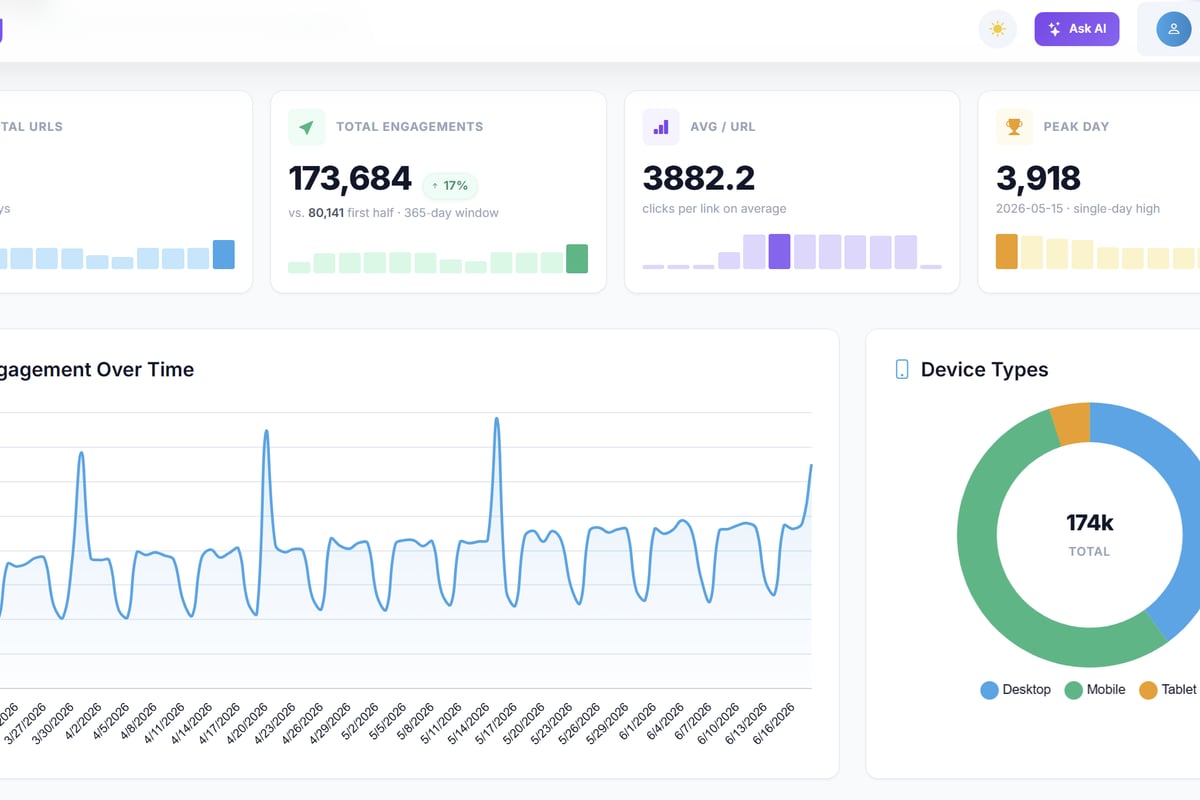
Manual campaign management cannot compete with the speed and scale of algorithmic optimization. Performance marketing platforms employ various automation strategies:
- Bid optimization algorithms that adjust bids in real-time based on conversion probability and target CPA
- Budget allocation systems that shift spending toward top-performing channels and audiences
- Creative rotation logic that serves best-performing ad variations more frequently
- Audience expansion tools that identify new prospect segments similar to high-converting customers
- Anomaly detection that alerts marketers to unusual performance patterns requiring investigation
These automation capabilities don't eliminate the need for strategic oversight but free marketers to focus on creative strategy, audience insights, and testing new approaches rather than manual bid adjustments and budget rebalancing.
Selecting the Right Platform for Your Business
Choosing appropriate performance marketing platforms requires careful evaluation of business objectives, technical capabilities, budget constraints, and growth stage. The right platform for a venture-funded startup differs significantly from what suits an established enterprise with complex attribution needs.
Evaluation Criteria
Integration Capabilities: The platform should connect seamlessly with your existing marketing technology stack, including analytics platforms, CRM systems, email marketing tools, and e-commerce platforms. API availability, pre-built connectors, and data export flexibility determine how easily you can create unified reporting and activate insights across systems.
Pricing Structure: Performance marketing platforms employ various pricing models, from percentage-of-spend fees to fixed monthly subscriptions and per-conversion charges. Consider total cost of ownership including platform fees, implementation costs, and ongoing management expenses. Some platforms become prohibitively expensive at scale, while others offer volume discounts that improve unit economics as campaigns grow.
Support and Training Resources: Technical complexity varies dramatically across platforms. Evaluate the quality of documentation, availability of customer support, and depth of training resources. Platforms with active user communities and extensive knowledge bases reduce implementation time and help teams maximize platform capabilities.
Platform Selection by Business Stage
| Business Stage | Platform Priority | Budget Range | Key Capabilities Needed |
|---|---|---|---|
| Early Startup | Ease of use, quick implementation | $500-$2,000/month | Basic attribution, simple reporting |
| Growth Stage | Scalability, multi-channel support | $2,000-$10,000/month | Advanced attribution, automation |
| Enterprise | Custom integrations, security | $10,000+/month | Enterprise SSO, data governance, API access |
Companies spending over $1 million monthly on advertising require enterprise-grade platforms with dedicated support, custom reporting capabilities, and robust fraud prevention systems. Smaller businesses benefit from platforms that balance capability with accessibility, avoiding unnecessary complexity that slows execution.
Implementation Best Practices
Successfully deploying performance marketing platforms requires more than selecting the right software. Implementation strategy, data hygiene, and organizational alignment determine whether platforms deliver promised value or become underutilized technology investments.
Technical Foundation Setup
Begin by establishing clean tracking infrastructure before launching campaigns. This includes:
- Implementing conversion tracking pixels correctly across all website conversion points
- Creating standardized UTM parameter naming conventions for consistent campaign tagging
- Setting up custom events for micro-conversions that indicate purchase intent
- Configuring server-side tracking for improved accuracy and cookie-loss resilience
- Testing all tracking implementations thoroughly before allocating significant budget
Agencies have helped clients improve ROAS from 2.1 to 4.3+ simply by implementing better data tracking and server-side solutions, demonstrating how technical foundation quality directly impacts campaign performance.
Team Structure and Responsibilities
Successful platform implementation requires clear ownership and collaboration across marketing, analytics, and technical teams. Designate platform administrators responsible for configuration management, user access control, and integration maintenance. Establish regular review cadences where stakeholders examine performance data, discuss optimization opportunities, and align on strategic priorities.
Cross-functional collaboration proves especially important when implementing advanced features like custom attribution models or predictive audience segments. These capabilities require input from data analysts, marketing strategists, and technical teams to configure correctly and interpret accurately.
Measuring Success and ROI
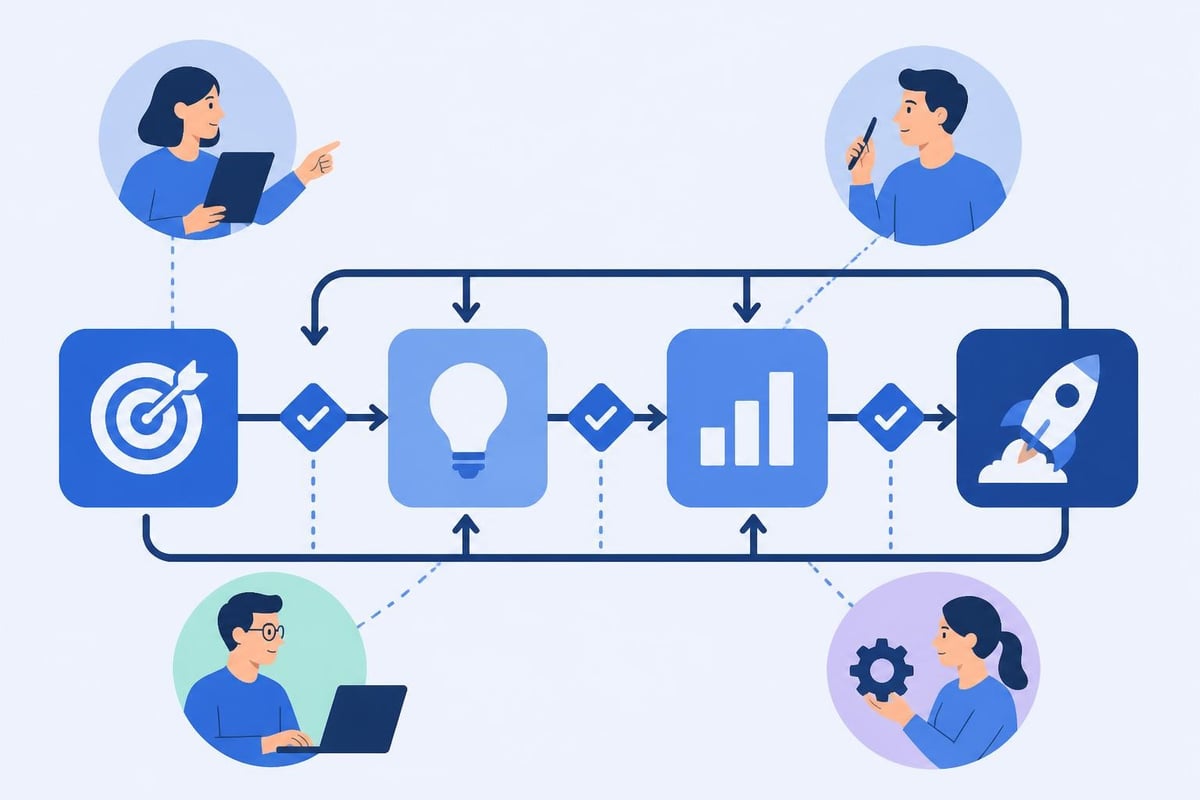
Performance marketing platforms generate vast amounts of data, but data without context provides little value. Establishing clear success metrics and measurement frameworks helps teams focus on signals that matter while filtering out noise that distracts from strategic priorities.
Primary Performance Indicators
Different business models and campaign objectives require distinct success metrics:
E-commerce Businesses focus primarily on return on ad spend (ROAS), customer acquisition cost (CAC), and customer lifetime value (LTV). These metrics directly connect marketing investment to revenue outcomes. Brands achieving 300% increases in lead generation typically implement scalable performance marketing engines with precise audience targeting and continuous optimization.
Lead Generation Businesses prioritize cost per lead (CPL), lead-to-customer conversion rate, and cost per acquisition (CPA). These organizations must track performance beyond initial lead capture to understand which campaigns generate qualified leads that convert to customers.
SaaS and Subscription Businesses measure customer acquisition cost against lifetime value, tracking metrics like trial-to-paid conversion rate, monthly recurring revenue (MRR) impact, and payback period. Long sales cycles require attribution windows that capture delayed conversions while maintaining campaign accountability.
Advanced Performance Analysis
Beyond surface-level metrics, sophisticated marketers dig deeper into performance data to uncover optimization opportunities:
- Cohort analysis revealing how customer quality varies by acquisition channel and campaign
- Incrementality testing determining which conversions would have occurred without advertising
- Cross-channel interaction analysis identifying how channels work together to drive conversions
- Audience segment performance comparing conversion rates and LTV across demographic and behavioral segments
- Creative performance patterns understanding which messaging themes and formats resonate with target audiences
Platforms that integrate DSP, affiliate, retargeting, and measurement into unified systems enable this advanced analysis by eliminating data silos and providing comprehensive views of customer acquisition economics.
Emerging Trends in Performance Marketing
The performance marketing landscape continues evolving rapidly as privacy regulations, platform policies, and technological capabilities shift. Staying ahead of these trends helps businesses maintain competitive advantages and adapt strategies before changes force reactive adjustments.
Privacy-First Measurement
Apple's App Tracking Transparency framework, Google's deprecation of third-party cookies, and regulatory changes like GDPR and CCPA have fundamentally altered digital tracking. Performance marketing platforms are adapting through:
- Server-side tracking that processes conversion data before browsers can block it
- First-party data strategies that rely on customer information collected directly by businesses
- Privacy-preserving technologies like differential privacy and federated learning
- Contextual targeting that reaches audiences based on content rather than behavioral tracking
- Modeling and aggregation approaches that estimate conversion impact without user-level tracking
These shifts require marketers to invest in owned data assets, strengthen customer relationships, and develop measurement approaches that balance privacy compliance with performance accountability.
AI-Powered Optimization
Machine learning capabilities embedded in performance marketing platforms have progressed from simple bid optimization to comprehensive campaign intelligence. Modern AI features include:
- Predictive audience modeling that identifies high-value prospects before they demonstrate purchase intent
- Creative generation tools that produce ad variations optimized for specific audience segments
- Budget allocation algorithms that shift spending dynamically based on real-time performance signals
- Automated testing frameworks that identify winning strategies faster than manual experimentation
- Natural language reporting that generates insights and recommendations in plain language
These capabilities democratize sophisticated optimization techniques previously available only to teams with dedicated data science resources. However, effective use still requires strategic oversight and understanding of how algorithms make decisions.
Cross-Channel Orchestration
Customers interact with brands across numerous touchpoints before converting. Performance marketing platforms increasingly focus on orchestrating consistent, personalized experiences across channels rather than optimizing isolated campaigns.
Advanced orchestration capabilities include:
- Dynamic creative optimization that tailors messaging based on customer journey stage
- Cross-channel frequency management preventing oversaturation across platforms
- Sequential messaging strategies that guide prospects through awareness to conversion
- Channel-specific bidding that accounts for each platform's role in the conversion path
- Unified audience segmentation applied consistently across all advertising channels
Businesses implementing performance systems built around analytics and channels have driven growth in competitive sectors by creating cohesive customer experiences that outperform fragmented campaign approaches.
Integration with Marketing Technology Ecosystems
Performance marketing platforms rarely operate in isolation. Their value multiplies when integrated with broader marketing technology stacks including customer data platforms, analytics tools, marketing automation systems, and business intelligence platforms.
Critical Integration Points
Customer Data Platforms (CDPs) centralize customer information from all sources, creating unified profiles that power advanced audience segmentation and personalization. Integrating performance marketing platforms with CDPs enables marketers to activate first-party data across advertising channels while maintaining data governance and privacy compliance.
Analytics Platforms like Google Analytics, Adobe Analytics, and specialized attribution tools provide deeper insights into on-site behavior and conversion paths. Bidirectional integrations allow performance platforms to optimize toward analytics-defined goals while enriching analytics data with advertising exposure information.
Marketing Automation and CRM Systems close the loop between advertising and revenue by tracking leads through sales processes. This integration reveals which campaigns generate qualified opportunities versus low-value leads, enabling more sophisticated optimization beyond initial conversion.
API and Data Connectivity
Modern performance marketing platforms expose robust APIs that enable custom integrations and data pipelines. These connections support use cases like:
- Automated campaign creation based on inventory data or promotional calendars
- Real-time alert systems that notify teams of performance anomalies
- Custom dashboards combining performance data with business metrics
- Bidirectional audience syncing that activates CRM segments across advertising platforms
- Revenue attribution that connects advertising spend to closed deals and customer lifetime value
Technical teams can leverage these APIs to build competitive advantages through unique data applications and workflow automations not available through standard platform interfaces.
Common Implementation Challenges
Despite their sophistication, performance marketing platforms present implementation challenges that can undermine value realization if not addressed proactively. Understanding common pitfalls helps teams avoid expensive mistakes and accelerate time to value.
Data Quality and Consistency Issues
Garbage in, garbage out applies especially to performance marketing. Common data quality problems include:
- Inconsistent UTM parameter usage across campaigns creating fragmented reporting
- Tracking pixel failures that undercount conversions and misattribute results
- Cross-domain tracking gaps losing customer journey continuity
- Duplicate conversion counting inflating reported performance
- Attribution window misconfigurations crediting wrong campaigns for conversions
Establishing data governance processes, conducting regular tracking audits, and implementing automated quality checks help maintain data integrity essential for accurate optimization.
Platform Complexity and Learning Curves
Advanced platforms offer extensive capabilities that require significant time investment to master. Teams often struggle with:
- Understanding which features provide value versus adding unnecessary complexity
- Configuring automation rules that improve rather than harm performance
- Interpreting reports correctly to make sound strategic decisions
- Maintaining platform knowledge as team members change roles or leave the organization
- Keeping current with platform updates that change interfaces and functionality
Investing in formal training, creating internal documentation, and designating platform champions helps organizations realize platform value while managing complexity.
Budget Allocation and Testing Discipline
Performance marketing platforms enable rapid testing and scaling, but this flexibility can lead to undisciplined experimentation that wastes budget without generating insights. Common mistakes include:
- Running too many simultaneous tests that dilute traffic and prevent statistical significance
- Making optimization decisions based on insufficient data samples
- Failing to document test hypotheses and learnings for institutional knowledge
- Chasing short-term performance improvements that undermine long-term brand building
- Over-optimizing toward measurement artifacts rather than true business value
Establishing testing frameworks, minimum sample size requirements, and balanced scorecard approaches that consider multiple performance dimensions helps teams extract maximum value from experimentation capabilities.
Performance marketing platforms have become essential infrastructure for businesses demanding measurable returns from marketing investments, providing the analytics, automation, and attribution capabilities needed to optimize campaigns across channels. Success requires not just selecting appropriate platforms but implementing them with clean data foundations, clear success metrics, and organizational alignment around performance culture. Trimy helps marketing teams build this foundation by transforming links into revenue signals through advanced analytics, A/B testing, smart routing, and deep tracking insights that optimize campaign performance at competitive pricing. Explore how Trimy can strengthen your performance marketing infrastructure today.