Online Content Creation Tools That Power Modern Marketing

The digital content landscape has evolved dramatically, and today's marketers need more than just creativity to succeed. They need robust online content creation tools that streamline workflows, enhance collaboration, and deliver measurable results. According to Adobe's Creators' Toolkit Report 2026, creative professionals now use an average of 8-12 different tools daily to manage their content operations. This shift toward tool diversification reflects the growing complexity of content marketing and the need for specialized platforms that handle specific tasks efficiently.
The Evolution of Content Creation Platforms
Online content creation tools have transformed from simple text editors and basic image manipulators into sophisticated platforms that integrate artificial intelligence, collaborative features, and advanced analytics. The modern content creator operates within an ecosystem where tools must communicate seamlessly with one another.
The State of Digital Content 2026 report reveals that 78% of content teams now prioritize tool integration over individual feature sets. This preference signals a fundamental shift in how organizations evaluate and implement content technology. Teams recognize that isolated tools create bottlenecks, while connected platforms accelerate production and improve quality.
Key Categories of Modern Creation Tools
Today's content professionals rely on several distinct categories of online content creation tools, each serving specific purposes within the broader workflow:
- Writing and editing platforms that offer grammar checking, style suggestions, and SEO optimization
- Visual design software for creating graphics, infographics, and branded assets
- Video production tools that democratize professional-quality video creation
- Audio editing and podcast platforms for voice-based content
- Collaboration and project management systems that keep teams aligned
- Analytics and performance tracking to measure content effectiveness
Each category contains dozens of specialized options, making tool selection both more flexible and more challenging than ever before.

Writing and Text-Based Content Solutions
Text remains the foundation of most digital marketing efforts, and online content creation tools for writing have advanced significantly. Modern platforms go far beyond spell-checking to offer contextual grammar improvements, tone adjustments, and readability enhancements.
These tools now incorporate AI-powered features that suggest content improvements, generate outlines, and even draft entire sections based on brief prompts. However, the most effective implementations use AI as an assistant rather than a replacement for human creativity and strategic thinking.
Features That Define Superior Writing Tools
| Feature Category | Business Value | Implementation Priority |
|---|---|---|
| Real-time collaboration | Reduces review cycles by 40-60% | High |
| SEO optimization | Improves search visibility and traffic | High |
| Version control | Prevents lost work and enables tracking | Medium |
| Template libraries | Accelerates content creation | Medium |
| Multi-format export | Ensures compatibility across platforms | Low |
The best writing platforms integrate these features into workflows that feel natural rather than forced. Writers should spend their cognitive energy on strategy and creativity, not on learning complex interfaces.
Research from Carnegie Mellon's digital authoring workflows study demonstrates that automating routine tasks like formatting and accessibility checks can improve content production speed by up to 35% without sacrificing quality.
Visual Design and Graphics Platforms
Visual content drives engagement across every digital channel, making design tools essential components of any content stack. Online content creation tools for visual design have become remarkably accessible, allowing non-designers to produce professional-quality graphics.
Cloud-based design platforms dominate this space because they eliminate software installation requirements and enable team collaboration. These platforms typically offer:
- Drag-and-drop interfaces that require minimal training
- Extensive template libraries organized by use case
- Brand kit functionality to maintain visual consistency
- Smart resize features that adapt designs across formats
- Direct publishing to social media and other channels
The democratization of design has empowered marketing teams to move faster and reduce dependency on specialized designers for routine assets. However, this efficiency gain only materializes when teams establish clear brand guidelines and approval processes.
Choosing Design Tools for Different Needs
For social media marketers, tools with built-in dimension templates and scheduling features provide maximum efficiency. For content marketers, platforms offering infographic builders and data visualization capabilities prove most valuable. For performance marketers, tools that enable rapid A/B testing of visual variants deliver the strongest ROI.
The insights from content creators' toolbox data show that the average marketing team uses 3.2 different design tools simultaneously, suggesting that no single platform perfectly addresses all visual content needs.
Video and Multimedia Production
Video content continues to dominate engagement metrics across platforms, and online content creation tools for video have evolved to meet this demand. What once required expensive equipment and specialized skills now happens in browser-based editors with intuitive interfaces.
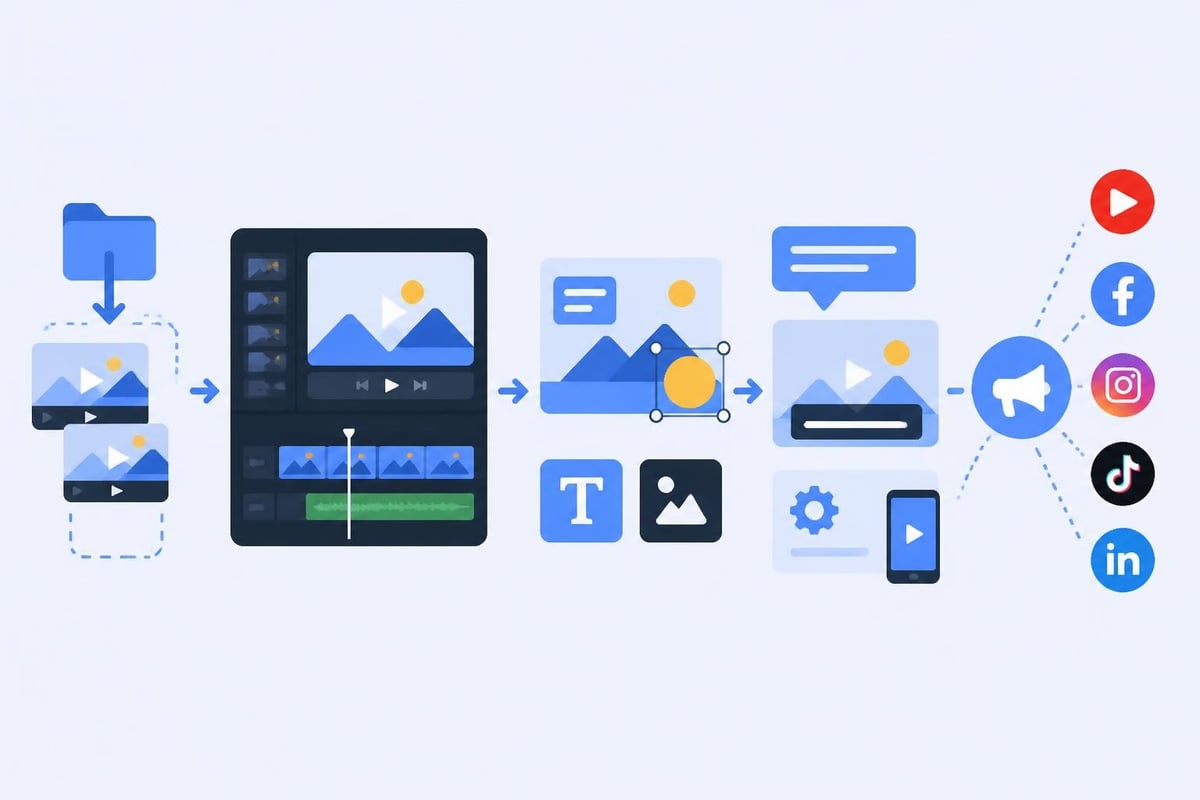
Modern video tools offer features that were exclusive to professional software just a few years ago:
- Multi-track editing with precise timeline control
- Automated caption generation using speech recognition
- Stock media libraries with millions of clips and music tracks
- Motion graphics templates that add polish without animation skills
- One-click optimization for different platform specifications
The accessibility of these tools has led to an explosion of video content, which means quality and strategic differentiation matter more than ever. Simply having video capability no longer provides competitive advantage; the execution and distribution strategy determine success.
Video Tool Selection Criteria
When evaluating video platforms, marketers should prioritize tools that align with their specific content strategy. Short-form social content requires different capabilities than long-form educational videos or product demonstrations.
According to research on data video creation tools, empirical studies of how users actually work with creation software reveal significant gaps between assumed and actual workflows. The most effective tools adapt to existing processes rather than forcing teams to adopt new methodologies.
Collaboration and Workflow Management
Content creation rarely happens in isolation. Teams need online content creation tools that facilitate collaboration while maintaining clear ownership and approval chains. The shift to distributed work has accelerated demand for platforms that enable seamless remote collaboration.
Essential collaboration features include:
- Real-time co-editing with visible cursor positions
- Comment threads attached to specific content sections
- Role-based permissions that control access levels
- Automated notifications for assignments and deadlines
- Integration with communication platforms like Slack and Teams
These capabilities transform content creation from a linear handoff process into a dynamic, iterative collaboration. Writers can see designer feedback directly on drafts, editors can approve changes in context, and stakeholders can review work without switching platforms.
| Tool Type | Primary Benefit | Best Use Case |
|---|---|---|
| Cloud document editors | Simultaneous editing | Blog posts, articles, scripts |
| Project management platforms | Task tracking and deadlines | Multi-asset campaigns |
| Digital asset management | Centralized media storage | Large teams, many assets |
| Review and approval systems | Streamlined sign-off process | Client-facing agencies |
The comprehensive overview of content creation tools highlights that integration capabilities often matter more than individual feature sets. Tools that connect easily with existing systems drive adoption and deliver faster ROI.
Analytics and Performance Measurement
Creating content without measuring its performance wastes resources and misses optimization opportunities. Online content creation tools increasingly incorporate analytics directly into creation workflows, enabling data-driven decisions from the planning stage forward.
Performance tracking capabilities now include:
- Real-time engagement metrics across channels
- A/B testing frameworks for headlines, images, and formats
- Attribution modeling that connects content to conversions
- Audience insights that inform future content planning
- Competitive benchmarking against industry standards
Smart marketers use these insights to continuously refine their content strategy. They identify which topics resonate, which formats drive action, and which distribution channels deliver the strongest ROI.
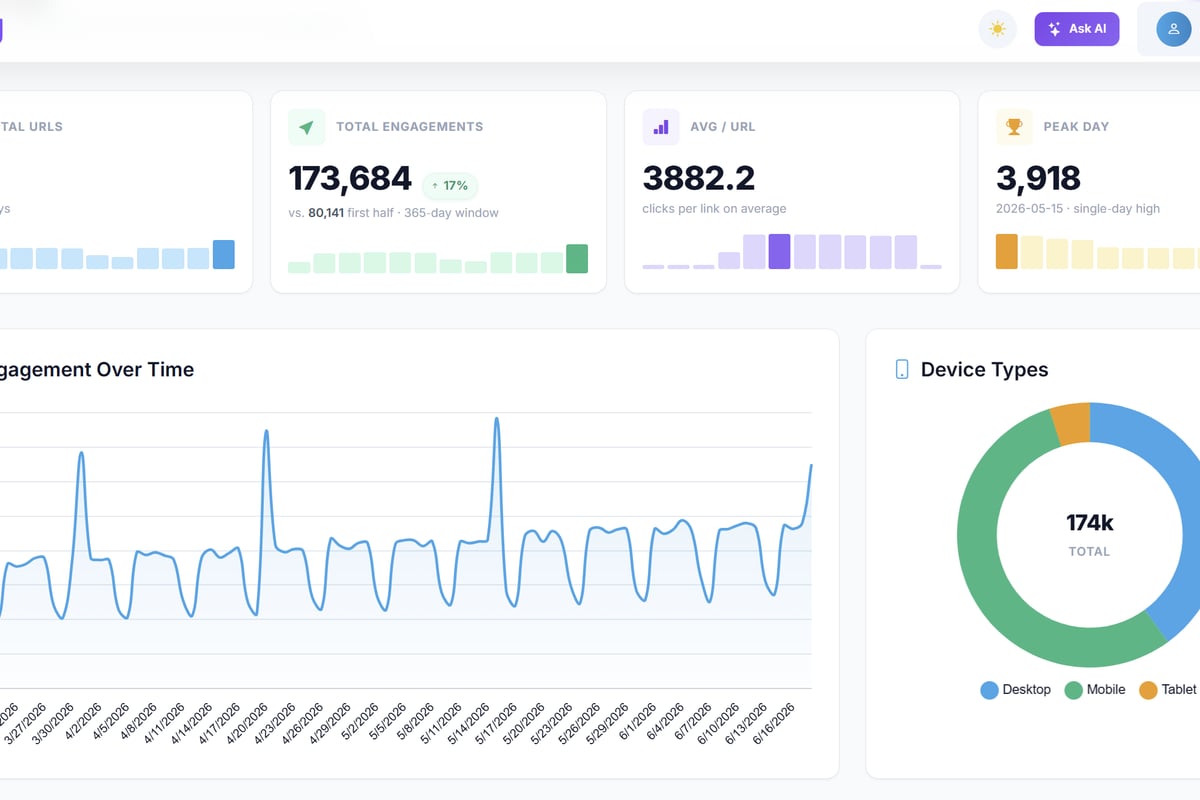
For businesses focused on link-driven campaigns and traffic analysis, specialized platforms provide deeper intelligence than general analytics tools. Trimy offers marketers the ability to track link performance with granular detail, run A/B tests on different URLs, and route traffic intelligently based on user characteristics. This level of link intelligence transforms simple content distribution into strategic campaign optimization.
Building Data-Driven Content Strategies
The most sophisticated content teams establish feedback loops where performance data directly influences creation decisions. They create content hypotheses, test them with real audiences, and iterate based on results rather than assumptions.
This approach requires online content creation tools that make data accessible and actionable. Dashboards should surface insights quickly, highlight significant patterns, and suggest optimization opportunities without requiring data science expertise.

Integration and Ecosystem Considerations
No single platform addresses every content creation need, which means modern marketing stacks consist of multiple specialized tools. The challenge shifts from finding one perfect solution to building an integrated ecosystem where tools work together efficiently.
Successful integration strategies focus on:
- API connectivity that enables automated data transfer
- Native integrations between frequently used platforms
- Centralized dashboards that aggregate data from multiple sources
- Single sign-on (SSO) implementation for security and convenience
- Consistent tagging and categorization across systems
Teams that prioritize integration save countless hours that would otherwise go to manual data transfer, duplicate entry, and reconciliation. They also reduce errors that occur when information moves between disconnected systems.
The decision to adopt new online content creation tools should always include integration assessment. Even a superior standalone tool creates friction if it cannot communicate with existing systems.
Accessibility and Inclusive Design
Content that excludes portions of your audience due to accessibility barriers represents both a missed opportunity and potential legal liability. Modern creation tools increasingly incorporate accessibility features that help marketers create inclusive content without specialized expertise.
Key accessibility features include:
- Automated alt text suggestions for images
- Contrast checkers for text and background combinations
- Caption generation for video and audio content
- Screen reader compatibility testing
- Keyboard navigation verification
These features should be built into creation workflows rather than treated as post-production additions. When accessibility becomes part of the initial creation process, it costs less and produces better results than retroactive remediation.
Cost Considerations and ROI
Online content creation tools span a wide price range, from free platforms with limited features to enterprise solutions with five-figure annual contracts. Effective budget allocation requires understanding both direct costs and hidden expenses like training time and integration work.
When evaluating tool costs, consider:
| Cost Factor | Impact Level | Evaluation Method |
|---|---|---|
| Per-user licensing | High | Multiply by team size and growth plans |
| Feature tier limitations | Medium | Map features to actual use cases |
| Training and onboarding | Medium | Estimate hours times labor costs |
| Integration development | Variable | Assess API quality and documentation |
| Switching costs | High | Consider data migration and workflow disruption |
The cheapest tool rarely delivers the best value when total cost of ownership is calculated properly. However, expensive enterprise platforms often include features that smaller teams never use, making mid-tier solutions the sweet spot for many organizations.
Security and Data Protection
Content often contains sensitive information about strategy, unreleased products, or customer data. Online content creation tools must provide robust security without creating workflow obstacles.
Essential security features include encrypted data transmission, granular access controls, audit logs that track all changes, and compliance with regulations like GDPR and CCPA. Cloud-based tools should clearly document where data is stored and who can access it.
Teams handling particularly sensitive content may require tools with on-premise deployment options or private cloud instances. These configurations provide maximum control but typically cost significantly more than standard SaaS offerings.
Emerging Trends and Future Directions
The online content creation tools landscape continues to evolve rapidly. Several trends will shape the next generation of platforms:
Artificial intelligence integration will move beyond simple automation to provide strategic recommendations based on performance data and market trends. Tools will suggest content topics, optimal posting times, and format selections based on historical patterns.
Voice and audio-first interfaces will expand as voice content grows. Tools that enable podcast creation, voice note transcription, and audio editing will become standard components of content stacks.
Augmented and virtual reality content creation will transition from experimental to practical as hardware becomes more accessible. Marketers will need tools that enable AR filter creation and 3D content development without specialized technical skills.
Personalization at scale will require tools that can generate variants of core content tailored to specific audience segments while maintaining brand consistency and quality standards.
The teams that stay ahead of these trends will gain competitive advantages as content consumption patterns shift and new platforms emerge.
Building Your Tool Stack
Selecting the right combination of online content creation tools requires understanding your team's specific needs, workflows, and growth plans. Start by auditing current processes to identify bottlenecks and inefficiencies.
A systematic selection process includes:
- Documenting all content types you produce regularly
- Mapping current tools to each content type and workflow stage
- Identifying gaps where manual work could be automated
- Evaluating 3-5 tools for each identified gap
- Running pilot tests with small teams before full deployment
- Measuring actual time savings and quality improvements
This methodical approach prevents impulse purchases based on compelling sales presentations or peer recommendations that may not apply to your situation.
Remember that the best tool stack evolves over time. Regular reviews ensure your platforms still align with business needs as your content strategy matures and market conditions change.
The right online content creation tools empower teams to produce more content, achieve higher quality, and drive better business results without proportional increases in headcount or budget. Success requires thoughtful selection, proper integration, and continuous optimization based on performance data. When you're ready to add sophisticated link management and analytics to your content stack, trimy provides the intelligence you need to transform every link into actionable insights that drive revenue growth and campaign optimization.