WhatsApp Ads: Complete Guide for Marketers in 2026
WhatsApp has evolved from a simple messaging app into a powerful advertising channel with over 2 billion active users worldwide. As businesses search for more direct ways to connect with customers, WhatsApp ads have emerged as a critical component of digital marketing strategies. These ads, primarily delivered through Meta's advertising ecosystem, enable companies to initiate conversations directly with potential customers, transforming traditional advertising into interactive, personalized experiences that drive measurable business outcomes.
Understanding WhatsApp Ads and Click-to-WhatsApp Campaigns
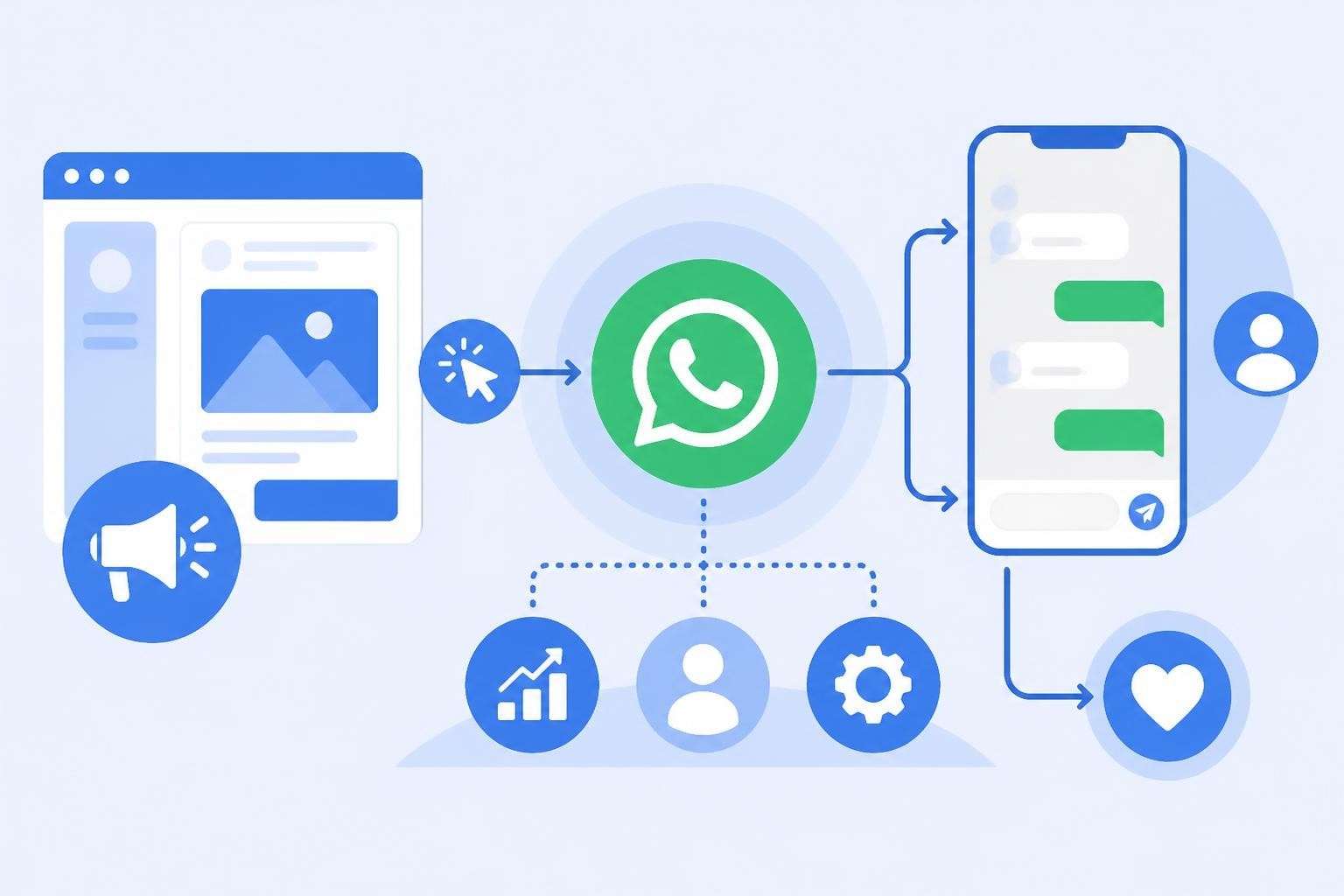
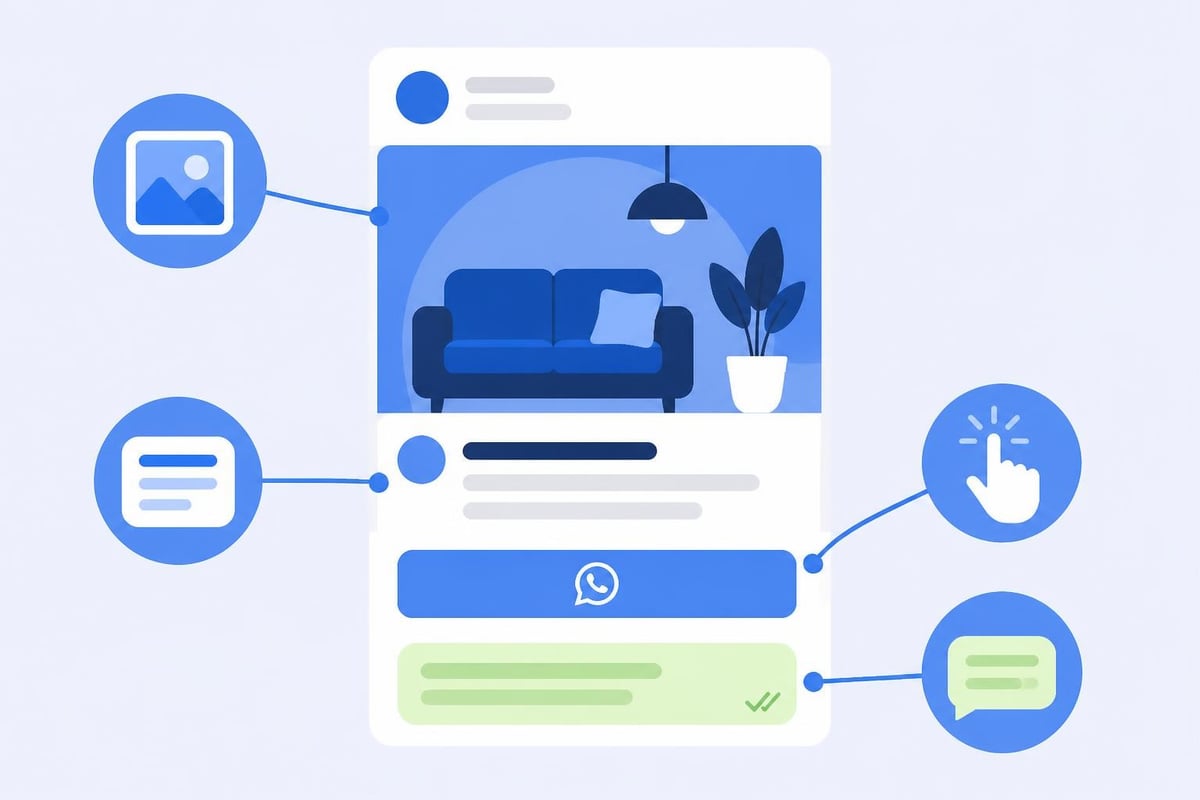
WhatsApp ads operate differently from traditional display or social media advertising. Rather than keeping users within a feed or landing page, these campaigns are designed to start conversations. The primary ad format, Click-to-WhatsApp, appears across Meta's family of apps including Facebook, Instagram, and Messenger, with a direct call-to-action that opens a WhatsApp chat thread.
When users click these ads, they're immediately directed to WhatsApp with a pre-filled message, reducing friction in the customer journey. This seamless transition makes it easier for businesses to capture high-intent leads who are ready to engage. According to Forrester's Total Economic Impact research on Meta Business Messaging, businesses using WhatsApp for customer engagement see significant returns through improved conversion rates and reduced service costs.
Where WhatsApp Ads Appear
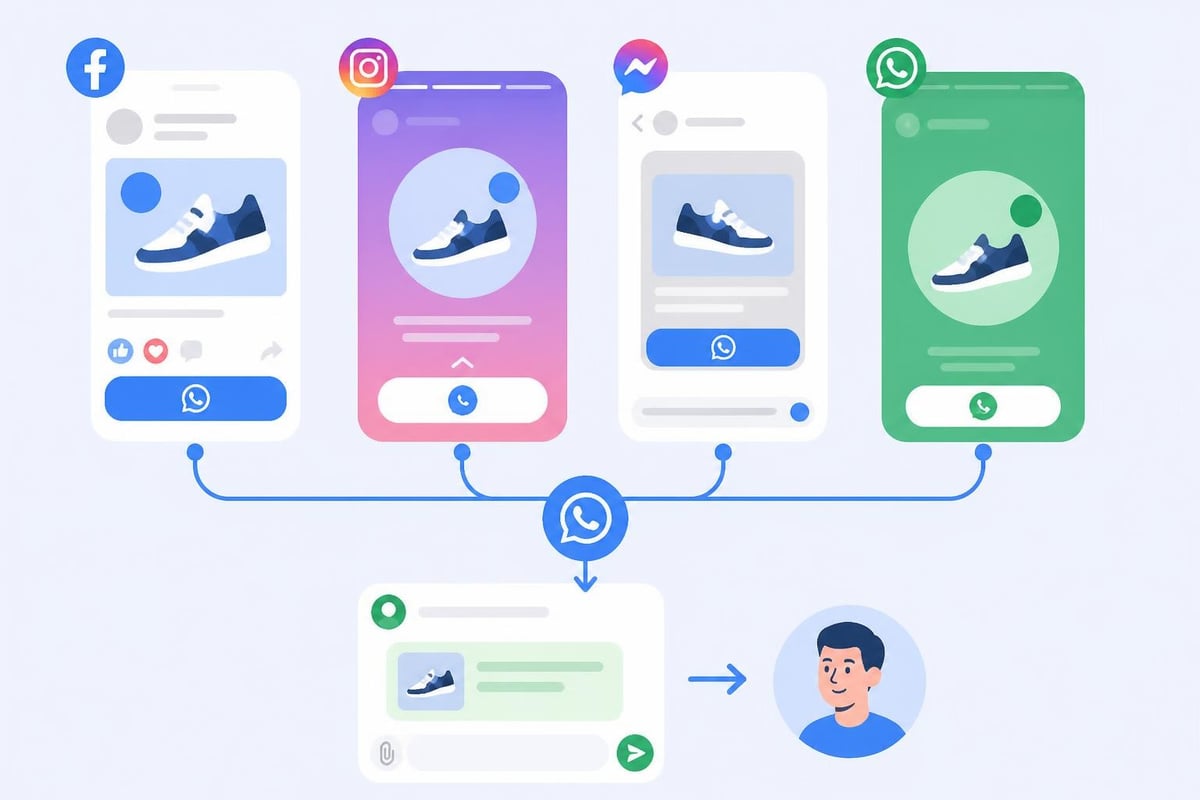
WhatsApp ads reach users across multiple touchpoints within the Meta ecosystem:
- Facebook News Feed and Stories: The most common placement for Click-to-WhatsApp campaigns
- Instagram Feed and Stories: Ideal for visual brands targeting younger demographics
- Messenger: Cross-platform messaging integration
- WhatsApp Status: Recent expansions allow ads directly within the WhatsApp environment
The announcement of Status ads marked a significant shift in WhatsApp's advertising strategy, bringing promotional content directly into the app itself. This placement offers advertisers another touchpoint, though the primary Click-to-WhatsApp format remains the most widely adopted.
Setting Up WhatsApp Ads Through Meta Ads Manager
Creating effective WhatsApp ads requires proper configuration within Meta's advertising infrastructure. The setup process connects your WhatsApp Business account with Ads Manager, enabling campaign creation, audience targeting, and performance tracking.
Prerequisites for launching WhatsApp ads:
- WhatsApp Business Account: Required for all commercial messaging
- Meta Business Manager: Central hub for ad account management
- Verified Business Profile: Builds trust with potential customers
- Catalog Integration (optional): For e-commerce product showcasing
The official WhatsApp Business guide to Click-to-WhatsApp ads provides comprehensive setup instructions, walking through account linking, message template creation, and campaign configuration. This resource is particularly valuable for small businesses launching their first conversational advertising campaigns.
Campaign Structure and Objective Selection
WhatsApp ads are built within the standard Meta Ads Manager interface, but require specific objective selection. When creating a campaign, you'll choose Messages as your objective, which unlocks WhatsApp as a destination option.
| Campaign Element | Configuration Options | Best Practice |
|---|---|---|
| Objective | Messages (required for WhatsApp) | Select based on conversation goals |
| Audience | Custom, Lookalike, Saved | Target high-intent, warm audiences first |
| Placement | Automatic or Manual | Start automatic, refine based on performance |
| Budget | Daily or Lifetime | Daily budgets offer more control for testing |
| Message Template | Quick Reply, Greeting, Pre-filled | Keep opening message brief and relevant |
The campaign structure mirrors other Meta advertising, but the conversion point shifts from website visits or app installs to conversation initiations. This fundamental difference affects how you measure success and optimize performance.
Creative Best Practices for WhatsApp Advertising
Successful WhatsApp ads require creative approaches that acknowledge the conversational nature of the platform. Unlike traditional ads that aim for clicks or impressions, these campaigns need to inspire users to start a dialogue.
Visual and Copy Strategies
Your ad creative must communicate immediate value while setting clear expectations for the conversation. Users need to understand what they'll receive by engaging through WhatsApp.
Effective creative elements include:
- Clear value proposition: What will the user gain from the conversation?
- Relevant imagery: Product shots, service demonstrations, or lifestyle contexts
- Compelling CTA: "Chat with us," "Get a quote," "Ask questions now"
- Trust signals: Business verification badges, response time indicators
The pre-filled message that appears when users click your ad deserves careful consideration. This opening message should be conversational, specific to the ad content, and easy to send without editing. Generic greetings like "Hi" miss the opportunity to reference the specific product or service that captured interest.
Message Template Design
WhatsApp Business enforces message templates to prevent spam and maintain user experience quality. Your templates need approval before campaigns launch, making planning essential.
Templates come in several categories:
- Utility templates: Order confirmations, shipping updates, appointment reminders
- Authentication templates: One-time passwords, verification codes
- Marketing templates: Promotional offers, product launches (with opt-in requirements)
Each template includes placeholders for personalization, allowing you to customize messages with customer names, order details, or product information. The approval process typically takes 24-48 hours, so build template submission into your campaign timeline.
Measuring and Optimizing WhatsApp Ad Performance
Traditional advertising metrics like click-through rates and cost-per-click apply to WhatsApp ads, but conversation quality metrics become equally important. You're not just buying clicks; you're investing in dialogue opportunities.
Key Performance Indicators
Primary metrics for WhatsApp advertising:
- Cost Per Messaging Conversation Started (CPMCS): Direct cost of initiating conversations
- Conversation Rate: Percentage of ad clicks that result in messages sent
- Response Time: How quickly your team replies to incoming messages
- Conversation-to-Conversion Rate: Messages that lead to sales or qualified leads
- Customer Acquisition Cost (CAC): Total ad spend divided by customers acquired
These metrics require integration between your WhatsApp Business account, CRM systems, and Meta Ads Manager. Proper attribution tracking becomes critical, especially as conversations may span multiple sessions before converting.
Meta Blueprint's training on Click-to-WhatsApp campaigns offers detailed modules on measurement frameworks, helping advertisers understand which metrics matter most for their specific business models.
Attribution and Link Tracking Challenges
Unlike traditional web-based campaigns where UTM parameters and pixel tracking provide clear attribution, WhatsApp ads introduce complexity. Conversations happen within the app, outside standard web analytics tracking.
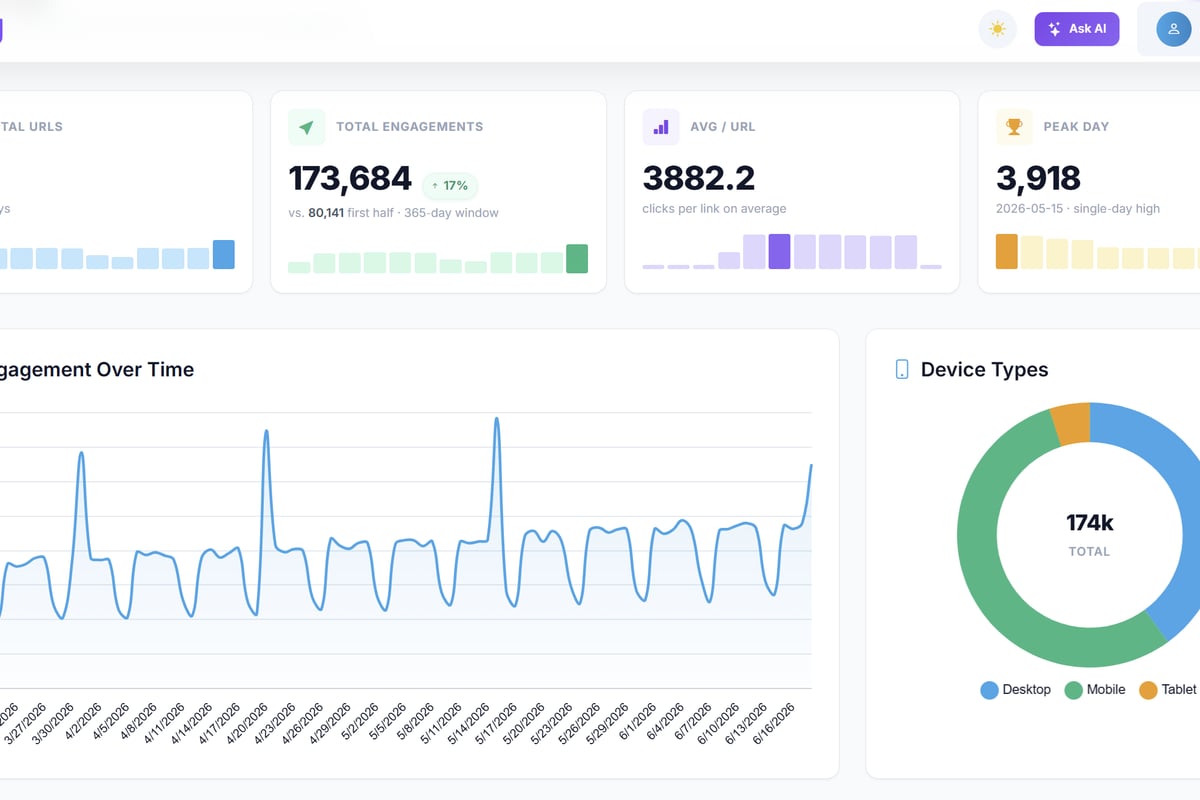
To maintain visibility into campaign performance, many marketers implement custom link structures when conversations move to booking pages, checkout flows, or information resources. This is where sophisticated link management becomes valuable. By using trackable links within WhatsApp conversations, you can bridge the gap between ad spend and revenue outcomes.
When a customer engages through a WhatsApp ad and your team shares a product link, appointment scheduler, or resource, that link should carry campaign identifiers that connect back to the original ad spend. Trimy provides the infrastructure to create these intelligent links with built-in analytics, A/B testing capabilities, and attribution tracking specifically designed for multi-channel campaigns like WhatsApp advertising.
Automation and Scaling WhatsApp Ad Campaigns
As conversation volumes grow, manual responses become unsustainable. Successful WhatsApp advertising strategies incorporate automation layers that maintain personalization while enabling scale.
Chatbot and AI Integration
Modern WhatsApp Business accounts support automated responses through chatbots and AI assistants. These tools handle common inquiries, qualify leads, and route complex questions to human agents.
Recent Meta announcements about centralized campaign management and AI support highlight the platform's commitment to making WhatsApp advertising more scalable. The integration of AI-powered features allows businesses to maintain conversation quality even during high-volume periods.
Automation opportunities include:
- Instant greeting messages acknowledging user contact
- FAQ responses for common product or service questions
- Lead qualification flows collecting customer information
- Appointment scheduling with calendar integration
- Order status lookups connected to e-commerce systems
The key is balancing automation with human touch. Conversations should feel natural and helpful, not robotic or overly scripted.
CRM and Marketing Platform Integration
To maximize WhatsApp ad effectiveness, conversation data needs to flow into your broader marketing infrastructure. Integration with CRM systems ensures that WhatsApp interactions inform your complete customer view.
HubSpot's guide to WhatsApp marketing demonstrates how conversational advertising fits within larger marketing automation strategies. By connecting WhatsApp conversations to contact records, you can trigger follow-up sequences, segment audiences based on conversation topics, and measure lifetime value of customers acquired through this channel.
| Integration Type | Capability | Business Impact |
|---|---|---|
| CRM Connection | Sync conversations to contact records | Complete customer journey visibility |
| E-commerce Platform | Product catalog access within chat | Seamless shopping experience |
| Calendar Systems | Direct appointment booking | Reduced scheduling friction |
| Analytics Tools | Conversation attribution and ROI | Accurate performance measurement |
| Email Marketing | Multi-channel nurture sequences | Coordinated customer communication |
These integrations transform WhatsApp from an isolated messaging channel into a strategic component of your customer acquisition and retention systems.
Compliance, Privacy, and Best Practices
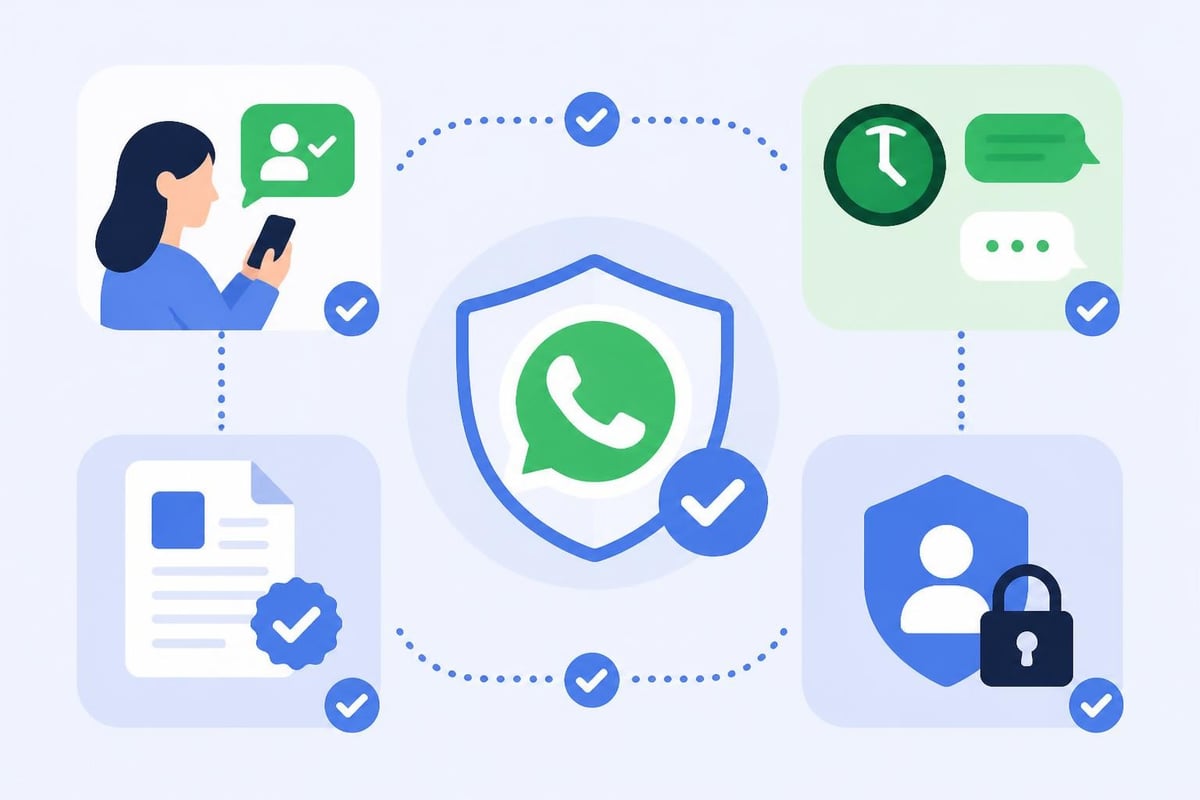
WhatsApp advertising operates within strict regulatory frameworks designed to protect user privacy and prevent spam. Understanding these requirements is essential for sustainable campaign success.
Data Handling and User Consent
WhatsApp ads must comply with both Meta's policies and broader privacy regulations including GDPR, CCPA, and regional data protection laws. The WhatsApp Business Data Transfer Addendum outlines contractual obligations for businesses using the platform.
Key compliance requirements:
- Opt-in for marketing messages: Users must explicitly consent to promotional content
- Clear opt-out mechanisms: Every message should include unsubscribe instructions
- Data retention policies: Define how long conversation data is stored
- Cross-border data transfers: Understand implications of international messaging
- Third-party sharing limitations: Restrictions on how conversation data is used
The WhatsApp Help Center documentation on ads and privacy explains user controls and how advertising appears within the platform. This transparency helps businesses set appropriate expectations and design compliant campaigns.
Avoiding Common Pitfalls
WhatsApp's low-tolerance spam policies mean that violations can result in account restrictions or permanent bans. Businesses need to approach the channel with respect for user experience.
Practices to avoid:
- Sending unsolicited promotional messages to users who only contacted you for support
- Exceeding 24-hour messaging windows without approved templates
- Using misleading ad creative that doesn't match conversation content
- Ignoring user opt-out requests or blocking attempts
- Sharing conversation data with unauthorized third parties
Maintaining high conversation quality scores requires consistent response times, relevant messaging, and positive user feedback. These quality signals influence both ad delivery costs and account standing.
Industry-Specific Applications and Use Cases
WhatsApp ads prove particularly effective for certain business models and customer journey stages. Understanding where the channel excels helps optimize campaign strategy.
High-Intent Service Industries
Businesses offering consultations, appointments, or complex services find WhatsApp advertising especially valuable. The immediate conversation capability helps answer questions and build trust before commitment.
- Real estate agents: Property inquiries and showing scheduling
- Healthcare providers: Appointment booking and pre-visit questions
- Financial services: Loan applications and advisory consultations
- Legal professionals: Case evaluations and initial consultations
- Home services: Quote requests and availability confirmation
These industries benefit from the conversational format because purchase decisions require dialogue, not just information consumption.
E-commerce and Retail Applications
Retail businesses use WhatsApp ads to reduce cart abandonment, answer product questions, and provide personalized recommendations. The direct connection to sales teams or chatbots can dramatically improve conversion rates compared to standard website traffic.
According to SocialMediaToday's coverage of Meta's messaging ad options, the integration of catalog features and AI chatbots makes WhatsApp increasingly viable for e-commerce at scale. Customers can browse products, receive personalized suggestions, and complete transactions without leaving the conversation.
Lead Generation and B2B Marketing
B2B companies leverage WhatsApp ads for qualified lead generation, using conversation flows to assess fit before routing to sales teams. The platform's international reach makes it particularly valuable for businesses serving global markets where WhatsApp dominates communication.
The ability to share documents, presentations, and media within conversations supports complex B2B sales processes that require educational content before purchase decisions.
Advanced Optimization Techniques
Experienced WhatsApp advertisers employ sophisticated strategies to reduce costs and improve conversation quality over time.
Audience Segmentation and Retargeting
Like other Meta advertising channels, WhatsApp ads benefit from precise audience targeting. Custom audiences based on website visitors, customer lists, or engagement with previous campaigns enable more relevant outreach.
Effective audience strategies:
- Warm traffic retargeting: Target visitors who viewed products but didn't purchase
- Lookalike audiences: Find new users similar to high-value customers
- Engagement-based segments: Reach users who interacted with content but haven't converted
- Geographic targeting: Focus on regions with high WhatsApp adoption
- Time-based windows: Retarget during peak consideration or decision periods
Retargeting through WhatsApp often achieves higher engagement than display ads because the conversation format feels less intrusive and more helpful.
A/B Testing Framework
Continuous testing improves WhatsApp ad performance across creative, messaging, and audience variables. Systematic experimentation reveals what resonates with your specific audience.
| Test Variable | What to Test | Success Metric |
|---|---|---|
| Ad Creative | Images, videos, carousel formats | Click-to-message rate |
| Ad Copy | Value propositions, CTAs, pain points | Conversation start rate |
| Pre-filled Message | Length, specificity, personalization | Message send rate |
| Audience | Demographics, interests, behaviors | Cost per conversation |
| Placement | Automatic vs. manual placement selection | Overall ROAS |
| Greeting Template | Automated vs. delayed human response | Conversation continuation rate |
Testing should extend beyond the ad itself to the conversation experience. Different greeting strategies, response speeds, and agent scripts all impact ultimate conversion rates.
Signal Quality and Privacy-First Attribution
As digital advertising moves toward privacy-focused measurement, WhatsApp ads face attribution challenges similar to other channels. IAB Tech Lab's guidance on signal shift and conversion value addresses how businesses can maintain performance measurement in privacy-first environments.
Strategies for improving attribution include:
- First-party data collection: Gather customer information during conversations for direct tracking
- Conversion API integration: Send server-side events to improve Meta's optimization algorithms
- Incrementality testing: Run holdout groups to measure true campaign impact
- Multi-touch attribution models: Credit WhatsApp appropriately in customer journeys with multiple touchpoints
These approaches help justify WhatsApp ad investment even when traditional pixel-based tracking provides incomplete data.
Budget Allocation and Cost Management
WhatsApp advertising costs vary significantly based on industry, geography, and competition. Understanding the economics helps set realistic expectations and appropriate budgets.
Pricing Models and Cost Benchmarks
WhatsApp ads use Meta's standard auction-based pricing, but costs are measured in conversations started rather than simple clicks or impressions. Average costs per messaging conversation started range from two dollars to fifteen dollars depending on factors including:
- Geographic market: Developed markets typically cost more than emerging ones
- Industry competition: Finance and real estate face higher costs than local services
- Audience quality: Warm retargeting audiences cost less than cold prospecting
- Creative relevance: Higher relevance scores reduce delivery costs
- Conversation quality: Accounts with better engagement histories see lower costs
Unlike website traffic where costs end at the click, WhatsApp advertising requires budget for both ad delivery and conversation management. Staffing or chatbot costs should factor into total cost-per-acquisition calculations.
Scaling Budget Efficiently
Start with modest daily budgets while testing creative and audience combinations. Once you identify winning formulas, scale gradually to maintain efficiency.
Budget scaling best practices:
- Increase daily budgets by no more than twenty percent every three days
- Maintain multiple ad sets to preserve learning and distribution
- Monitor conversation quality scores as volume increases
- Ensure response infrastructure can handle increased message volume
- Set maximum cost-per-conversation bid caps to protect margins
Rapid budget increases often trigger delivery volatility and efficiency losses. Patient, data-driven scaling produces better long-term results.
Future Trends in WhatsApp Advertising
The WhatsApp advertising landscape continues evolving as Meta expands capabilities and businesses discover new applications. Several trends are shaping the channel's trajectory through 2026 and beyond.
Emerging developments include:
- Enhanced commerce features: In-app checkout and payment processing reducing conversation friction
- Richer media formats: Video calls, interactive catalogs, and augmented reality product previews
- Deeper AI integration: More sophisticated chatbots handling complex queries and personalization
- Cross-platform messaging: Unified inbox experiences across WhatsApp, Instagram, and Messenger
- Performance partnerships: Affiliate and influencer integrations with trackable WhatsApp links
These advancements will make WhatsApp advertising more measurable, scalable, and integrated with broader marketing technology stacks. Businesses that develop conversational marketing capabilities now will gain competitive advantages as the channel matures.
The shift toward conversation-based advertising reflects broader consumer preferences for direct, personalized brand interactions. WhatsApp ads represent not just another advertising channel, but a fundamental rethinking of how businesses connect with customers in increasingly crowded digital environments.
WhatsApp ads offer marketers a powerful tool to transform advertising from passive content consumption into active customer conversations, driving higher engagement and conversion rates across industries. As you implement these strategies, remember that every conversation started through advertising creates an opportunity to build relationships that extend far beyond a single transaction. Trimy helps you maximize these opportunities by providing the link intelligence and tracking infrastructure needed to measure WhatsApp campaign performance accurately, optimize conversation flows through A/B testing, and connect messaging interactions to revenue outcomes, ensuring every advertising dollar drives measurable business growth.