Go to Market Strategy: Build, Launch, and Scale in 2026
Every product launch, expansion, or pivot depends on how effectively you bring your offering to customers. A go to market strategy defines the roadmap from concept to revenue, aligning product capabilities with customer needs, distribution channels, and measurable outcomes. Whether launching a new feature set or entering an adjacent market, your go to market approach determines speed to revenue, customer acquisition cost, and long-term market position. For platforms managing customer touchpoints and conversion paths, the clarity of your go to market execution directly impacts how prospects discover, evaluate, and adopt your solution.
Understanding Go to Market Strategy Fundamentals
A go to market strategy is the comprehensive plan that defines how a company will engage target customers and achieve competitive advantage when launching a product or entering a market. Unlike a marketing plan, which focuses on promotion and awareness, a go to market framework encompasses product positioning, pricing architecture, sales methodology, distribution channels, and post-sale customer success.
The framework addresses four critical questions: Who is the buyer? What problem are you solving? How will customers discover and purchase? Why should they choose you over alternatives? Answering these questions requires cross-functional alignment between product, marketing, sales, and customer success teams. Research from Forrester demonstrates that companies adopting audience-based go to market strategies see 2.5 times higher revenue growth than those using product-centric approaches.
Core Components of Effective Go to Market Planning
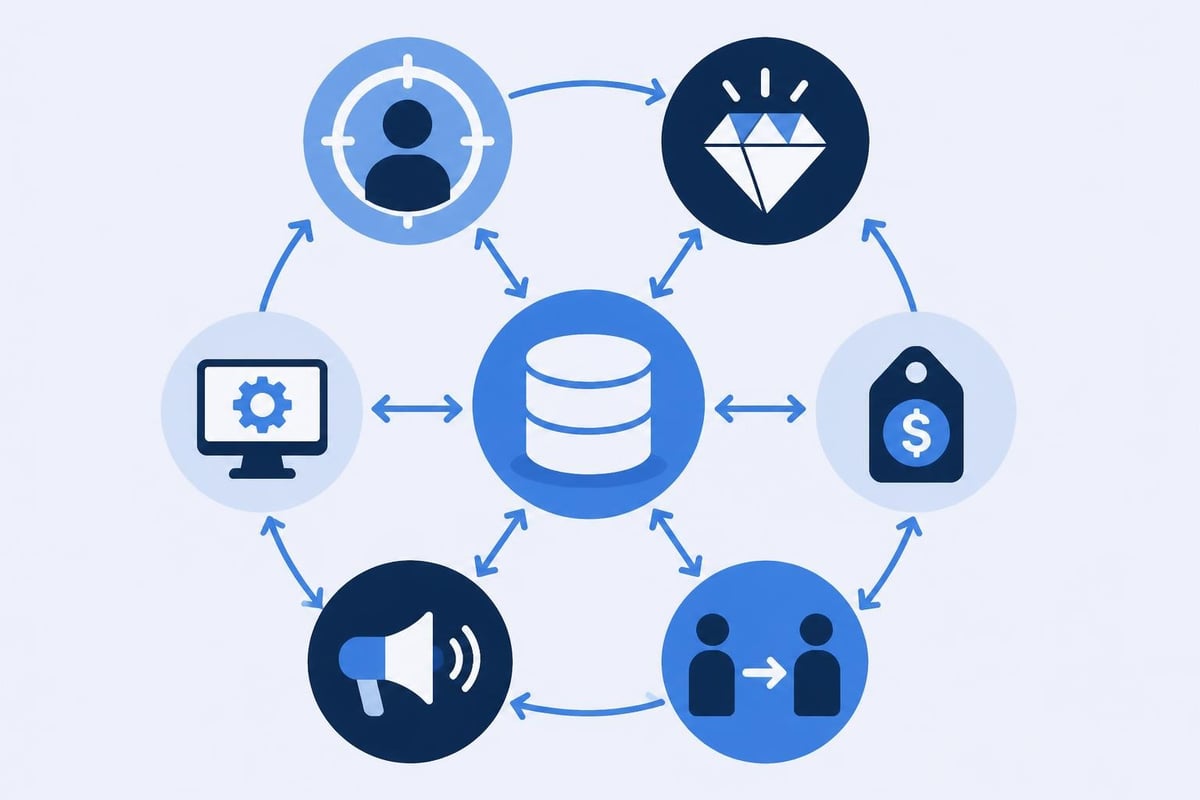
Every successful go to market strategy contains several interconnected elements that work together to drive customer acquisition and retention:
- Ideal Customer Profile (ICP): Detailed definition of target accounts, including firmographics, technographics, behavioral signals, and buying committee structure
- Value Proposition: Clear articulation of unique benefits, differentiation points, and measurable outcomes customers can expect
- Pricing and Packaging: Strategic price positioning, tier architecture, and bundling decisions aligned to customer willingness to pay
- Sales Motion: Whether product-led growth, inside sales, field sales, channel partnerships, or hybrid approaches drive revenue
- Channel Strategy: Distribution mechanisms including direct, indirect, digital, and marketplace channels
- Enablement Systems: Content, tools, training, and processes that equip customer-facing teams to execute effectively
The integration of these components determines execution velocity. Companies that document their go to market strategy in a shared framework experience 33% faster time to market and 28% higher win rates compared to those with informal approaches.
Designing Your Go to Market Framework
Building a go to market framework starts with deep customer research and market intelligence. Before defining tactics, invest time understanding buyer behavior, competitive positioning, and market dynamics that will shape your approach.
Defining Your Ideal Customer Profile
Your ICP represents the specific characteristics of accounts most likely to buy, find value, and expand their relationship with your solution. For link management and marketing intelligence platforms, this typically includes marketing operations teams, growth marketers, product managers, and developers who manage customer acquisition funnels.
Effective ICP definitions go beyond basic demographics. They incorporate technographic data (existing marketing stack components), behavioral signals (content consumption patterns, feature usage, expansion indicators), and organizational structure (decision-making processes, budget authority, procurement cycles). The more granular your ICP definition, the more efficiently you can allocate go to market resources.
| ICP Dimension | Example Criteria | Data Source |
|---|---|---|
| Company Size | 50-500 employees, $10M-$100M revenue | Firmographic databases |
| Technology Stack | Uses marketing automation, CRM, analytics platforms | Technographic tools |
| Role & Function | Marketing Operations Manager, Growth Lead, Product Manager | LinkedIn, intent data |
| Behavioral Signals | Downloads optimization content, attends webinars, visits pricing pages | Website analytics |
| Pain Points | Link tracking complexity, attribution gaps, campaign measurement | Customer interviews |
Selecting Distribution Channels and Sales Motions
Your go to market approach must align with how your ideal customers prefer to evaluate, purchase, and adopt solutions. The choice between product-led growth (PLG), sales-led, or hybrid motions depends on product complexity, average contract value, and buyer sophistication.
Product-led growth works when the product delivers immediate value, requires minimal configuration, and enables self-service adoption. Marketing platforms with freemium tiers, self-onboarding, and usage-based pricing often leverage PLG to acquire customers efficiently. The go to market motion emphasizes in-product experiences, viral loops, and conversion optimization from free to paid tiers.
Sales-led approaches suit complex solutions requiring customization, integration planning, or enterprise procurement processes. This go to market motion invests in sales development representatives (SDRs), account executives, and solution engineers who guide prospects through evaluation and implementation. Insights from a16z on sales and go to market tactics highlight how startups balance early sales-led motions with product-led expansion as they scale.
Hybrid models combine product-led acquisition with sales-assisted conversion for higher-value accounts. Users may start with self-service adoption, then engage sales teams as usage grows or when they require enterprise features like custom domains, advanced analytics, or dedicated support.
Building Messaging and Positioning Architecture
Clear, differentiated messaging forms the foundation of go to market execution. Your positioning must articulate the specific problem you solve, the unique approach you take, and the measurable outcomes customers achieve.
Crafting Value Propositions That Convert
Effective value propositions connect product capabilities directly to business outcomes. Rather than listing features, translate functionality into economic impact, efficiency gains, or competitive advantages. For link management platforms, this means emphasizing how advanced analytics, A/B testing, and intelligent routing translate to higher conversion rates, lower customer acquisition costs, and improved attribution clarity.
Structure your value proposition using this framework:
- Customer context: Acknowledge the specific challenge your ICP faces
- Unique capability: Explain your differentiated approach to solving that challenge
- Measurable outcome: Quantify the business impact customers can expect
- Proof point: Provide evidence through data, case studies, or customer testimonials
Test messaging across different buyer personas within your ICP. Marketing operations leaders care about workflow efficiency and data integration. Growth marketers prioritize conversion optimization and testing velocity. Developers value API flexibility and implementation simplicity. Your go to market materials should address each persona's priorities while maintaining consistent core positioning.
Developing Content for Each Buying Stage
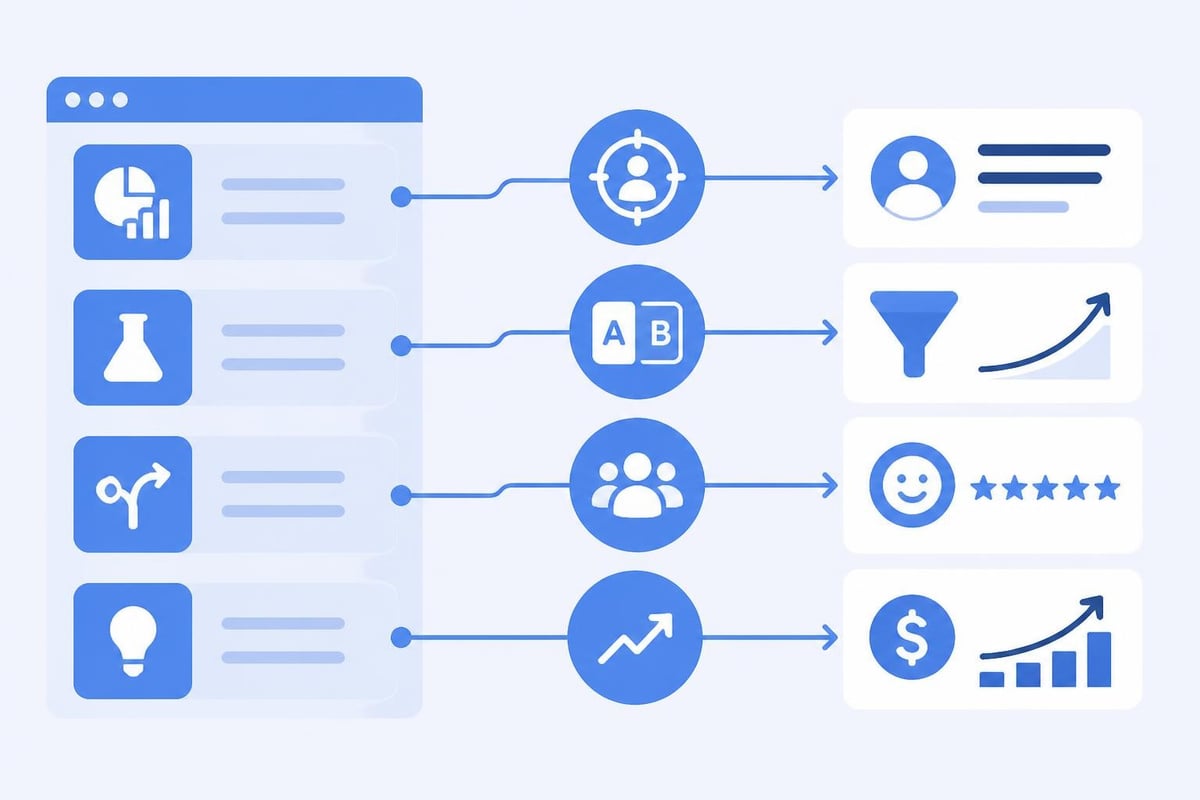
Your go to market content strategy must support prospects through awareness, consideration, decision, and adoption stages. Map content types to buyer journey phases and ensure each asset moves prospects toward the next conversion milestone.
- Awareness stage: Educational content addressing industry challenges, trend analysis, best practice guides, and thought leadership that builds authority
- Consideration stage: Product comparisons, capability overviews, use case demonstrations, and framework guides that help buyers evaluate solutions
- Decision stage: Pricing transparency, security documentation, integration guides, customer stories, and ROI calculators that reduce purchase friction
- Adoption stage: Implementation playbooks, training resources, optimization guides, and expansion use cases that drive value realization
According to Harvard Business Review research on integrating modern marketing into go to market models, companies that align content production with actual buying signals achieve 47% higher engagement rates and 35% shorter sales cycles.
Executing Launch and Optimization Cycles
A well-designed go to market strategy means nothing without disciplined execution. Launch planning requires cross-functional coordination, clear success metrics, and mechanisms for rapid iteration based on market feedback.
Planning Pre-Launch Activities
Successful launches begin weeks or months before general availability. Pre-launch activities build market awareness, validate messaging, and create early momentum that accelerates post-launch adoption.
Beta programs allow you to test product-market fit, gather testimonials, and refine positioning before full launch. Select beta participants who match your ICP and can provide substantive feedback on value delivery. Document their success metrics to create case studies for broader go to market campaigns.
Sales enablement ensures customer-facing teams can articulate value, handle objections, and guide prospects through evaluation. Develop battle cards, demo scripts, objection-handling guides, and competitive intelligence. HubSpot's practical GTM guide provides templates for enablement materials that reduce ramp time for new sales team members.
Channel partnerships extend your go to market reach through complementary platforms, resellers, or technology integrations. Identify partners whose customer base overlaps with your ICP and whose offerings create natural workflow adjacencies. For link management platforms, partnerships with marketing automation tools, CRM systems, or analytics platforms create integration value and joint go to market opportunities.
Measuring Go to Market Performance
Define leading and lagging indicators that reveal go to market effectiveness across the customer lifecycle. Leading indicators predict future performance and enable proactive adjustments. Lagging indicators confirm outcomes but offer limited opportunity for real-time optimization.
| Metric Type | Leading Indicators | Lagging Indicators |
|---|---|---|
| Awareness | Website traffic, content downloads, webinar registrations | Brand awareness surveys, share of voice |
| Consideration | Demo requests, free trial signups, pricing page views | Marketing qualified leads (MQLs), pipeline created |
| Decision | Sales engagement, proof of concept deployments | Win rate, average contract value, sales cycle length |
| Adoption | Activation rate, time to value, feature adoption | Net revenue retention, expansion revenue, customer lifetime value |
Establish measurement cadences that allow for meaningful iteration. Weekly reviews of leading indicators identify early warning signs or unexpected opportunities. Monthly business reviews assess lagging indicators and inform strategic adjustments to your go to market approach.
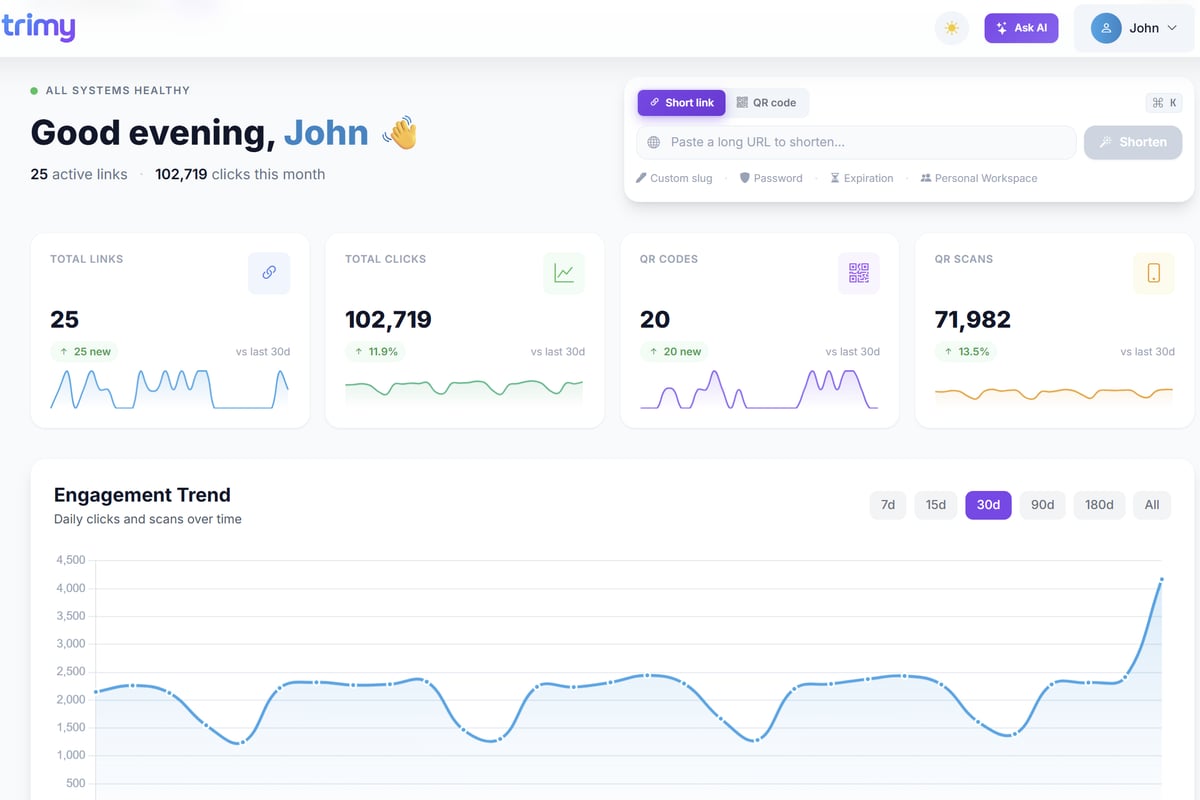
When managing marketing campaigns and customer acquisition funnels, having visibility into link performance, conversion paths, and traffic sources becomes essential to go to market optimization. Trimy provides the advanced analytics, A/B testing capabilities, and intelligent routing needed to transform every link into a measurable revenue signal, enabling marketers to optimize their go to market execution with precise data rather than assumptions.
Optimizing Go to Market Systems for Scale
As you move from launch to growth, your go to market systems must evolve to support increasing complexity, team size, and market coverage. Scaling requires process standardization, technology enablement, and organizational alignment.
Building Revenue Operations Foundations
Revenue operations (RevOps) aligns marketing, sales, and customer success around shared goals, unified data, and integrated systems. A strong RevOps function eliminates silos that fragment the customer experience and create inefficiency in your go to market execution.
Data integration ensures customer information, engagement signals, and performance metrics flow seamlessly between systems. When marketing automation, CRM, product analytics, and customer success platforms share data, teams gain complete visibility into customer journeys and can coordinate touchpoints effectively. Deloitte Digital's research on RevOps alignment shows that companies with mature RevOps capabilities achieve 19% faster revenue growth and 15% higher profitability.
Process standardization creates repeatable playbooks for common go to market scenarios: lead qualification, opportunity progression, expansion conversations, and renewal management. Document best practices, automate routine tasks, and establish governance for exceptions. Standardization reduces variability, improves forecast accuracy, and accelerates new team member productivity.
Adapting to Market Feedback
Your initial go to market strategy represents your best hypothesis about customer needs, competitive positioning, and effective channels. Market feedback will inevitably reveal gaps between assumptions and reality. High-performing organizations build feedback loops that capture insights and translate them into strategic adjustments.
Establish systematic mechanisms for gathering customer intelligence:
- Win/loss analysis: Interview customers who chose your solution and prospects who selected competitors to understand decision drivers
- Usage analytics: Track feature adoption, workflow patterns, and engagement signals that reveal actual value realization
- Customer advisory boards: Create structured forums where customers share strategic feedback on product direction and market needs
- Sales team debriefs: Capture field intelligence about competitive dynamics, pricing pressure, and emerging use cases
Schedule quarterly go to market reviews that assess strategy effectiveness and authorize adaptations. Review ICP accuracy, messaging resonance, channel productivity, and competitive positioning. Be willing to make substantive changes when evidence supports different approaches.
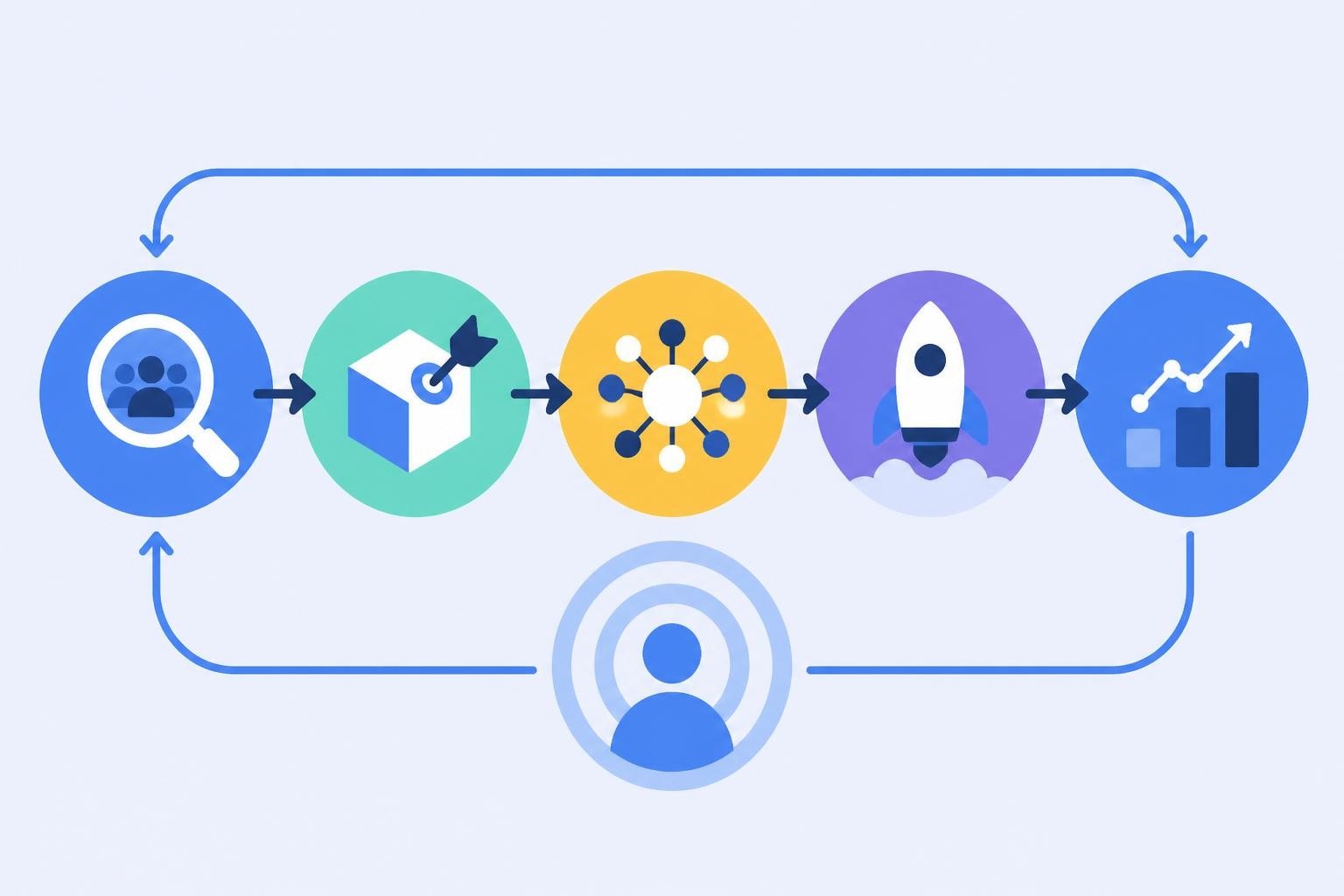
<image_prompt alt="Go to market optimization cycle">Continuous improvement feedback loop for go to market strategy: market execution generates performance data and customer insights, analysis identifies optimization opportunities, strategic adjustments update ICP, messaging, and channel tactics, refined approach returns to market execution creating ongoing cycle</image_image>
Aligning Product and Go to Market Roadmaps
Product development and go to market execution must operate in tight coordination. Product capabilities enable go to market promises, while market feedback shapes product prioritization. Misalignment creates credibility gaps when go to market teams make promises that products cannot deliver or when valuable features languish without market awareness.
Creating Integrated Planning Processes
Establish joint planning forums where product and go to market leaders collaborate on prioritization, launch timing, and market positioning. These forums should occur monthly at minimum, with more frequent touchpoints during active launch cycles.
Feature prioritization should incorporate both customer value and go to market impact. A capability that addresses a top customer pain point creates natural sales conversation opportunities and competitive differentiation. Conversely, features that solve edge cases may generate minimal go to market momentum regardless of development effort.
Launch sequencing balances product readiness, market conditions, and organizational capacity. Avoid launching multiple major initiatives simultaneously, which fragments attention and dilutes messaging impact. Create a 12-month launch calendar that spaces releases strategically and allows adequate preparation time for each go to market campaign.
Positioning evolution requires continuous dialogue between product and go to market teams. As product capabilities expand, messaging must evolve to reflect new use cases, buyer personas, and competitive differentiation. Bain's research on aligning product and go to market priorities identifies capability diagnostics that help technology companies scale go to market systems effectively.
Leveraging Customer Success as Growth Engine
Your go to market strategy should not end at initial purchase. Customer success drives expansion revenue, reduces churn, and generates referrals that lower acquisition costs. Treat post-sale engagement as integral to your go to market framework rather than a separate operational function.
Implement structured customer success playbooks for onboarding, adoption milestones, health monitoring, and expansion conversations. Track leading indicators like feature adoption rate, support ticket volume, and product engagement frequency that predict renewal likelihood. Proactive outreach to at-risk accounts protects revenue, while strategic expansion conversations with high-engagement customers accelerate growth.
Build customer advocacy programs that convert satisfied users into go to market assets. Case studies, reference calls, review site testimonials, and speaking opportunities provide social proof that accelerates prospect decisions. Systematic advocacy programs generate 3-5 times more referrals than ad hoc requests.
Implementing Technology for Go to Market Excellence
Modern go to market execution requires sophisticated technology that provides visibility, automation, and intelligence across the customer lifecycle. The right technology stack amplifies team productivity and enables data-driven decision making.
Essential Go to Market Technology Categories
Your go to market technology stack should address five core functional areas:
- Customer data platform: Unified customer profiles aggregating behavioral data, engagement signals, and transaction history from all touchpoints
- Marketing automation: Campaign execution, lead nurturing, scoring, and attribution across email, advertising, content, and events
- Sales enablement: Content management, training delivery, conversation intelligence, and performance analytics for revenue teams
- Analytics and business intelligence: Dashboards, reports, and predictive models that surface insights and guide strategic decisions
- Communication and collaboration: Tools that facilitate cross-functional alignment, project management, and knowledge sharing
Evaluate technology investments based on strategic impact rather than feature completeness. Prioritize platforms that integrate well with existing systems, scale with business growth, and provide flexibility for evolving go to market approaches.
Optimizing Digital Touchpoints
Every digital interaction represents an opportunity to advance prospects through your go to market funnel. Website visits, content downloads, email opens, and link clicks generate behavioral signals that inform segmentation, personalization, and timing decisions.
Link management becomes strategically important when running multi-channel campaigns, testing messaging variations, or attributing revenue to specific touchpoints. Advanced link intelligence reveals which channels drive qualified traffic, how messaging resonates with different segments, and where conversion friction occurs in customer journeys.
Track link performance metrics including click-through rates, conversion rates by traffic source, geographic distribution, device breakdowns, and temporal patterns. Use A/B testing to optimize calls to action, landing page variants, and promotional tactics. Smart routing directs traffic to personalized experiences based on visitor attributes, campaign context, or behavioral history.
A successful go to market strategy integrates customer insight, competitive positioning, channel optimization, and measurement discipline into a cohesive framework that drives predictable revenue growth. As market conditions evolve and customer expectations shift, continuous refinement of your go to market approach ensures sustained competitive advantage. When executing campaigns across multiple channels and touchpoints, having precise visibility into link performance, conversion paths, and attribution becomes essential. Trimy delivers the advanced analytics, A/B testing, and intelligent routing that transform every link into actionable revenue intelligence, enabling you to optimize your go to market execution with data-driven precision.