Marketing Budget Template Guide for Smart Marketers

Planning your marketing spend without a structured framework is like navigating without a map. A marketing budget template provides the foundation for strategic resource allocation, performance tracking, and financial accountability across all your campaigns. Whether you're managing paid ads, content marketing, or link intelligence tools, a well-designed template transforms scattered expenses into actionable insights that drive better business decisions.
Understanding the Essential Components of a Marketing Budget Template
A comprehensive marketing budget template serves as your financial command center, organizing every dollar spent across channels, campaigns, and time periods. The most effective templates balance granular detail with high-level visibility, allowing you to track individual campaign costs while maintaining a clear picture of overall marketing investment.
Core elements every template must include:
- Channel-level budget allocation (paid search, social media, email, content)
- Fixed costs (software subscriptions, salaries, retainer fees)
- Variable costs (ad spend, freelancer fees, campaign-specific expenses)
- Performance metrics tied to spending (CAC, ROAS, CPL)
- Time-period tracking (monthly, quarterly, annual)
The distinction between fixed and variable costs proves particularly important for link management and analytics platforms. When you invest in tools that track campaign performance, those subscription costs represent fixed infrastructure that supports multiple variable campaigns throughout the year.
Building Your Budget Framework
Start with your total available marketing budget, then work backward through strategic priorities. Most successful marketing leaders allocate budgets based on proven channel performance, growth objectives, and competitive positioning rather than arbitrary percentages.
Consider using Grove Financial's marketing budget template as a starting point, which includes channel-level tracking and ROI calculations designed for marketing leaders who need to justify expenditures to executives.
Structuring Your Marketing Budget Template by Category
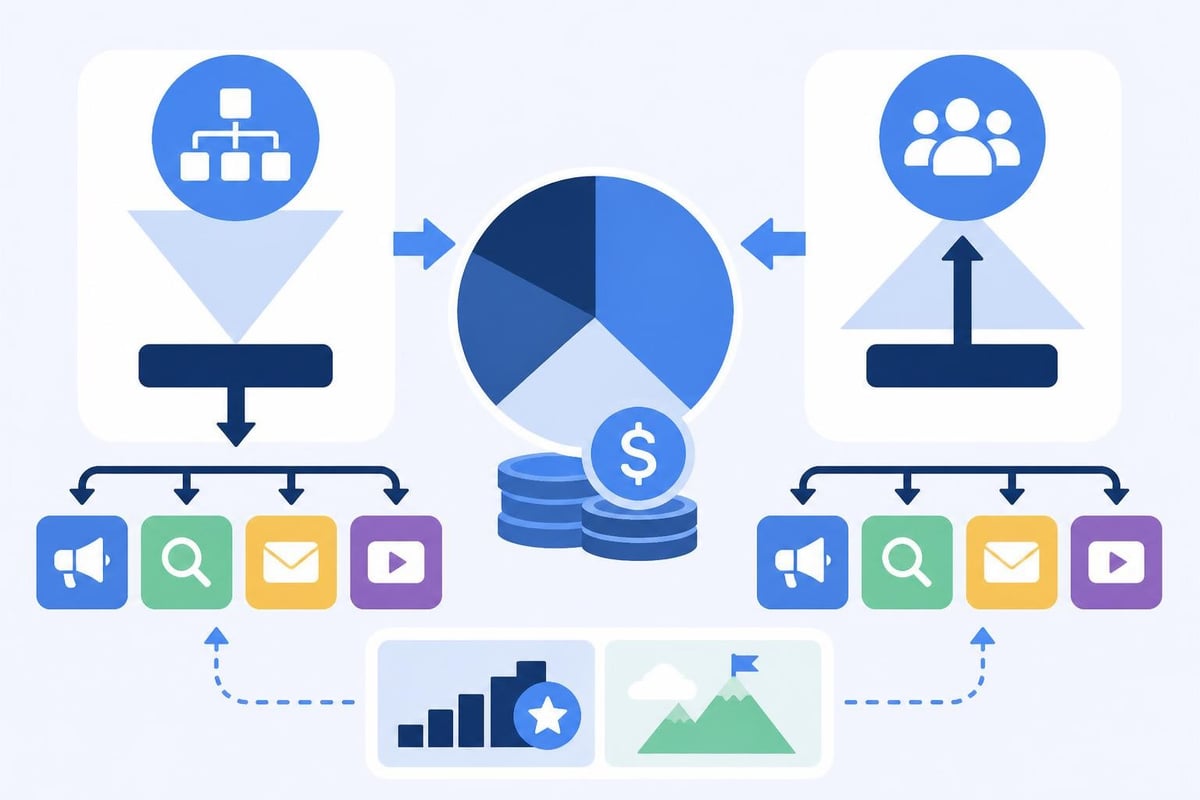
Organizing your marketing budget template by strategic categories rather than random line items creates clarity and enables better decision-making. The category structure should reflect how your team actually plans and executes campaigns, not just how accounting prefers to see expenses.
| Budget Category | Typical % Range | Key Components | Tracking Priority |
|---|---|---|---|
| Digital Advertising | 30-50% | PPC, social ads, display, retargeting | High - daily monitoring |
| Content & SEO | 15-25% | Content creation, optimization, tools | Medium - weekly review |
| Marketing Technology | 10-20% | Analytics, automation, CRM, link management | Medium - monthly assessment |
| Events & Sponsorships | 5-15% | Conferences, webinars, partnerships | Low - per-event basis |
| Brand & Creative | 10-20% | Design, video, brand assets | Low - project-based |
Digital advertising requires the most granular tracking because budgets fluctuate daily based on performance. Your marketing budget template should accommodate both planned spend and actual costs with automatic variance calculations.
Marketing technology deserves special attention in your budget structure. Platforms that provide link intelligence, analytics, and campaign optimization deliver value across multiple channels, making their ROI calculation more complex but potentially more impactful than single-channel tools.
Quarterly Planning Within Your Annual Template
Break annual budgets into quarterly allocations that account for seasonal fluctuations, product launches, and market conditions. A rigid annual number divided by twelve rarely reflects marketing reality.
Consider creating separate worksheet tabs for each quarter while maintaining a rollup summary that tracks year-to-date spending against annual targets. Demand Metric's marketing budget template offers excellent visual comparison features for actual versus budgeted spend across time periods.
Tracking Campaign-Level Expenses and Performance
While high-level budget categories provide strategic oversight, campaign-level tracking delivers the actionable insights that improve marketing effectiveness. Your marketing budget template should connect spending directly to measurable outcomes for every significant campaign.
Campaign tracking requirements:
- Unique campaign identifier and date range
- Total budget allocated to the campaign
- Actual spend broken down by day or week
- Key performance metrics (impressions, clicks, conversions)
- Cost per result (CPM, CPC, CPA, CAC)
- Revenue or pipeline attributed to the campaign
This granular approach reveals which campaigns deliver efficient customer acquisition and which drain budget without proportional returns. For link-driven campaigns, tracking the performance of shortened URLs, UTM parameters, and traffic sources becomes essential to understanding true campaign ROI.
Integrating Link Performance Data
Modern marketing budget templates must account for link-level intelligence that shows how different traffic sources perform. When you send traffic through tracked links, you gather data about user behavior, conversion paths, and channel effectiveness that should inform future budget decisions.
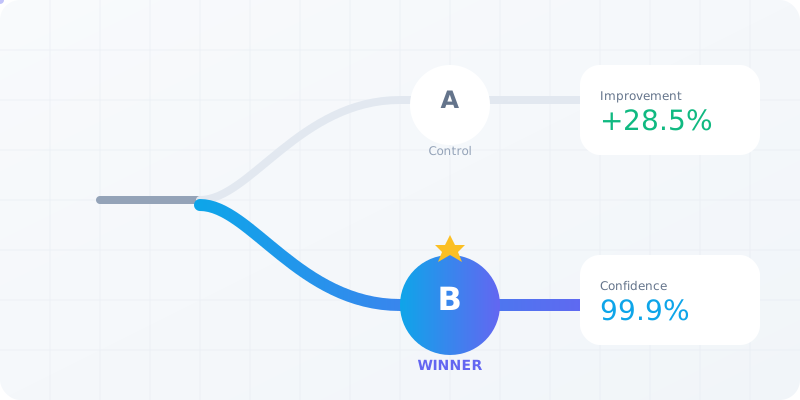
Track spending and results for each link destination, traffic source combination, and A/B test variant. This approach is particularly valuable for marketers running multi-channel campaigns where the same offer appears across paid search, social media, and email with different messaging and creative approaches.
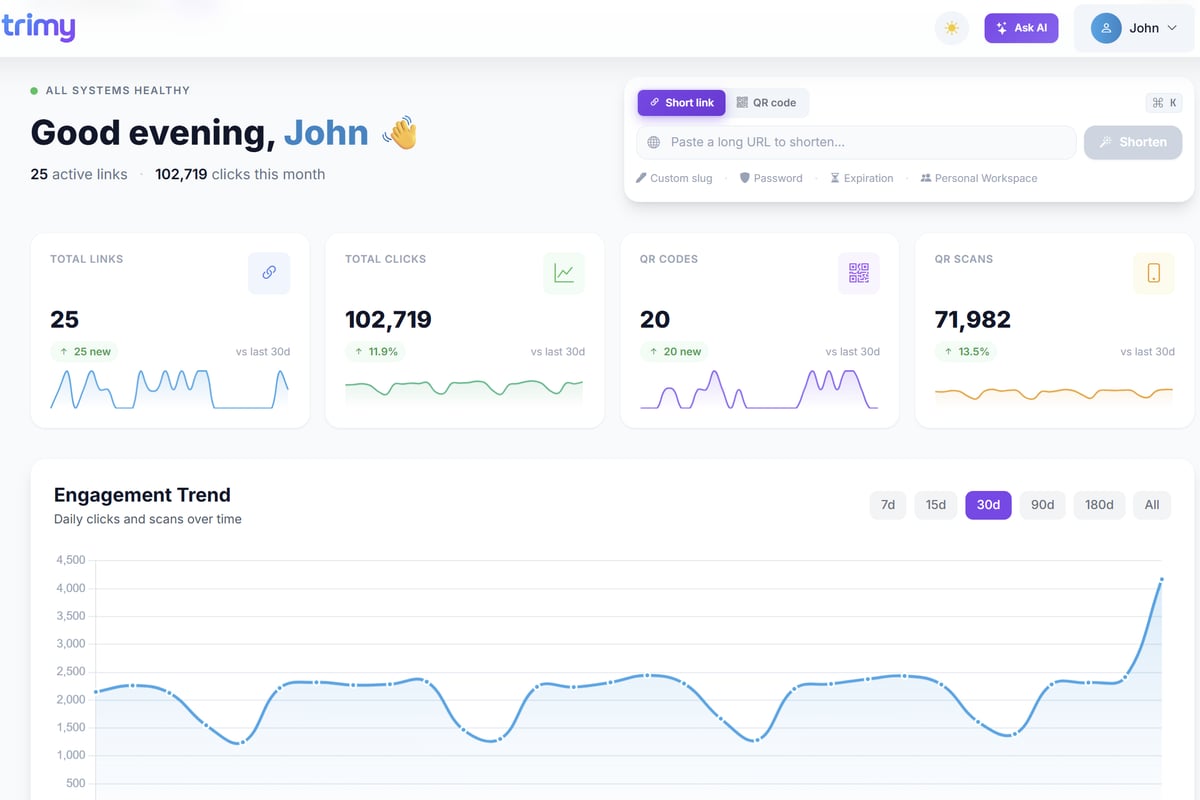
By connecting budget data with link performance metrics, you create a feedback loop that continuously improves allocation decisions. Trimy enables this connection by providing advanced analytics and A/B testing capabilities that transform your links into revenue signals, helping you identify which campaigns and channels deserve increased investment.

Building Formulas and Automation Into Your Template
Manual data entry kills productivity and introduces errors that compromise budget accuracy. A professional marketing budget template leverages formulas, conditional formatting, and data validation to minimize manual work while maintaining data integrity.
Essential formula categories:
- Summation formulas that automatically total category spending
- Variance calculations showing actual versus budgeted amounts
- Percentage calculations for budget allocation and spend rates
- Performance metrics that divide costs by results (CPA, ROAS, ROI)
- Conditional formatting that highlights overspending or underutilization
The AdSights marketing budget template demonstrates effective use of live rollup formulas that aggregate channel spending automatically, saving hours of manual calculation while providing real-time visibility into budget utilization.
Creating Dynamic Budget Scenarios
Advanced marketing budget templates include scenario planning capabilities that model different spending levels and their projected outcomes. Build separate sections or worksheets that test "what-if" scenarios for budget increases, channel shifts, or efficiency improvements.
For example, create a scenario that shows projected results if you shift 20% of your display advertising budget into search campaigns based on current performance data. Include formulas that calculate expected impressions, clicks, and conversions based on historical performance metrics.
Adapting Your Template for Different Marketing Models
Your marketing budget template structure should align with your business model and go-to-market strategy. B2B companies with long sales cycles need different tracking mechanisms than e-commerce brands focused on immediate transactions.
| Business Model | Budget Focus | Key Metrics | Template Features |
|---|---|---|---|
| B2B SaaS | Lead generation, nurture | MQL, SQL, CAC, LTV | Pipeline attribution, multi-touch tracking |
| E-commerce | Direct response, ROAS | ROAS, CPA, cart value | Product-level budgets, daily optimization |
| Marketplace | Two-sided acquisition | CAC by user type, GMV | Separate budgets for supply/demand |
| Content/Media | Audience growth | CPM, engagement, subscribers | Content category budgets, distribution costs |
Link management platforms serve all these models but with different emphasis. B2B marketers track links through long nurture sequences, while e-commerce teams optimize links for immediate conversion. Your marketing budget template should reflect these different optimization goals.
Industry-Specific Considerations
Different industries face unique budget challenges that require template customization. Healthcare marketing operates under strict compliance requirements, financial services balances brand and performance, and technology companies often invest heavily in developer evangelism and technical content.
Etropo's industry-specific templates provide pre-built structures with realistic channel allocations and tool recommendations tailored to various verticals, offering a practical starting point that reflects actual industry spending patterns.
Connecting Budget Data to Strategic Goals
A marketing budget template becomes truly valuable when it connects spending to business objectives rather than just tracking expenses. Every budget line should tie back to strategic priorities like customer acquisition, market expansion, product launch, or brand awareness.
Strategic alignment framework:
- Define quarterly business objectives with measurable targets
- Assign budget allocations to each objective
- Map campaigns and channels to specific objectives
- Track spending and performance against objective-level targets
- Reallocate based on objective progress and changing priorities
This approach transforms your template from an accounting tool into a strategic planning instrument. When executives question marketing spend, you can demonstrate exactly how each dollar supports specific business goals with measurable outcomes.
Quarterly Business Reviews Using Budget Data
Prepare quarterly business reviews by exporting data from your marketing budget template into presentation-ready formats. Focus on three key stories: where money went, what results it generated, and how you'll optimize future spending based on learnings.
Include year-over-year comparisons that show budget evolution, efficiency improvements, and changing channel mix. Highlight both wins and failures with specific numbers that demonstrate learning and continuous improvement.

Maintaining and Updating Your Marketing Budget Template
Budget templates require regular maintenance to remain useful throughout the year. Establish a consistent schedule for updating actual spend, reviewing variances, and adjusting forecasts based on new information.
Monthly maintenance checklist:
- Input actual spending for all categories and campaigns
- Review variance reports and investigate significant differences
- Update remaining budget forecasts based on current run rates
- Adjust allocations if performance data suggests optimization opportunities
- Archive completed campaigns and set up new campaign tracking
Quarterly maintenance should include more substantial reviews. Reassess channel effectiveness, evaluate new marketing opportunities, and potentially restructure budget categories to better reflect evolving strategy.
Version Control and Collaboration
Marketing budgets involve multiple stakeholders including marketing leadership, finance teams, and campaign managers. Implement version control practices that track changes, maintain audit trails, and prevent conflicting updates.
Consider using ProjectManager's marketing budget template as a collaborative foundation that multiple team members can access while maintaining data integrity through proper permissions and change tracking.
Advanced Budget Template Features for Sophisticated Marketers
Beyond basic tracking, advanced marketing budget templates incorporate predictive modeling, attribution analysis, and optimization recommendations that guide strategic decisions.
Advanced capabilities include:
- Multi-touch attribution modeling that allocates credit across touchpoints
- Predictive spend pacing that forecasts month-end and quarter-end totals
- Automated alerts when campaigns approach budget limits
- Integration with analytics platforms for automated data imports
- Cohort analysis showing customer acquisition costs by time period
These features transform your template from a reactive tracking tool into a proactive management system that identifies opportunities and risks before they fully materialize.
Building Custom Dashboards
Create visual dashboards that present budget data in immediately understandable formats for different audiences. Executives need high-level summaries with trend lines, while campaign managers require detailed performance breakdowns.
Use conditional formatting to highlight key metrics, create sparklines that show spending trends, and build comparison charts that reveal performance differences across channels, campaigns, or time periods.
Integrating External Data Sources
The most powerful marketing budget templates pull data automatically from advertising platforms, analytics tools, and CRM systems rather than relying solely on manual entry. This integration ensures accuracy, saves time, and enables real-time decision-making.
Integration opportunities:
- Advertising platform APIs (Google Ads, Facebook Ads, LinkedIn)
- Web analytics data (traffic sources, conversion rates, user behavior)
- CRM revenue data (closed deals, pipeline value, customer lifetime value)
- Link management platforms (click data, conversion tracking, A/B test results)
- Financial systems (invoices, payment processing, vendor management)
When your marketing budget template connects to link intelligence platforms, you gain visibility into which specific URLs, campaigns, and traffic sources deliver the best return on investment. This connection enables sophisticated analysis that goes far beyond simple channel-level reporting.
Data Refresh Strategies
Determine appropriate refresh frequencies for different data types. Advertising spend might update daily, while CRM revenue attribution could refresh weekly. Balance data freshness against API limits and processing overhead.
The Vena Solutions template demonstrates effective use of built-in formulas and pre-formatted dashboards that simplify data organization while maintaining flexibility for custom analysis.
A well-structured marketing budget template transforms financial planning from a compliance exercise into a strategic advantage that guides smarter spending decisions and proves marketing value. When you combine disciplined budget tracking with performance analytics and continuous optimization, you create a framework that consistently improves marketing efficiency and business outcomes. Trimy enhances this framework by providing the link intelligence and advanced analytics that connect your marketing spend to measurable results, turning every tracked link into a revenue signal that informs better budget allocation.