Marketing Automation for Small Businesses in 2026
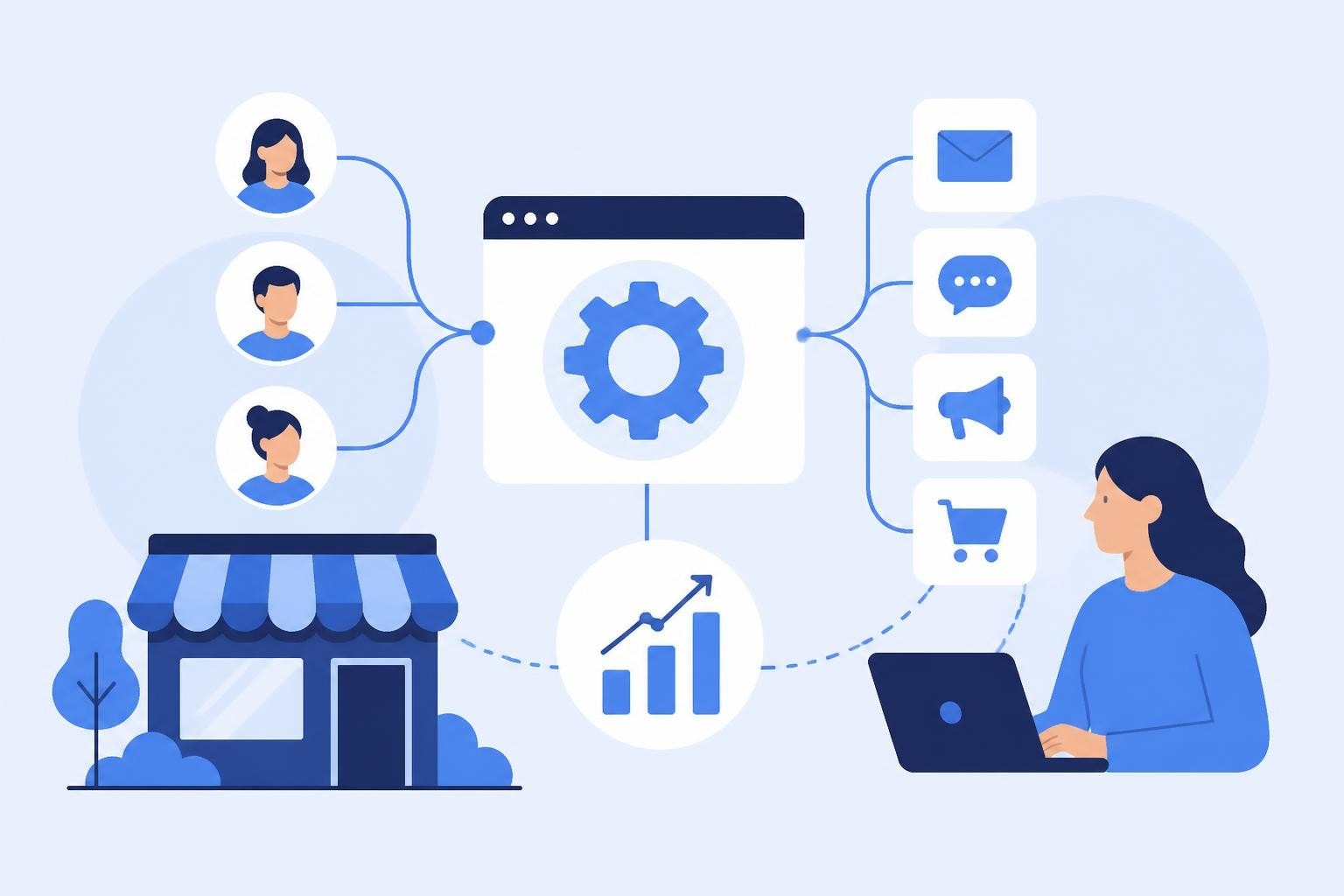
Small businesses face a unique challenge in 2026: competing with enterprise-level marketing teams while operating with limited budgets and personnel. Marketing automation for small businesses has evolved from a luxury to a necessity, enabling lean teams to execute sophisticated campaigns, nurture leads continuously, and track performance across every touchpoint. The technology democratizes advanced marketing capabilities, allowing businesses with three-person teams to achieve what previously required departments of specialists.
Understanding Marketing Automation Fundamentals
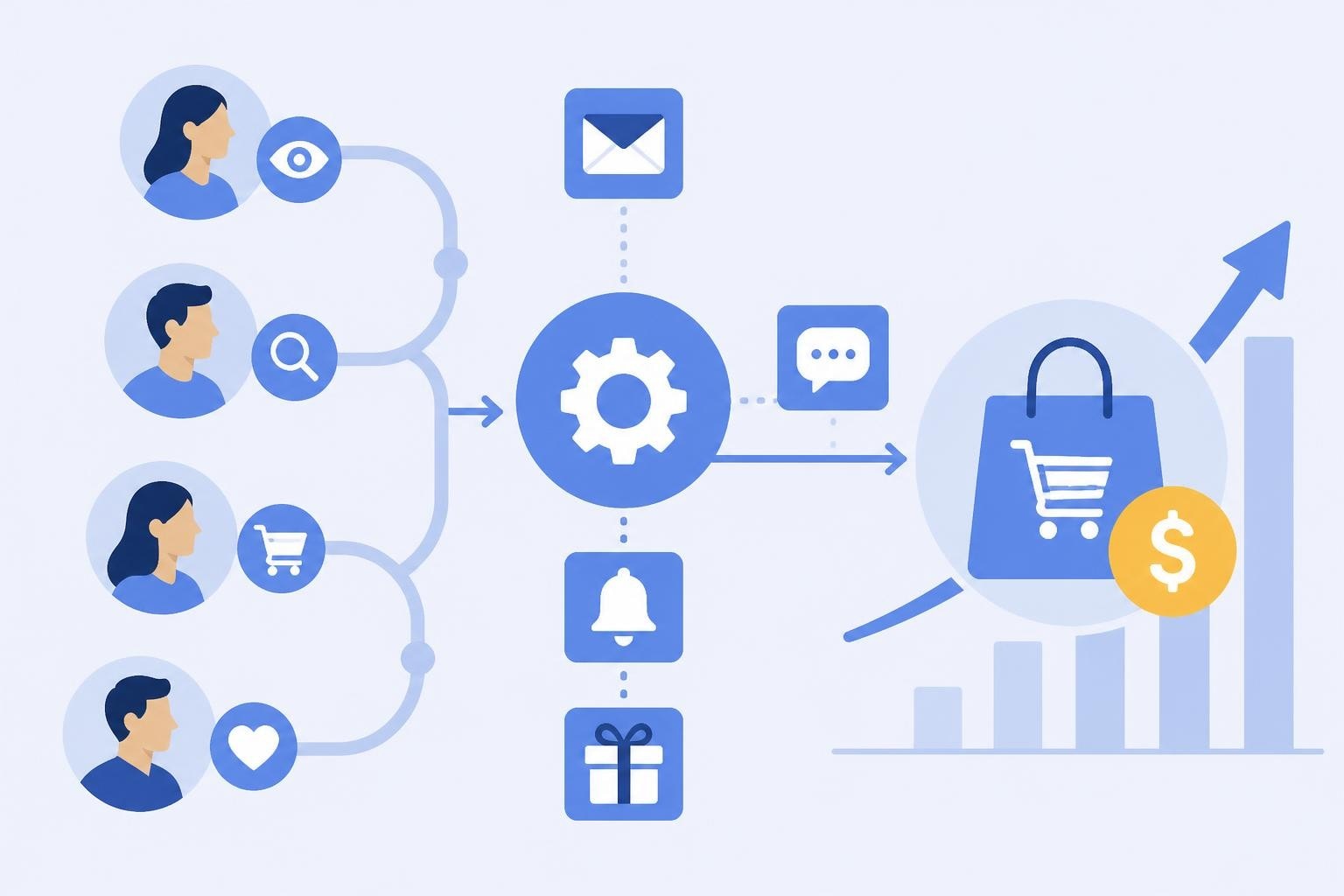
Marketing automation represents software platforms and technologies designed to automate repetitive marketing tasks, segment audiences, and deliver personalized experiences at scale. Rather than manually sending emails, tracking website visitors, or updating customer records, businesses create workflows that execute these activities automatically based on predefined triggers and conditions.
The core components include email marketing sequences, lead scoring systems, customer relationship management integration, and behavioral tracking. When a prospect downloads a whitepaper, the system automatically adds them to a nurture sequence, assigns a lead score, and notifies sales when they reach qualification thresholds.
Why Small Businesses Need Automation Now
The digital landscape has fragmented consumer attention across dozens of platforms and channels. Small businesses must maintain presence on social media, email, search engines, and review sites while personalizing interactions for increasingly sophisticated buyers. Implementing marketing automation helps small businesses scale operations efficiently without proportionally increasing headcount.
Key drivers include:
- Resource constraints: Small teams cannot manually manage thousands of customer interactions daily
- Competition pressure: Larger competitors deploy automation, setting customer experience expectations
- Data complexity: Modern campaigns generate massive data volumes requiring automated analysis
- Customer expectations: Buyers expect immediate, personalized responses regardless of business size
Research shows businesses using automation see 14.5% increases in sales productivity and 12.2% reductions in marketing overhead. These efficiency gains directly impact profitability for organizations operating on thin margins.
Selecting the Right Automation Tools
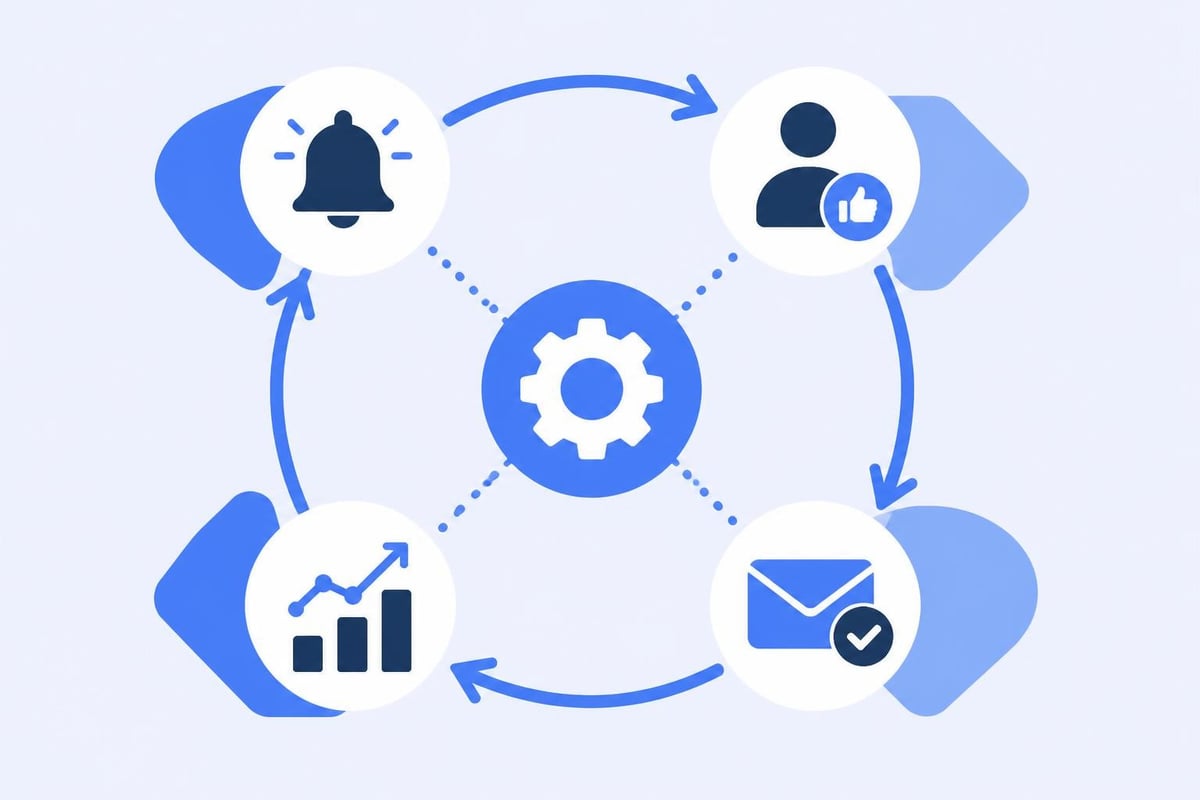
The marketing automation landscape offers solutions ranging from free basic platforms to enterprise systems costing thousands monthly. Small businesses must balance functionality needs against budget constraints while ensuring room for growth.
| Platform Type | Best For | Typical Cost | Key Features |
|---|---|---|---|
| All-in-One | Businesses wanting single platform | $50-$500/month | Email, CRM, landing pages, analytics |
| Email-Focused | Email-centric marketing strategies | $15-$200/month | Sequences, segmentation, A/B testing |
| CRM-Integrated | Sales and marketing alignment | $25-$300/month | Lead scoring, pipeline management, attribution |
| Specialized | Specific channel automation | $30-$150/month | Social scheduling, SMS campaigns, webinars |
When evaluating platforms, prioritize integration capabilities with existing tools. Your automation system should connect with your website analytics, customer database, payment processor, and communication channels. Disconnected systems create data silos that undermine automation benefits.
Essential Features for Small Business Success
Not all automation features deliver equal value for resource-constrained organizations. Focus on capabilities that directly impact revenue or significantly reduce time investment.
Must-have features include:
- Behavioral email triggers: Send messages based on specific customer actions
- Segmentation tools: Group contacts by characteristics, behaviors, or engagement levels
- Landing page builders: Create conversion-focused pages without developer assistance
- A/B testing capabilities: Optimize campaigns through systematic experimentation
- Analytics dashboards: Track performance metrics in real-time visual formats
- Mobile responsiveness: Ensure campaigns display correctly across devices
Advanced features like predictive analytics and AI-powered content recommendations provide value but should come after mastering fundamental automation workflows. Start with basic trigger sequences before investing in sophisticated machine learning models.
Building Effective Automation Workflows
Marketing automation for small businesses succeeds or fails based on workflow design quality. Poorly constructed sequences irritate customers, damage brand reputation, and waste resources. Effective workflows anticipate customer needs, deliver value at each touchpoint, and guide prospects toward conversion naturally.
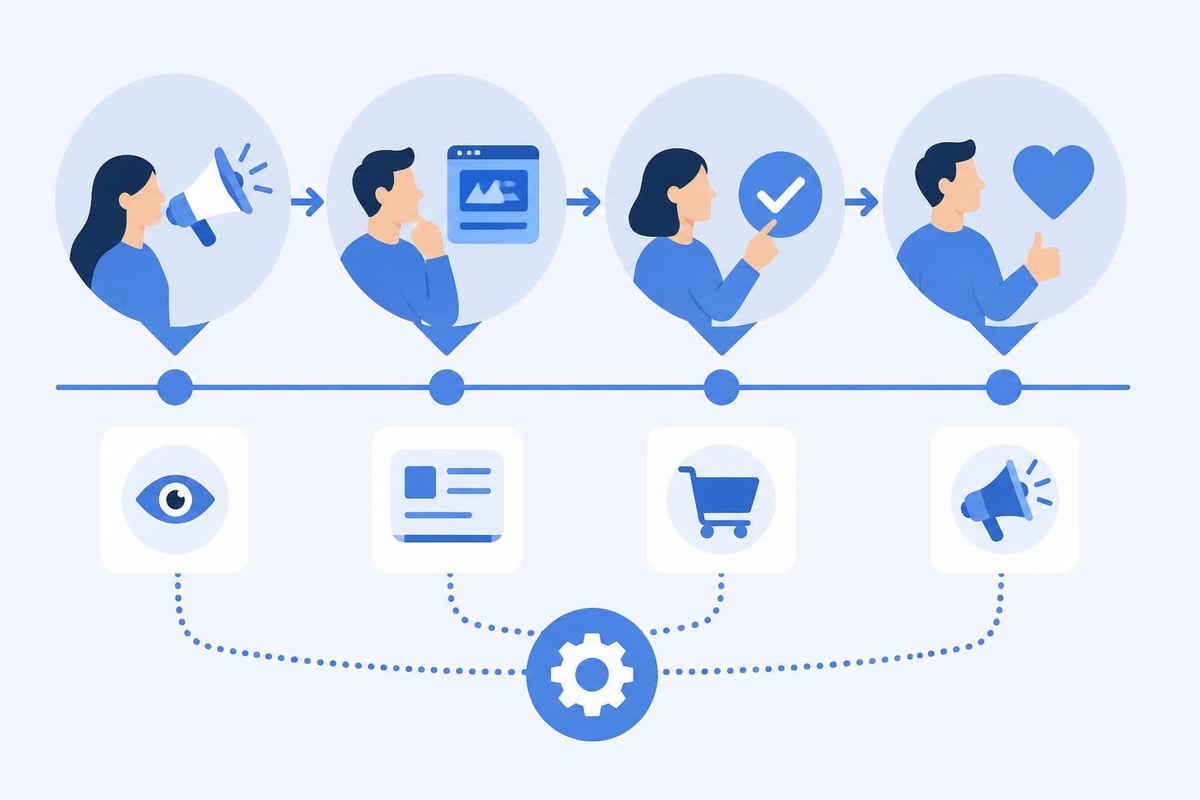
Begin by mapping your customer journey from initial awareness through purchase and beyond. Identify key decision points, common questions, and friction areas where prospects typically abandon. Design automation sequences that address these specific moments with relevant, helpful content.
Welcome Series Architecture
New subscriber welcome sequences represent the highest-engagement opportunity in email marketing. Contacts expect immediate acknowledgment and remain most receptive to messaging in the first 72 hours after signup.
Effective welcome series structure:
- Immediate confirmation (0 minutes): Verify subscription, set expectations, deliver promised lead magnet
- Value demonstration (24 hours): Share best content, highlight key features, establish expertise
- Engagement invitation (48 hours): Ask questions, request preferences, encourage interaction
- Social proof (96 hours): Present testimonials, case studies, success metrics
- Conversion opportunity (7 days): Introduce primary offer with special new subscriber incentive
Each email should stand alone as valuable content while contributing to the sequence's overall conversion objective. Avoid aggressive sales pitches in favor of educational material that positions your business as the logical solution.
Tracking and Attribution for Smarter Campaigns
The true power of marketing automation for small businesses emerges through comprehensive tracking and multi-touch attribution. Understanding which channels, messages, and touchpoints drive conversions allows strategic resource allocation and continuous optimization.
Modern customers interact with brands across numerous touchpoints before purchasing. They might discover your business through social media, research on your website, receive several emails, and finally convert through a retargeted ad. Without proper tracking, you cannot identify which elements actually influenced the decision.
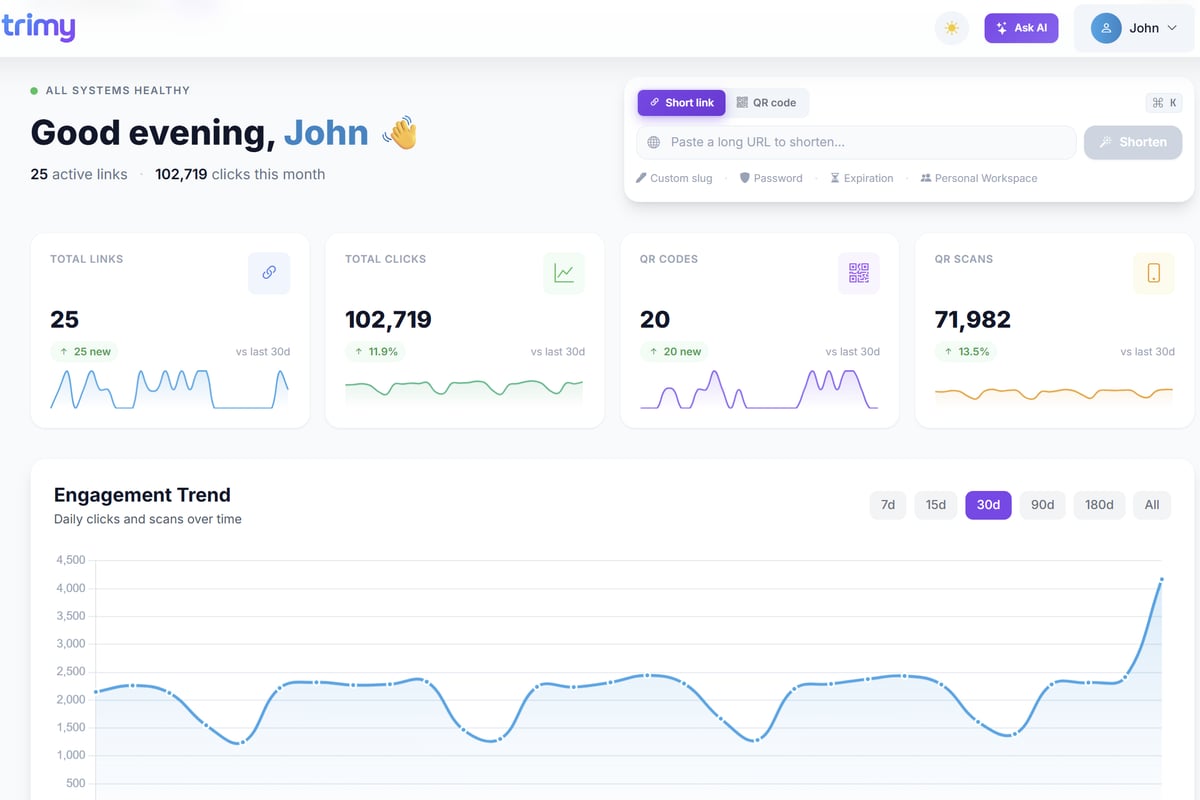
Understanding email marketing automation and tracking capabilities helps businesses connect customer actions with campaign elements. UTM parameters, conversion pixels, and integrated analytics platforms work together to create comprehensive attribution models.
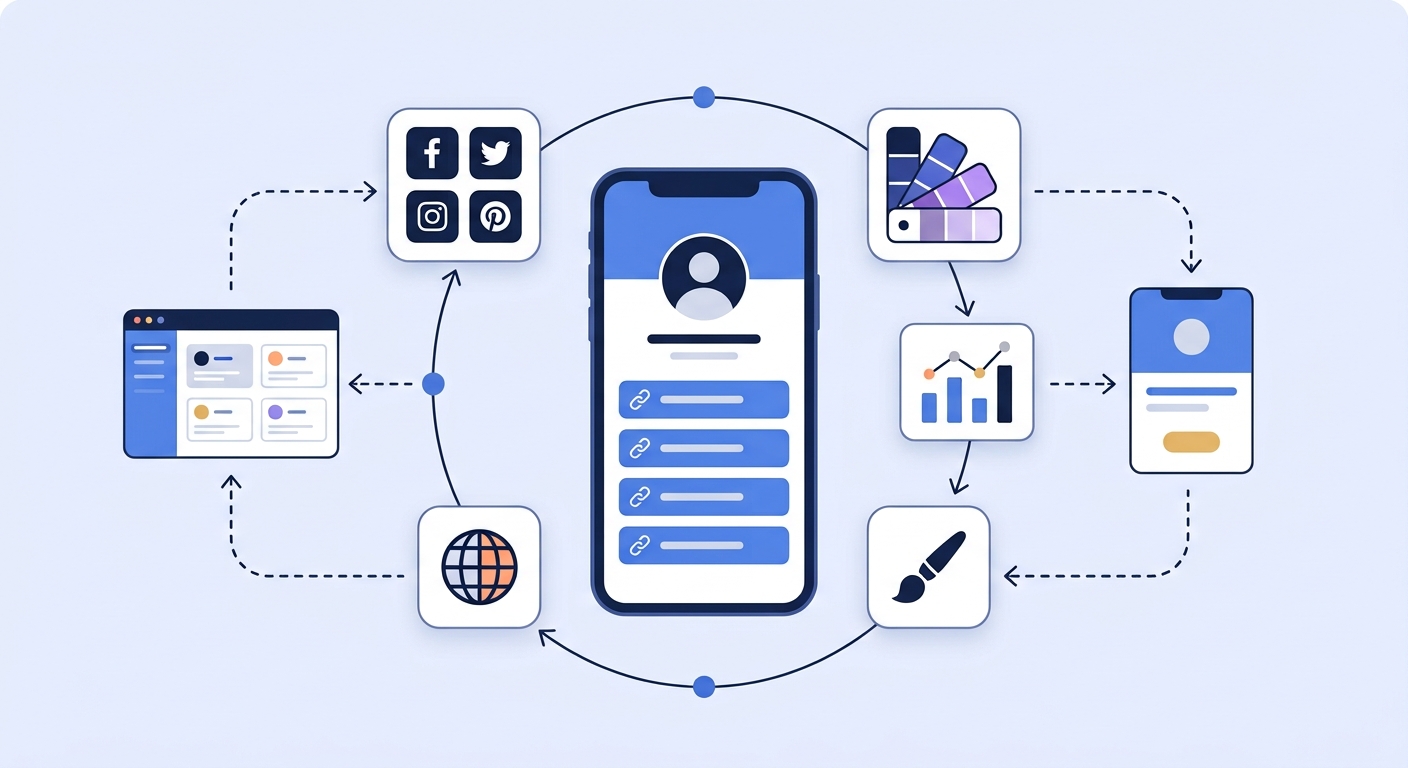
Link management becomes critical in this context. Every URL shared in emails, social posts, or advertisements should include tracking parameters that identify the source, medium, campaign, and specific creative element. This granular data reveals which messages resonate, which channels perform best, and where optimization opportunities exist.
Trimy transforms standard link tracking into actionable intelligence by providing deep analytics, smart routing capabilities, and A/B testing functionality. Rather than simply shortening URLs, the platform helps marketers understand exactly how traffic flows through campaigns, which variations convert better, and where prospects drop off in the funnel.
Setting Up Attribution Models
Attribution models assign conversion credit across the customer journey's multiple touchpoints. The model you choose significantly impacts how you evaluate channel performance and allocate budget.
| Attribution Model | Credit Distribution | Best For | Limitations |
|---|---|---|---|
| Last-click | 100% to final touchpoint | Direct response campaigns | Ignores nurturing contribution |
| First-click | 100% to initial touchpoint | Brand awareness focus | Discounts conversion factors |
| Linear | Equal across all touchpoints | Balanced perspective | Oversimplifies influence |
| Time-decay | More recent gets more credit | Sales-focused organizations | May undervalue discovery |
| Position-based | 40% first, 40% last, 20% middle | Comprehensive view | Complex implementation |
Small businesses typically start with last-click attribution due to simplicity, then graduate to more sophisticated models as they accumulate data and refine strategies. The key is consistent measurement methodology rather than perfect attribution science.
Personalization at Scale
Marketing automation for small businesses enables personalization levels previously achievable only through one-on-one interactions. Modern systems track individual behaviors, preferences, and characteristics to deliver customized experiences automatically.
Personalization extends far beyond inserting first names in email subject lines. Advanced approaches segment audiences by engagement patterns, purchase history, browsing behavior, and demographic attributes to create truly relevant messaging.
Effective personalization strategies:
- Dynamic content blocks: Show different email content sections based on recipient attributes
- Behavioral triggers: Send specific messages when customers take particular actions
- Progressive profiling: Gradually collect information through multiple interactions rather than lengthy forms
- Micro-targeting tactics adapted for small business contexts
- Product recommendations: Suggest items based on browsing history and similar customer purchases
The balance lies in being helpful without becoming intrusive. Customers appreciate relevant recommendations but feel uncomfortable when businesses demonstrate excessive surveillance. Transparency about data collection and clear value exchange build trust while enabling personalization.
Segmentation Strategies That Work
Effective segmentation divides your audience into groups sharing meaningful characteristics, enabling targeted messaging that resonates with specific needs and interests. Poor segmentation creates arbitrary divisions that add complexity without improving results.
Start with high-level segments based on clear behavioral or demographic differences:
Behavioral segments identify groups by actions taken or engagement levels. Active subscribers who open every email require different messaging than dormant contacts who haven't engaged in months. Frequent purchasers deserve VIP treatment while one-time buyers need reactivation campaigns.
Demographic segments group customers by characteristics like industry, company size, job role, or location. A software company might separate segments for developers, marketers, and executives, each receiving content tailored to their specific concerns and technical sophistication.
Lifecycle segments recognize customers occupy different relationship stages. New prospects need education, qualified leads require nurturing, active customers want optimization advice, and churned customers might respond to win-back campaigns.
Automation Integration Ecosystem
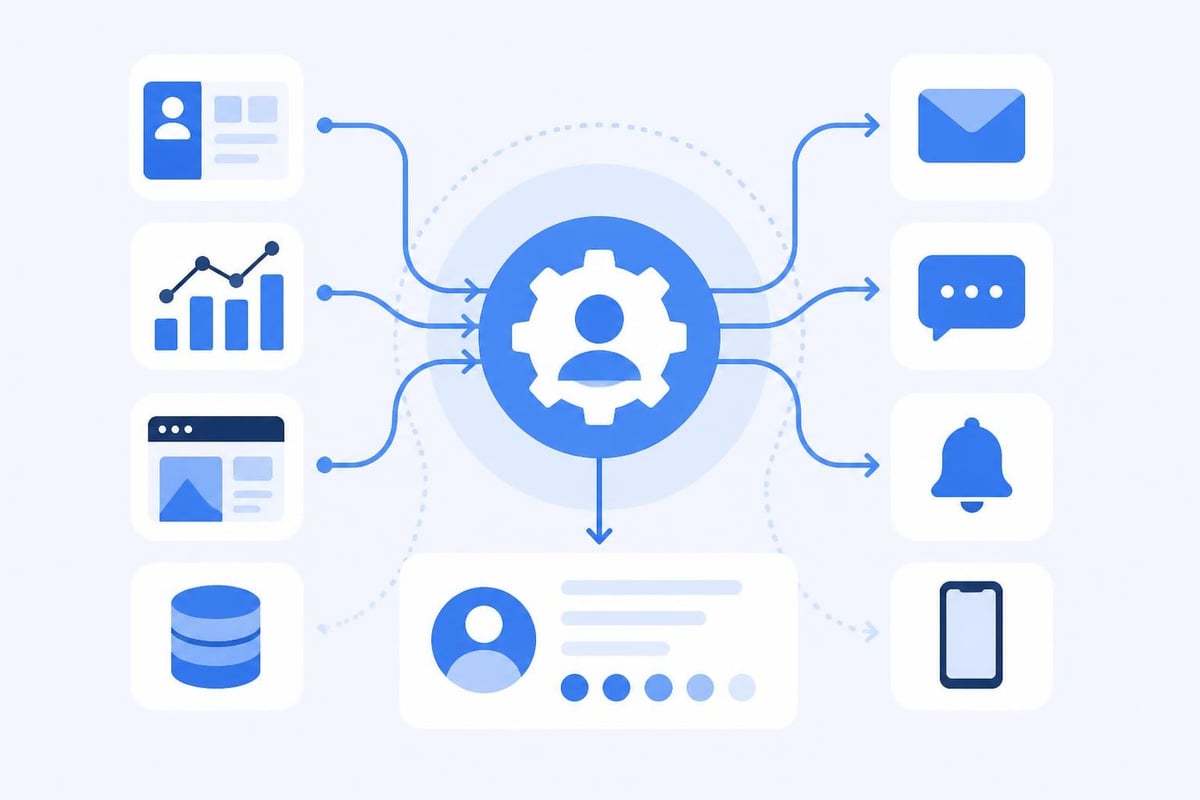
Marketing automation for small businesses delivers maximum value when integrated seamlessly with other business systems. Isolated platforms create manual work transferring data, increase error risk, and prevent comprehensive customer views.
The typical small business technology stack includes a website platform, email service, customer relationship management system, payment processor, analytics tools, and various channel-specific applications. Each generates valuable customer data that should inform marketing decisions.
Critical integration points include:
- Website to automation platform: Capture form submissions, track page visits, trigger workflows
- CRM to marketing automation: Sync contact records, update lead scores, align sales and marketing
- E-commerce to email system: Send abandoned cart reminders, purchase confirmations, product recommendations
- Social platforms to central dashboard: Monitor mentions, schedule posts, track engagement metrics
- Analytics to reporting systems: Consolidate performance data, visualize trends, identify opportunities
Modern platforms offer API connections, native integrations, or middleware tools like Zapier that connect disparate systems without custom development. Small businesses benefit from marketing automation when they prioritize integration planning during initial implementation rather than addressing it as an afterthought.
Measuring ROI and Performance Metrics
Implementing marketing automation requires investment in software, training, and workflow development. Small businesses must justify these expenses through measurable returns that demonstrate clear business impact.
Primary metrics for automation success:
- Lead generation volume: Number of new contacts entering your database monthly
- Lead quality scores: Percentage of contacts meeting qualification criteria
- Conversion rates: Proportion of leads becoming customers across funnel stages
- Customer acquisition cost: Total marketing spend divided by new customers acquired
- Customer lifetime value: Revenue generated per customer over relationship duration
- Email engagement rates: Open rates, click rates, and conversion rates by campaign
- Marketing qualified leads: Contacts demonstrating purchase intent through behavior
- Revenue attribution: Sales directly traceable to specific campaigns or channels
Track these metrics before implementing automation to establish baseline performance, then monitor changes as you deploy workflows and optimize campaigns. Expect gradual improvement rather than overnight transformation.
Optimization Through Continuous Testing
Marketing automation platforms enable systematic testing that reveals what actually works versus what seems like it should work. A/B testing functionality allows comparing two variations to identify which performs better statistically.
Test one variable at a time for clear results: subject lines, send times, call-to-action buttons, email length, personalization elements, or offer positioning. Run tests long enough to achieve statistical significance, typically requiring several hundred recipients per variation minimum.
Testing priorities for small businesses:
- Email subject lines (highest impact, easiest to test)
- Call-to-action button text and placement
- Email send timing and frequency
- Landing page headline variations
- Form length and field requirements
Document test results in a centralized repository so institutional knowledge accumulates even as team members change. Winning variations become control versions for future tests, creating continuous improvement cycles.
Compliance and Privacy Considerations
Marketing automation for small businesses operates within increasingly stringent privacy regulations and consumer protection laws. Non-compliance risks substantial penalties, legal liability, and reputation damage that disproportionately impacts smaller organizations.
The regulatory landscape includes GDPR in Europe, CCPA in California, CAN-SPAM for email marketing, and various industry-specific requirements. While requirements vary by jurisdiction and sector, common principles apply universally.
Compliance fundamentals:
- Explicit consent: Obtain clear permission before adding contacts to marketing lists
- Easy unsubscribe: Provide simple opt-out mechanisms in every communication
- Data transparency: Explain what information you collect and how you use it
- Security measures: Protect customer data through encryption and access controls
- Retention policies: Delete information when no longer needed for business purposes
- Third-party vetting: Ensure vendors and partners maintain compliance standards
Automated systems make compliance easier by standardizing processes, documenting consent, and executing data management policies consistently. Configure suppression lists that automatically prevent messaging to unsubscribed contacts, implement double opt-in confirmation for new subscribers, and schedule regular data audits.
Getting Started: Implementation Roadmap
Launching marketing automation successfully requires methodical planning rather than rushing to activate features. Small businesses often struggle by attempting too much simultaneously instead of building capabilities progressively.
Phase 1 (Weeks 1-2): Foundation
- Audit current marketing processes and identify automation opportunities
- Select automation platform based on needs assessment and budget
- Configure basic settings, import existing contacts, establish segmentation structure
- Create brand templates for emails and landing pages
Phase 2 (Weeks 3-4): Core Workflows
- Build welcome email sequence for new subscribers
- Implement basic lead scoring based on engagement and demographics
- Set up form tracking and behavioral triggers for website visitors
- Establish reporting dashboards for key performance indicators
Phase 3 (Weeks 5-8): Expansion
- Develop nurture sequences for different audience segments
- Create automated workflows for abandoned carts, event registrations, or content downloads
- Implement re-engagement campaigns for inactive contacts
- Integrate CRM and other business systems
Phase 4 (Ongoing): Optimization
- Conduct regular A/B tests on email and landing page elements
- Analyze campaign performance and refine targeting strategies
- Expand automation to additional channels and customer journey stages
- Train team members on advanced features and best practices
Resist the temptation to automate everything immediately. Start with high-impact, manageable workflows that solve specific problems or capitalize on clear opportunities. Success with simple automations builds confidence and skills for tackling more complex implementations.
Marketing automation for small businesses transforms how lean teams compete in crowded markets by enabling personalized, data-driven campaigns at scale. The combination of behavioral tracking, segmented messaging, and continuous optimization creates efficiency gains that directly impact profitability. When you're ready to elevate your campaign performance through advanced link intelligence and tracking, trimy provides the analytics, A/B testing, and routing capabilities that turn every URL into actionable revenue data.