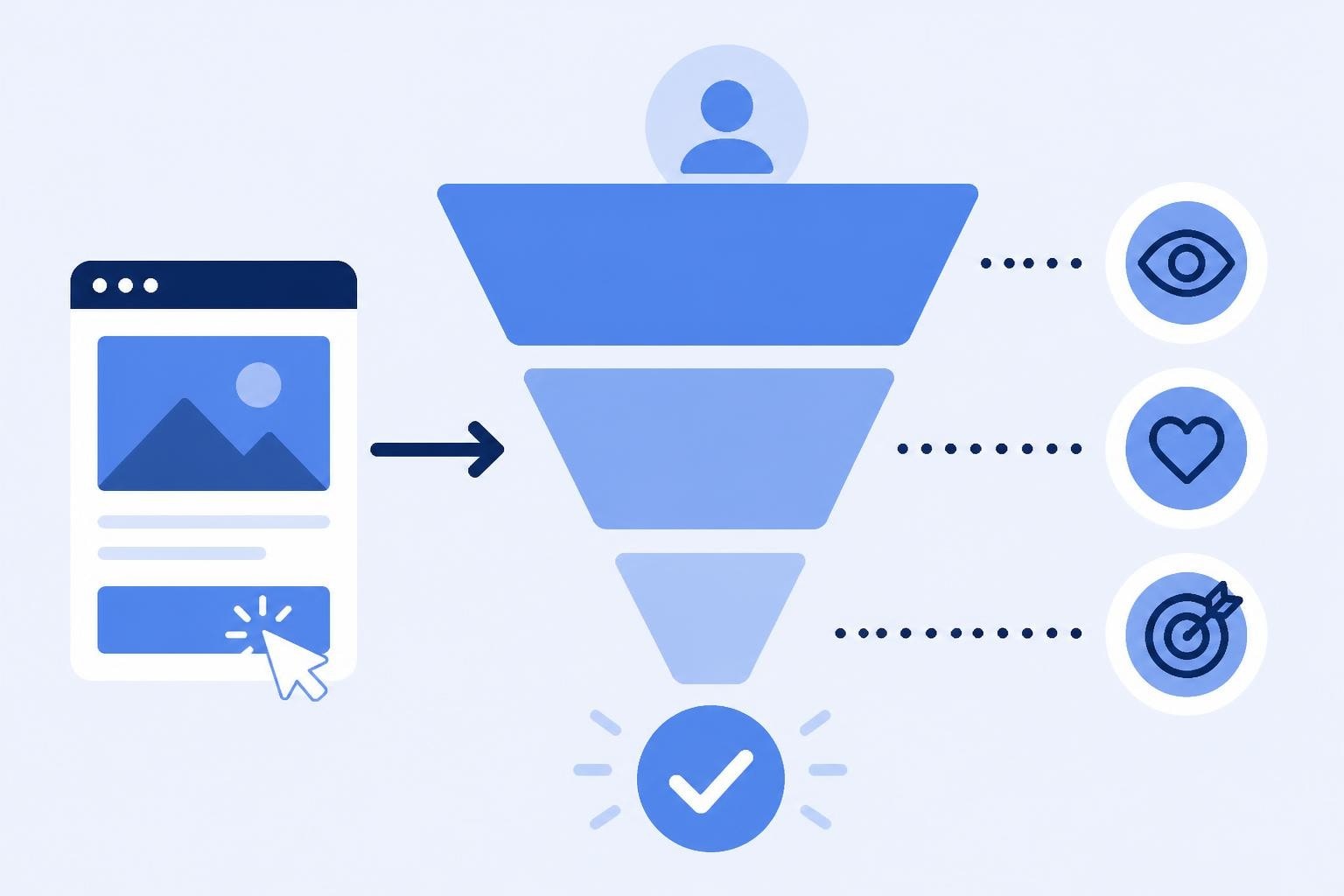
Ecommerce Marketing Automation: Complete 2026 Guide
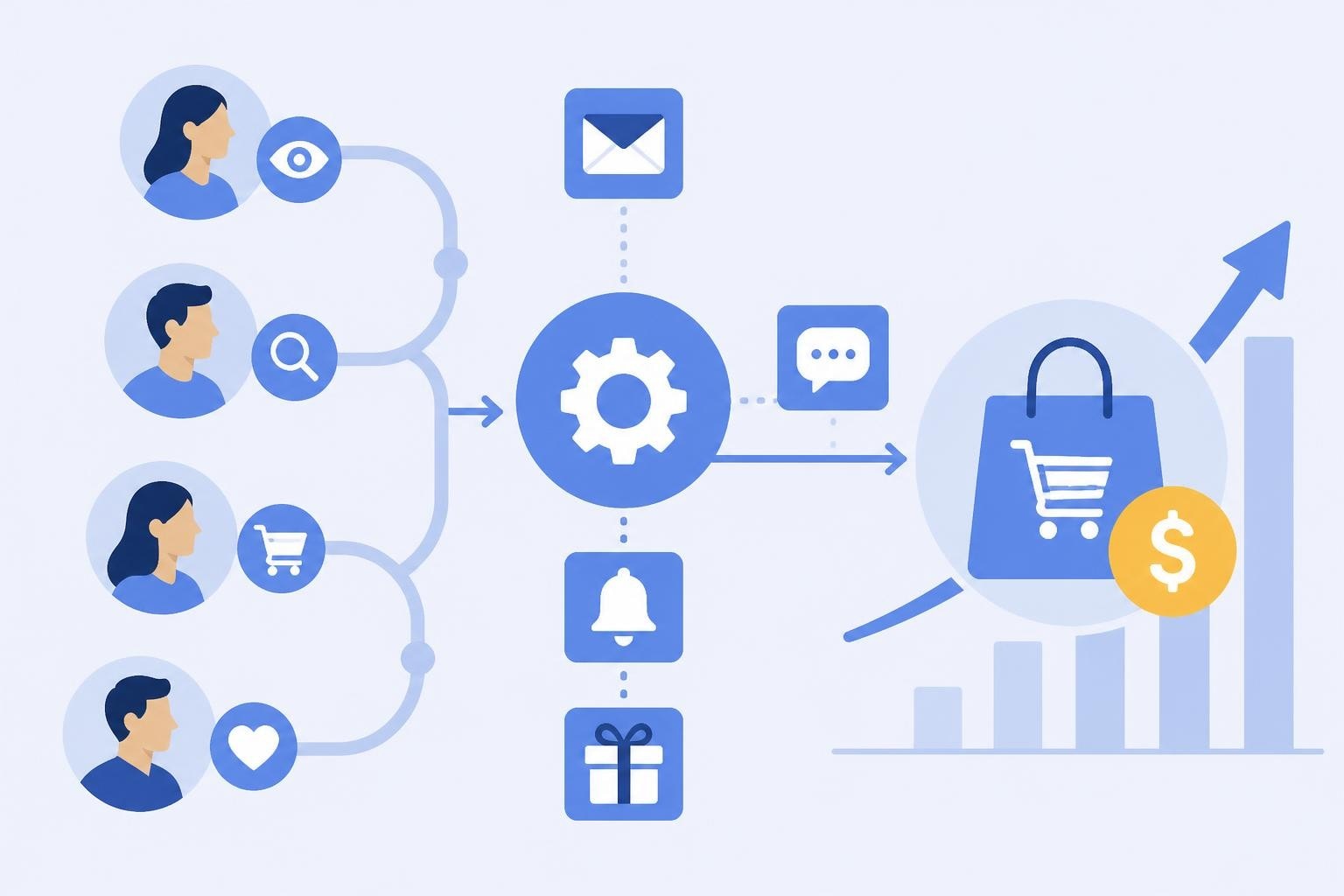
Ecommerce marketing automation has evolved from a competitive advantage to a business necessity in 2026. Brands processing thousands of customer interactions daily cannot rely on manual processes to deliver personalized experiences, recover abandoned carts, or nurture leads through complex buying journeys. Automation platforms now handle everything from email sequences to SMS campaigns, enabling marketers to focus on strategy while systems execute tactical operations at scale. The most successful ecommerce businesses use automation to transform customer data into revenue-generating actions without constant human intervention.
Understanding Ecommerce Marketing Automation Fundamentals
Ecommerce marketing automation refers to software and platforms that automatically execute marketing tasks based on predetermined triggers, customer behaviors, and data signals. Rather than manually sending emails or tracking customer actions, automation systems respond to user behavior in real-time, delivering relevant messages across channels without requiring marketers to initiate each interaction.
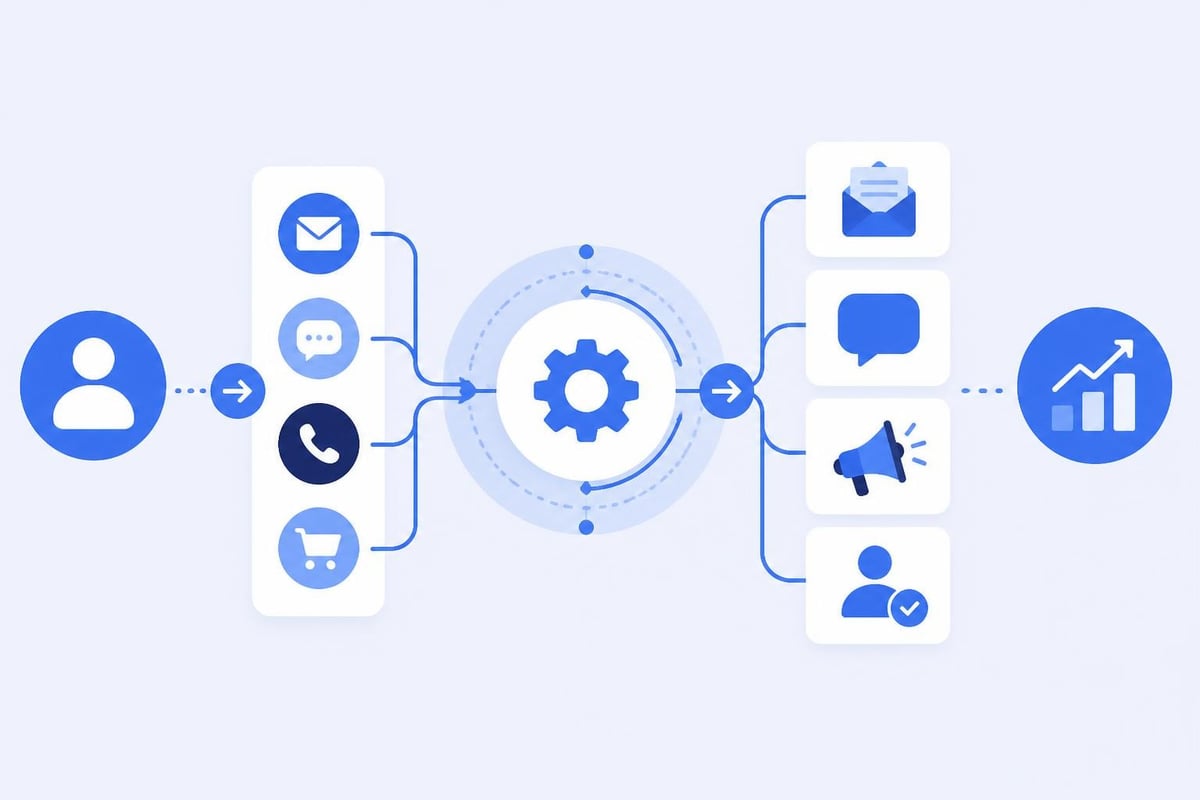
The foundation of effective ecommerce automation rests on three pillars: data collection, trigger mechanisms, and action execution. Platforms continuously gather customer interaction data from websites, email opens, purchase history, and browsing patterns. When specific conditions are met, such as a cart abandonment or product view, the system triggers predetermined workflows that might include email sequences, SMS messages, or personalized product recommendations.
Key Components of Marketing Automation Systems
Modern ecommerce marketing automation platforms integrate multiple technologies to create comprehensive customer experiences. These systems typically include:
- Email marketing engines that handle sequence delivery, A/B testing, and personalization
- Customer data platforms that unify information from multiple touchpoints
- Behavioral tracking systems that monitor website actions and engagement patterns
- Segmentation tools that group customers based on attributes and behaviors
- Analytics dashboards that measure campaign performance and ROI
The most sophisticated platforms also incorporate predictive analytics, using machine learning to forecast customer lifetime value, churn probability, and optimal send times. This intelligence allows marketers to automate not just the execution but also the optimization of campaigns.
Essential Automation Workflows for Revenue Growth
Successful ecommerce brands implement specific automation workflows that address critical moments in the customer journey. These workflows run continuously, engaging customers at precisely the right moment with relevant messaging that drives conversions and builds loyalty.
Cart Abandonment Recovery Sequences
Cart abandonment remains one of the highest-impact opportunities for automated revenue recovery. The average cart abandonment rate hovers around 70% across ecommerce sites, representing substantial lost revenue. Automated cart recovery sequences typically deploy three emails over 24-72 hours, each with increasing urgency and potentially sweetened offers.
The first email sends within 1-2 hours of abandonment, simply reminding customers about items left behind. The second message arrives 12-24 hours later, potentially including product reviews or scarcity messaging. The final email might offer a limited-time discount or free shipping to overcome final purchase barriers. Behavior-triggered campaigns like these generate significantly higher ROI than broadcast emails.
Post-Purchase Engagement Series
The relationship shouldn't end at checkout. Post-purchase automation workflows build customer loyalty and increase lifetime value through strategic touchpoints:
- Order confirmation with delivery expectations and tracking information
- Shipping notifications that keep customers informed about package status
- Delivery confirmation followed by product usage tips or tutorials
- Review requests timed for when customers have experienced the product
- Replenishment reminders for consumable products based on typical usage cycles
- Cross-sell recommendations showcasing complementary products
Each touchpoint provides value while subtly encouraging repeat purchases. The timing between messages varies based on product type, with consumables requiring faster replenishment cycles than durable goods.
Customer Segmentation and Personalization
Generic mass emails no longer generate acceptable engagement rates. Modern ecommerce marketing automation relies heavily on segmentation to deliver relevant content to specific customer groups. Effective segmentation strategies divide audiences based on:
| Segmentation Type | Example Criteria | Automation Use Case |
|---|---|---|
| Behavioral | Browse history, engagement level | Product recommendations, re-engagement campaigns |
| Demographic | Age, location, gender | Localized offers, seasonal promotions |
| Transactional | Purchase frequency, average order value | VIP programs, loyalty rewards |
| Lifecycle Stage | New subscriber, active customer, at-risk | Stage-appropriate nurture sequences |
Customer segmentation through automation enables personalized messaging at scale, with each segment receiving content tailored to their specific interests and behaviors. A customer who frequently browses running shoes receives different recommendations than someone interested in yoga equipment.
Building Advanced Automation Strategies
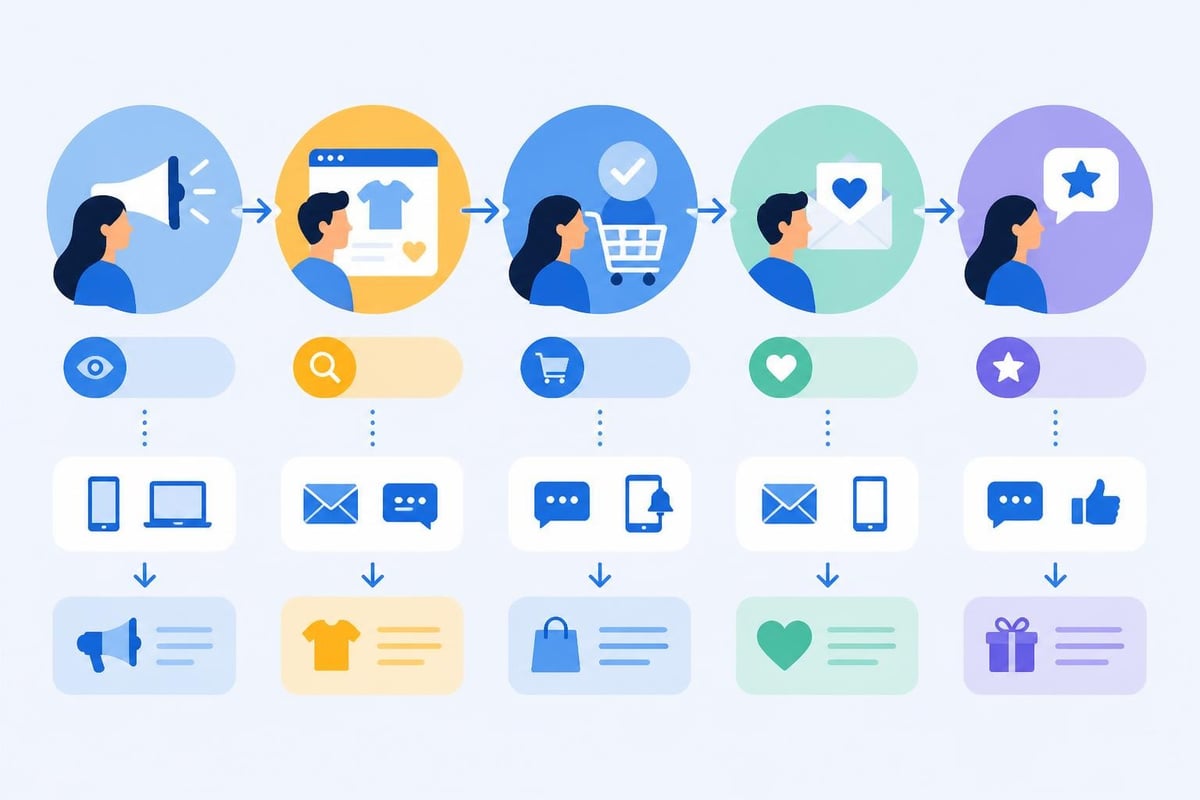
Beyond basic workflows, sophisticated ecommerce operations implement complex automation strategies that respond to nuanced customer signals and orchestrate multi-channel experiences. These approaches require deeper integration between systems and more strategic planning.
Multi-Channel Campaign Orchestration
Customers interact with brands across email, SMS, push notifications, social media, and websites. Effective ecommerce marketing automation coordinates messaging across these channels, ensuring consistent experiences without overwhelming customers with redundant communications.
A comprehensive approach might trigger an initial cart abandonment email, followed by an SMS reminder if the email goes unopened, then display targeted ads on social platforms if the customer doesn't respond to either message. Channel preference learning allows systems to identify which channels individual customers respond to best, automatically prioritizing those touchpoints in future campaigns.
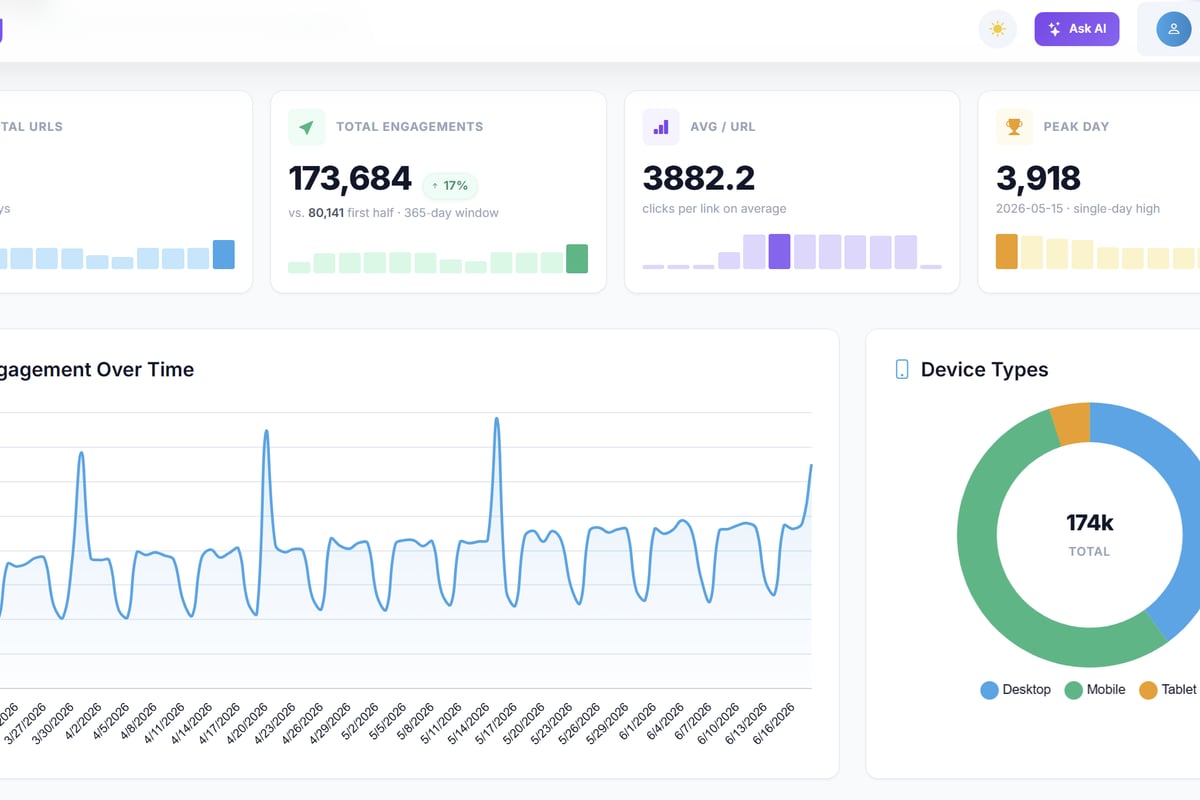
Link management plays a crucial role in multi-channel automation. Every message contains links that drive customers back to product pages, checkout processes, or special landing pages. Tracking these links across channels provides visibility into which touchpoints generate actual revenue versus mere engagement. Trimy enables marketers to create channel-specific short links with detailed tracking, A/B test different landing pages, and route traffic intelligently based on customer attributes, transforming every automated message into a data collection opportunity that refines future campaigns.
Predictive Customer Modeling
Advanced platforms now incorporate machine learning models that predict customer behaviors before they occur. These predictive capabilities enable proactive automation rather than purely reactive workflows.
Predictive models analyze historical data to identify patterns indicating:
- Churn risk: Customers showing declining engagement who need win-back campaigns
- Upsell readiness: Customers likely to purchase premium products or add-ons
- Optimal send times: Individual preferences for when they engage with messages
- Lifetime value potential: New customers worth investing additional acquisition resources
When models identify a high-value customer showing early churn signals, automation can trigger special retention offers or personalized outreach before the customer actually disengages. This proactive approach generates substantially better results than waiting for clear abandonment signals.
Dynamic Content and Product Recommendations
Static email templates no longer suffice for competitive ecommerce brands. Dynamic content changes based on individual customer attributes, displaying different products, offers, or messaging depending on who opens the email.
Product recommendation engines analyze purchase history, browsing behavior, and similar customer patterns to suggest items each recipient is most likely to purchase. These recommendations appear automatically in emails, on-site messaging, and post-purchase communications without manual curation.
The most effective implementations combine collaborative filtering (what similar customers bought) with content-based filtering (products similar to past purchases) to generate diverse yet relevant recommendations that expose customers to new products while respecting demonstrated preferences.
Implementing Marketing Automation Technology Stacks
Building an effective ecommerce marketing automation capability requires selecting and integrating the right technology platforms. The choices span from all-in-one solutions to best-of-breed point solutions connected through APIs.
Platform Selection Criteria
Choosing automation platforms involves balancing functionality, integration capabilities, scalability, and cost. Key evaluation criteria include:
- Native integrations with existing ecommerce platforms, CRM systems, and analytics tools
- Segmentation depth allowing granular audience targeting based on multiple data points
- Workflow complexity supporting multi-step, conditional logic beyond simple triggers
- Deliverability rates ensuring messages reach customer inboxes rather than spam folders
- Reporting capabilities providing actionable insights into campaign performance
Building an effective automation stack often requires combining multiple specialized tools rather than relying on a single platform. A typical stack might include a dedicated email service provider, customer data platform, SMS gateway, and analytics solution working together through API connections.
Data Integration and Management
Ecommerce marketing automation depends entirely on data quality and accessibility. Customer information scattered across disconnected systems prevents effective personalization and limits automation sophistication.
Successful implementations establish a single source of truth for customer data, typically through a customer data platform or warehouse that aggregates information from:
- Ecommerce platform transaction records
- Website behavioral tracking systems
- Email engagement metrics
- Customer service interaction logs
- Social media engagement data
- Offline purchase information for omnichannel brands
This unified data foundation enables automation platforms to make decisions based on complete customer profiles rather than partial information that might trigger irrelevant or poorly timed messages.
Measuring Automation Performance and ROI
Implementing ecommerce marketing automation requires investment in technology, setup time, and ongoing optimization. Measuring returns on this investment involves tracking specific metrics that demonstrate automation's impact on revenue and operational efficiency.
Revenue Attribution and Campaign Metrics
Direct revenue attribution connects automated campaigns to actual sales, proving the financial impact of automation investments. Key performance indicators include:
| Metric | Definition | Benchmark Target |
|---|---|---|
| Automation Revenue | Total revenue from automated workflows | 25-35% of email revenue |
| Cart Recovery Rate | Percentage of abandoned carts converted | 10-15% recovery rate |
| Welcome Series Conversion | New subscribers who make first purchase | 5-10% within 30 days |
| Post-Purchase Repeat Rate | Customers making second purchase | 20-30% within 90 days |
Beyond revenue, operational metrics demonstrate efficiency gains. Time saved through automation, reduction in manual campaign execution, and improved message consistency all contribute to ROI even when not directly measurable in dollars.
Testing and Continuous Optimization
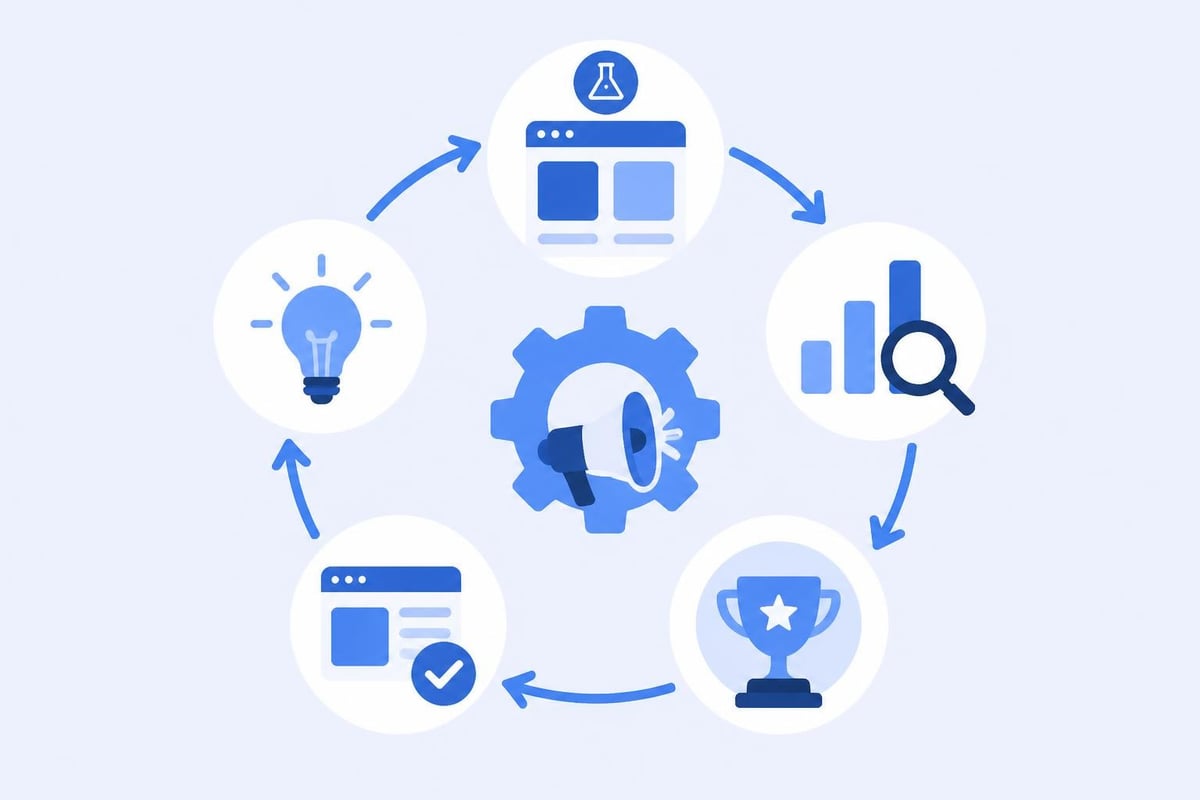
The most successful ecommerce brands treat automation as an ongoing optimization process rather than a set-it-and-forget-it solution. Regular testing and refinement of automated workflows ensures performance improves over time.
Effective testing strategies include:
- Subject line variations to improve open rates across automated sequences
- Send time optimization determining when specific segments engage most actively
- Content personalization depth testing how much customization drives incremental conversion
- Offer testing comparing discount strategies, free shipping thresholds, and scarcity messaging
- Sequence timing adjusting delays between messages in multi-step workflows
Each test generates learning that refines automation rules, creating compounding improvements in performance over months and years of operation.
Real-World Automation Success Patterns
Examining how successful ecommerce businesses implement automation reveals practical patterns that drive results. These case studies demonstrate specific tactics and outcomes worth emulating.
Comprehensive Campaign Coverage
Leading ecommerce brands implement extensive automation libraries covering every customer touchpoint rather than focusing on just one or two workflows. A comprehensive approach might include 30+ distinct automated campaigns addressing scenarios from welcome sequences to win-back campaigns for churned customers.
This breadth ensures no revenue opportunity goes uncaptured. While individual workflows might generate modest returns, the cumulative effect of comprehensive automation coverage significantly impacts overall revenue performance.
Operational Efficiency Through Automation
Beyond customer-facing campaigns, ecommerce marketing automation streamlines internal operations. Automated reporting eliminates manual data compilation, scheduled social media posts reduce daily execution burdens, and automated inventory alerts prevent stockouts on high-demand products.
Some implementations report reducing manual marketing work by 35+ hours weekly, freeing teams to focus on strategy, creative development, and higher-value activities that automation cannot replicate. This operational leverage allows small teams to execute sophisticated marketing programs previously requiring much larger staffs.
Progressive Profiling and Data Enrichment
Rather than demanding extensive information upfront, sophisticated automation platforms progressively build customer profiles over time. Each interaction reveals new data points that enhance personalization capabilities without creating friction that prevents initial engagement.
A customer might initially provide only an email address to download a guide. Subsequent browsing behavior reveals product interests. Eventually, a purchase provides shipping location and product preferences. Over time, the accumulated data enables increasingly personalized automation without ever requiring customers to complete lengthy forms.
Advanced Tactics for Competitive Advantage
As ecommerce marketing automation becomes universal, competitive advantage shifts to sophisticated implementations that extract maximum value from automation capabilities.
Lifecycle-Based Revenue Optimization
Different customer lifecycle stages present distinct revenue optimization opportunities. New customers need education and first-purchase incentives. Active customers respond to cross-sell recommendations. Declining customers require win-back campaigns before they churn completely.
Mapping automation strategies to lifecycle stages ensures resources concentrate where they generate highest returns. Analytics might reveal that retention campaigns targeting at-risk high-value customers generate 10x the ROI of acquisition campaigns, suggesting budget reallocation toward retention automation.
Behavioral Trigger Sophistication
Moving beyond simple triggers like cart abandonment, advanced implementations respond to nuanced behavioral signals that indicate purchase intent or engagement decline:
- Browsing multiple products in a category without adding to cart
- Viewing the same product repeatedly across sessions
- Opening emails but not clicking through over extended periods
- Engaging with specific content types that correlate with purchase readiness
- Spending increasing time on comparison or sizing guides
Each signal triggers tailored automation designed to address the specific customer state. Someone researching sizing needs different messaging than someone comparing prices across competitors.
Privacy-Compliant Data Collection
Growing privacy regulations and browser tracking limitations require ecommerce businesses to adapt automation strategies. First-party data collection becomes increasingly important as third-party cookies disappear.
Successful approaches incentivize customers to share information directly through value exchanges. Progressive profiling, preference centers, and zero-party data collection (customers explicitly sharing preferences) enable personalization without relying on tracking technologies facing regulatory pressure.
Automation platforms must also facilitate compliance through consent management, data retention policies, and automated processes for handling customer data requests under GDPR, CCPA, and similar regulations.
Ecommerce marketing automation transforms how businesses engage customers, delivering personalized experiences at scale while reducing manual workload and increasing revenue predictability. The most successful implementations combine comprehensive workflow coverage, continuous optimization, and sophisticated data management to create competitive advantages that compound over time. As you build or refine your automation strategy, trimy provides the link intelligence foundation that turns every automated message into a learning opportunity, with advanced tracking, A/B testing, and smart routing that optimizes the critical connection between your campaigns and revenue outcomes.