A to B Testing: Drive Results with Smart Experiments

A to b testing has transformed the way modern businesses make decisions about their digital presence. Rather than relying on intuition or assumptions, teams can now validate ideas with real user data, measure the impact of changes, and confidently invest in strategies that deliver measurable results. For marketers and developers working with links, landing pages, and traffic routing, understanding how to design, execute, and analyze these experiments is essential for maximizing return on investment and building campaigns that consistently perform.
Understanding the Fundamentals of A to B Testing
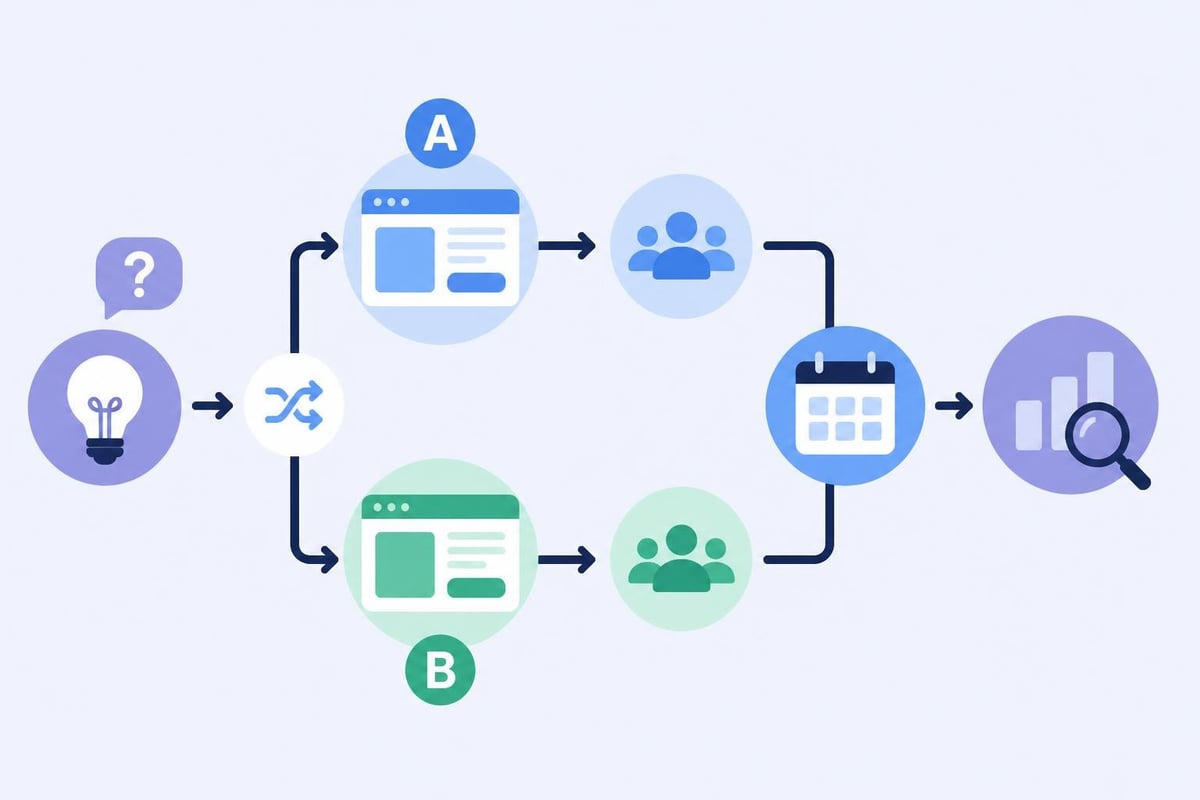
A to b testing, often called split testing, is a controlled experiment that compares two versions of a digital asset to determine which performs better. The methodology is straightforward: you present variant A to one segment of your audience and variant B to another, then measure which version achieves your objective more effectively. This could mean higher click-through rates, better conversion rates, increased revenue per visitor, or any other metric that matters to your business goals.
The power of this approach lies in its ability to isolate variables and measure causation rather than correlation. When you change a single element between versions and randomly assign visitors to each group, you create conditions where observed differences in performance can be attributed to that specific change. This scientific rigor makes a to b testing one of the most reliable tools in the modern marketer's arsenal.
Key Components of Valid Experiments
Every successful a to b testing program requires several critical elements working together. First, you need a clear hypothesis that predicts how a specific change will affect user behavior. Second, you must define success metrics before running the test to avoid cherry-picking favorable results. Third, random assignment ensures that external factors affect both groups equally, preventing biased outcomes.
Essential elements include:
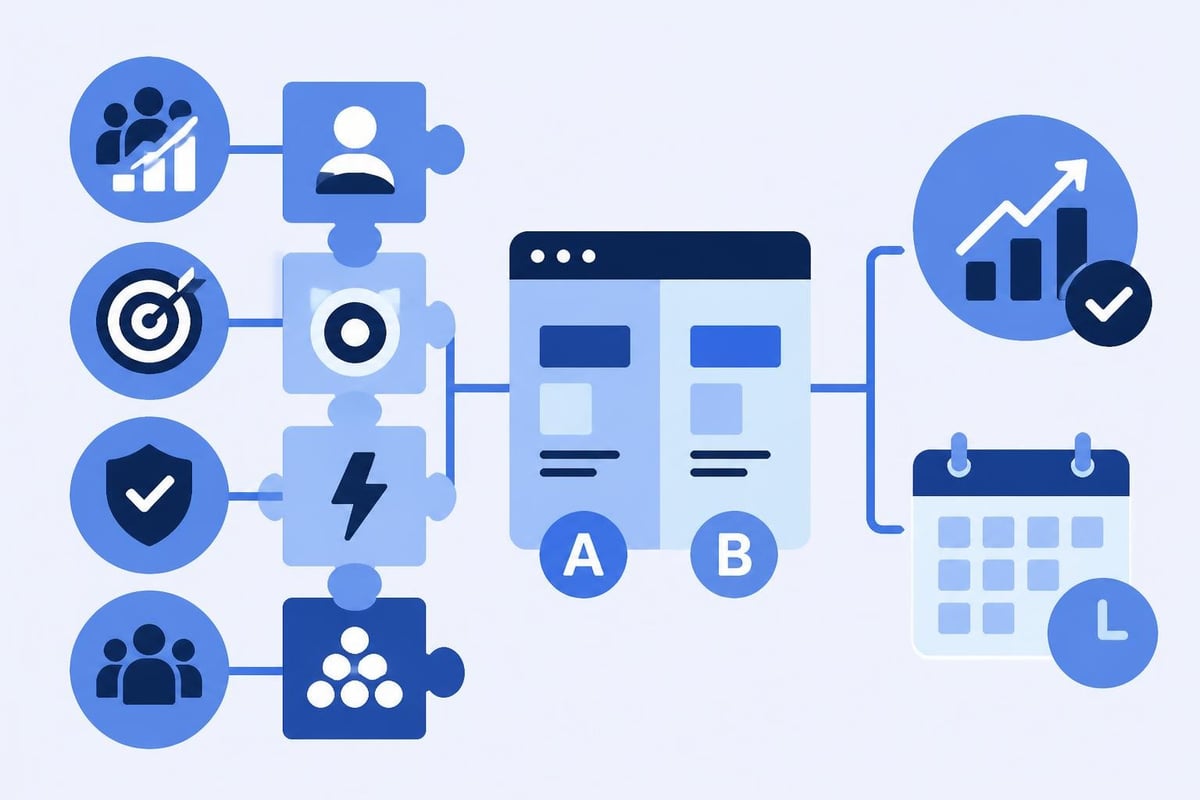
- Control group: The unchanged version (A) that serves as your baseline
- Treatment group: The modified version (B) that contains your proposed change
- Sample size: Enough visitors to detect meaningful differences with statistical confidence
- Testing duration: Sufficient time to account for weekly patterns and seasonal variations
- Statistical significance: Mathematical certainty that results aren't due to random chance
The practical considerations for running reliable A/B tests go beyond just these technical requirements. You also need organizational buy-in, proper tracking infrastructure, and a culture that values evidence-based decision-making over opinions.
Setting Up Effective A to B Testing Programs
Building a sustainable testing program starts with identifying high-impact opportunities. Not every element deserves a test, and spreading resources too thin across minor optimizations wastes time and statistical power. Focus on changes that could meaningfully affect business outcomes, such as call-to-action placement, messaging clarity, or navigation structure for link-driven campaigns.
Prioritizing What to Test
Smart teams use frameworks to evaluate testing opportunities. Consider the potential impact of a change, the resources required to implement it, and your confidence level in the hypothesis. A systematic approach prevents testing paralysis and ensures you're always working on experiments that could drive significant results.
| Priority Factor | High Value | Medium Value | Low Value |
|---|---|---|---|
| Potential Impact | Revenue-driving changes | Secondary conversion points | Cosmetic updates |
| Implementation Cost | Quick configuration changes | Moderate development work | Complex rebuilds |
| Hypothesis Strength | Data-supported predictions | Informed assumptions | Random ideas |
| Traffic Available | High-volume pages | Moderate traffic | Low-traffic segments |
For link management and marketing campaigns, high-priority tests often involve destination URLs, landing page variations, call-to-action copy, or routing logic based on user segments. These elements directly influence whether a click converts into a desired action, making them prime candidates for optimization through a to b testing.
Technical Implementation Considerations
The infrastructure supporting your experiments must handle traffic splitting, cookie persistence, and data collection without introducing bias or degrading user experience. Modern platforms can assign users to variants, ensure they see consistent versions across sessions, and track outcomes without noticeable delays.
Technical requirements include:
- Randomization algorithm that distributes traffic evenly without patterns
- Persistent user assignment so visitors don't switch between variants mid-journey
- Event tracking that captures all relevant actions and attributes them correctly
- Performance monitoring to ensure testing infrastructure doesn't slow down pages
- Data pipeline that feeds results into analysis tools with minimal latency
When implementing a to b testing for link campaigns, consider how your tracking infrastructure handles redirects, deep links, and cross-domain journeys. Link intelligence platforms need to maintain test assignments across these transitions while capturing attribution data accurately.
Analyzing Results and Making Decisions
The analysis phase separates successful testing programs from those that generate misleading insights. Common pitfalls in data-driven decision-making often stem from misinterpreting statistical significance, stopping tests too early, or ignoring important context about how results were generated.
Statistical significance tells you the probability that observed differences occurred by chance rather than because of your treatment. A 95% confidence level means there's only a 5% chance that the results are random noise. However, reaching statistical significance requires sufficient sample size, which depends on your baseline conversion rate, the minimum effect size you want to detect, and your desired confidence level.
Sample Size and Testing Duration
Determining how long to run an a to b testing experiment requires balancing statistical rigor with business urgency. Sample size calculations for A/B tests involve complex mathematics, but the principle is straightforward: smaller effects require larger samples to detect reliably, and higher confidence levels demand more data.
Running tests for at least one full business cycle helps account for day-of-week effects and other temporal patterns. A test that runs only Monday through Wednesday might show different results than one spanning a full week, especially for B2B campaigns where weekday behavior differs dramatically from weekend patterns.
Common analysis mistakes:
- Peeking at results repeatedly and stopping when significance is reached (increases false positives)
- Testing too many variants simultaneously without adjusting significance thresholds
- Ignoring segment-level differences that reveal important audience behaviors
- Conflating statistical significance with business significance
- Failing to account for multiple comparisons when testing several metrics
For link-based campaigns, pay special attention to downstream metrics beyond immediate clicks. A variant might generate more clicks but lower-quality traffic that converts poorly, making the higher click-through rate misleading if you focus only on that initial metric.
Advanced A to B Testing Strategies
Once you've mastered basic split tests, more sophisticated approaches can unlock additional insights and efficiency. Sequential testing allows you to monitor results continuously and stop early when a clear winner emerges, reducing the time needed to validate hypotheses. Multi-armed bandit algorithms dynamically allocate more traffic to better-performing variants, maximizing conversions during the testing period itself.
Multivariate and Sequential Testing
Multivariate testing extends the a to b testing framework by evaluating multiple elements simultaneously. Instead of just comparing two complete versions, you can test combinations of headlines, images, and calls-to-action to identify which elements contribute most to performance. This approach works best when you have substantial traffic and want to understand interaction effects between variables.
The systematic research on A/B testing methods highlights that advanced techniques require careful application. Multivariate tests need exponentially more traffic as you add variables, and interpreting results becomes more complex when multiple elements interact in unexpected ways.
| Testing Approach | Best Use Case | Traffic Required | Complexity | Time to Results |
|---|---|---|---|---|
| Simple A/B | Single variable, clear hypothesis | Moderate | Low | Fast |
| A/B/C/D | Multiple discrete options | Higher | Low-Medium | Moderate |
| Multivariate | Element interactions | Very High | High | Longer |
| Sequential | Continuous monitoring | Lower | Medium | Variable |
| Multi-armed Bandit | Ongoing optimization | Moderate | Medium-High | Continuous |
For link management platforms, sequential approaches offer particular value because they let you react quickly to performance signals without waiting for predetermined sample sizes. When testing destination URLs or landing page variants for a campaign with clear success metrics, you can shift more traffic to the winning option as soon as statistical confidence reaches acceptable levels.
Personalization and Segmentation
Not all users respond identically to changes, and sophisticated a to b testing incorporates segmentation to uncover these differences. Testing the same variant across mobile and desktop users, new versus returning visitors, or different traffic sources reveals whether a single "winning" version truly serves all audiences optimally.
Segment-level analysis can expose scenarios where variant B outperforms A overall but underperforms for an important subset of users. In such cases, smart routing that serves different variants to different segments based on their attributes can outperform deploying a single winner to everyone. This is particularly relevant for link management, where user intent and context vary significantly based on the source, device, and timing of each click.
Optimizing Link Campaigns Through Testing
Link-based marketing presents unique opportunities for a to b testing because every shortened URL, QR code, or tracked link becomes a potential experiment. Testing destination pages, tracking parameters, routing logic, and even the timing of link activation can reveal insights that directly impact campaign ROI and customer acquisition costs.
Testing Link Destinations and Routing
The destination URL represents the most consequential element of any link campaign. Whether you're driving traffic to product pages, lead generation forms, or content assets, small differences in where users land can create significant variance in conversion rates. A to b testing different landing pages for the same campaign, audience segment, or traffic source identifies which experiences resonate most effectively.
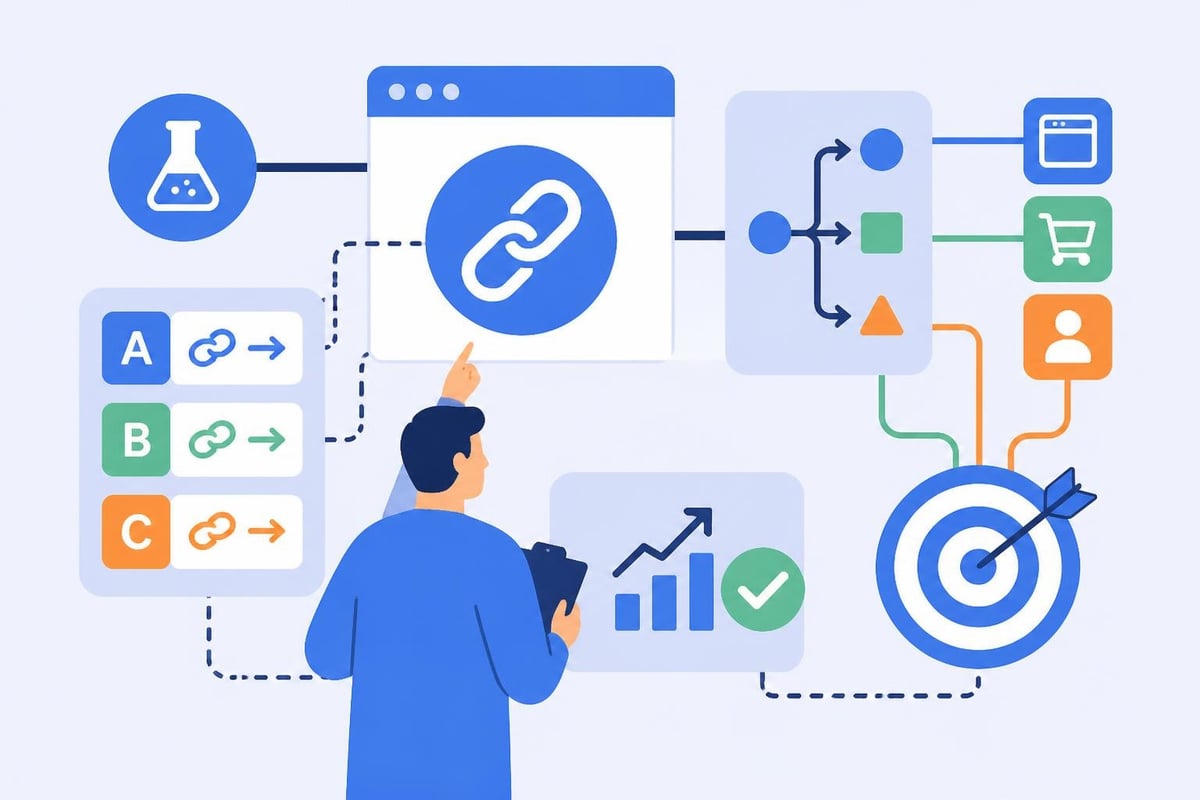
Smart routing adds another dimension by directing users to different destinations based on their characteristics. You might send mobile users to app store pages while desktop users reach web signup forms, or route enterprise prospects to demo request pages while small business visitors see self-service signup options. Testing these routing rules validates assumptions about what each segment needs most.
Effective link testing strategies include:
- Comparing landing page variations for the same marketing message
- Testing different product pages as destinations for the same ad creative
- Evaluating abbreviated versus detailed destination URLs in user-facing contexts
- Measuring how URL tracking parameters affect downstream conversion rates
- Assessing the impact of redirect speed on bounce rates and engagement
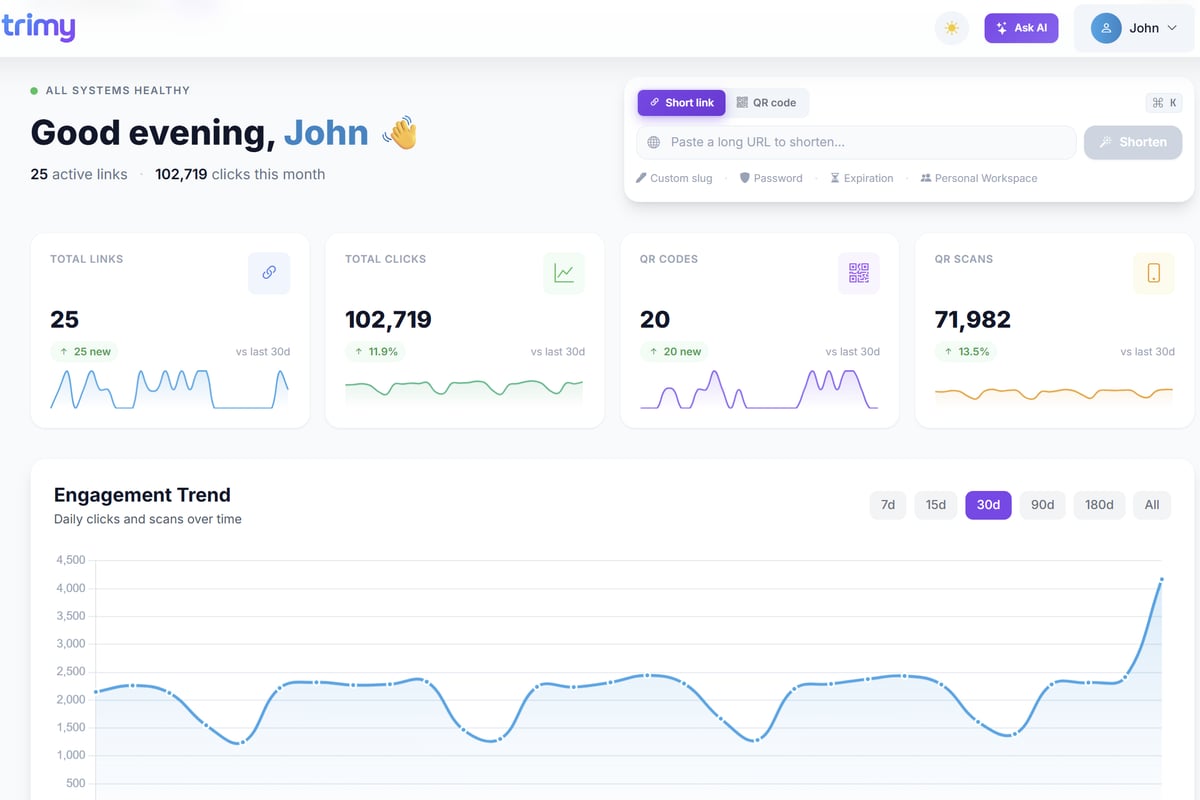
Platforms like Trimy enable marketers to implement these testing strategies at scale through built-in A/B testing capabilities for links. Rather than manually splitting traffic or creating separate campaigns, you can configure tests directly in your link management dashboard, automatically distribute traffic across variants, and track performance metrics that matter most to your business objectives. This integrated approach streamlines the entire testing lifecycle from hypothesis to implementation to analysis.
Avoiding Common A to B Testing Pitfalls
Even experienced teams fall into traps that compromise test validity or lead to incorrect conclusions. Awareness of these common mistakes helps you design better experiments and interpret results more accurately, ultimately building a testing program that generates reliable insights rather than false confidence.
Statistical and Methodological Errors
One frequent error involves testing too many variations without adjusting confidence thresholds for multiple comparisons. When you run five simultaneous tests at 95% confidence, the probability that at least one shows a false positive exceeds 20%. Proper adjustments like Bonferroni corrections maintain overall error rates but require larger samples or longer durations.
Another pitfall emerges when teams ignore the relationship between statistical and practical significance. A variant might show a statistically significant 2% improvement in click-through rate, but if implementing it requires substantial development resources, the business impact may not justify the investment. Always evaluate whether detected differences matter operationally and economically.
Red flags in testing programs:
- Declaring winners after just a few dozen conversions per variant
- Running tests for inconsistent durations based on desired outcomes
- Changing test parameters or success metrics mid-experiment
- Testing during unusual periods (holidays, major news events) without accounting for context
- Ignoring quality metrics in favor of volume metrics alone
The practical guidance on measuring e-commerce metrics in experiments emphasizes that transaction-level and item-level metrics require special care in a to b testing contexts. What appears as increased revenue per session might actually reflect timing artifacts or changes in product mix rather than true lift from your treatment.
Organizational and Process Challenges
Beyond statistical concerns, organizational factors frequently undermine testing programs. Without clear ownership of experiments, tests run indefinitely without decisions, or teams implement changes before reaching conclusive results. Establish processes that define who can launch tests, how long they run by default, what metrics trigger decisions, and how winning variants get promoted to production.
Cultural resistance to testing often stems from leaders who prefer trusting their instincts over data, or from teams afraid that tests will prove their ideas wrong. Building a learning-oriented culture where unsuccessful tests generate valuable insights rather than blame encourages broader participation and more ambitious hypothesis testing.
Building a Sustainable Testing Culture
Transforming a to b testing from occasional experiments into systematic practice requires infrastructure, skills, and organizational commitment. The most successful programs treat testing as a continuous process of learning and improvement rather than a project-based activity that happens when someone has an idea worth validating.
Creating Testing Frameworks and Processes
Documented frameworks ensure consistency across experiments and make it easier for team members to launch tests independently. Your framework should specify hypothesis formation standards, required documentation, approval workflows for different test types, statistical thresholds for decision-making, and post-test analysis requirements.
Framework components include:
- Hypothesis template requiring predicted direction, magnitude, and reasoning
- Test plan documentation capturing variants, metrics, duration, and sample size calculations
- Launch checklist verifying technical implementation and tracking accuracy
- Review schedule for examining interim results without triggering stopping biases
- Decision criteria linking statistical outcomes to business actions
- Knowledge repository cataloging all tests and their outcomes for institutional learning
Regular test reviews where teams share results, discuss surprises, and identify follow-up experiments create learning loops that compound over time. These sessions also surface patterns across multiple tests that might reveal broader insights about user behavior or market dynamics.
Investing in Skills and Tools
Effective a to b testing requires both statistical literacy and practical tool proficiency. Teams need to understand concepts like confidence intervals, power analysis, and Type I versus Type II errors, even if they use calculators rather than performing calculations manually. Training investments in experimental design and statistical thinking pay dividends through better-quality tests and more accurate interpretations.
The tooling ecosystem matters because poor platforms introduce friction that discourages testing or create technical limitations that compromise experiment quality. Capabilities like automatic sample size calculation, real-time significance monitoring, segment-level breakdowns, and integration with existing analytics systems remove barriers and expand what's possible to test efficiently.
| Tool Capability | Why It Matters | Impact on Testing Velocity |
|---|---|---|
| Visual test builder | Non-technical users can launch experiments | High |
| Statistical engine | Automatic significance calculation and confidence intervals | High |
| Segment analysis | Reveals differential effects across user groups | Medium |
| Integration APIs | Connects testing data with business intelligence platforms | Medium |
| Collaborative features | Teams can review and discuss tests together | Medium-High |
For teams managing link-driven campaigns, specialized link management platforms that include native testing capabilities eliminate the need to coordinate between separate tools for link creation, traffic routing, and experiment analysis. This integration accelerates the testing cycle and ensures data consistency across all measurement points.
A to b testing transforms marketing from guesswork into a systematic practice of learning what works and why. By implementing rigorous experimental methods, analyzing results carefully, and building organizational processes that sustain continuous testing, businesses can optimize every element of their campaigns for maximum impact. When you're ready to elevate your link marketing with integrated A/B testing, analytics, and intelligent routing, trimy provides the platform to turn every link into an opportunity for optimization and growth.