Amazon Digital Marketing: Strategy Guide for 2026
Amazon has evolved far beyond a simple online marketplace. In 2026, it represents a complete digital marketing ecosystem where brands compete for visibility, conversions, and customer loyalty. Understanding amazon digital marketing requires mastering a complex blend of paid advertising, organic optimization, brand building, and data-driven decision making. For marketers and developers seeking to maximize ROI, Amazon offers unique challenges and opportunities that demand specialized knowledge and sophisticated tools.
Understanding the Amazon Marketing Ecosystem
Amazon digital marketing operates within a fundamentally different environment than traditional digital channels. Unlike Google or Meta, Amazon captures users at the moment of highest purchase intent. Shoppers arrive ready to buy, not just browse.
This intent-driven behavior shapes every aspect of your marketing strategy. Amazon's algorithm prioritizes conversion above all else, rewarding listings and ads that drive sales while penalizing those that generate clicks without purchases. This creates a direct link between marketing performance and revenue that few other platforms can match.
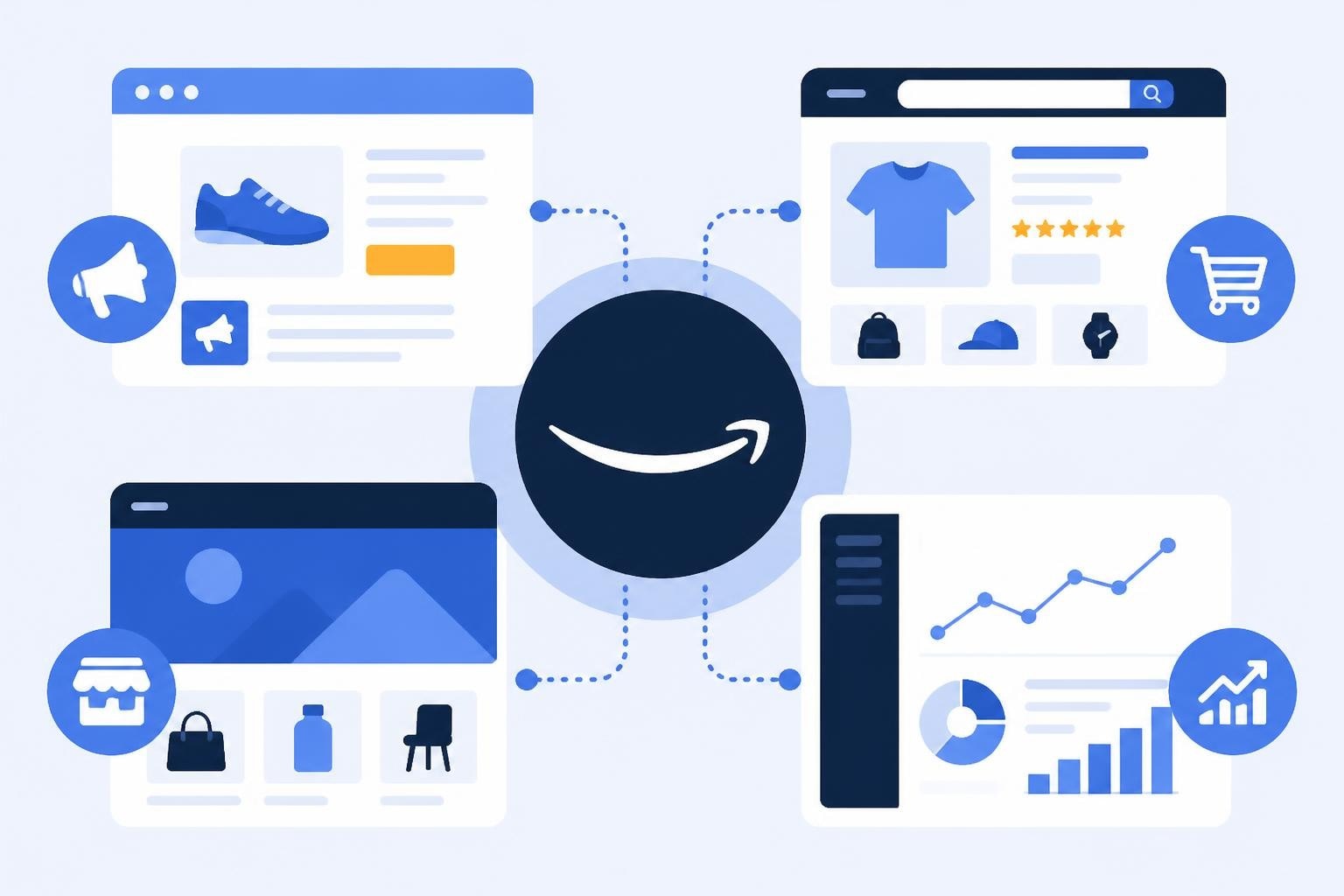
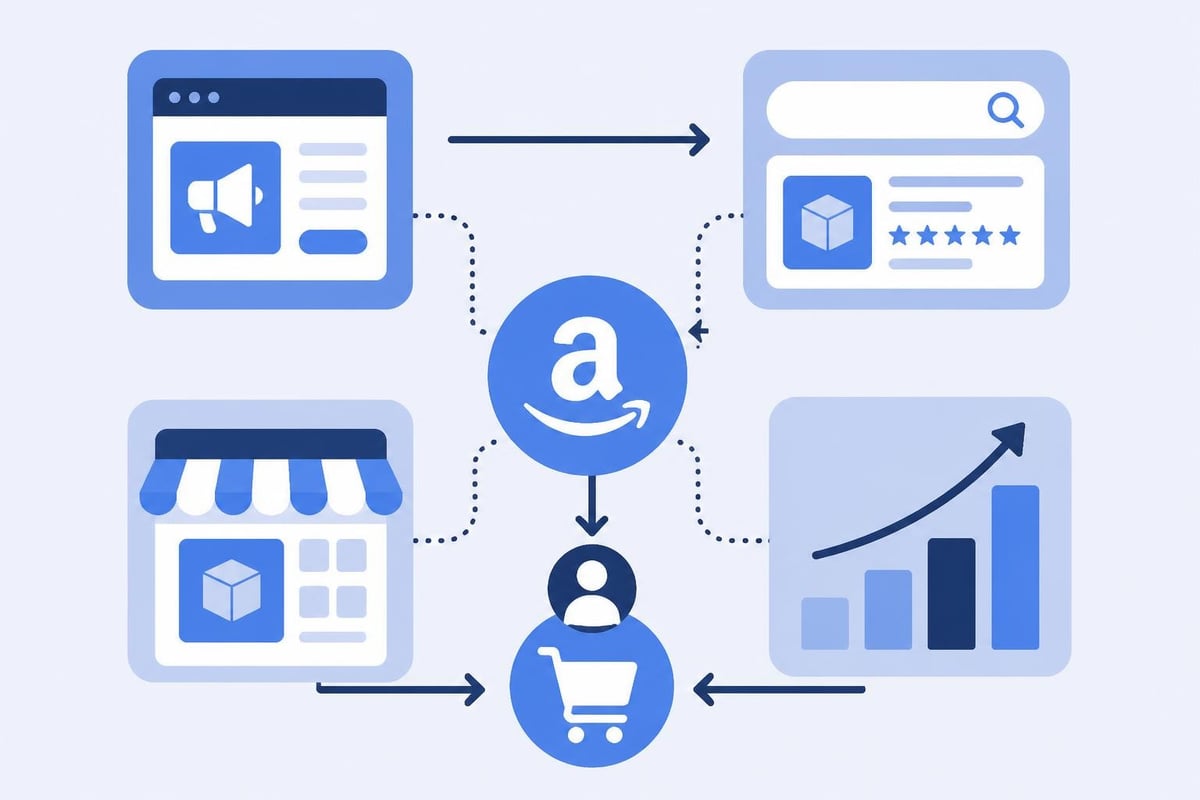
The ecosystem consists of three primary pillars: sponsored advertising, organic search optimization, and brand experience. Each pillar influences the others. Strong organic rankings reduce advertising costs. Compelling brand content increases conversion rates across both paid and organic traffic. Effective advertising generates sales velocity that boosts organic visibility.
The Strategic Value of Amazon Marketing
Recent research highlights why brands continue investing heavily in Amazon. According to Deloitte's Q4 2024 retail trends analysis, marketplace dynamics have shifted consumer expectations around fulfillment speed, product discovery, and purchase convenience. Amazon sits at the center of these expectations.
Harvard Business Review's analysis of selling on Amazon reveals the strategic trade-offs brands face. While Amazon provides unmatched customer reach and conversion infrastructure, it also creates data limitations and competitive pressures. Successful amazon digital marketing strategies acknowledge these trade-offs and build systems to maximize advantages while mitigating risks.
Advertising Strategies That Drive Performance
Amazon's advertising platform has matured into a sophisticated demand-generation engine. In 2026, advertisers can access targeting capabilities, placement options, and measurement tools that rival any major ad platform.
Sponsored Products and Strategic Bidding
Sponsored Products remain the foundation of most amazon digital marketing campaigns. These keyword-targeted ads appear in search results and product detail pages, capturing shoppers actively searching for solutions.
Effective bidding strategies balance three objectives:
- Maximize visibility for high-intent keywords
- Maintain profitable advertising cost of sale (ACoS)
- Generate sales velocity that improves organic rankings
Dynamic bidding with up and down adjustments allows Amazon's algorithm to optimize bids in real-time based on conversion likelihood. This automation works best when supported by strong campaign structure and regular keyword refinement.
Campaign segmentation separates branded, competitor, category, and generic keywords into distinct ad groups. This granular structure enables precise bid management and performance analysis. Branded campaigns typically achieve the lowest ACoS while generic campaigns drive discovery and market expansion.
Sponsored Brands and Display Advertising
Sponsored Brands occupy premium placements at the top of search results, featuring your logo, custom headline, and multiple products. These ads build brand awareness while driving consideration across your product portfolio.
The creative flexibility of Sponsored Brands demands strategic testing. Video creative often outperforms static images for complex products requiring demonstration. Custom headlines that emphasize unique value propositions or promotions can significantly lift click-through rates.
Amazon DSP (Demand-Side Platform) extends your reach beyond Amazon properties. Display ads appear across Amazon-owned sites and third-party publishers, enabling retargeting, lookalike targeting, and upper-funnel awareness campaigns. The official Amazon Ads planning hub provides detailed guidance on audience targeting and measurement options.
| Ad Type | Primary Objective | Best Use Case | Average ACoS Range |
|---|---|---|---|
| Sponsored Products | Conversions | High-intent keywords | 15-30% |
| Sponsored Brands | Awareness + Conversions | Brand building, multi-product | 20-40% |
| Sponsored Display | Retargeting + Awareness | Customer retention, cross-sell | 25-50% |
| Amazon DSP | Full-funnel | Audience building, brand reach | Varies widely |
Performance Measurement and Attribution
Amazon digital marketing success depends on sophisticated measurement. Basic ACoS tracking provides only surface-level insights. Total advertising cost of sale (TACoS) measures ad spend as a percentage of total sales, revealing how advertising impacts overall business growth.
Attribution windows matter significantly on Amazon. The default 7-day click and 1-day view attribution captures most directly attributable sales, but longer purchase cycles may require extended analysis. New-to-brand metrics identify customers acquired through advertising, enabling lifetime value calculations.
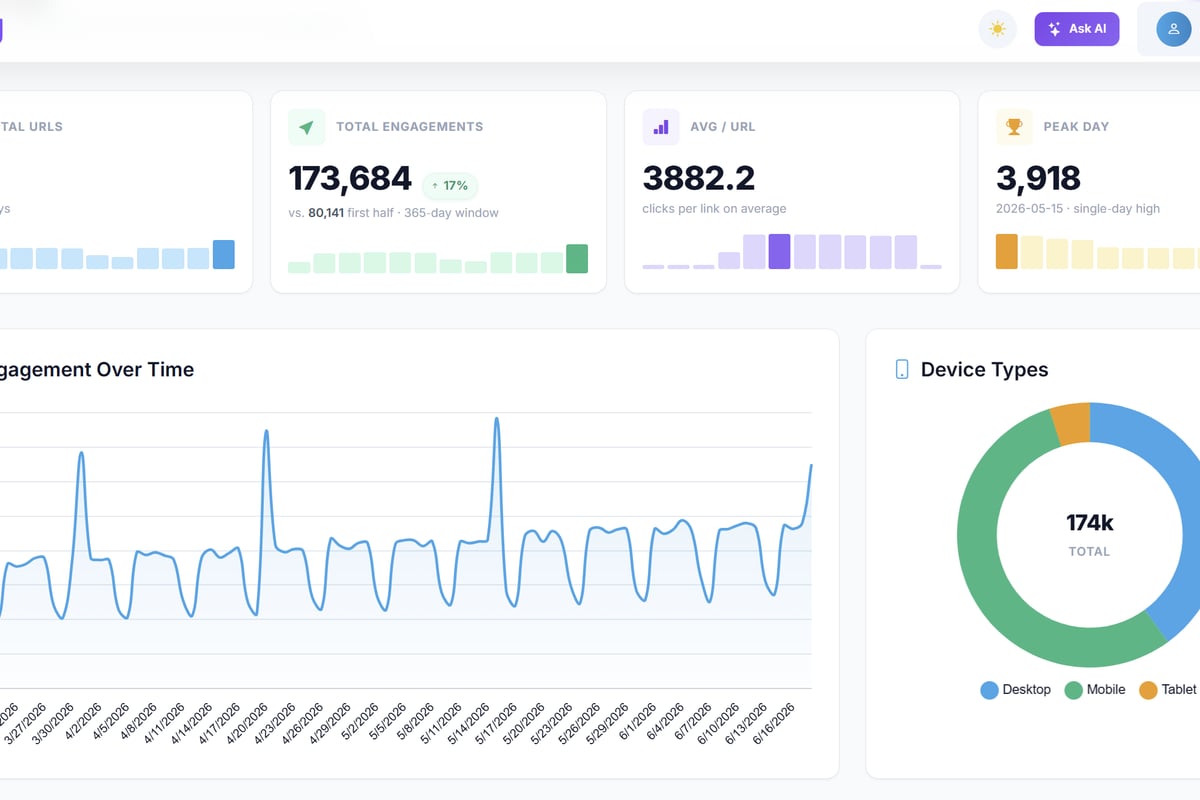
Campaign-level data reveals performance patterns, but link-level tracking provides deeper intelligence. Understanding which external traffic sources convert best on Amazon, how different UTM parameters perform, and where your marketing funnel loses momentum requires granular link management and analytics.
This is where advanced link intelligence becomes essential for amazon digital marketing optimization. Trimy provides the analytics, A/B testing, and smart routing capabilities that transform links into actionable revenue signals. By tracking every click from social media, email, influencer partnerships, or external ads to Amazon listings, marketers gain visibility into which channels truly drive conversions.
Optimizing Product Listings for Conversion
Advertising drives traffic, but listings convert it. Even the most sophisticated amazon digital marketing campaign fails without compelling product content that persuades shoppers to buy.
Title and Keyword Optimization
Product titles balance keyword relevance with readability. Amazon's search algorithm prioritizes titles for keyword matching, making them critical for organic visibility. Effective titles include:
- Brand name for recognition
- Product line or model number for specificity
- Key features that differentiate from competitors
- Size, quantity, or package details when relevant
- Primary keywords that match customer search behavior
Backend search terms supplement title keywords without cluttering visible content. These hidden keywords capture synonyms, alternate spellings, and related terms that shoppers might use. Avoid keyword stuffing or repetition across title and backend fields.
Enhanced Content and A+ Pages
Amazon's A+ Content tools enable brand-registered sellers to create rich product descriptions with images, comparison charts, and formatted text. These enhanced listings demonstrate professionalism and answer pre-purchase questions that basic bullet points cannot address.
A+ Content modules should follow a logical flow:
- Hero image or video demonstrating product in use
- Key benefits highlighted with supporting visuals
- Feature comparisons showing why your product excels
- Technical specifications in scannable format
- Use cases or applications for different customer needs
- Trust signals like certifications, warranties, or guarantees
Video content has become increasingly critical in 2026. Product demonstration videos, unboxing experiences, and user testimonials significantly improve conversion rates by reducing purchase uncertainty.

Review Management and Social Proof
Customer reviews influence both conversion rates and organic rankings. Amazon digital marketing strategies must include systematic review generation while adhering to platform policies and FTC guidelines on endorsements and reviews.
Legitimate review acquisition tactics include:
- Automated post-purchase review requests through Amazon's system
- Product inserts encouraging feedback (without incentives)
- Vine program participation for new product launches
- Proactive customer service that prevents negative reviews
Review response demonstrates brand engagement and can mitigate negative feedback's impact. Addressing concerns publicly shows prospective customers you stand behind your products and value customer satisfaction.
Integrating Amazon with Omnichannel Strategy
Amazon digital marketing doesn't exist in isolation. The most successful brands integrate Amazon into comprehensive omnichannel strategies that balance marketplace sales with direct-to-consumer relationships.
Balancing Marketplaces and Branded Properties
Research from Think with Google on brand.com versus marketplace dynamics reveals how consumers navigate between branded websites and marketplaces throughout their purchase journey. Many shoppers discover products on brand sites but complete purchases on Amazon for convenience, pricing, or Prime benefits.
This behavior creates strategic opportunities. Drive awareness through owned channels while facilitating Amazon conversion through strategic linking. Use retargeting to capture brand-site visitors who didn't convert and redirect them to Amazon with special offers.
Attribution becomes complex in omnichannel environments. A customer might discover your product through Instagram, research on your website, and purchase on Amazon. Without sophisticated link tracking, you cannot accurately measure which marketing investments drive Amazon revenue.
External Traffic and Link Strategy
Driving qualified traffic from external sources to Amazon listings amplifies your marketing impact. Social media campaigns, influencer partnerships, email marketing, and content marketing can all funnel high-intent shoppers to your Amazon products.
External traffic strategies require careful execution:
- Use Amazon Attribution tags to track off-Amazon marketing performance
- Create campaign-specific landing pages that pre-sell before directing to Amazon
- Test different link placements and call-to-action messaging
- Monitor conversion rates to identify which sources deliver qualified traffic
Link management becomes increasingly important as campaigns multiply across channels. Broken links, inconsistent UTM parameters, or untracked campaigns waste marketing spend and obscure performance insights.
Advanced link intelligence platforms enable A/B testing different Amazon listing variations, smart routing based on inventory levels or geographic location, and comprehensive analytics that connect every marketing touchpoint to revenue outcomes.
| External Channel | Conversion Potential | Best Link Strategy | Tracking Priority |
|---|---|---|---|
| Email Marketing | High | Direct product links with UTMs | Campaign performance |
| Social Media Organic | Medium | Bio/profile links, story links | Platform and post type |
| Influencer Partnerships | High | Unique tracking links per creator | Creator ROI |
| Paid Social Ads | Medium-High | Landing page → Amazon | Ad set performance |
| Content Marketing | Medium | Contextual product links | Content topic/type |
Data-Driven Optimization and Testing
Amazon digital marketing success requires continuous optimization based on performance data. Static campaigns deteriorate as competition intensifies and market conditions shift.
Systematic Testing Framework
Implement structured A/B testing across all controllable variables. Test one element at a time to isolate impact:
- Ad creative variations (images, video, headlines)
- Keyword match types and bid strategies
- Product title formats and keyword placement
- Main image variations on listings
- A+ Content module arrangements
- Pricing and promotional strategies
Document test hypotheses, implementation dates, and results. Build an optimization knowledge base that informs future decisions and prevents repeating unsuccessful tests.
Statistical significance matters. Run tests long enough to gather meaningful sample sizes. Seasonal fluctuations, day-of-week effects, and external events can all skew short-term results.
Competitive Intelligence and Market Analysis
Monitor competitor strategies through systematic observation. Track their sponsored keyword bids, content updates, pricing changes, and promotional tactics. This intelligence reveals market dynamics and competitive threats.
Digital Commerce 360's marketplace consumer survey data provides broader context about shopper behavior and marketplace trends. Understanding macro-level shifts helps anticipate changes in your specific category.
Search term reports reveal exactly what customers type before clicking your ads or finding your listings organically. These reports uncover new keyword opportunities, identify negative keywords to exclude, and highlight shifts in customer language and needs.
Automation and Scaling
As campaigns grow complex, automation becomes essential. Rule-based bid adjustments, dayparting strategies, and automated keyword harvesting maintain performance while reducing manual management burden.
However, automation requires oversight. Algorithm-driven decisions optimize for immediate metrics but may miss strategic opportunities or market shifts requiring human judgment. Balance automation efficiency with strategic direction.
Campaign templates and standardized structures enable rapid scaling across product lines or new marketplaces. When expanding to international Amazon sites, replicate proven strategies while adapting for local language, cultural preferences, and competitive landscapes.
Advanced Tactics for Competitive Advantage
Sophisticated amazon digital marketing strategies employ tactics that most competitors overlook or execute poorly.
Launch Strategies and Velocity Building
New product launches require concentrated effort to overcome the cold-start problem. Without sales history, reviews, or organic rankings, new listings struggle for visibility.
Successful launch sequences include:
- Pre-launch audience building through social media and email
- Aggressive initial advertising to drive early sales velocity
- Review generation through Vine or early purchaser outreach
- Promotional pricing to maximize conversions during ranking algorithm sensitivity
- Inventory management ensuring no stockouts during critical early weeks
Sales velocity during the first 30-90 days disproportionately impacts long-term organic rankings. Concentrated marketing investment during launch pays dividends through sustained organic visibility.
Seasonal and Promotional Planning
Amazon's promotional calendar creates predictable demand spikes. Prime Day, Black Friday/Cyber Monday, and category-specific events generate massive traffic increases.
Effective seasonal planning begins months in advance. Inventory must arrive at fulfillment centers early to qualify for promotional placements. Lightning Deals and Best Deals require advance application. Ad budgets need expansion to capitalize on increased search volume.
Post-holiday periods often present opportunities as competitors reduce spending. Maintaining presence when others pull back can capture market share at lower costs.
Brand Store Development
Amazon Brand Stores function as your owned real estate within Amazon's marketplace. These customizable multi-page experiences showcase your complete product catalog, tell your brand story, and provide curated shopping experiences.
Well-designed Brand Stores serve multiple functions. They act as destinations for Sponsored Brands traffic, reducing immediate purchase pressure while building brand affinity. They facilitate cross-selling by highlighting complementary products. They improve organic visibility through additional keyword-rich content.
Store analytics reveal shopping patterns, category preferences, and navigation behavior that inform broader marketing strategies. This data complements product-level metrics to paint a complete picture of customer engagement.
Mastering amazon digital marketing in 2026 demands sophisticated strategies across advertising, content optimization, and data analytics. The platform's complexity creates barriers for casual marketers while rewarding those who invest in systematic optimization and advanced tools. Every campaign, listing, and external traffic source represents an opportunity to gather insights and improve performance. Trimy transforms those opportunities into actionable intelligence through advanced link analytics, A/B testing, and smart routing that connect every marketing touchpoint to measurable Amazon revenue.