What Is Deep Linking: A Complete Guide for 2026
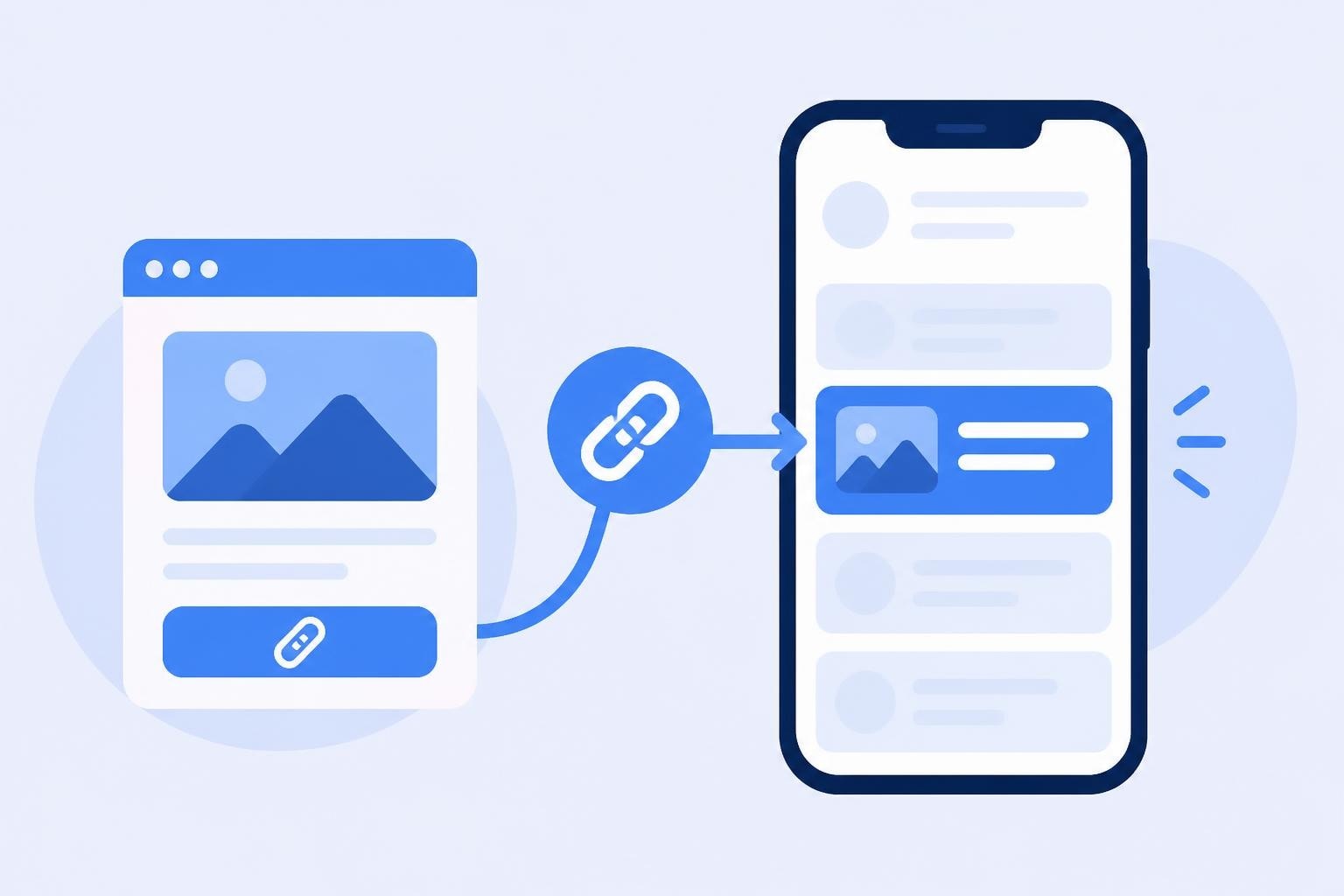
Understanding what is deep linking has become essential for marketers and developers who want to create seamless user experiences across digital platforms. Deep linking is a navigation technique that directs users to specific content within an app or website, rather than simply opening a homepage or landing page. This targeted approach transforms how businesses guide their audiences through digital journeys, reducing friction and improving engagement rates. As mobile usage continues to dominate internet traffic in 2026, mastering deep linking strategies can significantly impact your conversion rates and user retention.
Understanding the Fundamentals of Deep Linking
Deep linking represents a fundamental shift in how we think about user navigation. Instead of forcing users to manually search for content after clicking a link, deep links transport them directly to their destination. This precision matters because every additional click or search step increases the likelihood that a user will abandon their journey.
The technology works by encoding specific parameters within a URL that tell an application or browser exactly where to navigate. When a user clicks a deep link, the system reads these parameters and executes the appropriate navigation commands. Deep linking mechanisms have evolved significantly since their introduction, now supporting complex routing scenarios across multiple platforms.
The Technical Architecture Behind Deep Links
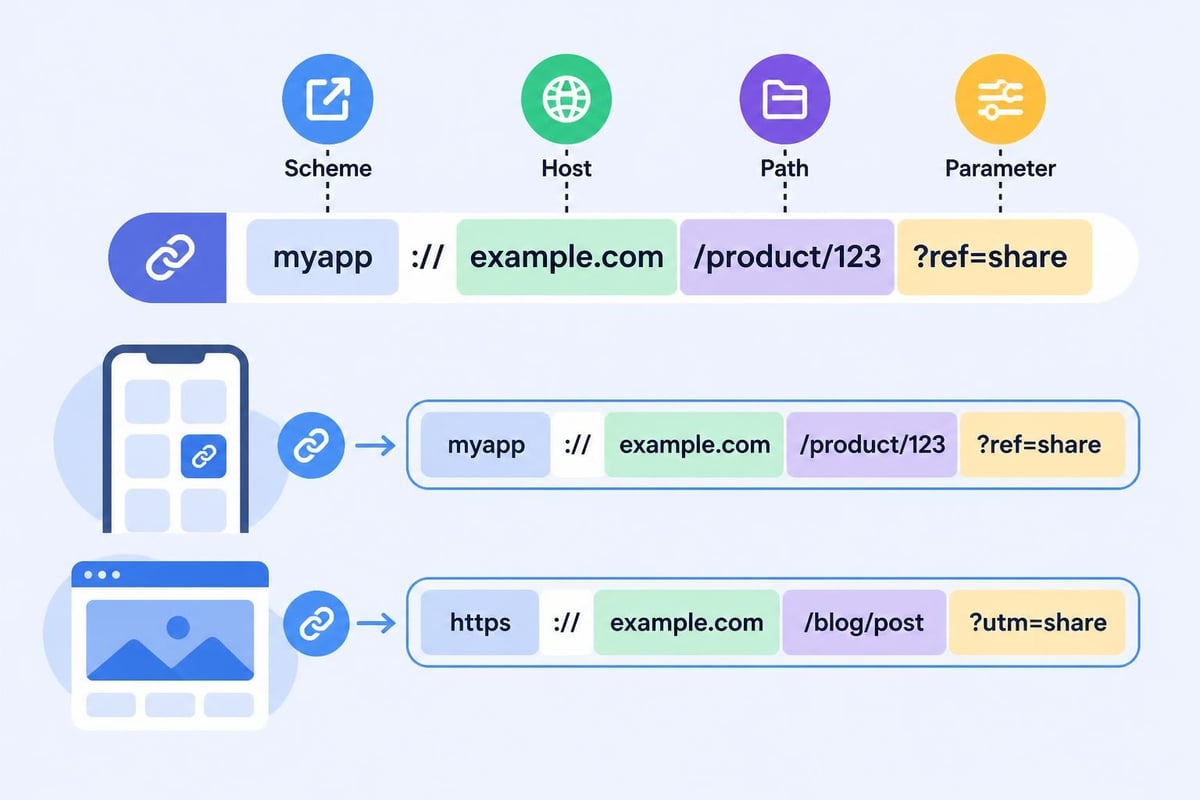
Deep links contain more information than standard URLs. They include scheme identifiers, path components, and query parameters that specify exact destinations. For mobile apps, this might mean directing users to a specific product page, user profile, or checkout screen. For websites, it could point to a particular blog post section or dashboard view.
Key components of a deep link include:
- Scheme: Identifies the protocol (http://, https://, or custom app scheme)
- Host: Specifies the domain or app identifier
- Path: Defines the specific location within the app or site
- Parameters: Provide additional context or data for the destination
Types of Deep Linking Technologies
Understanding what is deep linking requires familiarity with its various implementations. Each type serves different use cases and technical requirements.
Traditional Deep Links
Traditional deep links work exclusively when users already have an app installed. They use custom URL schemes registered by apps to trigger specific actions. For example, a link with the scheme myapp://product/12345 would only work if the corresponding app is installed on the device.
These links fail gracefully when the app isn't present, typically showing an error message or doing nothing. This limitation led to the development of more sophisticated solutions.
Deferred Deep Links
Deferred deep links solve the installation problem by remembering the intended destination even when users need to install an app first. When a user without the app clicks a deferred deep link, they're directed to the app store. After installation and first launch, the app automatically navigates to the originally intended content.
This technology requires server-side tracking to match users before and after installation. Android Developers provide detailed implementation guidance for creating these experiences on their platform.
Contextual Deep Links
Contextual deep links go beyond navigation by carrying additional data about the user's origin, campaign source, or referrer information. This metadata enables personalized experiences and accurate attribution tracking. Marketers particularly value this capability because it connects specific campaigns to downstream user behavior.
| Deep Link Type | Requires App Install | Carries Context Data | Primary Use Case |
|---|---|---|---|
| Traditional | Yes | No | Basic app navigation |
| Deferred | No | Yes | App acquisition campaigns |
| Contextual | No | Yes | Advanced attribution & personalization |
Business Applications and Marketing Benefits
Deep linking directly impacts key business metrics across multiple dimensions. Companies implementing deep linking strategies report significant improvements in conversion rates, user engagement, and customer lifetime value.
Marketing campaigns benefit enormously from deep linking capabilities. Instead of sending users to a generic homepage where they must navigate to promotional content, marketers can link directly to featured products, limited-time offers, or personalized landing pages. This directness reduces abandonment and increases campaign ROI.
Email Marketing Optimization
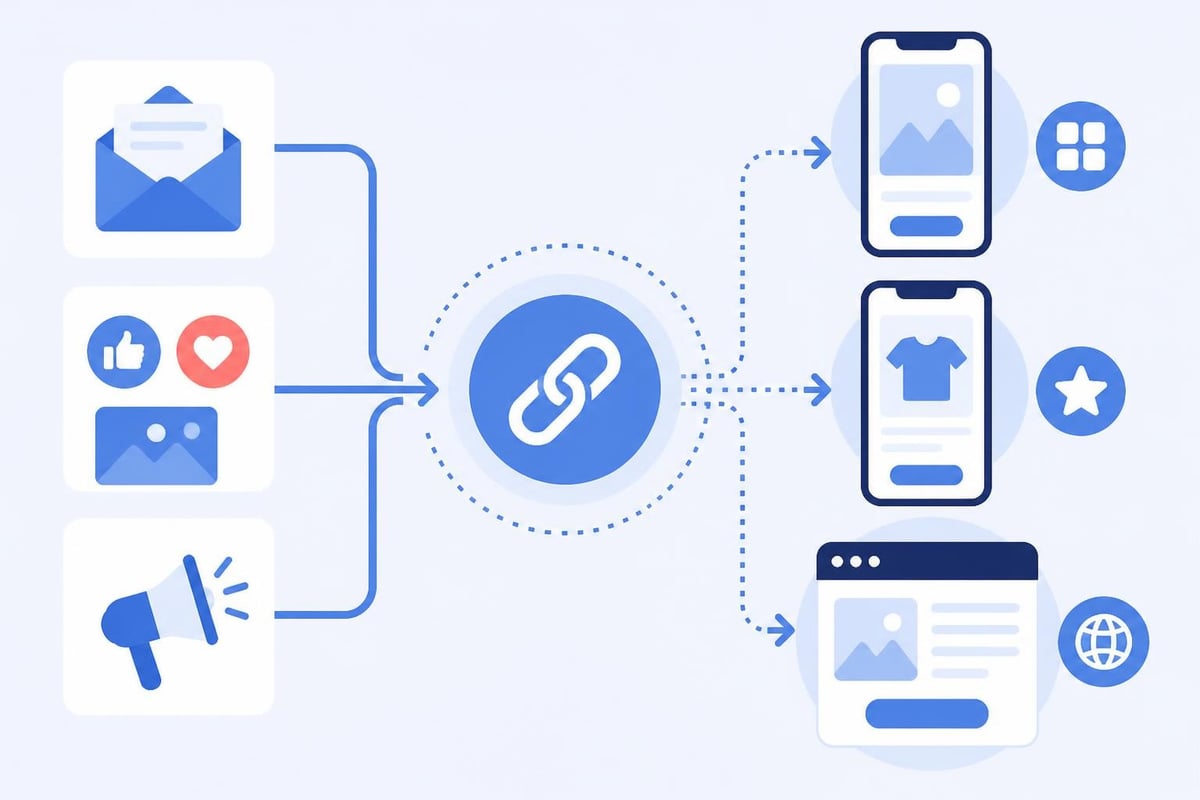
Email campaigns represent one of the most powerful applications of deep linking technology. When subscribers receive promotional emails on their mobile devices, deep links ensure they land exactly where intended. A fashion retailer can link directly to a specific dress in their app, with the correct size and color pre-selected based on user preferences.
The difference in conversion rates is substantial. Users who reach their destination in one click convert at rates 2-3 times higher than those who must navigate manually after clicking.
Social Media Integration
Social media platforms have embraced deep linking to improve user experiences. When users share content from apps, the shared links can use deep linking to bring others directly back to that content. Deep linking enhances these user journeys by eliminating navigation friction.
Platforms like Instagram, Facebook, and Twitter support deep linking in their APIs, enabling seamless transitions between social content and apps. This integration is crucial for social commerce strategies where impulse purchases depend on minimal friction.
Implementation Strategies for Developers
Implementing deep linking requires careful planning and technical execution. Developers must consider platform differences, fallback mechanisms, and analytics integration from the start.
Essential implementation steps include:
- Define your URL structure with clear, logical patterns that scale with your app
- Register URL schemes with operating systems and claim associated domains
- Build routing logic that maps URLs to specific app states or screens
- Implement fallback handling for scenarios where deep linking fails
- Test across devices and OS versions to ensure consistent behavior
- Integrate analytics to measure deep link performance and user journeys
Platform-Specific Considerations
iOS and Android handle deep linking differently, requiring platform-specific implementations. iOS uses Universal Links, which associate your domain with your app through a verification file hosted on your server. Android employs App Links with similar verification requirements.
Both platforms also support custom URL schemes for backward compatibility, though these lack the security and reliability of the newer standards. Modern implementations typically combine both approaches to maximize compatibility.
Link Management and Analytics
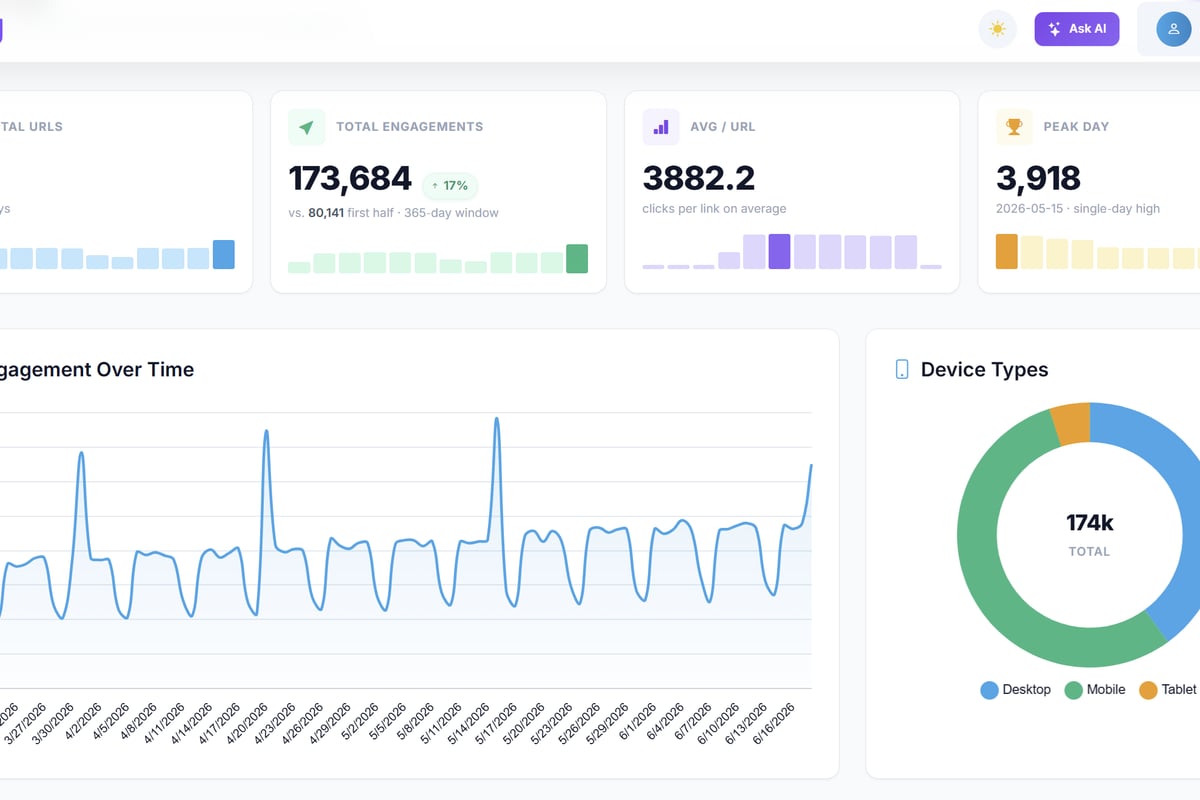
Understanding what is deep linking from a measurement perspective is critical for optimization. Every deep link should carry tracking parameters that identify its source, campaign, and intended outcome. This data enables precise attribution and helps marketers understand which channels drive the most valuable users.
Link management platforms specialize in creating, organizing, and analyzing deep links at scale. Trimy provides comprehensive link intelligence that transforms deep links into actionable insights, with advanced analytics showing exactly how users navigate through your digital properties after clicking.
Web Deep Linking and SEO Implications
While often associated with mobile apps, deep linking also plays a crucial role in web navigation and search engine optimization. Web deep links point to specific pages or sections within websites, rather than homepages. Search engines and legal frameworks recognize deep linking as standard practice, though some nuances require attention.
SEO Benefits and Best Practices
Search engines favor websites with clear deep linking structures because they enable better content discovery and indexing. When your content has unique, descriptive URLs that can be deep linked, search engines can catalog and rank individual pages more effectively.
Deep linking SEO best practices:
- Create descriptive, keyword-rich URLs for all important content
- Implement proper canonical tags to avoid duplicate content issues
- Use structured data markup to help search engines understand page context
- Ensure deep links remain stable over time to preserve link equity
- Build internal linking strategies that leverage deep linking principles
Fragment Identifiers and Anchor Links
Web deep linking extends to specific sections within pages through fragment identifiers (anchor links). These allow users to jump directly to relevant content on long pages. Modern single-page applications use fragment identifiers extensively to manage state and navigation without full page reloads.
However, search engines handle fragment identifiers inconsistently. The hashbang (#!) syntax that once dominated single-page apps has largely been replaced by the History API, which enables proper deep linking in JavaScript-heavy applications without SEO penalties.
Security and Privacy Considerations
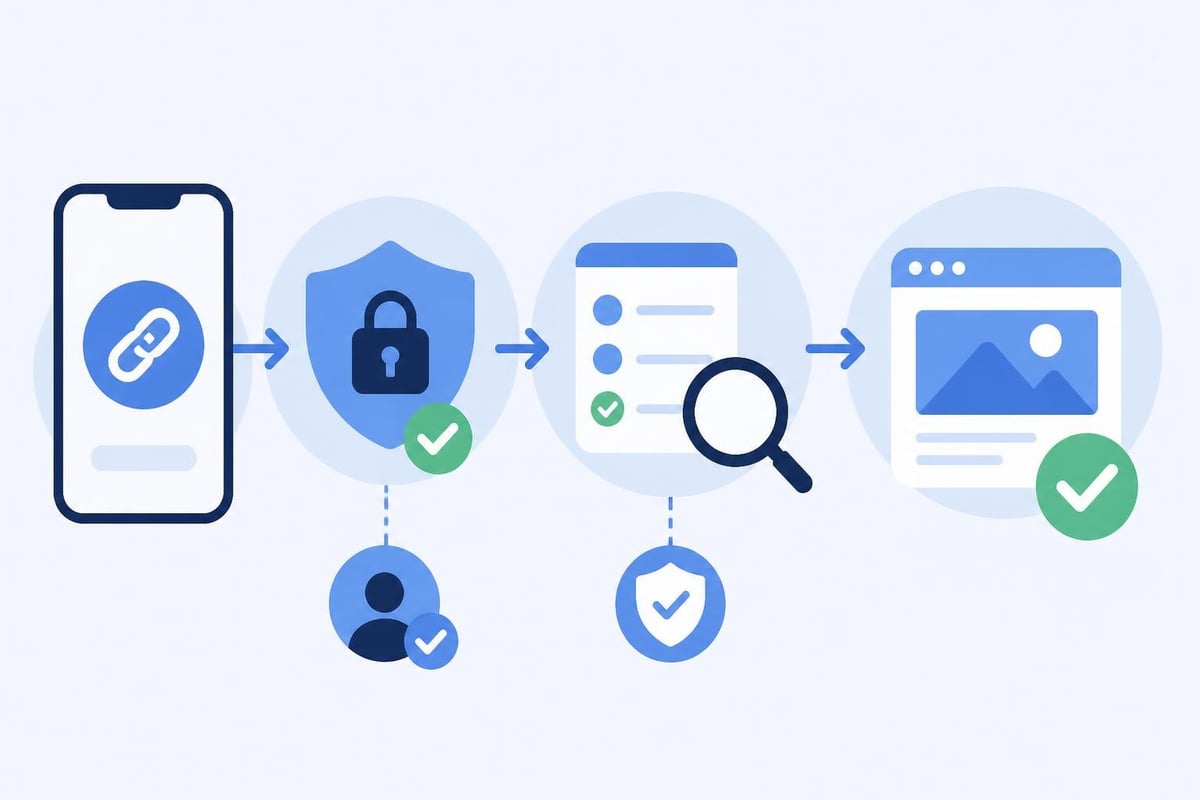
Deep linking introduces security and privacy challenges that developers and marketers must address. Because deep links can bypass normal authentication flows, they potentially expose sensitive content or functionality.
| Security Concern | Risk Level | Mitigation Strategy |
|---|---|---|
| Unauthorized access to protected content | High | Validate authentication state before navigation |
| Parameter tampering | Medium | Implement server-side validation of all parameters |
| Tracking without consent | Medium | Honor user privacy preferences and regulations |
| Link hijacking | Low | Use HTTPS and domain verification |
Authentication and Authorization
Deep links that point to authenticated areas must verify user permissions before granting access. Simply checking if a user is logged in isn't sufficient. The system must confirm they have authorization to view the specific content requested.
Implementing secure deep linking requires token-based authentication, session validation, and proper error handling. When authentication fails, users should be redirected to login screens that preserve the original deep link destination for post-authentication navigation.
Privacy Regulations and User Consent
Privacy regulations like GDPR and CCPA impact how businesses can use deep linking for tracking and personalization. Contextual deep links that carry user data must comply with consent requirements and data minimization principles.
Advanced Deep Linking Use Cases
Sophisticated organizations leverage deep linking for scenarios beyond basic navigation. These advanced applications demonstrate the full potential of what is deep linking technology.
Cross-Platform User Journeys
Users frequently switch between devices and platforms during their purchase journey. A customer might discover a product on desktop, research it on mobile, and complete the purchase on a tablet. Deep linking enables continuity across these transitions by preserving context and progress.
Implementing cross-platform deep linking requires shared user identifiers, cloud-based state management, and intelligent routing that detects the user's current platform. When executed well, users experience seamless transitions that feel like a single, continuous interaction.
A/B Testing and Personalization
Deep links can carry experiment identifiers that trigger specific variations of content or user experiences. This capability enables precise A/B testing where marketers control exactly what users see based on the link they clicked.
Combined with user segmentation data, deep links enable hyper-personalized experiences. A returning customer and first-time visitor clicking the same campaign link can see entirely different content optimized for their status.
Referral and Viral Growth
Viral growth mechanics depend heavily on deep linking technology. When users share content from apps, the shared links must bring recipients directly to that content to maintain context and motivation for engagement.
Referral programs use deep links to track who invited whom, automatically applying rewards and creating closed-loop attribution. The deep link carries the referrer's identifier, ensuring proper credit assignment when new users sign up or make purchases.
Measuring Deep Linking Success
Analytics form the foundation of deep linking optimization. Without proper measurement, you can't determine which links drive value or identify optimization opportunities.
Key metrics for deep linking performance:
- Click-through rate (CTR) by source and campaign
- Installation rate for app acquisition links
- Time to first action after deep link navigation
- Conversion rate by deep link destination
- Session duration and engagement depth
- Attribution accuracy and credit assignment
Attribution Challenges
Deep linking complicates attribution because users interact with multiple touchpoints before converting. A user might click a deep link in an email, later see a retargeting ad, and finally convert through direct navigation. Determining which touchpoint deserves credit requires sophisticated attribution modeling.
Multi-touch attribution models distribute credit across the customer journey, while deep link parameters provide the data needed to implement these models. Advanced deep linking platforms help marketers understand the complete path to conversion.
Continuous Optimization
Deep linking performance improves through systematic testing and refinement. Marketers should regularly analyze which deep link destinations drive the highest conversion rates, which campaigns generate the most valuable users, and where friction points cause abandonment.
This optimization cycle-measure, analyze, hypothesize, test, implement-transforms deep linking from a technical feature into a strategic advantage. Organizations that treat deep linking as an ongoing optimization opportunity consistently outperform those viewing it as a one-time implementation project.
Future Trends in Deep Linking Technology
The evolution of deep linking continues as new platforms, devices, and user behaviors emerge. Several trends are shaping what is deep linking becoming in 2026 and beyond.
Voice assistants and smart speakers increasingly support deep linking, enabling users to speak commands that trigger specific app actions. "Hey assistant, order my usual coffee" might deep link into a coffee app, load the saved order, and complete checkout-all through voice navigation.
Wearable devices require new deep linking approaches because of their limited screen real estate and interaction models. Deep links on smartwatches must navigate efficiently while respecting the device's constraints.
Augmented reality platforms are developing deep linking standards that point to specific AR experiences or 3D objects. As AR becomes mainstream, these deep links will enable sharing and discovery of virtual content layered onto physical spaces.
The convergence of web and app experiences through progressive web apps (PWAs) blurs traditional deep linking boundaries. PWAs combine the discoverability of web content with app-like functionality, requiring hybrid deep linking strategies that work across both paradigms.
Deep linking has evolved from a technical novelty to an essential component of digital user experiences, enabling seamless navigation and reducing friction across platforms and devices. By implementing strategic deep linking that connects users directly to valuable content, businesses can dramatically improve conversion rates, attribution accuracy, and overall campaign performance. Trimy helps marketers and developers harness the full power of deep linking through intelligent link management, advanced analytics, and optimization tools that transform every link into actionable revenue signals.