Marketing Segmentation: A Complete Guide for 2026
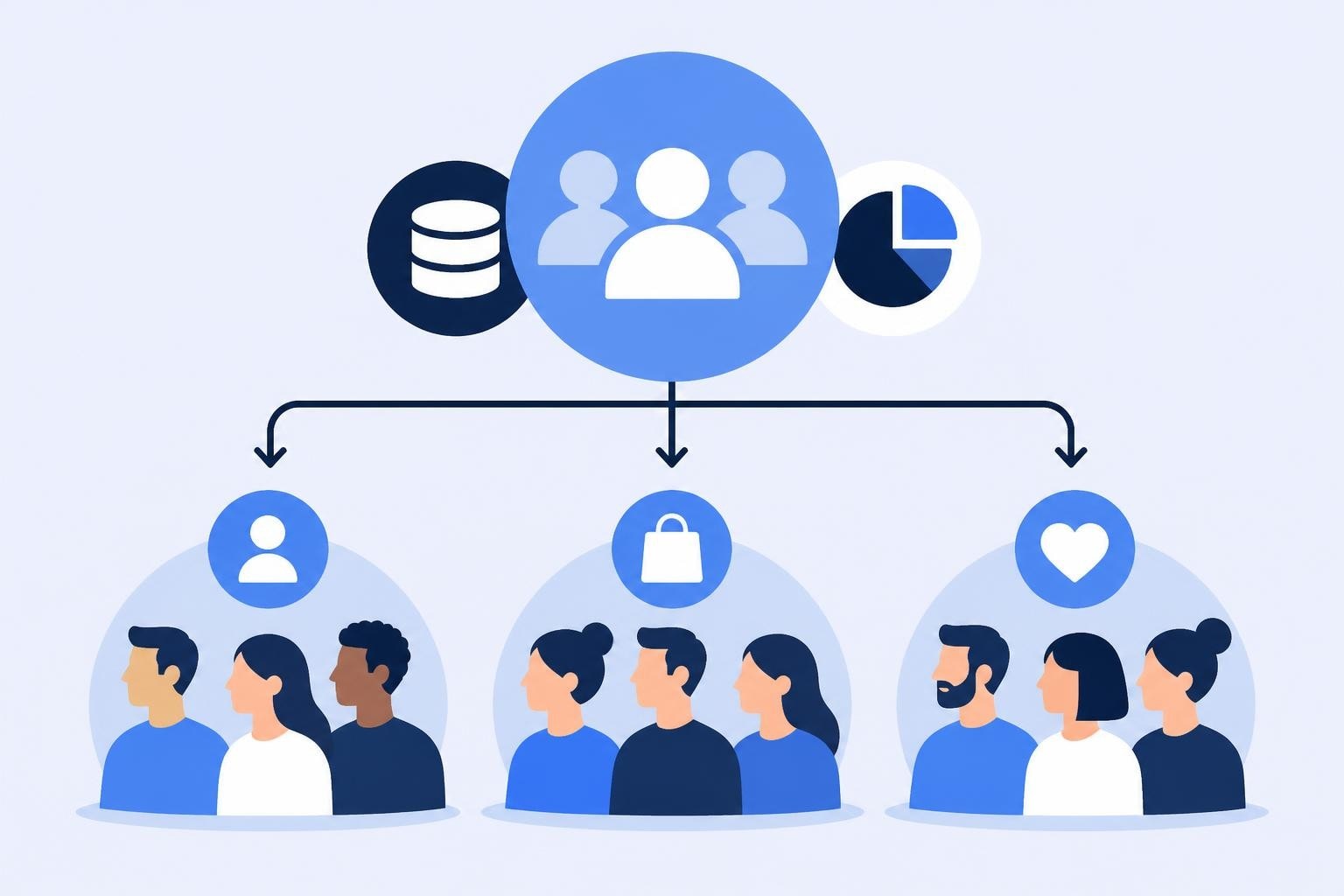
Marketing segmentation transforms broad audiences into precise, actionable groups that respond to tailored messaging and offers. In 2026, businesses that master segmentation achieve higher conversion rates, better customer retention, and more efficient marketing spend. Whether you manage link campaigns, content distribution, or multi-channel outreach, understanding how to divide your market into meaningful segments separates profitable campaigns from wasted budget. This guide explores proven segmentation frameworks, modern implementation methods, and practical strategies to turn audience data into revenue.
Understanding Marketing Segmentation Fundamentals
Marketing segmentation is the strategic process of dividing a heterogeneous market into smaller, homogeneous groups based on shared characteristics, behaviors, or needs. Each segment represents a distinct subset of your total addressable market that exhibits similar response patterns to marketing stimuli.
The value proposition is simple: generic messaging reaches everyone but resonates with no one. Segmented campaigns speak directly to specific pain points, aspirations, and contexts. Research from Harvard Business Review's market segmentation studies consistently shows that organizations employing sophisticated segmentation strategies outperform competitors on customer lifetime value and acquisition efficiency.
The Four Core Segmentation Dimensions
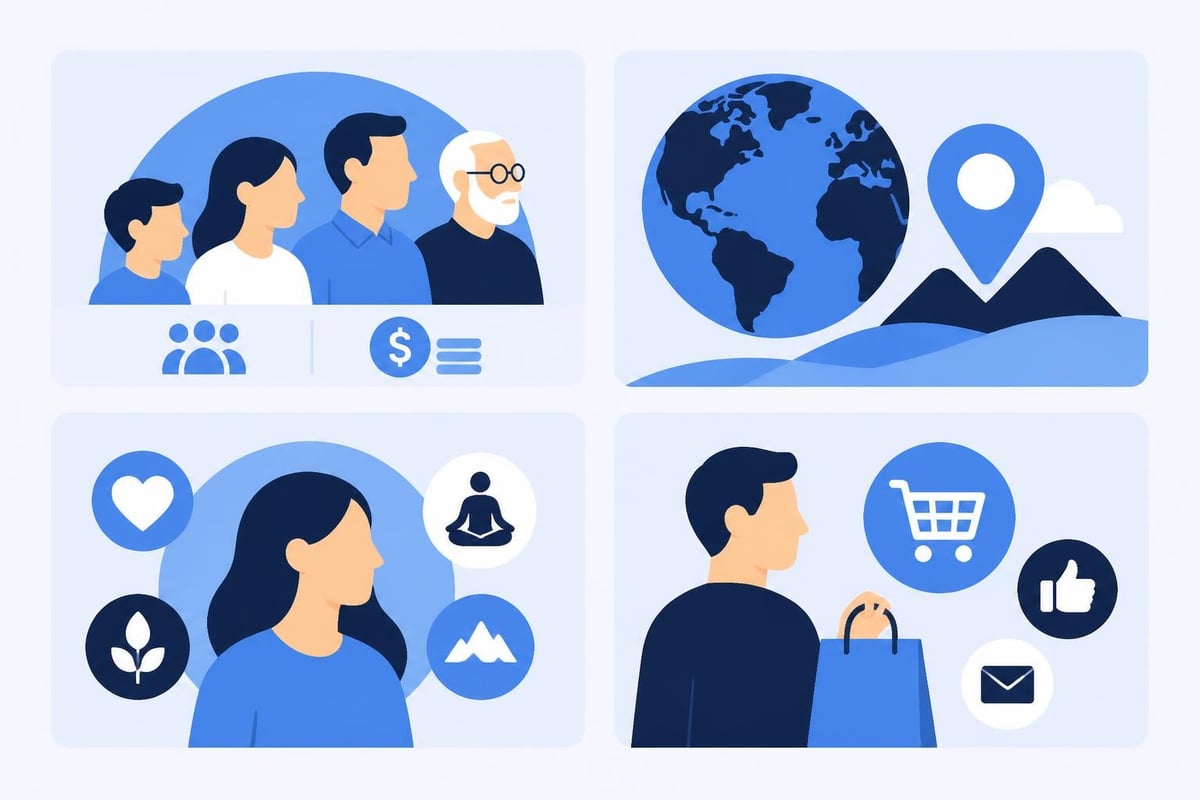
Every marketing segmentation strategy builds on four fundamental dimensions, each offering unique insights into customer groups.
Demographic segmentation divides markets by quantifiable population characteristics:
- Age and generational cohorts
- Income levels and socioeconomic status
- Education and occupation
- Family structure and household size
- Gender identity and marital status
Geographic segmentation organizes audiences by location and regional attributes:
- Country, region, and city
- Climate and terrain
- Population density (urban, suburban, rural)
- Cultural and language zones
Psychographic segmentation examines psychological and lifestyle factors:
- Values, beliefs, and attitudes
- Personality traits and lifestyle choices
- Interests, hobbies, and activities
- Social class and aspirations
Behavioral segmentation analyzes how customers interact with products and brands:
- Purchase history and frequency
- Usage patterns and consumption rates
- Brand loyalty and switching behavior
- Benefits sought and decision triggers
- Customer journey stage and readiness to buy
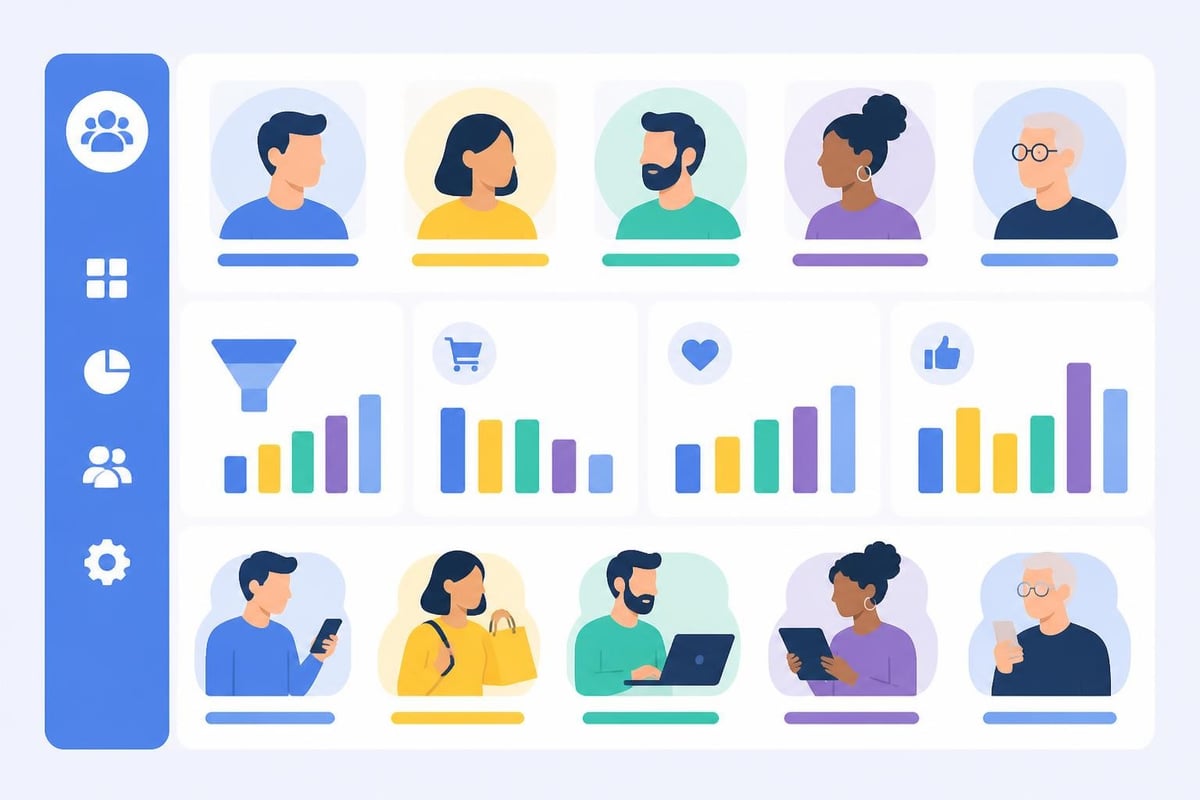
Modern marketing segmentation combines these dimensions into composite profiles. A software company might target "millennial marketing managers in mid-sized tech companies who value data-driven decision making and actively research tools before purchase." This multi-dimensional approach creates segments precise enough for personalized messaging yet large enough to justify dedicated campaigns.
Implementing Data-Driven Segmentation Strategies
The shift from intuition-based to data-driven marketing segmentation marks the most significant change in audience targeting over the past decade. Organizations now leverage first-party data, behavioral analytics, and machine learning to identify segments that actually predict customer behavior.
Google's approach to audience segmentation emphasizes measurement frameworks that connect segment definitions to business outcomes. Start by identifying the customer attributes that correlate with your key performance indicators. For link management and campaign optimization, relevant behavioral signals might include click-through patterns, conversion rates by traffic source, or engagement with specific content types.
Building Segments from Analytics Data
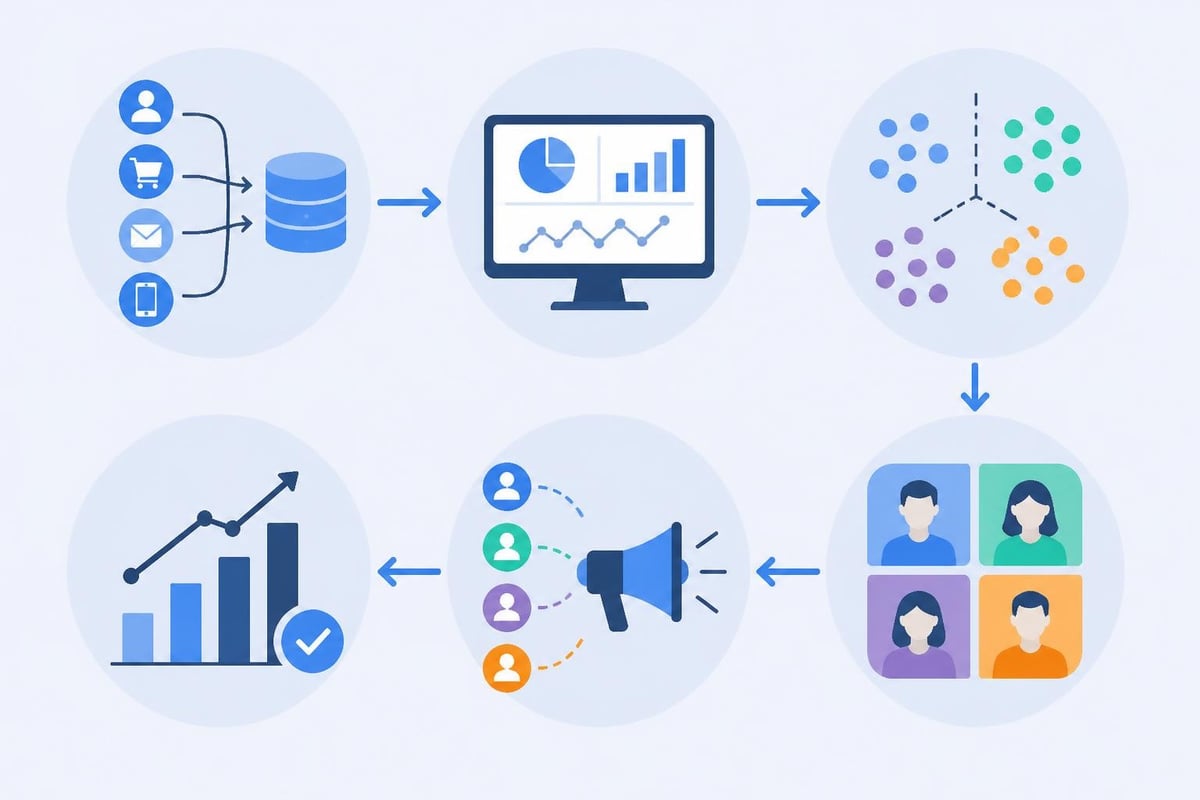
The technical implementation of marketing segmentation requires systematic data collection and analysis. Begin with your existing analytics infrastructure and customer data platform.
- Audit available data sources across your marketing stack, CRM, website analytics, and transaction systems
- Identify clustering variables that show meaningful variation across your customer base
- Test segment hypotheses using historical campaign data to validate that proposed segments respond differently
- Create segment definitions with clear, measurable criteria that marketing automation can execute
- Establish measurement frameworks to track segment-level performance over time
| Data Source | Segmentation Value | Implementation Complexity |
|---|---|---|
| Website behavior | High - reveals intent and interests | Medium - requires event tracking |
| Transaction history | Very High - predicts future purchases | Low - structured data available |
| Email engagement | Medium - shows channel preference | Low - native to email platforms |
| Social interactions | Medium - indicates brand affinity | High - requires API integration |
| Support tickets | High - reveals pain points | Medium - needs categorization |
The customer segmentation techniques outlined by HubSpot provide actionable frameworks for translating raw data into segment definitions. The key is moving beyond simple demographic cuts to behavioral cohorts that predict response.
For organizations running digital campaigns with tracked links, behavioral segmentation becomes particularly powerful. You can segment audiences based on which content they engaged with, which traffic sources drove their visits, and how they navigated through your conversion funnel. This granular behavioral data enables precise retargeting and personalized follow-up sequences.
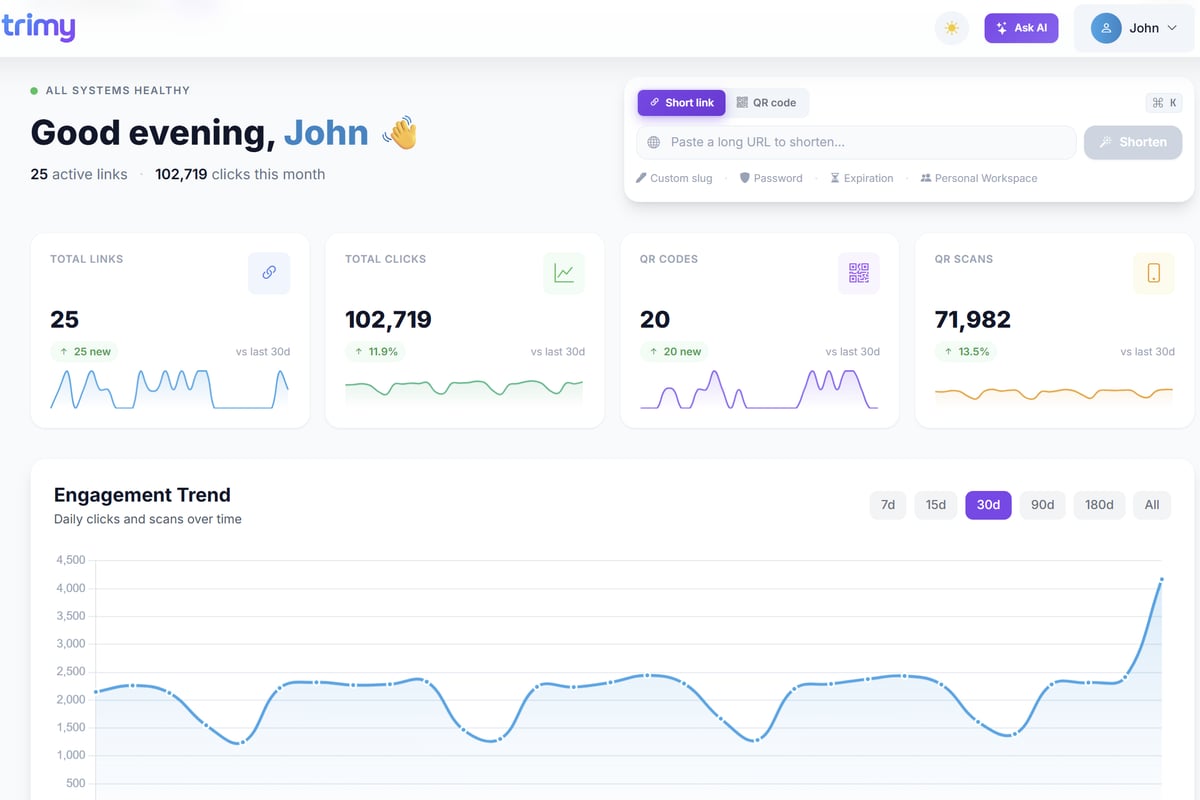
Trimy supports this data-driven approach by capturing detailed click and conversion data across every link in your campaigns. The platform's analytics reveal which audience segments respond to different messaging, channels, and offers, allowing you to refine your marketing segmentation based on actual performance rather than assumptions.
Advanced Segmentation Methods for 2026
Traditional marketing segmentation relied on static demographic profiles. Modern approaches employ dynamic, predictive models that adapt as customer behavior evolves.
Predictive and AI-Enhanced Segmentation
Machine learning algorithms now identify segments that humans might overlook. Clustering algorithms like K-means, hierarchical clustering, and DBSCAN find natural groupings in multi-dimensional customer data. These mathematical approaches remove human bias and surface non-obvious patterns.
Predictive segmentation goes further by forecasting future behavior:
- Propensity models score customers on likelihood to convert, churn, or upgrade
- Lifetime value predictions identify high-value segments worth premium acquisition costs
- Next-best-action models recommend optimal messaging for each segment
- Lookalike modeling finds new prospects similar to your best customers
Recent research, including methodological advances in causal segmentation, emphasizes creating segments based on causal relationships rather than mere correlation. This ensures that segment-specific strategies actually drive the outcomes you seek rather than simply describing existing patterns.
Micro-Segmentation and Personalization at Scale
The granularity of marketing segmentation continues to increase. Micro-segmentation creates hundreds or thousands of narrow segments, each receiving hyper-targeted content. At the extreme, segment-of-one personalization treats each customer as a unique segment.
This approach works when you have:
- Sufficient data volume to statistically support narrow segments
- Marketing automation capable of delivering personalized content at scale
- Content production resources to create variant messaging
- Clear ROI justification for the additional complexity
Implementation considerations for micro-segmentation:
- Start with your highest-value customer segments before expanding
- Test whether narrower segments actually improve performance metrics
- Balance personalization benefits against content production costs
- Ensure compliance with privacy regulations when using granular behavioral data
Organizations pursuing micro-segmentation often employ dynamic content systems that assemble personalized messages from modular components rather than creating entirely unique assets for each segment.
Activating Segments Across Marketing Channels
Creating segments delivers no value until you activate them with differentiated strategies. Each segment requires tailored messaging, offers, channels, and timing.
Channel Selection by Segment
Different segments prefer different communication channels. B2B decision-makers might respond to LinkedIn and email, while younger consumer segments engage primarily through Instagram and TikTok. Forrester's research on customer segmentation highlights that channel preference itself often defines valuable segments.
Map your segments to channels based on:
- Where each segment spends attention
- Which channels drive highest engagement for each segment
- Cost per acquisition by channel and segment
- Competitive intensity and noise levels in each channel
For link-based campaigns, understanding which segments respond to different traffic sources becomes critical. Some segments convert better from organic social, others from paid search, and still others from email. Your marketing segmentation should inform budget allocation across channels.
Messaging and Creative Differentiation
Each segment should encounter messaging that addresses their specific situation, concerns, and aspirations. Generic value propositions get replaced with segment-specific benefits.
Consider a project management tool marketing to different segments:
| Segment | Primary Pain Point | Core Message | Proof Point |
|---|---|---|---|
| Startup founders | Chaos and missed deadlines | "Ship faster without dropping balls" | Time to first launch metric |
| Enterprise PMOs | Governance and visibility | "Complete portfolio transparency" | Compliance certification |
| Creative agencies | Client collaboration | "Delight clients with seamless updates" | Client satisfaction scores |
| Remote teams | Coordination across time zones | "Stay aligned from anywhere" | Async productivity data |
The messaging framework remains consistent, but emphasis shifts to match each segment's decision criteria. Your segment research should reveal the specific language, concerns, and proof points that resonate.
Measuring Segmentation Effectiveness
Marketing segmentation investments must demonstrate measurable return. Establish baseline metrics before implementing segment-based strategies, then track improvement.
Key Performance Indicators by Segment
Standard KPIs take on new meaning when analyzed by segment. Overall conversion rate matters less than segment-level variation and improvement.
Critical metrics for segmentation performance:
- Conversion rate differential between segments validates that segments represent meaningfully different audiences
- Cost per acquisition by segment reveals which segments offer profitable growth
- Customer lifetime value by segment identifies where to concentrate retention efforts
- Engagement metrics by segment show which groups respond to your content and messaging
- Segment migration patterns track how customers move between segments over time
Track these metrics in dashboards that make segment performance transparent to marketing teams. TechTarget's overview of customer segmentation analytics provides technical guidance on measurement infrastructure.
Attribution and Multi-Touch Analysis
Understanding how segments move through multi-touch journeys requires sophisticated attribution. Different segments follow different paths to conversion. Some make quick decisions after minimal research, others engage across many touchpoints over weeks or months.
Modern attribution models assign credit across the customer journey, revealing which channels and messages influence each segment. This granular view informs both segment definition refinement and budget allocation.
For organizations managing complex multi-channel campaigns, link-level attribution becomes essential. Every link represents a trackable touchpoint. By tagging links with segment parameters and analyzing click-through behavior, you build a complete picture of segment-specific conversion paths.
Evolving Your Segmentation Framework
Marketing segmentation is not a one-time project but an ongoing discipline. Markets shift, customer needs evolve, and new data sources emerge. Your segmentation framework should adapt continuously.
Refresh Cycles and Segment Validation
Establish regular intervals to validate that your segments still represent distinct, actionable groups. Quarterly or bi-annual reviews work for most organizations. During these reviews:
- Test whether segment definitions still predict differential response
- Identify emerging sub-segments that warrant separation
- Consolidate segments that no longer show meaningful differences
- Incorporate new data sources and behavioral signals
- Update messaging and creative based on performance learnings
Some segments remain stable over years, particularly those based on fundamental demographics or business firmographics. Behavioral segments often shift more rapidly as product usage patterns and competitive alternatives evolve.
Privacy, Consent, and Ethical Segmentation
The regulatory environment around data collection and segmentation continues to tighten. GDPR, CCPA, and emerging privacy frameworks restrict how organizations collect, store, and use customer data for marketing segmentation.
Privacy-compliant segmentation practices:
- Build segments primarily from first-party data customers explicitly share
- Maintain clear consent records for all data collection and segmentation use
- Provide transparency about how segmentation influences customer experiences
- Offer opt-out mechanisms for personalization and targeted messaging
- Avoid protected class discrimination in segment-based pricing or access
- Implement data minimization, collecting only what segmentation requires
The shift toward privacy-first marketing actually strengthens segmentation by forcing focus on meaningful, consented relationships. Organizations that build trust through transparent data practices gain permission to collect richer behavioral signals, enabling more sophisticated marketing segmentation.
Integrating Segmentation Across the Organization
Marketing segmentation delivers maximum value when it extends beyond the marketing department. Sales, product, customer success, and support teams all benefit from shared segment understanding.
Cross-Functional Segment Alignment
Create a unified segment taxonomy that all customer-facing teams reference. When marketing, sales, and support use consistent segment definitions, the organization delivers coherent experiences across touchpoints.
Sales teams use segments to:
- Prioritize outreach to high-value segment prospects
- Tailor pitch decks and demos to segment-specific pain points
- Forecast pipeline based on historical segment conversion patterns
- Set appropriate acquisition cost expectations by segment
Product teams use segments to:
- Prioritize feature development for strategic segments
- Design onboarding flows optimized for each segment's needs
- Identify expansion opportunities within high-value segments
- Create usage analytics dashboards segmented by customer type
Customer success uses segments to:
- Assign account managers based on segment complexity and value
- Design proactive outreach cadences appropriate to each segment
- Identify at-risk customers within each segment
- Tailor renewal and expansion conversations
This cross-functional alignment requires shared data infrastructure. Customer data platforms and CRM systems should expose segment membership to all relevant teams, enabling everyone to act on the same customer intelligence.
Marketing segmentation transforms generic audiences into precise targets that respond to tailored strategies, driving higher conversion rates and more efficient marketing spend. By combining traditional demographic frameworks with modern behavioral analytics and predictive models, organizations create dynamic segments that adapt as markets evolve. When you implement data-driven segmentation across channels and measure performance rigorously, every campaign becomes more targeted and every marketing dollar works harder. Trimy empowers this segment-based approach with deep link analytics, A/B testing, and traffic intelligence that reveals exactly how different audience segments engage with your campaigns, enabling continuous refinement of your marketing segmentation strategy.