QR Code Business Card: Smart Networking for 2026
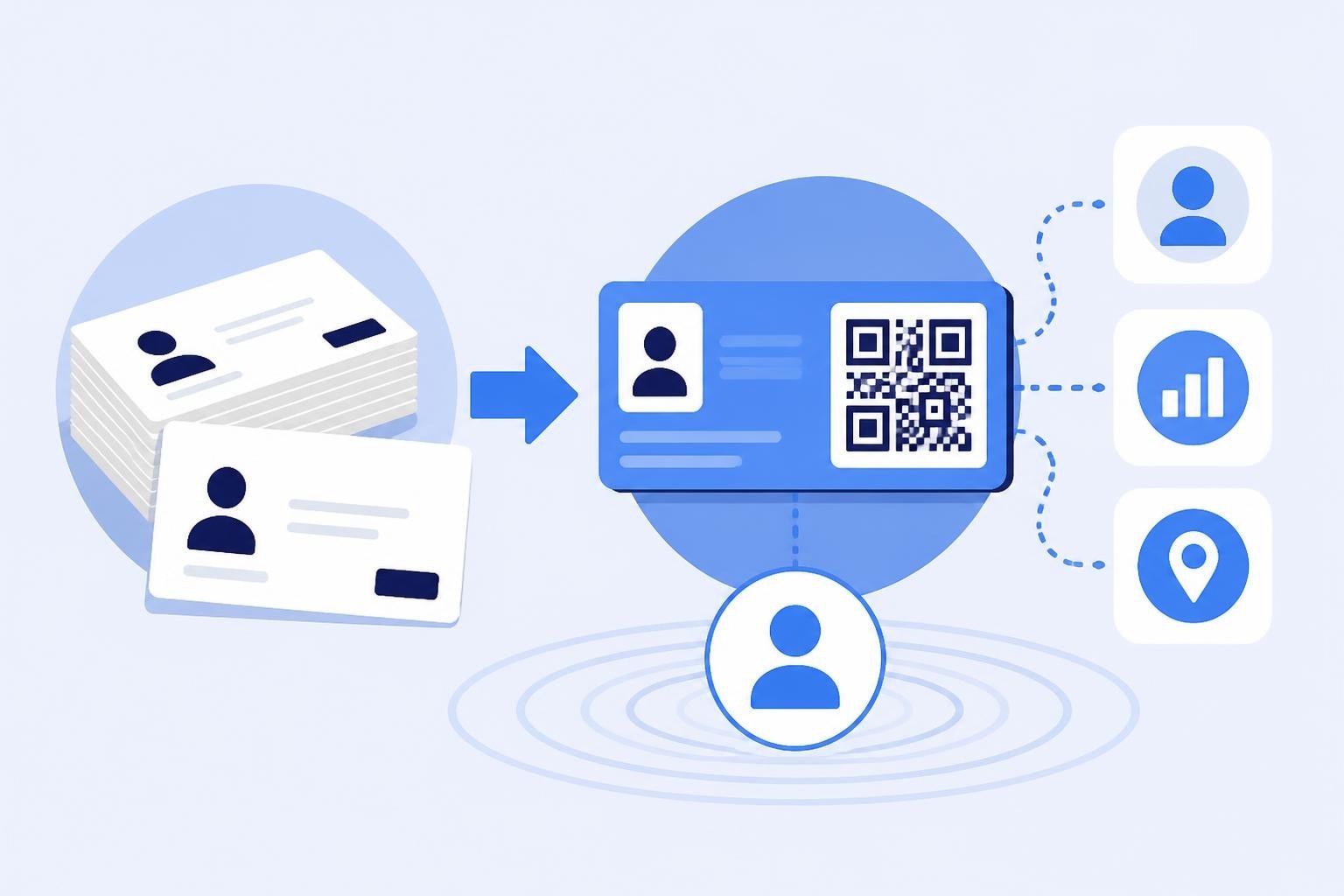
The traditional business card is evolving. While paper cards remain a staple of professional networking, the qr code business card represents a powerful fusion of physical presence and digital intelligence. By encoding contact information, portfolio links, and trackable URLs into a scannable code, professionals can measure networking performance, update information in real time, and create seamless digital handoffs that transform casual encounters into quantifiable business opportunities.
Why QR Code Business Cards Matter in 2026
The proliferation of smartphone cameras with native QR scanning capabilities has fundamentally changed how people exchange information. According to recent global digital usage statistics, QR code scanning has become a mainstream behavior across demographics, particularly in professional contexts where speed and accuracy matter.
A qr code business card eliminates manual data entry, reduces transcription errors, and provides the recipient with instant access to comprehensive professional information. More importantly for marketers and business developers, it transforms every card exchange into a measurable interaction with trackable engagement data.
The Analytics Advantage
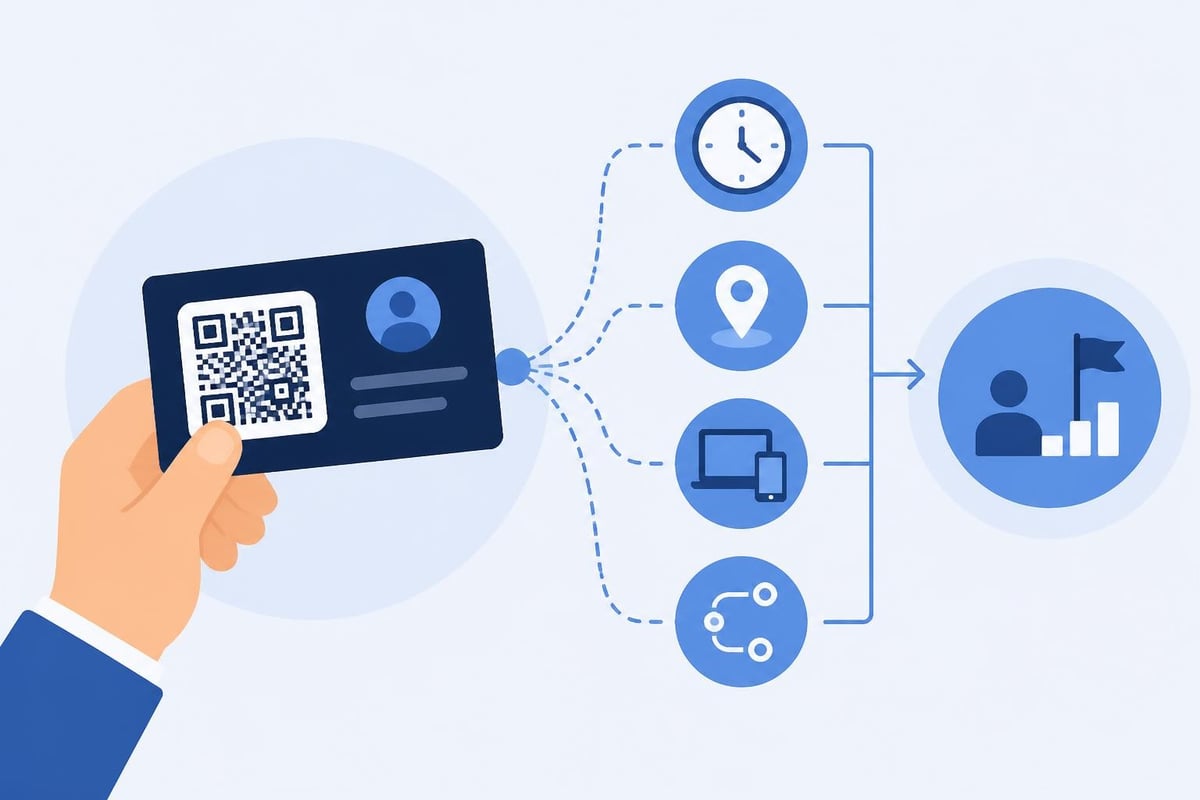
Unlike traditional cards that disappear into wallets and desk drawers, qr code business cards generate actionable intelligence:
- Scan timestamps revealing when contacts engaged with your information
- Geographic data showing where networking efforts yield results
- Device information indicating whether contacts use iOS or Android
- Conversion tracking from initial scan to website visit, form submission, or purchase
This data transforms networking from a qualitative activity into a quantifiable channel with clear ROI metrics.
Technical Approaches to QR Business Card Implementation
Building an effective qr code business card requires choosing the right encoding strategy based on your goals and technical requirements.
Direct vCard Encoding
The most straightforward approach embeds contact information directly in the QR code using the vCard format standardized in RFC 6350. When scanned, the phone immediately offers to save the contact without requiring internet connectivity.
Advantages:
- Works offline without network access
- No dependency on third-party services
- Immediate contact saving with no intermediate steps
Limitations:
- Information cannot be updated after printing
- No analytics or tracking capability
- Limited space for comprehensive information
- No A/B testing or optimization possible
URL-Based Dynamic Approach
A more sophisticated qr code business card encodes a shortened URL that redirects to a dynamically updated landing page or vCard file. This approach unlocks the full potential of link intelligence platforms.
The URL might follow patterns recommended in the GS1 Digital Link standard, which provides guidance for creating resolver-friendly, long-lived URIs suitable for QR encoding. While originally designed for product identification, the structural principles apply equally to professional contact scenarios requiring updateable, trackable links.
| Approach | Analytics | Updates | Offline | A/B Testing |
|---|---|---|---|---|
| Direct vCard | No | No | Yes | No |
| Static URL | Limited | No | No | No |
| Dynamic Link | Full | Yes | No | Yes |
| Hybrid | Partial | Yes | Fallback | Limited |
Creating Effective QR Code Business Card Content
The destination of your qr code business card matters as much as the code itself. Recipients who scan expect immediate value and clear next steps.
Essential Information Architecture
Your landing page or digital vCard should include:
- Primary contact methods with one-tap calling, emailing, or messaging
- Professional headline clarifying your role and value proposition
- Social proof elements such as credentials, portfolio samples, or testimonials
- Clear call-to-action guiding the contact toward the next step
- Calendar integration allowing immediate meeting scheduling
The page should load in under two seconds and display perfectly on both iOS and Android devices. Mobile optimization is non-negotiable-every QR code scan originates from a mobile device.
Smart Routing and Personalization
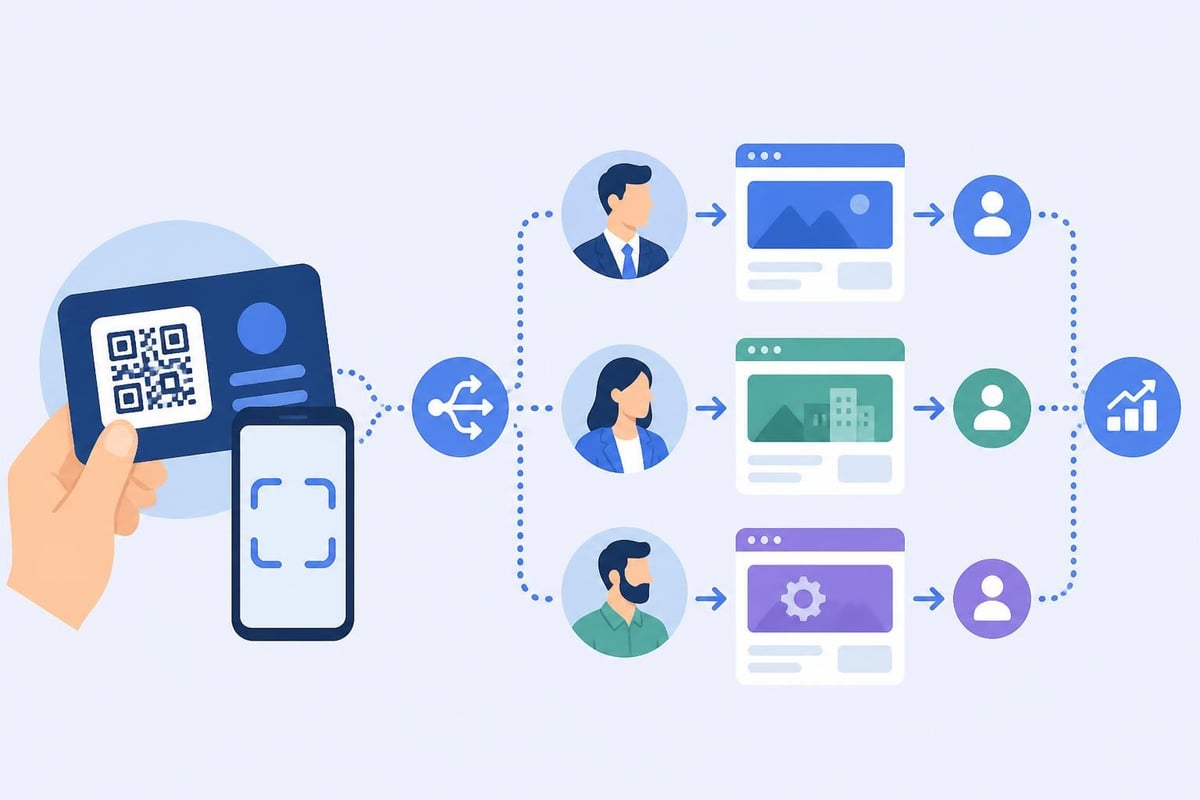
Advanced link management enables context-aware routing that adapts based on scan conditions:
- Route enterprise contacts to case studies while routing startup founders to pricing pages
- Display different calendars based on geographic location and time zones
- Serve industry-specific portfolios based on the event or conference
- Adjust messaging based on whether it's a first scan or repeat engagement
This level of sophistication transforms the qr code business card from a static information transfer into an intelligent, adaptive networking tool.
Security and Trust Considerations
QR codes have become vectors for phishing attacks-a practice known as "quishing." The CISA provides guidance on phishing risks that applies directly to QR code security. Professional use of qr code business cards requires implementing trust signals and security best practices.
Building Scannable Trust
Before someone scans your code, they're making a security calculation. Reduce friction and increase trust by:
- Using branded short domains that clearly identify your organization
- Including human-readable URLs beneath the QR code so recipients can verify the destination
- Adding visual branding elements that match your other professional materials
- Avoiding generic URL shorteners that obscure the destination
The W3C vCalm specification addresses interaction QR code formats with consideration for trusted-origin patterns-principles that apply when designing secure, professional QR business card implementations.
Protecting Recipient Privacy
Your qr code business card collects data about every scan. Transparency and privacy protection build long-term professional relationships:
- Clearly communicate what data you collect and why
- Provide opt-out mechanisms for tracking
- Comply with GDPR, CCPA, and other privacy regulations
- Secure your analytics data with proper access controls
- Never share scan data with third parties without explicit consent
Design Integration and Physical Implementation
A qr code business card must work as both a physical artifact and a digital gateway. Design choices significantly impact scan rates and professional perception.
Size and Placement Optimization
QR codes require minimum size thresholds for reliable scanning. On a standard business card:
- Minimum code size: 0.8 × 0.8 inches (2 × 2 cm) for reliable scanning
- Optimal size: 1 × 1 inches (2.5 × 2.5 cm) for comfortable scanning at arm's length
- Quiet zone: Maintain blank space around all sides (at least 4 modules wide)
The code can occupy the back of the card entirely, appear as an element integrated with your design, or serve as the primary visual element on a minimalist card.
Error Correction and Scanning Reliability
QR codes support four error correction levels (L, M, Q, H) that allow the code to remain scannable even when partially damaged or obscured. For business cards:
- Level M (15% recovery) balances data capacity and durability for most uses
- Level Q (25% recovery) recommended if you're incorporating logos or design elements within the code
- Level H (30% recovery) provides maximum resilience but reduces data capacity
Test your printed qr code business card across multiple devices and lighting conditions before ordering large quantities. What scans perfectly on your screen may fail under conference hall lighting or when printed on textured paper stock.
Tracking Networking ROI with Advanced Analytics
The true power of a qr code business card emerges when scan data integrates with broader marketing intelligence and CRM systems. Each scan becomes an entry point into your conversion funnel with measurable downstream effects.
Key Performance Indicators
Monitor these metrics to optimize your networking effectiveness:
- Scan rate: Percentage of distributed cards that generate scans
- Scan-to-action conversion: How many scans result in meaningful next steps
- Time-to-scan distribution: When contacts engage with your information after receiving it
- Geographic performance: Which events or locations yield highest-quality connections
- Device and browser patterns: Technical preferences of your network
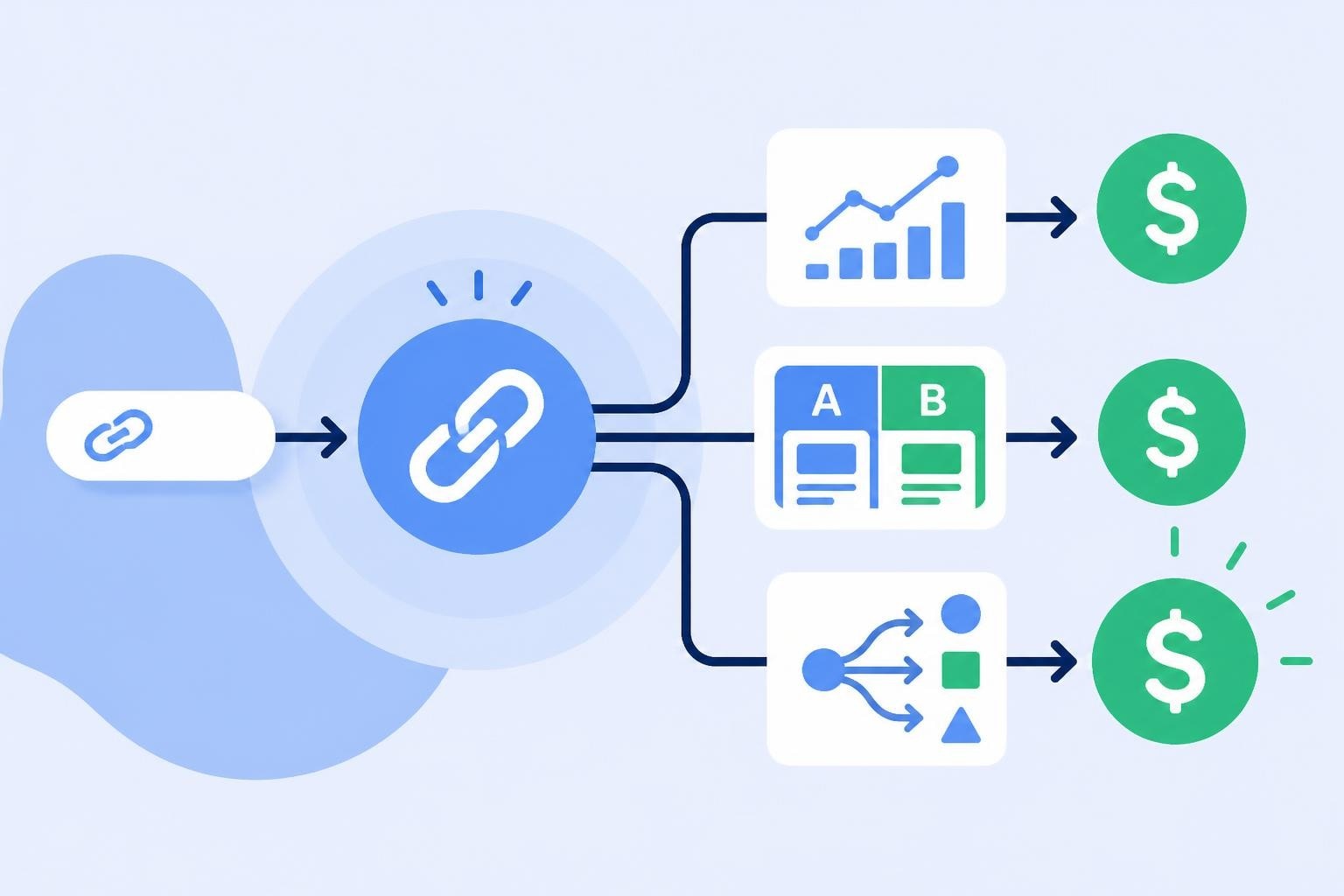
A sophisticated link management platform transforms these data points into actionable insights. By connecting your qr code business card URL with UTM parameters, retargeting pixels, and conversion tracking, you measure not just scans but actual business outcomes.
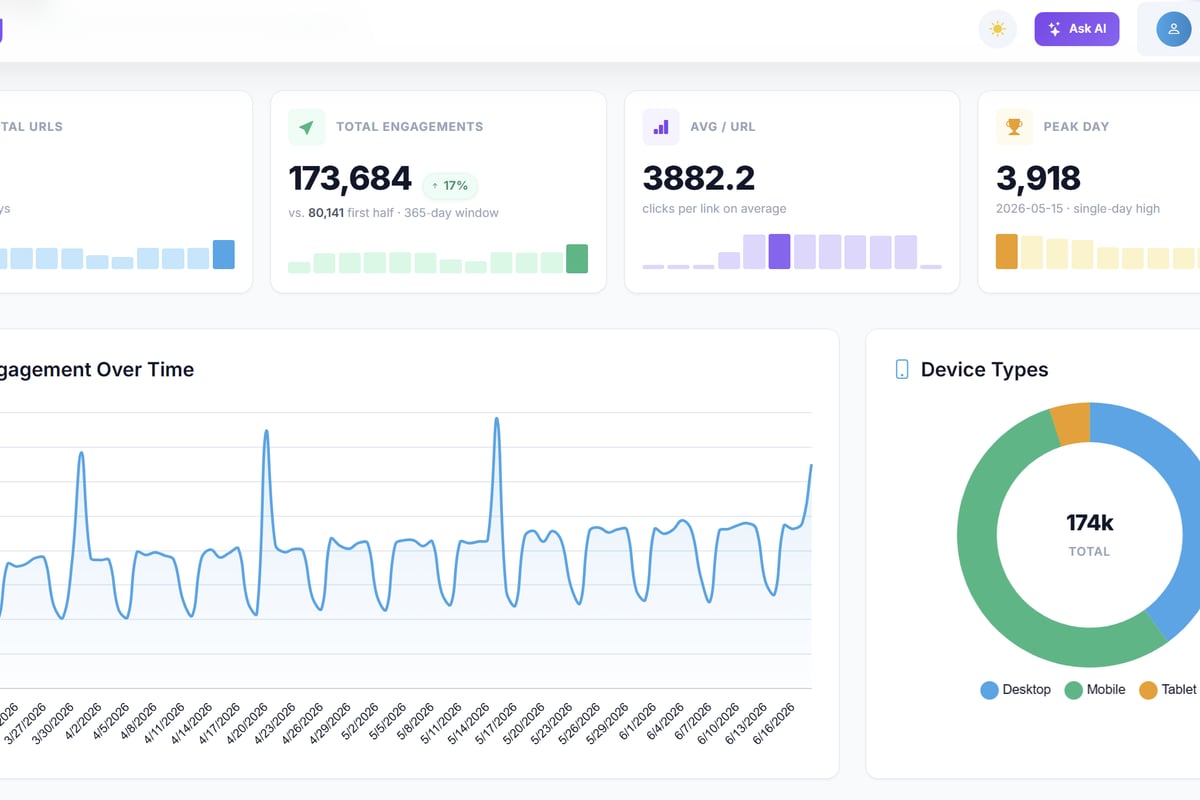
Platforms like Trimy enable this level of intelligence by providing comprehensive link analytics, A/B testing capabilities for landing page optimization, and smart routing rules that adapt based on contact characteristics. Rather than treating networking as unmeasurable relationship-building, you gain quantitative feedback on which approaches drive results.
A/B Testing Your Networking Approach
Different professional contexts call for different information architectures. Testing multiple approaches reveals what resonates:
| Test Variable | Variant A | Variant B | Metric |
|---|---|---|---|
| Landing page | Full portfolio | Contact form | Scan-to-meeting rate |
| CTA | "Schedule call" | "View case studies" | Click-through rate |
| Information depth | Comprehensive bio | Minimal with links | Time on page |
| Social proof | Client logos | Testimonials | Conversion rate |
Run each variant for statistically significant sample sizes before drawing conclusions. A qr code business card with 50 scans provides directional insights; 500 scans enable confident optimization decisions.
Accessibility and Inclusive Design
Professional networking should be accessible to everyone. The WebAIM community discusses QR code accessibility with practical considerations for making QR business cards usable for people with disabilities.
Beyond Visual Scanning
Not everyone can easily scan QR codes. Inclusive qr code business card design includes:
- Human-readable URLs printed clearly beneath or beside the code
- High contrast ratios between the code and background (minimum 3:1)
- Alternative contact methods such as NFC tags for those who prefer tap-to-connect
- Clear typography for printed contact information that doesn't rely solely on the code
- Tactile indicators on premium cards to help visually impaired recipients locate the code area
The goal is ensuring that the digital enhancement provided by the QR code adds value without creating barriers for those who cannot or prefer not to use it.
Integration with Marketing Technology Stack
A qr code business card doesn't exist in isolation-it's one touchpoint in a comprehensive marketing and sales ecosystem. Maximum value emerges when scan data flows into your existing systems.
CRM and Marketing Automation
Connect your QR code URLs to:
- CRM platforms that automatically create or update contact records when someone scans
- Email marketing systems that add scanners to appropriate nurture sequences
- Sales automation tools that alert account executives to high-value prospect engagement
- Attribution platforms that credit networking activities with downstream revenue
This integration transforms a business card scan from an isolated event into a tracked journey through your conversion funnel with clear attribution to specific networking activities.
Retargeting and Audience Building
Each qr code business card scan represents an identified, engaged prospect. Embed retargeting pixels on your landing page to:
- Build custom audiences for social media advertising campaigns
- Serve relevant content based on professional interests indicated by the scan context
- Re-engage contacts who scanned but didn't complete desired actions
- Suppress converted customers from prospecting campaigns
The combination of identity (you know who scanned because you handed them the card) and behavioral data (what they did after scanning) creates powerful segmentation opportunities unavailable with traditional networking approaches.
Practical Implementation Workflows
Moving from concept to executed qr code business card campaign requires deliberate planning and systematic testing.
Development and Testing Process
- Define objectives: Determine what action you want scanners to take
- Create destination content: Build the landing page or vCard file
- Configure tracking: Set up analytics, UTM parameters, and conversion goals
- Generate QR code: Create the code with appropriate error correction and size
- Design integration: Incorporate the code into your card design professionally
- Multi-device testing: Verify scanning across iOS, Android, and various camera apps
- Print testing: Order samples and test actual printed codes before bulk orders
- Distribution tracking: Implement systems to know which cards went to which events
Testing proves particularly critical. QR codes that scan perfectly as digital files sometimes fail when printed due to color choices, paper texture, or size reduction that seemed reasonable in design software but proves too small in practice.
Ongoing Optimization
Your first qr code business card design won't be your best. Continuous improvement based on data drives results:
- Review scan analytics weekly to identify patterns and opportunities
- Test landing page variations monthly to improve conversion rates
- Update routing rules based on contact segment performance
- Refresh destination content quarterly to maintain relevance
- Survey contacts who scanned to gather qualitative feedback
The GS1 Digital Link Quick Start Guide offers practical patterns for structuring URIs that remain maintainable as your implementation evolves-principles applicable beyond product identification to any scenario requiring long-lived, updateable QR destinations.
Cost-Benefit Analysis for Professional Networking
Implementing qr code business cards involves upfront investment and ongoing management. Understanding the return justifies the effort.
Investment Requirements
| Cost Category | Traditional Card | QR Code Card |
|---|---|---|
| Design | $200-500 | $300-800 |
| Printing (500) | $50-150 | $75-200 |
| Platform/tracking | $0 | $10-100/month |
| Landing page hosting | $0 | $5-50/month |
| Time investment | Minimal | 5-10 hours initial |
Measurable Returns
The value proposition emerges through:
- Conversion rate improvement: Even small increases in contact-to-meeting conversion justify investment
- Time savings: Automated contact information transfer eliminates manual follow-up data entry
- Data-driven optimization: Analytics reveal which networking activities produce results
- Professional differentiation: Modern approach signals technical sophistication
- Long-term relationship value: Better tracking enables systematic relationship nurturing
Calculate your networking ROI by tracking customer lifetime value attributed to contacts initiated through qr code business card scans versus traditional card exchanges.
Industry-Specific Applications and Variations
Different professional contexts demand customized qr code business card approaches optimized for specific use cases and audience expectations.
Sales and Business Development
Sales professionals benefit from routing rules that adapt based on prospect characteristics:
- Enterprise prospects see case studies and ROI calculators
- Small business contacts access simplified pricing and onboarding resources
- Existing customers route to support resources and upsell opportunities
- Partners connect to co-marketing materials and referral programs
Recruiters and HR Professionals
Recruiting-focused qr code business cards can:
- Link candidates directly to application portals with pre-filled referral codes
- Route based on seniority level to appropriate job listings
- Connect passive candidates to company culture content and employee testimonials
- Track which events and sources yield highest-quality candidate pipeline
Creative Professionals and Consultants
Portfolio-driven professionals optimize for immediate credibility:
- Visual portfolios load instantly with optimized image delivery
- Project case studies include client testimonials and measurable results
- Calendar integrations enable immediate consultation scheduling
- Social proof elements demonstrate expertise and authority
The qr code business card represents networking evolution: physical presence enhanced by digital intelligence, casual encounters transformed into measurable opportunities, and professional relationships built on data-driven optimization. By treating every card exchange as a trackable interaction with analytics, testing, and smart routing, you transform unmeasurable relationship-building into a quantifiable marketing channel. Trimy provides the link intelligence infrastructure to capture, analyze, and optimize every scan, turning your business cards into revenue signals with comprehensive tracking, A/B testing, and conversion analytics at a competitive price point.