Social Media and Marketing: Strategy Guide for 2026
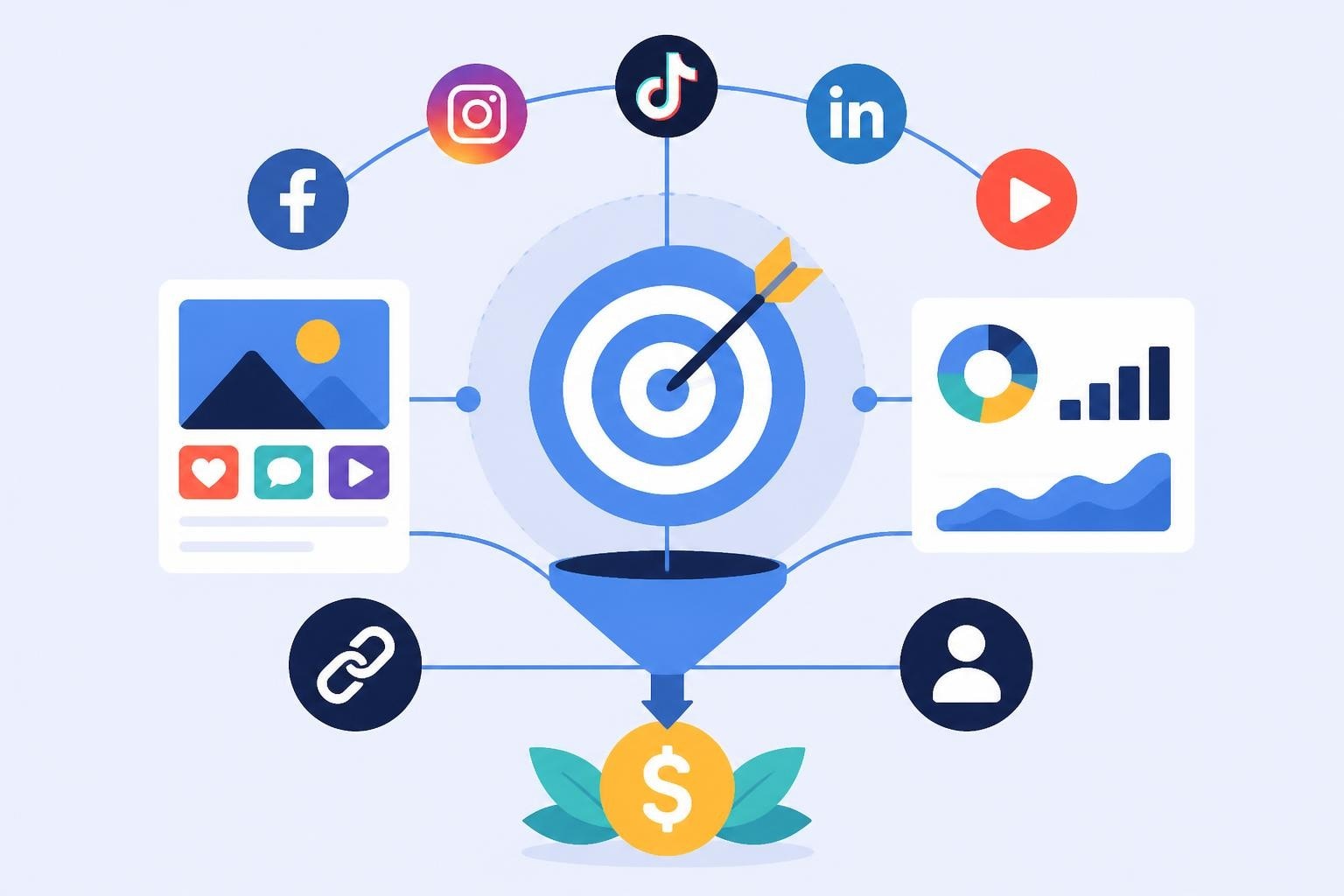
The convergence of social media and marketing has fundamentally reshaped how businesses connect with audiences, measure performance, and drive revenue. In 2026, successful brands no longer treat social platforms as simple broadcasting channels but as sophisticated ecosystems where every interaction, click, and conversion provides actionable intelligence. For marketers and developers managing campaigns across multiple platforms, the ability to track, analyze, and optimize each touchpoint has become essential to competitive advantage.
The Evolution of Social Media and Marketing Integration
Social media platforms have matured from experimental marketing channels into mission-critical revenue drivers. Recent research on Americans' social media use reveals that platform adoption continues to shift, with younger demographics fragmenting across newer networks while traditional platforms evolve their commercial features.
The relationship between social media and marketing now extends far beyond follower counts and engagement rates. Modern campaigns require deep integration between creative strategy, audience targeting, performance analytics, and conversion tracking. Marketers who understand how to connect these elements gain visibility into which platforms, content formats, and audience segments actually generate business results.
Platform-Specific Marketing Approaches
Different social platforms demand distinct marketing strategies based on their unique algorithms, user behaviors, and commercial features.
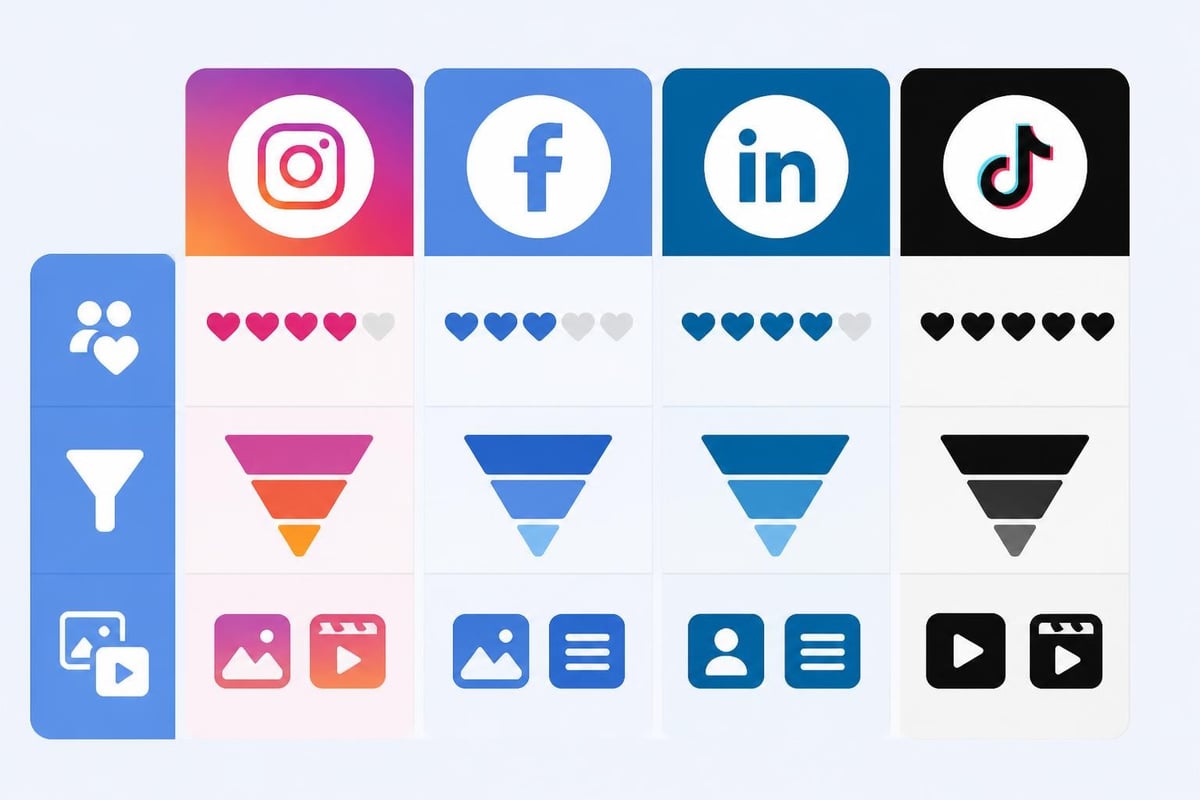
Instagram and Facebook continue to dominate visual storytelling and direct-response advertising. The Meta ecosystem's Reels advertising options have transformed short-form video into a conversion-focused format, requiring marketers to blend entertainment value with clear calls-to-action.
LinkedIn remains the premium platform for B2B social media and marketing, where thought leadership content, employee advocacy programs, and targeted advertising converge to reach decision-makers.
TikTok has shifted from pure entertainment to a viable commerce platform, with brand accounts balancing viral creativity against measurable business objectives.
Building Data-Driven Social Media and Marketing Campaigns
Effective social media and marketing strategies in 2026 depend on comprehensive data collection and analysis. Every link shared, story posted, or ad launched generates signals about audience preferences, content performance, and conversion potential.
Link Intelligence as a Marketing Asset
The URLs you share across social platforms carry more strategic value than most marketers realize. Each link represents a potential data collection point that can inform broader campaign decisions.
- Traffic source analysis reveals which social platforms drive the highest-quality visitors
- Conversion tracking connects social engagement to actual revenue outcomes
- A/B testing identifies which messaging, creative, or offers resonate with specific audience segments
- Geographic and device data enables platform-specific optimization
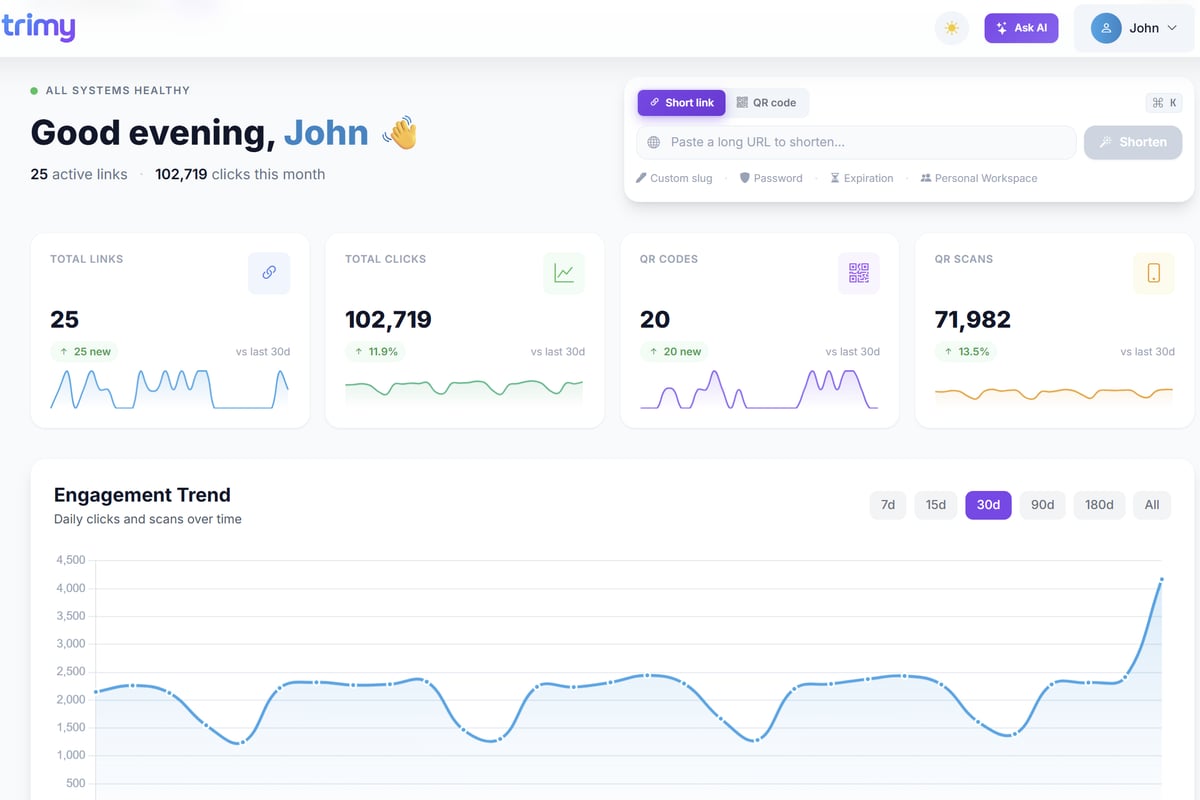
Smart marketers treat links as intelligence-gathering tools, not just navigation mechanisms. When you can track exactly how social traffic behaves after clicking through, you gain insights that inform content strategy, budget allocation, and platform prioritization.
Platforms like Trimy enable this level of link intelligence by providing deep analytics, A/B testing capabilities, and smart routing features that turn every shared URL into a revenue signal. Rather than guessing which social campaigns perform best, marketers can track precise conversion paths and optimize accordingly.
Measuring What Actually Matters
The social media and marketing measurement landscape has become increasingly sophisticated, moving beyond vanity metrics toward business-impact indicators.
| Metric Category | Vanity Metrics | Business-Impact Metrics |
|---|---|---|
| Awareness | Impressions, Reach | Share of voice, Brand search lift |
| Engagement | Likes, Comments | Click-through rate, Time on site |
| Conversion | Profile visits | Revenue per visitor, Customer acquisition cost |
| Retention | Follow count | Repeat purchase rate, Customer lifetime value |
The IAB's measurement guidelines provide industry standards for tracking performance consistently across platforms and campaigns, enabling more accurate budget allocation and strategy refinement.
Content Strategy for Social Media and Marketing Success
Content remains the foundation of effective social media and marketing, but the definition of "effective content" has evolved considerably. In 2026, successful content strategies balance platform-specific best practices with overarching brand consistency.
The Social-First Content Framework
Forward-thinking content strategies now prioritize social-native formats over repurposed blog posts or website content. This approach recognizes that each platform's algorithm rewards content created specifically for its unique environment.
Short-form video dominates across platforms, requiring marketers to condense complex messages into engaging 15-60 second narratives. The challenge lies in maintaining brand voice and driving business outcomes within these constraints.
Interactive content including polls, quizzes, and question stickers transforms passive scrolling into active participation, generating both engagement and valuable audience insight.
User-generated content and social proof provide authentic validation that traditional marketing messages cannot match. Brands that systematically collect, curate, and deploy customer content gain trust and conversion advantages.
Balancing Organic and Paid Social Media and Marketing
The organic versus paid debate has settled into a more nuanced understanding: successful brands need both, optimized for different objectives.
Organic social builds community, establishes brand voice, provides customer service, and tests content concepts before investing advertising budget. While organic reach has declined on most platforms, it remains essential for relationship-building and brand positioning.
Paid social accelerates reach, enables precise targeting, and drives specific conversion outcomes. The most sophisticated marketers use organic performance data to inform paid campaign creative and targeting decisions.
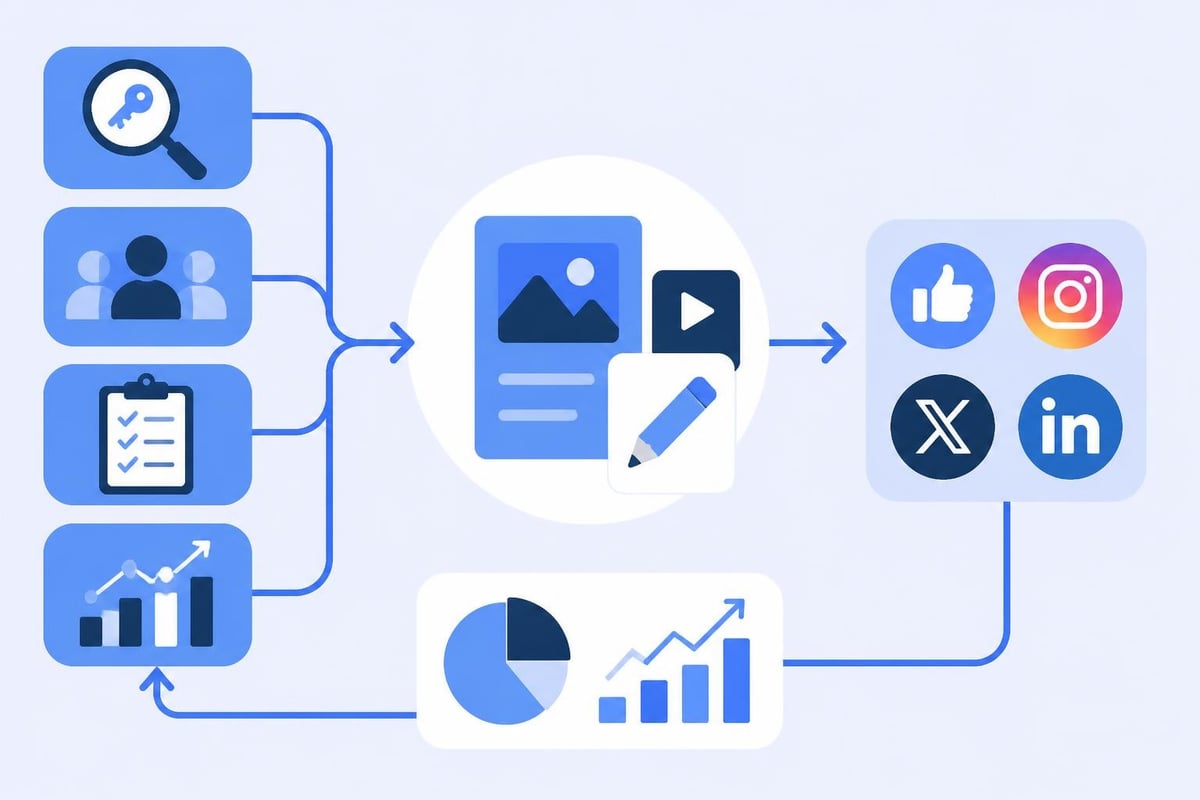
- Identify high-performing organic content through engagement analysis
- Allocate paid budget to amplify top performers to broader audiences
- Test variations using A/B testing on paid campaigns
- Scale winners while continuing organic experimentation
- Feed insights back into content strategy and organic posting
Advanced Tactics for Social Media and Marketing Optimization
As social media and marketing mature, advanced practitioners differentiate themselves through sophisticated optimization tactics that competitors overlook.
Audience Segmentation and Personalization
Generic messaging fails in crowded social feeds. Winning campaigns deliver personalized experiences based on detailed audience segmentation.
- Behavioral segments group users by interaction patterns, purchase history, and engagement depth
- Demographic segments enable age, location, and interest-based customization
- Journey stage segments deliver appropriate messages to awareness, consideration, and decision-stage audiences
- Value segments allocate resources based on customer lifetime value predictions
Influencer Collaboration and Creator Partnerships
The influencer marketing landscape has professionalized significantly, with data-driven creator selection replacing intuition-based partnerships. According to the 2025 Influencer Marketing Benchmark Report, brands are increasingly focused on measurable ROI rather than reach alone.
Effective influencer programs in 2026 include:
- Clear performance expectations with trackable links and conversion goals
- Authentic partnerships that align creator values with brand positioning
- Long-term relationships that build credibility over time
- Micro and nano-influencer strategies that maximize engagement efficiency
Social Commerce Integration
The line between social media and marketing and direct commerce continues to blur. Platforms now offer native shopping features, in-app checkout, and seamless purchase experiences that reduce friction between discovery and conversion.
| Platform | Commerce Features | Best Use Cases |
|---|---|---|
| Shopping posts, Product tags, Checkout | Visual products, Fashion, Beauty, Home decor | |
| Marketplace, Shops, Live shopping | Community-driven products, Local businesses | |
| TikTok | TikTok Shop, Live shopping | Impulse purchases, Trending products |
| Product pins, Shopping lists | Home improvement, Wedding planning, Recipes |
Attribution and Cross-Platform Tracking
One of the most persistent challenges in social media and marketing involves accurate attribution. Customers rarely convert on their first social interaction, instead following complex paths across multiple platforms and touchpoints.
Multi-Touch Attribution Models
Understanding which social touchpoints deserve credit for conversions requires sophisticated attribution modeling:
First-touch attribution credits the initial social interaction that introduced a customer to your brand. This model helps evaluate top-of-funnel social awareness campaigns.
Last-touch attribution assigns full credit to the final social touchpoint before conversion. While simple to implement, this approach often undervalues the awareness and consideration stages.
Linear attribution distributes credit equally across all touchpoints, providing a more balanced view of the customer journey but potentially oversimplifying complex paths.
Time-decay attribution gives more credit to recent interactions, acknowledging that touchpoints closer to conversion typically have greater influence.
The most valuable insights emerge when marketers analyze multiple attribution models simultaneously, understanding that each reveals different aspects of social media and marketing effectiveness.
UTM Parameters and Link Tracking
Consistent UTM parameter implementation transforms social links into data sources that illuminate campaign performance and customer behavior. Strategic marketers establish clear naming conventions that enable granular analysis:
- utm_source identifies the specific platform (facebook, linkedin, instagram)
- utm_medium indicates the content type (organic_social, paid_social, influencer)
- utm_campaign names the specific initiative or promotion
- utm_content differentiates between variations or creative treatments
- utm_term tracks specific targeting parameters or keywords
This structured approach to link tracking creates the foundation for comprehensive social media and marketing analysis, revealing which combinations of platform, content type, and campaign drive the best results.
Emerging Trends Shaping Social Media and Marketing
The social media and marketing landscape continues to evolve rapidly, with several trends poised to reshape strategies in the coming years.
AI-Powered Content Creation and Optimization
Artificial intelligence tools now assist with content ideation, image generation, copy optimization, and performance prediction. Forward-thinking marketers use AI to accelerate production while maintaining human oversight for brand alignment and strategic direction.
Privacy-First Tracking and Measurement
Industry research from Deloitte Digital highlights how privacy regulations and platform changes are forcing marketers to develop new measurement approaches. First-party data collection, server-side tracking, and privacy-compliant attribution models have become essential capabilities.
Community-Driven Social Media and Marketing
Brands are shifting from broadcast mentalities toward community building. Private groups, exclusive memberships, and conversation-focused strategies generate stronger loyalty and more valuable customer relationships than traditional follower-focused approaches.
Key community-building tactics:
- Create exclusive spaces for engaged customers
- Facilitate peer-to-peer connections and conversations
- Recognize and reward active community members
- Solicit feedback and involve community in product decisions
- Provide genuine value beyond promotional messaging
Platform Algorithm Changes and Adaptation Strategies
Social platform algorithms change frequently, sometimes dramatically altering organic reach and content distribution. Successful social media and marketing strategies build resilience against algorithm volatility.
Diversification Across Platforms
Relying too heavily on any single platform creates vulnerability to algorithm changes, policy updates, or shifting user preferences. Smart brands maintain presence across multiple platforms while tailoring content to each environment's unique characteristics.
Owned Media Development
While social platforms provide valuable distribution, they remain rented land where rules can change overnight. Balancing social media and marketing efforts with owned channels like email lists, websites, and communities provides stability and control.
Engagement-First Content Philosophy
Regardless of specific algorithm mechanics, most platforms prioritize content that generates meaningful engagement. Creating content that sparks conversations, answers questions, and provides genuine value typically performs well across algorithm changes.
Budget Allocation and Resource Optimization
Effective social media and marketing requires strategic resource allocation across platforms, content types, and campaign objectives.
Platform Budget Distribution
| Platform | Typical Budget % | Best For |
|---|---|---|
| Facebook/Instagram | 35-45% | Broad reach, Detailed targeting, Visual products |
| 15-25% | B2B campaigns, Professional services, Recruitment | |
| TikTok | 10-20% | Younger demographics, Viral potential, Brand awareness |
| Twitter/X | 5-10% | Real-time engagement, Customer service, News |
| Emerging platforms | 5-15% | Innovation, Early adoption advantages, Testing |
These percentages vary significantly based on industry, target audience, and business objectives, but provide a starting framework for distribution decisions.
In-House Versus Agency Resources
Organizations face ongoing decisions about building internal social media and marketing capabilities versus partnering with specialized agencies. The optimal approach often combines dedicated internal strategists who understand business objectives with external creative and execution support for specialized campaigns.
Mastering social media and marketing in 2026 requires integrating platform expertise, data analysis, content creativity, and technical tracking capabilities into cohesive strategies that drive measurable business outcomes. The brands that succeed treat every social interaction as both a customer touchpoint and a data opportunity, continuously refining their approach based on performance insights. Trimy transforms this vision into reality by providing the link intelligence, A/B testing, and advanced analytics needed to optimize every social campaign, turning shared URLs into strategic assets that illuminate the path from social engagement to revenue generation.