Expired Link: Risks, Reclaiming, and Management Guide
An expired link represents one of the most common yet underestimated challenges in digital marketing and web management. These broken connections occur when a URL that once pointed to valid content no longer functions due to domain expiration, content removal, or structural website changes. Whether you're managing a content-rich website, running marketing campaigns, or building software applications, understanding how to identify and address expired links can mean the difference between maintaining credibility and losing valuable traffic, backlinks, and revenue opportunities.
Understanding What Makes a Link Expire
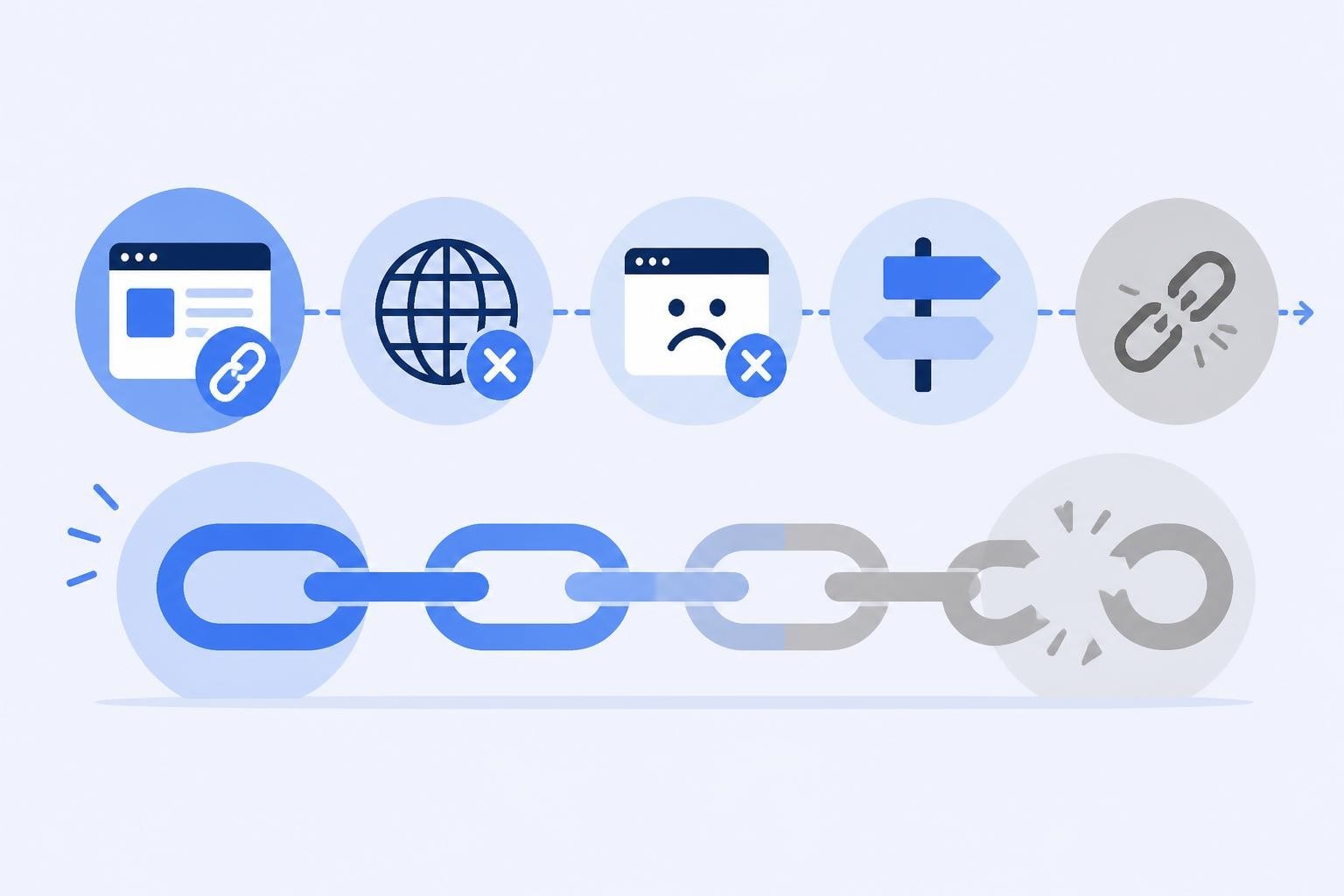
An expired link forms when the destination URL becomes inaccessible, returning error codes instead of the intended content. The most common scenario involves domain expiration, where website owners fail to renew their domain registration and the site becomes unavailable. This creates a cascading effect across the web, turning every inbound link to that domain into an expired link overnight.
Beyond domain expiration, several factors contribute to link death. Website restructuring often changes URL patterns without proper redirects, leaving old links pointing to nonexistent pages. Companies rebrand, merge, or close entirely, abandoning their digital properties. Content management systems update their structure, inadvertently breaking previously functional URLs.
The impact extends far beyond simple user inconvenience. Search engines view excessive expired links as signals of poor site maintenance and diminished relevance. Research has shown that broken links appear with surprising frequency even on high-traffic websites, affecting both credibility and cybersecurity posture.

The SEO Implications of Expired Links
Every expired link on your website represents lost authority and diminished user experience. Search engines crawl your site expecting to find valuable, connected content. When they encounter broken links instead, they question the overall quality and maintenance level of your domain.
Key SEO impacts include:
- Reduced crawl efficiency as bots waste resources on dead ends
- Decreased page authority from broken internal linking structures
- Lost link equity from valuable backlinks pointing nowhere
- Negative user signals when visitors encounter error pages
- Potential ranking penalties for sites with extensive link rot
The situation becomes more complex when considering expired domains for acquisition. Google has clarified that while expired domains don't automatically transfer their ranking power, the approach matters significantly. Purchasing an expired domain expecting immediate SEO benefits often leads to disappointment and potential penalties.
Many marketers discover hidden SEO risks when acquiring expired domains without thorough vetting. Previous spam activity, penalties, or toxic backlink profiles can transfer with the domain, creating more problems than opportunities.
Identifying Expired Links Across Your Digital Assets
Detection represents the critical first step in managing expired links effectively. Most website owners remain unaware of link rot until it significantly impacts performance or users report issues. Proactive monitoring prevents these problems from escalating.
Systematic Link Auditing Approaches
Modern link auditing requires both automated tools and manual review processes. Automated crawlers identify obvious HTTP errors like 404s and 500s, but human judgment determines whether fixes make strategic sense.
| Audit Method | Frequency | Best For | Limitations |
|---|---|---|---|
| Automated crawlers | Weekly | Large sites, technical errors | Misses context and priority |
| Manual review | Monthly | Strategic pages, high-value links | Time-intensive, scales poorly |
| User feedback | Ongoing | Real-world experience gaps | Reactive rather than proactive |
| Analytics monitoring | Daily | Traffic impact assessment | Identifies problems after they occur |
Start by crawling your entire site to identify internal expired links. These directly damage user experience and waste link equity within your own domain structure. External link monitoring proves equally important but requires different tools since you cannot control destination sites.
Marketing campaigns present unique challenges. Shortened links, QR codes, and promotional URLs often have limited lifespans by design. However, these same links may appear in evergreen content, social media posts, or third-party publications where they continue generating clicks long after campaigns end. Platform analytics should track click patterns to identify which expired links still receive meaningful traffic.
Software development introduces another dimension. Research shows that links embedded in source code comments decay rapidly, creating documentation that misleads developers and breaks build processes. Version control systems rarely catch these issues until someone needs the reference.

Reclaiming Value from Expired Backlinks
External sites linking to your content represent earned authority. When those links point to expired URLs on your domain, you forfeit that value unnecessarily. Expired backlinks can be reclaimed through strategic redirect implementation and relationship management.
Steps to reclaim expired backlink value:
- Identify high-authority sites linking to your expired URLs
- Determine the original content intent and context
- Create relevant replacement content or identify existing alternatives
- Implement 301 redirects from expired URLs to new destinations
- Contact webmasters of top referring sites to update links directly
- Monitor redirect chains to prevent excessive link equity loss
The redirect approach works well when you control the domain. If a competitor acquired your expired domain, recovery becomes more challenging but not impossible. Reach out to sites linking to the expired property, explain the situation, and offer superior replacement content on your current domain.
Managing Intentionally Expired Links
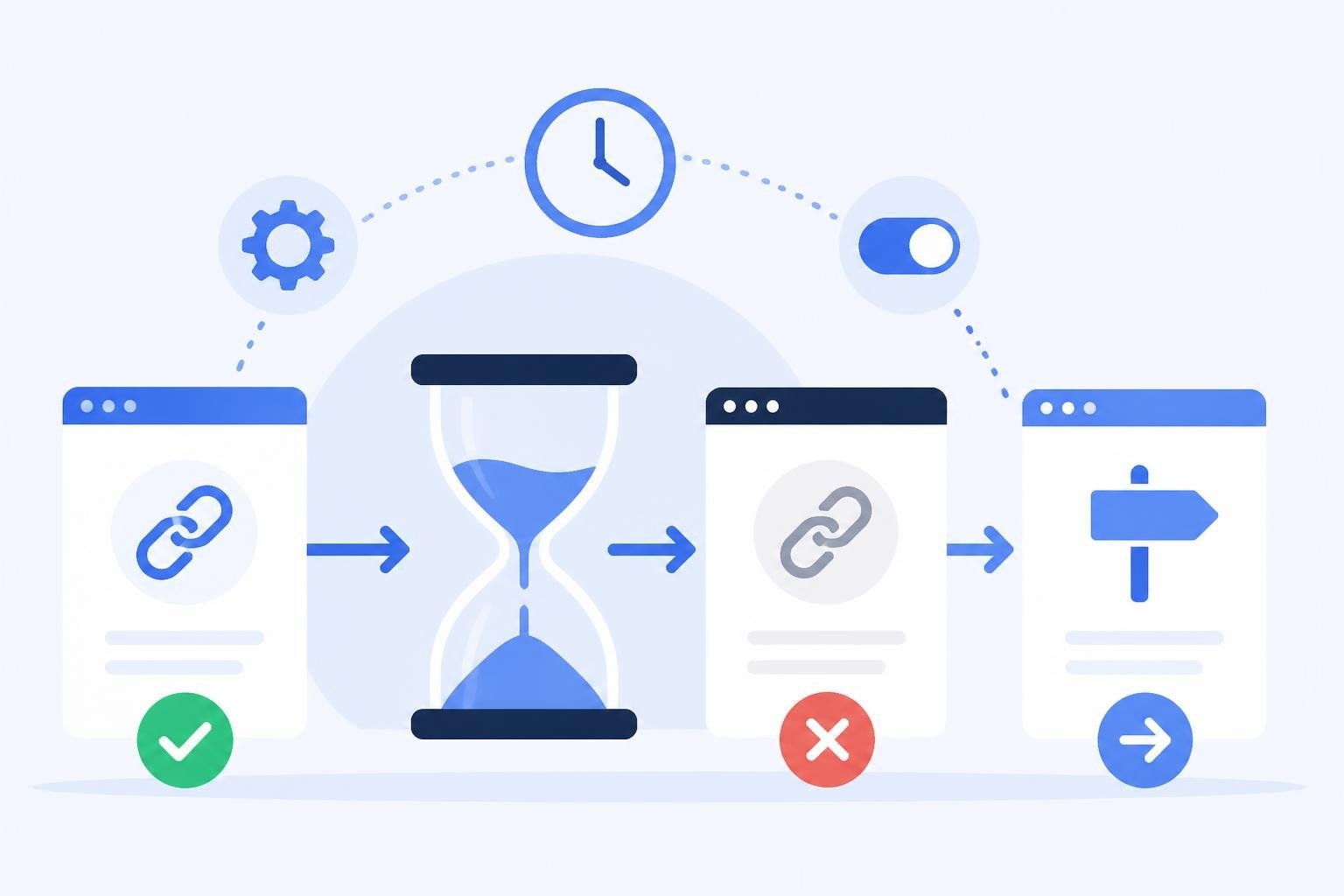
Some links should expire by design. Download links for time-sensitive materials, promotional offers with deadlines, and security-conscious file sharing all benefit from expiring download links. These controlled expirations serve legitimate business purposes.
Best practices for intentional link expiration include:
- Clearly communicating expiration dates to users upfront
- Providing grace periods before complete inaccessibility
- Offering alternative access methods for urgent needs
- Tracking expiration impact on user behavior and satisfaction
- Automating the expiration process to ensure consistency
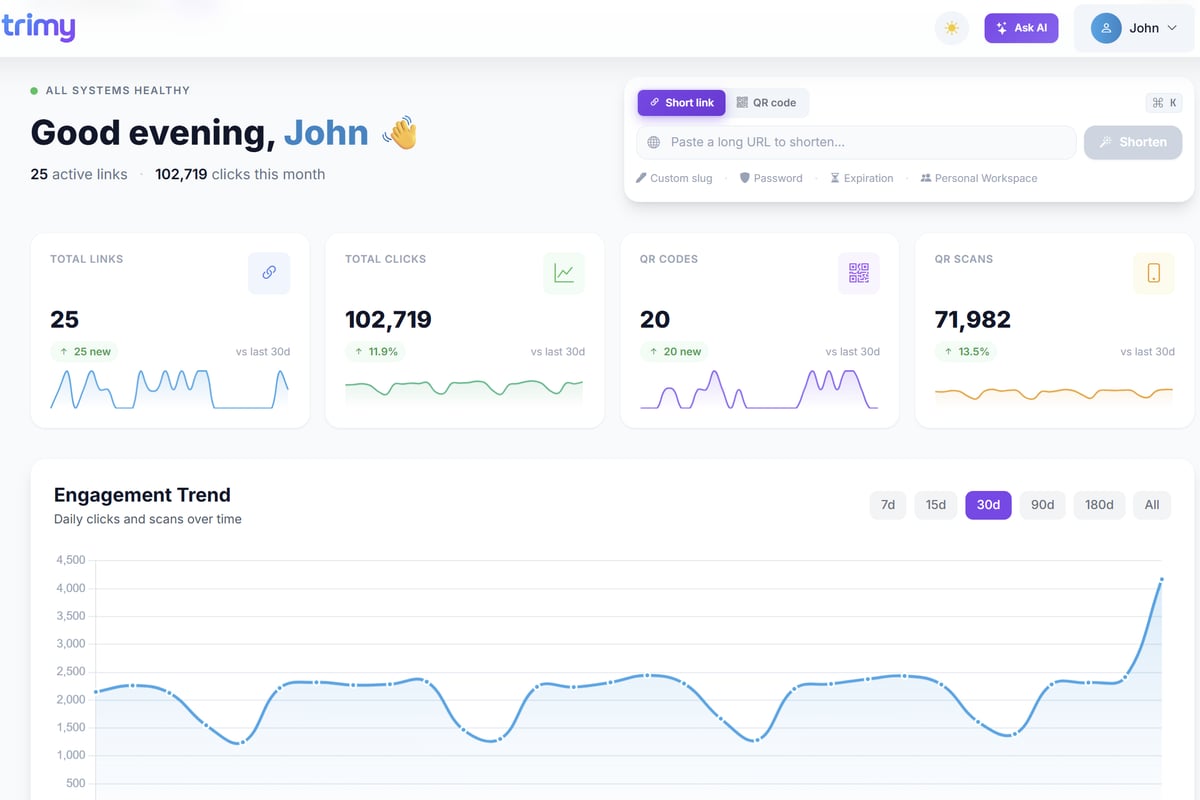
Trimy's link management capabilities make this process straightforward by allowing you to set expiration parameters directly when creating shortened links, ensuring your marketing campaigns maintain precision while your analytics capture complete performance data before links retire.
Strategic Approaches to Expired Content
Pages that served specific time-bound purposes eventually become obsolete. Event landing pages, seasonal promotions, and dated product announcements all reach natural endpoints. Managing expired content strategically preserves SEO value while maintaining site relevance.
You have several options when content expires:
Update and refresh works for content with enduring relevance but outdated details. Change dates, statistics, examples, and recommendations while preserving the URL and core topic. This maintains accumulated link equity and ranking positions.
Redirect to similar content applies when the exact topic no longer matters but related content serves the same user intent. A discontinued product page redirects to the successor model. An expired event page points to the event series overview.
Return 410 Gone status signals permanent removal more definitively than 404 errors. Search engines remove these pages from indexes faster, preventing wasted crawl budget on content you never intend to restore.
Preserve with historical context maintains truly valuable content while acknowledging its dated nature. Add banners explaining the page's historical significance and linking to current equivalents. This approach works for significant announcements, popular tutorials for deprecated technologies, or content frequently referenced despite age.
Preventing Future Link Expiration
Reactive link management consumes resources and allows problems to accumulate. Proactive prevention strategies reduce long-term maintenance burden and protect accumulated SEO value.
Sustainable URL Structure Design
Permanent URLs require careful planning. Avoid embedding dates, campaign names, or technology-specific references in core URL structures. These elements guarantee obsolescence. Instead, focus on evergreen topic descriptions and logical hierarchies.
| URL Element | Avoid | Prefer |
|---|---|---|
| Dates | /2026/march/announcement | /announcements/feature-name |
| Versions | /api/v2/documentation | /api/documentation (with versioned content) |
| Campaign codes | /summer-sale-2026 | /seasonal-offers (redirect from campaigns) |
| Platform references | /wordpress-tutorial | /cms-tutorial |
Implement redirect management from the beginning. When restructuring becomes necessary, comprehensive redirect mapping ensures no link expires unintentionally. Document all URL changes and maintain redirect chains no more than two levels deep to preserve link equity.
Monitoring and Maintenance Protocols
Regular link health checks should become routine operations, not crisis responses. Establish monitoring schedules based on site size and update frequency. Large, frequently updated sites require weekly scans. Smaller, stable sites manage with monthly reviews.
Prioritize fixes based on traffic impact and strategic value. An expired link on your homepage receiving thousands of daily clicks demands immediate attention. A broken reference deep in archived blog content from 2019 can wait for batch processing.
Set up automated alerts for critical link categories. Monitor branded shortened links, campaign URLs with significant ad spend, and API endpoints that external developers depend upon. Early detection prevents small issues from becoming major problems.
Security Risks of Expired Domains and Links
Domain expiration creates opportunities for malicious actors. When valuable domains expire, attackers register them to exploit residual traffic, hijack backlinks, or compromise systems that still reference the domain.
Supply chain vulnerabilities emerge when software projects depend on expired domains referenced in package managers or build scripts. An attacker controlling that expired domain can inject malicious code into thousands of downstream projects.
Security best practices include:
- Monitoring critical domain expiration dates with multiple redundant alerts
- Maintaining domain auto-renewal for all business-critical properties
- Auditing code repositories for hardcoded domain references
- Implementing content security policies that restrict external resource loading
- Verifying link destinations before clicking, especially in emails and documents
Marketing links present similar risks at smaller scale. Expired campaign URLs that redirect to competitor sites or phishing pages damage brand reputation. Using expired domains for SEO purposes requires extensive vetting to avoid inheriting security issues alongside any potential ranking benefits.
Link Intelligence for Modern Marketing
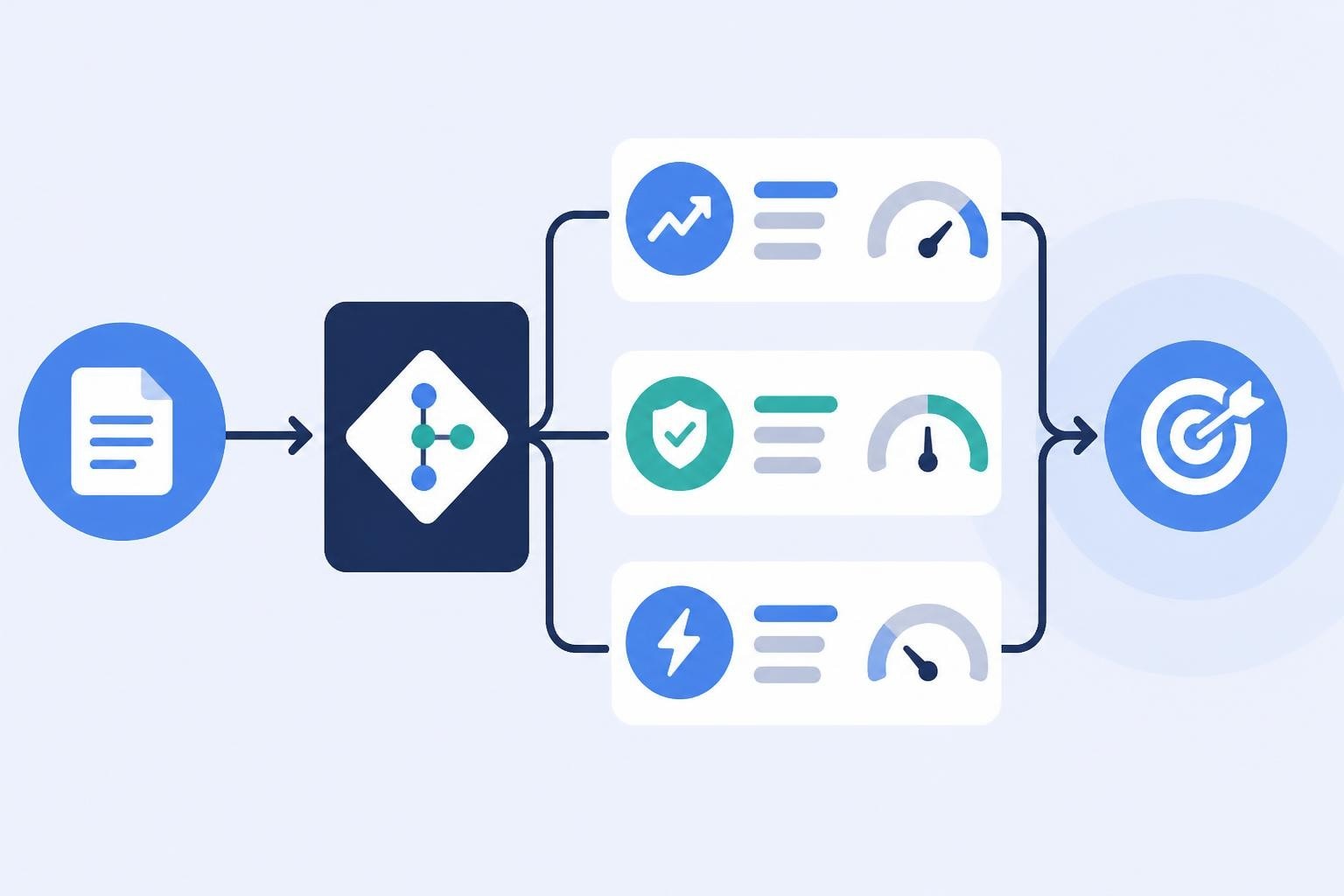
Advanced link management transcends basic expiration prevention. Modern marketers need comprehensive link intelligence that transforms every URL into a data-gathering opportunity while maintaining reliability.
This means tracking not just whether links function, but how they perform across dimensions:
- Click-through rates across channels and audiences
- Conversion paths from initial click to final purchase
- Geographic and demographic patterns in link engagement
- A/B test results comparing different destinations or messaging
- Retargeting pixel data for downstream campaign optimization
Sophisticated platforms integrate these capabilities with expiration management, ensuring no marketing link ever dies without replacement while capturing maximum intelligence from every click. Smart routing sends different audiences to optimized destinations based on device, location, or campaign parameters.
The competitive advantage comes from treating links as strategic assets requiring active management rather than disposable utilities. Each link represents an investment in reaching audiences, and letting them expire wastes that investment completely.
Managing expired links requires systematic monitoring, strategic decision-making, and the right tools to maintain link integrity across your digital presence. Whether you're reclaiming lost backlink value, preventing domain expiration, or optimizing marketing campaign performance, proactive link management protects your SEO investment and user experience. Trimy provides the intelligence and control modern businesses need to transform links from potential liabilities into reliable revenue signals, with advanced analytics, smart routing, and comprehensive tracking that ensures your links work as hard as you do.