Smart Order Routing: A Complete Guide for 2026

Smart order routing has transformed how digital systems make execution decisions across fragmented environments. Originally developed for financial markets to find the best price across multiple exchanges, this intelligent routing technology now powers everything from e-commerce fulfillment to digital marketing campaigns. As markets and digital ecosystems become increasingly fragmented, the ability to automatically route orders, requests, or traffic to the optimal destination has become essential for competitive advantage.
Understanding Smart Order Routing Fundamentals
Smart order routing represents an algorithmic approach to decision-making that evaluates multiple execution venues in real-time and automatically directs orders to the most favorable destination. The technology emerged from the need to navigate fragmented markets where identical assets or services are available across numerous platforms, each with different pricing, liquidity, and execution characteristics.
At its core, smart order routing operates on a set of predefined rules and real-time data analysis. The system continuously monitors available execution venues, assesses current conditions such as pricing, capacity, and performance metrics, then makes split-second decisions about where to route each order for optimal results.
Key Components of Smart Order Routing Systems
Every smart order routing implementation relies on several critical components working together:
- Real-time data feeds from all available execution venues
- Decision algorithms that evaluate multiple factors simultaneously
- Rule-based logic defining priority criteria and constraints
- Execution engines that send orders to selected destinations
- Monitoring systems that track performance and adjust strategies
The sophistication of these systems varies significantly. Basic implementations might simply check price across three venues and select the cheapest option. Advanced systems incorporate dozens of variables including historical performance, current capacity, predicted delays, and complex business rules.
Smart Order Routing in Financial Markets
The financial services industry pioneered smart order routing technology to address market fragmentation following regulatory changes in the early 2000s. When stocks began trading on multiple exchanges simultaneously, brokers needed automated systems to ensure clients received the best possible execution.
Smart order routing technology scans multiple trading venues to find the best available price for each trade. The system considers factors beyond simple price comparison, including order size, market depth, historical fill rates, and transaction costs. A large order might be split across multiple venues to minimize market impact, while a small order could be directed entirely to the exchange offering the best net price after fees.

Performance Metrics That Matter
Financial institutions measure smart order routing effectiveness through several key performance indicators:
| Metric | Description | Target |
|---|---|---|
| Price Improvement | Execution price better than national best bid/offer | Positive spread capture |
| Fill Rate | Percentage of order successfully executed | >98% |
| Execution Speed | Time from order submission to complete fill | <100ms |
| Routing Accuracy | Orders sent to optimal venue on first attempt | >95% |
These metrics drive continuous algorithm refinement. Machine learning approaches, such as risk-aware linear bandits, help trading systems balance execution quality against market uncertainty and evolving conditions.
E-commerce and Fulfillment Applications
Smart order routing has found compelling applications beyond financial markets, particularly in e-commerce order fulfillment. When an online customer places an order, retailers must decide which warehouse or distribution center should fulfill it. This decision significantly impacts shipping costs, delivery speed, and customer satisfaction.
Modern smart order routing systems continuously evaluate fulfillment operations to improve efficiency by reducing delays and minimizing split shipments. The system considers inventory availability, warehouse capacity, shipping costs to the customer's location, current workload at each facility, and promised delivery windows.
Warehouse Management Optimization
Smart order routing in warehouse environments extends beyond facility selection to optimize picking processes within individual warehouses. Warehouse management applications focus on reducing labor costs and improving fulfillment accuracy by intelligently assigning orders to pickers based on their location, workload, and the physical layout of inventory.
The benefits of this approach include:
- Reduced travel time for warehouse staff
- Balanced workload distribution across teams
- Fewer picking errors through optimized sequencing
- Higher throughput during peak periods
- Lower operational costs per order
Unlike static routing logic that applies the same rules regardless of current conditions, smart order routing adapts to real-time variables. If a warehouse is experiencing equipment issues or staff shortages, the system automatically shifts new orders to alternative facilities without manual intervention.
Digital Marketing and Traffic Routing
The principles of smart order routing apply directly to digital marketing, where campaigns generate traffic that must be directed to landing pages, offers, or experiences. Marketing teams face a similar challenge to traders: how to route each visitor to the destination that will produce the optimal outcome.
Smart routing in marketing contexts considers factors such as geographic location, device type, traffic source, time of day, campaign parameters, and historical conversion data. A visitor from a mobile device might be routed to a mobile-optimized landing page, while desktop users see a different experience. Traffic from paid ads could be directed to dedicated landing pages with messaging aligned to the ad creative.

A/B Testing and Performance Optimization
Smart order routing becomes particularly powerful when combined with A/B testing and conversion optimization. Instead of randomly distributing traffic across test variants, intelligent routing can dynamically adjust distribution based on real-time performance. If variant A is outperforming variant B by a significant margin, the system gradually shifts more traffic to the winning variant while continuing to gather data on the underperformer.
Link management platforms can leverage smart routing to:
- Detect user characteristics from click data and routing context
- Evaluate available destinations against current performance metrics
- Apply business rules for traffic allocation and testing protocols
- Route the click to the statistically optimal destination
- Measure outcomes to refine future routing decisions
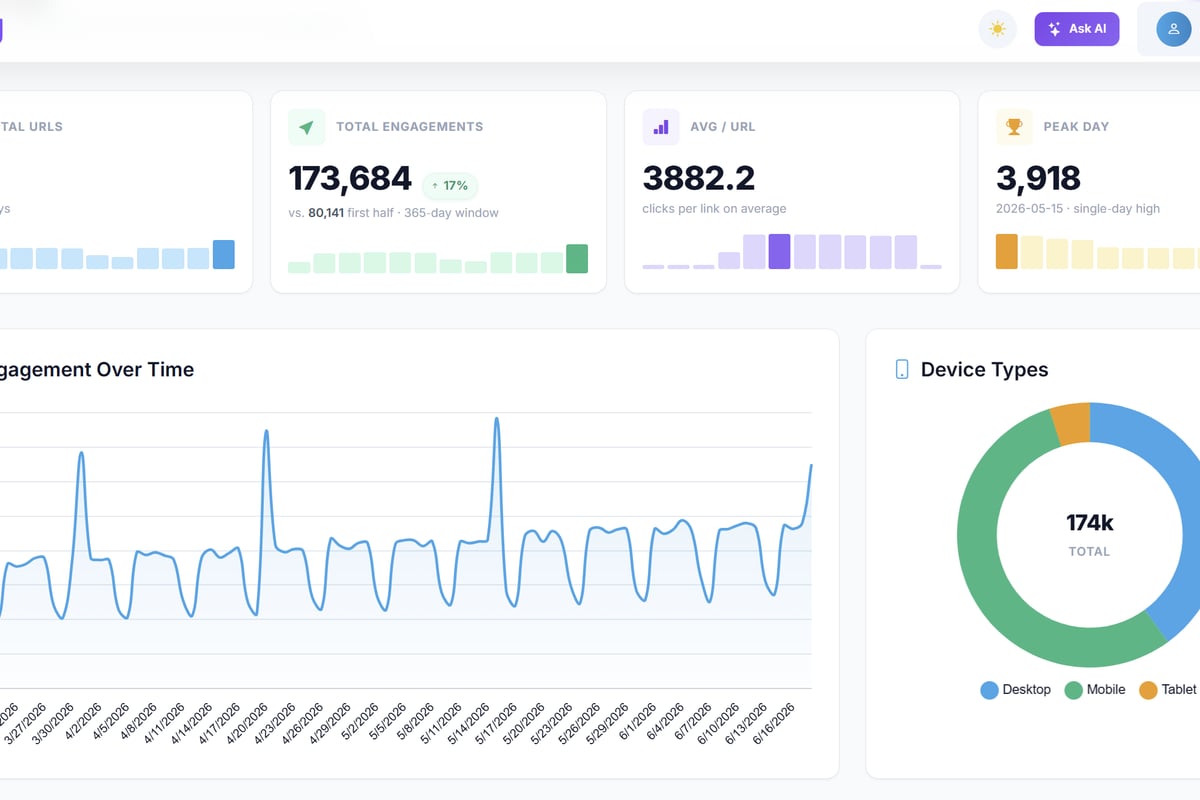
This creates a feedback loop where routing decisions become progressively more accurate as the system learns from accumulated data. When you need sophisticated link management with intelligent routing capabilities, Trimy provides the infrastructure to implement these strategies at scale, combining URL shortening, click tracking, A/B testing, and smart routing in a single platform built for marketers who need full control over their traffic and conversion data.
Network Infrastructure and Software-Defined Routing
Smart order routing concepts also apply to network infrastructure, where data packets must be routed through complex networks to reach their destinations. Traditional network routing protocols determine paths based primarily on network topology and basic metrics like hop count. Smart routing approaches incorporate additional intelligence.
Research into proactive fault-handling in software-defined networks has introduced smart routing techniques that aim to eliminate convergence processes and enhance network reliability. When a network link fails, traditional protocols require time to detect the failure, propagate the information, and recalculate routes. Smart routing can anticipate potential failures and maintain pre-computed backup paths.
Proxy Networks and Request Distribution
Proxy services represent another domain where smart order routing delivers substantial value. When routing requests through proxy networks, the system must select from potentially thousands of available proxy servers. The optimal choice depends on target geography, server load, success rates for specific target websites, and connection quality.
Services like PinguProxy utilize intelligent routing to automatically select the best proxy for each request based on real-time performance metrics and user requirements. This ensures high success rates for web scraping, API access, and other use cases where reliable proxy performance is critical.
The routing decision considers:
- Target website location and restrictions
- Proxy server current capacity and response time
- Historical success rates for similar requests
- IPv4 vs IPv6 protocol requirements
- Rotation schedules for maintaining anonymity
Implementing Smart Order Routing: Strategic Considerations
Organizations considering smart order routing implementations must address several strategic questions before designing their systems. The complexity and sophistication of the routing logic should match the actual business value at stake.
Rule-Based vs. Machine Learning Approaches
Two fundamental approaches exist for implementing routing decisions. Rule-based systems apply predefined logic: "If condition A exists, route to destination 1; otherwise route to destination 2." These systems are transparent, predictable, and easy to troubleshoot, but they struggle with complex scenarios involving many variables.
Machine learning approaches train algorithms on historical data to predict optimal routing decisions. These systems can discover non-obvious patterns and handle high-dimensional decision spaces, but they require substantial training data and can behave unpredictably when encountering novel situations.
| Approach | Best For | Limitations |
|---|---|---|
| Rule-Based | Clear priorities, stable conditions, regulatory compliance | Cannot adapt to complex patterns |
| Machine Learning | Many variables, pattern discovery, dynamic optimization | Requires data, lacks transparency |
| Hybrid | Combining business rules with data-driven refinement | Implementation complexity |
Most successful implementations use hybrid approaches: machine learning optimizes within boundaries set by business rules.
Performance Monitoring and Continuous Improvement
Smart order routing systems require ongoing monitoring and refinement to maintain effectiveness. Market conditions change, new execution venues emerge, and performance characteristics evolve over time. Without continuous monitoring, routing algorithms optimized for past conditions can degrade in performance.
Key monitoring activities include:
- Performance benchmarking against alternative routing strategies
- Venue analysis to identify consistently underperforming destinations
- Algorithm backtesting using historical data with different rule sets
- Anomaly detection to catch unexpected routing patterns
- Cost-benefit analysis of incremental improvements
The comparison between smart order routing and static logic reveals significant performance differences in dynamic environments. Static logic that worked well under certain conditions can fail dramatically when those conditions change, while adaptive smart routing maintains performance across varying scenarios.
Data Infrastructure Requirements
Effective smart order routing depends on robust data infrastructure. The system needs real-time access to current conditions across all potential destinations, historical performance data for pattern analysis, and low-latency execution capabilities to act on routing decisions before conditions change.
Organizations should invest in:
- Reliable data feeds with minimal latency and high accuracy
- Historical data storage supporting pattern analysis and backtesting
- Analytics platforms for monitoring performance and identifying improvements
- Testing environments where new routing strategies can be validated safely
- Scalable execution infrastructure that maintains performance under peak loads
The data requirements scale with system sophistication. Basic price comparison needs only current pricing data, while advanced predictive systems require extensive historical data, market microstructure information, and complex analytical capabilities.

Future Directions in Smart Order Routing
Smart order routing technology continues to evolve as new machine learning techniques, faster infrastructure, and richer data sources become available. Several trends are shaping the next generation of routing systems.
Reinforcement learning approaches that learn optimal policies through trial and error show promise for discovering routing strategies that human designers might miss. These systems can explore the trade-off space between competing objectives more thoroughly than rule-based approaches.
Real-time predictive analytics enable routing systems to anticipate future conditions rather than merely reacting to current states. By forecasting capacity constraints, price movements, or network congestion before they occur, routing algorithms can make more informed decisions.
Integration Across Business Functions
Organizations are discovering value in applying consistent smart routing principles across multiple business functions rather than maintaining separate systems for trading, fulfillment, marketing, and infrastructure. Unified platforms that share data and learnings across domains can achieve better overall performance than isolated implementations.
The advanced algorithms designed to achieve high execution quality combine rule-based processes with real-time monitoring in ways that transfer across industries. A retail company's learnings about routing customer orders among fulfillment centers can inform how their marketing team routes campaign traffic among landing pages.
Cross-functional smart routing platforms enable:
- Shared data infrastructure reducing redundant systems
- Consistent performance monitoring and reporting
- Transfer learning where insights from one domain improve others
- Unified optimization considering enterprise-wide objectives
- Reduced complexity through consolidated tooling
Smart order routing has evolved from a financial markets innovation into a versatile technology applicable across diverse domains including e-commerce, marketing, and network infrastructure. By automatically evaluating multiple execution venues and routing each order to the optimal destination based on real-time conditions, organizations can improve execution quality, reduce costs, and deliver better outcomes. For marketing teams looking to optimize campaign traffic and maximize conversion rates through intelligent link routing, Trimy provides the analytics, A/B testing, and smart routing capabilities needed to transform links into revenue signals and gain complete control over marketing traffic flows.