Google Analytics 360: Enterprise Analytics for Marketers

Enterprise marketing teams face increasingly complex challenges when measuring campaign performance across multiple channels, platforms, and customer touchpoints. Google Analytics 360 emerged as the premium solution for organizations requiring advanced analytics capabilities, dedicated support, and enterprise-grade service level agreements. As businesses navigate the transition to GA4 and evaluate their analytics infrastructure, understanding what Google Analytics 360 offers becomes essential for making informed decisions about analytics investments.
What Makes Google Analytics 360 Different from Standard Analytics
Google Analytics 360 represents the enterprise tier of Google's analytics ecosystem, designed specifically for organizations with high traffic volumes and sophisticated measurement requirements. The platform extends beyond standard Google Analytics capabilities by offering unsampled reports, higher data collection limits, and guaranteed uptime commitments.
Key differentiators include:
- Unsampled reporting across all reports and explorations
- Processing up to 1 billion hits per month per property
- 400 custom dimensions and 125 custom metrics (versus 50 and 25 in standard GA4)
- Service Level Agreement (SLA) guaranteeing 99.9% uptime
- Direct access to dedicated support teams and technical account managers
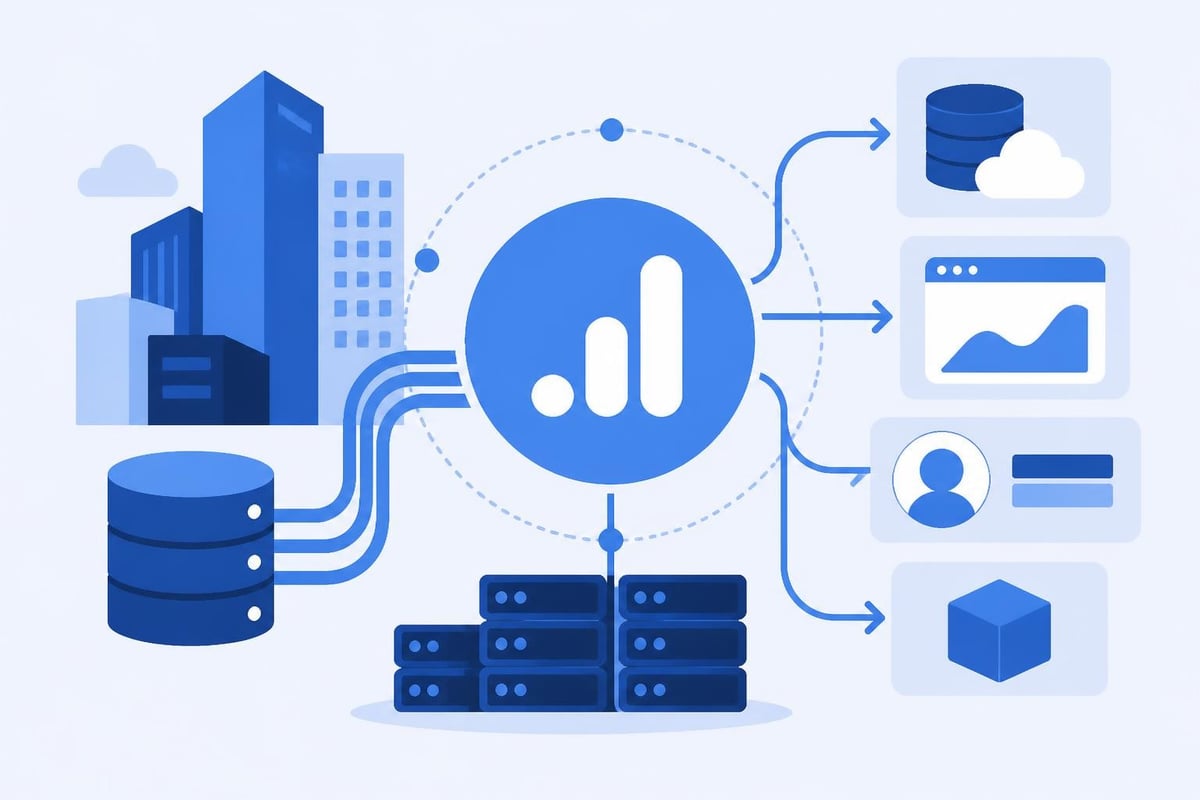
The platform integrates seamlessly with other Google Marketing Platform products, including Campaign Manager 360, Display & Video 360, and Search Ads 360. This integration creates a unified measurement ecosystem where marketing teams can connect advertising investments directly to business outcomes.
Organizations using Google Analytics 360 gain access to BigQuery export capabilities, enabling data scientists and analysts to run custom queries against raw, unaggregated data. This feature proves particularly valuable for businesses building proprietary attribution models or conducting advanced statistical analysis.
Enterprise Features That Drive Marketing Performance
Advanced Attribution and Analysis
Google Analytics 360 provides data-driven attribution modeling that allocates credit across multiple touchpoints in the customer journey. Unlike rule-based attribution models, the data-driven approach uses machine learning to understand which channels and campaigns genuinely drive conversions.
Marketing teams can compare different attribution models side-by-side to understand how various methodologies impact channel performance assessment. This capability becomes critical when justifying budget allocations across paid search, display, social media, and other channels.
| Attribution Model | Best Use Case | GA360 Advantage |
|---|---|---|
| Data-Driven | Complex multi-touch journeys | Machine learning across full dataset |
| Position-Based | Awareness and conversion focus | Unlimited historical data |
| Time Decay | Long consideration cycles | Unsampled analysis |
| Linear | Equal channel contribution | Custom lookback windows |
The platform's exploration tools enable analysts to build custom reports that answer specific business questions without writing code. Funnel analysis, path analysis, and segment overlap features help identify optimization opportunities across the customer journey.
Audience Activation and Personalization
Google Analytics 360 allows marketers to create sophisticated audience segments based on behavioral data, then activate those audiences across Google's advertising platforms. The integration between analytics and activation creates closed-loop measurement, where teams can measure how specific audience strategies perform.
Audience capabilities include:
- Creating audiences based on predicted behavior (likely to purchase, likely to churn)
- Building sequential segments that capture specific user journey patterns
- Excluding segments to prevent ad fatigue or inappropriate messaging
- Importing first-party data from CRM systems for enrichment
This level of audience sophistication enables personalization strategies that standard analytics cannot support. Marketing teams running complex A/B tests or multi-variant campaigns need these capabilities to properly measure incremental lift.
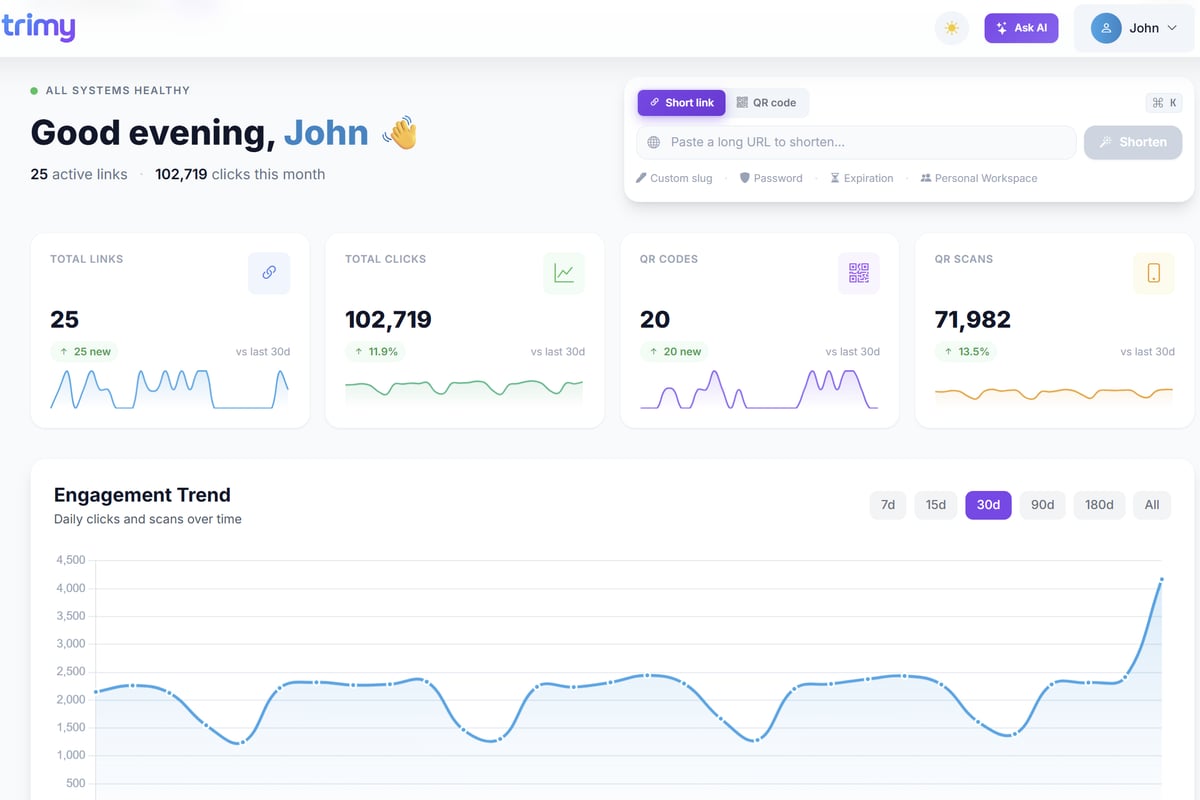
For businesses managing multiple links and campaigns simultaneously, understanding audience behavior across different entry points becomes essential. Trimy complements Google Analytics 360 by providing granular link-level intelligence, A/B testing capabilities, and smart routing that feeds valuable data into your broader analytics ecosystem.
The GA4 Transition and Analytics 360
The Google Analytics 360 migration to GA4 marked a significant shift in enterprise analytics strategy. Google extended the Universal Analytics 360 sunset to July 2024, giving enterprise customers additional time to transition their measurement frameworks.
Migration Considerations for Enterprise Teams
Moving from Universal Analytics 360 to Google Analytics 360 (GA4) required careful planning and execution. The new platform introduced event-based measurement, replacing the session-based model that marketers used for years.
Critical migration steps included:
- Mapping existing custom dimensions and metrics to GA4's event parameters
- Rebuilding custom reports and dashboards in the new interface
- Retraining teams on GA4's exploration and reporting paradigms
- Testing data collection accuracy before deprecating UA360 properties
- Establishing new benchmarks based on GA4's different measurement methodology
According to CMSWire's analysis of the Analytics 360 sunset, many enterprises struggled with the compressed timeline and significant platform differences. Organizations that invested in thorough migration planning experienced smoother transitions and maintained measurement continuity.

The GA4 version of Google Analytics 360 maintains enterprise features while adding enhanced privacy controls, machine learning capabilities, and cross-platform measurement. The platform now uses Google's consent mode to model conversions when users decline tracking, addressing privacy regulations while maintaining measurement accuracy.
Privacy, Compliance, and Data Governance
Meeting Regulatory Requirements
Google Analytics 360 provides enhanced data controls that help organizations meet GDPR, CCPA, and other privacy regulations. The platform offers IP anonymization, data deletion controls, and detailed data processing agreements.
Enterprise customers gain access to detailed audit logs showing who accessed what data and when. This transparency proves critical during compliance audits or when investigating potential data breaches.
| Privacy Feature | Standard GA4 | Analytics 360 |
|---|---|---|
| IP Anonymization | Automatic | Automatic + configurable |
| Data Retention | Up to 14 months | Custom retention periods |
| User Deletion | Manual per request | Automated workflows |
| Audit Logs | Limited | Comprehensive access logs |
| Data Processing Agreement | Standard | Customizable terms |
The platform's role-based access controls enable granular permissions management, ensuring team members only access data relevant to their responsibilities. This capability becomes essential as organizations grow and analytics access expands beyond marketing teams.
Data Quality and Accuracy
Google Analytics 360 implements sophisticated bot filtering and spam detection to maintain data quality. The platform automatically identifies and excludes known bots, crawlers, and invalid traffic from reports.
For organizations running high-stakes campaigns where attribution accuracy directly impacts million-dollar budget decisions, these data quality features justify the platform investment. Marketing teams can trust their analytics data when making strategic recommendations to executive leadership.
Integration Ecosystem and Technical Capabilities
Connecting Marketing Technology Stacks
Google Analytics 360 serves as the measurement foundation for sophisticated marketing technology ecosystems. The platform's API access enables custom integrations with CRM systems, customer data platforms, and marketing automation tools.
Common integration patterns include:
- Pushing offline conversion data from CRM into Analytics 360 for complete attribution
- Syncing audience segments to email service providers for coordinated campaigns
- Feeding analytics data into business intelligence platforms for executive reporting
- Connecting e-commerce platforms for enhanced product performance analysis
The BigQuery export functionality proves particularly powerful for technical teams. Raw event data flows into BigQuery within hours, enabling data scientists to build predictive models, conduct cohort analysis, or merge analytics data with other business datasets.
As industry coverage from AdExchanger highlights, the advertising technology landscape continues evolving around privacy-first measurement. Google Analytics 360's integration capabilities position it as a central component in privacy-compliant marketing stacks.
Developer Resources and Customization
The Measurement Protocol API allows developers to send data to Google Analytics 360 from any internet-connected device. This capability enables measurement of server-side events, IoT devices, or custom applications.
Development teams can implement enhanced e-commerce tracking that captures detailed product interaction data, custom checkout funnel steps, and promotion performance. This granular data collection supports sophisticated analysis of product merchandising strategies and user experience optimization.
Organizations with unique measurement requirements can leverage custom event parameters and user properties to track business-specific metrics. A SaaS company might track feature adoption rates, while a publisher might measure content engagement depth across article types.
Cost Considerations and ROI Analysis
Understanding Analytics 360 Pricing
Google Analytics 360 pricing starts at $50,000 annually for standard licensing, with costs scaling based on hit volume and feature requirements. While this represents significant investment compared to free Google Analytics, enterprise customers evaluate ROI differently.
Factors justifying the investment include:
- Cost of data sampling errors in standard Analytics leading to poor decisions
- Value of dedicated support preventing measurement gaps during critical campaigns
- Revenue impact of advanced attribution improving budget allocation
- Efficiency gains from BigQuery integration reducing manual reporting work
- Risk mitigation through SLA guarantees and enhanced data governance
Forbes analysis of GA4 transitions indicates that enterprises increasingly view analytics infrastructure as strategic competitive advantage rather than commodity tooling. Organizations generating substantial revenue through digital channels recognize that measurement accuracy directly impacts profitability.
<image_prompt alt="Analytics 360 ROI drivers">Enterprise analytics return on investment calculation showing data quality improvements, attribution accuracy, resource efficiency, and decision velocity gains from Google Analytics 360</image_content>
Alternative Considerations
Some organizations evaluate Google Analytics 360 against alternatives like Adobe Analytics, Amplitude, or Mixpanel. Each platform offers different strengths depending on business model and measurement priorities.
| Criterion | Analytics 360 | Adobe Analytics | Amplitude |
|---|---|---|---|
| Best For | Google ecosystem integration | Enterprise marketing clouds | Product analytics |
| Pricing Model | Annual license | Annual license | Usage-based |
| Learning Curve | Moderate | Steep | Moderate |
| Real-time Data | Standard | Advanced | Advanced |
| Predictive Analytics | Growing | Mature | Product-focused |
The decision often comes down to existing technology investments and team expertise. Organizations heavily invested in Google Marketing Platform find Analytics 360 integration benefits outweigh potential advantages of competing solutions.
Strategic Implementation and Team Enablement
Building Analytics Capability
Successful Google Analytics 360 implementations require more than technical setup. Organizations must invest in team training, governance frameworks, and measurement planning to realize platform value.
Implementation best practices include:
- Establishing a measurement plan that documents what gets tracked and why
- Creating naming conventions for events, parameters, and custom dimensions
- Defining data quality monitoring processes to catch tracking issues quickly
- Building a center of excellence that supports analytics users across departments
- Documenting attribution methodologies so stakeholders understand how credit gets assigned
Research from Harvard Business Review on analytics alignment demonstrates that organizations achieving analytics success align measurement capabilities with strategic business objectives. Google Analytics 360 provides the platform, but businesses must define what success looks like and how measurement informs decisions.
Maximizing Platform Value
Marketing teams should regularly audit their Analytics 360 implementation to ensure they utilize available features fully. Many organizations pay for capabilities they never activate or configure properly.
Common underutilized features include:
- Custom channel groupings that better reflect business marketing taxonomy
- Enhanced measurement for scroll tracking, file downloads, and video engagement
- Cross-domain tracking for accurate user journey measurement
- Event parameter reporting for deeper behavioral analysis
- Predictive metrics identifying high-value user segments
Regular training sessions keep teams current on platform updates and emerging best practices. Google releases new features continuously, and staying informed ensures organizations leverage their investment fully.
Performance Measurement for Link-Based Campaigns
Marketing teams running campaigns across multiple channels face particular measurement challenges when links serve as the primary conversion mechanism. Google Analytics 360 provides the measurement infrastructure, but link-level intelligence requires additional tooling.
Campaign managers need visibility into how individual links perform, which message variations drive engagement, and how traffic routing decisions impact conversion rates. This granular insight enables continuous optimization of campaign performance.
Testing different landing pages, call-to-action messaging, or offer structures requires controlled experimentation at the link level. When combined with Google Analytics 360's audience and attribution capabilities, this creates comprehensive measurement of campaign effectiveness from click through conversion.
Organizations managing hundreds or thousands of campaign links benefit from specialized link management platforms that integrate with their broader analytics stack. This integration ensures link-level performance data enriches the customer journey insights available in Analytics 360.
Google Analytics 360 delivers enterprise-grade measurement capabilities that support sophisticated marketing strategies across complex customer journeys. The platform's advanced attribution, audience activation, and data governance features justify investment for organizations where analytics accuracy directly impacts revenue.
For marketing teams seeking to maximize campaign performance through intelligent link management, Trimy provides the specialized capabilities that transform every link into a revenue signal. Our platform delivers advanced A/B testing, smart routing, and deep analytics that complement enterprise measurement infrastructure while giving you granular control over the links driving your business forward.