App Deeplinking: The Complete 2026 Guide for Marketers
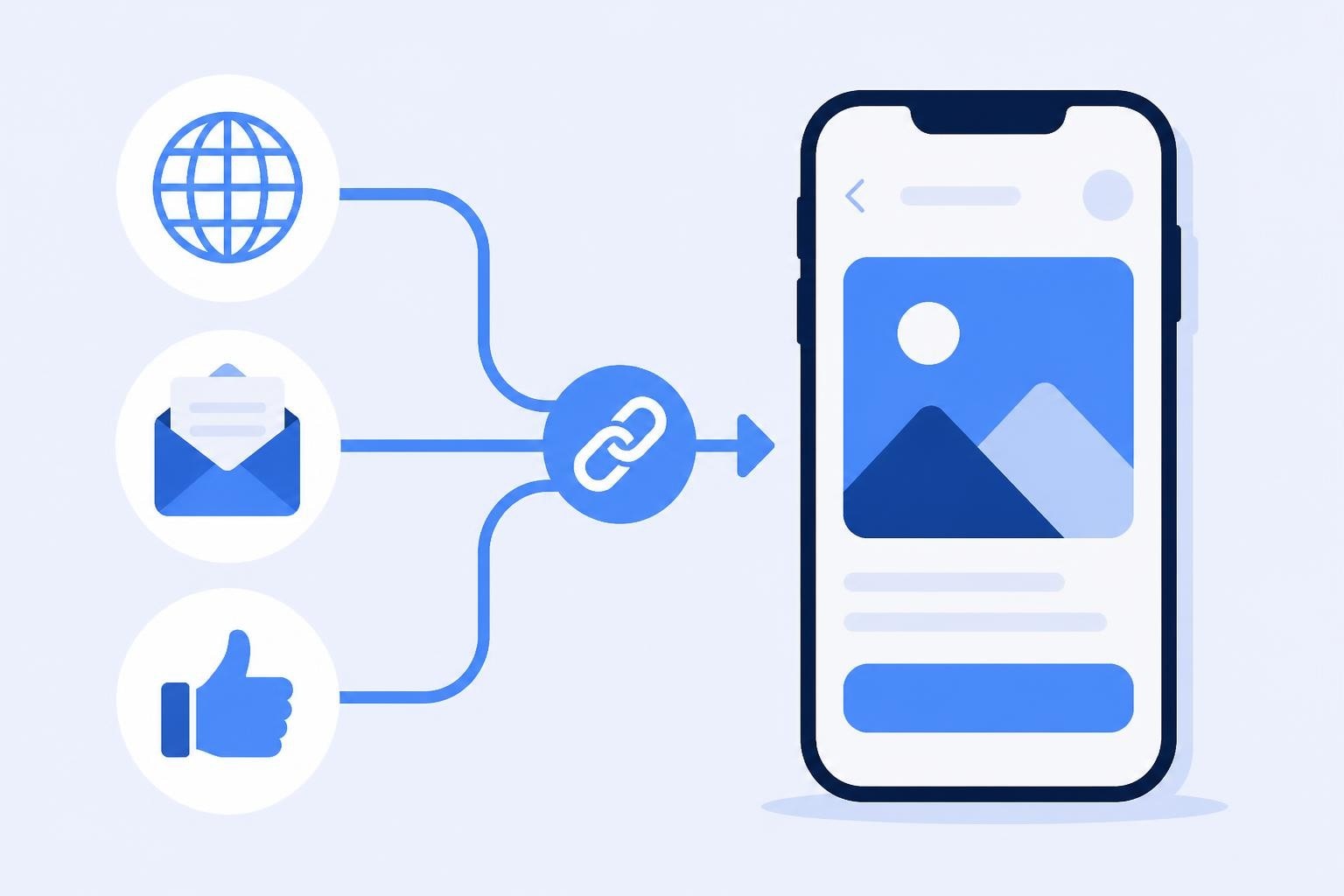
Mobile app engagement starts with the first click, and that click often happens outside your app. Whether users discover your content through social media, email campaigns, search results, or SMS messages, the path from discovery to in-app experience defines success. App deeplinking bridges this gap by routing users directly to specific screens or content within your mobile application, eliminating friction and preserving marketing intent throughout the customer journey.
Understanding App Deeplinking Architecture
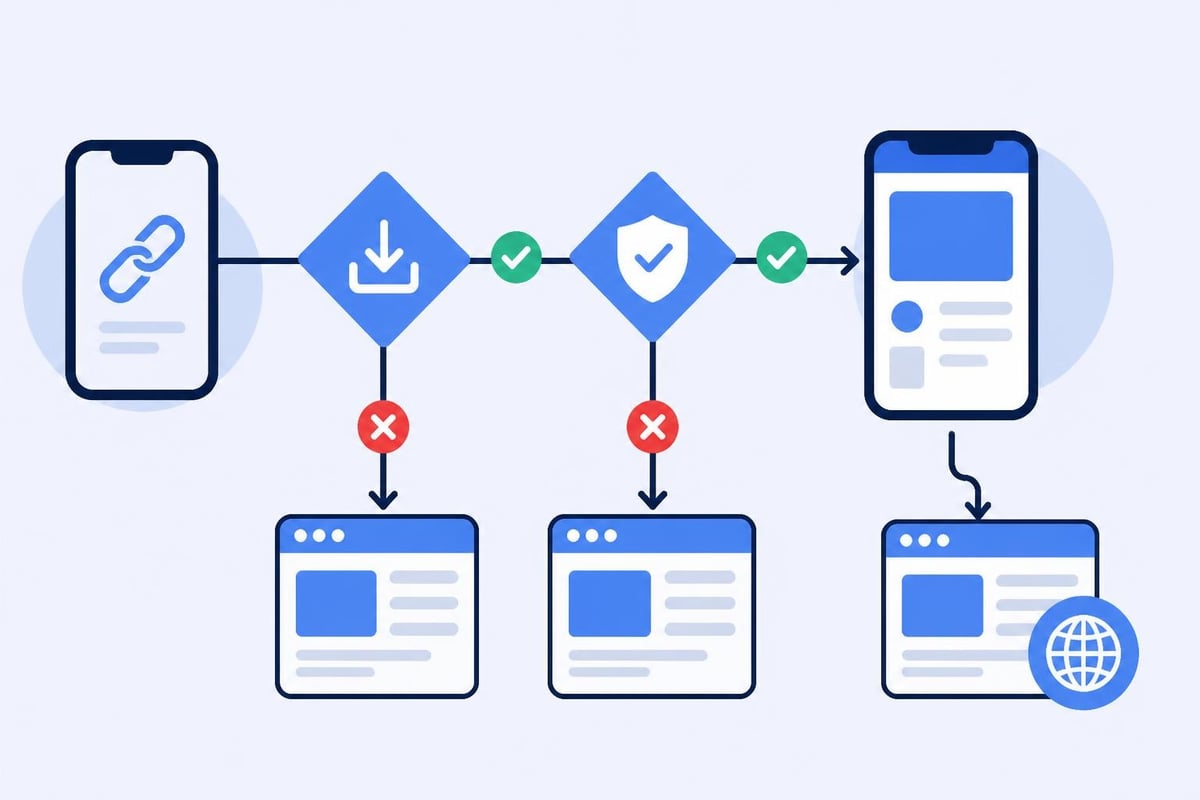
App deeplinking functions as a specialized URL scheme that mobile operating systems recognize and process differently than standard web links. When a user taps a deep link, the operating system checks whether the target application is installed, then either launches the app to the specified content or redirects to an alternative destination like the App Store or a mobile website.
The technical foundation involves three primary components: the URI scheme, the intent filter (Android) or associated domains (iOS), and the routing logic within your application. Each component must work in harmony to deliver seamless experiences.
URI Schemes and Universal Links
Traditional deep links use custom URI schemes like yourapp://product/12345, which function reliably when the app is installed but fail gracefully when it's not. Universal Links (iOS) and App Links (Android) evolved as superior solutions, using standard HTTPS URLs that work as both web links and app triggers.
This dual functionality means a single link like https://yourdomain.com/product/12345 can open the app if installed or display the mobile website if not. No broken experiences, no error messages, just intelligent routing based on device state. Creating deep links in Android requires specific configuration files and verification processes that ensure security and reliability.
Types of Deep Links and When to Use Each
Not all deep links serve the same purpose, and understanding the distinctions helps marketers choose the right implementation for each campaign objective.
| Link Type | Installation Required | Platform Support | Use Case |
|---|---|---|---|
| Basic Deep Links | Yes | iOS, Android | Existing user engagement, in-app notifications |
| Deferred Deep Links | No (carries data post-install) | iOS, Android | User acquisition campaigns, referral programs |
| Contextual Deep Links | No (preserves full attribution) | iOS, Android | Multi-touch attribution, personalized onboarding |
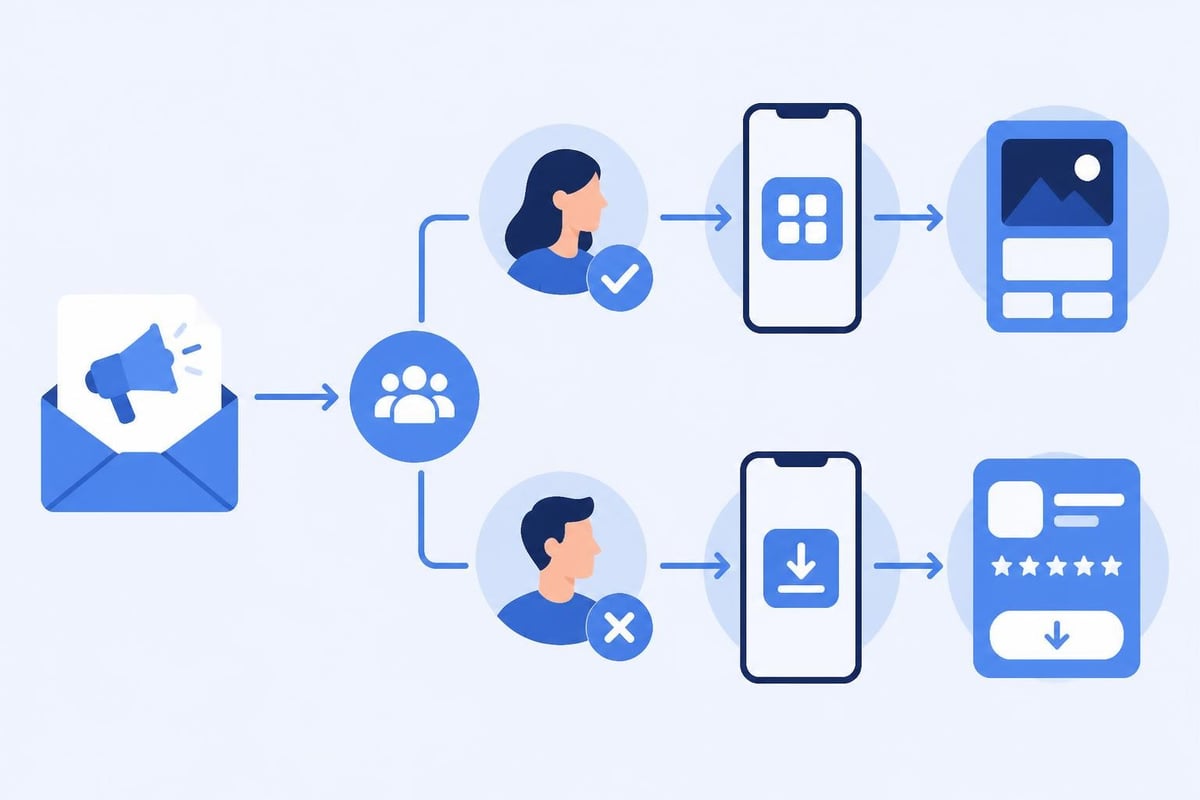
Basic deep links assume the app is already installed and simply route users to specific content. They're perfect for email campaigns targeting existing customers or push notifications that bring users back to abandoned carts.
Deferred deep links remember the intended destination even when users must install the app first. A user clicks a promotional link, gets redirected to the App Store, installs the app, and launches directly to the promoted product. The link "defers" its routing until the app exists.
Contextual deep links go further by preserving attribution data, campaign parameters, and user context throughout the installation and first-launch process. These links power sophisticated attribution models and personalized onboarding experiences.
Implementation Considerations for Marketing Teams
Marketing teams need technical partners who understand both the creative and analytical dimensions of app deeplinking. The routing logic determines whether your carefully crafted campaigns deliver promised experiences or frustrate users with generic home screens.
Campaign-specific parameters must survive the journey from ad click through app launch. UTM parameters, affiliate codes, promotional identifiers, and A/B test variants all require careful preservation through the deep linking infrastructure.
Building Effective Deep Link Campaigns
Strategic app deeplinking transforms how marketing campaigns perform across channels. Each touchpoint becomes an opportunity to deliver precisely targeted experiences rather than generic app landings.
Social Media Integration
Social platforms generate massive mobile traffic, but that traffic traditionally lands on mobile websites with high bounce rates. Deep links convert social engagement into app sessions by routing Instagram, Facebook, TikTok, and Twitter users directly to featured products, articles, or offers.
The challenge lies in creating links that adapt to user state. Installed users should land in-app instantly, while new users need frictionless paths through app store installations to the promised content. This conditional routing requires intelligent link infrastructure that evaluates device capabilities and user history in real-time.
Platform-specific considerations matter significantly. Instagram Stories prohibit swipe-up links for most accounts, requiring bio links or creator tools. Facebook's app browser sometimes interferes with deep link detection. Each platform presents unique technical challenges that proper testing reveals before campaigns launch.
Email Campaign Optimization
Email clients process links through various redirects and tracking wrappers that can break fragile deep linking implementations. Robust solutions survive these transformations while maintaining attribution integrity.
Segment your email lists by app installation status when possible, sending different link types to different audiences. Existing users receive basic deep links for instant access, while prospects get deferred links that promise specific value after installation. This segmentation improves both conversion rates and user experience metrics.
Abandoned cart emails demonstrate app deeplinking's power clearly. Instead of routing users to a generic app home screen where they must search for their cart, deep links can restore the exact checkout state, complete with selected items, shipping information, and promotional codes already applied. This removes friction that typically causes conversion abandonment.
Advanced Analytics and Attribution
App deeplinking generates valuable data streams that many marketing teams underutilize. Each link interaction reveals user preferences, channel performance, and conversion patterns that inform strategic decisions.
Tracking Installation Sources
Attribution becomes complex when users discover your app through one channel but install through another. A user sees your Instagram ad, searches for your app in the App Store later, and installs from search results. Which channel deserves credit?
Deferred deep links solve this attribution puzzle by maintaining a cryptographic fingerprint that survives the installation gap. Even when users don't complete immediate installations, the link infrastructure can match post-install launches to original campaign sources with high confidence.
This capability transforms acquisition economics. Instead of accepting platform-reported install numbers at face value, you gain independently verified attribution that reveals true campaign ROI. Best practices for routing users emphasize the importance of reliable attribution in optimizing user acquisition spend.
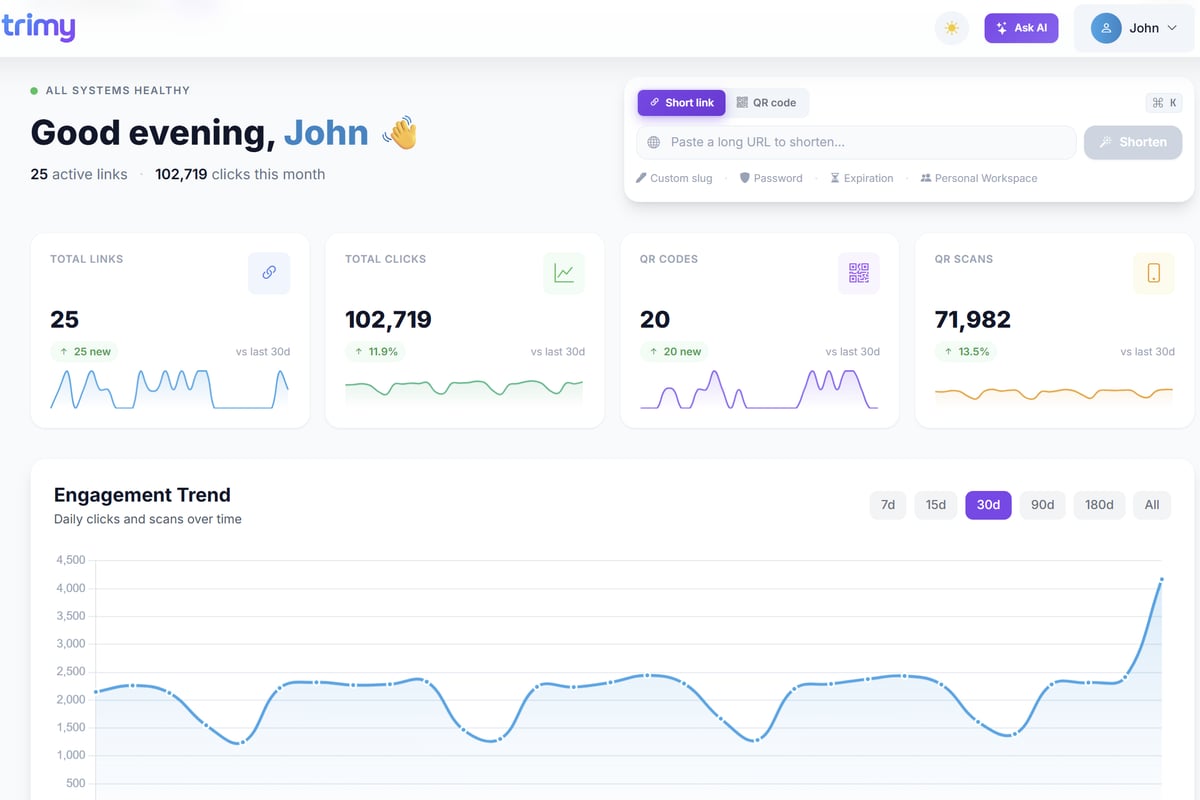
For marketers managing complex multi-channel campaigns, Trimy provides the link intelligence infrastructure needed to track every touchpoint accurately. With advanced analytics, A/B testing capabilities, and smart routing, the platform helps transform deep links from simple redirects into comprehensive revenue signals that inform strategic marketing decisions.
Multi-Touch Attribution Models
Single-touch attribution credits one interaction for conversions, ignoring the complex journeys users actually take. Multi-touch models distribute credit across multiple touchpoints, revealing how channels work together to drive outcomes.
App deeplinking data feeds these sophisticated models by capturing every link interaction throughout the customer journey. First-touch links reveal awareness channels, mid-funnel links show consideration behaviors, and last-touch links identify conversion triggers.
The technical requirement is consistent link infrastructure across all campaigns. When every email, ad, social post, and SMS message uses the same deep linking platform, the resulting data connects naturally into comprehensive journey maps.
Performance Optimization Strategies
Even perfectly implemented app deeplinking can fail if links load slowly or routing logic introduces delays. Performance optimization separates functional deep links from exceptional user experiences.
Minimizing Redirect Chains
Each redirect adds latency and creates failure points. Inefficient deep linking implementations might redirect users three, four, or five times before reaching their destination: from the initial link to a tracking server, then to a routing service, then to a universal link handler, then finally to the app.
Streamlined architectures reduce these chains to the minimum necessary for attribution and routing. Modern solutions handle complex logic server-side before the initial redirect, then send users directly to their destination in a single hop.
- Server-side routing logic processes campaign parameters, device detection, and A/B test assignments before generating the redirect
- Edge computing brings routing decisions geographically closer to users for reduced latency
- Predictive prefetching anticipates likely user paths and prepares resources in advance
A/B Testing Deep Link Experiences
Not all routing strategies perform equally. Some users respond better to direct app launches, while others prefer seeing a mobile web preview before committing to an app experience. A/B testing reveals these preferences.
Test variables include the timing of app launch prompts, the content of interstitial pages, the fallback behavior when apps aren't installed, and the onboarding sequences new users encounter. Each variable influences conversion rates measurably.
Systematic testing requires infrastructure that randomly assigns users to variants, tracks behavior across the installation gap, and attributes downstream actions to specific test conditions. This complexity explains why many teams struggle to run effective deep link experiments despite understanding their potential value.
Platform-Specific Implementation Details
iOS and Android handle app deeplinking through different mechanisms, requiring platform-specific configurations and testing protocols.
iOS Universal Links
Apple's Universal Links system requires a signed JSON file hosted on your web domain that declares which URL patterns your app handles. The apple-app-site-association file must be accessible at https://yourdomain.com/.well-known/apple-app-site-association and properly formatted according to Apple's specifications.
When users tap links matching your declared patterns, iOS checks whether your app is installed and verified to handle those domains. Verification happens at the operating system level through cryptographic signatures, preventing malicious apps from hijacking your links.
Common implementation mistakes include incorrect file formatting, missing SSL certificates, CDN configurations that prevent Apple's crawler from accessing verification files, and case-sensitive path matching issues. This hands-on tutorial demonstrates the verification process step-by-step, though focused on Android, the principles translate to iOS implementations.
Android App Links
Android App Links function similarly to iOS Universal Links but use a assetlinks.json file instead. The verification process confirms domain ownership through digital asset links that associate your app's signing certificate with your web domain.
Android's intent system provides more flexibility than iOS for handling link ambiguity. When multiple apps declare the ability to handle the same URL pattern, Android can prompt users to choose their preferred app or remember previous selections.
This flexibility creates both opportunities and challenges. Your deep links might compete with other apps for user attention, but sophisticated routing logic can differentiate your links through better user experiences and clearer value propositions.
Security Considerations and Best Practices
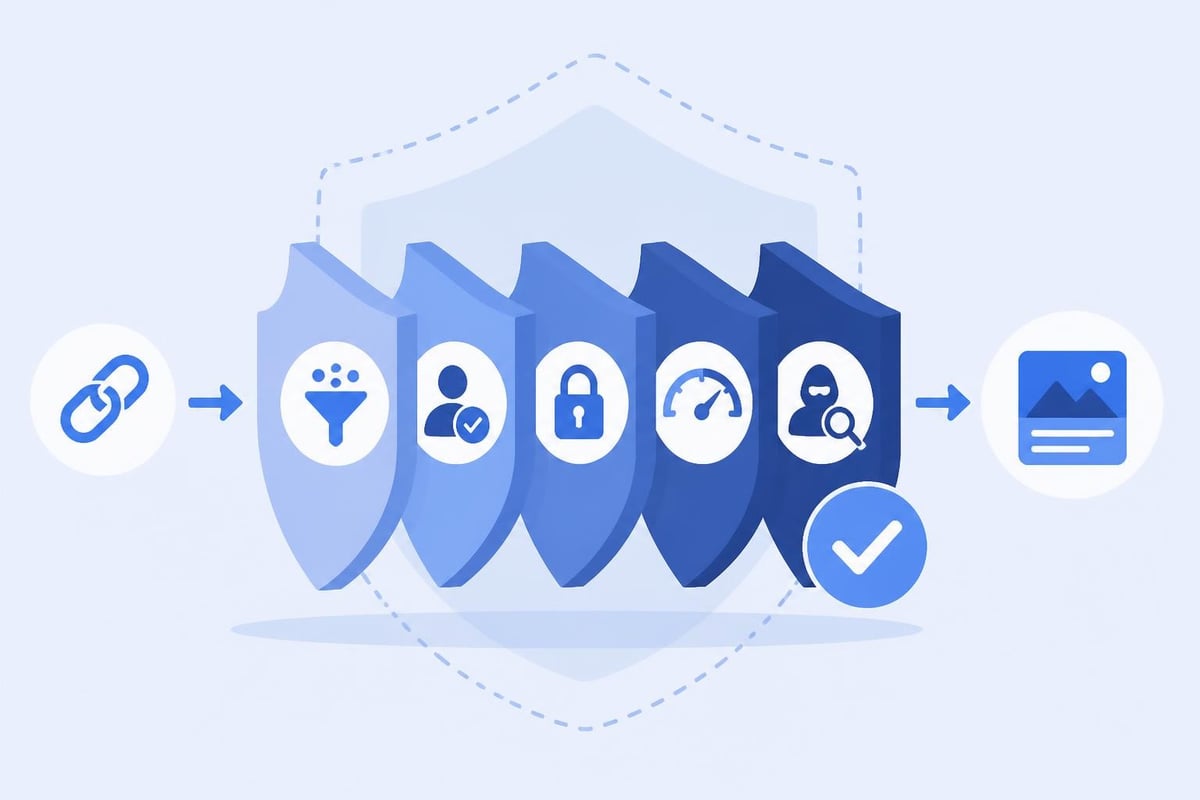
App deeplinking introduces security considerations that careless implementations can expose. Malicious actors can craft deep links that bypass authentication, access unauthorized content, or execute unintended actions.
Validating Link Parameters
Never trust user-supplied data, including parameters passed through deep links. Treat every incoming link as potentially malicious until validated against your security policies.
Implement server-side validation for sensitive operations triggered by deep links. If a deep link requests privileged content, verify the user's authentication state and authorization level before granting access. Client-side checks alone are insufficient since sophisticated attackers can bypass them.
Parameter sanitization prevents injection attacks where specially crafted link parameters could execute malicious code or access unintended resources. URL-encode all parameters, validate expected data types, and reject unexpected or malformed inputs.
Rate Limiting and Abuse Prevention
Deep links can be replayed, shared, or automated at scale. Without rate limiting, attackers might use deep links to scrape content, enumerate user data, or overwhelm your infrastructure with fraudulent requests.
Implement rate limits based on device identifiers, IP addresses, and behavioral patterns. Distinguish between legitimate high-volume usage (viral campaigns, popular content) and suspicious patterns (scrapers, fraud attempts).
Session management becomes critical when deep links bypass normal authentication flows. Ensure that security-sensitive links expire after single use or short time windows, and require fresh authentication for privileged operations regardless of link state.
Measuring Deep Link Success
Defining success metrics helps teams evaluate deep link performance objectively and identify optimization opportunities systematically.
Key Performance Indicators
Different campaigns require different success metrics, but several KPIs apply broadly across app deeplinking initiatives:
- Deep link conversion rate: Percentage of link clicks that successfully open the app
- Deferred deep link match rate: Percentage of post-install launches correctly attributed to pre-install clicks
- Time to content: Seconds elapsed from link click to target screen rendering
- Retention lift: Difference in retention rates between deep-linked users and standard app launches
Industry benchmarks vary significantly by vertical, platform, and implementation quality. E-commerce apps typically see 60-80% deep link conversion rates for installed users, while media apps might achieve 70-90% when content is readily available. These ranges reflect both technical performance and content availability factors.
Attribution Window Optimization
How long should deep links remain active? If a user clicks a promotional link but doesn't install the app for three weeks, should that eventual installation count toward campaign attribution?
Standard attribution windows range from 24 hours to 30 days, with 7 days serving as a common middle ground. Shorter windows reduce false positives from unrelated installations, while longer windows capture deliberate but delayed conversions.
Test different attribution windows for different campaign types. Brand awareness campaigns might justify longer windows since users take time to research and decide. Limited-time promotional campaigns need shorter windows that match offer durations.
Integration with Marketing Automation
App deeplinking delivers maximum value when integrated with broader marketing automation systems that orchestrate multi-channel campaigns and personalize user experiences.
CRM and Customer Data Platforms
Customer relationship management systems hold valuable profile data that can personalize deep link destinations. A loyalty program member clicking a promotional email should land on a screen showing their current point balance and personalized offers, not a generic promotion page.
This personalization requires passing user identifiers through deep links and retrieving profile data server-side before rendering content. Privacy regulations like GDPR and CCPA constrain what data can be passed through URLs versus retrieved from authenticated sessions.
Progressive enhancement balances personalization with privacy. Generic deep links work for anonymous users, while authenticated users receive enhanced experiences that leverage their profile data. This approach ensures functionality for all users while rewarding engaged customers with superior experiences.
Marketing Campaign Management
Campaign management platforms coordinate messaging across email, SMS, push notifications, social media, and paid advertising. Deep links embedded in these messages must maintain consistent attribution and routing logic regardless of channel.
Centralized link creation ensures consistency. When campaign managers generate deep links through a single platform rather than manually constructing URLs for each channel, the resulting links follow organizational standards for parameter naming, tracking codes, and fallback behaviors.
Version control becomes important as apps evolve. Deep links created for version 2.0 of your app might fail when users still running version 1.8 click them. Intelligent routing detects app versions and adjusts destinations accordingly, maintaining functionality across your installed user base.
Real-World Case Studies
Examining how successful companies implement app deeplinking reveals practical insights that generic best practices can't capture.
Glints optimized their deep linking strategy to scale their user base and job applications significantly. By improving how candidates moved from job discovery to application completion, they reduced friction that previously caused abandonment at critical conversion points.
The IDCU date planner app case study demonstrates how deep linking enhances discovery experiences by routing users directly to curated date plans and venue details. This implementation transformed casual browsers into active users by eliminating navigation overhead.
A leading mobile brand achieved over 120 million seamless app redirections through strategic deep linking implementation. The scale of this success highlights how enterprise-grade solutions handle massive traffic volumes while maintaining performance and attribution accuracy.
These case studies share common patterns: clear value propositions that justify app installations, frictionless routing that preserves user intent, and robust analytics that quantify business impact. Companies that master these elements consistently outperform competitors still treating deep links as technical afterthoughts.
Future Trends in App Deeplinking
The app deeplinking landscape continues evolving as platforms introduce new capabilities and user expectations shift toward seamless cross-device experiences.
Privacy-Focused Attribution
iOS App Tracking Transparency and similar privacy initiatives restrict the device fingerprinting techniques that powered traditional deferred deep linking. Modern solutions adapt by using probabilistic matching, aggregate measurement, and privacy-preserving attribution methods.
These changes require marketers to rethink attribution strategies. While individual user tracking becomes more restricted, cohort-level analysis and incrementality testing provide alternative frameworks for measuring campaign effectiveness. Understanding how deep linking works in 2026 includes navigating these privacy-first measurement approaches.
Cross-Platform Continuity
Users increasingly expect seamless experiences across phones, tablets, desktop browsers, and connected devices. Deep linking architectures are expanding beyond mobile apps to coordinate experiences across this fragmented ecosystem.
A user might research products on their laptop, receive a promotional email on their phone, and complete purchases through a tablet app. Deep links that recognize user context across these devices and maintain cart state, browsing history, and promotional eligibility deliver superior experiences that drive higher conversion rates.
Technical standards like web app manifests and progressive web apps blur the distinction between web and native experiences, creating new opportunities for intelligent routing based on device capabilities rather than rigid platform boundaries.
App deeplinking transforms marketing links from simple redirects into intelligent routing infrastructure that preserves user intent and maximizes conversion potential across every channel. By implementing the technical foundations correctly, testing systematically, and measuring comprehensively, marketing teams can significantly improve campaign ROI while delivering superior user experiences. Trimy provides the link intelligence and management capabilities needed to execute sophisticated deep linking strategies at scale, with advanced analytics and smart routing that turn every link into actionable business insights.