Smart Routing: Optimize Traffic and Conversions in 2026
In today's digital landscape, sending users to the right destination at the right time can make the difference between a conversion and a bounce. Smart routing technology has emerged as a critical tool for businesses seeking to optimize their traffic distribution, enhance user experiences, and maximize return on investment. By leveraging real-time data and intelligent algorithms, smart routing systems automatically direct users, leads, or transactions to the most appropriate destination based on multiple contextual factors.
Understanding Smart Routing Technology
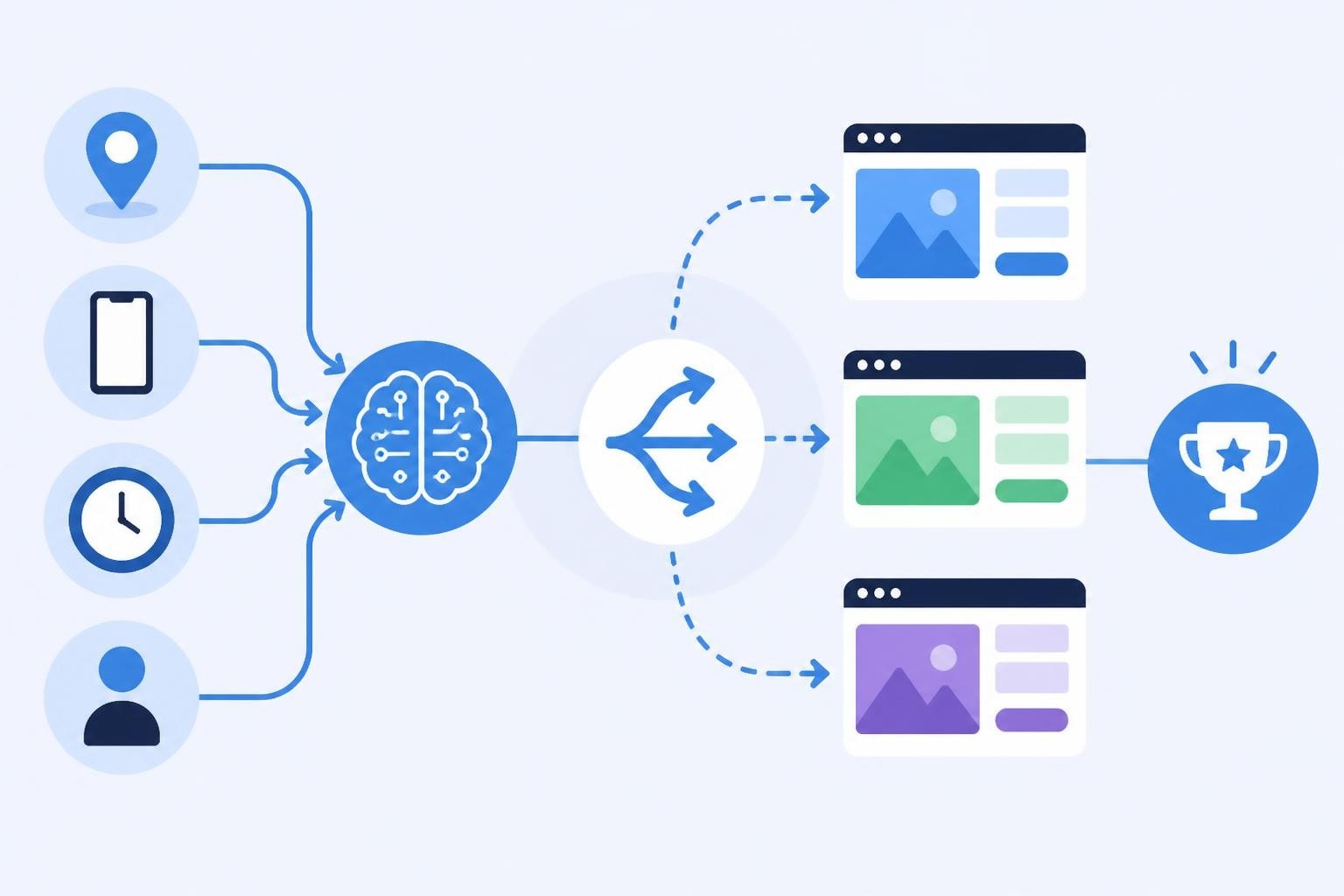
Smart routing represents an evolution beyond simple redirection. Traditional routing sends all traffic to a single destination regardless of context, while smart routing uses AI-driven logic to analyze multiple variables and make instant decisions about where to send each individual user or request.
The technology examines factors such as geographic location, device type, browser, time of day, referral source, user behavior patterns, and historical performance data. This comprehensive analysis happens in milliseconds, ensuring users experience no delays while benefiting from optimized routing decisions.
Core Components of Smart Routing Systems
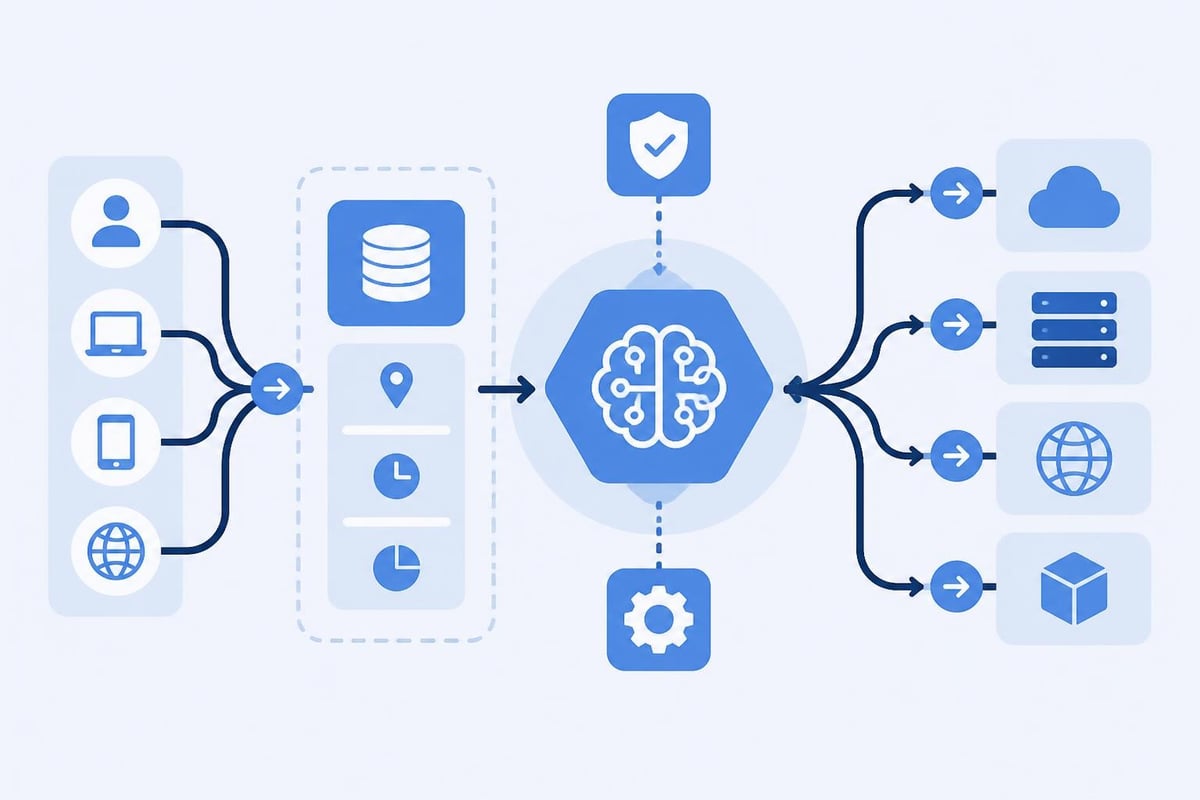
Decision Engines form the brain of smart routing systems. These engines process incoming requests, evaluate predefined rules and machine learning models, and determine the optimal destination. They continuously learn from outcomes to improve future routing decisions.
Data Collection Layers gather information about each request. This includes:
- IP address and geolocation data
- Device and browser specifications
- Time and date information
- Referral source and campaign parameters
- Previous user interactions and conversion history
- A/B test assignments and variant performance
Integration Points connect smart routing to your existing infrastructure. APIs, webhooks, and direct integrations ensure routing decisions can leverage your full data ecosystem while pushing traffic to appropriate destinations across your marketing stack.
Business Applications of Smart Routing
The versatility of smart routing extends across numerous business functions. Each application addresses specific optimization challenges while contributing to overall operational efficiency and revenue growth.
Marketing Campaign Optimization
Marketing teams use smart routing to maximize campaign performance by directing traffic based on conversion probability. When users click on ads or promotional links, smart routing evaluates which landing page, offer, or product page will most likely convert that specific user.
Geographic routing ensures users see location-appropriate content, pricing in local currency, and region-specific offers. Device-based routing directs mobile users to mobile-optimized experiences while desktop users access full-featured pages. Time-based routing can show different offers during business hours versus evenings or weekends.
| Routing Factor | Optimization Opportunity | Impact on Conversions |
|---|---|---|
| Geographic Location | Regional pricing, language, shipping options | 15-25% improvement |
| Device Type | Mobile vs desktop experience | 20-30% improvement |
| Traffic Source | Custom landing pages per channel | 10-20% improvement |
| Time of Day | Business hours vs after-hours offers | 5-15% improvement |
Lead Distribution and Sales Operations
Smart routing in sales operations automatically assigns incoming leads to the most appropriate sales representatives. The system considers rep expertise, current workload, past performance with similar leads, geographic territory, and lead characteristics.
This intelligent distribution prevents cherry-picking, ensures balanced workloads, and matches prospects with reps most likely to close the deal. Advanced systems track outcomes and adjust routing rules to continuously improve conversion rates.
Round-robin distribution ensures equal opportunity while performance-based routing rewards top performers with higher-quality leads. Specialty routing directs complex or high-value prospects to experienced reps with relevant expertise.
Customer Service and Support Optimization
Customer inquiries benefit significantly from intelligent routing in customer service. When customers reach out through chat, email, or phone, smart routing analyzes the inquiry content, customer history, and agent capabilities to make optimal assignments.
Technical questions route to specialists with relevant expertise. High-value customers connect with senior agents. Urgent issues receive priority handling. This reduces resolution time, improves first-contact resolution rates, and enhances overall customer satisfaction.
Technical Implementation Strategies
Implementing smart routing requires careful planning and execution. Success depends on establishing clear objectives, collecting appropriate data, and configuring rules that align with business goals.
Setting Up Routing Rules and Logic
Start by defining your routing criteria and objectives. Identify the key variables that should influence routing decisions. Common variables include:
- Geographic criteria: Country, region, city, or custom geographic zones
- Temporal factors: Time of day, day of week, seasonal patterns
- Technical attributes: Device type, operating system, browser, screen size
- Behavioral signals: New vs returning visitor, engagement history, purchase history
- Campaign context: Traffic source, UTM parameters, referral data
Create routing rules that combine these variables logically. Simple rules might route all mobile traffic to mobile-optimized pages. Complex rules might consider device type AND geographic location AND time of day to determine the optimal destination.
Testing and Optimization Workflows
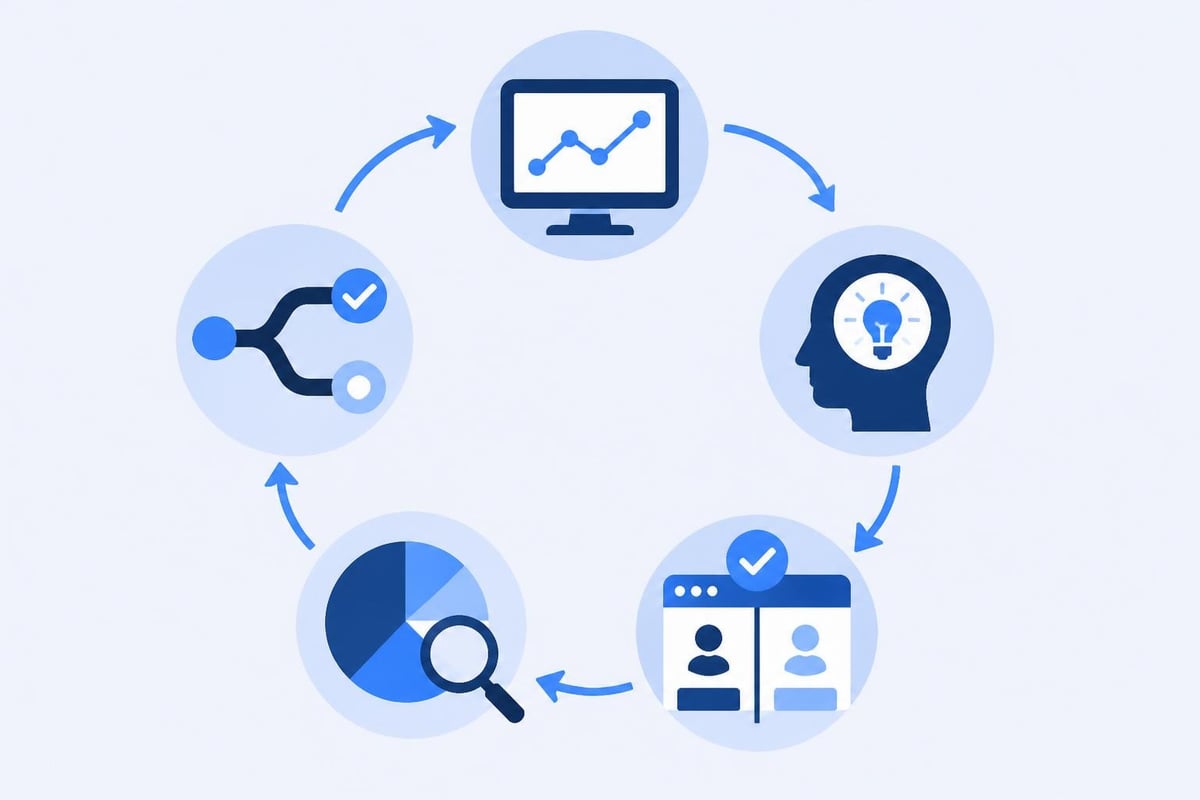
Smart routing becomes truly effective through continuous testing and refinement. Implement A/B testing frameworks that evaluate different routing strategies against each other.
Control groups establish baseline performance while test groups experience new routing logic. Measure key metrics including conversion rate, revenue per visitor, engagement time, and bounce rate. Statistical significance testing ensures you make data-driven decisions about which routing strategies to adopt permanently.
Track performance across different segments. A routing strategy that works well for desktop users might perform poorly for mobile visitors. Geographic routing that excels in North America might need adjustment for European markets.
Advanced Smart Routing Techniques
As smart routing systems mature, advanced techniques unlock additional optimization opportunities. These approaches require more sophisticated implementation but deliver substantial performance improvements.
Machine Learning-Enhanced Routing
Machine learning models analyze historical data to predict which destinations will perform best for each user. Rather than relying solely on predefined rules, these systems identify patterns humans might miss.
The models consider hundreds of variables simultaneously, weighing their relative importance and interactions. As new data accumulates, the models automatically adjust their predictions to reflect changing conditions and user behaviors.
Multi-Armed Bandit Algorithms
Traditional A/B testing dedicates traffic evenly between variants during the test period. Multi-armed bandit algorithms dynamically adjust traffic allocation, sending more users to better-performing variants while still exploring alternatives.
This approach reduces opportunity cost during testing. Instead of sending 50% of traffic to an underperforming variant for weeks, the algorithm quickly identifies winners and shifts traffic accordingly while maintaining statistical validity.
Contextual Routing Based on User Intent
Understanding user intent enables highly targeted routing decisions. Systems analyze search queries, browsing behavior, and engagement patterns to infer what users seek.
Informational queries route to educational content while transactional queries direct to product or pricing pages. Users exhibiting comparison behavior see competitive analysis content while those showing purchase intent route directly to checkout flows.
Performance Metrics and Measurement
| Metric Category | Key Indicators | Measurement Frequency |
|---|---|---|
| Conversion Performance | Conversion rate, revenue per visitor, average order value | Daily/Weekly |
| User Experience | Bounce rate, time on page, pages per session | Daily |
| Technical Performance | Routing decision time, error rate, uptime | Real-time |
| Business Impact | Total revenue, cost per acquisition, ROI | Weekly/Monthly |
Effective smart routing requires comprehensive measurement. Track both immediate technical performance and broader business outcomes to understand true system effectiveness.
Conversion metrics reveal whether routing decisions successfully drive desired actions. Compare conversion rates across different routing rules, segments, and destinations. Calculate revenue per visitor to understand economic impact beyond simple conversion counting.
User experience metrics indicate whether routing enhances or hinders user satisfaction. High bounce rates after routing might signal destination mismatch. Low engagement suggests routing sends users to irrelevant content.
Technical performance metrics ensure routing systems operate reliably. Monitor routing decision latency to verify users experience no delays. Track error rates to identify and resolve system issues quickly.
Integration with Link Management Platforms
Smart routing capabilities become exponentially more powerful when integrated with comprehensive link management platforms. These integrations enable marketers to leverage routing intelligence across their entire link ecosystem.
Link management platforms that include smart routing let you create a single campaign link that automatically adapts to each user. Rather than creating separate links for different segments, you deploy one intelligent link that routes users based on their characteristics.
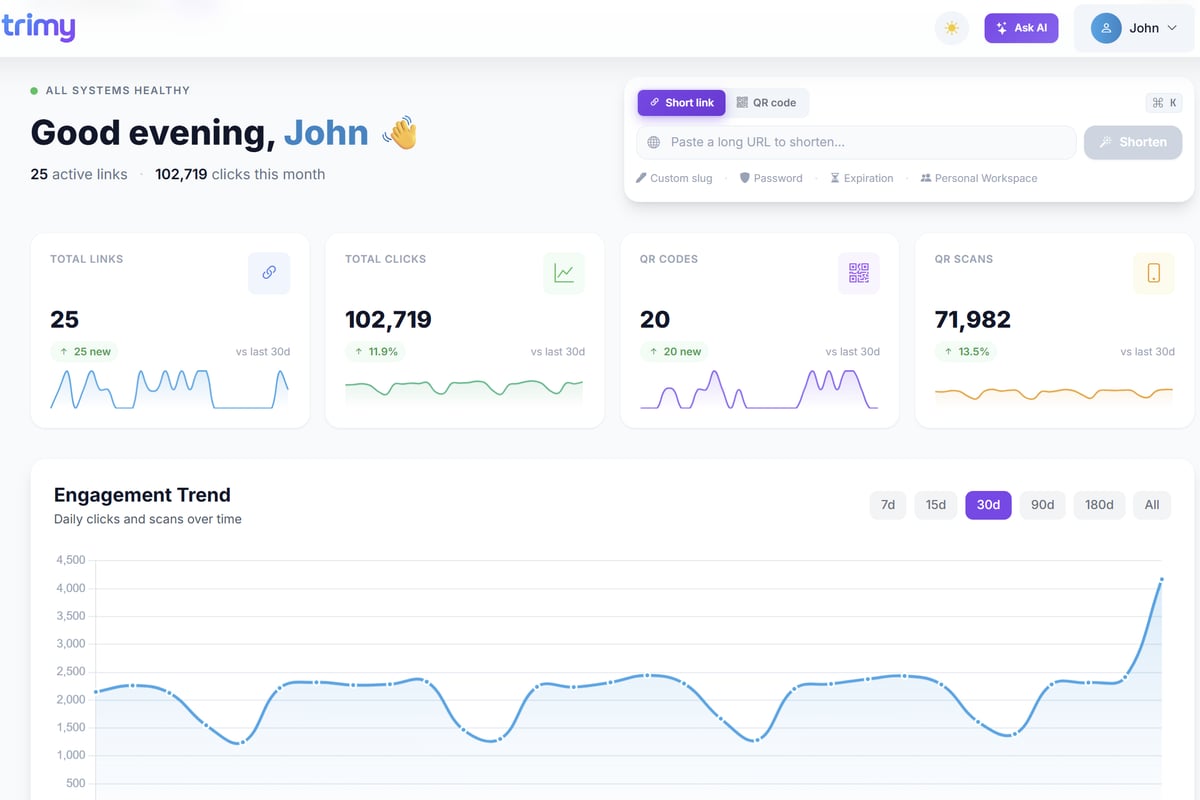
Trimy combines smart routing with advanced analytics, A/B testing, and deep campaign insights in a single platform. This integration lets marketers optimize not just where traffic goes, but how they track, measure, and improve performance across all campaigns. The platform transforms simple links into intelligent routing systems that maximize conversions while providing granular data on what works for different user segments.
API-Driven Routing Capabilities
Modern smart routing systems expose APIs that enable programmatic control over routing logic. Developers can dynamically update routing rules based on external data sources, inventory levels, or business conditions.
APIs enable routing decisions to incorporate real-time information from CRM systems, inventory databases, or external services. This creates responsive routing that adapts to changing business conditions automatically.
Industry-Specific Smart Routing Applications
Different industries leverage smart routing to address unique challenges and opportunities. Understanding these specific applications helps identify relevant use cases for your business.
E-commerce and Retail
E-commerce platforms use smart routing to optimize product recommendations, pricing displays, and checkout flows. Users from high-shipping-cost regions might route to pages featuring free shipping promotions. Mobile users route to streamlined mobile checkout experiences. Returning customers skip introductory content and proceed directly to personalized product recommendations.
Inventory-aware routing directs users toward products actually available in their region. Price-sensitive segments see discount-focused pages while premium segments view full-price products with enhanced features and benefits.
SaaS and Technology
Software companies route trial signups to appropriate onboarding flows based on company size, industry, or use case. Enterprise prospects connect with dedicated sales teams while small business users enter self-service trials. Technical users access API documentation and developer resources while business users see feature benefits and case studies.
Smart routing also optimizes feature announcements and product updates, ensuring users see information relevant to their subscription tier and feature access.
Financial Services and Payments
Payment processing systems use smart routing to direct transactions through the most appropriate payment processor. The system considers transaction success rates, processing fees, geographic compliance requirements, and processor capabilities.
This optimization reduces processing costs while maximizing authorization rates. Transactions route through processors with the highest approval rates for specific card types, transaction amounts, or geographic regions.
Emerging Trends in Smart Routing Technology
The smart routing landscape continues evolving as new technologies and approaches emerge. Understanding these trends helps future-proof routing strategies and identify upcoming opportunities.

Edge Computing and Distributed Routing
Edge computing brings routing decisions closer to users by processing them on distributed servers near user locations. This reduces latency while enabling more sophisticated routing logic that might be too slow when processed centrally.
Network optimization through intelligent routing leverages distributed infrastructure to improve both routing decisions and overall network performance. Edge-based routing can incorporate local network conditions, regional preferences, and geographic-specific optimization strategies.
Privacy-Preserving Smart Routing
As privacy regulations tighten and third-party cookie deprecation continues, smart routing evolves to operate effectively with less user data. Privacy-preserving techniques enable intelligent routing while respecting user privacy preferences and regulatory requirements.
Contextual routing based on page content, referral source, and non-identifying signals replaces person-level targeting. Aggregated learning approaches improve routing models using cohort data rather than individual tracking.
Cross-Channel Routing Coordination
Modern customer journeys span multiple channels and touchpoints. Advanced smart routing coordinates decisions across channels, ensuring consistent experiences whether users arrive via email, social media, paid search, or direct traffic.
Cross-channel systems remember user interactions and preferences, applying learned insights across all touchpoints. A user who engaged with mobile content receives mobile-optimized experiences across all channels. Preferences expressed in email campaigns influence routing decisions when users click social media links.
Overcoming Common Smart Routing Challenges
Implementing smart routing introduces technical and strategic challenges. Anticipating these obstacles helps teams prepare appropriate solutions and avoid common pitfalls.
Data Quality and Availability
Smart routing quality depends entirely on data quality. Inaccurate geolocation, incomplete user profiles, or missing behavioral data lead to suboptimal routing decisions. Establish data validation processes that verify information accuracy before routing systems use it.
Create fallback routing rules that handle missing or unreliable data gracefully. When optimal routing data is unavailable, systems should default to safe, proven destinations rather than making uninformed guesses.
Balancing Complexity and Maintainability
Complex routing logic delivers powerful optimization but becomes difficult to manage. Teams struggle to understand why specific routing decisions occur or how to modify behavior. Document routing rules clearly and implement version control for routing configuration.
Start with simple routing rules that address your most impactful optimization opportunities. Add complexity gradually as you master simpler implementations and identify additional optimization potential.
Performance and Reliability Considerations
Routing decisions must occur quickly to avoid user experience degradation. Optimize routing logic for speed, implementing caching strategies and efficient data lookups. Monitor routing system performance continuously, establishing alerts for latency increases or error rate spikes.
Implement redundancy and failover mechanisms that ensure routing continues functioning even during system issues. When routing systems fail, traffic should default to proven destinations rather than creating broken user experiences.
Smart routing transforms static links into intelligent systems that optimize every user interaction. By directing traffic based on real-time context and continuous learning, businesses maximize conversions, improve user experiences, and drive measurable revenue growth. Whether you're optimizing marketing campaigns, distributing sales leads, or enhancing customer service, smart routing provides the infrastructure to deliver the right experience to each user automatically. Trimy combines these powerful routing capabilities with comprehensive analytics and testing tools, giving you everything needed to transform your links into optimized revenue engines that adapt to your audience and continuously improve performance.