B2B Social Media Marketing: Strategy Guide for 2026

B2B social media marketing has evolved from a nice-to-have channel into a critical revenue driver for businesses targeting other organizations. As buying committees increasingly conduct research on social platforms before ever speaking with sales teams, your social presence directly impacts pipeline quality and velocity. Today's B2B marketers face a unique challenge: creating content that resonates with multiple stakeholders while maintaining measurable ROI across platforms that were originally built for consumer engagement. This guide explores the strategies, platforms, and metrics that separate high-performing B2B social programs from those that simply check boxes.
Understanding the B2B Social Landscape in 2026
The B2B social media marketing ecosystem has matured significantly over the past few years. Research from HubSpot's 2026 Social Media Trends report reveals that decision-makers now spend an average of 27% of their buying journey on social platforms, up from 19% just two years ago.
Platform dynamics have shifted dramatically:
- LinkedIn remains the dominant player for B2B engagement, with 89% of B2B marketers using it as their primary platform
- Twitter (X) has seen declining B2B engagement, dropping to 34% active usage among marketing teams
- YouTube and short-form video platforms now capture 62% of B2B content consumption time
- Niche communities and Slack channels have emerged as high-intent engagement spaces
The buyer's journey itself has become more self-directed. According to Forrester's B2B marketing predictions, 68% of B2B buyers prefer to research independently online rather than engage with sales representatives early in their journey. This behavior shift makes your social content strategy a top-of-funnel imperative.

Platform Selection and Prioritization
Not every social platform deserves equal investment in b2b social media marketing. Your platform strategy should align with where your specific audience spends time and how they prefer to consume information.
| Platform | Primary Use Case | Content Format | Engagement Type |
|---|---|---|---|
| Thought leadership, lead generation | Articles, carousel posts, video | Professional networking | |
| YouTube | Product education, tutorials | Long-form video, shorts | Educational research |
| Twitter/X | Industry news, real-time engagement | Text, threads, links | Conversation, updates |
| Brand culture, visual storytelling | Stories, reels, graphics | Behind-the-scenes connection |
LinkedIn should anchor most B2B strategies, but diversification matters. Data from the Content Marketing Institute's B2B research shows that companies using three or more platforms generate 34% more qualified leads than single-platform strategies.
Content Strategy That Converts Business Buyers
B2B social media marketing content must balance educational value with business outcomes. Your audience consists of busy professionals looking for insights that help them solve problems, make better decisions, or advance their careers.
Effective B2B content categories include:
- Industry insights and data analysis - Original research, trend reports, and market commentary
- Problem-solving frameworks - Step-by-step guides addressing common business challenges
- Customer success stories - Real results from real companies (with metrics)
- Thought leadership - Executive perspectives on industry evolution
- Product education - How-to content that demonstrates value without heavy promotion
The shift toward video cannot be ignored. Short-form video now drives 2.5x higher engagement than static posts on LinkedIn, while tutorial content on YouTube generates the longest average watch time in B2B categories.
Creating Multi-Stakeholder Content
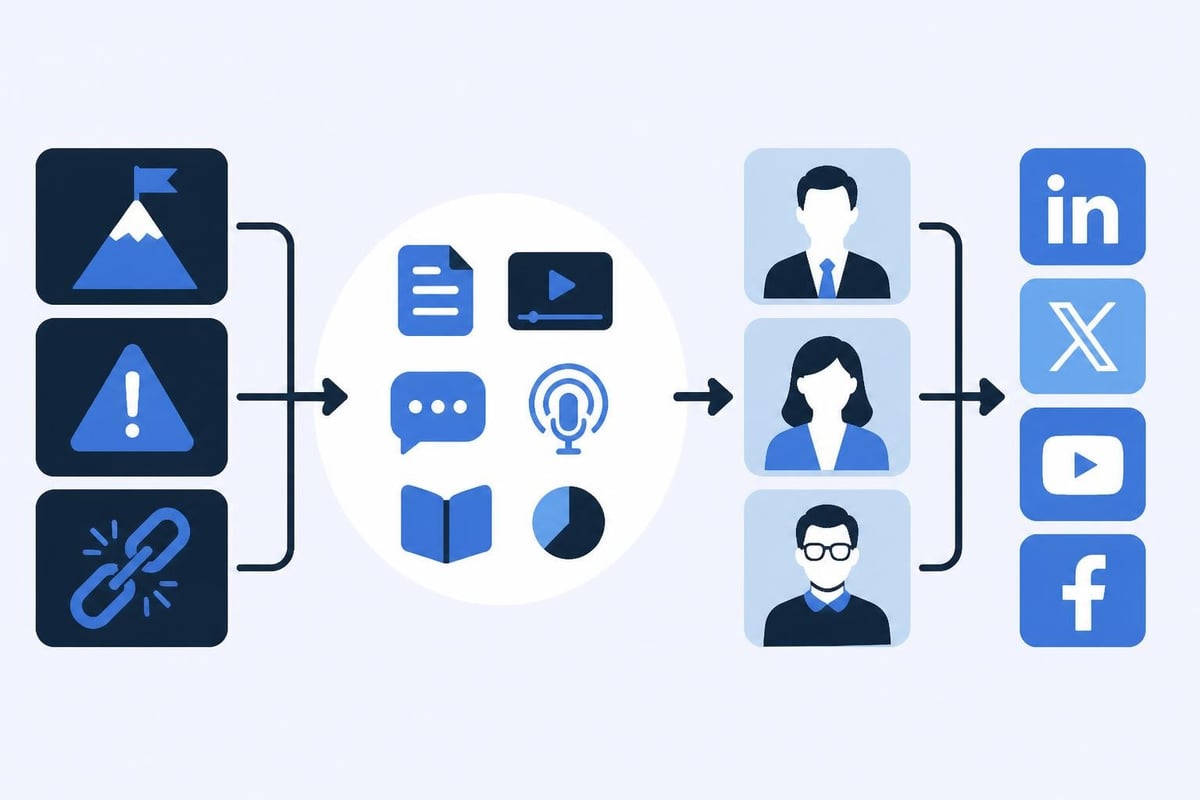
B2B purchases typically involve 6-10 decision-makers, each with different priorities. Your content strategy needs to address technical users, financial gatekeepers, and executive sponsors simultaneously.
Consider creating content clusters around a single topic:
- For technical users: Implementation guides, integration tutorials, API documentation
- For managers: ROI calculators, efficiency comparisons, workflow improvements
- For executives: Strategic outcomes, competitive advantages, risk mitigation
This approach ensures every piece of content serves multiple audiences while maintaining message consistency across your b2b social media marketing efforts.
Advanced Targeting and Audience Development
Generic audience targeting wastes budget and dilutes message impact. B2B social media marketing requires precision in identifying and reaching the right professionals at the right companies.
LinkedIn's targeting capabilities offer exceptional B2B precision:
- Job title and seniority level filtering
- Company size and industry categorization
- Member skills and interests
- Matched audiences from your CRM data
Beyond LinkedIn, platform-specific audiences require different approaches. YouTube reaches B2B audiences through intent-based search behavior, while niche communities on Reddit or specialized Slack groups offer high-engagement micro-audiences.
Account-based marketing (ABM) integration amplifies social effectiveness. By coordinating social content with targeted account lists, you create consistent touchpoints across the buying committee. When multiple decision-makers from the same company encounter your content independently, it builds brand familiarity and credibility.
Leveraging First-Party Data
Your existing customer and prospect data provides the foundation for sophisticated audience strategies. Upload email lists to create matched audiences, then build lookalike segments to expand reach while maintaining relevance.
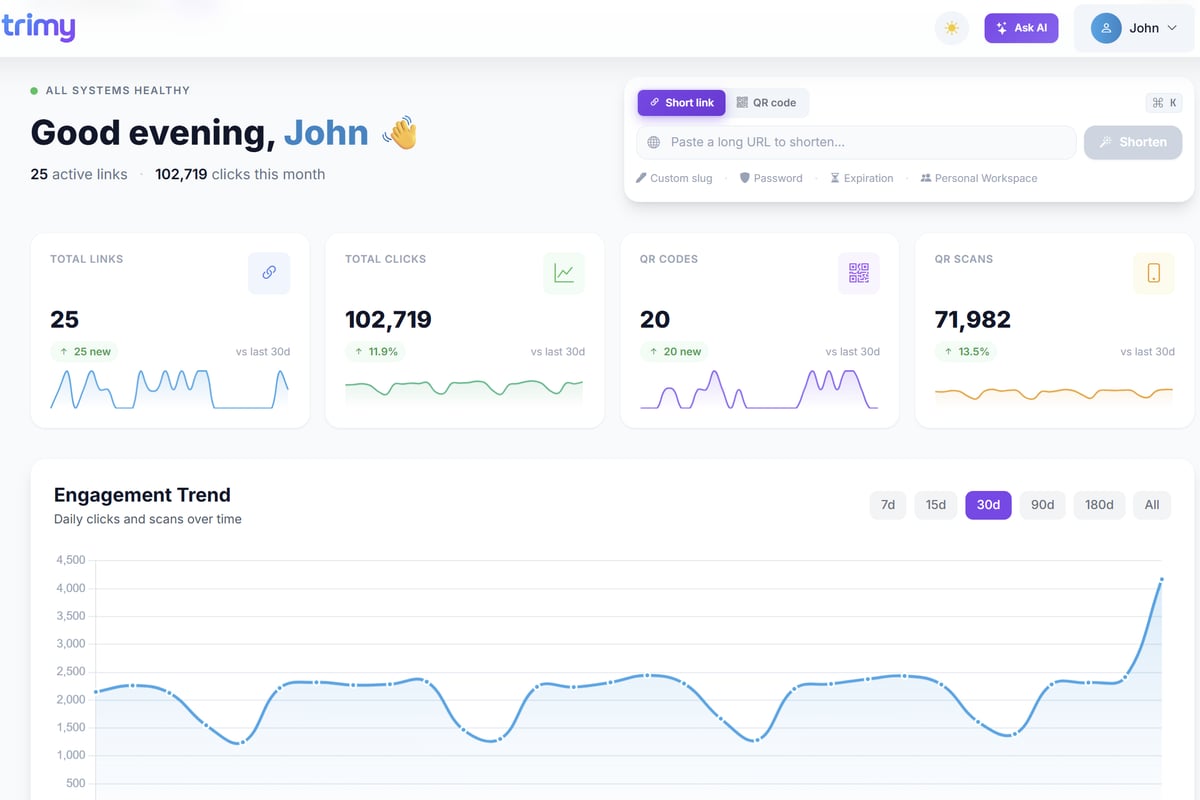
Smart link management becomes critical here. When you share content across social platforms, tracking which audiences engage with specific topics helps refine future targeting. A robust platform that provides detailed click analytics, source tracking, and audience insights transforms your social links into intelligence gathering tools. Trimy enables marketers to track social media traffic with granular precision, run A/B tests on different messaging approaches, and attribute conversions back to specific social campaigns through advanced link analytics.
Measurement and Attribution Strategies
B2B social media marketing ROI remains one of the most challenging aspects for marketing teams. Unlike direct response channels, social often plays an assistive role across lengthy sales cycles.
Metrics That Matter Beyond Vanity Numbers
Follower counts and likes provide minimal business insight. Focus instead on metrics tied to business outcomes:
Engagement quality indicators:
- Comment sentiment and depth (not just volume)
- Share rate among target job titles
- Click-through rates to gated content
- Time spent on linked resources
Pipeline contribution metrics:
- Social-sourced MQLs and SQLs
- Influence on closed deals (multi-touch attribution)
- Average deal size from social-influenced opportunities
- Sales cycle length comparison
According to Statista's B2B marketing data, only 23% of B2B companies effectively measure social media ROI, representing a significant competitive opportunity for those who implement proper tracking.
| Metric Type | What It Measures | Why It Matters |
|---|---|---|
| Reach | Potential audience size | Brand awareness growth |
| Engagement | Content resonance | Message-market fit |
| Traffic | Website visits | Intent and interest |
| Conversions | Lead capture | Pipeline contribution |
| Revenue | Attributed sales | Ultimate ROI proof |
Multi-Touch Attribution Models
B2B buyers interact with your brand across numerous touchpoints before converting. Single-touch attribution models (first-touch or last-touch) miss the complete picture of how social contributes to revenue.
Implement these attribution approaches:
- Time decay models - Weight touchpoints closer to conversion more heavily
- Position-based attribution - Credit both introduction and closing touchpoints
- Custom algorithmic models - Machine learning analysis of conversion paths
- Campaign influence reporting - Track deal involvement regardless of direct attribution
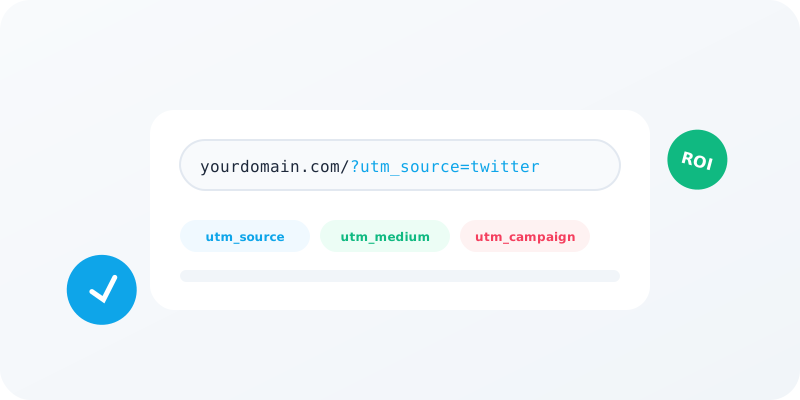
Integration between your social platforms, CRM, and analytics stack enables this sophisticated tracking. UTM parameters, custom URL parameters, and conversion tracking pixels provide the data foundation.
Paid Social Strategy for B2B Growth
Organic reach continues declining across all major platforms. Data from Pew Research Center's social media usage report shows that algorithm changes have reduced organic business content visibility by 41% since 2024.
Paid social amplification has transitioned from optional to essential in b2b social media marketing. Strategic budget allocation across platforms maximizes reach while maintaining efficiency.
Budget Allocation Frameworks
Most B2B companies should allocate 60-70% of social budget to LinkedIn, with remaining budget distributed based on audience behavior and content performance. Test smaller budgets on emerging platforms before committing significant resources.
Campaign structure best practices:
- Separate campaigns for awareness, consideration, and conversion objectives
- Dedicated budgets for retargeting engaged audiences
- A/B testing campaigns for creative and messaging optimization
- Seasonal adjustments based on buying cycle patterns
LinkedIn's campaign manager offers sophisticated lead generation formats including Lead Gen Forms that capture prospect information without leaving the platform. These formats typically convert 2-3x higher than click-to-website campaigns but require careful follow-up processes.
Employee Advocacy and Executive Presence
Personal profiles generate 8x more engagement than company pages on LinkedIn. Strategic employee advocacy programs amplify reach while adding authenticity to your b2b social media marketing efforts.
Building an effective advocacy program requires:
- Clear content sharing guidelines and approval workflows
- Ready-to-share content libraries with suggested commentary
- Recognition and incentive structures for active participants
- Training on personal brand development and engagement best practices
Executive visibility drives disproportionate impact. CEOs and senior leaders with active, authentic social presence build trust that corporate accounts cannot replicate. According to eMarketer's B2B social analysis, companies with visible executive social presence see 47% higher brand trust scores.

Authenticity vs. Corporate Messaging
The most successful B2B social presences balance professional credibility with genuine human connection. Overly polished corporate speak fails to generate engagement, while purely personal content misses business objectives.
Encourage team members to share industry perspectives, lessons learned, and professional experiences. This approach positions your company as a collection of knowledgeable experts rather than a faceless brand pushing products.
Emerging Trends and Future Considerations
The b2b social media marketing landscape continues evolving rapidly. Staying ahead of trends provides competitive advantages as platforms and buyer behaviors shift.
AI and automation integration - Tools for content creation, response management, and performance optimization are becoming standard. However, maintain human oversight to preserve authenticity and strategic direction.
Community building over broadcasting - Private groups, member-only spaces, and interactive formats generate deeper engagement than one-way content publishing. LinkedIn newsletters, group discussions, and exclusive communities foster ongoing relationships.
Video-first content strategies - Short-form video, live streams, and webinar content now dominate engagement metrics. Think with Google's insights reveal that B2B buyers watch an average of 7 video pieces during their research process.
Social commerce capabilities - While still emerging in B2B, platforms are developing features for direct transaction and demo booking within social environments, reducing friction in the buying journey.
Agencies like Stijl en Vorm have helped businesses develop comprehensive digital strategies that integrate social media with broader marketing initiatives, ensuring consistent messaging across all customer touchpoints.
Privacy and Data Considerations
Increasing privacy regulations and third-party cookie deprecation impact social media tracking and targeting. First-party data collection becomes increasingly valuable as alternative tracking methods diminish.
Build direct relationships through email capture, community membership, and owned platforms. These owned audience channels provide targeting capabilities independent of platform policy changes.
Content Calendar and Campaign Planning
Consistency drives results in b2b social media marketing. Irregular posting creates audience uncertainty and algorithm penalties, while strategic scheduling maximizes visibility and engagement.
Effective content calendar components:
- Pillar content themes - Core topics aligned with business objectives and audience needs
- Campaign coordination - Social support for product launches, events, and initiatives
- Seasonal considerations - Industry events, fiscal calendars, and cultural moments
- Flexibility reserves - Capacity for reactive content and trending topics
Most B2B brands succeed with 3-5 posts per week on primary platforms, with higher frequency on Twitter/X and lower on YouTube. Quality consistently outperforms quantity when resources are constrained.
Platform-specific timing matters more than generic "best time to post" advice. Analyze your audience's engagement patterns to identify when your specific followers are most active and receptive.
Cross-Platform Coordination
Repurpose core content across platforms with format adaptations rather than identical posts. A single research insight can become:
- A LinkedIn article (1,000+ words)
- An Instagram carousel (8-10 slides)
- A YouTube explanation video (3-5 minutes)
- A Twitter thread (6-8 tweets)
- Multiple quote graphics across platforms
This approach maximizes content ROI while respecting platform-specific consumption preferences. Custom AI solutions like those from Ryan Cook can help automate portions of this repurposing workflow while maintaining brand consistency.
Competitive Analysis and Benchmarking
Understanding competitive social performance provides context for your own metrics and identifies opportunity gaps. Regular competitive analysis should inform strategy adjustments and content development.
Key competitive intelligence areas:
- Content themes and formats - What topics and styles generate their highest engagement?
- Posting frequency and timing - How often do they publish, and when?
- Engagement patterns - Which posts drive conversation versus passive consumption?
- Growth trajectories - Are they gaining or losing audience share?
- Paid versus organic balance - What content receives promotional budget?
Tools for competitive monitoring include native platform analytics, social listening platforms, and manual tracking spreadsheets. The depth of analysis should match your resource availability and competitive intensity.
Benchmark your performance not just against direct competitors but also against industry leaders and aspirational brands. This broader perspective identifies innovation opportunities beyond your immediate competitive set.
Integration with Broader Marketing Efforts
B2B social media marketing delivers maximum impact when integrated with email, content marketing, events, and sales enablement. Siloed social efforts miss opportunities for reinforcement and conversion optimization.
Critical integration points include:
- Email promotion of high-performing social content to owned audiences
- Social amplification of gated content assets and research reports
- Event promotion and live coverage through social channels
- Sales enablement with social proof, testimonials, and engagement data
Your CRM should track social interactions alongside other touchpoints, providing sales teams visibility into prospect engagement. When a lead has consumed your content across multiple platforms, sales conversations become more informed and effective.
B2B social media marketing in 2026 requires strategic sophistication that balances brand building with measurable business outcomes. By focusing on platform-specific strategies, quality content that serves multiple stakeholders, and rigorous measurement of pipeline contribution, your social programs can deliver consistent ROI. When you need to transform your social traffic into actionable intelligence, Trimy provides the link management and analytics infrastructure to track every click, optimize every campaign, and prove the revenue impact of your social media investments.