Facebook Ads for Real Estate: 2026 Strategy Guide
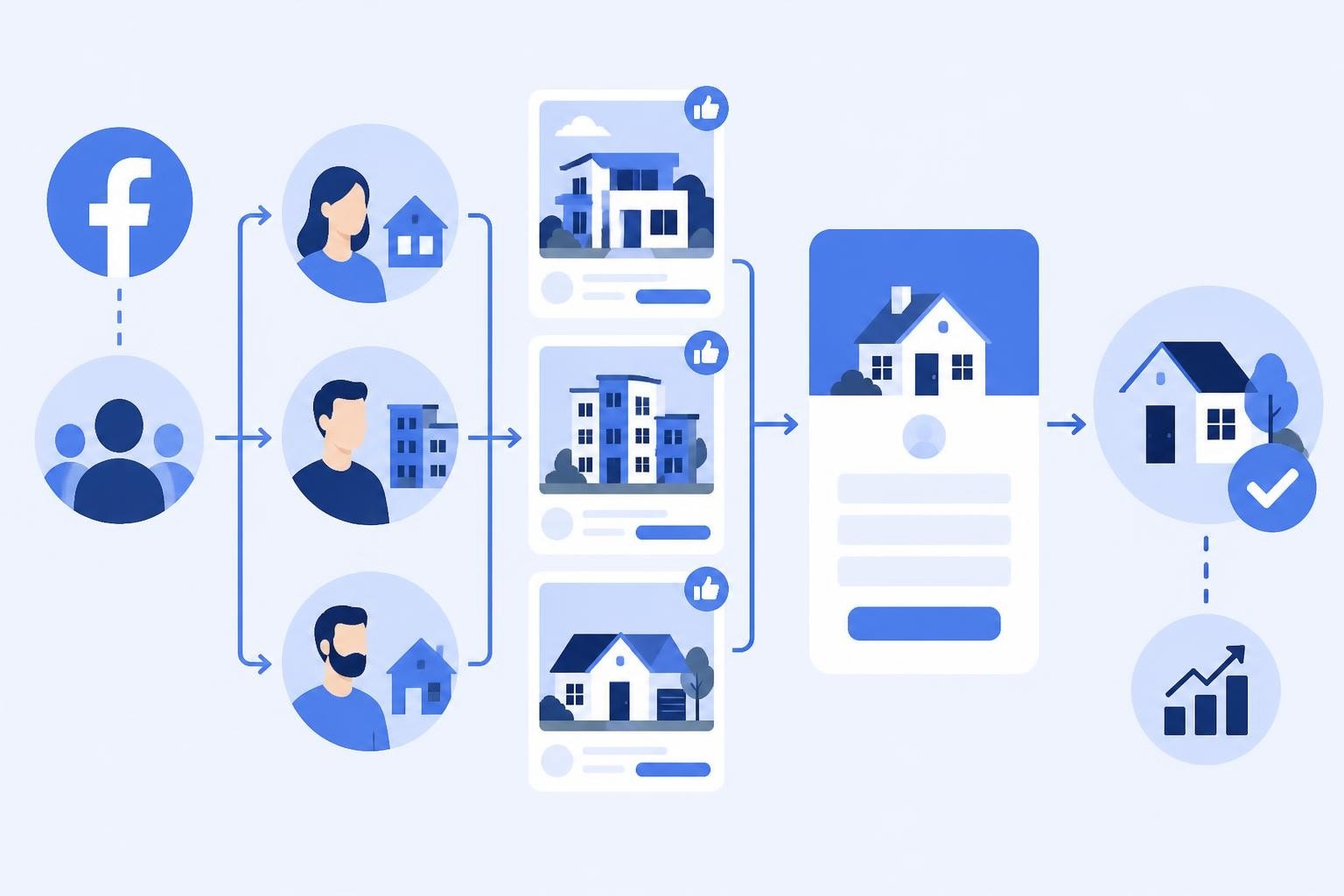
Real estate professionals continue to find Facebook advertising among the most cost-effective channels for generating qualified buyer and seller leads in 2026. With over 2.9 billion monthly active users and sophisticated targeting capabilities, Facebook ads for real estate offer unmatched reach and precision. However, the platform's Special Ad Category restrictions for housing have fundamentally changed how agents and brokerages approach campaign structure, creative development, and performance measurement. Understanding these nuances separates top-performing campaigns from budget waste.
Understanding Special Ad Category Requirements for Housing
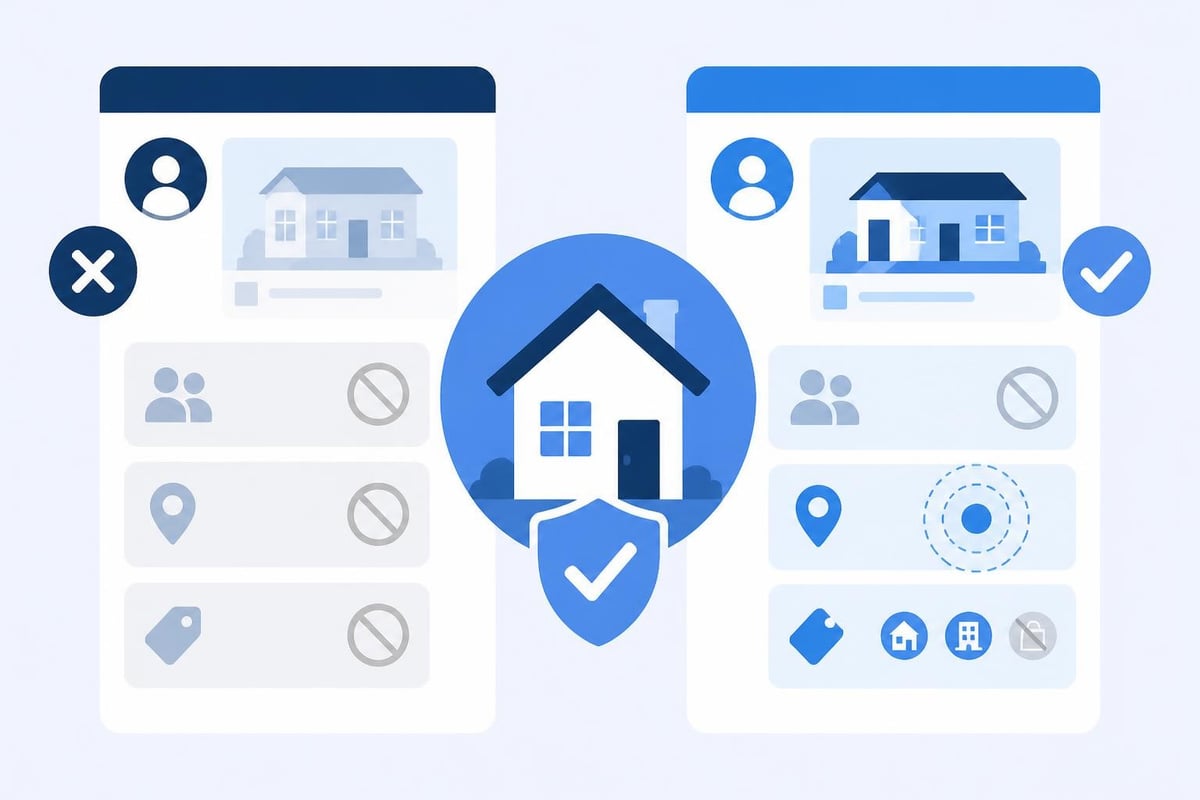
Facebook classifies real estate advertisements as housing-related, triggering mandatory Special Ad Category restrictions that limit targeting options and reporting capabilities. When you create facebook ads for real estate, you must designate your campaign under the housing category, which removes demographic targeting based on age, gender, and ZIP code.
These restrictions exist to comply with fair housing laws and prevent discriminatory advertising practices. The U.S. Department of Justice actively monitors compliance, making proper categorization non-negotiable for anyone running property-related campaigns.
What Triggers Housing Classification
Any advertisement promoting the sale, rental, or financing of housing must use the Special Ad Category designation. This includes:
- Single-family homes, condos, and apartments
- Land for residential development
- Mortgage and financing services
- Home insurance products
- Real estate agent services promoting property transactions
Even brand awareness campaigns for real estate agencies fall under these rules if they reference housing availability or services.
Building Effective Audience Strategies Within Compliance
The targeting limitations for facebook ads for real estate require creative approaches to reach qualified prospects without violating platform policies. Success depends on leveraging the targeting options that remain available while building custom audiences from first-party data.
Location Targeting That Works
Instead of precise ZIP code targeting, housing ads use radius-based targeting with a minimum 15-mile radius around a selected point. For agents working specific neighborhoods, this creates obvious challenges.
Effective workarounds include:
- Creating separate campaigns for each major metro area or region
- Using multiple ad sets with overlapping radii to increase coverage density
- Developing location-specific creative that appeals to buyers interested in particular communities
- Running broader awareness campaigns to build custom audiences for retargeting
The platform still allows you to exclude locations, which helps reduce waste in areas where you don't operate.
Interest and Behavior Targeting Options
While demographic filters are restricted, facebook ads for real estate can still target based on interests and behaviors that correlate with homebuying intent.
| Targeting Category | Effective Options | Why They Work |
|---|---|---|
| Interests | Home improvement, interior design, mortgage calculators | Indicates homeownership or buying research |
| Behaviors | Recent movers, likely to move soon | Direct intent signals |
| Life Events | Recently engaged, newly married, expecting parents | Life changes that trigger housing needs |
| Job Titles | HR managers, executives (for relocation) | Corporate relocation potential |
Testing multiple interest combinations across separate ad sets reveals which audiences deliver the lowest cost per lead in your market.
Custom and Lookalike Audiences
First-party data becomes your most valuable targeting asset under Special Ad Category rules. Building custom audiences from your existing contacts and website visitors allows precise retargeting within compliance boundaries.
High-performing custom audience sources:
- Email lists of past clients and leads
- Website visitors who viewed specific property pages
- Video viewers who watched 50% or more of listing tours
- Users who engaged with your Facebook or Instagram content
- CRM data synchronized through Meta's integration tools
Lookalike audiences based on your best clients help scale reach while maintaining relevance, though they perform with less precision than non-housing campaigns due to the restricted data signals Meta can use for modeling.
Creative Strategies That Convert Real Estate Leads
Visual storytelling drives performance in facebook ads for real estate, where property imagery and neighborhood lifestyle content compete for attention against countless other advertisers. Your creative approach must stop the scroll and compel immediate action.
Video vs. Static Image Performance
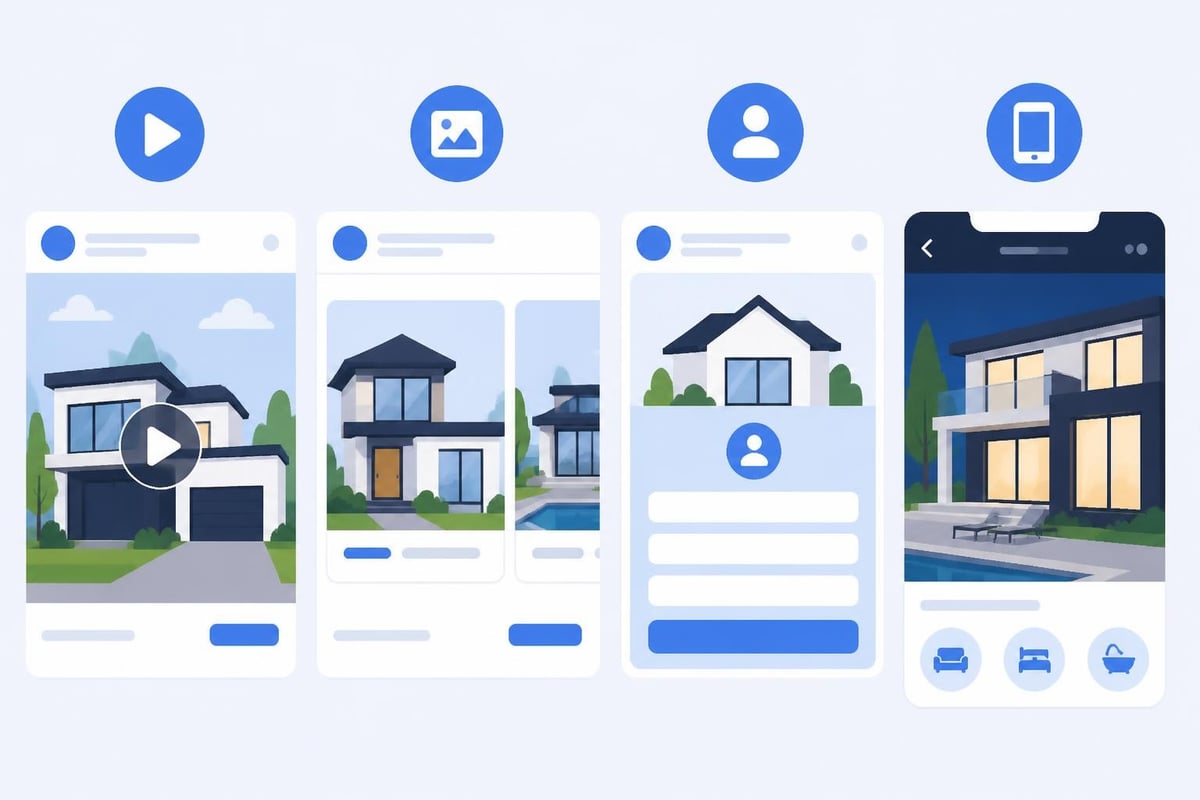
Video content consistently outperforms static images for real estate advertising in 2026. Property walkthroughs, neighborhood tours, and agent introduction videos generate 2-3x higher engagement rates than photos alone.
Video best practices:
- Keep duration between 30-90 seconds for optimal completion rates
- Add captions for the 85% of users who watch without sound
- Show the property's best features in the first 5 seconds
- Include a clear next step in the final frame
- Test square (1:1) and vertical (4:5) formats for feed placement
Static carousel ads work well for showcasing multiple properties or highlighting different rooms within a single listing. Each card should feature a distinct selling point with compelling overlay text.
Ad Copy That Drives Action
The copy accompanying your facebook ads for real estate must overcome the platform's limitations by creating urgency and clearly articulating value propositions that resonate with your target market.
Avoid generic phrases like "beautiful home" or "great location." Instead, lead with specific benefits and differentiators:
- "3,200 sq ft with home office and finished basement – $425K in Riverside" beats "Spacious family home"
- "New construction, zero landscaping for 5 years" beats "Low maintenance"
- "Walk to Metro, 22-minute commute downtown" beats "Convenient location"
Include a strong call-to-action that matches your campaign objective. "Schedule your private showing" works for immediate conversion campaigns, while "See all photos and details" suits traffic campaigns building retargeting audiences.
Landing Page and Lead Form Optimization
Facebook Lead Ads with Instant Forms reduce friction by keeping users on the platform, consistently delivering 40-60% lower cost per lead compared to campaigns driving traffic to external landing pages.
Instant Form optimization checklist:
- Ask for only essential information (name, email, phone)
- Include a compelling featured image at the top
- Write a clear privacy statement and follow-up expectation
- Use custom questions to qualify lead intent ("When are you planning to move?")
- Enable the organic Lead Ads CTA on your Facebook Page for additional reach
For campaigns driving to external pages, ensure your landing page loads in under 2 seconds on mobile, features a property gallery above the fold, and includes social proof such as testimonials or recent sales.
Campaign Structure and Budget Allocation
Organizing your facebook ads for real estate campaigns into logical structures improves performance tracking and allows efficient budget distribution across different objectives and audience segments.
Campaign Architecture Framework
Most successful real estate advertisers run three concurrent campaign types, each serving a distinct stage of the buyer journey:
- Awareness campaigns introduce your brand and services to cold audiences using engaging content (market updates, home-buying tips, neighborhood guides)
- Consideration campaigns target warm audiences with specific property listings and comparative market analyses
- Conversion campaigns focus on retargeting engaged users with lead magnets, showing invitations, and consultation offers
This funnel approach builds audience pools systematically while maintaining lower costs at the top of the funnel and maximizing conversion rates at the bottom.
Budget Recommendations by Market Size
| Market Size | Monthly Minimum | Recommended Split |
|---|---|---|
| Small (< 100K population) | $1,200-$2,000 | 40% awareness, 30% consideration, 30% conversion |
| Medium (100K-500K) | $2,500-$5,000 | 35% awareness, 35% consideration, 30% conversion |
| Large (500K+) | $6,000-$12,000 | 30% awareness, 40% consideration, 30% conversion |
Starting with lower budgets requires concentrating spend on conversion campaigns targeting existing audiences rather than trying to build awareness and convert simultaneously.
According to WordStream's 2024-2025 Facebook Ads benchmarks, real estate advertisers should expect average cost-per-lead between $18-$42 depending on market competitiveness and creative quality.
Tracking Performance and Attribution
Measuring the true ROI of facebook ads for real estate requires connecting ad engagement to closed transactions, a process complicated by long sales cycles and offline conversions.
Essential Metrics to Monitor
Top-of-funnel indicators:
- Cost per 1,000 impressions (CPM)
- Click-through rate (CTR)
- Cost per click (CPC)
- Video completion rate
Mid-funnel engagement:
- Cost per lead (CPL)
- Lead form completion rate
- Landing page conversion rate
- Retargeting audience growth rate
Bottom-funnel outcomes:
- Lead-to-appointment conversion rate
- Appointment-to-showing ratio
- Cost per qualified lead (leads that attend showings)
- Customer acquisition cost (total ad spend ÷ closed deals)
Track these metrics weekly to identify performance trends early and reallocate budget toward winning combinations.
Link Tracking and Attribution
Every URL in your facebook ads for real estate campaigns should include UTM parameters to ensure accurate source attribution in Google Analytics or your CRM. Proper link tagging becomes especially critical when testing multiple ad variations or running campaigns across awareness, consideration, and conversion objectives.
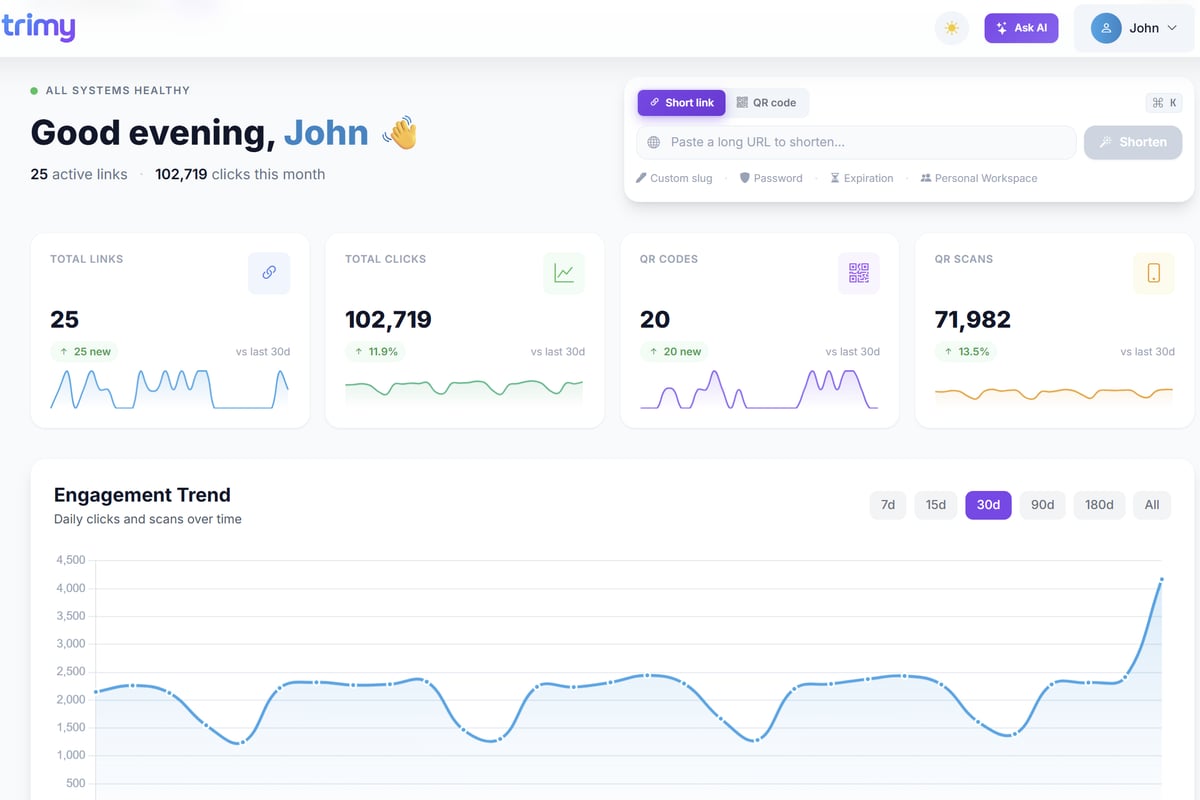
Trimy provides advanced link management capabilities that help real estate marketers track which specific ads and audiences drive the most valuable leads. With A/B testing built into shortened links, you can test different landing page variants without creating duplicate campaigns, while retargeting pixels can be added to any link to build Facebook audiences from your most engaged prospects.
Connecting Ad Leads to CRM and Sales Outcomes
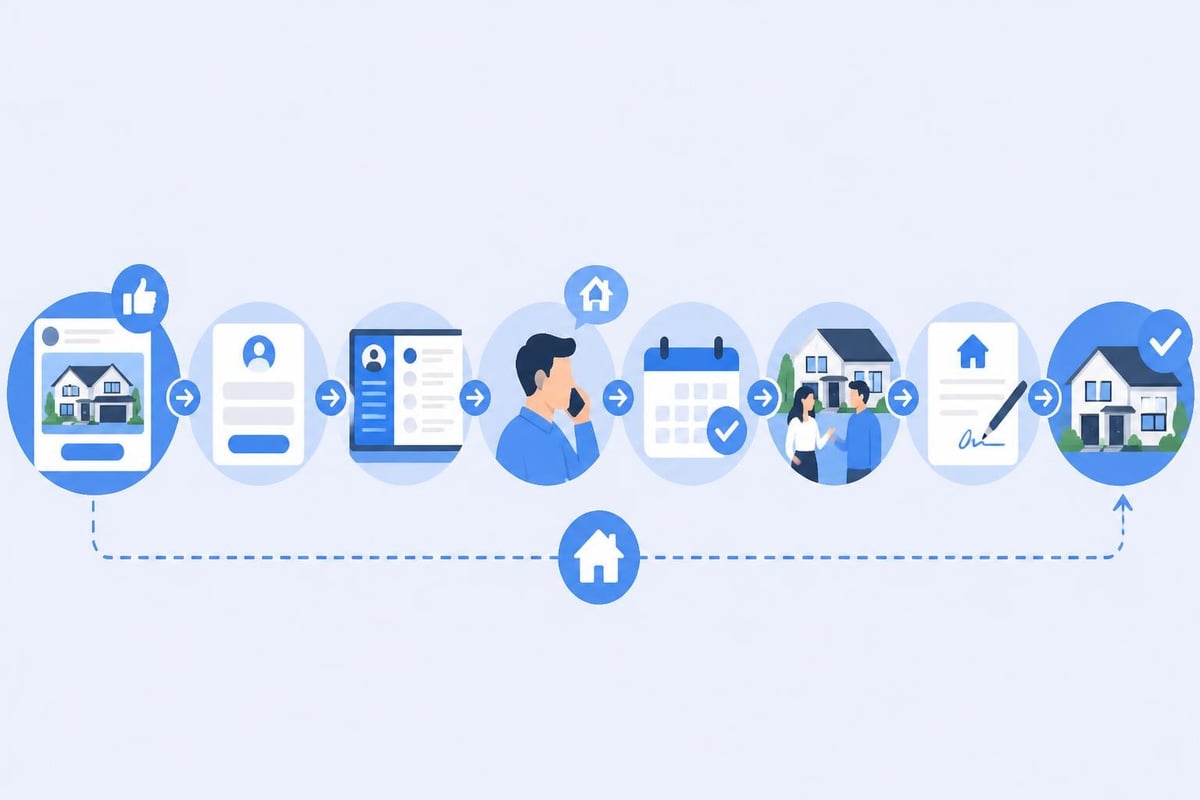
The disconnect between Facebook lead generation and closed sales causes most attribution failures in real estate advertising. Implementing systematic lead handling processes ensures you can calculate true ROI.
Critical integration steps:
- Connect Facebook Lead Ads directly to your CRM using native integrations or tools like Zapier
- Create lead source fields that capture campaign name, ad set, and creative ID
- Establish follow-up timing standards (respond within 5 minutes for best conversion)
- Track every lead through the sales pipeline with consistent status updates
- Calculate cost per closed deal by analyzing total campaign spend against sales from those leads
Many real estate teams discover their best-performing campaigns based on lead volume differ significantly from their best campaigns based on deal quality and close rate.
Advanced Tactics for Competitive Markets
Markets with high advertising competition require sophisticated approaches to facebook ads for real estate that go beyond basic campaign setup.
Dynamic Creative Testing
Facebook's dynamic creative feature automatically tests multiple combinations of headlines, images, videos, and descriptions to identify the highest-performing combinations.
For real estate advertisers, this means uploading 3-5 property photos, 2-3 video clips, and 4-5 headline variations, then letting the algorithm optimize delivery based on performance. This approach typically improves conversion rates by 15-25% compared to static creative sets.
Retargeting Sequences
Building multi-touch retargeting sequences nurtures leads who didn't convert on first exposure. Effective sequences for facebook ads for real estate include:
Day 0-3: User visits property landing page Day 1-7: Show social proof ads featuring testimonials and recent sales Day 8-14: Offer valuable content (buyer's guide, neighborhood report) Day 15-30: Present limited-time incentive (free home valuation, consultation)
Each stage uses different creative and messaging that acknowledges the user's previous engagement without being repetitive.
Micro-Targeting Relocation Buyers
Corporate relocations represent high-value opportunities for real estate professionals. Target users whose profiles indicate recent job changes at companies with offices in your market.
Create campaigns specifically addressing relocation concerns such as school districts, commute times, and community integration. Partner with local employers' HR departments to access relocation budget programs and employee referral opportunities.
Compliance and Legal Considerations
Beyond Facebook's Special Ad Category rules, facebook ads for real estate must comply with fair housing laws, state real estate advertising regulations, and truth-in-advertising standards.
Fair Housing Compliance
The Department of Justice actively monitors housing advertisements for discriminatory content. Avoid language that expresses preferences based on protected characteristics.
Prohibited phrases:
- "Perfect for young professionals" (age discrimination)
- "Great for families with children" (familial status)
- "Ideal for Christian community" (religion)
- "Bachelor pad" (gender and familial status)
Focus on property features, neighborhood amenities, and objective benefits rather than describing ideal residents.
Licensing and Disclosure Requirements
Include your real estate license number in ad copy if required by your state. Some states mandate specific disclosures about represented parties (buyer's agent vs. listing agent) in advertisements.
Review your MLS rules regarding property advertising, as some boards require watermarks, specific photo credits, or approval before marketing active listings.
Integrating Facebook Ads Into Your Marketing Mix
While facebook ads for real estate deliver consistent results, optimal performance comes from coordinating them with other marketing channels rather than relying on a single platform.
Facebook vs. Google Ads Strategy
Comparing Meta and Google advertising strategies reveals complementary strengths. Facebook excels at creating demand and building awareness among users who aren't actively searching for properties, while Google captures existing demand from people searching for homes in specific areas.
Allocate 60-70% of budget to Facebook for market awareness and lead generation, with 30-40% to Google for capturing high-intent searchers. Users who engage with your Facebook ads and later search branded terms convert at significantly higher rates than cold search traffic.
Email and Facebook Retargeting Integration
Synchronize your email marketing calendar with Facebook campaigns. When sending market updates or new listing alerts via email, launch parallel Facebook campaigns targeting the same audience segments with consistent messaging.
Upload email lists as custom audiences for coordinated retargeting, and use Facebook lead ads to grow your email database with qualified prospects who opt in for market updates.
Scaling Successful Campaigns
Once you identify winning combinations of audience, creative, and offer through facebook ads for real estate testing, systematic scaling preserves performance while increasing lead volume.
Horizontal vs. Vertical Scaling
Horizontal scaling duplicates successful ad sets with new audiences or locations. Create separate ad sets for each geographic market, interest category, or customer segment while maintaining the same creative and offer.
Vertical scaling increases budget to existing high-performing ad sets. Raise budgets gradually (no more than 20% every 3 days) to avoid triggering Facebook's learning phase reset.
Most real estate advertisers achieve better results with horizontal scaling, as it provides more data points and reduces risk compared to dramatically increasing spend on single ad sets.
Seasonal Adjustments
Real estate markets experience seasonal fluctuations that require campaign adjustments. Spring and summer typically see increased buyer activity and higher competition, raising costs per lead by 15-30%.
Adjust budgets seasonally based on historical market patterns in your area. Consider shifting more budget to awareness campaigns during slow winter months to build retargeting audiences for spring conversion campaigns.
Continuously refresh creative every 4-6 weeks as ad fatigue sets in and engagement rates decline. Monitor frequency metrics closely and pause ads when the same users see them more than 5 times.
Learning Resources and Ongoing Education
The Facebook advertising platform evolves constantly, with quarterly feature releases and periodic policy updates affecting facebook ads for real estate campaigns. Staying current requires commitment to ongoing education.
Meta Blueprint offers free certification courses covering advertising fundamentals, creative best practices, and measurement strategies. The housing-specific modules address Special Ad Category requirements and compliance considerations essential for real estate advertisers.
HubSpot's comprehensive Facebook ad strategy guide provides tactical frameworks for campaign planning, audience development, and sales integration that translate well to real estate applications.
Join real estate marketing communities and Facebook advertising groups where practitioners share current strategies, troubleshoot policy issues, and discuss emerging platform features before they reach mainstream adoption.
Mastering facebook ads for real estate in 2026 requires balancing platform compliance with creative marketing that cuts through competitive noise and generates qualified leads consistently. By understanding Special Ad Category restrictions, building first-party audiences, testing creative systematically, and tracking attribution through to closed sales, real estate professionals transform Facebook advertising from an expense into a predictable revenue driver. When you're ready to optimize the performance of every link in your real estate campaigns with advanced tracking, A/B testing, and conversion analytics, Trimy gives you the intelligence to turn marketing links into measurable revenue signals.