Links Management: A Complete Guide for Modern Marketers

Managing the lifecycle of marketing links has become a critical competency for modern digital teams. Every shortened URL, tracking parameter, and branded link represents a touchpoint with potential customers and a data opportunity that can inform strategic decisions. Effective links management transforms scattered URLs into organized assets that drive measurable business outcomes while maintaining brand consistency and providing actionable intelligence across campaigns.
Understanding the Fundamentals of Links Management
Links management encompasses the systematic approach to creating, organizing, tracking, and optimizing the URLs that power digital marketing campaigns. This discipline extends far beyond simple URL shortening to include comprehensive strategies for maintaining link integrity, ensuring accurate attribution, and extracting meaningful insights from click data.
The foundation of successful links management rests on establishing clear naming conventions and organizational structures. Teams that implement standardized approaches can quickly identify campaign performance, troubleshoot tracking issues, and maintain consistency across channels. Without these systems in place, marketing operations quickly devolve into chaos as team members create duplicate links, lose track of active campaigns, and struggle to compile accurate performance reports.
Core Components of Effective Link Systems
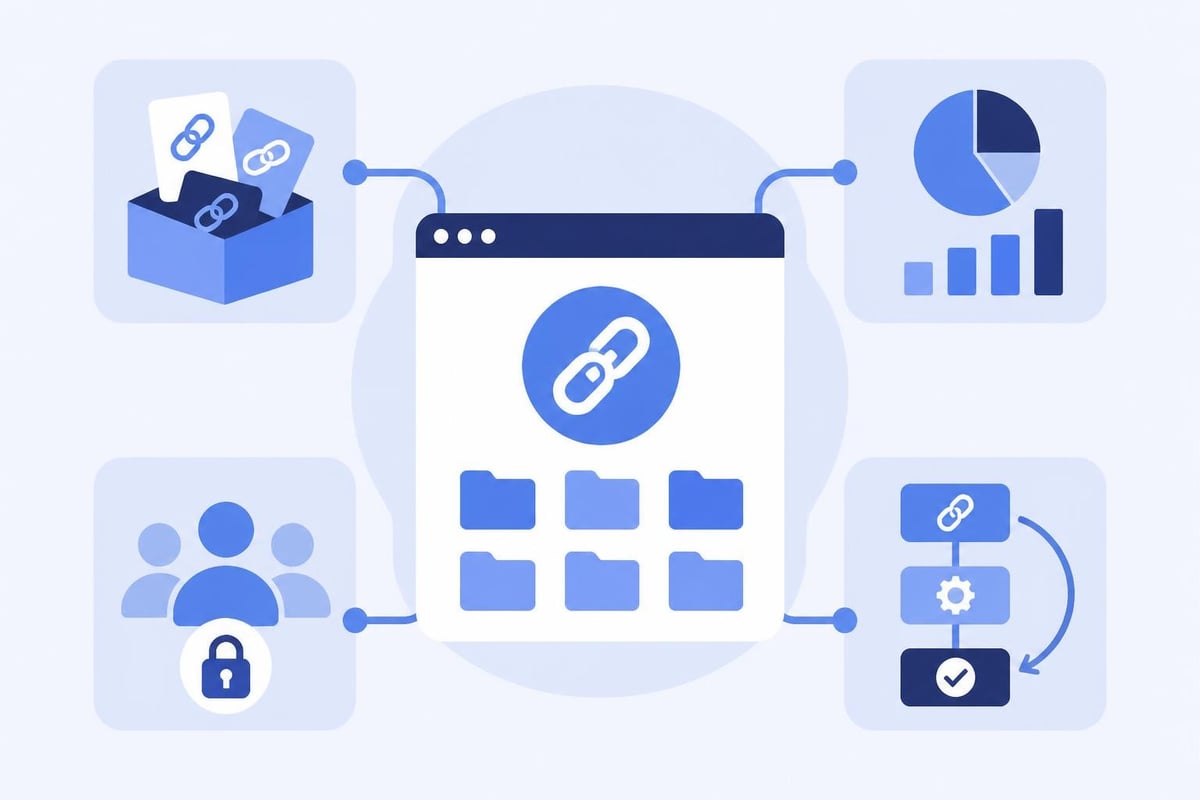
A robust links management system incorporates several essential elements that work together to support marketing objectives:
- Centralized link repository with searchable metadata and tags
- Version control to track link modifications and updates
- Permission management for team collaboration and security
- Analytics integration connecting click data to business metrics
- Automated workflows for link creation and deployment
These components create an ecosystem where links become strategic assets rather than disposable utilities. Best practices for organizing links emphasize the importance of treating URLs as valuable marketing infrastructure that requires ongoing maintenance and optimization.
Implementing Strategic Link Organization
The difference between functional and exceptional links management often comes down to organizational methodology. Teams need frameworks that scale with campaign complexity while remaining intuitive enough for daily use.
Taxonomy Development for Marketing Links
Creating a logical taxonomy begins with understanding how your team segments campaigns and measures success. Most organizations benefit from hierarchical structures that mirror their marketing organization:
| Level | Purpose | Example |
|---|---|---|
| Brand/Division | Top-level separation | corporate, product-a, product-b |
| Campaign Type | Marketing function | email, social, paid-search |
| Specific Campaign | Individual initiative | spring-sale-2026, webinar-series |
| Variant | A/B test or channel | version-a, linkedin, header-cta |
This structured approach enables teams to locate specific links quickly while maintaining the flexibility to add new categories as marketing strategies evolve. The taxonomy should align with reporting requirements so that link performance data naturally aggregates at meaningful business levels.
UTM Parameter Standardization
Consistent UTM parameter implementation forms the backbone of accurate attribution. Effective hyperlink standards extend to tracking parameters where inconsistency creates analytics nightmares. Establishing organization-wide conventions for utm_source, utm_medium, utm_campaign, utm_term, and utm_content ensures clean data flows into analytics platforms.
Common pitfalls include capitalization inconsistencies, spacing variations, and abbreviation conflicts. A documented parameter dictionary prevents these issues by providing canonical values for each parameter. For instance, deciding whether social media traffic uses "social," "social-media," or "socialmedia" as utm_medium may seem trivial, but inconsistency fragments reporting and obscures performance patterns.
Advanced Analytics and Performance Tracking
Moving beyond basic click counting, sophisticated links management enables deep performance analysis that connects individual link clicks to revenue outcomes. This intelligence transforms marketing from a cost center into a measurable revenue driver.
Conversion Funnel Mapping
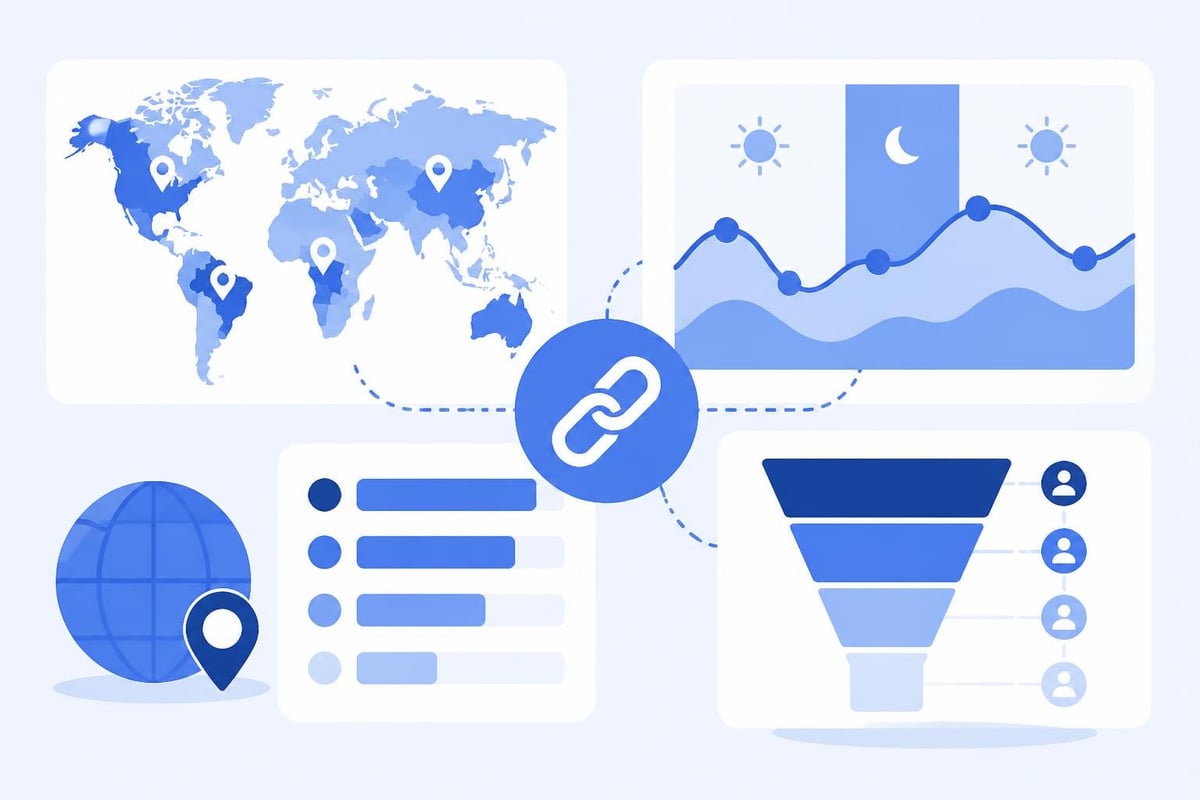
Modern links management platforms track the complete customer journey from initial click through conversion events. By implementing conversion pixels and integrating with CRM systems, marketers can attribute specific links to downstream behaviors including:
- Form submissions and lead captures
- Product page visits and cart additions
- Purchase completions and revenue values
- Post-purchase engagement and retention metrics
This granular visibility reveals which campaigns, channels, and creative variants generate not just traffic but qualified prospects and paying customers. Teams can then reallocate budget toward highest-performing initiatives with confidence backed by data.
Geographic and Temporal Insights
Understanding when and where audiences engage with marketing links provides crucial context for optimization. Performance patterns often reveal unexpected opportunities such as untapped geographic markets or optimal posting times that differ from industry assumptions.
Key temporal patterns to monitor:
- Day-of-week performance variations across channels
- Hour-of-day click patterns for scheduling optimization
- Seasonal trends in campaign effectiveness
- Response time decay curves for different content types
Geographic data similarly uncovers targeting refinements, from country-level market prioritization to city-specific campaign customization. These insights guide localization efforts and inform decisions about multilingual content development and regional advertising spend.
A/B Testing and Optimization Workflows
Continuous improvement in marketing performance requires systematic experimentation with different approaches. Links management systems that incorporate A/B testing capabilities enable marketers to make data-driven decisions about every element of their campaigns.
Designing Effective Link Tests
Meaningful A/B tests isolate specific variables while maintaining consistent conditions for fair comparison. In the context of links management, testable elements include:
- Destination page variations for conversion rate optimization
- Call-to-action text and placement in promotional materials
- Offer messaging and value proposition framing
- Visual creative elements in display advertising
- Email subject lines paired with specific landing pages
The key to actionable results lies in testing one variable at a time with sufficient traffic to achieve statistical significance. Rushing to conclusions with small sample sizes leads to false positives and misguided optimization efforts.
Smart Routing Based on User Attributes
Advanced links management enables dynamic destination routing based on user characteristics detected at click time. This capability allows a single short link to direct different audience segments to tailored experiences:
| User Attribute | Routing Logic | Use Case |
|---|---|---|
| Geographic location | Region-specific landing pages | Localized pricing and inventory |
| Device type | Mobile or desktop experience | Optimized layouts and interactions |
| New vs. returning | Acquisition vs. retention messaging | Lifecycle-appropriate offers |
| Traffic source | Channel-optimized content | Medium-specific user expectations |
This intelligent routing maximizes relevance without requiring multiple versions of promotional materials or complicating campaign execution.
Team Collaboration and Workflow Integration
Links management succeeds or fails based on team adoption and consistent execution. The best systems integrate seamlessly into existing workflows rather than requiring significant process changes.
Role-Based Access and Permissions
As teams grow, managing who can create, edit, and delete links becomes critical for maintaining data integrity and security. Implementing role-based permissions ensures that:
- Junior team members can create links within defined campaigns without access to historical data
- Marketing managers can review and approve links before deployment
- Analysts have read-only access for reporting purposes
- Administrators control integrations, domains, and system settings
These guardrails prevent accidental deletions, unauthorized modifications, and security vulnerabilities while empowering teams to work efficiently.
API Integration for Developer Teams
Technical teams require programmatic access to links management functionality for automation and integration with marketing technology stacks. Comprehensive link management platforms provide robust APIs that enable:
- Automated link generation from CRM triggers
- Bulk link creation for large-scale campaigns
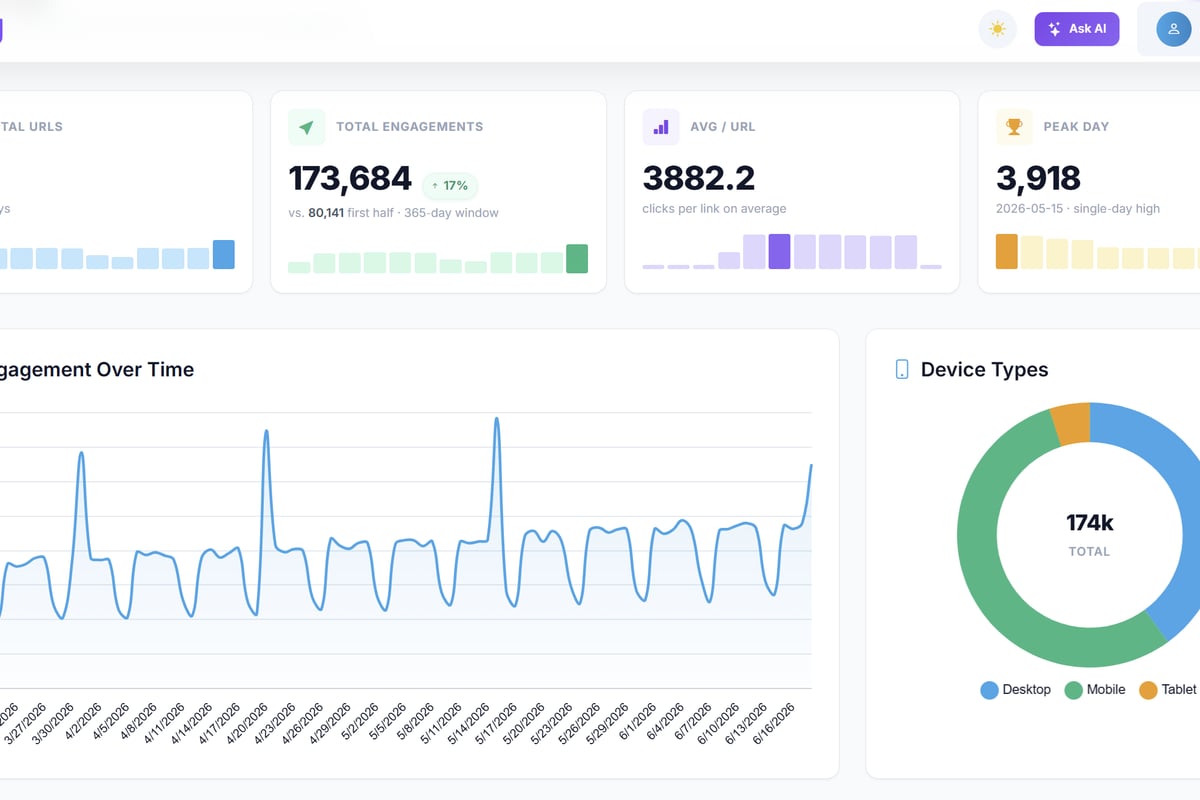
- Real-time analytics retrieval for custom dashboards
- Link validation and health monitoring
- Webhook notifications for conversion events
These capabilities eliminate manual bottlenecks and ensure consistency across automated workflows. Developer-friendly documentation and client libraries in popular programming languages accelerate implementation and reduce integration friction.
For teams seeking comprehensive link intelligence capabilities, platforms like Trimy combine advanced analytics, A/B testing, and smart routing with developer-friendly APIs and competitive pricing. This enables both marketers and technical teams to transform links into strategic revenue signals.
Maintaining Link Health and Governance
The long-term value of links management depends on ongoing maintenance practices that prevent decay and ensure continued accuracy. Links that initially perform well can degrade over time due to destination changes, broken integrations, or outdated targeting parameters.
Regular Auditing Procedures
Establishing quarterly link audits identifies issues before they impact campaign performance:
- Broken link detection: Scan for 404 errors and redirect chains that slow page load
- Orphaned link cleanup: Remove unused links cluttering the repository
- Parameter validation: Verify UTM tags align with current conventions
- Domain health checks: Monitor SSL certificates and DNS configuration
- Analytics verification: Confirm tracking pixels fire correctly
These proactive measures maintain data quality and prevent customer frustration from encountering broken promotional links.
Documentation and Knowledge Transfer
As team members transition and campaigns evolve, institutional knowledge about link strategies can be lost. Comprehensive documentation preserves critical context:
Essential documentation elements:
- Link naming convention rationale and examples
- UTM parameter dictionary with approved values
- Campaign calendar linking to associated shortened URLs
- A/B test results and winning variations
- Integration setup guides and troubleshooting procedures
This documentation enables new team members to contribute productively without requiring extensive training while ensuring continuity in strategic approaches.
Security and Brand Protection
Links management introduces security considerations that responsible teams must address to protect both their organization and their audiences.
Preventing Link Hijacking and Abuse
Shortened links can be targets for malicious actors attempting to exploit trust in branded domains. Comparing open-source link management tools reveals varying approaches to security, but core protections include:
- Rate limiting to prevent automated abuse
- Link expiration for time-sensitive campaigns
- Password protection for restricted content
- Click fraud detection and filtering
- SSL enforcement for all shortened URLs
These measures safeguard brand reputation and ensure marketing links don't become vectors for security incidents.
Compliance with Privacy Regulations
Modern privacy regulations impose requirements on how organizations track and use click data. Links management systems must support compliance with GDPR, CCPA, and similar frameworks through:
- Consent management integration
- Data retention policy enforcement
- User data deletion capabilities
- Geographic data processing controls
- Transparent privacy policy disclosure
Understanding SEO and accessibility impacts of linking practices also extends to privacy considerations, as search engines increasingly reward sites that respect user privacy.

Measuring Links Management ROI
Justifying investment in sophisticated links management requires demonstrating clear business value beyond operational efficiency.
Quantifiable Business Impacts
Well-implemented links management systems deliver measurable returns across several dimensions:
| Metric | Impact | Measurement Approach |
|---|---|---|
| Campaign efficiency | 20-30% faster deployment | Time to launch tracking |
| Attribution accuracy | 15-25% improvement | Conversion tracking validation |
| Marketing ROI | 10-20% increase | Revenue per link analysis |
| Team productivity | 5-10 hours saved weekly | Task completion time studies |
| Error reduction | 40-60% fewer mistakes | Link audit findings trends |
These improvements compound over time as teams build expertise and refine their processes.
Strategic Value Beyond Metrics
The less tangible benefits of professional links management often prove equally valuable. Teams gain confidence in their data, enabling bolder strategic decisions. Cross-functional alignment improves as everyone accesses consistent performance information. Customer experiences become more coherent as links reliably deliver on their promises.
Choosing the Right Links Management Platform
The marketplace offers numerous solutions ranging from basic URL shorteners to comprehensive link intelligence platforms. Selection criteria should align with organizational needs and technical capabilities.
Essential Evaluation Criteria
When comparing link management platforms, prioritize features that support your specific use cases:
- Analytics depth: Real-time tracking, conversion attribution, cohort analysis
- Scalability: Volume limits, API rate quotas, team member capacity
- Integration ecosystem: Native connections to your marketing stack
- Customization options: Branded domains, custom URL slugs, whitelabeling
- Pricing structure: Per-link costs, user-based pricing, enterprise agreements
Testing platforms with realistic campaign scenarios reveals capabilities that specifications alone don't capture. Pay particular attention to user interface intuitiveness, as friction in daily operations compounds over time.
Self-Hosted vs. SaaS Considerations
Organizations with strong technical resources may consider self-hosted solutions that offer maximum control and data ownership. Open-source link management tools provide flexibility but require ongoing maintenance and security updates. SaaS platforms trade some control for convenience, reliability, and continuous feature improvements without internal engineering overhead.
The decision ultimately depends on organizational priorities around data sovereignty, customization requirements, and available technical resources for platform maintenance.
Future Trends in Links Management
The evolution of digital marketing continues to reshape links management requirements and capabilities.
AI-Powered Optimization
Machine learning algorithms increasingly automate optimization tasks that previously required manual analysis. Emerging capabilities include:
- Predictive performance modeling for new campaigns
- Automated A/B test result analysis and winner selection
- Anomaly detection flagging unusual click patterns
- Dynamic budget reallocation based on real-time performance
- Intelligent routing refinement learning from conversion data
These advances enable smaller teams to achieve results previously requiring extensive analytical resources.
Privacy-First Attribution
As browser restrictions and privacy regulations limit traditional tracking methods, links management evolves toward privacy-preserving attribution techniques. Server-side tracking, aggregated reporting, and consent-based analytics replace invasive tracking cookies while maintaining useful performance insights.
Understanding these shifts positions teams to adapt their strategies proactively rather than reactively scrambling when familiar tools stop working.
Mastering links management transforms scattered URLs into strategic assets that drive measurable marketing performance while maintaining brand consistency and data integrity. By implementing structured organizational systems, leveraging advanced analytics, and establishing governance frameworks, teams extract maximum value from every marketing link. Trimy provides the link intelligence platform that marketers and developers need to turn these principles into practice, offering advanced analytics, A/B testing, smart routing, and deep campaign insights at competitive pricing that makes professional links management accessible to teams of all sizes.