How to Choose the Right Marketing AI Tool in 2026

The marketing landscape has transformed dramatically over the past few years, with artificial intelligence becoming an essential component of successful campaigns. Today's marketers face an overwhelming array of options when searching for the right marketing ai tool to enhance their strategies. From content generation to predictive analytics, these platforms promise to streamline workflows, improve targeting, and deliver measurable results. Understanding how to evaluate and implement these solutions can mean the difference between competitive advantage and wasted resources.
Understanding the Modern Marketing AI Landscape
The evolution of AI-powered marketing platforms has created distinct categories, each serving specific business needs. Some tools focus on content creation and copywriting, while others specialize in customer segmentation, predictive modeling, or campaign optimization.
Content generation platforms leverage large language models to produce blog posts, social media updates, email campaigns, and ad copy. AI writing tools have become increasingly sophisticated, capable of maintaining brand voice and adapting to different formats.
Analytics and insights tools process vast amounts of customer data to identify patterns, predict behaviors, and recommend strategic adjustments. These platforms often integrate machine learning algorithms that improve over time as they gather more information.
Automation and workflow systems handle repetitive tasks like email scheduling, lead scoring, social media posting, and customer follow-ups. The best marketing ai tool options in this category seamlessly connect with existing technology stacks.
Key Features to Evaluate
When assessing potential solutions, marketers should prioritize capabilities that align with their specific objectives:
- Data integration capabilities that connect with CRM systems, analytics platforms, and advertising networks
- Real-time processing for dynamic campaign adjustments based on performance metrics
- Customization options allowing teams to tailor outputs to brand guidelines
- Scalability to accommodate growing data volumes and user bases
- Compliance features ensuring adherence to privacy regulations and data protection standards

Determining Your Business Requirements
Before investing in any marketing ai tool, organizations must conduct thorough needs assessments. This process involves evaluating current pain points, defining success metrics, and understanding team capabilities.
Analyzing Current Marketing Challenges
Document specific bottlenecks in your existing workflows. Are manual tasks consuming excessive time? Is personalization at scale proving difficult? Do you lack visibility into campaign performance across channels?
Creating a prioritized list of challenges helps narrow the field of potential solutions. A team struggling with content production volume needs different capabilities than one facing attribution modeling problems.
| Challenge Area | Traditional Approach | AI-Enhanced Solution |
|---|---|---|
| Content Creation | Manual writing, 5-10 hours per article | Assisted drafting, 1-2 hours with AI support |
| Audience Segmentation | Basic demographic splits | Behavioral prediction with hundreds of variables |
| Campaign Testing | Limited A/B tests | Multivariate testing across infinite combinations |
| Performance Analysis | Weekly/monthly reports | Real-time dashboards with predictive insights |
Setting Measurable Objectives
Define what success looks like in concrete terms. Instead of vague goals like "improve marketing efficiency," establish specific targets such as reducing content production time by 40 percent or increasing email conversion rates by 25 percent.
These benchmarks guide both tool selection and post-implementation evaluation. They also justify budget allocation and help secure stakeholder buy-in.
Evaluating Integration and Data Flow
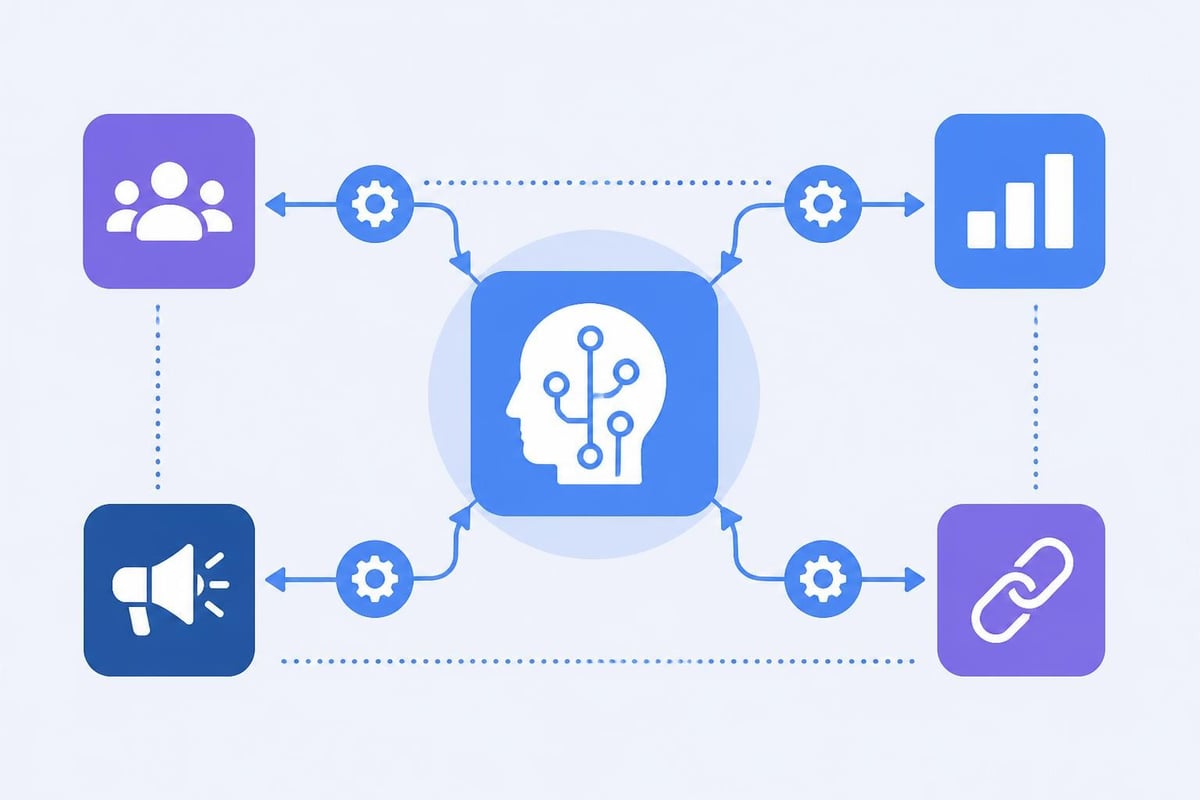
The most powerful marketing ai tool becomes useless if it cannot communicate with your existing systems. Integration architecture represents one of the most critical yet overlooked evaluation criteria.
Modern marketing operations typically involve numerous platforms: customer relationship management systems, email service providers, advertising networks, analytics tools, and content management systems. Your AI solution must extract data from these sources and push insights back into operational workflows.
API Capabilities and Flexibility
Examine the application programming interfaces offered by potential vendors. Robust APIs enable custom integrations, automated data synchronization, and the creation of specialized workflows.
Questions to ask include:
- What pre-built integrations are available?
- How frequently does data sync between systems?
- Can the platform handle both inbound and outbound data flows?
- What authentication and security protocols are supported?
- Are there rate limits that might constrain usage at scale?
Documentation quality matters enormously. Well-documented APIs with clear examples, SDKs in multiple languages, and responsive developer support significantly reduce implementation time and costs.
Data Quality and Preparation
AI systems perform only as well as the data they receive. Before implementing any marketing ai tool, audit your data sources for accuracy, completeness, and consistency.
Common data quality issues include duplicate records, outdated contact information, inconsistent formatting, and siloed datasets that prevent comprehensive customer views. Addressing these problems before AI implementation prevents garbage-in, garbage-out scenarios.
Understanding Pricing Models and Total Cost
Marketing AI tools employ diverse pricing structures that can significantly impact long-term costs. Understanding these models helps avoid budget surprises and enables accurate ROI calculations.
Common Pricing Approaches
Per-user licensing charges monthly or annual fees based on the number of team members accessing the platform. This model offers predictability but can become expensive as teams grow.
Usage-based pricing ties costs to consumption metrics like API calls, content pieces generated, emails sent, or data processed. This approach aligns expenses with value received but requires careful monitoring.
Tiered subscriptions provide different feature sets at various price points. Entry-level tiers attract small businesses while enterprise packages serve larger organizations with advanced needs.
| Pricing Model | Advantages | Disadvantages | Best For |
|---|---|---|---|
| Per-User | Predictable costs, simple budgeting | Expensive at scale | Small, stable teams |
| Usage-Based | Pay for actual value, scales naturally | Variable monthly costs | Growing businesses |
| Tiered | Clear upgrade path, feature flexibility | May pay for unused capabilities | Organizations with evolving needs |
| Enterprise Custom | Negotiated terms, dedicated support | Higher minimums, complex contracts | Large corporations |
Hidden Costs to Consider
Beyond subscription fees, factor in implementation expenses, training requirements, integration development, and ongoing maintenance. Many organizations underestimate these ancillary costs, which can exceed the tool's direct price.
Professional services for setup and customization often represent substantial investments. Training ensures team adoption and maximizes value extraction. Regular updates and optimizations require dedicated resources or vendor support packages.
Assessing AI Capabilities and Limitations
Not all artificial intelligence is created equal. The sophistication, accuracy, and applicability of AI features vary dramatically across marketing platforms.
Machine Learning Maturity
Investigate the underlying technology powering each marketing ai tool. Is it using rules-based automation disguised as AI, or genuine machine learning models that improve over time?
Advanced platforms employ deep learning architectures, natural language processing, computer vision, and reinforcement learning. These technologies enable capabilities like sentiment analysis, image recognition, predictive modeling, and autonomous optimization.
Request specifics about model training, data sources, accuracy metrics, and update frequencies. Vendors committed to genuine AI innovation provide transparency about their technological foundations.
Understanding Output Quality
AI-generated content and recommendations require human oversight. The best systems augment human capabilities rather than attempting full replacement.
Test platforms extensively during evaluation periods. Generate sample content, run predictive models against historical data, and compare AI recommendations against human expert judgments. This validation reveals practical accuracy and identifies potential biases or limitations.
Prioritizing User Experience and Adoption
Even the most sophisticated marketing ai tool fails if team members cannot or will not use it effectively. User experience considerations directly impact adoption rates and ultimate value realization.
Interface Design and Accessibility
Evaluate dashboards, workflows, and navigation structures. Can team members with varying technical expertise accomplish their tasks efficiently? Are common actions accessible within a few clicks?
Progressive disclosure represents good design practice, presenting basic functionality prominently while making advanced features available without cluttering the interface.
Mobile accessibility matters increasingly as marketers work across devices and locations. Responsive designs and dedicated applications enable productivity beyond desktop environments.
Training and Support Resources
Comprehensive onboarding programs accelerate time-to-value. Look for vendors offering documentation, video tutorials, interactive training sessions, and certification programs.
Support quality varies significantly across providers. Consider response times, available channels (chat, email, phone), hours of operation, and expertise levels. Premium support tiers often justify their costs through reduced downtime and faster problem resolution.
Examining Security and Compliance Features
Marketing operations involve sensitive customer data, making security and regulatory compliance non-negotiable requirements for any marketing ai tool.
Data Protection Standards
Verify that platforms implement industry-standard security practices:
- Encryption for data in transit and at rest
- Access controls with role-based permissions and multi-factor authentication
- Audit logging documenting all data access and modifications
- Regular security assessments including penetration testing and vulnerability scanning
- Incident response plans detailing breach notification and remediation procedures
Regulatory Compliance
Different regions and industries impose specific data handling requirements. GDPR governs European customer data, CCPA applies to California residents, HIPAA regulates healthcare information, and financial services face additional constraints.
Ensure potential vendors maintain relevant certifications and provide features supporting compliance obligations. Data residency options, consent management, deletion capabilities, and portability tools help organizations meet their legal responsibilities.

Leveraging AI for Link Intelligence
For organizations focused on digital marketing optimization, connecting AI capabilities with link management creates powerful synergies. When you integrate a marketing ai tool with advanced link tracking platforms, you gain unprecedented visibility into customer journeys and campaign performance.
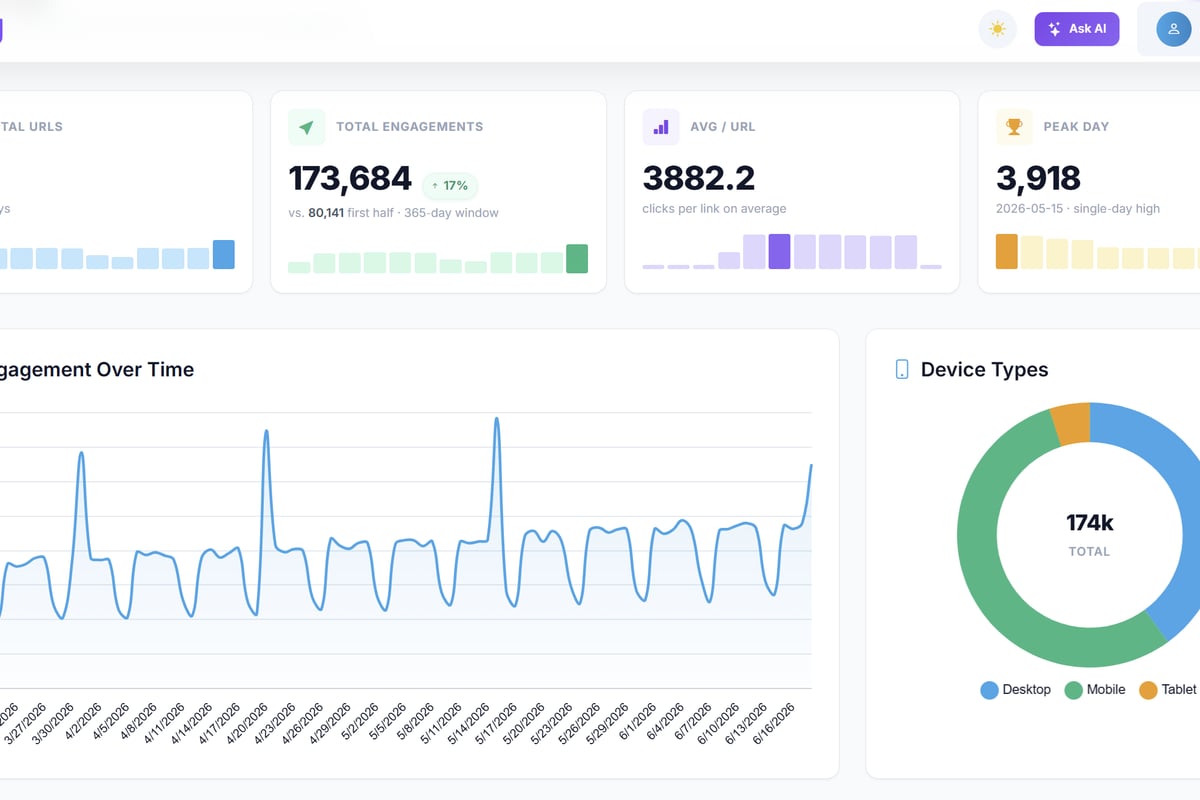
AI-powered marketing platforms can analyze click patterns, identify optimal routing strategies, and predict which audiences respond best to specific messaging. This intelligence transforms simple URL shorteners into strategic assets.
A comprehensive link management platform like Trimy provides the infrastructure for capturing granular data about every click, referral source, and conversion path. When combined with AI-powered analytics, marketers can automatically segment audiences, test creative variations, and route traffic to personalized landing experiences.
Smart Routing and Predictive Analytics
AI algorithms excel at pattern recognition across massive datasets. Applied to link intelligence, these capabilities enable dynamic routing based on predicted user intent, device type, geographic location, or previous interaction history.
Testing frameworks powered by machine learning continuously optimize link destinations, moving beyond simple A/B tests to explore multidimensional variations. The system learns which combinations of creative elements, landing pages, and offers generate the highest conversion rates for specific audience segments.
Implementing and Measuring Success
Selection represents only the first step. Successful marketing ai tool implementation requires structured rollout plans, clear success metrics, and continuous optimization.
Phased Deployment Strategy
Rather than attempting full-scale launches, adopt incremental approaches:
- Pilot programs with limited scope and small teams
- Success validation against predetermined benchmarks
- Iterative expansion incorporating lessons learned
- Full deployment once processes are refined
- Continuous improvement based on ongoing performance data
This methodology reduces risk, builds organizational confidence, and allows course corrections before significant resource commitments.
Establishing KPIs and Tracking Methods
Define key performance indicators aligned with initial objectives. If the goal was reducing content production time, track hours spent per piece before and after implementation. If improving targeting accuracy was the priority, measure engagement rates and conversion improvements.
Baseline measurements established pre-implementation enable accurate progress assessment. Document current performance across all relevant metrics before introducing AI capabilities.
Regular reporting keeps stakeholders informed and justifies ongoing investment. Monthly or quarterly reviews should examine both quantitative metrics and qualitative feedback from team members using the tools daily.
Staying Current with AI Marketing Evolution
The artificial intelligence field advances rapidly, with new capabilities, techniques, and applications emerging constantly. Research into generative AI marketing applications demonstrates how quickly these technologies evolve.
Vendor Innovation Roadmaps
During evaluation, ask potential providers about their development plans. How frequently do they release updates? What emerging capabilities are they exploring? How do they incorporate customer feedback into product evolution?
Vendors investing heavily in research and development, maintaining active academic partnerships, and participating in industry standards development demonstrate long-term viability and innovation commitment.
Adaptation Strategies
Build flexibility into technology architectures. Avoid over-customization that creates migration barriers. Maintain skills development programs ensuring team members stay current with AI capabilities and best practices.
As AI search transforms brand visibility strategies, marketing organizations must evolve their approaches to remain competitive. The most effective marketing ai tool today may be superseded tomorrow, making adaptability essential.
Balancing Automation with Human Expertise
While AI delivers tremendous capabilities, the most successful marketing organizations maintain appropriate balances between automated systems and human creativity, intuition, and judgment.
Where AI Excels
Artificial intelligence outperforms humans in processing vast data volumes, identifying subtle patterns, executing repetitive tasks consistently, and operating continuously without fatigue. These strengths make AI ideal for:
- Data analysis and visualization
- Predictive modeling and forecasting
- Audience segmentation and personalization
- Performance monitoring and alerting
- Content optimization based on historical performance
- Automated bidding and budget allocation
Preserving Human Roles
Strategic thinking, creative ideation, emotional intelligence, ethical judgment, and relationship building remain fundamentally human domains. Marketing strategies, brand positioning, creative concepts, and customer relationship nurturing benefit from human insight that AI cannot replicate.
The optimal approach treats AI as augmentation technology, enhancing human capabilities rather than replacing them. Teams leveraging both AI efficiency and human creativity achieve superior results compared to those relying exclusively on either approach.
Evaluating Vendor Stability and Support
Selecting a marketing ai tool represents a multi-year commitment. Vendor stability, financial health, and support quality significantly impact long-term success.
Company Viability Assessment
Research potential vendors thoroughly. How long have they operated? What is their funding situation? Who are their major customers? What is their market reputation?
Customer references provide valuable insights. Speak with organizations similar to yours in size, industry, and use case. Ask about implementation experiences, ongoing support quality, and whether the solution delivered promised value.
Community and Ecosystem
Active user communities, third-party integrations, consulting partners, and educational resources indicate healthy vendor ecosystems. These networks provide implementation assistance, best practice sharing, and accelerated problem-solving.
Platforms with robust developer communities often benefit from community-contributed integrations, extensions, and innovations that enhance core functionality beyond vendor-provided features.
Selecting the right marketing ai tool requires careful evaluation of capabilities, integration requirements, costs, and strategic alignment with business objectives. Organizations that approach this decision systematically, prioritizing genuine needs over flashy features, position themselves for sustainable competitive advantages. As you optimize your marketing technology stack, consider how trimy can transform your link management into actionable intelligence, providing the data foundation that makes AI-powered marketing truly effective.