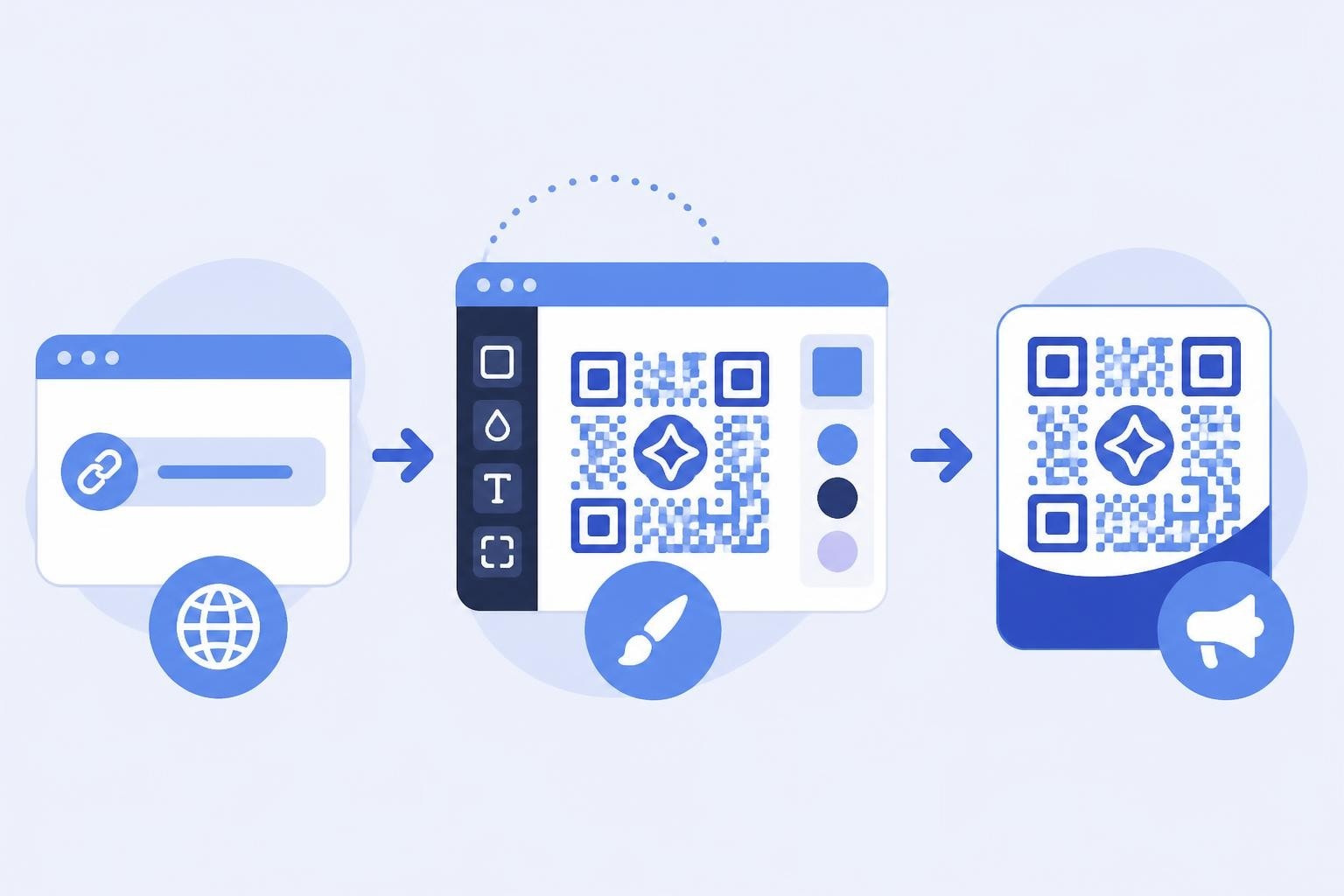
FreeQRCode: A Complete Guide to Free QR Code Tools

The rise of QR code adoption accelerated dramatically during the pandemic and has maintained momentum into 2026, with marketers seeking freeqrcode solutions to bridge physical and digital channels. While premium platforms offer sophisticated features, understanding the landscape of free QR code generators helps businesses make informed decisions about when to use no-cost tools and when to invest in enterprise solutions. Whether you're a startup testing market fit or an established brand running multi-channel campaigns, the freeqrcode ecosystem provides entry points for experimentation and learning.
Understanding the FreeQRCode Landscape
The freeqrcode market encompasses dozens of online generators, each offering varying capabilities and limitations. Most platforms provide basic encoding functionality without payment, allowing users to convert URLs, plain text, contact information, or Wi-Fi credentials into scannable matrix barcodes. The business model typically involves offering limited features for free while reserving advanced capabilities like analytics, bulk generation, or commercial licensing for paid tiers.
Basic freeqrcode generators handle straightforward use cases effectively. A restaurant can create a menu QR code, a retail store can link to product pages, or an event organizer can encode registration URLs without financial commitment. These tools democratize access to QR technology, removing barriers for small businesses and individual creators who need occasional QR codes.
Feature Comparison Across Free Platforms
| Feature | Basic Free Tools | Advanced Free Tiers | Developer Libraries |
|---|---|---|---|
| Static QR codes | Unlimited | Unlimited | Unlimited |
| Dynamic/editable URLs | Limited or none | 5-10 per month | Requires hosting |
| Analytics tracking | None | Basic pageviews | Custom implementation |
| Custom branding | Watermarked | Limited customization | Full control |
| Bulk generation | Manual only | 10-50 codes | Programmatic |
| Commercial use | Restricted | Often allowed | Open source license |
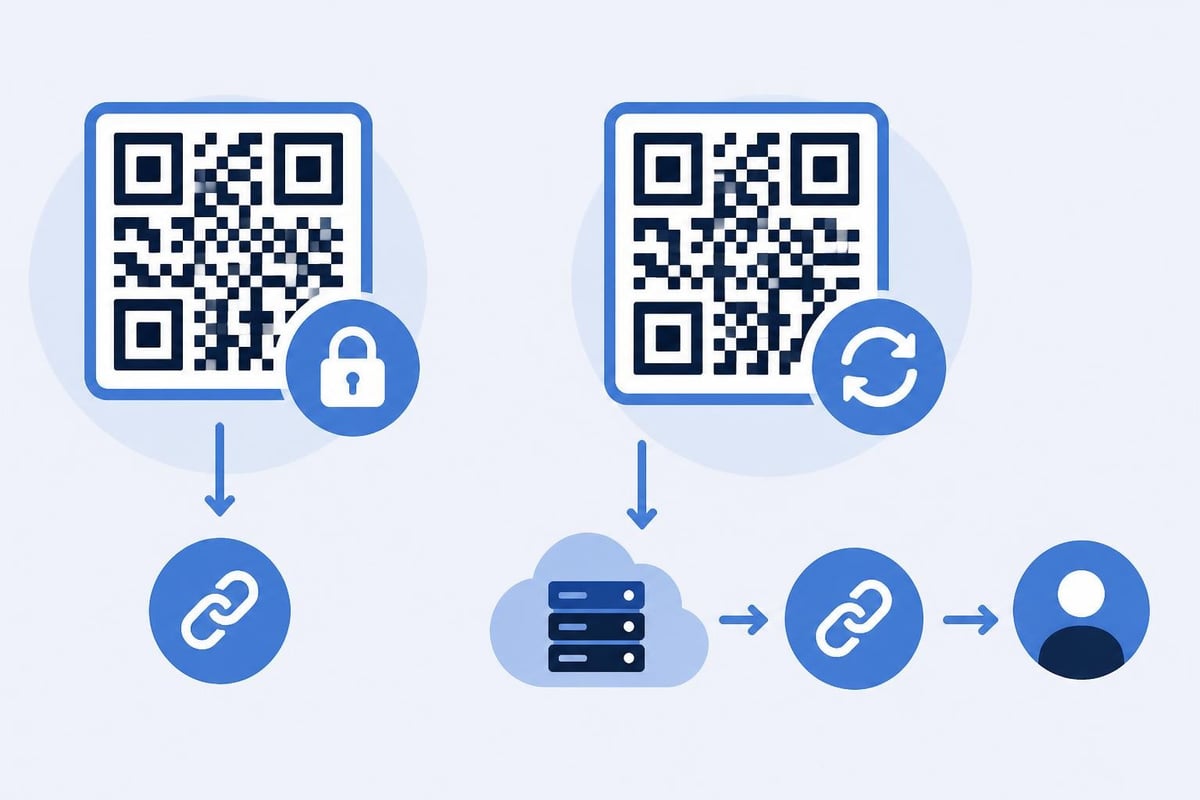
The distinction between static and dynamic QR codes fundamentally shapes freeqrcode utility. Static codes encode data directly into the matrix pattern itself, meaning the destination cannot be changed after printing. Dynamic codes point to an intermediary redirect service that allows URL modification, essential for campaigns where messaging evolves or requires A/B testing.
Quality and Error Correction Considerations
Error correction capability represents a critical technical specification often overlooked when selecting freeqrcode generators. QR codes implement Reed-Solomon error correction, which allows scanning even when portions of the code are damaged or obscured. The four standardized levels (L, M, Q, H) balance data capacity against resilience, with higher correction levels tolerating greater damage but requiring more space.
Most freeqrcode platforms default to M level (approximately 15% damage tolerance), suitable for digital displays and protected print environments. Codes destined for outdoor use, merchandise, or environments where wear is expected benefit from Q or H levels. Understanding this technical foundation helps marketers specify appropriate parameters when generating codes for specific deployment contexts.
For developers seeking deeper control, libraries like pyqrcode provide programmatic generation with fine-grained parameter control. These open-source tools eliminate service dependencies entirely, useful for high-volume applications or when data privacy requires local generation. The comprehensive QR Code tutorial from Thonky offers implementation guidance for teams building custom solutions.
Marketing Applications and Campaign Integration
FreeQRCode solutions shine in experimental campaigns where cost constraints preclude premium tools. A product launch might test consumer response by placing QR codes on packaging prototypes, using free generators to validate scan rates before investing in trackable infrastructure. Pop-up retail installations, guerrilla marketing activations, and grassroots awareness campaigns all benefit from the zero-barrier entry freeqrcode provides.
The limitation emerges when marketers need to measure campaign effectiveness. Without built-in analytics, free static QR codes function as blind links. Scans occur, but attribution, geographic distribution, device types, and temporal patterns remain invisible. This measurement gap becomes problematic when optimizing spend across channels or demonstrating ROI to stakeholders.
Implementing Tracking with Free Tools
Smart marketers bridge the freeqrcode analytics gap by combining free generation with manual tracking implementation. The process requires adding campaign parameters to destination URLs before encoding:
- Construct the target URL with UTM parameters identifying source, medium, and campaign
- Generate the QR code using any freeqrcode service, encoding the parameterized URL
- Configure Google Analytics or equivalent platform to capture and segment QR traffic
- Monitor campaign performance through the analytics dashboard rather than QR platform
This approach, detailed in Loves Data's tracking guide, transforms untrackable static codes into measurable touchpoints. The limitation lies in manual URL construction and inability to change destinations post-deployment, but for single-purpose campaigns, the method proves effective and cost-free.
Location-specific campaigns benefit from unique UTM parameters per placement. A retail chain testing QR codes across twenty stores can encode distinct campaign values for each location, enabling performance comparison through standard analytics reporting. The freeqrcode generator simply encodes whatever URL is provided; the intelligence resides in thoughtful parameter design.
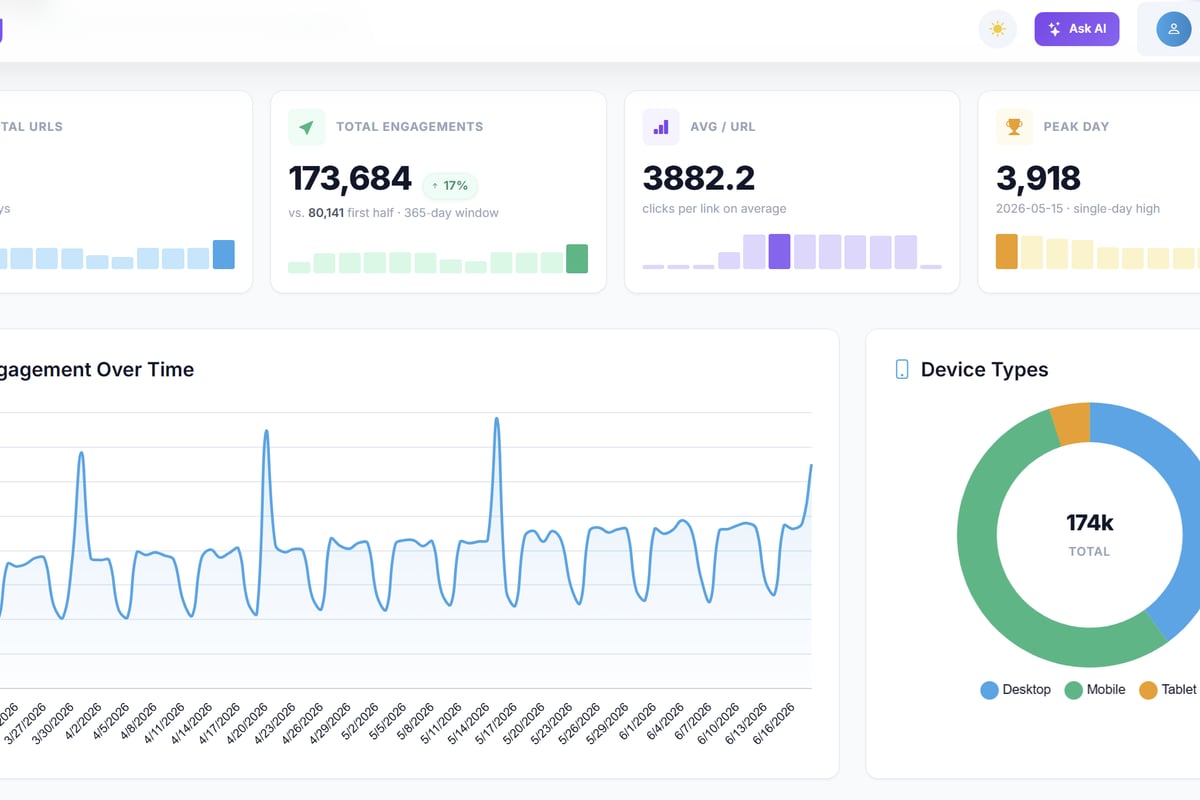
For teams running sophisticated multi-variant campaigns or requiring post-print URL flexibility, Trimy extends beyond freeqrcode limitations by combining dynamic link management with built-in analytics, A/B testing, and retargeting pixel integration. This bridges the gap between basic free tools and enterprise QR platforms at accessible pricing for growing businesses.
Security Implications and Risk Mitigation
The accessibility of freeqrcode generation creates security challenges alongside opportunities. QR codes obscure their destination from human inspection, enabling phishing attacks that exploit user trust. Recent research on QR code phishing effectiveness demonstrates measurable success rates for attackers using seemingly legitimate codes to harvest credentials or distribute malware.
Financial services face particularly acute risks, with the FS-ISAC threat intelligence report documenting sophisticated QR-based attacks targeting banking customers. Attackers replace legitimate payment codes or overlay malicious codes on parking meters and restaurant tables, redirecting payments to fraudulent accounts.
Best Practices for Safe Deployment
Organizations deploying QR codes carry responsibility for user safety regardless of whether they use freeqrcode services or enterprise platforms:
- Display the destination URL prominently near the QR code so users can verify before scanning
- Use branded short domains that signal legitimacy and build trust (example.com/promo rather than bit.ly/x7k2p)
- Implement HTTPS exclusively to prevent man-in-the-middle attacks during redirect
- Educate audiences about QR security through adjacent messaging encouraging verification
- Monitor for tampering by periodically scanning deployed codes to verify destination accuracy
The freeqrcode ecosystem lacks centralized security vetting, placing verification burden on end users and deploying organizations. While free generators don't inherently create insecure codes, the absence of oversight means malicious actors access the same tools as legitimate businesses.
Competitive intelligence platforms like BrandScout help marketing teams monitor how competitors deploy QR codes and identify emerging patterns in customer engagement strategies. Understanding the broader landscape informs tactical decisions about where and how to implement QR touchpoints effectively.
Design Optimization for Maximum Scan Rates
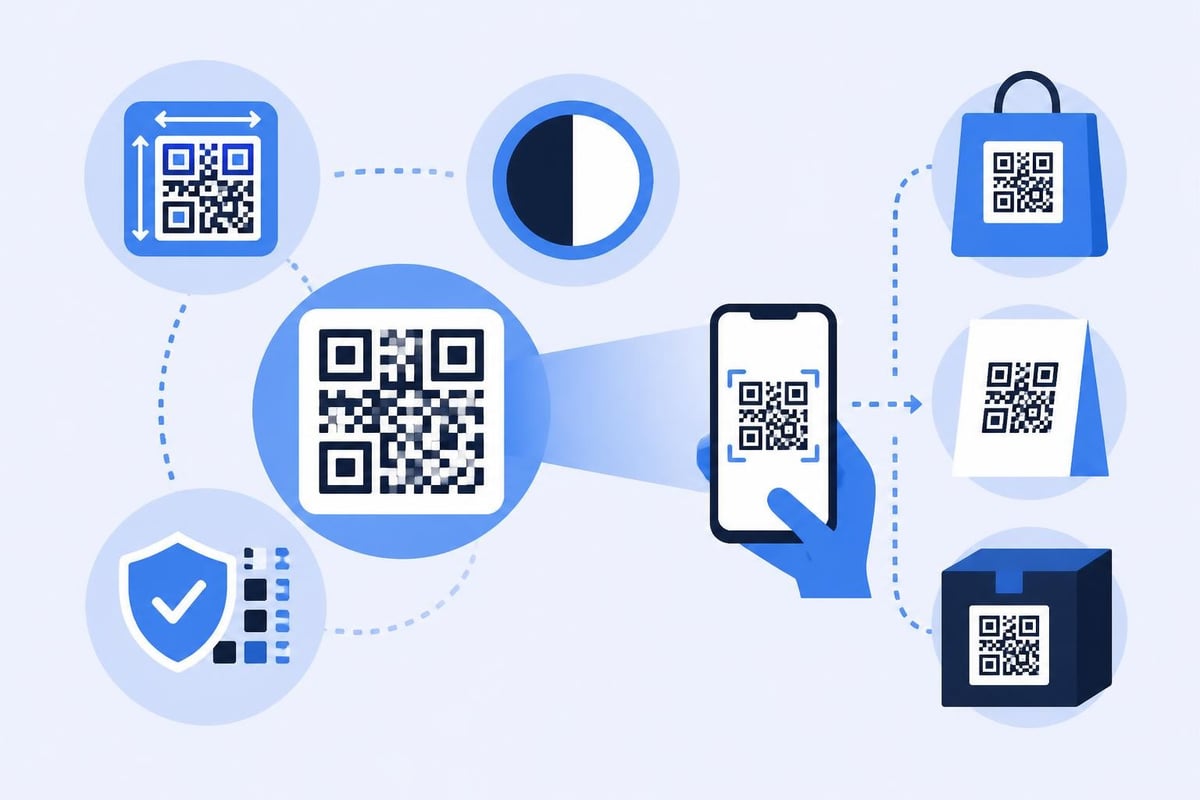
Visual design significantly impacts freeqrcode effectiveness, yet many marketers treat codes as technical artifacts rather than creative elements. The matrix pattern must remain scannable, but surrounding context, size, placement, and color customization all influence whether consumers actually engage.
Size and Placement Guidelines
| Print Medium | Minimum Code Size | Recommended Size | Viewing Distance |
|---|---|---|---|
| Business cards | 0.8 x 0.8 inches | 1 x 1 inches | 4-8 inches |
| Flyers/posters | 1.5 x 1.5 inches | 2 x 2 inches | 1-3 feet |
| Billboards | 4 x 4 feet | 6 x 6 feet | 50+ feet |
| Product packaging | 0.6 x 0.6 inches | 1 x 1 inches | 6-12 inches |
The viewing distance formula (code size = distance / 10) provides starting guidance, but real-world testing reveals nuances. Smartphone camera quality, ambient lighting, and surface material all affect readability. Matte finishes outperform glossy surfaces where reflection interferes with scanning. Curved surfaces require larger codes to compensate for distortion.
Color customization distinguishes branded codes from generic black-and-white defaults, but freeqrcode platforms vary widely in customization capability. Maintaining sufficient contrast between foreground and background remains essential. The W3C accessibility guidelines recommend minimum contrast ratios that apply equally to QR codes, ensuring scannability across lighting conditions and visual abilities.
Call-to-Action Integration
Naked QR codes without context underperform compared to codes accompanied by compelling calls to action. "Scan for exclusive discount" outperforms "Scan here" by clearly articulating value. The freeqrcode itself remains neutral; surrounding copy and design drive conversion.
Position matters. Codes placed at natural decision points (checkout counters, product packaging, end of articles) capture intent better than interruption placements. Print advertisements benefit from codes positioned where readers' attention naturally flows after consuming primary messaging.
Mobile-first landing page design determines post-scan experience quality. Since 100% of QR scans originate from mobile devices, destinations must load quickly, display properly on small screens, and enable easy conversion. Freeqrcode generators create the bridge, but landing page optimization determines campaign success.
Technical Implementation for Developers
Development teams integrating QR generation into applications face different considerations than marketers using one-off freeqrcode web tools. Embedding generation capabilities requires evaluating libraries, understanding encoding specifications, and implementing error handling for edge cases.
The technical structure of QR codes, explained in detail through UseQR's error correction tutorial, involves multiple encoding steps: data analysis, version determination, encoding mode selection, error correction code generation, and final module arrangement. Most libraries abstract these complexities, but understanding fundamentals helps debug issues and optimize parameters.
Library Selection Criteria
- License compatibility with project requirements (MIT, GPL, Apache, etc.)
- Output format support (SVG, PNG, PDF, EPS) matching rendering needs
- Dependency footprint appropriate for deployment environment
- Maintenance status and community support for ongoing compatibility
- Performance characteristics for high-volume generation scenarios
Python projects often leverage pyqrcode or qrcode libraries. JavaScript applications choose from node-qrcode, qrcode-generator, or browser-based implementations. Each brings trade-offs in bundle size, feature richness, and API design.
Server-side generation centralizes logic and enables consistent styling across all codes, but requires API calls and network dependency. Client-side generation eliminates backend requirements and enables offline functionality, but increases client bundle size and exposes generation parameters.
Data Privacy and GDPR Compliance
FreeQRCode services that offer dynamic codes or analytics necessarily collect user data, raising privacy considerations especially for European audiences under GDPR or Californians under CCPA. Static codes generated and downloaded without account creation avoid most privacy concerns since no tracking occurs, but businesses must evaluate their full workflow.
When freeqrcode platforms provide redirect services, they typically log:
- Scan timestamp and frequency
- Geographic location (IP-based)
- Device type and operating system
- Referrer information
This data collection, even when aggregated and anonymized, requires privacy policy disclosure and potentially user consent depending on jurisdiction and data sensitivity. Organizations deploying codes must understand what data third-party services collect and whether data processing agreements are necessary.
Self-hosted solutions eliminate third-party data sharing but transfer responsibility for secure data handling to the implementing organization. For enterprises with strict data governance requirements, this trade-off often favors internal implementation despite higher development costs.
Cross-Channel Campaign Coordination
QR codes function as connectors between physical and digital channels, requiring coordination across traditionally siloed marketing functions. Print teams, digital marketers, analytics specialists, and creative departments must align on freeqrcode implementation to avoid fragmentation.
Consistent tracking taxonomy ensures QR-driven traffic integrates cleanly with other channel data. If social campaigns use one UTM parameter structure and QR codes use another, cross-channel attribution becomes impossible. Establishing organization-wide conventions for source, medium, campaign, term, and content parameters maintains analytical coherence.
Multi-Touch Attribution Challenges
| Scenario | Attribution Challenge | Mitigation Strategy |
|---|---|---|
| User scans code but doesn't convert immediately | First-touch credit only | Extended attribution windows |
| Multiple codes across customer journey | Which code drove conversion? | Unique parameters per touchpoint |
| Code scan followed by direct site visit | Scan credit lost | Cookie-based user recognition |
| Offline conversion after scan | Digital metrics incomplete | Point-of-sale integration |
Freeqrcode tools rarely address attribution complexity, focusing instead on basic scan counting. Sophisticated marketers build attribution models externally, using QR data as one input among many channel signals.
Smart routing capabilities available in advanced platforms enable testing multiple destination URLs through a single QR code, rotating users between variants to identify optimal messaging. This A/B testing framework requires infrastructure beyond what freeqrcode services typically provide, representing a graduation point toward paid platforms.
Print Production Considerations
QR codes destined for professional print require technical specifications that freeqrcode generators don't always provide. Designers need vector formats (SVG, EPS, PDF) rather than raster images (PNG, JPG) to ensure scalability and print clarity. Not all free tools offer vector export, creating workflow friction.
Color space matters for print reproduction. Codes generated in RGB must be converted to CMYK for offset printing, potentially altering contrast ratios if not handled carefully. Spot color specifications enable better consistency across print runs, but require design software beyond typical freeqrcode web interfaces.
Quiet zones (the blank margin surrounding the code matrix) must be preserved during layout. The specification requires a border of at least four modules (the smallest square unit in the pattern) on all sides. Designers sometimes crop too aggressively, rendering codes unscannable. Most freeqrcode generators include appropriate quiet zones, but subsequent editing can remove them.
Printer resolution capabilities determine minimum achievable module size. Commercial offset printing (300+ DPI) supports much smaller codes than desktop inkjet printers (150-200 DPI). Understanding production constraints helps specify appropriate code dimensions during the freeqrcode generation phase.
Future Trends and Evolution
The freeqrcode ecosystem continues evolving as smartphone camera capabilities improve and consumer adoption deepens. Native camera app integration (eliminating dedicated scanner apps) removes friction from the scanning process, making QR codes more accessible to mainstream audiences in 2026 than ever before.
Augmented reality integration represents an emerging frontier. QR codes can trigger AR experiences that overlay digital content on physical environments, transforming static codes into portals for immersive brand storytelling. While current freeqrcode tools focus on simple URL encoding, the underlying technology supports richer data types.
Privacy-preserving analytics methods may emerge to address tracking concerns while maintaining measurement capability. Differential privacy techniques or federated learning could enable aggregate campaign insights without individual-level surveillance, balancing marketer needs with consumer privacy expectations.
Standardization efforts continue refining QR specifications for specialized use cases. Payment codes, health certificates, and identity verification each impose unique requirements that generic freeqrcode generators may not address. Industry-specific implementations will likely proliferate alongside general-purpose tools.
FreeQRCode generators provide accessible entry points for businesses exploring QR technology, but strategic implementation requires understanding technical specifications, security implications, and measurement frameworks. Whether using no-cost tools or investing in sophisticated platforms depends on campaign complexity, tracking requirements, and budget constraints. Trimy bridges the gap between basic freeqrcode services and enterprise solutions, offering advanced link intelligence, dynamic routing, and comprehensive analytics that transform QR codes from simple redirects into revenue-generating touchpoints with full tracking visibility.