Online Marketing Platforms: A Complete Guide for 2026
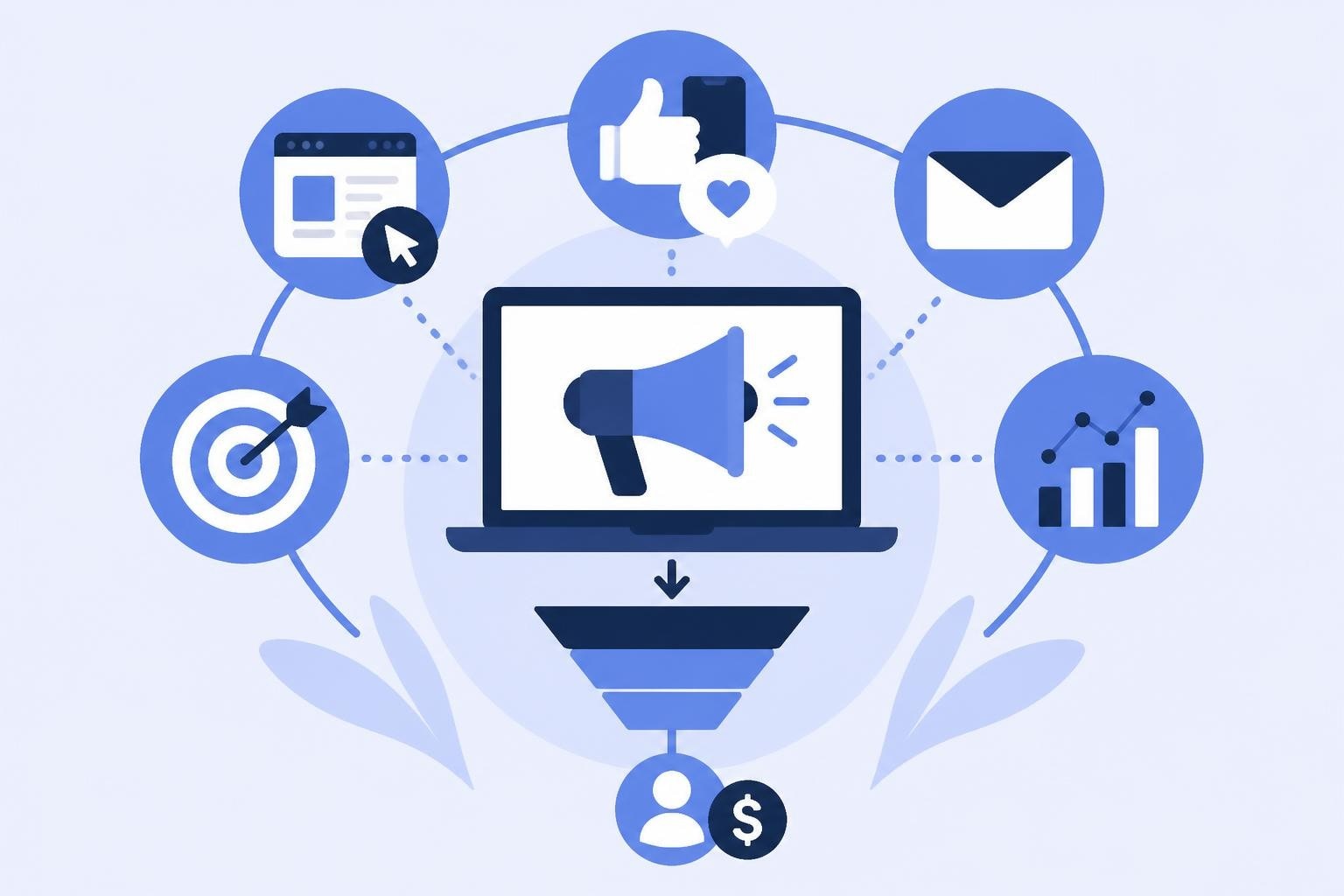
The digital marketing landscape has evolved into a sophisticated ecosystem where online marketing platforms serve as the backbone of customer acquisition, engagement, and revenue generation. Businesses today navigate an expanding universe of tools that promise to streamline campaigns, unlock insights, and deliver measurable returns. With marketing technology investment continuing to grow in 2025, understanding which platforms align with your business objectives has become essential for competitive advantage. This comprehensive guide explores the categories, capabilities, and strategic considerations that define modern online marketing platforms.
Understanding the Online Marketing Platform Landscape
Online marketing platforms encompass a broad spectrum of software solutions designed to execute, measure, and optimize digital marketing activities. These tools range from all-in-one marketing suites to specialized point solutions that address specific channels or functions.
The martech landscape has grown to over 11,000 solutions, creating both opportunity and complexity for marketing teams. This explosion reflects the increasing sophistication of digital marketing and the demand for specialized capabilities across every customer touchpoint.
Categories of Marketing Platforms
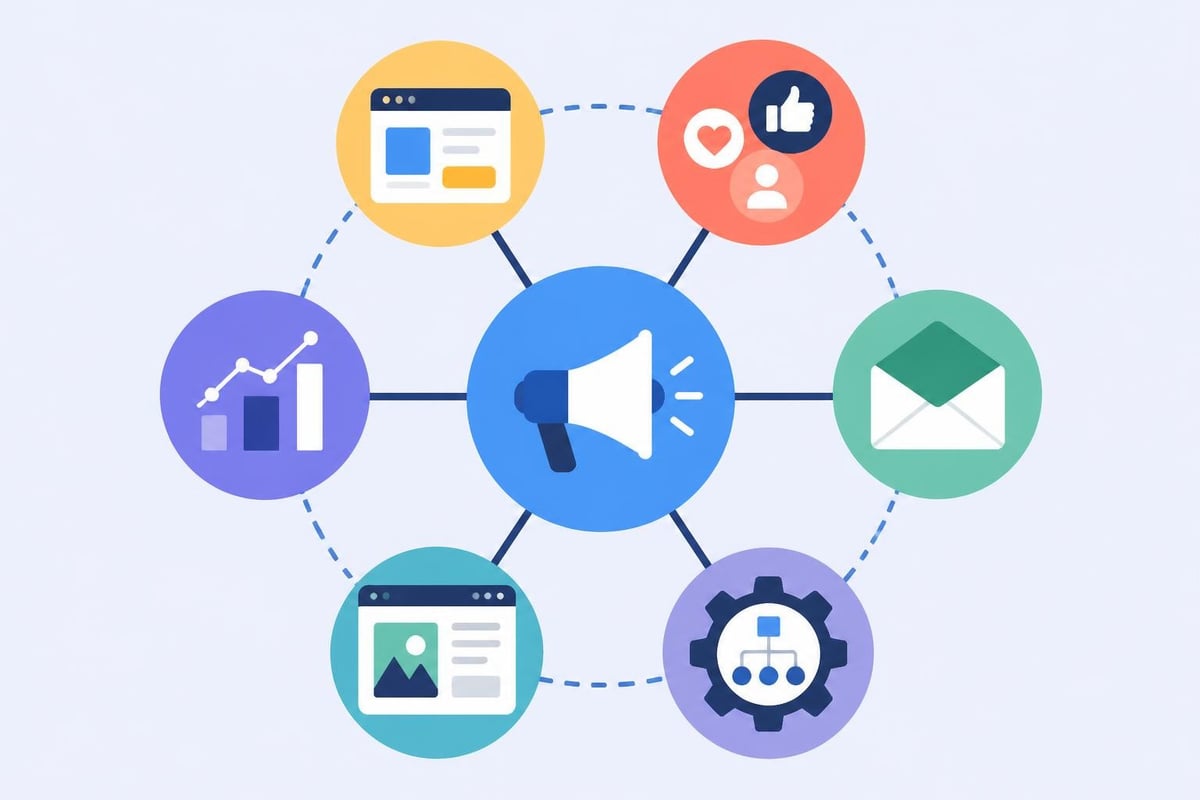
Modern online marketing platforms typically fall into several distinct categories:
- Advertising platforms for paid media execution and optimization
- Social media management tools for organic and paid social campaigns
- Email marketing platforms for automated nurture sequences
- Analytics and attribution systems for measuring performance
- Content management systems for website and landing page creation
- Marketing automation hubs that orchestrate multi-channel campaigns
- Customer data platforms that unify audience information
Each category addresses specific marketing functions, though many platforms now blur these boundaries by offering integrated capabilities. The trend toward composable martech allows businesses to assemble best-of-breed solutions rather than committing to monolithic suites.
Advertising and Paid Media Platforms
Paid advertising platforms remain the cornerstone of digital marketing strategy, commanding the largest share of marketing budgets. Digital advertising revenue in the United States reached new heights in 2025, reflecting the continued shift from traditional to digital channels.
Search advertising platforms like Google Ads enable businesses to capture demand at the moment customers express intent. These platforms offer sophisticated targeting based on keywords, demographics, location, and device, with bidding strategies powered by machine learning algorithms.
Display and programmatic platforms extend reach beyond search through banner ads, native advertising, and video placements across publisher networks. Real-time bidding technology allows advertisers to evaluate and bid on individual impressions based on audience signals.
Social Media Advertising
Social platforms have evolved into robust advertising ecosystems with advanced targeting capabilities:
| Platform Category | Primary Strength | Best Use Case |
|---|---|---|
| Meta (Facebook/Instagram) | Demographic and interest targeting | Lead generation, e-commerce |
| Professional targeting | B2B marketing, recruitment | |
| TikTok | Short-form video engagement | Brand awareness, younger audiences |
| Visual discovery | Retail, home, fashion | |
| X (Twitter) | Conversation and trends | Real-time marketing, thought leadership |
Social media usage patterns continue to evolve, with platforms gaining and losing favor based on demographic shifts, feature innovations, and trust considerations. Successful marketers maintain presence across multiple platforms while concentrating spend where their audiences are most active and engaged.
Marketing Automation and Revenue Platforms
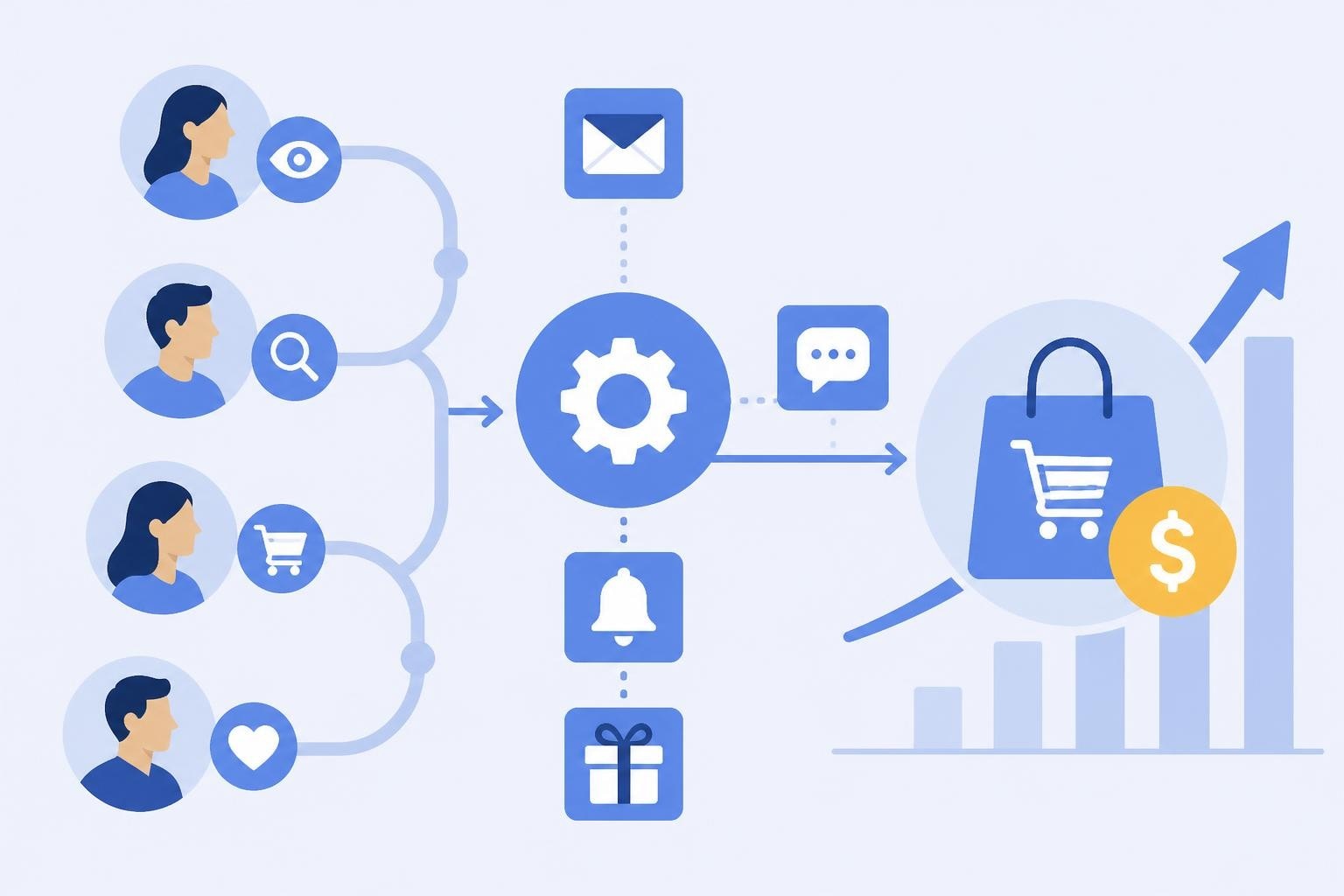
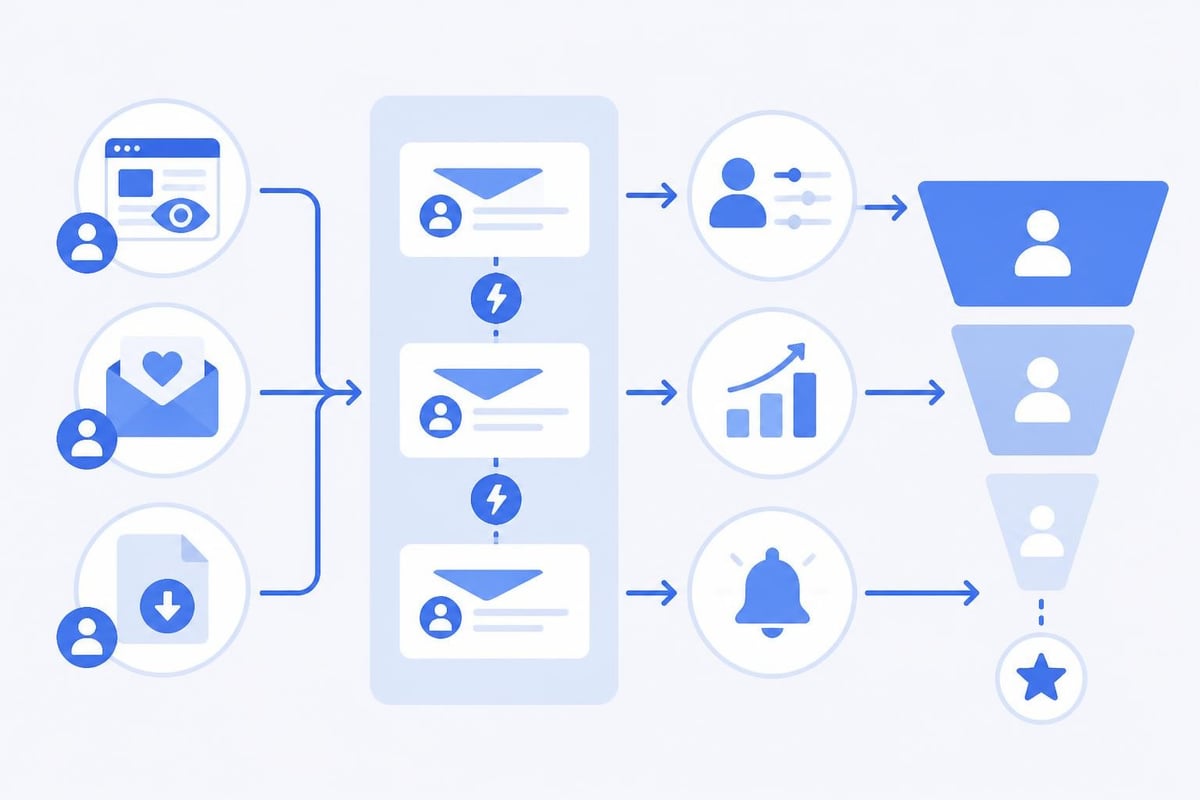
Marketing automation platforms orchestrate customer journeys across email, web, mobile, and advertising channels. These systems enable marketers to deliver personalized experiences at scale by triggering messages based on behavioral signals and customer attributes.
Lead scoring and nurturing capabilities help marketing teams identify high-intent prospects and guide them through the buying journey with relevant content. Automated workflows can respond to website visits, email opens, content downloads, and product usage patterns without manual intervention.
B2B revenue marketing platforms have matured significantly, integrating marketing automation with sales intelligence, account-based marketing, and revenue attribution. These platforms align marketing activities directly with pipeline generation and closed revenue.
Key Automation Capabilities
Modern marketing automation platforms deliver value through several core functions:
- Email campaign management with template builders, A/B testing, and send-time optimization
- Landing page creation with drag-and-drop editors and conversion tracking
- Lead management including scoring, routing, and CRM synchronization
- Multi-channel orchestration coordinating touchpoints across email, SMS, push, and web
- Reporting and attribution connecting marketing activities to revenue outcomes
The most effective implementations focus automation on repetitive, high-volume tasks while preserving human creativity for strategy, content creation, and relationship building.
Analytics and Attribution Platforms
Understanding campaign performance requires robust analytics infrastructure that connects marketing activities to business outcomes. Online marketing platforms dedicated to measurement provide the visibility necessary to optimize spend allocation and tactical execution.
Web analytics platforms track visitor behavior, conversion paths, and engagement patterns across digital properties. Google Analytics remains the dominant solution for website measurement, offering free access to sophisticated tracking and reporting capabilities.
Marketing attribution platforms address the challenge of crediting touchpoints along complex, multi-channel customer journeys. These systems employ various attribution models:
- First-touch attribution credits the initial interaction
- Last-touch attribution assigns value to the final touchpoint before conversion
- Linear attribution distributes credit equally across all interactions
- Time-decay attribution gives more weight to recent touchpoints
- Algorithmic attribution uses machine learning to assign credit based on contribution
No single model captures perfect truth, but sophisticated marketers compare multiple attribution lenses to understand which channels initiate relationships, which nurture consideration, and which close deals.
Content and Social Media Management
Content creation and distribution platforms help marketing teams produce, publish, and promote material across owned channels. These online marketing platforms range from blog and website CMS solutions to social media scheduling tools.
Content management systems like WordPress, HubSpot CMS, and Contentful provide the infrastructure for creating and maintaining websites, landing pages, and content hubs. Headless CMS architectures separate content storage from presentation, enabling distribution across web, mobile, and emerging channels.
Social media management platforms consolidate the posting, monitoring, and engagement workflow across multiple networks:
- Schedule posts in advance for optimal timing
- Monitor brand mentions and relevant conversations
- Engage with comments and messages from a unified inbox
- Analyze social performance and audience growth
- Collaborate with team members on content approval
These platforms save substantial time for teams managing multiple social accounts while providing analytics that inform content strategy and posting optimization.
Customer Data and Personalization Platforms
Customer data platforms (CDPs) unify customer information from disparate sources into comprehensive profiles that power personalization across marketing channels. These systems ingest data from websites, mobile apps, CRM systems, point-of-sale systems, and other touchpoints to create a single customer view.
Identity resolution capabilities connect anonymous website visitors to known customers and stitch together cross-device behavior. This unified profile enables marketers to deliver consistent, contextually relevant experiences regardless of channel.
Personalization engines leverage CDP data to customize website content, product recommendations, email messaging, and advertising creative based on individual preferences and behavior. Machine learning models predict next-best actions and optimize content selection in real-time.
Privacy and Compliance Considerations
Modern online marketing platforms must navigate evolving privacy regulations and consumer expectations:
- GDPR in Europe requires explicit consent for data collection and processing
- CCPA/CPRA in California grants consumers rights to access and delete personal data
- Cookie deprecation in browsers reduces third-party tracking capabilities
- Platform privacy changes like Apple's App Tracking Transparency limit cross-app tracking
Responsible marketers prioritize first-party data collection through value exchanges that give customers reasons to share information directly. Building owned audiences through email lists, SMS subscribers, and registered users reduces dependence on platform-controlled data.
Link Management as Marketing Infrastructure
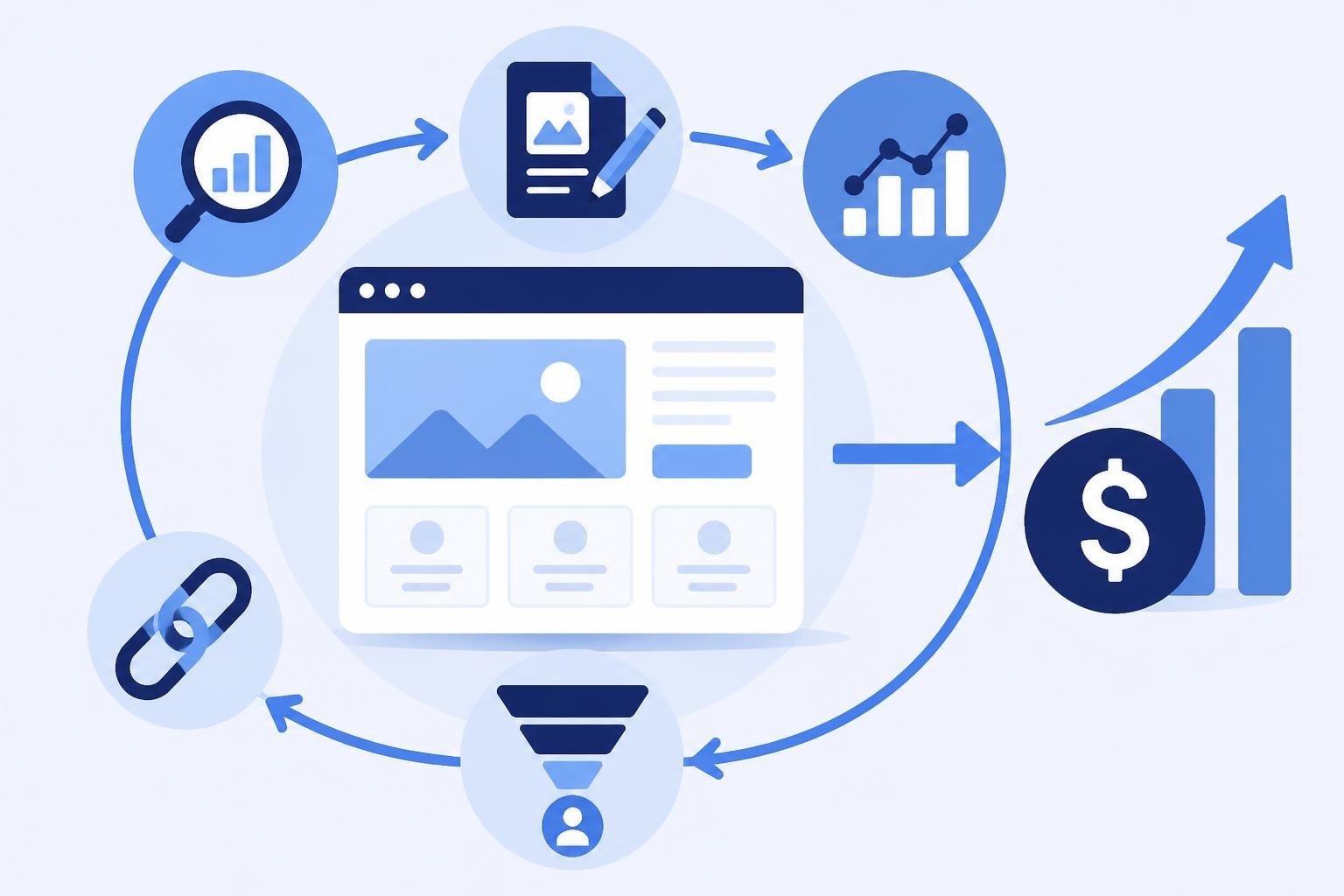
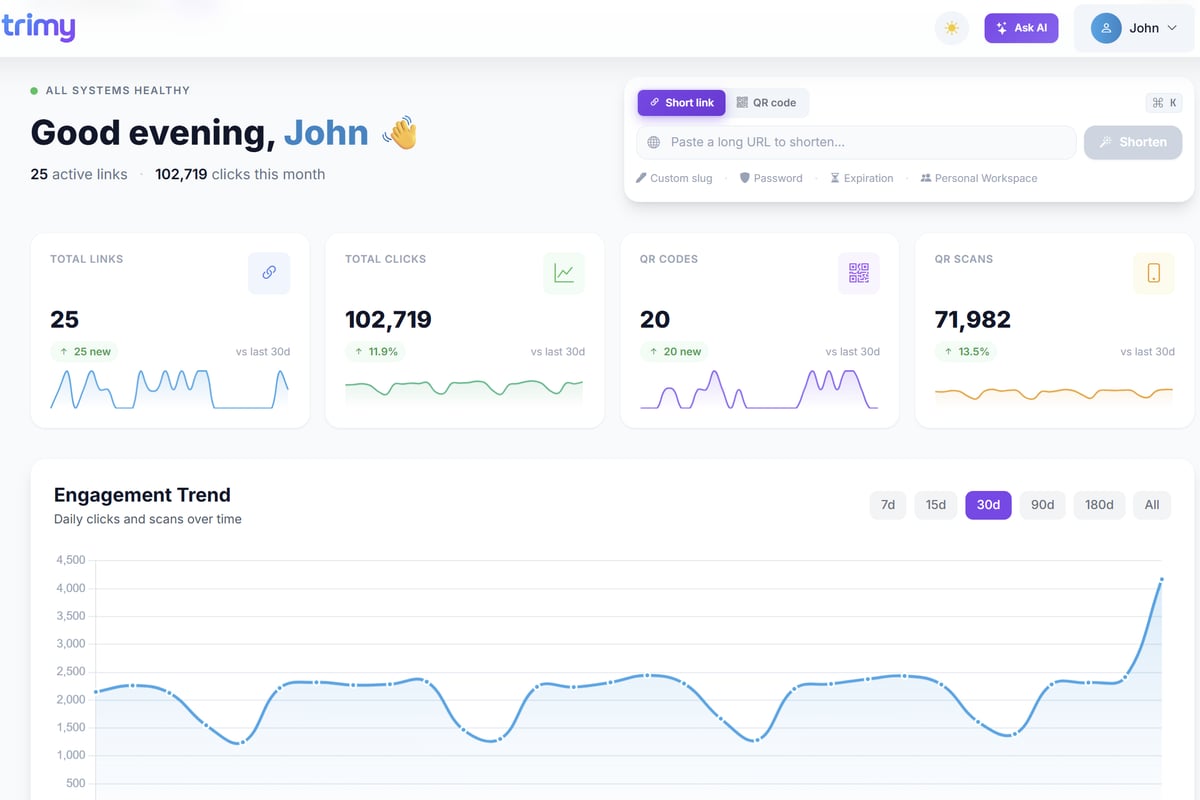
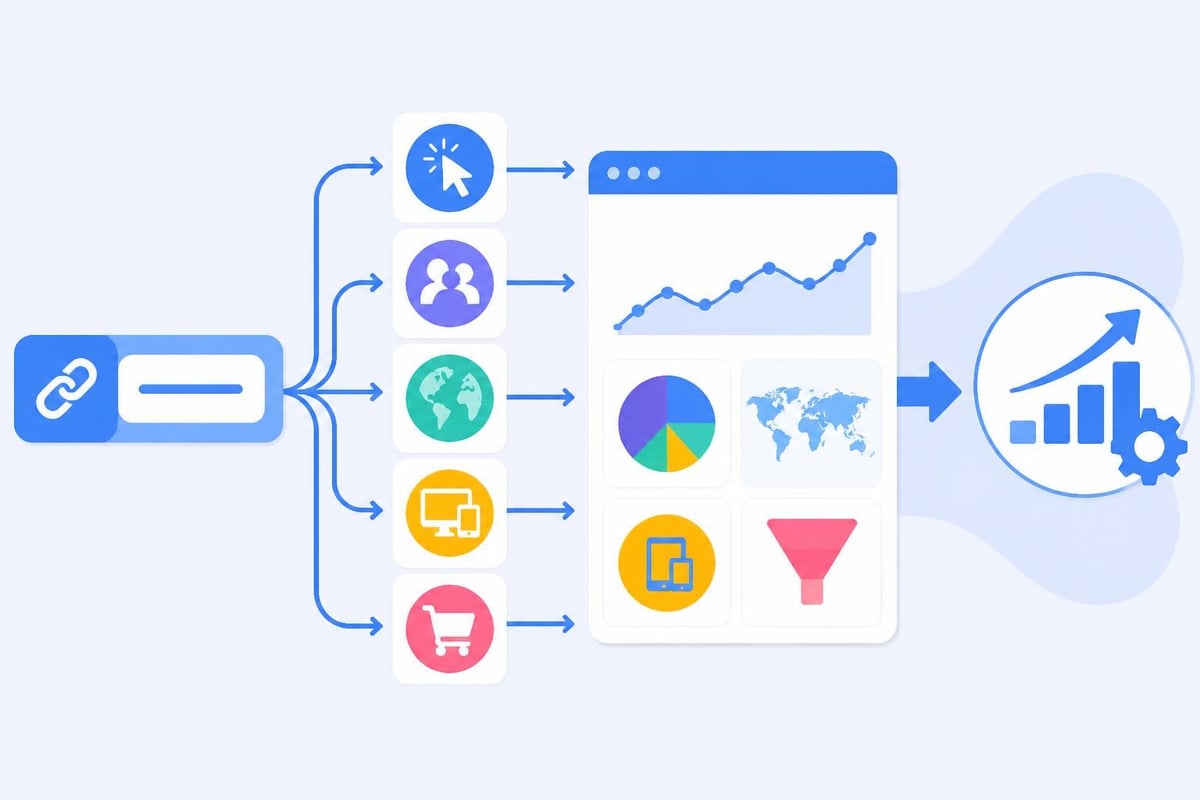
Every marketing campaign depends on links to connect audiences with landing pages, content, and conversion points. Link management platforms transform these connective elements into intelligence-gathering assets that reveal customer behavior and campaign performance.
Trimy provides the link intelligence infrastructure that modern marketing campaigns require. By tracking every click, analyzing traffic sources, and enabling A/B testing of destinations, Trimy helps marketers optimize the critical handoff between advertising platforms and owned properties.
Integration and the Composable Marketing Stack
The most effective marketing technology ecosystems emphasize integration over isolated tool selection. Research shows that marketing tech is often broken due to poor integration and siloed data, limiting the value organizations extract from platform investments.
API-first architectures enable online marketing platforms to exchange data and trigger actions across systems. Modern platforms expose robust APIs that allow developers to build custom integrations and workflows tailored to specific business requirements.
Integration platform-as-a-service (iPaaS) solutions like Zapier, Make, and Workato provide no-code connectors between popular marketing platforms. These tools democratize integration by allowing marketers to build automated workflows without engineering resources.
Building a Composable Stack
The composable martech philosophy emphasizes assembling best-of-breed platforms rather than accepting the constraints of all-in-one suites:
- Identify core workflows and the data that must flow between systems
- Evaluate integration capabilities before committing to platforms
- Establish data governance to ensure consistency across systems
- Document integration architecture for team reference and troubleshooting
- Monitor integration health to catch and resolve connectivity issues
This approach requires more upfront planning but delivers superior flexibility and the ability to swap components as needs evolve or better solutions emerge.
Platform Selection Criteria
Choosing the right online marketing platforms requires evaluating capabilities against specific business requirements and constraints. Generic feature checklists matter less than alignment with your marketing strategy, team capabilities, and integration requirements.
Total cost of ownership extends beyond subscription fees to include implementation costs, training time, integration expenses, and the opportunity cost of features you cannot access. Enterprise platforms with impressive feature lists often require dedicated administrators and consulting support to realize value.
| Selection Factor | Key Considerations |
|---|---|
| Functionality | Does it solve your specific use case? |
| Usability | Can your team operate it without extensive training? |
| Integration | Does it connect with your existing systems? |
| Scalability | Will it grow with your business needs? |
| Support | What level of customer success is included? |
| Data ownership | Can you export and migrate your data? |
| Security | Does it meet your compliance requirements? |
Request trials or pilots before committing to annual contracts. Involve end users from marketing, sales, and IT in evaluation to surface concerns and requirements that might not be obvious from demos.
Emerging Trends in Marketing Platforms
The evolution of online marketing platforms continues to accelerate with new capabilities and architectural approaches. Google's 2025 marketing strategy guidance emphasizes AI, measurement, and platform-driven approaches that shape vendor roadmaps.
Artificial intelligence is moving from experimental feature to core capability across marketing platforms. AI-powered tools now write copy variations, generate creative assets, predict customer behavior, optimize bidding strategies, and personalize content at individual levels.
Predictive analytics applications forecast customer lifetime value, churn risk, conversion probability, and optimal next actions. These insights enable marketers to allocate resources toward high-value opportunities and intervene before customers disengage.
Conversational marketing platforms leverage chatbots and messaging apps to engage customers in real-time dialogue. These systems qualify leads, answer questions, schedule meetings, and route conversations to human representatives when appropriate.
Privacy-First Marketing Technology
The deprecation of third-party cookies and tightening privacy regulations are driving platform innovation around first-party data strategies:
- Server-side tracking reduces reliance on browser-based measurement
- Consent management platforms streamline compliance across jurisdictions
- Clean room technology enables data collaboration without sharing raw customer data
- Contextual targeting revives page-level signals as alternatives to behavioral tracking
Forward-thinking marketers are building strategies that deliver personalization and measurement while respecting customer privacy and meeting regulatory requirements.
Optimization and Performance Management
Platform implementation represents the beginning rather than the end of the value creation journey. Continuous optimization extracts additional performance from existing platform investments while minimizing the need for new tool acquisitions.
A/B testing capabilities built into advertising, email, and web platforms enable data-driven improvement of creative, messaging, and user experience. Systematic testing programs compound small improvements into significant performance gains over time.
Regular platform audits reveal underutilized features, integration gaps, and configuration issues that limit effectiveness:
- Review user adoption and identify training gaps
- Audit data quality and implement cleansing processes
- Evaluate integration health and resolve connectivity issues
- Benchmark performance against platform best practices
- Document workflows and standard operating procedures
Many organizations realize only a fraction of their platform capabilities because they lack the processes and governance to drive systematic utilization across teams.
The landscape of online marketing platforms offers unprecedented capabilities to reach customers, measure performance, and optimize campaigns for revenue impact. Success requires thoughtful platform selection aligned with business objectives, robust integration architecture, and ongoing optimization that maximizes value from existing investments. When you need link intelligence to transform every URL into a revenue signal with advanced analytics, A/B testing, and deep insights, trimy provides the competitive advantage that turns link management into a strategic marketing asset.