Paid Plans: How to Structure and Price Them for Growth

Choosing the right structure for your paid plans can make the difference between sustainable growth and missed revenue opportunities. Whether you're launching a SaaS platform, a content subscription service, or a link management tool, how you package and price your offerings directly impacts conversion rates, customer lifetime value, and overall profitability. This comprehensive guide explores the strategic decisions behind effective paid plan design, from tier architecture to pricing psychology, helping you build a monetization strategy that resonates with your target audience.
Understanding the Foundation of Paid Plan Strategy
Paid plans represent more than just a revenue stream. They establish the relationship between the value you deliver and what customers are willing to exchange for that value. The architecture of your pricing structure communicates your positioning in the market, defines your customer segments, and sets expectations for the experience users will receive.
Most successful businesses design their paid plans around clear value propositions. Each tier should solve a specific problem for a defined user segment. A marketing team requiring advanced analytics has different needs than a solo entrepreneur testing campaign performance. Your pricing tiers should reflect these distinctions clearly.

Key Components of Effective Paid Plans
When building your monetization framework, several critical elements require careful consideration:
- Feature differentiation across tiers that creates clear upgrade paths
- Usage limits that align with customer needs and encourage growth
- Pricing psychology that positions your offerings competitively
- Transparency in what each plan includes and excludes
- Flexibility to accommodate seasonal businesses or varying usage patterns
The best subscription-based payment models demonstrate how companies across industries structure their offerings to match customer expectations. From flat-rate simplicity to usage-based complexity, the right model depends on your product's value delivery mechanism.
Pricing Tier Architecture
Most successful paid plans follow one of three primary structures. The flat-rate model offers unlimited access for a single price point, eliminating decision fatigue. Tiered pricing creates multiple options targeting different customer segments. Usage-based pricing charges according to consumption, aligning costs directly with value received.
Flat-rate pricing works well when your product delivers consistent value regardless of usage intensity. Customers appreciate predictability, and you benefit from simplified billing and easier forecasting. However, this model may leave money on the table from power users or discourage price-sensitive customers from starting.
Tiered structures allow you to capture more market segments. A basic tier attracts budget-conscious users, a professional tier serves growing businesses, and an enterprise tier accommodates large organizations. This approach, highlighted in research on high-converting subscription tiers, enables you to maximize revenue across diverse customer profiles.
Usage-based models align perfectly with products where value correlates with consumption. Link management platforms might charge based on clicks tracked, links created, or data processed. This fairness appeals to customers who want to pay only for what they use, though it can create billing unpredictability.
Designing Your Paid Plans for Maximum Conversion
The transition from free to paid represents a critical conversion moment. How you design this experience significantly impacts your revenue potential. Your paid plans should feel like natural progressions, not obstacles to overcome.
The Free-to-Paid Transition Strategy
Consider your free tier (if offering one) as an extended trial period. It should provide enough value to demonstrate your product's capabilities while creating clear motivation to upgrade. Smart limitations focus on features that matter to growing businesses rather than artificial constraints that frustrate users.
For link management specifically, a free tier might include basic link shortening and limited analytics. As users build campaigns and need deeper insights, retargeting pixels, or custom domains, the paid plans become essential rather than optional.
| Feature Category | Free Tier | Starter Plan | Professional Plan | Enterprise Plan |
|---|---|---|---|---|
| Links Created | 50/month | 500/month | 5,000/month | Unlimited |
| Analytics Depth | 7 days | 90 days | 1 year | Unlimited history |
| Custom Domains | 0 | 1 | 5 | Unlimited |
| A/B Testing | No | Basic | Advanced | Advanced + AI |
| Team Members | 1 | 3 | 10 | Unlimited |
This structure creates clear upgrade triggers. When a customer hits their link limit or needs analytics beyond seven days, the value proposition for upgrading becomes immediately apparent.
Pricing Psychology and Positioning
The specific numbers you choose for your paid plans carry psychological weight. Pricing at $29 versus $30 might seem trivial, but decades of research confirm charm pricing's effectiveness. More importantly, your pricing positions you relative to competitors and sets customer expectations.
Anchor pricing uses your highest tier to make mid-tier options appear more reasonable. Even if few customers select your enterprise plan, its presence makes your professional tier seem like a better value. This technique proves particularly effective when the price difference exceeds 3x between tiers.
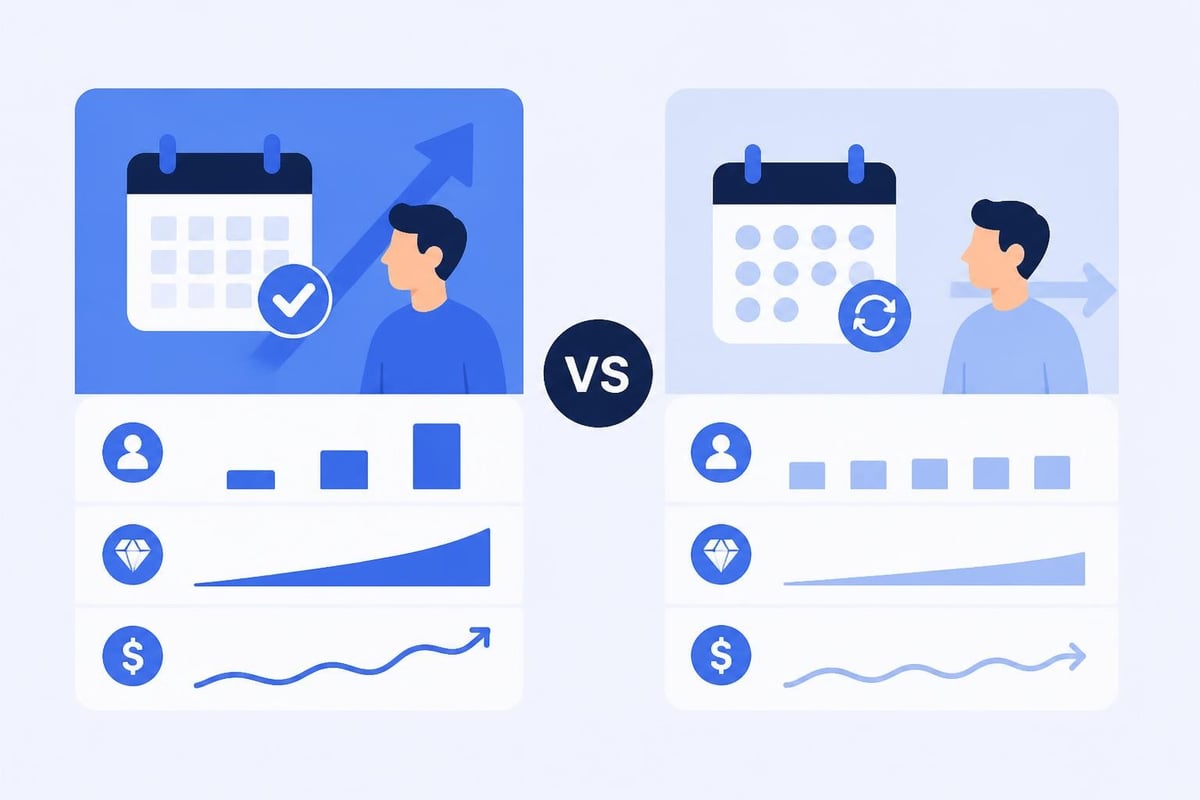
Annual versus monthly billing deserves strategic consideration. Offering annual plans at a discount (typically 15-25%) improves cash flow, reduces churn, and increases customer lifetime value. However, the higher upfront cost can deter new customers. Most successful businesses offer both options, with incentives nudging users toward annual commitments.
Optimizing Paid Plans Through Testing and Iteration
No pricing structure emerges perfect from initial launch. The most successful companies treat their paid plans as dynamic systems requiring continuous optimization based on real customer behavior and market feedback.
A/B Testing Your Pricing Structure
Testing different aspects of your paid plans reveals what resonates with your audience. You might test price points, feature combinations, tier names, or billing frequencies. The key is testing one variable at a time to isolate what drives conversion changes.
Consider testing:
- Price sensitivity by offering the same features at different price points to different segments
- Feature bundling to determine which capabilities drive upgrade decisions
- Trial lengths to find the optimal period for users to experience value
- Billing frequency incentives to understand annual versus monthly preferences
- Tier naming because "Professional" might convert better than "Premium" for your audience
When implementing A/B testing for link management features specifically, track not just conversion rates but also customer lifetime value and retention by cohort. A lower price point might drive more initial conversions but attract customers with higher churn rates.
Analytics-Driven Plan Refinement
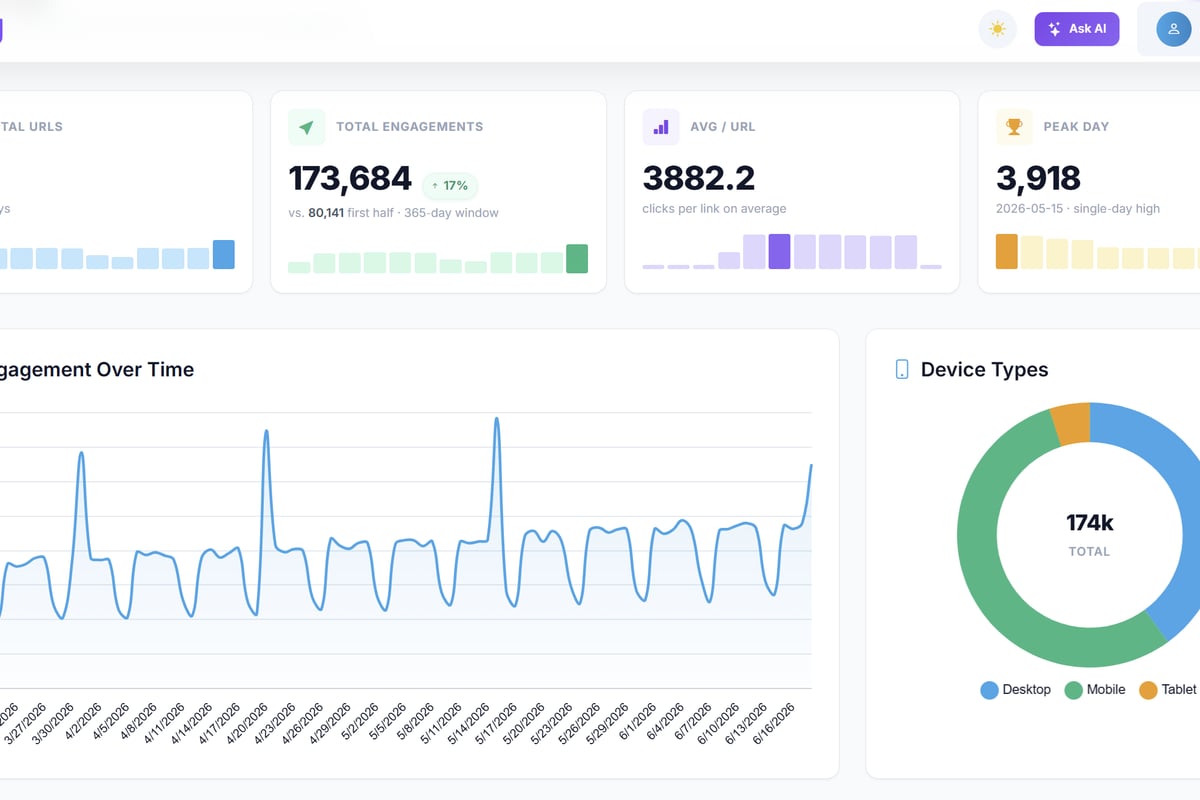
Deep analytics reveal how customers interact with your paid plans. Track metrics including:
- Conversion rates at each tier
- Time from signup to first upgrade
- Feature adoption rates within each plan
- Churn rates by pricing tier
- Upgrade and downgrade patterns
- Customer acquisition cost versus lifetime value by tier
These insights inform strategic adjustments. If your professional tier shows high churn, perhaps it includes too many features customers don't value, making it feel expensive. If few customers select your enterprise tier, maybe the jump from professional pricing is too steep, or the additional features aren't compelling enough.
Trimy's platform demonstrates how link intelligence transforms marketing campaign optimization through detailed tracking and smart routing. When building paid plans around link management capabilities, understanding which analytics features drive the most value helps you structure tiers that align with genuine customer needs rather than arbitrary feature lists.
Best Practices for Subscription Model Implementation
Implementing paid plans requires more than setting prices and building a checkout flow. The entire subscription user experience impacts whether users convert, remain satisfied, and continue their subscriptions long-term.
Transparency and Communication
Customers appreciate clarity about what they're purchasing. Your paid plans should explicitly list included features, limitations, and billing terms. Hidden fees or surprise charges destroy trust and increase churn.
Clear upgrade paths help customers understand what happens as their needs grow. When a user approaches their plan limits, proactive notifications with clear paths to upgrade prevent frustration. This communication should focus on value received rather than restrictions imposed.
Billing transparency means customers always know when charges will occur, how to modify their subscription, and what cancellation involves. The experience design guide for subscription services emphasizes these principles as foundational to building lasting customer relationships.
Retention-Focused Design
Acquiring customers costs significantly more than retaining them. Your paid plans should incorporate retention mechanisms from the start:
- Grandfathering protects existing customers when you raise prices, building goodwill and reducing churn
- Loyalty incentives reward long-term subscribers with additional features or discounts
- Downgrade options let customers reduce spending rather than canceling entirely
- Pause functionality accommodates seasonal businesses or temporary budget constraints
- Usage alerts notify customers before they hit limits that would impact their workflows
The case study on implementing paid subscriptions by major publishers illustrates how premium content providers balance access with monetization while maintaining subscriber satisfaction.
Advanced Paid Plan Strategies
Beyond basic tier structures, sophisticated pricing strategies can unlock additional revenue and serve diverse customer segments more effectively.
Usage-Based Pricing Nuances
Pure usage-based pricing offers ultimate fairness but creates complexity. Hybrid models combine base subscription fees with usage overages. This approach provides revenue predictability while allowing high-volume customers to pay proportionally to value received.
For link management platforms, a hybrid model might include a base fee covering analytics, dashboard access, and support, with additional charges triggered when customers exceed included link volumes or click tracking limits. This structure works particularly well when baseline costs (infrastructure, support) remain relatively fixed regardless of usage.
Add-On and Modular Pricing
Rather than forcing customers into rigid tiers, modular pricing lets them build custom plans. A base subscription provides core functionality, with optional add-ons for specialized features like white-label capabilities, API access, or priority support.
This flexibility appeals to customers with specific needs who don't fit neatly into predefined tiers. However, it increases decision complexity and can create analysis paralysis. Balance is essential.
<image_prompt alt="Modular pricing structure">Add-on pricing architecture showing base subscription features with optional modules for specialized capabilities and custom configurations</image_content>
Enterprise and Custom Plans
For large organizations or customers with unique requirements, standardized paid plans often fall short. Enterprise tiers typically list pricing as "Contact Sales" rather than displaying specific numbers. This approach enables:
- Negotiated pricing based on volume commitments
- Custom feature development addressing specific needs
- Dedicated support and service level agreements
- Flexible contracts accommodating complex procurement processes
- Multi-year agreements providing revenue stability
While enterprise sales require different resources than self-service paid plans, they often deliver the highest customer lifetime values and most stable revenue streams.
Measuring Paid Plan Success
Implementing paid plans is just the beginning. Ongoing measurement ensures your pricing strategy achieves business objectives while delivering customer value.
Key Performance Indicators
Track these metrics to evaluate your paid plan performance:
| Metric | What It Measures | Target Benchmark |
|---|---|---|
| Conversion Rate | Percentage of free users upgrading | 2-5% monthly |
| Average Revenue Per User | Total revenue divided by active users | Varies by industry |
| Customer Lifetime Value | Total revenue from average customer | 3x acquisition cost |
| Churn Rate | Monthly subscriber cancellations | Under 5% monthly |
| Expansion Revenue | Upgrades minus downgrades | 20-30% of new revenue |
Successful subscription models, as detailed in case studies and best practices, consistently monitor these metrics and adjust strategies based on trends rather than isolated data points.
Cohort Analysis
Analyzing customers by acquisition cohort reveals how pricing changes impact different user groups. Compare retention rates, lifetime value, and feature adoption between customers who joined under different pricing structures. This longitudinal view informs whether recent pricing adjustments improve or harm key metrics.
Competitive Benchmarking
Your paid plans exist within a competitive landscape. Regular analysis of competitor pricing, features, and positioning ensures you remain competitive while differentiating appropriately. However, avoid reactive price matching. Your unique value proposition justifies premium pricing when delivered effectively.
Adapting Paid Plans for Market Changes
Markets evolve, customer expectations shift, and new competitors emerge. Your paid plans must adapt to remain relevant and competitive throughout 2026 and beyond.
When to Adjust Pricing
Several signals indicate it's time to revisit your paid plan structure:
- Consistent customer feedback about pricing misalignment with value
- Competitive pressure from new entrants or feature expansions
- Significant increases in infrastructure or operational costs
- Feature additions that substantially increase value delivery
- Market expansion into regions with different pricing expectations
The subscription model best practices emphasize that successful companies review pricing at least annually, making incremental adjustments rather than disruptive overhauls.
Communicating Pricing Changes
When adjusting paid plans, communication strategy matters as much as the changes themselves. Existing customers deserve advance notice, clear explanations of rationale, and grandfather options when appropriate. New pricing for new customers typically generates less friction than changing terms for current subscribers.
Grandfather policies maintain existing customers at current pricing even as you raise rates for new subscribers. This approach demonstrates appreciation for early adopters while allowing you to capture increased value from future customers who benefit from additional features and improvements developed over time.
Regional Pricing Considerations
Global businesses often implement regional pricing to reflect local purchasing power and competitive landscapes. What works in North America might price out customers in developing markets. Currency fluctuations, local regulations, and payment method availability also influence international paid plan design.
Designing effective paid plans requires balancing customer value perception with business sustainability. The strategies outlined here provide a framework for creating pricing structures that convert prospects, retain customers, and scale with your business growth. When you need deep insights into how your marketing campaigns perform across different channels and customer segments, Trimy transforms your links into revenue signals with advanced analytics, A/B testing, and smart routing that optimize every click for maximum ROI.