What Is Customer Segmentation? A Complete Guide

Understanding your customers as unique individuals rather than a monolithic mass is the foundation of effective marketing. Customer segmentation transforms raw audience data into actionable intelligence, enabling businesses to deliver personalized experiences that drive engagement and revenue. For companies managing digital campaigns and tracking user behavior through links and analytics, mastering segmentation is not optional-it's essential for competitive advantage.
Understanding What Customer Segmentation Means
What is customer segmentation? At its core, customer segmentation is the practice of dividing your customer base into distinct groups that share similar characteristics, behaviors, or needs. Rather than treating every prospect and customer identically, segmentation acknowledges that different people interact with your brand for different reasons, at different times, and through different channels.
The strategic value of segmentation lies in its ability to increase relevance. When you understand which customers respond to specific messaging, offers, or channels, you can allocate marketing resources more efficiently and improve conversion rates across every touchpoint.
The Business Case for Segmentation
Companies that implement customer segmentation strategies typically see measurable improvements in key performance indicators. Research consistently demonstrates that personalized campaigns outperform generic broadcasts by significant margins.
Key benefits include:
- Higher conversion rates from targeted messaging
- Improved customer retention through relevant communications
- More efficient marketing spend by focusing on high-value segments
- Enhanced product development guided by segment-specific needs
- Stronger customer lifetime value from personalized experiences
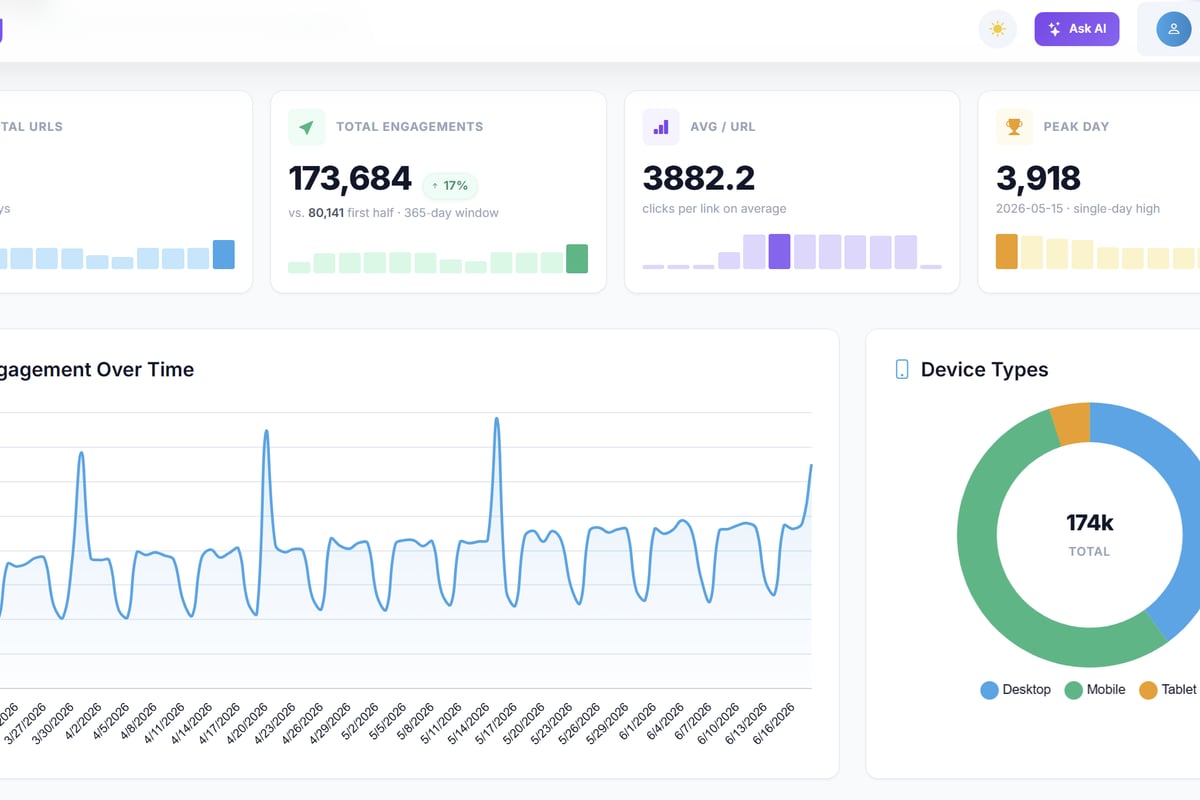
Organizations leveraging link management platforms can capture rich behavioral data-click patterns, device preferences, geographic distribution, and campaign engagement-that becomes the foundation for sophisticated segmentation models.
Primary Segmentation Variables and Methods
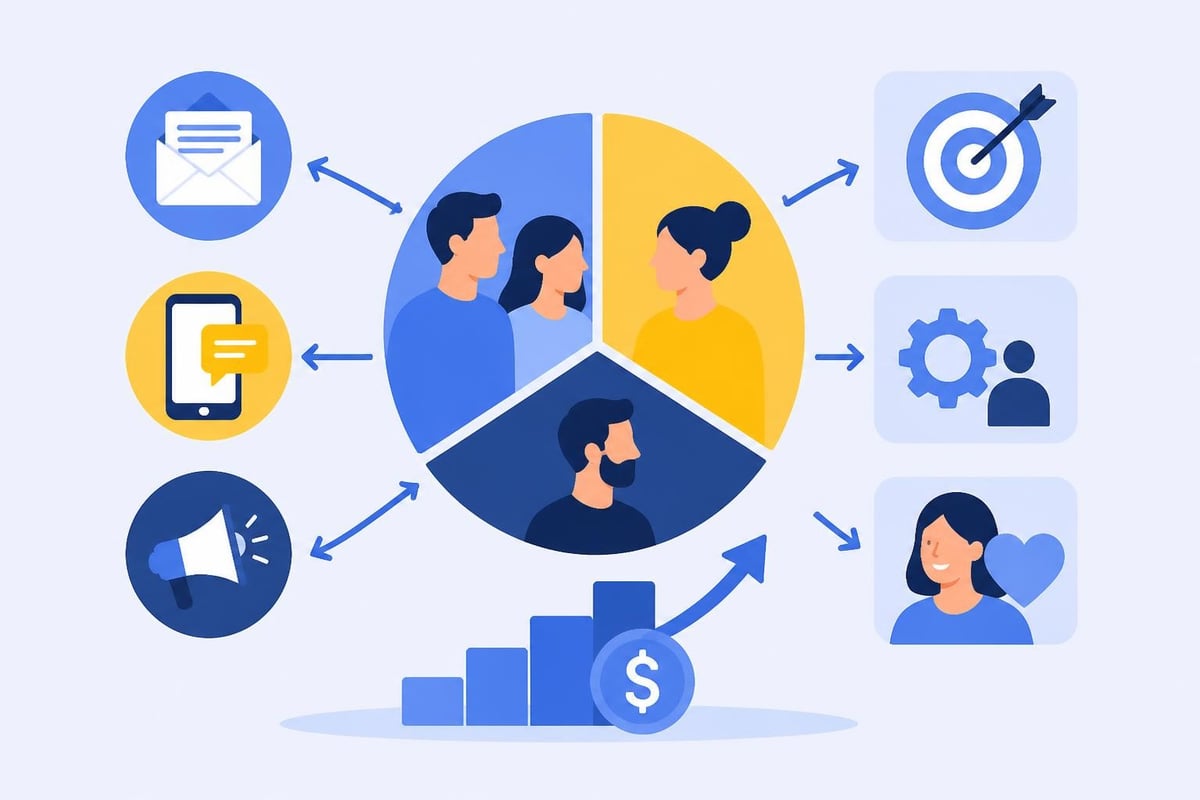
What is customer segmentation without clear criteria to divide your audience? Multiple variables can form the basis of your segmentation strategy, and the most effective approaches often combine several dimensions.
Demographic Segmentation
Demographic segmentation divides customers by statistical characteristics such as age, gender, income, education, occupation, and family status. This traditional approach remains valuable because demographic data is relatively easy to collect and often correlates with purchasing behavior.
For digital marketers tracking campaign performance, demographics provide context for understanding why certain links perform better with specific audiences. A B2B software company might discover that decision-makers aged 35-50 click through at twice the rate of younger audiences, informing both creative and targeting decisions.
Geographic Segmentation
Location-based segmentation considers where customers live, work, or access your content. Beyond simple country or region divisions, sophisticated geographic segmentation accounts for:
- Urban versus rural preferences
- Climate-driven needs and purchasing patterns
- Time zone considerations for campaign timing
- Regional cultural nuances and language preferences
- Local competitive landscapes
Link management platforms with geographic tracking capabilities enable marketers to identify location-based patterns that inform routing decisions and personalized landing pages.
Behavioral Segmentation
Behavioral segmentation examines how customers interact with your brand across touchpoints. This approach analyzes purchase history, browsing patterns, engagement frequency, feature usage, and campaign response rates.
| Behavioral Variable | Example Segments | Marketing Application |
|---|---|---|
| Purchase frequency | One-time, occasional, frequent buyers | Retention campaigns, loyalty programs |
| Engagement level | Highly engaged, moderate, dormant | Re-engagement sequences, VIP content |
| Channel preference | Email, social, direct, paid search | Channel-specific creative and budgets |
| Product category | Category A buyers, cross-category shoppers | Upsell and cross-sell campaigns |
For businesses managing digital campaigns, behavioral data captured through link analytics-which URLs generate clicks, which A/B variants perform better, which traffic sources convert-offers granular insight into customer intent and preferences.
Psychographic Segmentation
Psychographic segmentation goes beyond observable actions to understand customer motivations, values, interests, and lifestyle choices. This approach recognizes that two demographically identical customers may have completely different priorities and respond to different messaging.
While psychographic data requires more sophisticated collection methods (surveys, social listening, content engagement analysis), it enables deeply personalized campaigns that resonate emotionally. A link management platform user might segment audiences not just by click behavior but by the types of content they engage with, revealing underlying interests and priorities.
Advanced Segmentation Techniques
Modern segmentation extends beyond simple categorical divisions. Advanced techniques leverage statistical methods and machine learning to uncover hidden patterns and predict future behavior.
RFM Segmentation
RFM segmentation analyzes three key dimensions: recency (how recently a customer purchased), frequency (how often they purchase), and monetary value (how much they spend). This model helps identify your most valuable customers and those at risk of churn.
RFM scoring typically works as follows:
- Assign scores (1-5) for recency, frequency, and monetary value
- Combine scores to create customer segments (e.g., "555" = champion customers)
- Develop tailored strategies for each segment combination
- Monitor segment migration over time to measure campaign effectiveness
For businesses tracking link engagement, RFM principles can adapt to measure recency of last click, frequency of engagement with campaigns, and monetary value of conversions attributed to tracked links.
Machine Learning and AI-Driven Segmentation
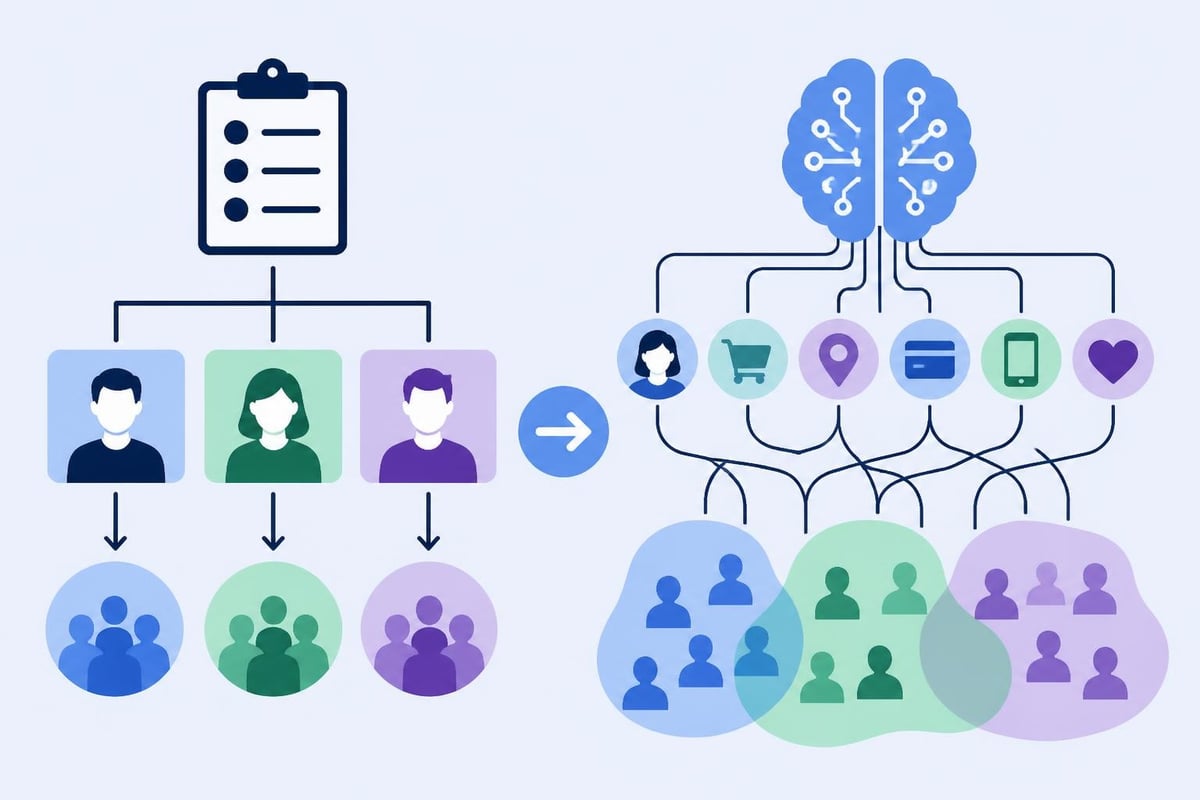
Artificial intelligence methods enable dynamic segmentation that evolves as customer behavior changes. Unlike static rules-based segments, machine learning models identify complex patterns across dozens of variables simultaneously.
Common algorithms for customer segmentation include:
- K-means clustering: Groups customers by minimizing variance within clusters
- Hierarchical clustering: Builds nested segments from bottom-up or top-down
- DBSCAN: Identifies clusters of varying density and flags outliers
- Neural networks: Discovers non-linear relationships in high-dimensional data
Recent research on clustering algorithms demonstrates that ensemble approaches combining multiple methods often outperform single-algorithm strategies, particularly when dealing with complex retail and digital marketing datasets.
Implementing Customer Segmentation in Practice
Understanding what is customer segmentation conceptually differs from executing it effectively. Implementation requires strategic planning, appropriate technology, and organizational alignment.
Data Collection and Integration
Effective segmentation depends on comprehensive, accurate customer data. Most organizations maintain customer information across multiple systems-CRM platforms, email service providers, web analytics tools, transaction databases, and marketing automation platforms.
Critical data sources include:
- First-party behavioral data from website analytics and link tracking
- Transaction history from e-commerce or billing systems
- Email engagement metrics (opens, clicks, conversions)
- Customer service interactions and support tickets
- Survey responses and explicit preference declarations
Link intelligence platforms play a crucial role by capturing granular behavioral signals. Every click provides data about device type, referral source, geographic location, and campaign context that enriches customer profiles.
When implementing segmentation, organizations should navigate privacy and consent considerations carefully, ensuring transparent data practices and appropriate governance frameworks.
Defining Segment Criteria
Not every potential segment deserves dedicated resources. Useful segments share four characteristics:
| Criterion | Description | Test Question |
|---|---|---|
| Measurable | You can quantify segment size and characteristics | Can we accurately count members and track metrics? |
| Accessible | You can reach the segment through available channels | Do we have communication paths to this group? |
| Substantial | The segment is large enough to justify investment | Will ROI exceed the cost of segment-specific campaigns? |
| Differentiable | The segment responds differently than others | Do members show distinct preferences or behaviors? |
Start with hypothesis-driven segmentation: identify strategic questions your business needs to answer, then design segments that provide those answers. For example, if retention is a priority, create segments based on engagement trajectories and churn risk signals captured through declining link engagement or lengthening response intervals.
Activation and Personalization
Segments become valuable only when activated through personalized experiences. This requires mapping segment characteristics to specific marketing tactics.
A comprehensive activation plan specifies:
- Content variations tailored to segment interests and sophistication levels
- Channel strategies aligned with segment preferences and accessibility
- Offer structures reflecting segment price sensitivity and value perception
- Timing optimization based on segment behavioral patterns
- Creative approaches resonating with segment psychographics
Link management becomes critical during activation. Different segments often require different landing pages, tracking parameters, and conversion pathways. Advanced platforms enable smart routing based on segment membership, ensuring each click delivers the most relevant experience.
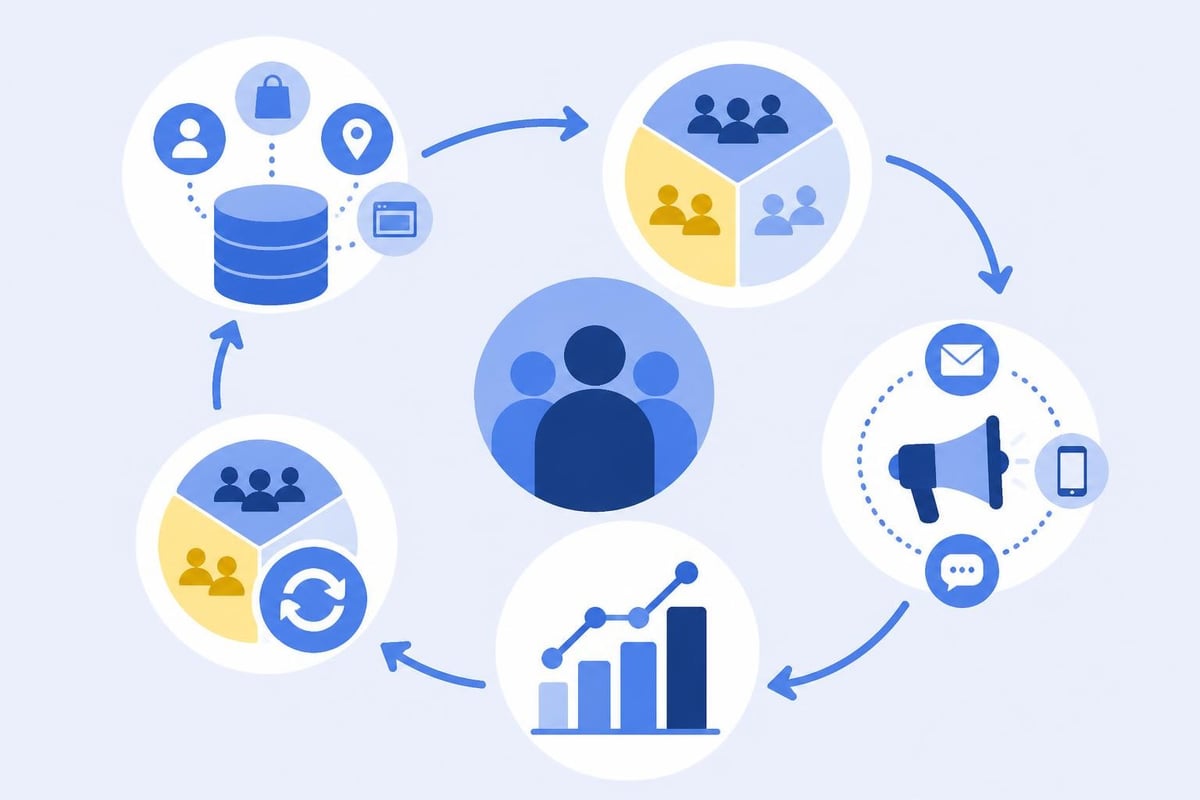
When you can track which link variants perform best with specific segments, you create a feedback loop that continuously refines both your segmentation model and your personalization strategy. Testing different UTM parameters, A/B variations, and retargeting pixels across segments reveals which combinations drive the strongest results.
Measuring Segmentation Performance
What is customer segmentation worth to your business? The answer lies in rigorous measurement and continuous optimization.
Key Performance Indicators
Different segments should demonstrate measurably different performance across key metrics. Monitor these indicators by segment:
- Conversion rate: Percentage of segment members who complete desired actions
- Customer lifetime value: Total revenue generated by segment members over time
- Engagement metrics: Click-through rates, time on site, pages per session
- Retention rate: Percentage of segment members who remain active over defined periods
- Acquisition cost: Investment required to acquire customers in each segment
Compare segment performance against baseline metrics for your entire audience. Effective segmentation should show higher-performing segments substantially outperforming lower-value groups, validating your targeting strategy.
Attribution and Segment Migration
Sophisticated segmentation strategies track how customers move between segments over time. A first-time buyer becomes a repeat customer; a dormant user re-engages after a targeted campaign; a high-value customer shows early churn signals.
Monitor these segment dynamics:
- Which marketing activities drive positive segment migration (dormant to active, occasional to frequent)?
- What triggers negative migration (active to at-risk, loyal to churned)?
- How quickly do customers typically move between segments?
- Which acquisition channels deliver customers into the most valuable segments?
Link tracking provides early signals of segment migration. Changes in click frequency, engagement patterns, or campaign response rates often precede formal segment transitions, enabling proactive intervention.
Strategic Applications of Customer Segmentation
Leading organizations leverage customer segmentation not just for campaign optimization but as a foundation for enterprise strategy.
Product Development and Innovation
Customer segments reveal unmet needs and innovation opportunities. By analyzing segment-specific pain points, feature requests, and usage patterns, product teams can prioritize development roadmaps and design offerings that resonate with high-value audiences.
Link engagement data contributes to this process. Which feature announcements generate the most clicks from your most valuable segments? Which content types drive engagement from underserved groups? These signals inform both product strategy and go-to-market approaches.
Resource Allocation and Budgeting
Not all customers deserve equal investment. Segmentation enables efficient resource allocation by identifying which groups offer the highest return on marketing spend.
Strategic allocation questions include:
- Which segments justify premium acquisition costs based on lifetime value?
- Where should we invest in retention versus acquisition?
- Which segments respond to lower-cost channels, freeing budget for harder-to-reach groups?
- What is the optimal mix of segment-specific versus broad-reach campaigns?
Organizations managing multiple campaigns across channels can use link performance data to understand true cost-per-acquisition and ROI by segment, informing more sophisticated budget decisions.
Organizational Alignment
Customer segmentation creates a shared language across departments. When marketing, sales, product, and customer success teams reference the same segments, coordination improves and customer experience becomes more consistent.
Successful segmentation strategies require executive sponsorship and cross-functional collaboration. Segments should align with business objectives, not just marketing convenience, and should evolve as strategic priorities shift.
Common Segmentation Pitfalls and Solutions
Even sophisticated organizations struggle with segmentation execution. Recognizing common challenges enables proactive mitigation.
Over-Segmentation and Analysis Paralysis
Creating too many segments dilutes focus and makes personalization operationally impossible. Most organizations can effectively manage five to ten primary segments; attempting to personalize for dozens of micro-segments rarely justifies the complexity.
Solution: Start with strategic segments tied to key business questions, then create sub-segments only when they enable meaningfully different actions. Use hierarchical segmentation to maintain manageable top-level groups while preserving granular detail for specific analyses.
Static Segments in Dynamic Markets
Customer behavior evolves continuously. Segments defined once and never revisited become outdated, reducing effectiveness over time.
Solution: Establish regular segment review cycles (quarterly or bi-annually) to assess whether definitions still reflect customer reality. Leverage behavioral data from link tracking and campaign engagement to identify when segment boundaries should shift.
Technology Without Strategy
Sophisticated segmentation tools create value only when paired with clear strategic intent. Deploying machine learning without understanding business objectives produces complex models that don't drive action.
Solution: Begin with hypothesis-driven questions, then select analytical methods that answer those questions. Ensure every segment connects to specific business decisions and tactical applications.
Data Quality and Integration Challenges
Segmentation accuracy depends entirely on data quality. Incomplete profiles, duplicated records, outdated information, and siloed systems all undermine segmentation effectiveness.
Solution: Invest in data hygiene and integration before deploying advanced segmentation. Establish clear data governance, implement identity resolution to unify customer records across systems, and validate segment membership regularly against ground truth.
The Future of Customer Segmentation
Customer segmentation continues evolving as technology advances and customer expectations shift. Several trends are reshaping segmentation practice.
Predictive segmentation moves beyond describing current customer groups to forecasting future behavior. Machine learning models identify customers likely to churn, upgrade, or respond to specific offers before those behaviors occur, enabling proactive intervention.
Real-time segmentation adjusts segment membership instantly as behavior changes, rather than batch processing updates periodically. This enables truly dynamic personalization that responds to immediate context.
Privacy-first segmentation adapts to regulatory constraints and consumer preferences by creating value from first-party data while respecting consent and transparency requirements. Organizations that build trust through ethical data practices gain competitive advantage as third-party tracking becomes less viable.
Cross-channel segmentation integrates behavior across owned, earned, and paid media to create unified customer views. Link tracking that spans channels-email to social to search to direct-enables understanding of customer journeys rather than isolated touchpoints.
Customer segmentation transforms generic marketing into personalized experiences that drive measurable results. By dividing your audience into meaningful groups based on demographics, behavior, psychographics, and value, you can deliver the right message to the right person at the right time. When you track performance rigorously and refine segments continuously, segmentation becomes a sustainable competitive advantage. Trimy provides the link intelligence and analytics capabilities to capture the behavioral signals that power sophisticated segmentation strategies, helping you transform every click into actionable customer insight and optimize campaigns for maximum ROI.