What Is Growth Marketing? A Complete 2026 Guide
Growth marketing has transformed how businesses approach customer acquisition and retention in 2026. Unlike traditional marketing that focuses primarily on top-of-funnel awareness, growth marketing takes a holistic, data-driven approach to the entire customer lifecycle. For companies managing digital campaigns and tracking performance metrics, understanding what is growth marketing means unlocking systematic methods to scale revenue and build sustainable competitive advantages.
Defining Growth Marketing in Today's Digital Landscape
What is growth marketing? At its core, growth marketing is a data-driven, experiment-heavy approach that optimizes every stage of the customer journey. Rather than treating marketing as a separate function focused solely on acquiring new customers, growth marketing integrates product development, customer success, and analytics to create self-reinforcing growth loops.
The discipline emerged from the lean startup movement and has evolved into a comprehensive framework that combines traditional marketing channels with product-led growth tactics. Growth marketers obsess over metrics, run continuous experiments, and make decisions based on quantifiable results rather than assumptions or creative intuition alone.
Key characteristics that define growth marketing include:
- Data-driven decision making backed by analytics and attribution
- Rapid experimentation across channels and tactics
- Full-funnel optimization from awareness to advocacy
- Cross-functional collaboration between marketing, product, and engineering teams
- Focus on sustainable, scalable growth rather than short-term wins
The AARRR Framework
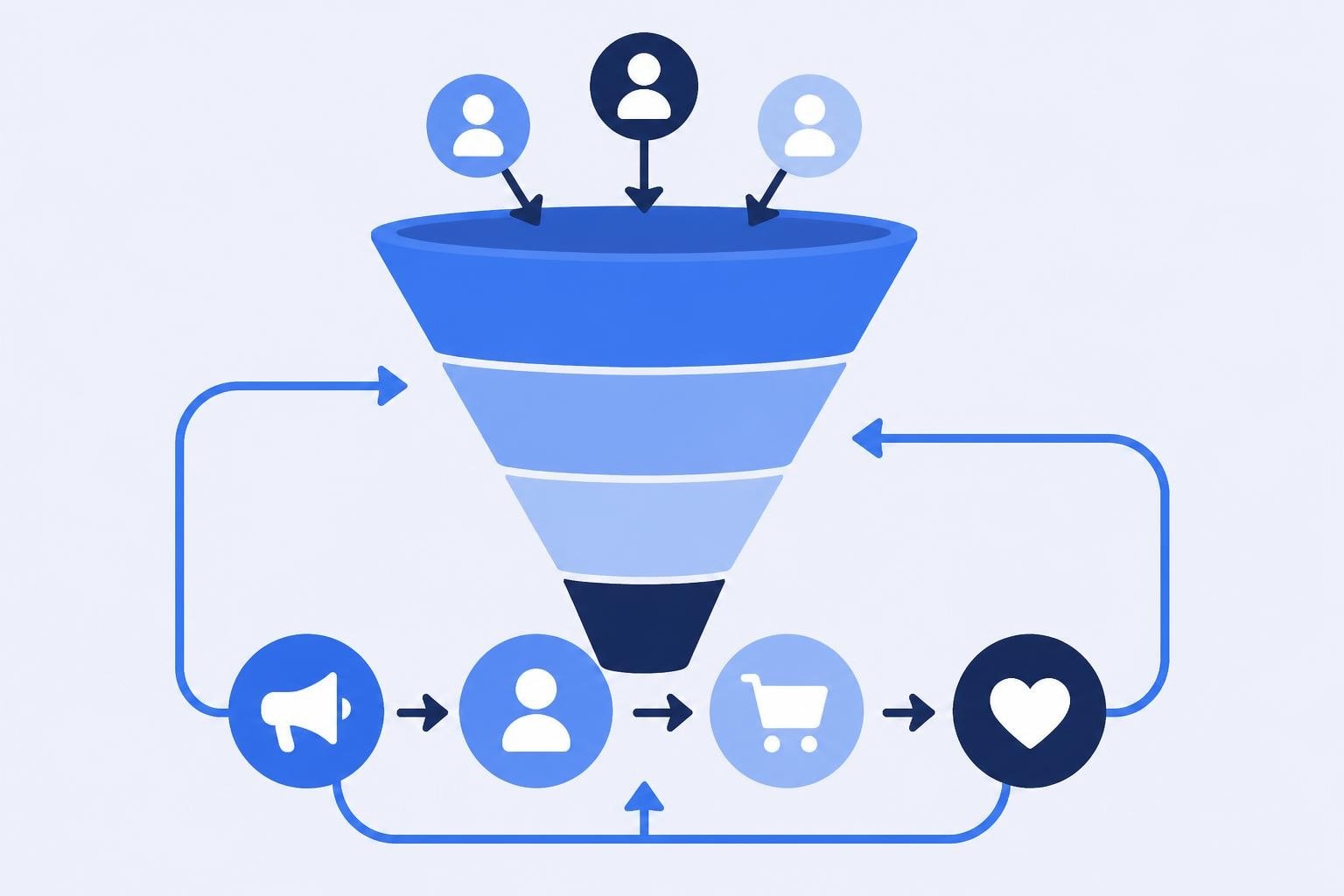
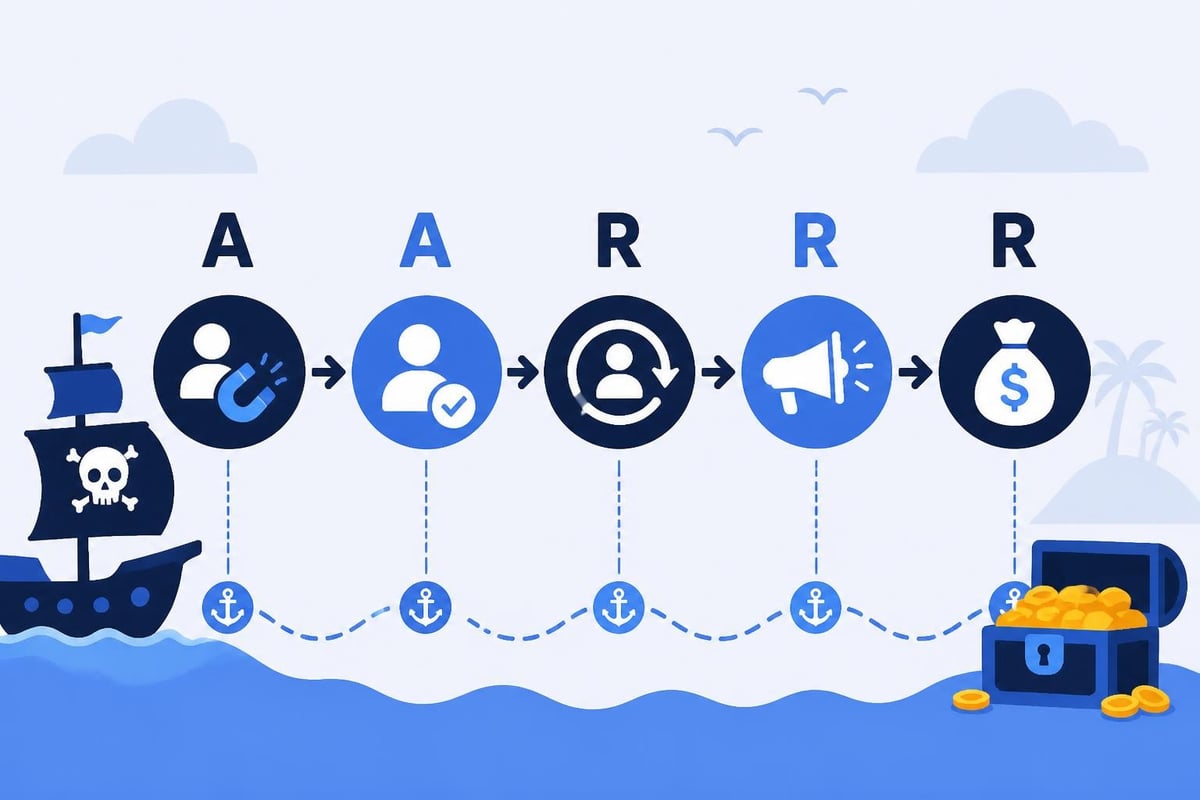
Growth marketing operates on well-established frameworks that guide strategic thinking. The AARRR framework, also known as pirate metrics, breaks down the customer lifecycle into five critical stages:
- Acquisition: How users discover your product or service
- Activation: First positive experience that demonstrates value
- Retention: Users returning and continuing to engage
- Referral: Satisfied customers recommending you to others
- Revenue: Monetization and increasing customer lifetime value
Each stage requires specific metrics, experiments, and optimization strategies. Growth marketers identify bottlenecks in this funnel and systematically test solutions to improve conversion rates at every transition point.
How Growth Marketing Differs from Traditional Marketing
Understanding what is growth marketing requires examining how it diverges from conventional marketing approaches. Traditional marketing typically operates with longer planning cycles, larger upfront investments, and campaign-based thinking. A company might plan a quarterly campaign, execute it, measure results, and then plan the next initiative.
Growth marketing flips this model entirely. Instead of big-bet campaigns, growth marketers run dozens or hundreds of small experiments simultaneously. They might test 20 different headline variations in a single week, analyze the results, and immediately apply learnings to the next iteration.
| Aspect | Traditional Marketing | Growth Marketing |
|---|---|---|
| Focus | Brand awareness and lead generation | Full customer lifecycle optimization |
| Timeline | Quarterly campaigns | Continuous experimentation |
| Budget Allocation | Large upfront investments | Small, iterative tests that scale winners |
| Success Metrics | Impressions, reach, leads | Activation, retention, revenue, LTV |
| Team Structure | Siloed by channel | Cross-functional growth teams |
| Decision Making | Experience and intuition | Data analysis and statistical testing |
Traditional marketers might celebrate reaching 100,000 people with an ad campaign. Growth marketers would dig deeper: How many activated? What's the retention curve? Which acquisition channels produce customers with the highest lifetime value? These questions reflect the analytical rigor that defines what is growth marketing as a discipline.
The Role of Product in Growth Marketing
A fundamental distinction is that growth marketing treats the product itself as a marketing channel. Product-led growth strategies embed viral loops, referral mechanisms, and retention hooks directly into the user experience. Dropbox's famous referral program, which rewarded both referrer and referee with extra storage, exemplifies this approach.
For platforms managing links and campaign data, the product experience directly impacts growth metrics. When users can easily track click-through rates, analyze traffic sources, and optimize campaigns within an intuitive dashboard, they're more likely to stick around and recommend the tool to colleagues. This integration of product and marketing is central to understanding what is growth marketing in practice.
Core Strategies and Tactics in Growth Marketing
Growth marketing encompasses a diverse toolkit of strategies that span the entire customer journey. Effective growth marketing strategies combine channel expertise with analytical rigor and creative problem-solving.
Acquisition Strategies
- Content marketing optimized for conversion, not just traffic
- Paid advertising with granular testing of audiences, creative, and messaging
- SEO focused on high-intent keywords that signal purchase readiness
- Partnership and integration strategies that tap into existing user bases
- Community building that generates organic word-of-mouth
Activation Optimization
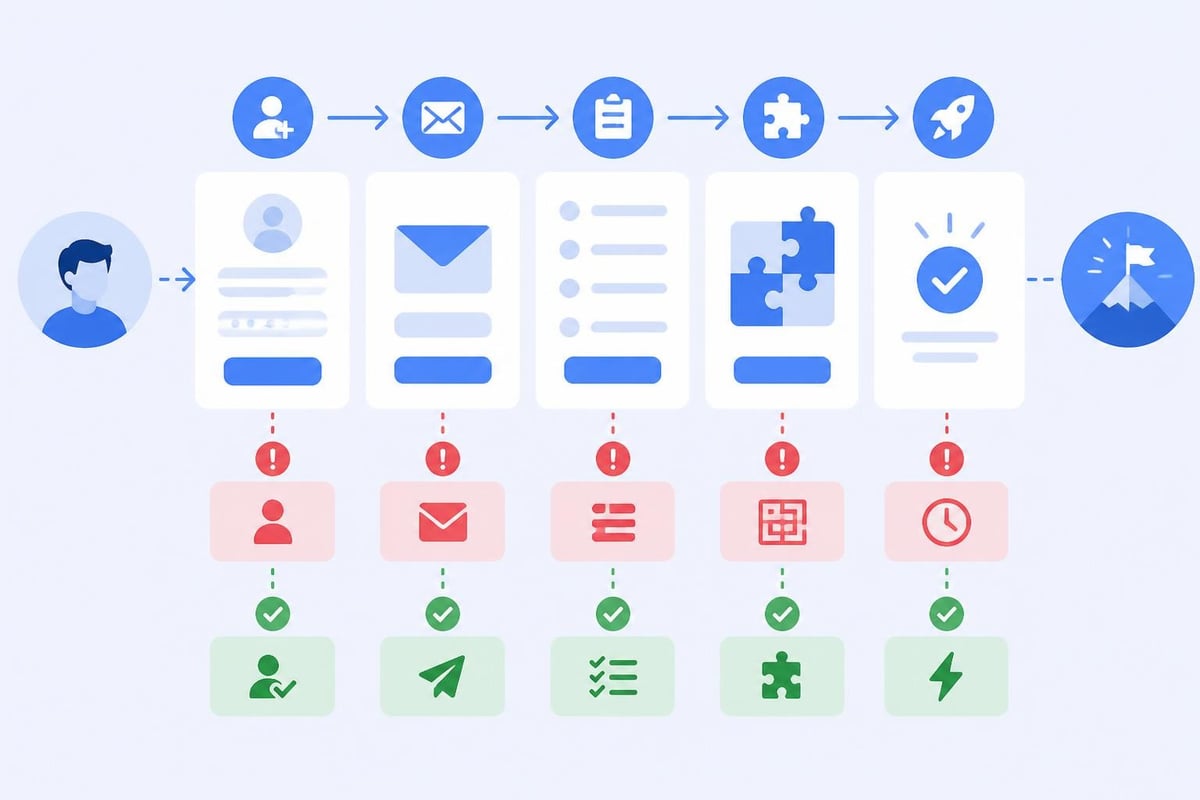
Activation represents the critical moment when a new user experiences your product's core value. Growth marketers obsessively measure time-to-value and remove friction from the onboarding process.
Common activation tactics include:
- Simplified signup flows with minimal required fields
- Interactive product tours that showcase key features
- Personalized onboarding based on user goals or segments
- Quick wins that demonstrate value within the first session
- Progressive disclosure that prevents overwhelming new users
Retention and Engagement
Growth marketing tactics recognize that retaining existing customers is more cost-effective than acquiring new ones. Retention strategies focus on building habits and demonstrating ongoing value.
Retention levers include:
- Email nurture sequences triggered by user behavior
- In-app messaging that encourages feature discovery
- Push notifications timed to re-engage dormant users
- Loyalty programs that reward continued usage
- Community features that create network effects
For businesses managing marketing campaigns and link performance, retention might mean users regularly checking analytics dashboards, creating new campaigns, or expanding usage to new team members. Each of these behaviors signals deeper product integration and reduces churn risk.
The Data Foundation of Growth Marketing
What is growth marketing without robust data infrastructure? The answer: impossible to execute effectively. Growth marketing decisions rely on accurate tracking, proper attribution, and sophisticated analysis of user behavior patterns.
Essential Measurement Systems
Growth marketers build measurement systems that track:
- User-level event tracking showing exactly what actions people take
- Attribution modeling that connects conversions to marketing touchpoints
- Cohort analysis revealing how user behavior changes over time
- Funnel analytics identifying where prospects drop off
- A/B testing platforms enabling statistically valid experiments
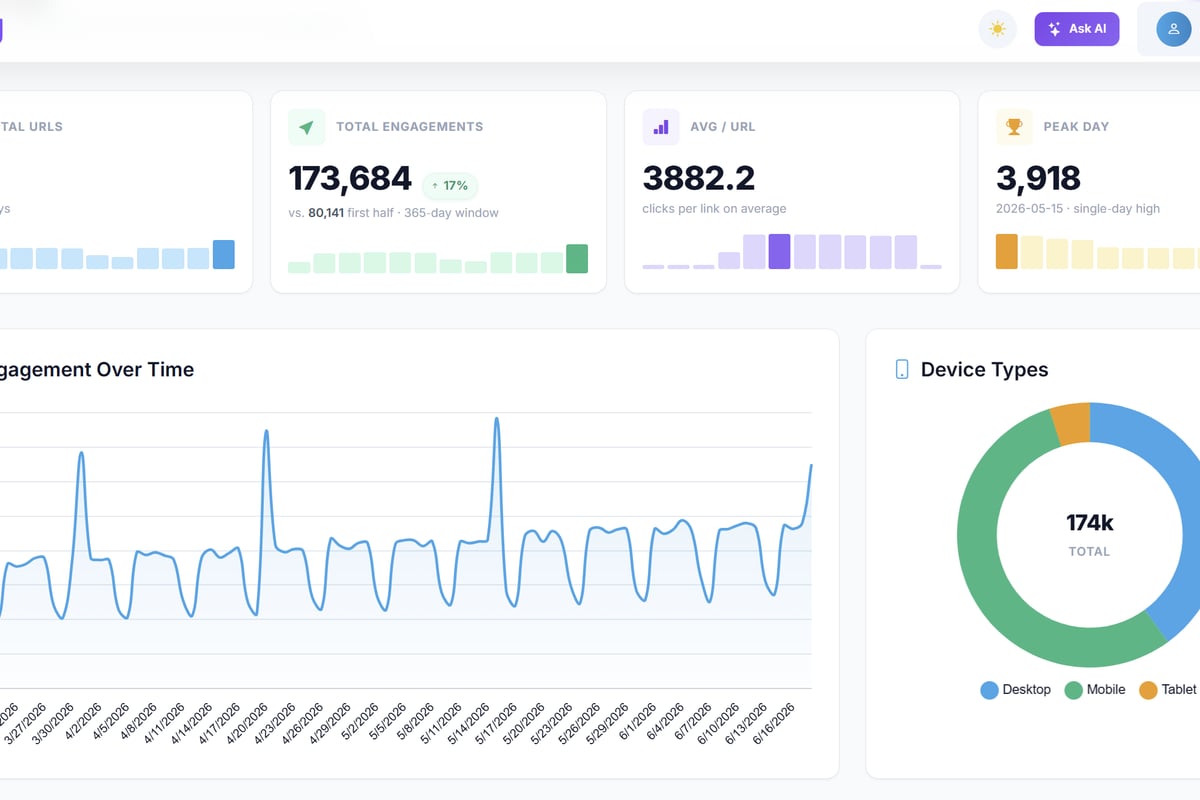
Modern link management platforms exemplify this data-driven approach by providing granular insights into click patterns, geographic distribution, device types, and conversion paths. When marketers can see exactly which traffic sources generate the most valuable customers, they can reallocate budgets to maximize ROI.
| Metric Category | Examples | Why It Matters |
|---|---|---|
| Acquisition Metrics | CAC, traffic sources, conversion rates | Identifies most efficient growth channels |
| Activation Metrics | Time to value, feature adoption, setup completion | Predicts long-term retention |
| Retention Metrics | DAU/MAU ratio, churn rate, cohort curves | Indicates product-market fit |
| Revenue Metrics | LTV, ARPU, expansion revenue | Measures sustainable business growth |
Trimy demonstrates how link intelligence platforms support growth marketing by transforming simple URLs into data collection points that reveal campaign performance, audience behavior, and optimization opportunities.
The Experimentation Mindset
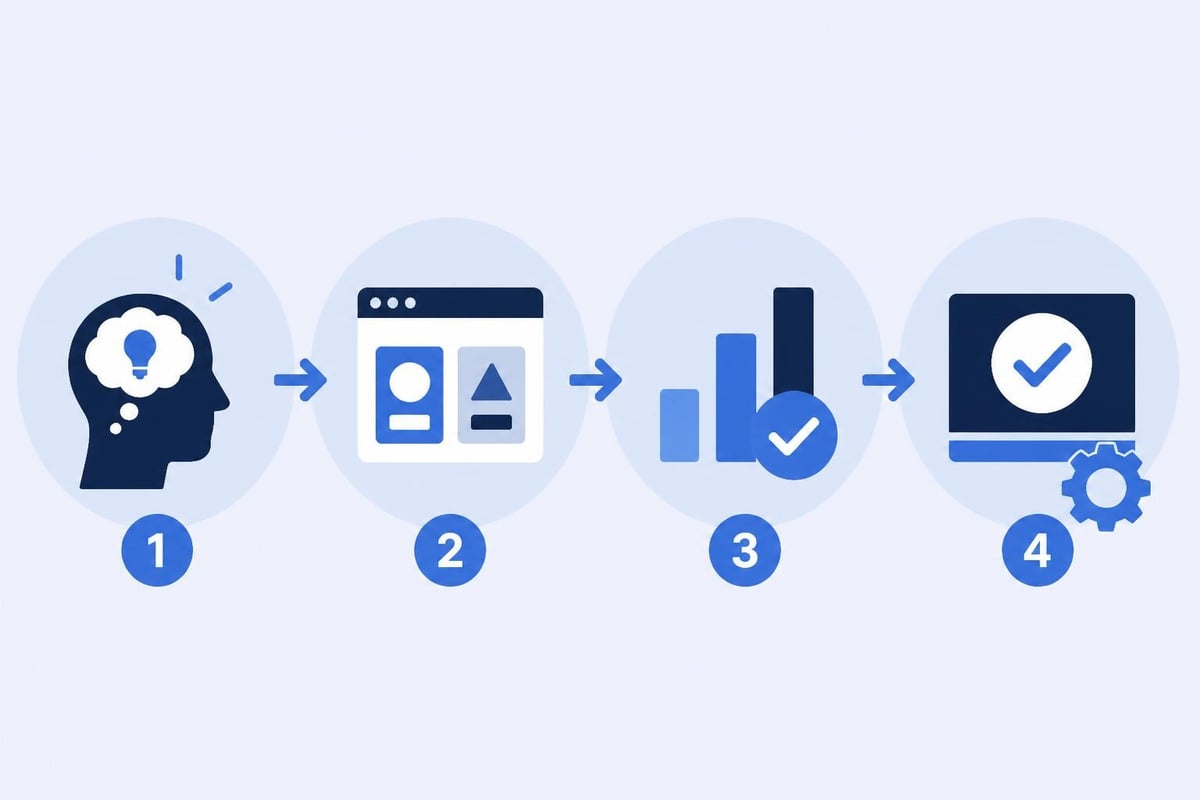
Growth marketing operates on the scientific method: form hypotheses, design experiments, collect data, analyze results, and iterate. A growth marketer might hypothesize that changing a call-to-action button from "Learn More" to "Start Free Trial" will increase activation by 15 percent.
They would then:
- Define the success metric and minimum detectable effect
- Calculate required sample size for statistical significance
- Split traffic randomly between control and variant
- Run the test until reaching significance
- Implement the winner and move to the next experiment
This rigorous approach to growth marketing separates it from marketing based on best practices or conventional wisdom. What works for one audience or product might fail completely for another, making direct experimentation essential.
Building a Growth Marketing Strategy
Implementing growth marketing requires more than understanding what is growth marketing conceptually. Organizations need structured processes, specialized skills, and cultural alignment around data-driven decision making.
Assembling the Growth Team
Effective growth teams combine diverse skill sets:
- Data analysts who can extract insights from complex datasets
- Growth marketers with channel expertise and creative thinking
- Engineers who can rapidly build and test product features
- Designers focused on conversion optimization and user experience
- Product managers who prioritize experiments and coordinate execution
These teams work in rapid cycles, often running weekly sprint planning where they review experiment results, share learnings, and prioritize the next batch of tests. The collaborative nature of growth marketing breaks down traditional silos between departments.
Selecting Your North Star Metric
Every growth strategy needs a north star metric that encapsulates the core value your product delivers. This single metric aligns the entire team and guides prioritization decisions.
Examples of north star metrics:
- Airbnb: Nights booked
- Facebook: Daily active users
- Slack: Messages sent by teams
- Netflix: Hours of content watched
For a link management platform, the north star might be "campaigns actively tracked" or "links generating insights." This metric should correlate with both customer value and business revenue, ensuring that growth efforts drive sustainable outcomes.
Creating Growth Loops
The most powerful growth strategies create self-reinforcing loops where growth outputs become growth inputs. Understanding growth loops represents advanced growth marketing thinking.
Common growth loop patterns include:
Viral loops: Users invite others, who invite more users (social networks, collaboration tools)
Content loops: User-generated content attracts visitors through search, who create more content (review sites, forums)
Paid loops: Revenue from customers funds acquisition of new customers at profitable CAC ratios
Product loops: Using the product generates artifacts that attract new users (public portfolios, shared documents)
Link shorteners inherently create content loops when shortened URLs appear in public content that ranks in search engines or gets shared across social platforms. Each shared link becomes a potential acquisition channel.
Advanced Growth Marketing Techniques
As growth marketing has matured, practitioners have developed sophisticated techniques that leverage technology, psychology, and cross-channel integration.
Personalization at Scale
Modern growth marketers move beyond basic segmentation to deliver personalized experiences based on behavioral data, predictive modeling, and real-time context.
- Dynamic landing pages that adapt messaging to traffic source and user intent
- Behavioral email triggers that respond to specific action sequences
- Predictive send time optimization delivering messages when users most likely engage
- Customized in-app experiences based on user goals and progress
Multi-Touch Attribution
Understanding what is growth marketing in 2026 means grappling with complex attribution challenges. Customers rarely convert after a single touchpoint, making it critical to understand how channels work together.
Attribution models include:
- First-touch: Credits the initial interaction
- Last-touch: Attributes conversion to the final touchpoint
- Linear: Distributes credit equally across all touches
- Time-decay: Gives more weight to recent interactions
- Algorithmic: Uses machine learning to assign credit based on conversion probability
Link management platforms with robust tracking capabilities enable marketers to build custom attribution models that reflect their specific customer journeys and channel mix.
Conversion Rate Optimization
CRO applies growth marketing principles to specific conversion points, systematically testing variations to maximize desired outcomes.
| Test Type | Application | Typical Impact |
|---|---|---|
| Headline variations | Landing pages, emails | 10-30% conversion lift |
| CTA button design | Forms, product pages | 5-15% improvement |
| Social proof elements | Checkout, signup flows | 15-25% increase |
| Form field reduction | Lead capture, signup | 20-40% completion boost |
| Pricing presentation | Sales pages, checkout | 5-20% revenue impact |
Small improvements compound across the funnel. A 10 percent increase at acquisition, 15 percent at activation, and 20 percent at retention produces exponential overall growth rather than additive improvements.
Challenges and Considerations
While growth marketing offers powerful frameworks for scaling businesses, practitioners face real challenges that require careful navigation.
Data Privacy and Compliance
Regulations like GDPR and CCPA restrict data collection and usage, requiring growth marketers to balance personalization with privacy. Building trust through transparent data practices has become a competitive advantage rather than just a compliance requirement.
Avoiding Growth-at-All-Costs Mentality
The pressure to show rapid growth can lead to unsustainable practices: acquiring low-quality users, ignoring unit economics, or creating manipulative dark patterns. Perspectives from growth experts emphasize that ethical, sustainable growth beats short-term vanity metrics.
Balancing Brand and Performance
Pure performance marketing can neglect brand building, which drives long-term pricing power and customer loyalty. Sophisticated growth strategies integrate brand investments with measurable performance tactics.
Resource Constraints
Small teams or limited budgets require careful prioritization. The key is starting with highest-impact experiments that address the biggest bottlenecks in your growth funnel rather than trying to optimize everything simultaneously.
Implementing Growth Marketing in Your Organization
Transitioning to growth marketing requires cultural change, new processes, and different success metrics. Organizations can start by identifying one or two critical funnel stages to optimize.
Begin with baseline measurement: establish current conversion rates, customer acquisition costs, and retention curves. Without knowing where you start, you cannot measure improvement.
Next, form hypotheses about why conversion rates sit at current levels. What friction points prevent users from advancing? What value propositions might resonate more strongly? Which channels remain underexploited?
Design small, fast experiments to test these hypotheses. Start with changes requiring minimal engineering resources so you can build momentum and demonstrate results before requesting larger investments.
Document everything. Growth marketing generates institutional knowledge about what works for your specific audience and product. A well-maintained experiment log becomes increasingly valuable as patterns emerge across dozens or hundreds of tests.
Finally, celebrate learning rather than just wins. Failed experiments that definitively disprove hypotheses provide valuable information that prevents wasted resources on ineffective strategies.
Growth marketing represents a fundamental shift from campaign-based thinking to systematic, data-driven optimization of the entire customer lifecycle. By embracing experimentation, leveraging analytics, and focusing on sustainable growth loops, businesses can achieve predictable scaling that compounds over time. Trimy empowers growth marketers with the link intelligence and campaign analytics needed to track performance, run meaningful experiments, and transform every URL into actionable insights that drive optimization decisions across your growth strategy.