AB Marketing: Strategy, Testing & Campaign Optimization

AB marketing represents one of the most powerful methodologies available to modern marketers who want to make data-driven decisions rather than relying on intuition or guesswork. By systematically testing two or more variations of marketing assets, campaigns, or strategies, businesses can identify what truly resonates with their audience and drives measurable results. In an increasingly competitive digital landscape where every percentage point of conversion rate matters, understanding how to implement and optimize ab marketing experiments has become essential for marketing teams across industries.
Understanding the Fundamentals of AB Marketing
AB marketing, at its core, is a controlled experiment methodology where marketers compare two versions of a marketing asset to determine which performs better against specific business objectives. Unlike traditional marketing approaches that rely on best practices or assumptions, ab marketing provides empirical evidence about what works for your specific audience.
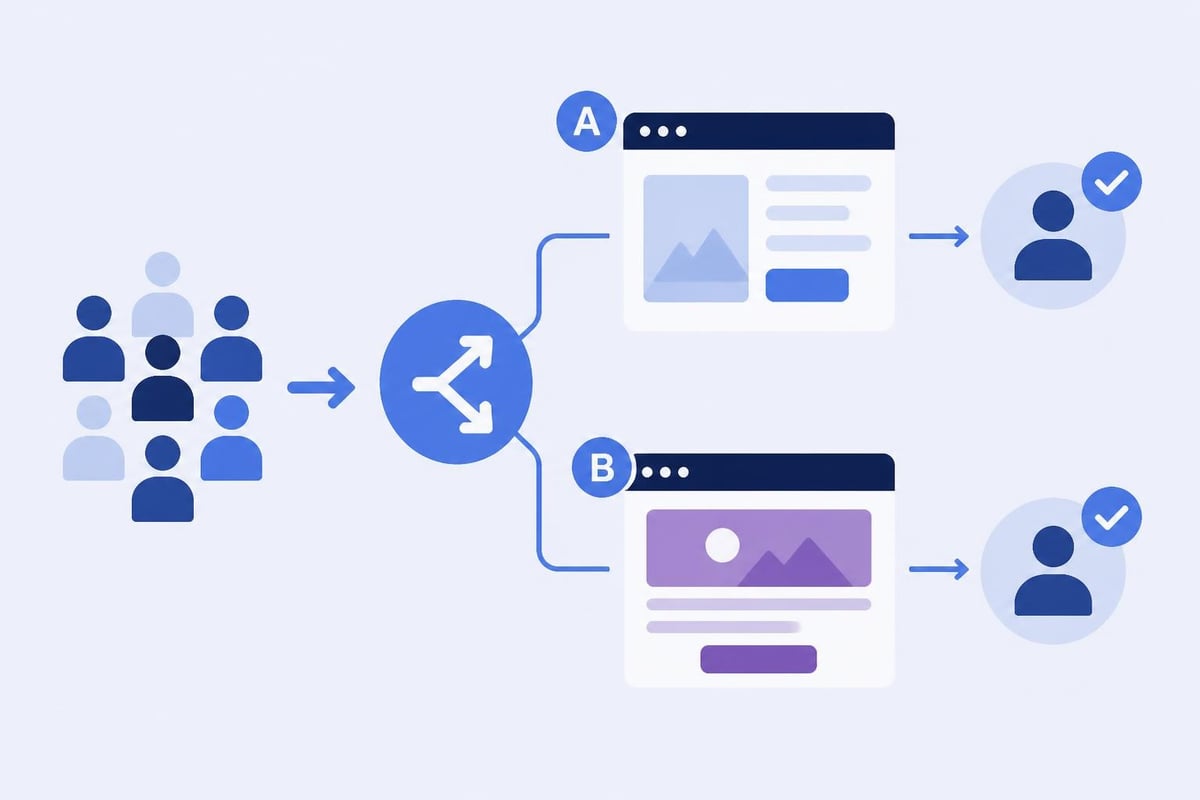
The process begins with identifying a hypothesis about what might improve performance. This could relate to email subject lines, landing page layouts, call-to-action button colors, ad copy variations, or entire campaign strategies. Once you've established your hypothesis, you create two versions: the control (A) and the variant (B), then split your audience to expose each group to only one version.
Key elements of successful ab marketing include:
- Clear, measurable objectives tied to business outcomes
- Statistically significant sample sizes to ensure reliable results
- Controlled variables to isolate the impact of specific changes
- Sufficient test duration to account for temporal variations
- Rigorous analysis methodology to interpret results correctly
The beauty of ab marketing lies in its scientific approach. Rather than making sweeping changes based on trends or opinions, you can validate each decision with real user behavior data. This systematic approach minimizes risk while maximizing the learning curve for your marketing organization.
Statistical Rigor and Sample Size Considerations
One of the most critical aspects of ab marketing that teams often underestimate is the importance of statistical validity. Running a test for too short a period or with insufficient traffic can lead to false positives and poor decisions that actually harm performance.
Sample size calculations depend on several factors: your baseline conversion rate, the minimum detectable effect you want to identify, desired statistical power (typically 80%), and significance level (usually 95%). For example, if your current conversion rate is 3% and you want to detect a 10% relative improvement, you might need thousands of visitors per variation to reach statistical confidence.
| Sample Size Factor | Typical Value | Impact on Test Duration |
|---|---|---|
| Baseline Conversion Rate | 2-5% | Lower rates need more traffic |
| Minimum Detectable Effect | 5-20% | Smaller effects require larger samples |
| Statistical Power | 80% | Higher power extends test time |
| Significance Level | 95% | Higher confidence needs more data |
Marketing teams must resist the temptation to call tests early when they see promising results. Researchers and practitioners have documented how peeking at results and stopping tests prematurely inflates false positive rates dramatically. Plan your test duration based on proper sample size calculations, then commit to running the full experiment.
Implementing AB Marketing Across Campaign Channels
The versatility of ab marketing extends across virtually every marketing channel and touchpoint in the customer journey. Each channel presents unique opportunities for optimization and requires tailored approaches to experimentation.
Email Marketing Optimization
Email remains one of the most measurable and test-friendly channels for ab marketing. Beyond the obvious subject line tests, sophisticated marketers experiment with send times, sender names, preview text, email length, visual versus text-heavy designs, and personalization strategies.
A well-structured email ab marketing program tests one variable at a time while maintaining a testing calendar to ensure continuous learning. Consider testing:
- Subject line formulas (question versus statement, emoji inclusion, personalization tokens)
- Content structure (benefit-focused versus feature-focused, story-driven versus direct)
- Call-to-action placement (above fold, multiple CTAs, button versus text link)
- Segmentation strategies (demographic versus behavioral triggers)
- Frequency and timing (day of week, time of day, campaign cadence)
The cumulative effect of multiple winning tests compounds over time. A 5% improvement in open rates combined with a 10% lift in click-through rates and a 7% increase in conversion rates can dramatically impact overall campaign ROI.
Landing Page and Web Optimization
Landing pages serve as critical conversion points where ab marketing can generate substantial revenue impact. Best practices for A/B testing emphasize starting with high-traffic pages and focusing on elements that directly influence conversion decisions.
High-impact elements to test include headline messaging, hero images or videos, form length and field requirements, trust signals and social proof placement, and the prominence of value propositions. Each of these elements can significantly shift visitor behavior and conversion likelihood.
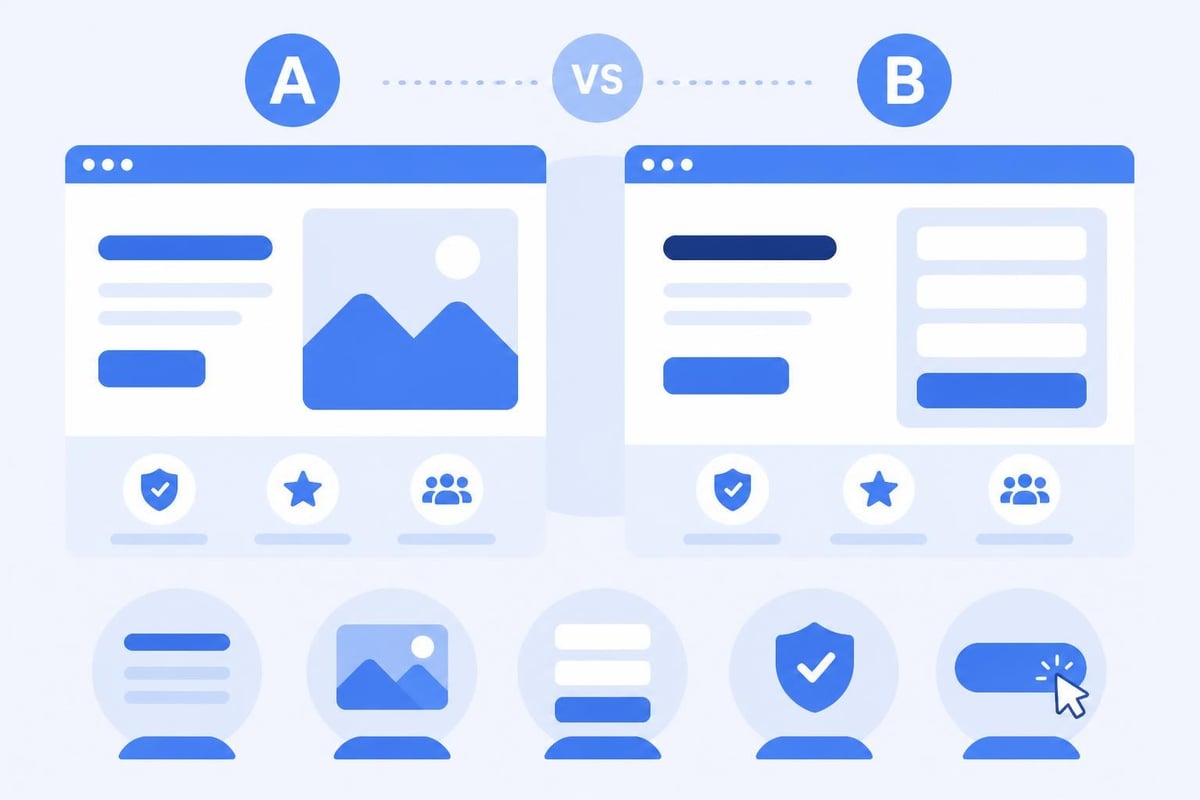
When implementing ab marketing for landing pages, ensure you're tracking the right metrics. Page views and bounce rates provide context, but conversion rate, cost per acquisition, and ultimately revenue per visitor represent the true success indicators. Some tests may increase engagement metrics while decreasing actual conversions, which is why alignment with business objectives matters more than vanity metrics.
Paid Advertising Experiments
Paid advertising channels offer built-in ab marketing capabilities, though marketers must navigate platform-specific testing frameworks. Google Ads, Facebook Ads, and LinkedIn Campaign Manager all provide native A/B testing tools, but understanding their methodologies and limitations remains crucial.
In paid advertising ab marketing, you're often testing ad creative elements (images, video, headlines, body copy), audience targeting parameters, bidding strategies, and landing page experiences. The combination of these variables creates a complex testing landscape where systematic prioritization based on potential impact becomes essential.
Advertising ab marketing priority framework:
- Test elements with the highest visibility and engagement first (creative assets)
- Ensure sufficient budget allocation to reach statistical significance quickly
- Account for learning phases in algorithm-based platforms
- Isolate variables by testing one change at a time when possible
- Document learnings to build institutional knowledge over time
Link-Level AB Marketing and Traffic Optimization
For marketers managing complex campaigns with multiple traffic sources, destinations, and conversion paths, link-level ab marketing offers granular control and optimization opportunities. This approach allows you to test different landing experiences, offer variations, or conversion funnels by routing different segments of your traffic to specific destinations.
Trimy enables sophisticated link-level ab marketing by letting you create smart routing rules that automatically distribute traffic between multiple destination URLs while tracking performance metrics for each variation. This capability proves particularly valuable for campaigns where you want to test different product pages, pricing tiers, promotional offers, or entirely different conversion experiences without requiring separate ad sets or campaigns.
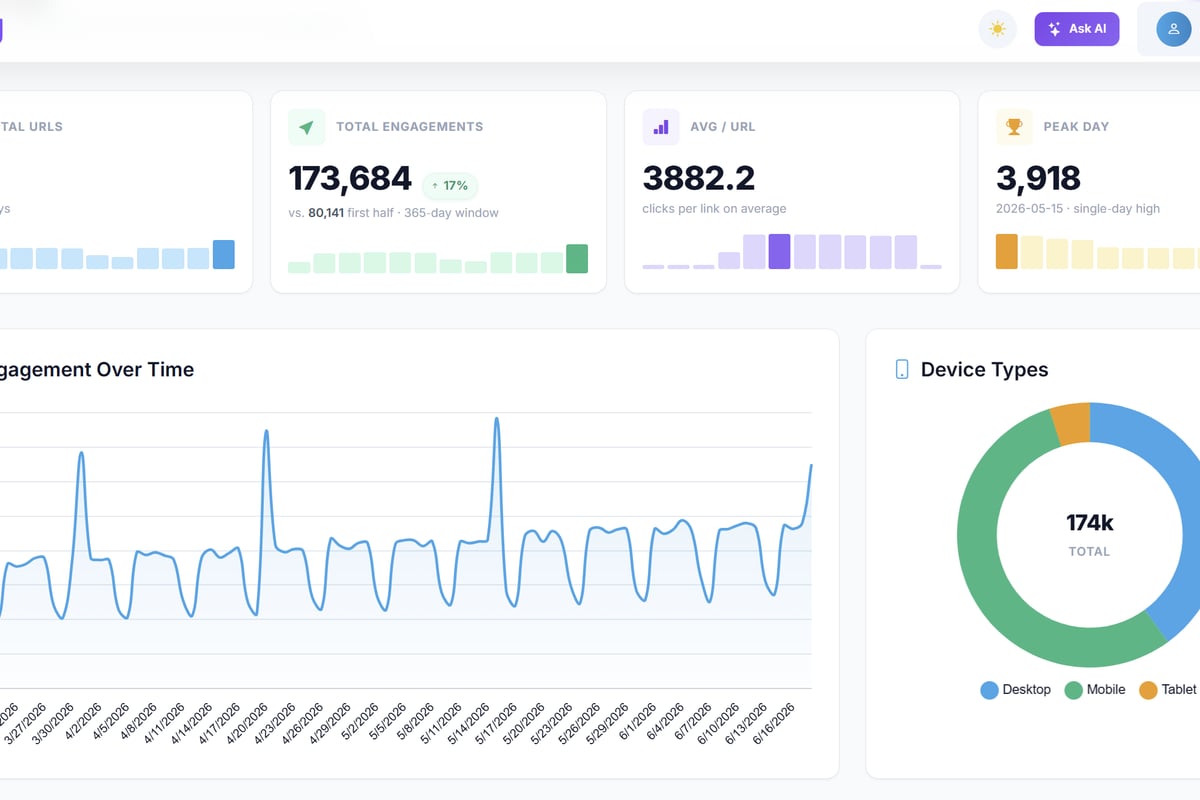
Link intelligence platforms transform simple redirects into powerful testing and optimization tools. By embedding A/B tests directly into your link infrastructure, you gain flexibility to iterate quickly, test hypotheses across channels simultaneously, and make data-driven decisions about which experiences drive the best results for different audience segments.
Attribution and Multi-Touch Analysis
Modern ab marketing extends beyond simple conversion tracking to understand the full customer journey. Multi-touch attribution helps you understand how different touchpoints contribute to conversions, which becomes crucial when testing changes that might affect awareness or consideration rather than immediate conversion.
Consider a scenario where you test two different top-of-funnel content strategies. Variation A might drive fewer immediate conversions but generate higher-quality leads that convert at higher rates after multiple touchpoints. Without proper attribution modeling, you might incorrectly conclude that variation B (which drives immediate but lower-quality conversions) is the winner.
| Attribution Model | Best Use Case | AB Marketing Application |
|---|---|---|
| Last-click | Direct response campaigns | Testing final conversion elements |
| First-click | Awareness campaigns | Testing top-of-funnel messaging |
| Linear | Balanced journey | Testing mid-funnel nurture |
| Time-decay | Longer sales cycles | Testing sequence and timing |
| Data-driven | Complex journeys | Holistic campaign testing |
Your ab marketing methodology should align with your attribution approach to ensure you're measuring the right outcomes and making decisions based on comprehensive performance data rather than isolated metrics.
Building an AB Marketing Culture and Process
The most successful organizations don't treat ab marketing as an occasional tactic but rather embed it into their operational culture. Building a culture of experimentation requires leadership commitment, process standardization, and celebration of learning (even from failed tests).
Establishing Testing Governance
Create a centralized testing calendar and prioritization framework to prevent conflicts and ensure resources focus on high-impact experiments. Multiple simultaneous tests on the same page or audience can create interaction effects that invalidate results, so coordination becomes essential as your ab marketing program matures.
Your governance structure should define:
- Who can propose and approve tests
- How to calculate expected value and prioritize experiments
- Minimum standards for test design and statistical rigor
- Documentation requirements for sharing learnings
- Post-test implementation processes for winning variations
Documentation proves especially critical. Too many organizations run tests, identify winners, but fail to systematically record insights or implement changes. This wastes the investment made in running experiments and forces teams to relearn the same lessons repeatedly.
Avoiding Common AB Marketing Pitfalls
Even experienced practitioners make mistakes that undermine ab marketing effectiveness. The most common errors include testing too many variables simultaneously, stopping tests prematurely due to impatience or pressure, ignoring seasonal effects and external factors, testing changes that are too subtle to matter, and failing to validate winning tests with follow-up experiments.
Ethical considerations in online experiments have gained increasing attention as ab marketing becomes more sophisticated. Transparency about data collection, obtaining appropriate consent, avoiding manipulative practices, and considering the potential harm of experimental variations all factor into responsible testing programs.

The temptation to run tests on inadequate sample sizes remains one of the most persistent problems. Marketing leaders under pressure for quick wins sometimes rush to declare winners before reaching statistical significance, which leads to implementing changes that don't actually improve performance or even harm it.
Advanced AB Marketing Methodologies
As teams gain experience with basic ab marketing, they often explore more sophisticated testing approaches that can accelerate learning and handle complex scenarios.
Multivariate Testing
While traditional ab marketing tests one variable at a time, multivariate testing (MVT) examines multiple variables simultaneously to understand interaction effects. For example, testing four headline variations and three call-to-action variations simultaneously creates twelve total combinations.
MVT requires substantially more traffic than simple A/B tests because you're splitting your audience across many more variations. The benefit comes from understanding which combinations work best and identifying interaction effects where certain headlines might perform better with specific CTAs.
Sequential Testing and Continuous Optimization
Traditional ab marketing follows a fixed-horizon approach where you determine sample size upfront and run the test until reaching that threshold. Sequential testing methodologies allow you to check results as data accumulates while maintaining statistical validity through adjusted significance thresholds.
This approach can reduce the time and traffic required to identify strong effects while still controlling false positive rates. Engineering teams at scale have developed sophisticated sequential testing frameworks that enable faster iteration while maintaining rigor.
Personalization and Adaptive Testing
The frontier of ab marketing involves moving beyond finding single winning variations to delivering personalized experiences based on user characteristics, behavior, or context. Adaptive testing uses machine learning algorithms to automatically allocate more traffic to better-performing variations and can even personalize which variation each user sees based on predicted conversion likelihood.
This represents an evolution from "test and implement" to "continuous optimization" where your marketing assets constantly adapt based on accumulating data. The infrastructure requirements and analytical complexity increase significantly, but so do the potential performance gains.
Measuring AB Marketing Program ROI
Justifying investment in ab marketing capabilities requires demonstrating return on the resources dedicated to testing infrastructure, analyst time, and opportunity costs of running experiments rather than implementing changes immediately.
Calculate your ab marketing program value by considering:
- Direct revenue impact from implemented winning tests
- Risk mitigation value from avoiding poor decisions (failed test variants)
- Learning value that informs broader strategy beyond specific tests
- Competitive advantage from data-driven decision making
- Reduced waste in marketing spend through optimization
Industry analysis of marketing measurement and optimization shows that sophisticated testing programs typically deliver 10-30% improvements in campaign performance over time as incremental gains compound. Even conservative estimates of a 5% annual improvement in marketing effectiveness can justify substantial investment in ab marketing capabilities.
The key is maintaining realistic expectations about individual test impact while recognizing that systematic testing creates compounding returns. Most individual tests won't produce dramatic improvements, but a mature ab marketing program running dozens of tests annually identifies enough incremental gains to substantially impact overall performance.
AB marketing has evolved from a novel technique to an essential discipline for any organization serious about marketing performance and data-driven decision making. By systematically testing hypotheses, measuring results with statistical rigor, and implementing winning variations, teams can continuously improve campaign effectiveness while reducing reliance on guesswork. The methodology applies across channels, from email and landing pages to paid advertising and link-level optimization. When you're ready to take your ab marketing program to the next level with sophisticated link testing, traffic routing, and deep analytics, trimy provides the intelligence layer to transform your links into powerful optimization tools that drive measurable revenue impact.