Impressions vs Reach: A Marketer's Guide to Key Metrics
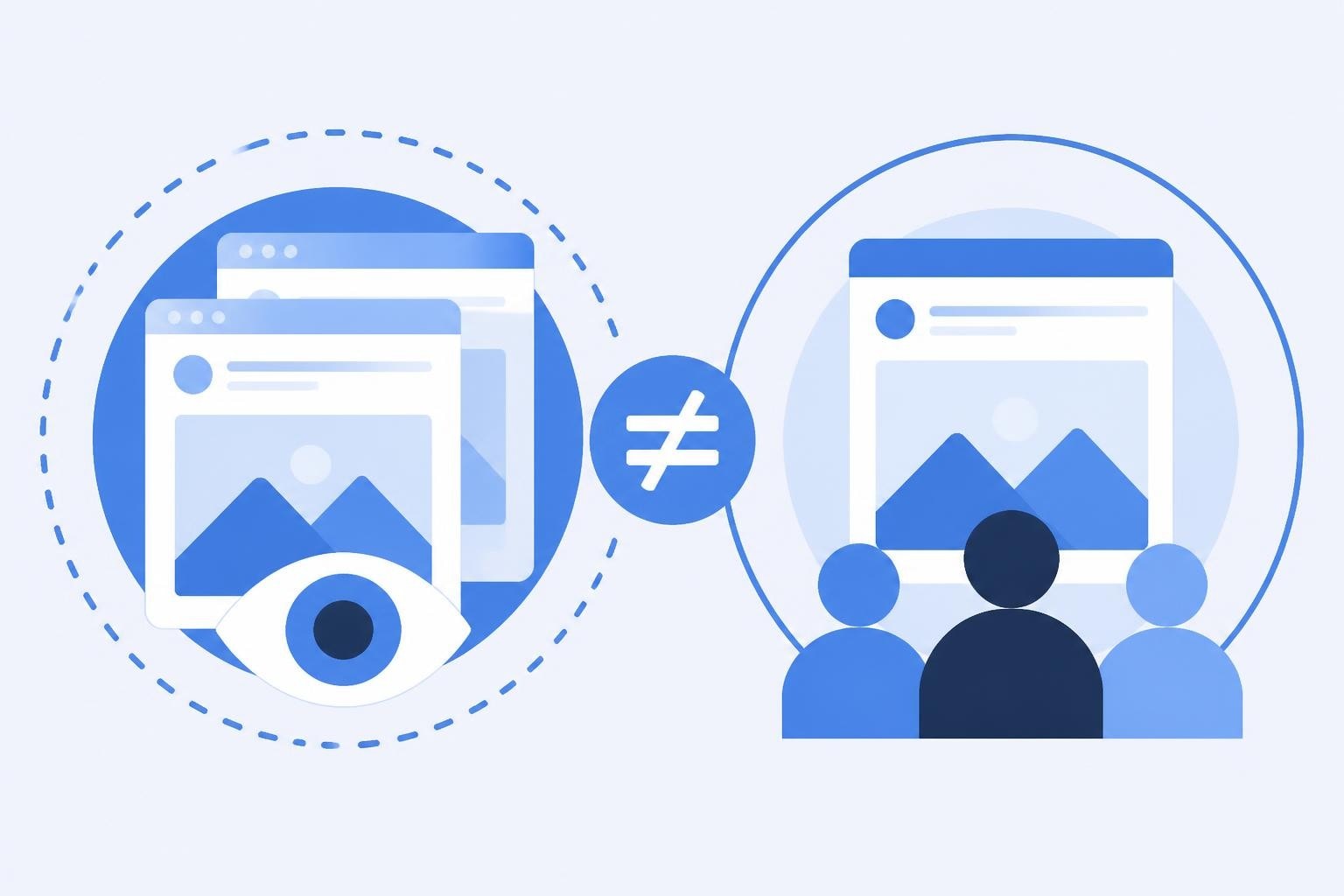
Understanding the difference between impressions and reach is fundamental for marketers who want to accurately measure campaign performance and optimize their strategies. While these two metrics often appear side by side in analytics dashboards, they measure distinctly different aspects of your content's visibility. Mastering the nuances of impressions vs reach enables you to make data-driven decisions that align with your specific marketing objectives and audience engagement goals.
What Are Impressions in Digital Marketing
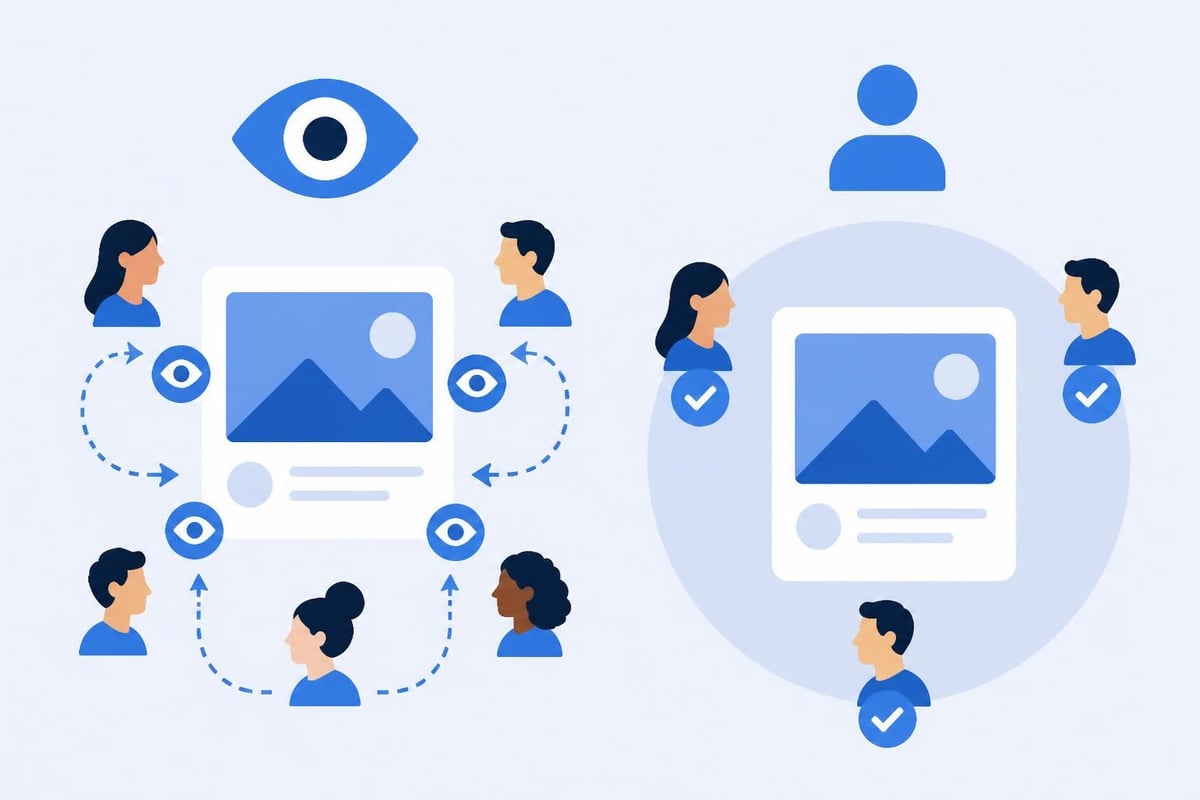
Impressions represent the total number of times your content is displayed on a screen, regardless of whether it was clicked or interacted with. Every single display counts as one impression, even if the same person sees your content multiple times throughout the day.
This metric captures volume and frequency. When your Instagram post appears in someone's feed three times because they scroll past it, refresh their feed, or return to the app later, that counts as three separate impressions. The same principle applies across all digital platforms, from social media to display advertising.
How Impressions Are Counted
Digital platforms track impressions differently based on their technical infrastructure and measurement standards. Most platforms count an impression when content loads on a user's screen, though the specific trigger point varies.
- Social media platforms typically count impressions when a post appears in a user's feed
- Display advertising networks register impressions when an ad loads on a webpage
- Video platforms may count impressions differently based on autoplay settings and visibility thresholds
- Email marketing tools track impressions when recipients open messages with images enabled
The precision of impression tracking has improved significantly as platforms adopt viewability standards. Many advertisers now focus on viewable impressions, which require a minimum percentage of the ad to be visible for a specific duration.
Understanding Reach and Its Importance
Reach measures the number of unique users who see your content at least once during a specific time period. Unlike impressions, reach eliminates duplicate views and focuses on audience breadth rather than frequency.
When you analyze reach, you're answering a fundamental question: how many different people did my content actually reach? This metric provides insight into your content's distribution and your ability to expand your audience base.
Types of Reach Metrics
Marketing platforms break down reach into several categories that help you understand how your content spreads. Each type offers different strategic insights for campaign optimization.
Organic reach represents users who see your content without paid promotion. This metric reflects your content's natural appeal and your audience's engagement patterns. Paid reach counts unique users who see your content through advertising spend, providing direct insight into campaign investment efficiency.
Viral reach measures users who see your content because someone else shared or engaged with it. This type of reach indicates content resonance and social amplification. Understanding these distinctions helps you allocate resources more effectively across different marketing channels.
The Mathematical Relationship Between Impressions vs Reach
The connection between impressions vs reach creates a crucial third metric: frequency. This calculation reveals how many times, on average, each unique user sees your content.
| Metric | Calculation | What It Tells You |
|---|---|---|
| Frequency | Impressions ÷ Reach | Average views per unique user |
| Reach Rate | (Reach ÷ Total Audience) × 100 | Percentage of audience reached |
| Impression Share | Your Impressions ÷ Total Available Impressions | Market visibility compared to potential |
Frequency is particularly valuable for understanding reach vs impressions in the context of campaign effectiveness. A frequency of 1.0 means each person saw your content exactly once. Higher frequencies indicate repeated exposure, which can be beneficial for brand recall but may also signal audience saturation.
When Frequency Matters Most
Different marketing objectives require different frequency targets. Brand awareness campaigns typically benefit from higher frequency, ensuring your message penetrates audience consciousness through repetition. Conversely, performance marketing often prioritizes reach over frequency to maximize conversion opportunities across a broader audience.
Monitor frequency closely to avoid ad fatigue. When users see the same content too many times, engagement rates typically decline while cost per action increases. Most platforms experience optimal performance with frequency ranges between 2 and 5, though this varies by industry and campaign type.
Strategic Applications of Impressions Data
Impressions serve specific strategic purposes that reach cannot fulfill. This metric excels at measuring content visibility, campaign scale, and message reinforcement across your target audience.
High impression counts indicate strong content distribution and algorithmic favor on social platforms. When your impressions significantly exceed your reach, you're achieving repeated exposure that can strengthen brand recall and message retention.
Optimizing for Impressions
Certain campaign types prioritize impression growth as their primary objective. Product launches, seasonal promotions, and brand awareness initiatives often benefit from maximizing impressions to ensure message saturation within your target market.
- Retargeting campaigns leverage high frequency impressions to re-engage prospects
- Event promotion requires repeated exposure to drive action before deadlines
- Brand building uses impression volume to establish market presence
- Seasonal offers need frequency to overcome consumer inertia
Track impression trends over time to identify content that maintains visibility. When impressions remain strong while engagement rates stay healthy, you've found content that resonates sufficiently to warrant repeated viewing without causing fatigue.
Leveraging Reach for Audience Growth
Reach metrics directly indicate your ability to expand brand awareness into new audience segments. When reach grows consistently, you're successfully extending your message beyond existing followers and previous website visitors.
Prioritizing reach over impressions makes sense when your objective centers on market penetration rather than message reinforcement. New product categories, market entry strategies, and audience expansion campaigns typically optimize for reach.
Calculating Effective Reach
Not all reach delivers equal value. Effective reach considers whether you're reaching qualified prospects who match your target customer profile. A campaign might achieve massive reach numbers while failing to connect with decision-makers in your target market.
Analyze demographic and behavioral data alongside reach metrics. When your reach aligns closely with your ideal customer profile, you're achieving effective reach that drives business results. Misaligned reach inflates vanity metrics without contributing to conversion goals.

Platform-Specific Differences in Impressions vs Reach
Each digital platform defines and calculates impressions vs reach slightly differently, creating challenges for cross-platform measurement and comparison. Understanding these variations prevents misinterpretation of analytics data.
Facebook and Instagram count impressions each time content enters a screen, even if the user scrolls past quickly. Reach counts unique daily users who saw your content at least once. LinkedIn uses similar methodology but applies different timeframes for organic versus paid content measurement.
Twitter counts impressions when tweets appear in timelines, search results, or through direct URL access. Platform-specific definitions of impressions affect how you interpret performance across different channels and campaigns.
| Platform | Impression Trigger | Reach Window | Key Consideration |
|---|---|---|---|
| Content on screen | 28 days | Combines organic and paid | |
| Feed or story view | Daily | Stories separate from feed | |
| Timeline appearance | Daily/Campaign | Varies by content type | |
| Any display | Campaign period | Includes all placements |
These differences matter when you're tracking link performance across multiple platforms. When you share shortened links through various social channels, understanding how each platform measures visibility helps you attribute traffic and engagement accurately. Link management platforms help consolidate these disparate metrics into unified performance dashboards, giving you clearer visibility into which channels drive the most valuable traffic to your campaigns.
Choosing the Right Metric for Campaign Goals
Your campaign objectives should dictate whether you prioritize impressions vs reach in your measurement framework. Different business goals align with different metrics, and optimizing for the wrong one wastes budget while underdelivering results.
Brand awareness campaigns typically benefit from reach optimization. When you're introducing a new brand or product, connecting with as many unique potential customers as possible creates the foundation for future engagement. Maximizing reach ensures your message penetrates deeply into your target market.
Consideration stage campaigns often balance reach and frequency. You need enough reach to connect with prospects, but also sufficient frequency to move them through the decision-making process. Monitor both metrics to ensure you're neither too broad nor too repetitive.
Performance Marketing and Metric Selection
Direct response campaigns require a more nuanced approach to impressions vs reach. While broad reach might seem beneficial, concentrated frequency among high-intent audiences often delivers better conversion rates and lower customer acquisition costs.
Test different approaches systematically. Run campaign variations that prioritize reach alongside others that emphasize frequency, then measure downstream metrics like click-through rates, conversion rates, and return on ad spend. Understanding the relationship between reach vs impressions helps you optimize campaign structure for your specific conversion funnel.
Advanced Analytics Beyond Basic Impressions and Reach
Sophisticated marketers extend beyond basic impressions vs reach analysis by incorporating engagement rates, quality scores, and conversion attribution. These advanced metrics provide context that raw visibility numbers cannot deliver.
Engagement rate divides total engagements by impressions, revealing what percentage of content views generate interactions. This metric helps identify whether your high impression counts translate into meaningful audience connections or represent empty visibility.
Reach efficiency compares the cost of reaching unique users against the cost of generating total impressions. This calculation helps optimize budget allocation between reach expansion and frequency building strategies.
Building Comprehensive Measurement Frameworks
Create measurement frameworks that connect top-funnel metrics like impressions and reach to bottom-funnel outcomes like conversions and revenue. This connection transforms visibility metrics from vanity indicators into actionable business intelligence.
- Calculate impression-to-click ratios to measure content relevance
- Track reach-to-conversion rates to assess audience quality
- Monitor frequency-adjusted engagement to identify optimal exposure levels
- Analyze cost per unique reach to optimize budget efficiency
Integration across platforms becomes critical for accurate measurement. When you're running coordinated campaigns across multiple channels, deduplicated reach metrics prevent double-counting users who see your content on multiple platforms. Modern approaches to measuring impressions emphasize cross-platform attribution and unified analytics.
Common Mistakes When Interpreting Impressions vs Reach
Many marketers misinterpret impressions vs reach data, leading to flawed strategic decisions and wasted advertising spend. Recognizing these common errors helps you avoid analytical pitfalls that undermine campaign performance.
Mistake one: Assuming higher impressions always indicate better performance. While high impression counts seem positive, they may signal ad fatigue if engagement rates decline simultaneously. Context matters more than absolute numbers.
Mistake two: Ignoring frequency when comparing campaigns. Two campaigns might show identical reach numbers, but vastly different impression counts reveal different audience exposure patterns. The campaign with higher frequency might drive better recall despite equal reach.
Avoiding Attribution Errors
Attribution mistakes frequently occur when marketers fail to account for platform measurement differences. Comparing Facebook reach directly to Twitter reach without adjusting for definitional differences creates false equivalencies that distort cross-platform analysis.
Mistake three: Prioritizing reach without considering audience quality. Reaching one million unqualified users delivers less value than reaching ten thousand highly qualified prospects. Always weight reach against target audience alignment.
Mistake four: Treating impressions and reach as interchangeable. The distinction between these metrics represents fundamentally different aspects of campaign performance, requiring separate optimization strategies and success criteria.
Optimizing Budget Allocation Using Both Metrics
Smart budget allocation leverages insights from both impressions vs reach to maximize marketing efficiency. Different campaign phases and objectives require different metric priorities and corresponding budget distributions.
Early-stage campaigns typically allocate more budget toward reach expansion. Building initial awareness requires connecting with new audience segments rather than reinforcing messages to existing aware audiences. Focus spending on platforms and targeting strategies that maximize unique user exposure.
Mid-stage campaigns shift toward balanced approaches. Once you've established baseline awareness, strategic frequency helps move prospects through consideration stages. Budget allocation should maintain reach while building frequency among engaged audience segments.
Dynamic Budget Optimization
Implement dynamic budget optimization that responds to real-time performance data. When reach plateaus despite increased spending, diminishing returns signal the need to shift budget toward frequency building or alternative audience segments.
Monitor these key performance indicators for budget optimization:
- Incremental reach cost: How much does each additional unique user cost to reach?
- Frequency saturation point: At what frequency do engagement rates begin declining?
- Reach penetration rate: What percentage of your total addressable market are you reaching?
- Impression efficiency: How many impressions are required to generate desired actions?
Understanding when to emphasize reach versus impressions enables more sophisticated budget allocation models that adapt to campaign performance and market conditions.
Reporting Impressions vs Reach to Stakeholders
Communicating the difference between impressions vs reach to non-marketing stakeholders requires clarity and context. Many executives struggle to understand why these distinct metrics both matter and how they connect to business outcomes.
Structure reports that translate visibility metrics into business impact. Instead of simply presenting impression and reach numbers, connect them to awareness lift, consideration increases, and ultimately revenue generation.
Creating Effective Performance Dashboards
Build dashboards that display impressions and reach alongside conversion metrics and revenue attribution. This integrated view helps stakeholders understand how top-funnel visibility drives bottom-funnel results.
Include frequency calculations prominently. When stakeholders see that your 500,000 impressions reached 100,000 unique users with an average frequency of 5, they better understand your campaign's actual market penetration and message reinforcement strategy.
Provide industry benchmarks for context. Stakeholders need reference points to evaluate whether your reach and impression numbers represent strong or weak performance relative to competitive standards and market norms.
Understanding impressions vs reach transforms how you measure, optimize, and report on marketing campaign performance. These complementary metrics provide different lenses for evaluating visibility, with impressions measuring total exposure and reach counting unique audience members. When you're running sophisticated marketing campaigns across multiple channels, tracking both metrics alongside link performance data becomes essential for accurate attribution and optimization. Trimy helps marketers connect link-level analytics with broader campaign metrics, providing the intelligence needed to transform visibility into measurable revenue outcomes.