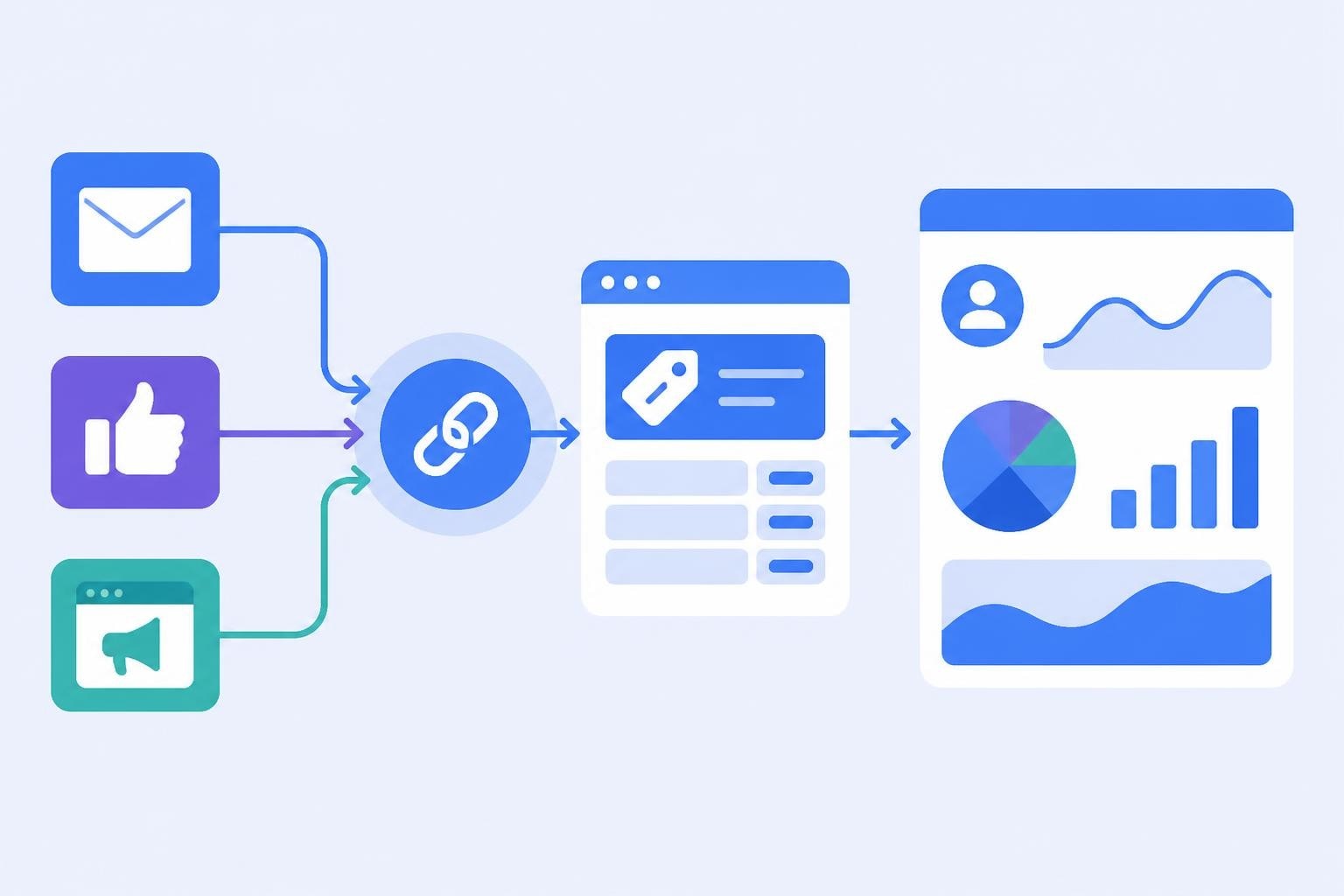
Management Data: The Foundation of Business Intelligence
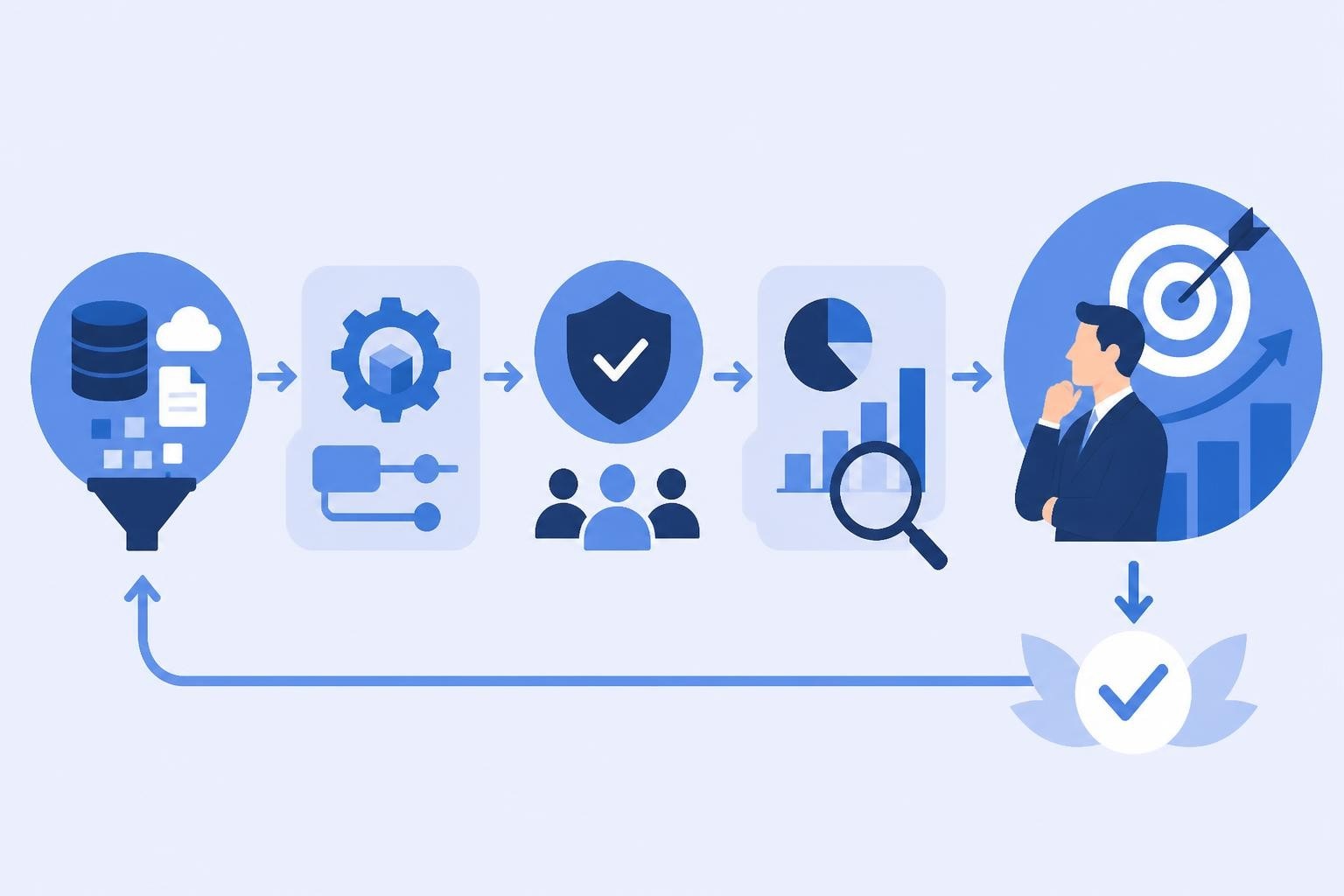
Organizations today generate data at unprecedented rates, yet many struggle to convert this raw information into actionable intelligence. Management data represents the critical foundation that enables businesses to measure performance, guide decisions, and optimize operations across every department. Unlike transactional or operational data that powers day-to-day systems, management data serves the specific purpose of informing strategic choices and tracking organizational health. For companies operating in digital marketing, e-commerce, and technology sectors, understanding how to collect, govern, and leverage this data determines competitive advantage.
Understanding Management Data in Modern Organizations
Management data encompasses the information assets that leaders use to monitor performance, identify trends, and make evidence-based decisions. This category includes key performance indicators (KPIs), financial metrics, operational statistics, customer analytics, and workforce data. The Data Management Body of Knowledge (DAMA-DMBOK) defines comprehensive frameworks for organizing these knowledge areas.
What distinguishes management data from other information types is its purpose and audience. While operational data flows through systems to execute transactions, management data aggregates and contextualizes information for human decision-makers. It answers questions about what happened, why it happened, and what should happen next.
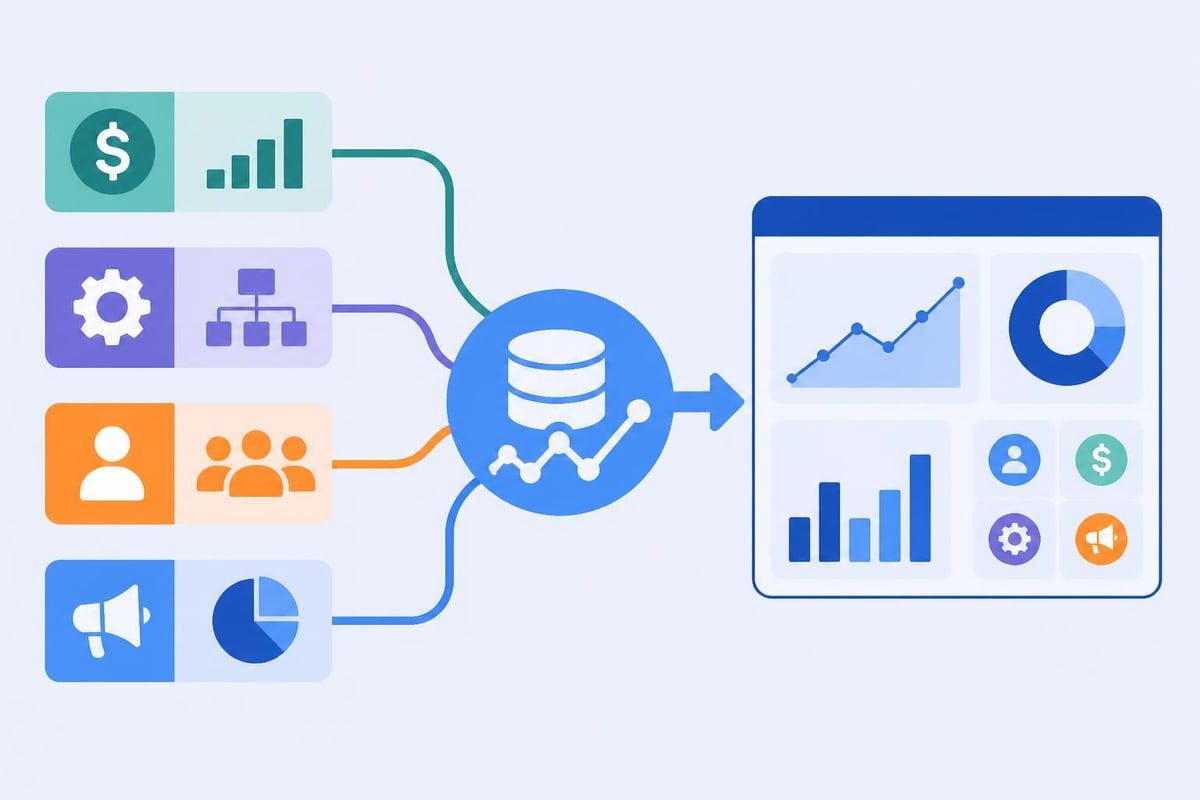
Core Categories of Management Data
Different business functions rely on specific data types to fulfill their objectives:
- Financial management data: Revenue, expenses, profit margins, cash flow, budget variance
- Operational management data: Production volumes, efficiency rates, quality metrics, capacity utilization
- Customer management data: Acquisition costs, lifetime value, churn rates, satisfaction scores
- Marketing management data: Campaign performance, channel attribution, conversion rates, engagement metrics
- Human resources management data: Headcount, turnover, productivity, compensation benchmarks
Each category requires distinct collection methods, quality standards, and reporting cadences. Organizations typically establish dedicated systems and processes for each domain while maintaining integration points for cross-functional analysis.
The Strategic Value of Quality Management Data
High-quality management data creates tangible business advantages across strategic planning, resource allocation, and competitive positioning. Organizations that invest in robust data practices outperform peers in market responsiveness, operational efficiency, and innovation velocity.
Driving Evidence-Based Decision Making
Leaders who rely on comprehensive management data reduce bias and improve decision quality. Instead of intuition alone, they validate hypotheses against actual performance trends and customer behavior patterns. This approach becomes particularly valuable during periods of uncertainty or rapid change when historical assumptions may no longer hold.
MIT Sloan research demonstrates that companies with mature data programs show 58% higher revenue growth compared to industry averages. The research published in MIT Sloan Management Review emphasizes aligning data strategy with business outcomes.
For marketing teams managing digital campaigns, management data transforms abstract metrics into revenue signals. Click-through rates, conversion paths, and attribution data reveal which channels drive actual business results versus vanity metrics. Companies can then reallocate budgets toward high-performing initiatives with confidence.
| Decision Type | Without Quality Data | With Quality Data |
|---|---|---|
| Budget allocation | Based on precedent and politics | Optimized by ROI and strategic fit |
| Product development | Driven by internal opinions | Informed by customer behavior analysis |
| Market expansion | Opportunistic and reactive | Targeted based on demographic trends |
| Risk management | Reactive to problems | Proactive with early warning indicators |
Measuring and Optimizing Performance
Management data enables the measurement frameworks that drive continuous improvement. Organizations establish baselines, set targets, track progress, and identify performance gaps systematically. This feedback loop accelerates learning and adaptation across the business.
Performance measurement requires several key practices:
- Define clear metrics aligned with strategic objectives
- Establish data collection processes that ensure consistency
- Create reporting cadences matched to decision cycles
- Build accountability by assigning metric ownership
- Review and refine metrics as business priorities evolve
Marketing organizations particularly benefit from granular performance tracking. When every link, campaign, and channel generates structured data, teams can run controlled experiments and optimize continuously. A/B testing, attribution modeling, and cohort analysis all depend on reliable management data infrastructure.
Building Robust Management Data Infrastructure
Creating effective management data systems requires intentional architecture, governance, and technology choices. Organizations must balance accessibility with control, flexibility with standardization, and speed with accuracy.
Data Governance Frameworks
Governance establishes the policies, roles, and processes that ensure data remains accurate, secure, and compliant. Without governance, management data degrades through inconsistent definitions, duplicate records, and unauthorized modifications. The NIST Privacy Framework provides guidance on privacy risk governance that intersects with broader data management practices.
Core governance components include:
- Data ownership assignments and accountability structures
- Quality standards and validation rules
- Access controls and security protocols
- Retention policies and archival procedures
- Change management processes for schema updates
Effective governance requires cross-functional collaboration. IT teams provide technical controls, business units define requirements, legal ensures compliance, and executive sponsors allocate resources. This shared ownership model distributes expertise while maintaining central coordination.
Master Data Management
Master data management (MDM) creates single, trusted reference records for critical business entities like customers, products, locations, and accounts. Management data relies heavily on these reference points for accurate aggregation and analysis.
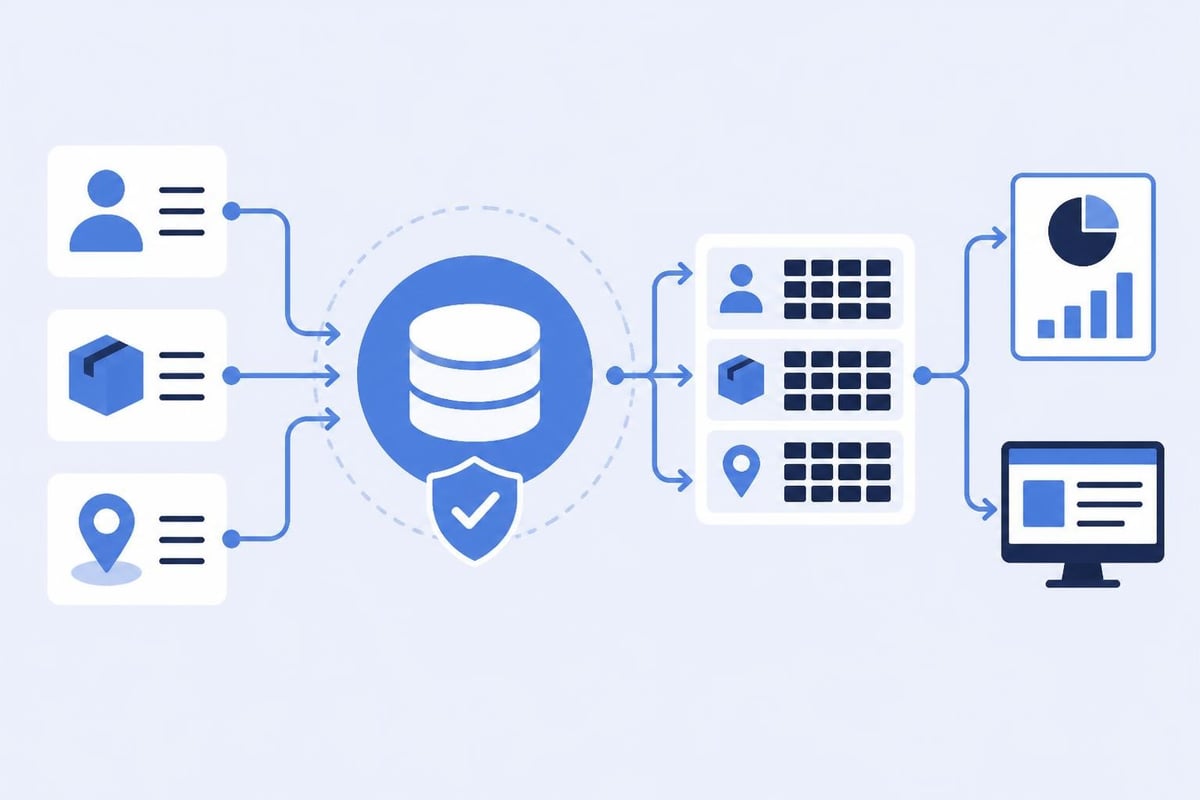
When marketing teams track campaign performance across channels, MDM ensures customer records match correctly. A single individual might interact via email, social media, website, and mobile app. Without unified customer records, management data reports fragment this journey into separate, disconnected interactions.
MDM implementations typically follow this progression:
- Identify critical entities requiring master records
- Map source systems contributing entity data
- Define golden record rules for conflict resolution
- Implement matching algorithms to identify duplicates
- Establish synchronization processes for ongoing updates
- Monitor quality through ongoing validation
Quality and Observability Practices
Management data quality directly impacts decision confidence. Leaders making strategic choices need assurance that underlying information accurately reflects business reality. Quality issues erode trust and delay decisions as teams investigate discrepancies instead of analyzing trends.
Dimensions of Data Quality
Quality assessment examines multiple characteristics:
- Accuracy: Values correctly represent real-world facts
- Completeness: Required fields contain valid entries
- Consistency: Values align across related records and systems
- Timeliness: Information reflects current state appropriately
- Validity: Entries conform to defined formats and ranges
TDWI research on data quality observability demonstrates how modern cloud platforms enable automated quality monitoring at scale. Organizations implement continuous validation rather than periodic audits, catching issues before they propagate through downstream analytics.
For link management and marketing analytics, quality issues manifest in broken attribution, inflated metrics, or missed conversions. A single misconfigured tracking parameter can invalidate weeks of campaign data. Systematic quality practices prevent these costly errors.
Implementing Observability
Data observability borrows concepts from application monitoring, treating data pipelines as critical infrastructure requiring continuous health checks. Teams instrument their data flows with sensors that detect anomalies, track lineage, and alert on quality degradations.
Key observability practices:
| Practice | Purpose | Implementation |
|---|---|---|
| Schema validation | Catch structural changes | Automated checks on ingestion |
| Volume monitoring | Detect missing data | Threshold alerts on record counts |
| Distribution analysis | Identify outliers | Statistical profiling of numeric fields |
| Freshness tracking | Ensure timeliness | Timestamp-based service level objectives |
| Lineage mapping | Understand dependencies | Metadata graphs of data transformations |
Observability transforms reactive troubleshooting into proactive prevention. Instead of discovering quality issues during quarterly reviews, teams receive real-time alerts and can investigate immediately while context remains fresh.
Operationalizing Management Data for Business Impact
Technical infrastructure alone does not guarantee value. Organizations must embed management data into decision processes, workflows, and culture. This operationalization requires change management, training, and continuous reinforcement.
Creating Self-Service Analytics
Democratizing data access empowers teams to answer their own questions without bottlenecking on specialized analysts. Self-service platforms provide curated datasets, intuitive interfaces, and guided exploration while maintaining governance controls.
Marketing teams particularly benefit from self-service capabilities. Campaign managers need rapid feedback on performance without submitting requests and waiting for reports. Real-time dashboards, customizable views, and drill-down capabilities enable immediate optimization decisions.
When every team member can access relevant management data, organizations see faster experimentation cycles and broader data literacy. Questions that previously took days to answer resolve in minutes, accelerating the pace of learning and adaptation.
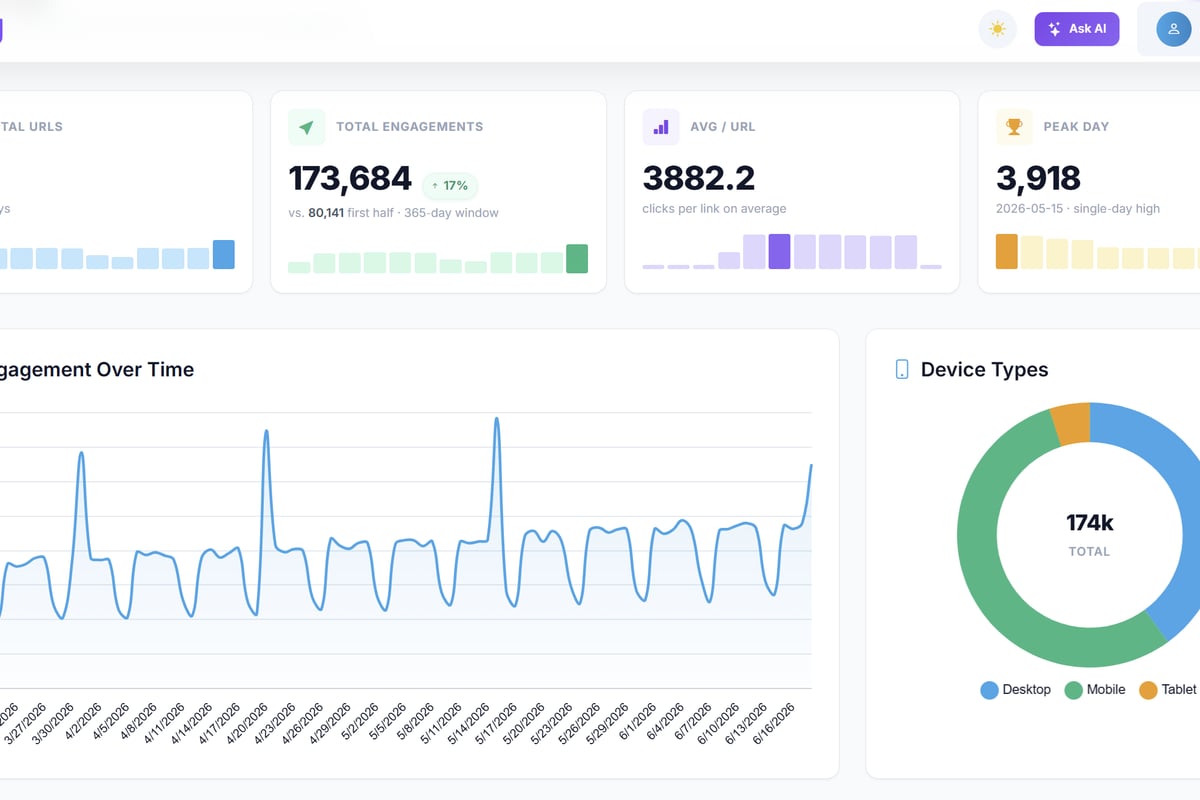
For businesses running digital campaigns with complex link structures, self-service analytics reveals which URLs drive conversions, which audiences engage most, and which messaging resonates. These insights inform everything from ad creative to landing page design. Trimy transforms link tracking into a self-service intelligence platform, enabling marketers to analyze click patterns, test variations, and optimize campaigns without technical dependencies.

Establishing Data-Driven Culture
Technology and processes enable data-driven operations, but culture determines adoption. Organizations must cultivate environments where evidence trumps opinion, where questioning assumptions is encouraged, and where learning from data becomes standard practice.
Leadership plays a crucial role in cultural transformation. When executives model data-informed decision making, teams follow. Regular reviews of management data, public discussion of metrics, and celebration of insights reinforce desired behaviors.
Training programs ensure teams understand both technical capabilities and analytical thinking. Users need skills in:
- Formulating answerable business questions
- Selecting appropriate metrics and dimensions
- Interpreting results with statistical awareness
- Communicating findings to diverse audiences
- Translating insights into action plans
Advanced Applications and Emerging Trends
Management data practices continue evolving as technology capabilities expand and business complexity increases. Organizations pushing boundaries explore predictive analytics, real-time processing, and integrated automation.
Predictive and Prescriptive Analytics
While descriptive analytics answers "what happened," predictive models forecast "what will happen" and prescriptive systems recommend "what should happen." These advanced capabilities build on quality management data foundations to provide forward-looking guidance.
Marketing applications include customer lifetime value prediction, churn forecasting, and next-best-action recommendations. Models learn from historical patterns to anticipate future behavior, enabling proactive intervention rather than reactive response.
Implementation requirements include:
- Historical data with sufficient volume and variety
- Feature engineering to identify predictive variables
- Model training and validation protocols
- Deployment infrastructure for real-time scoring
- Monitoring systems to detect model drift
Real-Time Management Data
Traditional management reporting operates on batch cycles-daily, weekly, or monthly refreshes. Modern businesses increasingly demand real-time or near-real-time insights that enable immediate response to changing conditions.
Streaming data architectures process events as they occur, updating dashboards and triggering alerts continuously. For digital marketing, real-time management data reveals campaign performance as impressions happen, clicks register, and conversions complete. Teams can pause underperforming ads, scale winning variants, and optimize budgets within hours rather than waiting for end-of-day reports.
Real-time capabilities require different technical foundations than batch processing. Event streaming platforms, in-memory databases, and distributed computing frameworks replace traditional ETL and data warehouse architectures.
Integration with Operational Systems
Management data creates maximum value when integrated into operational workflows rather than isolated in separate reporting systems. This integration closes the loop between insight and action, reducing latency and increasing impact.
Automated Decision Execution
Advanced implementations embed management data directly into operational systems to automate routine decisions. Business rules engines evaluate incoming data against defined criteria and trigger actions without human intervention.
Marketing automation platforms exemplify this integration. When management data shows a customer segment responding strongly to specific messaging, automation rules adjust targeting and creative dynamically. Budgets shift, audiences refine, and content personalizes based on continuous performance feedback.
The benefits compound over time. Each automated decision generates new management data, which refines models and improves future automation. This virtuous cycle accelerates organizational learning exponentially.
Cross-Functional Collaboration
Siloed management data limits perspective and misses connection points between departments. Modern platforms break down these barriers, creating shared views that reveal cross-functional patterns and opportunities.
When marketing teams see inventory data alongside campaign performance, they avoid promoting out-of-stock products. When finance reviews customer acquisition costs next to lifetime value calculations, resource allocation improves. When product development accesses support ticket trends, feature prioritization aligns with user needs.
Harvard Business Review research on enterprise data programs emphasizes that technical solutions alone prove insufficient. Successful initiatives require leadership commitment, organizational alignment, and change management discipline to overcome resistance and drive adoption.
Security and Compliance Considerations
Management data often contains sensitive information requiring protection from unauthorized access, breach, or misuse. Organizations must balance accessibility for legitimate users with controls that prevent security incidents and regulatory violations.
Access Control and Authentication
Role-based access control (RBAC) ensures users see only data relevant to their responsibilities. Marketing analysts access campaign metrics but not employee compensation details. Finance reviewers see cost structures but not individual customer transactions unless necessary for their role.
Modern authentication systems add layers of security:
- Multi-factor authentication verifies user identity
- Single sign-on simplifies access while centralizing control
- Activity logging creates audit trails for compliance
- Data masking hides sensitive values in non-production environments
Regulatory Compliance
Various regulations govern management data practices depending on industry and geography. GDPR, CCPA, HIPAA, and other frameworks impose requirements for consent, purpose limitation, retention, and subject rights. Non-compliance risks significant financial penalties and reputational damage.
Compliance programs require:
| Component | Description | Implementation |
|---|---|---|
| Data inventory | Catalog of what data exists and where | Automated discovery and classification |
| Privacy impact assessments | Risk evaluation for data processing | Structured review process for new initiatives |
| Consent management | Tracking permissions and preferences | Centralized preference centers and enforcement |
| Subject rights fulfillment | Processes for access, correction, deletion | Workflow systems and data portability tools |
| Breach response | Incident detection and notification | Monitoring, playbooks, and communication plans |
Marketing organizations face particular compliance challenges as they collect behavioral data, build customer profiles, and execute personalized campaigns. Every link click, page view, and conversion event potentially falls under privacy regulations requiring transparent disclosure and consent management.
Management data serves as the nervous system of modern organizations, transmitting signals that enable coordinated response to market conditions, operational challenges, and strategic opportunities. The investment in quality data infrastructure, governance practices, and analytical capabilities pays dividends through better decisions, optimized operations, and sustainable competitive advantage. For marketing teams seeking to transform campaign tracking into actionable intelligence, Trimy provides the link management and analytics foundation to capture every signal, run controlled tests, and optimize performance systematically across all digital channels.