Marketing Automation Newsletter: Strategy & Best Practices
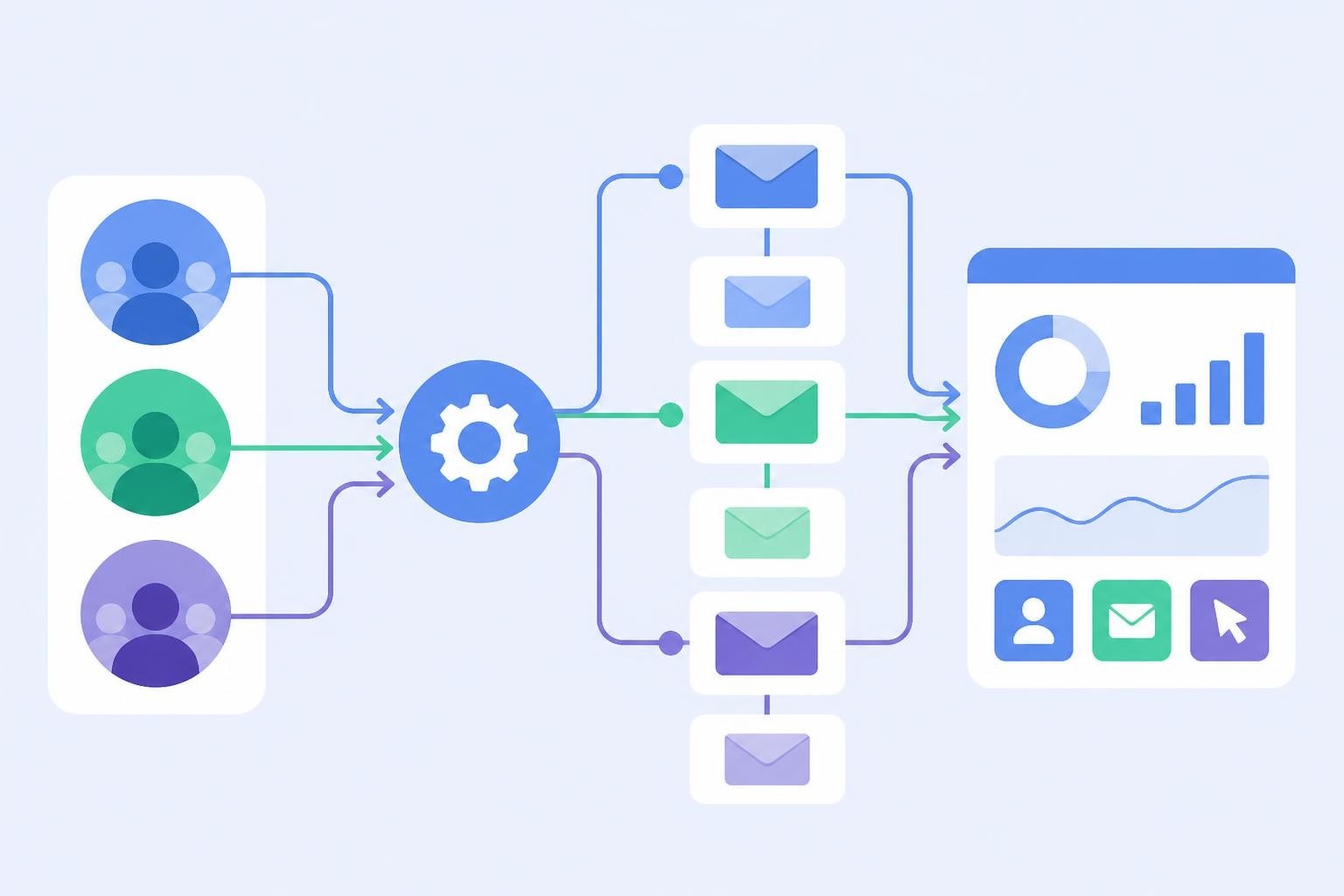
Building a successful marketing automation newsletter requires more than scheduling a few emails and hoping for the best. Modern marketers need sophisticated strategies that combine segmentation, personalization, and data-driven decision-making to cut through inbox noise and deliver real value. As email marketing continues to evolve with artificial intelligence and advanced automation capabilities, understanding how to leverage these tools effectively can transform your newsletter from a generic broadcast into a powerful revenue channel.
Understanding Marketing Automation Newsletter Fundamentals
A marketing automation newsletter differs significantly from traditional email campaigns. While basic newsletters rely on manual sending and broad audience targeting, automated newsletters use triggered workflows, behavioral data, and dynamic content to deliver the right message at the right time.
Marketing automation platforms enable several key capabilities:
- Behavioral triggers based on subscriber actions
- Dynamic content personalization using subscriber data
- Automated A/B testing and optimization
- Advanced segmentation using multiple data points
- Performance tracking across the entire customer journey
The shift toward automation has accelerated dramatically. According to Ascend2's State of Email and Automation report, over 75% of marketers now use some form of email automation, with newsletters being one of the most common use cases.
Why Automation Matters for Newsletter Success
Manual newsletter management becomes unsustainable as your subscriber list grows. Automation solves critical challenges around timing, relevance, and scalability.
When subscribers join your list at different times, they need different content based on where they are in their journey. A new subscriber might need introductory content, while a long-time reader wants advanced insights. Automation handles this complexity seamlessly.
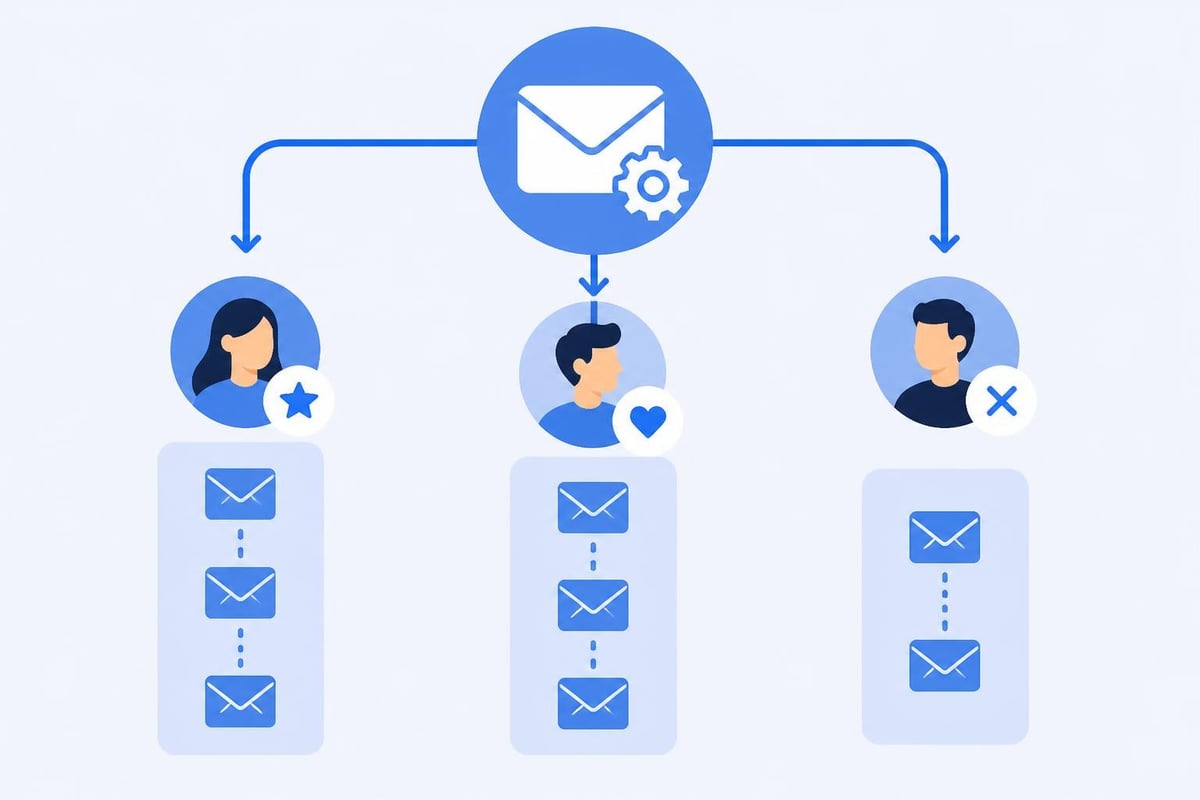
Research from Litmus on email marketing trends shows that automated email campaigns generate 320% more revenue than non-automated campaigns. This performance gap stems from better timing, relevance, and personalization that automation enables.
Building Your Marketing Automation Newsletter Strategy
Creating an effective marketing automation newsletter starts with strategic planning. You need clear goals, defined segments, and a content strategy that aligns with subscriber needs.
Defining Newsletter Objectives and KPIs
Before configuring any automation workflows, establish what success looks like. Different objectives require different approaches and measurement frameworks.
| Objective | Primary KPIs | Secondary Metrics |
|---|---|---|
| Brand awareness | Open rate, forwarding rate | Social shares, new subscribers |
| Lead nurturing | Click-through rate, time-to-conversion | Content engagement, lead scoring |
| Customer retention | Repeat purchase rate, lifetime value | Churn rate, engagement score |
| Revenue generation | Conversion rate, revenue per email | Average order value, ROI |
Your marketing automation newsletter should align with broader business goals. If you're in link management like Trimy, your newsletter might focus on educating subscribers about campaign optimization, sharing analytics insights, or demonstrating advanced features through use cases.
Audience Segmentation for Automated Newsletters
Effective segmentation transforms generic newsletters into personalized experiences. Marketing automation platforms allow you to create sophisticated segments based on multiple criteria.
Consider segmenting by:
- Demographic data (industry, company size, role)
- Behavioral patterns (content preferences, engagement level)
- Customer lifecycle stage (prospect, trial user, paying customer)
- Purchase history and product usage
- Geographic location and timezone
HubSpot's State of Newsletters research reveals that 78% of newsletter professionals use segmentation to improve relevance, with behavioral segmentation showing the highest impact on engagement rates.
The key is starting simple and expanding complexity as you gather data. Begin with basic lifecycle segmentation, then layer in behavioral triggers as you learn what resonates with different audiences.
Essential Marketing Automation Newsletter Workflows
Certain automated workflows prove valuable across industries and business models. These core sequences form the foundation of most successful marketing automation newsletter programs.
Welcome Series Automation
Your welcome series sets expectations and establishes value immediately. This automated sequence typically runs over 3-7 emails, introducing new subscribers to your brand and content.
Effective welcome series elements include:
- Immediate confirmation and expectation-setting (Email 1)
- Core value proposition and best content (Email 2)
- Community building and social proof (Email 3)
- Product or service introduction (Email 4)
- Call-to-action and next steps (Email 5)
Each email should build on the previous one, gradually deepening the relationship while providing genuine value. The welcome series typically sees 4x higher engagement than regular newsletters, making it critical for long-term success.
Engagement-Based Triggers
Behavioral automation responds to subscriber actions, delivering content when interest is highest. These workflows monitor specific triggers and execute predetermined sequences.
For example, when a subscriber clicks a link about A/B testing in your newsletter, your automation might send follow-up content about testing methodologies, case studies, or related tools. This creates a responsive, personalized experience without manual intervention.
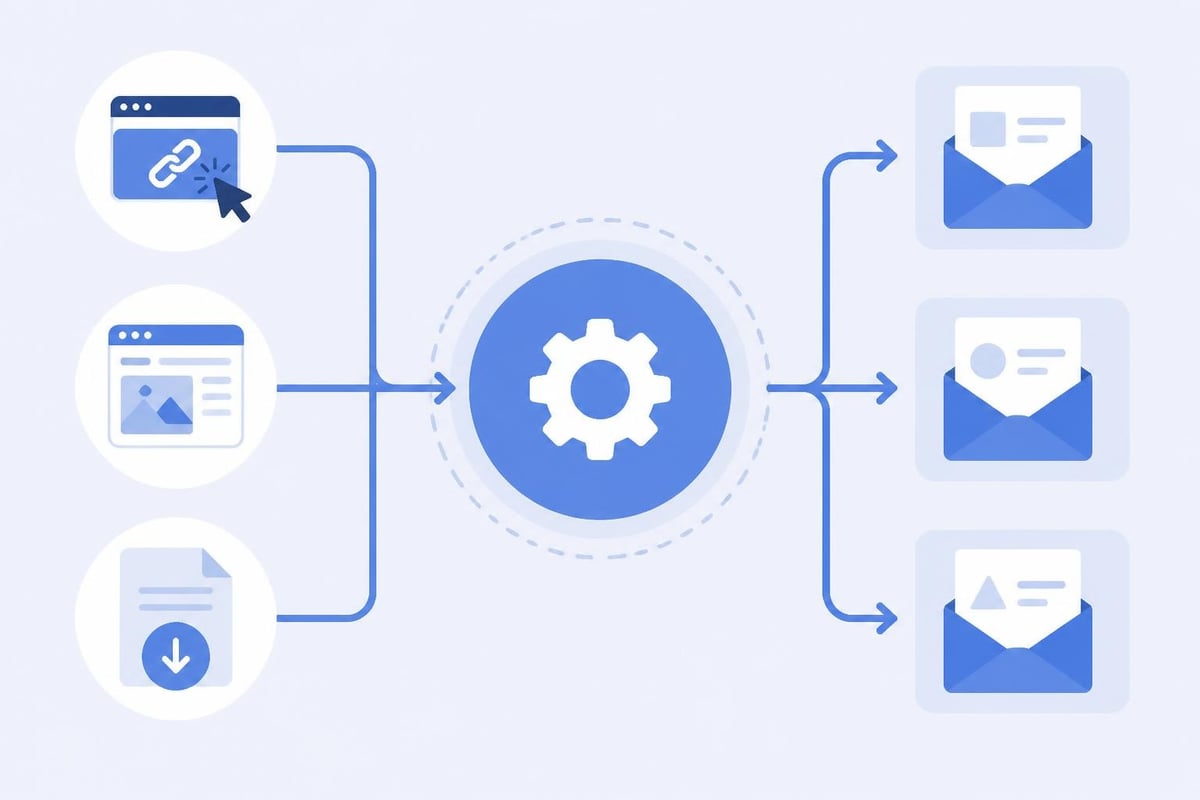
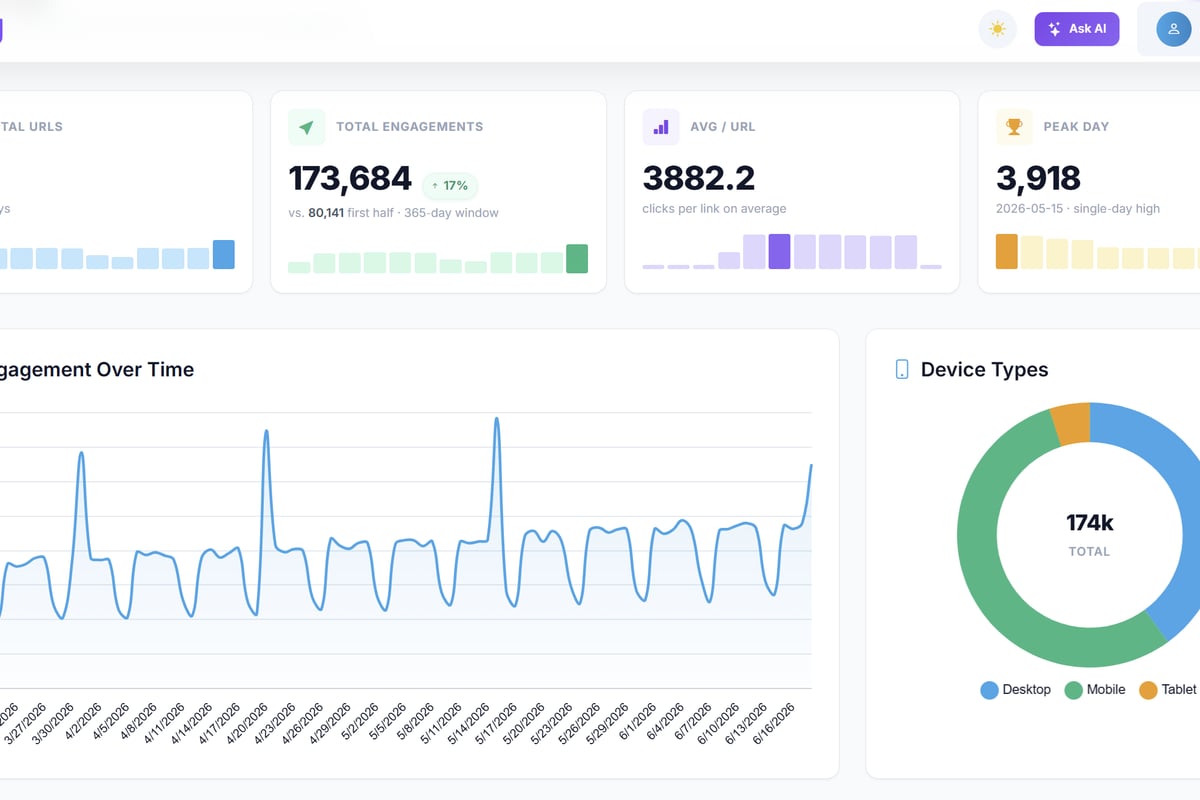
Link intelligence becomes particularly valuable here. Platforms that provide detailed click analytics enable more sophisticated triggering based on which specific links subscribers engage with, not just that they clicked something.
Trimy's link management platform excels at providing the granular click data and tracking capabilities that power these engagement-based workflows. By tracking every click with advanced analytics and smart routing, marketers can trigger precisely targeted follow-up sequences based on genuine interest signals rather than guesswork.
Re-Engagement Campaigns
Inactive subscribers represent both a challenge and opportunity. Automated re-engagement sequences attempt to revive interest before removing unengaged contacts.
A typical re-engagement workflow identifies subscribers who haven't opened emails in 60-90 days, then sends a targeted sequence asking if they want to continue receiving newsletters. Those who engage move back to active status, while non-responders get removed to maintain list health.
According to Validity's Email Deliverability Benchmark report, maintaining list hygiene through re-engagement campaigns improves overall deliverability rates by 15-20%, protecting sender reputation and inbox placement.
Content Strategy for Automated Newsletters
Content planning becomes more complex with automation but also more strategic. You need content that works in automated sequences while maintaining freshness and relevance.
Creating Evergreen and Timely Content Balance
Your marketing automation newsletter needs both evergreen content that remains relevant over time and timely pieces that address current trends or events.
Evergreen content works perfectly in automated sequences like welcome series or educational drips. This includes fundamental concepts, how-to guides, and best practices that don't quickly become outdated.
Timely content requires different handling. You might send these as one-off broadcasts or incorporate them into ongoing automated sequences with expiration dates that remove them after they're no longer relevant.
| Content Type | Best Use | Automation Approach |
|---|---|---|
| Evergreen tutorials | Welcome series, educational drips | Fully automated sequences |
| Industry insights | Regular newsletter editions | Scheduled automation with manual review |
| Product updates | Customer communications | Triggered by release dates |
| Seasonal content | Holiday campaigns | Date-based automation with annual refresh |
| Breaking news | Timely broadcasts | Manual sends or short-window automation |
Dynamic Content Personalization
Modern marketing automation platforms enable dynamic content blocks that change based on subscriber attributes. This allows a single email template to deliver personalized experiences at scale.
Dynamic content might include:
- Role-specific tips and examples
- Industry-relevant case studies
- Geographic location-based events or offers
- Product usage recommendations based on current plan
- Content recommendations based on previous engagement
The Data & Marketing Association's research shows that emails with personalized subject lines and content generate 58% higher click-to-open rates compared to generic messages.
Measurement and Optimization
A marketing automation newsletter generates vast amounts of performance data. The challenge is identifying which metrics matter and using them to drive continuous improvement.
Core Newsletter Metrics
Primary engagement metrics include:
- Open rate: Percentage of delivered emails opened
- Click-through rate: Percentage of recipients who clicked any link
- Click-to-open rate: Percentage of openers who clicked (engagement quality)
- Conversion rate: Percentage who completed desired action
- Unsubscribe rate: Percentage who opted out
Beyond these basics, advanced metrics provide deeper insights. Time-to-open shows whether your send timing is optimal. Click patterns reveal which content types resonate most. Link-level analytics identify high-performing calls-to-action.
A/B Testing in Automated Sequences
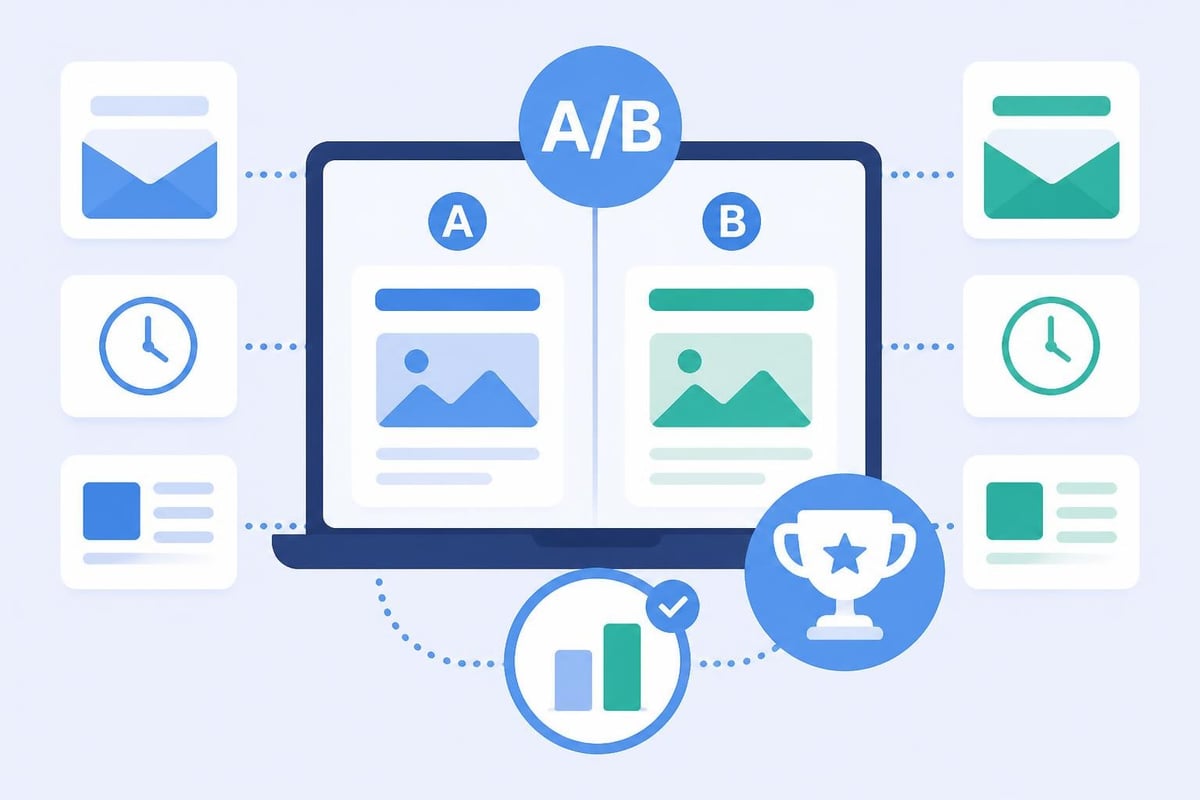
Testing shouldn't stop because emails are automated. Regular A/B testing within automated workflows ensures continuous optimization.
Test elements systematically:
- Subject lines and preview text
- Send timing and frequency
- Content length and format
- Call-to-action placement and wording
- Personalization approaches
Google's newsletter analytics guidance emphasizes connecting newsletter metrics to broader website and conversion analytics, creating a complete picture of how email automation drives business outcomes.
Technical Implementation Best Practices
The technical foundation of your marketing automation newsletter affects deliverability, performance, and subscriber experience. These elements require attention regardless of which platform you use.
Authentication and Deliverability
Email authentication protocols protect your sender reputation and ensure inbox placement. Implement SPF, DKIM, and DMARC records to verify you're an authorized sender for your domain.
Deliverability checklist for automated newsletters:
- Configure SPF records for your sending domain
- Set up DKIM signing for email authentication
- Implement DMARC policy to prevent spoofing
- Maintain consistent sending patterns and volume
- Monitor feedback loops and complaint rates
- Warm up new IP addresses gradually
Northwestern's research on email platform adoption found that organizations with proper authentication see 30% better inbox placement rates, making these technical foundations critical for automation success.
Integration Architecture
Your marketing automation newsletter shouldn't operate in isolation. Integrations with your CRM, analytics platforms, and other marketing tools create a unified data ecosystem.
Key integrations include:
- CRM systems for lead scoring and sales handoff
- Analytics platforms for attribution and ROI tracking
- Content management systems for dynamic content
- E-commerce platforms for purchase-based triggers
- Link management tools for advanced click tracking
Link management integration deserves particular attention. Detailed link analytics enable sophisticated automation triggers, A/B testing of CTAs, and revenue attribution from newsletter clicks to conversions.
Platform Selection and Migration
Choosing the right marketing automation platform significantly impacts your newsletter's capabilities and long-term success. Platform selection requires evaluating both current needs and future scalability.
Evaluating Marketing Automation Platforms
Different platforms excel at different aspects of email automation. Some prioritize ease of use, others advanced segmentation, and still others integration breadth.
| Consideration | Questions to Ask | Why It Matters |
|---|---|---|
| Deliverability | What's the average inbox placement rate? | Poor deliverability undermines all other efforts |
| Segmentation | How complex can segment logic become? | Advanced targeting requires sophisticated rules |
| Integration | Does it connect with your existing stack? | Data silos limit automation effectiveness |
| Analytics | What reporting and attribution is available? | You can't optimize what you can't measure |
| Scalability | How does pricing scale with list growth? | Unexpected costs impact long-term viability |
According to Litmus' State of Email data, 67% of marketers cite integration capabilities as a top factor in platform selection, highlighting the importance of ecosystem fit over isolated feature sets.
Migration Strategy
Moving from one platform to another requires careful planning to maintain list health and subscriber experience. Poor migration execution can damage sender reputation and lose valuable automation history.
Plan your migration in phases:
- Audit current workflows and document all active automations
- Export data cleanly with proper subscriber consent records
- Test thoroughly in the new platform before full migration
- Warm up sending reputation gradually with engaged segments
- Monitor performance closely for the first 30-60 days
Maintain list hygiene during migration by removing inactive subscribers before importing. This protects your sender reputation in the new platform and provides a fresh start with your most engaged audience.
Advanced Automation Techniques
As your marketing automation newsletter program matures, advanced techniques unlock additional performance gains and subscriber value.
Predictive Send Time Optimization
AI-powered platforms can analyze individual subscriber behavior to determine optimal send times for each recipient. Rather than sending your newsletter to everyone at 9 AM, the system delivers each copy when that specific subscriber is most likely to engage.
This approach can increase open rates by 20-30% compared to static send times, particularly for global audiences across multiple time zones.
Lead Scoring Integration
Connect newsletter engagement to your lead scoring model, allowing email behavior to influence sales prioritization. Subscribers who consistently engage with product-focused content might score higher than those who only read general industry news.
Newsletter engagement scoring criteria:
- Opens in the last 30 days (baseline engagement)
- Clicks on product or pricing content (purchase intent)
- Forwarding to colleagues (influence indicator)
- Reply rates and direct responses (active interest)
- Content download behavior (information gathering)
This integration ensures your sales team focuses on genuinely interested prospects rather than chasing cold leads.
Progressive Profiling
Rather than asking for all subscriber information upfront, progressive profiling gradually collects data over time through email interactions. Each newsletter might include a subtle question or preference selector that updates the subscriber profile.
This approach reduces initial friction while building increasingly detailed profiles that power more sophisticated personalization and segmentation over time.
Implementing a sophisticated marketing automation newsletter strategy transforms email from a basic communication channel into a strategic revenue driver. By combining behavioral segmentation, personalized content, and continuous optimization, modern marketers create newsletter experiences that genuinely serve subscriber needs while advancing business objectives. For teams managing complex campaigns with multiple touchpoints, link intelligence platforms like Trimy provide the advanced tracking and analytics needed to understand exactly how newsletter engagement drives conversions, enabling data-driven optimization across your entire automation strategy.