Marketing Automation Strategy for Growth in 2026
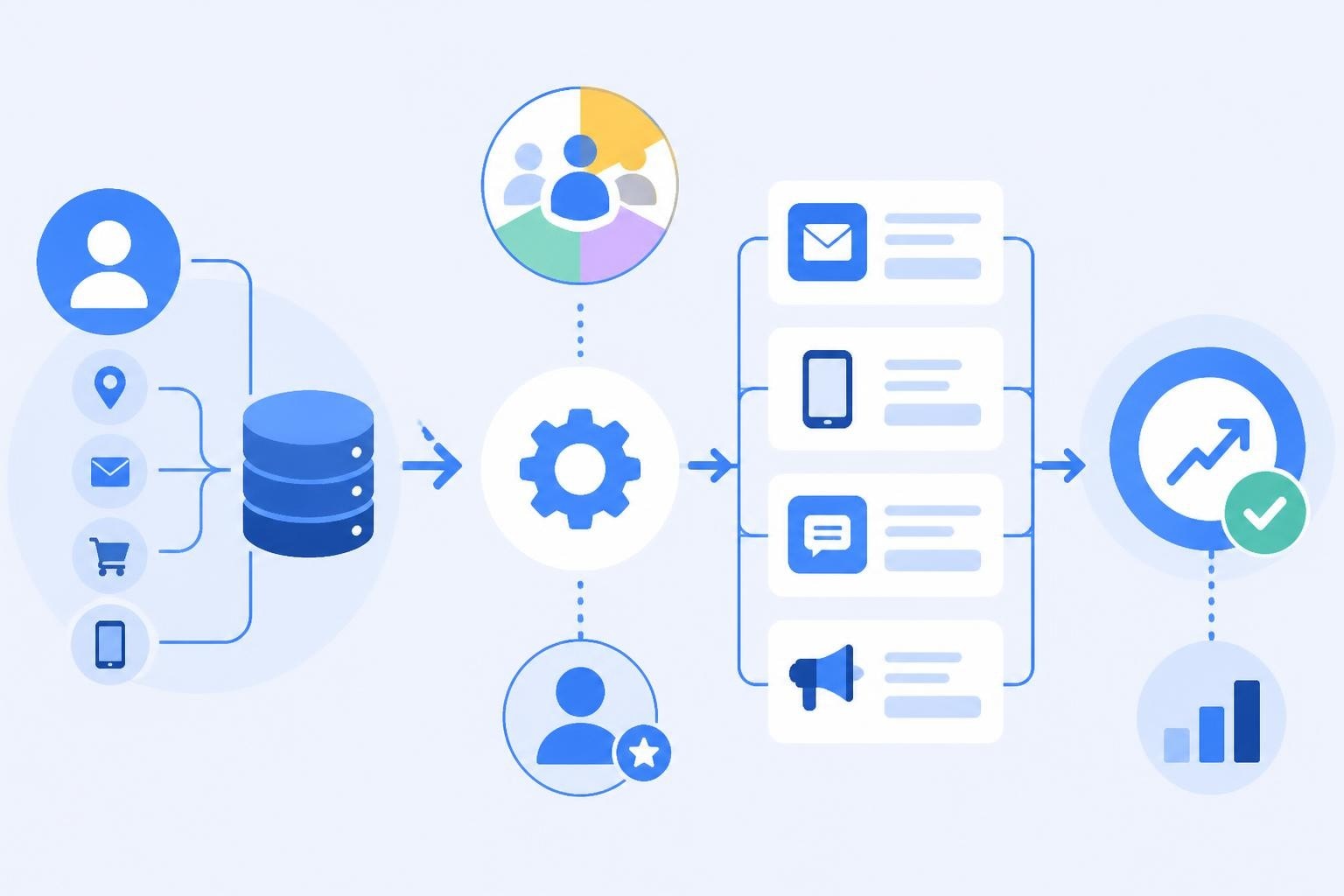
Building a comprehensive marketing automation strategy has evolved from a competitive advantage to a fundamental requirement for businesses seeking sustainable growth. As marketing teams navigate increasingly complex customer journeys across multiple touchpoints, the need for systematic, data-driven automation becomes paramount. The difference between companies that thrive and those that struggle often comes down to how effectively they leverage automation to deliver personalized experiences at scale while maintaining authentic customer relationships.
Understanding the Foundation of Marketing Automation Strategy
A successful marketing automation strategy begins with clarity about what you're trying to achieve and who you're trying to reach. Many organizations rush into implementing automation tools without establishing the foundational elements that determine success or failure.
Defining Clear Business Objectives
Before selecting platforms or building workflows, identify specific, measurable goals that align with your broader business strategy. These objectives might include:
- Increasing lead conversion rates by a specific percentage
- Reducing customer acquisition costs
- Improving customer lifetime value through better retention
- Accelerating sales cycle velocity
- Enhancing lead scoring accuracy
Each objective requires different automation approaches and measurement frameworks. A company focused on conversion rate optimization will build different workflows than one prioritizing customer retention, even if they use similar tools.
Mapping Customer Journeys with Precision
Understanding how customers move through your ecosystem forms the backbone of effective automation. Creating detailed customer journey maps reveals critical touchpoints where automation can enhance the experience rather than diminish it.
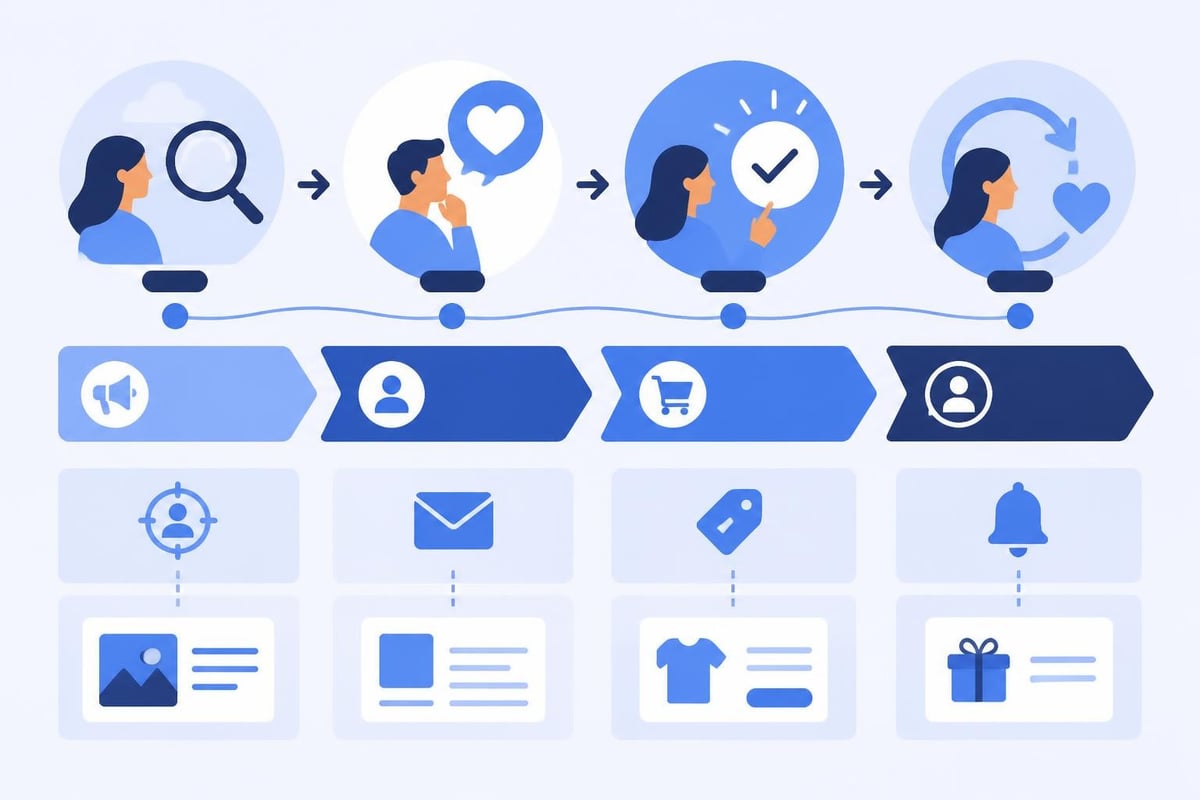
Map each stage from initial awareness through post-purchase advocacy. Document the questions customers ask, the content they consume, and the actions that signal readiness to advance. This granular understanding allows you to create automation that feels helpful rather than intrusive.
Building Your Marketing Automation Framework
With foundations established, the next phase involves constructing the actual framework that will power your automated marketing efforts. This framework encompasses technology selection, data architecture, and process design.
Technology Stack Selection
| Capability | Business Impact | Integration Priority |
|---|---|---|
| Email Marketing | Direct customer communication | Critical |
| CRM Integration | Unified customer view | Critical |
| Analytics Platform | Performance measurement | High |
| Social Media Management | Multi-channel presence | Medium |
| Link Management | Campaign tracking & optimization | High |
Your technology choices should solve specific problems rather than adding complexity. Start with core capabilities that address your primary objectives, then expand as you prove ROI and identify gaps.
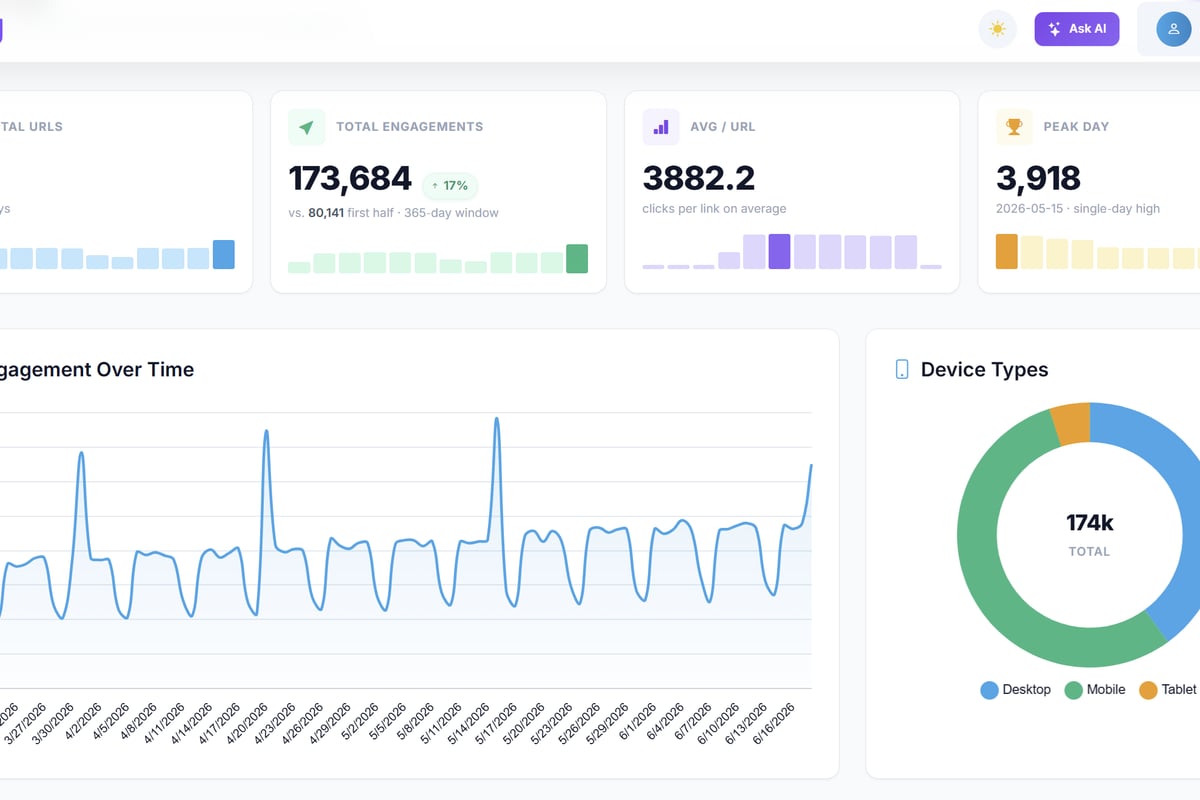
For businesses running multi-channel campaigns, link intelligence becomes especially valuable. Every campaign generates dozens or hundreds of links across email, social media, paid advertising, and content marketing. Trimy provides the advanced analytics and A/B testing capabilities needed to understand which links drive conversions, allowing marketers to optimize campaigns based on actual performance data rather than assumptions.
Data Architecture and Segmentation
Effective automation requires clean, accessible data organized in ways that enable sophisticated targeting. Build your data architecture around these principles:
- Single Source of Truth: Establish one authoritative database for customer information
- Progressive Profiling: Collect information gradually rather than overwhelming prospects
- Behavioral Tracking: Monitor actions across all touchpoints to understand intent
- Dynamic Segmentation: Create segments that update automatically based on behavior
Poor data quality undermines even the most sophisticated automation strategy. Invest in data hygiene processes that continuously validate, enrich, and deduplicate your customer information. Research from IBM emphasizes defining clear goals and ensuring data quality as foundational elements of successful automation programs.
Implementing Behavior-Based Triggers and Workflows
Static, time-based automation sequences no longer deliver the personalization customers expect. Modern marketing automation strategy relies on behavior-based triggers that respond to what customers actually do rather than following predetermined schedules.
Designing Intelligent Trigger Systems
Behavior-based triggers create responsive automation that adapts to individual customer actions:
- Engagement triggers: Respond when customers interact with specific content or channels
- Abandonment triggers: Re-engage when customers leave processes incomplete
- Milestone triggers: Celebrate achievements or anniversaries to strengthen relationships
- Inactivity triggers: Win back customers who've disengaged before they churn
- Intent triggers: Accelerate sales processes when behavior signals buying readiness
Each trigger should initiate workflows specifically designed for that context. A cart abandonment trigger requires different messaging and timing than a content download trigger, even if both aim to move prospects toward conversion.
Multi-Channel Orchestration
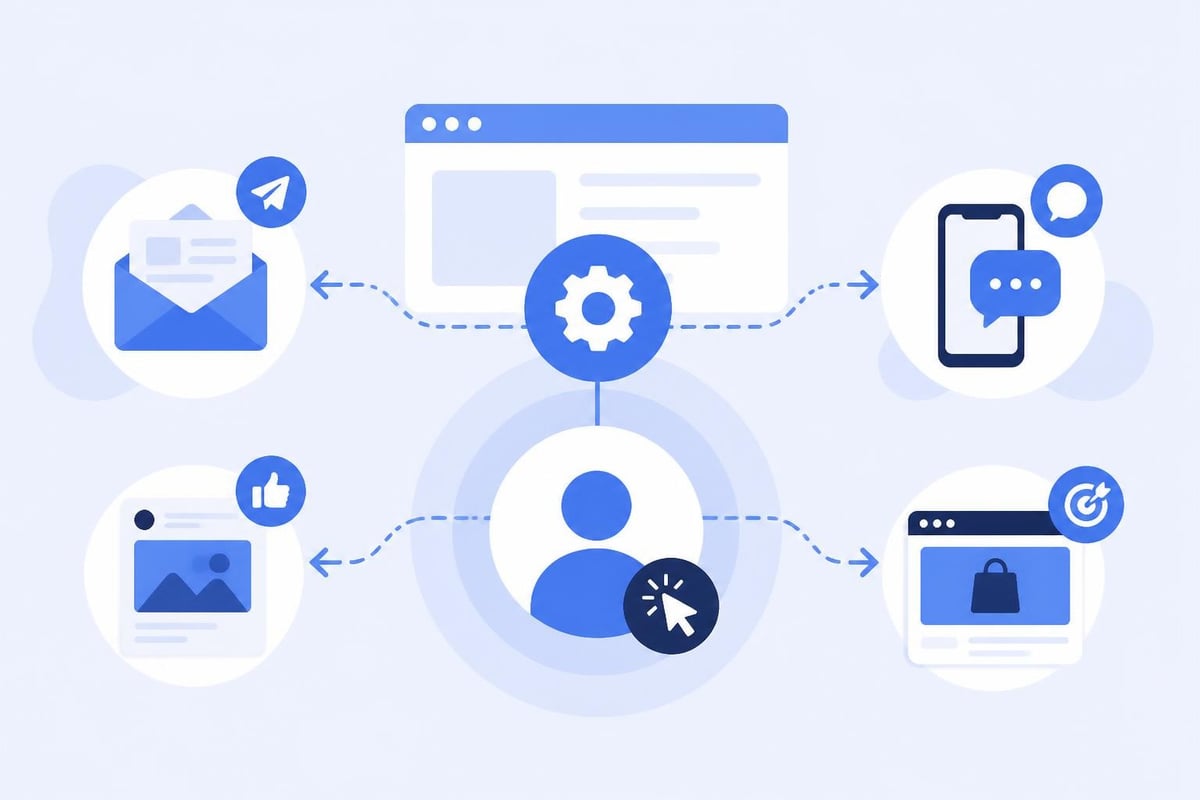
Customers interact with brands across email, social media, websites, mobile apps, and offline channels. Your marketing automation strategy must orchestrate consistent experiences regardless of where interactions occur.
| Channel | Automation Capability | Primary Use Case |
|---|---|---|
| Highly sophisticated | Nurture sequences, transactional messages | |
| SMS | Time-sensitive alerts | Appointment reminders, flash promotions |
| Push Notifications | Real-time engagement | App user retention, location-based offers |
| Retargeting Ads | Visual reinforcement | Brand awareness, abandoned cart recovery |
| Direct Mail | Tangible impact | High-value prospects, VIP customers |
The most effective strategies use multiple channels in coordinated campaigns rather than siloed efforts. A prospect who downloads a whitepaper might receive an immediate email, see retargeting ads reinforcing key concepts, and get an SMS reminder before a related webinar.
Personalization at Scale Through Dynamic Content
Generic messages destroy the efficiency gains automation provides. Dynamic content allows you to deliver personalized experiences to thousands of customers simultaneously without creating thousands of individual messages.
Content Variation Strategies
Build content libraries organized by customer segments, journey stages, and pain points. Then create rules that automatically select appropriate content based on recipient attributes:
- Industry-specific case studies for B2B audiences
- Product recommendations based on browsing history
- Pricing tiers matched to company size or revenue
- Regional offers reflecting local preferences
- Role-based messaging addressing specific job functions
Dynamic content extends beyond simple mail merge fields. Advanced implementations adjust entire email layouts, recommended products, imagery, and calls-to-action based on what you know about each recipient.
Testing and Optimization Cycles
A robust marketing automation strategy treats every campaign as a learning opportunity. Developing effective automation strategies requires continuous testing to identify what resonates with different audience segments.
Implement systematic A/B testing for:
- Subject lines and preview text
- Call-to-action button copy and placement
- Email send times and frequency
- Landing page layouts and forms
- Offer positioning and incentive structures
Testing extends to your links as well. Different URLs, tracking parameters, and destination pages can significantly impact conversion rates. Smart marketers test these variables just as rigorously as they test email creative.
Measuring Performance and Attribution
Marketing automation generates enormous amounts of data, but data without analysis provides no value. Your strategy must include robust measurement frameworks that connect automation activities to business outcomes.
Key Performance Indicators by Objective
Different objectives require different metrics. Align your KPIs with the goals you established during the foundation phase:
Lead Generation Focus:
- Form completion rate
- Cost per lead
- Lead quality score
- MQL to SQL conversion rate
Customer Retention Focus:
- Customer churn rate
- Repeat purchase frequency
- Average order value over time
- Customer satisfaction scores
Revenue Acceleration Focus:
- Sales cycle length
- Win rate percentage
- Average deal size
- Customer lifetime value
Track both leading indicators that predict future performance and lagging indicators that confirm results. This balanced approach allows you to make proactive adjustments before problems impact revenue.
Attribution Modeling for Complex Journeys
Modern buyers rarely convert after a single touchpoint. They research extensively, engage through multiple channels, and take weeks or months to make decisions. Your marketing automation strategy needs attribution models that credit appropriate touchpoints rather than oversimplifying complex journeys.
| Attribution Model | Best For | Limitation |
|---|---|---|
| First Touch | Brand awareness campaigns | Ignores nurture value |
| Last Touch | Direct response marketing | Overlooks earlier influences |
| Linear | Team collaboration | Treats all touches equally |
| Time Decay | Long sales cycles | May undervalue early awareness |
| Algorithmic | Data-rich environments | Requires significant volume |
Many organizations use multiple models to gain different perspectives on campaign performance. A first-touch model shows which channels generate awareness, while a last-touch model reveals what closes deals.
Advanced Strategies for Mature Programs
Once you've mastered fundamental automation, advanced techniques can dramatically improve performance and create competitive advantages that are difficult for rivals to replicate.
Predictive Analytics and Lead Scoring
Machine learning models can analyze historical data to predict which leads are most likely to convert, which customers risk churning, and which products individual buyers will want next. Incorporate these predictions into your automation workflows to prioritize high-value opportunities.
Build lead scoring models that consider:
- Demographic fit with ideal customer profile
- Engagement intensity and recency
- Content consumption patterns
- Website behavior and page views
- Social media interactions
- Email engagement metrics
Scores should trigger different automation paths. High-scoring leads might route immediately to sales, while lower-scoring prospects enter extended nurture sequences designed to build interest over time.
Account-Based Marketing Automation
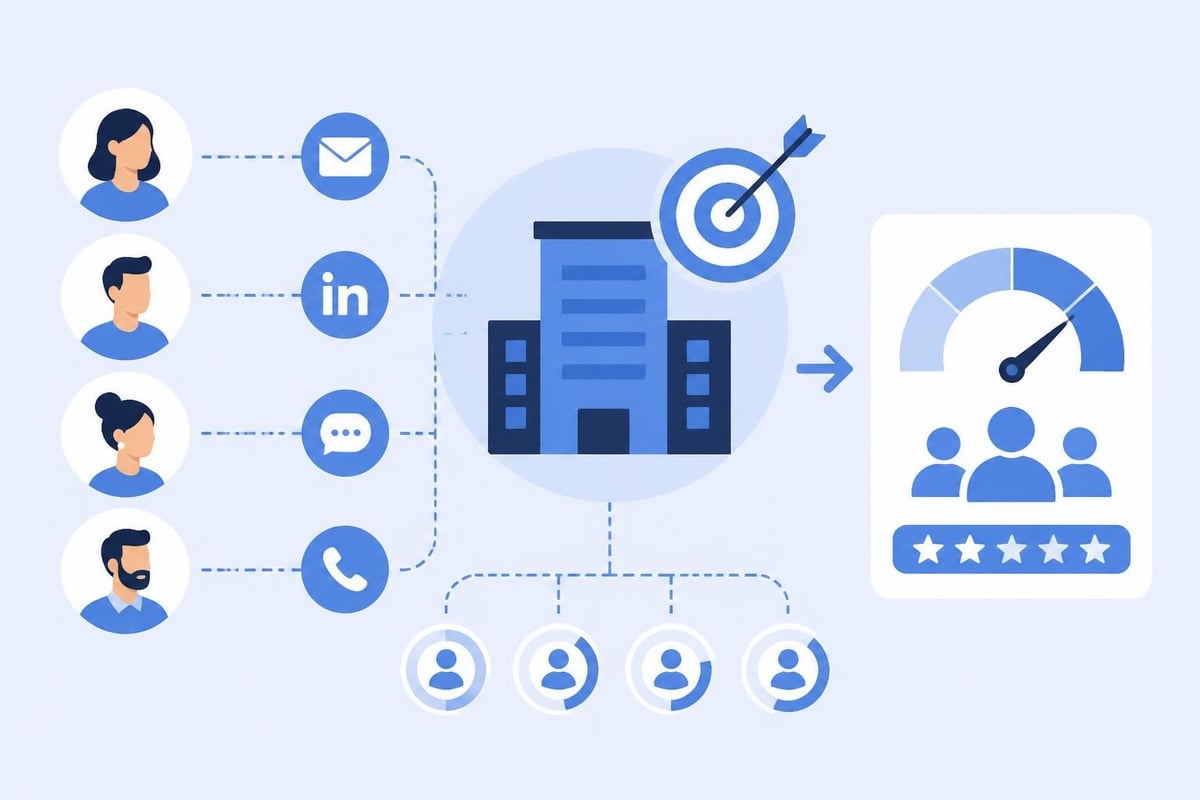
For B2B companies with high-value accounts, account-based marketing requires coordinating multiple stakeholders within target organizations. Automation makes ABM scalable by orchestrating personalized outreach to numerous contacts while maintaining account-level consistency.
Crafting successful automation strategies for ABM involves mapping organization charts, tracking engagement across all contacts, and triggering sales alerts when collective account activity suggests readiness.
Integration and Scalability Considerations
As your marketing automation strategy matures, integration capabilities and scalability become critical factors determining long-term success. Systems that work beautifully with 1,000 contacts may collapse under the weight of 100,000 or fail to connect with essential business platforms.
API Connectivity and Data Flows
Modern marketing technology stacks typically include 10-20 different platforms that must share data seamlessly. Evaluate automation platforms based on:
- Native integrations with your existing tools
- API documentation quality and developer resources
- Webhook support for real-time data synchronization
- Data transformation capabilities
- Error handling and logging for troubleshooting
Strong integration capabilities allow you to build sophisticated workflows that span multiple systems. A prospect who downloads content on your website can automatically sync to your CRM, receive a welcome email, get added to retargeting audiences, and trigger notifications to sales representatives, all without manual intervention.
Governance and Compliance Frameworks
Automation amplifies both positive and negative actions. A poorly configured workflow can send thousands of inappropriate messages before anyone notices. Your marketing automation strategy must include governance mechanisms that prevent these disasters.
Implement approval processes for:
- New automation workflows before activation
- Major changes to existing sequences
- Database segmentation rules
- Personalization token usage
- Third-party data integrations
Compliance with regulations like GDPR, CCPA, and CAN-SPAM requires automated processes for consent management, preference centers, and data deletion requests. Build these requirements into your automation framework from the beginning rather than retrofitting them later.
Optimizing Human-Automation Balance
The most successful marketing automation strategy enhances human capabilities rather than attempting to replace them entirely. Preserving authentic storytelling becomes increasingly important as automation becomes more sophisticated.
When to Automate and When to Personalize
Not every customer interaction should be automated. Reserve human involvement for:
- High-value prospect interactions
- Complex customer questions or concerns
- Relationship-building with key accounts
- Crisis management and reputation issues
- Creative strategy and campaign development
Use automation for repetitive, high-volume tasks that don't require human judgment. Data entry, lead routing, follow-up scheduling, and basic nurture sequences are ideal automation candidates. Creative strategy, empathetic customer service, and strategic decision-making remain distinctly human domains.
Continuous Learning and Iteration
Your marketing automation strategy should evolve based on performance data and changing customer expectations. Establish quarterly review cycles that examine:
- Campaign performance against benchmarks
- Workflow completion and dropout rates
- Customer feedback and satisfaction scores
- Technology stack efficiency and costs
- Competitive landscape and industry trends
Use insights from these reviews to refine segmentation, update messaging, test new channels, and optimize workflows. The companies that succeed with automation treat it as an ongoing practice rather than a one-time implementation project.
Marketing automation strategy transforms how businesses engage customers, combining systematic processes with personalized experiences that drive measurable results. Success requires clear objectives, deep customer understanding, robust data architecture, and continuous optimization based on performance insights. When implemented thoughtfully, automation frees marketing teams to focus on strategy and creativity while ensuring no opportunity falls through the cracks. Trimy helps businesses maximize their marketing automation efforts by providing the link intelligence and analytics needed to understand what's actually working across campaigns, turning every link into actionable data that improves performance and drives revenue growth.