Marketing Campaign Management: A Complete 2026 Guide

Marketing campaign management has evolved from simple promotional pushes into a sophisticated discipline that requires strategic planning, cross-functional coordination, and data-driven decision-making. In 2026, successful marketers must orchestrate complex campaigns across multiple channels while maintaining consistent messaging, tracking performance in real-time, and adapting strategies based on actionable insights. The difference between campaigns that drive meaningful ROI and those that drain budgets often comes down to how well teams manage the entire campaign lifecycle.
Understanding Marketing Campaign Management Fundamentals
Marketing campaign management encompasses the end-to-end process of planning, executing, tracking, and optimizing promotional initiatives designed to achieve specific business objectives. This discipline requires coordinating resources, timelines, creative assets, and distribution channels while maintaining alignment with broader marketing goals.
The core components of effective campaign management include clear objective setting, audience segmentation, budget allocation, creative development, channel selection, and performance measurement. Each component must work in harmony to create campaigns that resonate with target audiences and deliver measurable results.
The Strategic Planning Phase
Before launching any campaign, successful marketing teams invest significant time in strategic planning. This phase establishes the foundation for everything that follows and determines whether your campaign will achieve its intended outcomes.
Key planning elements include:
- Defining specific, measurable campaign objectives tied to business goals
- Identifying target audience segments with detailed personas
- Establishing realistic budgets with allocation across channels
- Setting clear timelines with milestones and deadlines
- Determining success metrics and KPIs
According to best practices for marketing campaign management, cross-functional collaboration during the planning phase significantly increases campaign success rates. Teams that involve sales, product, and customer service stakeholders create more comprehensive campaigns that address real customer needs.

Building an Effective Campaign Management Process
A repeatable campaign management process enables teams to scale their efforts without sacrificing quality or consistency. The most effective processes break down into distinct phases that provide structure while allowing flexibility for creative execution.
The Five-Stage Framework
Marketing campaign management typically follows five critical stages that guide campaigns from concept to completion:
- Intake and briefing - Capturing requirements, objectives, and stakeholder expectations
- Strategic planning - Developing campaign strategy, messaging, and tactical approach
- Execution and deployment - Creating assets, launching campaigns, and activating channels
- Monitoring and reporting - Tracking performance metrics and gathering real-time data
- Analysis and optimization - Evaluating results and implementing improvements
Each stage requires specific deliverables, approvals, and checkpoints to maintain campaign momentum and quality standards. Teams that document their processes create institutional knowledge that improves with each campaign iteration.
Managing Multiple Campaigns Simultaneously
Most marketing teams juggle several campaigns at various stages of the lifecycle. This complexity demands robust organizational systems and clear prioritization frameworks to prevent chaos and ensure consistent execution quality.
| Challenge | Solution | Benefit |
|---|---|---|
| Conflicting timelines | Centralized campaign calendar | Clear visibility across all initiatives |
| Resource constraints | Prioritization matrix | Optimal allocation of limited resources |
| Inconsistent messaging | Brand guidelines and templates | Cohesive cross-campaign experience |
| Data silos | Integrated tracking systems | Unified performance view |
The ability to manage multiple marketing campaigns without chaos requires establishing clear ownership, standardized workflows, and communication protocols that keep stakeholders aligned throughout the campaign lifecycle.
Audience Segmentation and Targeting Strategies
Effective marketing campaign management relies heavily on understanding who you're trying to reach and tailoring messages to resonate with specific audience segments. Generic, one-size-fits-all campaigns rarely achieve the performance of highly targeted initiatives.
Creating Actionable Audience Segments
Modern marketers segment audiences based on multiple criteria that go beyond basic demographics. Behavioral data, psychographic attributes, purchase history, engagement patterns, and lifecycle stage all contribute to building comprehensive audience profiles.
Advanced segmentation approaches include:
- Behavioral segmentation based on website interactions and content consumption
- Firmographic targeting for B2B campaigns (company size, industry, revenue)
- Intent-based segments identified through search behavior and topic engagement
- Customer lifecycle stages (awareness, consideration, decision, retention)
- Value-based segmentation using customer lifetime value predictions
When campaigns speak directly to specific audience needs and pain points, conversion rates typically increase while acquisition costs decrease. This precision targeting requires robust data collection and analysis capabilities that inform campaign development.

Channel Selection and Integrated Campaign Execution
Choosing the right channels for your marketing campaign management strategy determines how effectively you reach your target audience. In 2026, successful campaigns leverage integrated multi-channel approaches rather than relying on single platforms.
Evaluating Channel Effectiveness
Each marketing channel offers distinct advantages depending on your objectives, audience, and resources. Email excels for nurturing existing relationships, while paid search captures high-intent prospects actively seeking solutions.
Social media platforms provide opportunities for brand building and community engagement. Content marketing establishes thought leadership and organic search visibility. Paid social enables precise targeting based on detailed user attributes and behaviors.
The comprehensive approach to campaign management emphasizes integrated channel strategies where each touchpoint reinforces others, creating a cohesive customer experience across the entire journey.
Maintaining Consistency Across Channels
While each channel requires customized content formats and approaches, successful marketing campaign management ensures consistent messaging and branding throughout. This consistency builds recognition and trust as prospects encounter your campaign across multiple touchpoints.
Cross-channel consistency elements:
- Unified value proposition and key messages
- Coordinated visual identity and brand elements
- Synchronized timing and promotional offers
- Complementary calls-to-action that guide prospects forward
- Aligned targeting criteria to reach the same audiences
Teams that maintain campaign consistency while adapting to channel-specific best practices achieve significantly higher engagement and conversion rates than those treating each channel as an isolated initiative.
Tracking Performance and Campaign Analytics
No marketing campaign management process is complete without robust tracking mechanisms that provide visibility into what's working and what requires adjustment. Data-driven decision-making separates high-performing campaigns from those that waste resources on ineffective tactics.
Establishing Key Performance Indicators
Before launching campaigns, define the specific metrics that indicate success. These KPIs should directly tie to your campaign objectives and provide actionable insights that inform optimization decisions.
| Campaign Objective | Primary KPIs | Secondary Metrics |
|---|---|---|
| Brand Awareness | Impressions, reach, share of voice | Engagement rate, brand lift |
| Lead Generation | Conversion rate, cost per lead | Form completions, landing page performance |
| Sales Revenue | Revenue, ROI, customer acquisition cost | Average order value, conversion rate |
| Customer Retention | Retention rate, repeat purchase rate | Customer lifetime value, churn rate |
Effective tracking requires implementing proper measurement frameworks from the campaign's inception. Planning and executing marketing campaigns becomes exponentially easier when measurement systems are built into the process rather than added as afterthoughts.
Advanced Tracking Methodologies
Modern marketing campaign management leverages sophisticated tracking capabilities that provide granular insights into campaign performance. Attribution modeling helps understand which touchpoints contribute most significantly to conversions across complex customer journeys.
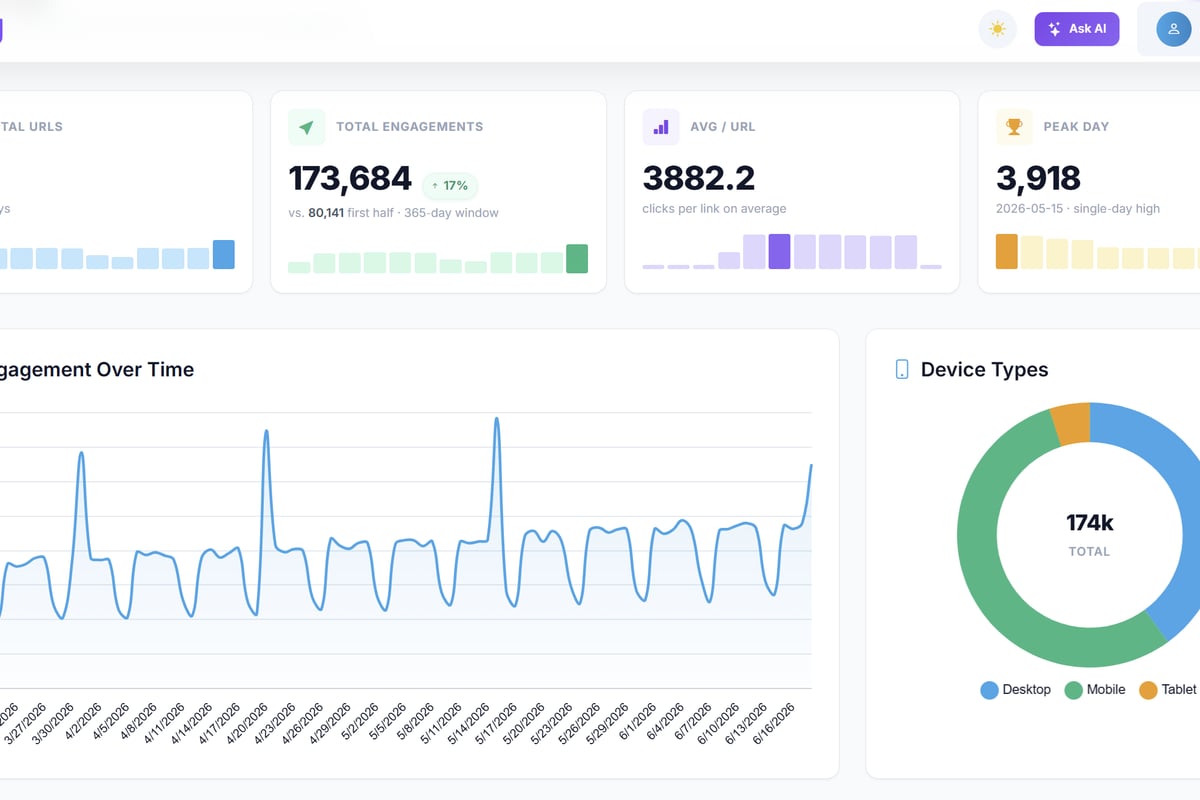
Link-level tracking has emerged as a particularly valuable methodology for understanding exactly how different campaign elements perform. By implementing comprehensive UTM parameters and campaign tracking codes on every link, marketers gain precise visibility into which channels, messages, and creative variants drive desired actions.
This level of tracking enables sophisticated analysis including:
- Channel effectiveness comparisons based on actual conversion data
- A/B testing results measured by engagement and conversion metrics
- Attribution analysis showing multi-touch conversion paths
- Audience segment performance across different campaign elements
- Geographic and temporal patterns in campaign response
Platforms like Trimy provide marketers with advanced link management capabilities that transform every campaign URL into a data collection point, offering deep insights into traffic sources, user behavior, and conversion patterns that inform optimization decisions.
Budget Management and Resource Allocation
Financial stewardship represents a critical component of marketing campaign management that directly impacts ROI. Effective budget management ensures resources flow to the highest-performing initiatives while maintaining flexibility to capitalize on unexpected opportunities.
Strategic Budget Allocation
Smart marketers allocate budgets based on expected returns rather than distributing resources evenly across all channels. This requires understanding the historical performance of different tactics and making informed predictions about future effectiveness.
The seven-step process for successful marketing campaign management emphasizes that budget decisions should align with strategic objectives and audience reach potential rather than defaulting to previous spending patterns.
Budget allocation considerations:
- Historical performance data for similar campaigns
- Audience size and accessibility through different channels
- Competitive landscape and cost trends
- Testing budget for new tactics and experimental approaches
- Reserve funds for optimization and mid-campaign adjustments
Monitoring Campaign Spend
Real-time budget monitoring prevents overspending while identifying underperforming areas where reallocation could improve overall campaign results. Daily or weekly spend reviews enable quick pivots when campaigns aren't delivering expected returns.
Modern marketing campaign management platforms provide spend tracking dashboards that consolidate costs across multiple channels, making it easier to maintain budgetary control while managing complex, multi-channel initiatives.
Creative Development and Messaging Strategy
Compelling creative assets and resonant messaging form the heart of any campaign. Even with perfect targeting and optimal channel selection, poorly executed creative work undermines campaign effectiveness.
Crafting Messages That Convert
Effective campaign messaging addresses specific audience pain points while clearly articulating how your solution provides value. The most successful campaigns avoid generic claims in favor of concrete benefits supported by proof points.
Message development should consider where prospects are in their buyer journey. Awareness-stage messaging differs significantly from consideration-stage content, which in turn differs from decision-stage communications.
- Identify the core value proposition that differentiates your offering
- Develop supporting messages that address common objections and questions
- Create channel-specific variants that adapt the core message to each platform
- Test different approaches through A/B testing and multivariate experiments
- Refine based on performance data to optimize conversion rates
Asset Production and Quality Control
Campaign assets range from simple text ads to complex video productions, interactive tools, and immersive experiences. Regardless of format, maintaining consistent quality standards ensures your brand is represented professionally across all touchpoints.
Quality control processes should include multiple review stages, brand guideline compliance checks, legal and compliance reviews when necessary, and technical testing to ensure assets function properly across devices and platforms.

Optimization and Continuous Improvement
The most sophisticated marketing campaign management practices treat campaigns as living initiatives that evolve based on performance data rather than static programs that run unchanged from launch to completion.
Real-Time Campaign Optimization
Modern digital channels enable real-time adjustments that would have been impossible in traditional media environments. Monitoring campaign performance daily or even hourly allows marketers to identify trends early and make adjustments before significant budget waste occurs.
Optimization opportunities to monitor:
- Underperforming audience segments that should be excluded or adjusted
- High-performing creative variants that deserve increased budget allocation
- Channel mix adjustments based on comparative conversion costs
- Messaging refinements based on engagement and conversion patterns
- Landing page improvements to increase conversion rates
Teams that manage successful campaigns establish clear optimization protocols that define when adjustments should be made and who has authority to implement changes without derailing the broader campaign strategy.
Post-Campaign Analysis
When campaigns conclude, comprehensive performance analysis provides insights that inform future initiatives. This analysis should examine not just whether objectives were achieved, but why certain approaches worked while others fell short.
Detailed post-mortems identify successful tactics worth repeating, ineffective elements to avoid, unexpected insights about audience preferences, technical issues that impacted performance, and opportunities for process improvements in future campaigns.
Technology and Tools for Campaign Management
The right technology stack streamlines marketing campaign management by automating repetitive tasks, centralizing data, and providing visibility across complex, multi-channel initiatives. However, technology should enable your process rather than dictating it.
Essential Campaign Management Capabilities
Effective campaign management platforms provide centralized planning tools, collaborative workflows, asset management systems, integrated analytics, and reporting dashboards that consolidate performance data across channels.
Integration capabilities determine how well different tools work together within your marketing technology ecosystem. Platforms that connect seamlessly with CRM systems, analytics tools, advertising platforms, and content management systems reduce manual data transfers and create more reliable reporting.
Selecting the Right Tools
Tool selection should prioritize solving your specific challenges rather than chasing the latest features. Small teams might benefit most from all-in-one platforms that consolidate multiple functions, while enterprise organizations often require specialized best-of-breed solutions integrated through APIs.
Consider your team's technical capabilities, integration requirements with existing systems, scalability to support growth, vendor stability and support quality, and total cost of ownership including implementation and training when evaluating marketing campaign management platforms.
Team Structure and Collaboration Models
Successful marketing campaign management requires effective collaboration among diverse team members with specialized skills. The organizational structure you choose impacts how efficiently campaigns move from concept to completion.
Cross-Functional Campaign Teams
Modern campaigns typically involve marketers, designers, copywriters, developers, data analysts, and subject matter experts who each contribute specialized expertise. Clear role definitions and communication protocols prevent confusion about responsibilities and decision-making authority.
Effective team structures include:
- Centralized model - Single team manages all campaigns with specialized functional experts
- Distributed model - Multiple teams manage campaigns for different products or regions
- Hybrid model - Centralized strategy and standards with distributed execution teams
- Agency partnership model - Internal team provides strategy while agencies handle execution
The practical guide to managing multiple campaigns emphasizes that regardless of structure, clearly documented processes and regular communication cadences keep teams aligned throughout the campaign lifecycle.
Communication and Project Management
Regular status updates, centralized project tracking, and documented decisions maintain campaign momentum while preventing misalignment among team members. Weekly campaign reviews provide forums to address challenges, share insights, and make collective decisions about optimization opportunities.
Project management tools designed for marketing teams provide specialized features like creative review workflows, campaign calendars, and budget tracking that generic project management platforms lack.
Effective marketing campaign management in 2026 requires balancing strategic planning with tactical execution, leveraging data insights while maintaining creative excellence, and coordinating complex multi-channel initiatives without losing sight of core objectives. Success comes from establishing repeatable processes, investing in proper measurement frameworks, and continuously optimizing based on performance data. Trimy helps marketing teams transform every campaign link into an intelligence asset, providing the deep analytics and tracking capabilities necessary to understand what drives results and optimize campaigns for maximum ROI.