Organic Search vs Paid Search: A Complete Guide
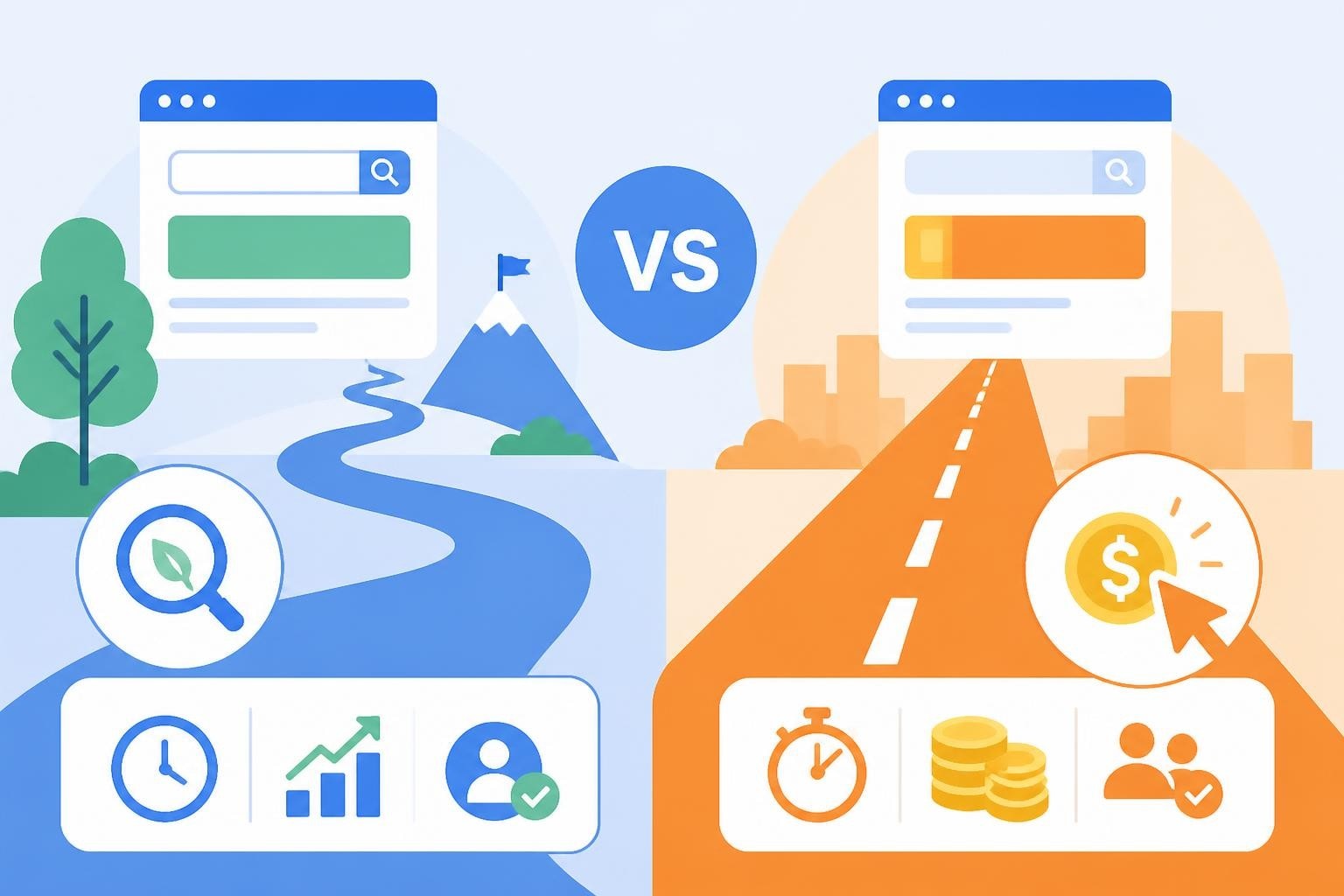
Digital marketing success hinges on visibility, and search engines remain the primary gateway between businesses and potential customers. Understanding the fundamental distinction between organic search vs paid search is essential for allocating resources effectively and building a sustainable growth strategy. Both approaches deliver traffic from search engines, but they operate on entirely different principles, timelines, and cost structures. The choice between them-or the balance of both-can determine whether your marketing budget drives immediate returns or builds lasting equity in your online presence.
What Is Organic Search?
Organic search refers to the unpaid listings that appear on search engine results pages (SERPs) based on their relevance to a user's query. These results are determined by complex algorithms that evaluate hundreds of ranking factors, including content quality, site authority, user experience, and technical optimization.
When users conduct a search, organic search results typically appear below any paid advertisements, though their exact placement varies depending on the query type and SERP features. Search engines like Google use sophisticated crawlers to index web pages and rank them according to perceived value and relevance.
The Foundation of Organic Visibility
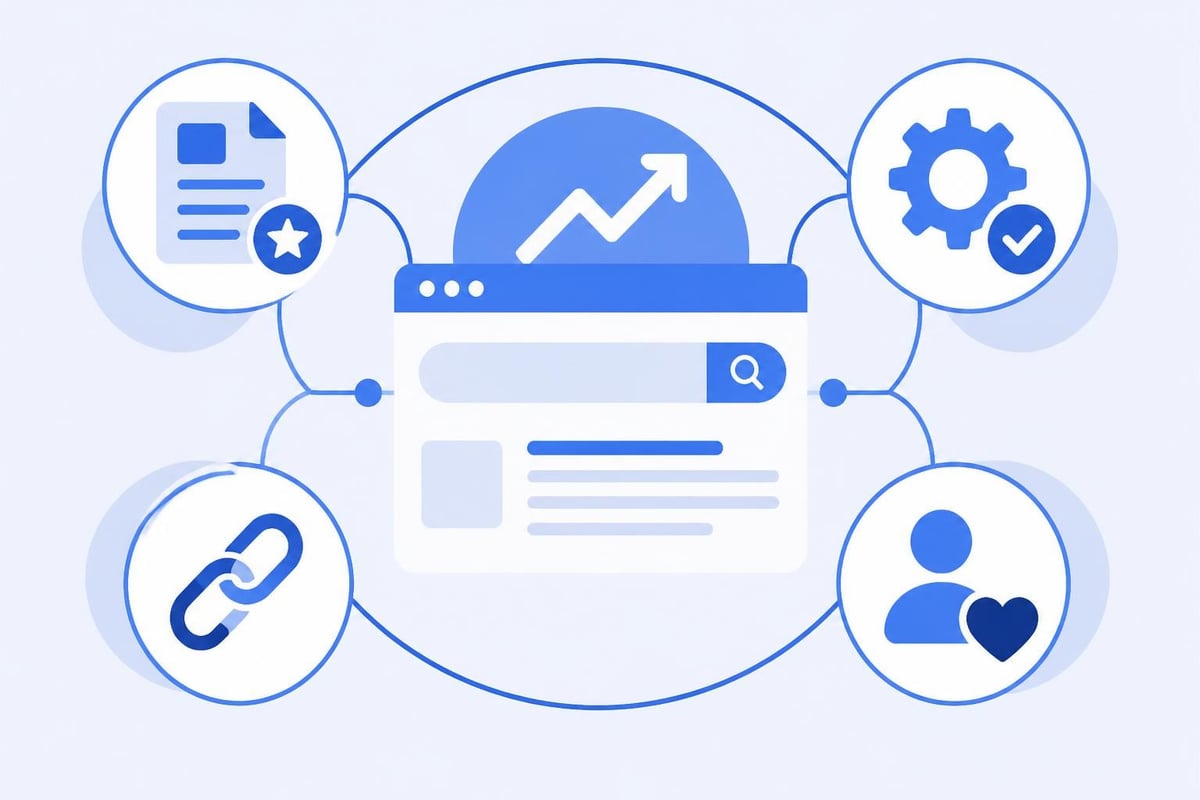
Building organic search visibility requires a comprehensive approach to search engine optimization (SEO). This includes:
- On-page optimization: Creating high-quality content with strategic keyword placement, optimized meta tags, and proper heading structure
- Technical SEO: Ensuring fast load times, mobile responsiveness, secure connections, and clean site architecture
- Off-page signals: Earning backlinks from authoritative sources, building brand mentions, and establishing topical authority
- User experience: Designing intuitive navigation, reducing bounce rates, and maximizing engagement metrics
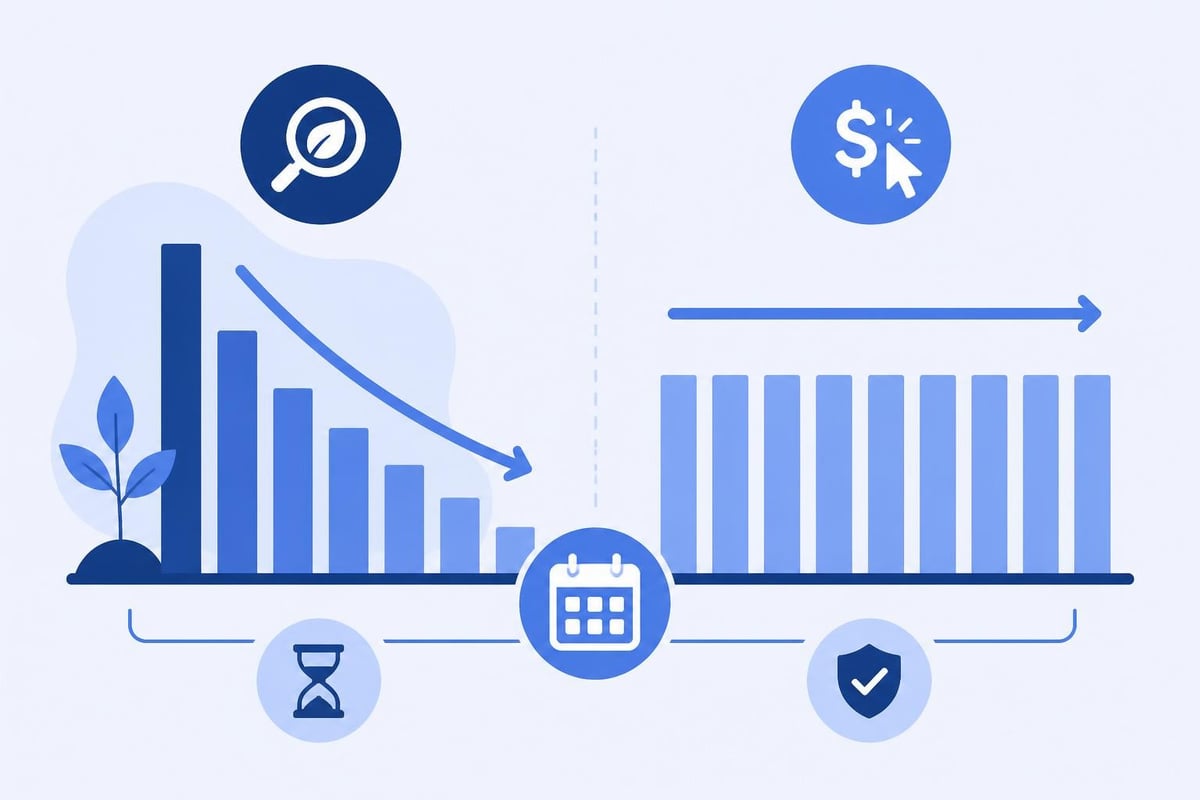
The effort required to rank organically is substantial, but the results compound over time. Unlike paid channels that stop delivering traffic the moment you stop paying, organic rankings can persist for months or years with proper maintenance.
The Timeline for Organic Results
One critical consideration in the organic search vs paid search decision is patience. Organic search typically requires three to six months before showing meaningful results, and competitive industries may demand even longer timelines. This delayed gratification frustrates businesses seeking immediate returns, but the investment builds cumulative value that paid advertising cannot replicate.
What Is Paid Search?
Paid search, commonly known as pay-per-click (PPC) advertising or search engine marketing (SEM), involves bidding on keywords to display advertisements at the top of search results. Advertisers pay each time a user clicks their ad, with costs varying based on competition, keyword value, and quality scores.
These advertisements appear in designated positions, typically above organic results or in sidebar placements. They're clearly marked as "Sponsored" or "Ad" to distinguish them from organic listings, though research shows that users often struggle to differentiate between paid and organic results on modern SERPs.
How Paid Search Campaigns Operate
Paid search platforms like Google Ads and Microsoft Advertising operate on auction-based systems where advertisers compete for placement. The process involves several key components:
- Keyword research and selection: Identifying search terms that align with business objectives and customer intent
- Bid management: Setting maximum cost-per-click amounts for each keyword or ad group
- Ad creation: Writing compelling headlines and descriptions within character limits
- Landing page optimization: Designing dedicated pages that match ad promises and drive conversions
- Quality Score optimization: Improving ad relevance, click-through rates, and landing page experience to reduce costs
The beauty of paid search lies in its immediacy. Campaigns can launch within hours and begin driving traffic almost instantly, making it ideal for time-sensitive promotions, new product launches, or businesses that cannot wait for organic rankings to develop.
Cost Comparison: Investment vs Expense
The financial dimension of organic search vs paid search represents perhaps the most significant difference between these strategies. Understanding how costs accumulate and deliver value is crucial for budget allocation.
| Factor | Organic Search | Paid Search |
|---|---|---|
| Upfront Investment | High (content, technical work, tools) | Moderate (platform setup, initial creative) |
| Ongoing Costs | Medium (content updates, monitoring) | High (continuous ad spend per click) |
| Cost per Acquisition | Decreases over time | Remains relatively constant |
| Budget Predictability | Low (results vary by effort) | High (spend caps available) |
| Scalability Cost | Low (content scales efficiently) | Linear (more clicks = more cost) |
Organic search functions as an investment that appreciates over time. The initial costs are substantial-whether hiring SEO specialists, creating quality content, or building authoritative backlinks-but each ranking improvement delivers ongoing traffic without incremental costs.
Paid search operates as an operational expense. Every visitor carries a price tag, and traffic stops immediately when budgets are exhausted. According to research on ROI comparisons, organic search often delivers better long-term returns, though paid search can generate faster initial revenue.
Speed and Visibility Timeline
The temporal dimension separates these approaches dramatically. Businesses must align their expectations with realistic timelines for each channel.
Immediate Results with Paid Search
Paid search delivers unprecedented speed. A well-configured campaign can appear at the top of search results within hours of launch. This immediacy serves multiple business scenarios:
- Product launches: Capturing demand immediately when releasing new offerings
- Seasonal campaigns: Maximizing visibility during peak shopping periods
- Event promotion: Driving registrations with tight deadlines
- Competitive response: Countering competitor campaigns quickly
- Testing demand: Validating market interest before investing in organic efforts
Building Momentum with Organic Search
Organic visibility follows an entirely different curve. The relationship between effort and results is neither linear nor immediate. Initial months may show minimal traffic growth, followed by accelerating returns as domain authority builds and content begins ranking.
This delayed payoff requires either financial runway to sustain the effort or supplementary traffic sources during the building phase. However, once established, organic rankings can deliver traffic for years with minimal ongoing investment.
Click-Through Rates and User Trust
User behavior differs significantly between organic and paid results, impacting the quality and quantity of traffic each generates. Statistics on organic versus paid search reveal compelling patterns in user preferences and engagement.
Research consistently shows that organic listings receive substantially higher click-through rates than paid advertisements, particularly for informational queries. Users demonstrate greater trust in algorithmically-determined rankings than paid placements, viewing organic results as more credible and relevant.
Conversion Rate Considerations
Beyond raw traffic volume, conversion rates tell a critical story. Paid search often delivers higher conversion rates for commercial intent keywords because advertisers can precisely target users ready to purchase and direct them to optimized landing pages.
Organic traffic typically shows lower conversion rates on average but delivers higher overall volume at mature sites. The aggregate value can exceed paid search despite individual visitor conversion rates being lower.
Strategic Advantages of Organic Search
Organic search offers unique benefits that paid advertising cannot replicate, making it essential for sustainable digital presence.
Long-term asset building: Every piece of optimized content and earned backlink becomes a permanent asset that continues generating value indefinitely. This creates compounding returns where today's SEO investments deliver traffic for years.
Trust and credibility: Users inherently trust organic rankings more than advertisements. Appearing in top organic positions signals authority and expertise in ways that paid placement cannot convey.
Comprehensive coverage: Organic content can target informational, navigational, and commercial queries across the entire customer journey, building relationships long before purchase intent crystallizes.
Cost efficiency at scale: Once rankings are established, the marginal cost of additional traffic approaches zero. High-traffic sites can generate millions of visits without proportional cost increases.
Competitive moat: Strong organic presence takes significant time and effort to build, creating barriers that competitors cannot quickly overcome with budget alone.
Strategic Advantages of Paid Search
Paid search provides distinct capabilities that make it indispensable for specific business objectives and situations.
- Precise audience targeting: Demographics, geographic locations, device types, and even household income levels can be targeted with granular precision
- Message testing: Multiple ad variations can run simultaneously, providing rapid feedback on messaging effectiveness
- Budget control: Daily spending caps and bid adjustments allow exact budget management
- Timing flexibility: Campaigns can launch, pause, or adjust instantly based on business needs
- Guaranteed visibility: Sufficient budget ensures placement regardless of organic ranking capabilities
The ability to iterate rapidly based on performance data makes paid search invaluable for optimizing messaging before investing in long-term content creation. Many successful businesses use paid search to identify winning angles that later inform their organic content strategy.
When to Prioritize Organic Search
Certain business situations strongly favor organic search investment as the primary channel for sustainable growth.
Established businesses with longer planning horizons benefit most from organic search. When immediate revenue pressure is manageable and the business can invest in assets that appreciate over time, SEO delivers superior lifetime value compared to paid channels.
Content-rich industries where educational material precedes purchasing decisions should prioritize organic presence. B2B companies, professional services, and complex technical products often require extensive research phases where organic content builds trust and authority before sales conversations begin.
Businesses with limited ongoing budgets find organic search more sustainable than paid advertising. While initial investment is required, the perpetual nature of organic traffic better serves companies that cannot commit to continuous ad spending.
Markets with extremely high paid search costs make organic search financially necessary. When cost-per-click reaches prohibitive levels, organic ranking becomes the only viable path to profitable customer acquisition.
When to Prioritize Paid Search
Specific circumstances make paid search the optimal primary channel, either temporarily or as an ongoing strategy.
New businesses without existing visibility require paid search to generate immediate traffic while organic efforts mature. The six-to-twelve month lag before SEO delivers meaningful results is untenable for most startups, making paid advertising essential for initial customer acquisition.
Time-sensitive opportunities like seasonal products, limited inventory, or event-based services demand the immediacy that only paid search provides. When the opportunity window is measured in weeks rather than months, organic search cannot respond quickly enough.
Highly competitive markets where organic ranking would require years of effort may justify ongoing paid search as the primary channel. When established competitors dominate organic results with decade-old domains and massive content libraries, paid search offers a more realistic path to visibility.
Testing new markets, products, or messaging benefits from paid search's rapid feedback loops. Validating demand and optimizing positioning through paid campaigns before committing to organic content investments reduces risk and improves resource allocation.
The Integrated Approach
The organic search vs paid search debate often presents a false choice. The most effective strategies integrate both channels to maximize their complementary strengths.
Using paid search to identify high-converting keywords and messaging provides invaluable data for organic content development. The conversion rates, engagement metrics, and audience insights from paid campaigns inform which topics deserve long-form content investment.
Conversely, organic content research reveals long-tail keyword opportunities and customer questions that can enhance paid search campaigns. Understanding the full spectrum of user intent across the customer journey improves both targeting precision and ad relevance.
| Strategy Element | Organic Search Role | Paid Search Role |
|---|---|---|
| Brand Awareness | Educational content builds authority | Sponsored content reaches new audiences |
| Consideration | Deep-dive guides answer questions | Retargeting nurtures interested prospects |
| Conversion | Product pages rank for buying terms | Shopping ads capture purchase intent |
| Retention | Resource content maintains engagement | Promotional campaigns drive repeat purchases |
Running both channels simultaneously provides defensive benefits as well. Competitors cannot outbid you for organic positions, and strong organic presence reduces dependence on paid channels when budgets tighten.
Measuring Success Across Both Channels
Effective measurement requires understanding the different metrics and timelines appropriate for each approach. The evolution of search engine results has made attribution more complex, but fundamental principles remain consistent.
For organic search, track ranking positions, organic traffic volume, pages indexed, domain authority metrics, and conversion rates from organic sources. Evaluate these metrics monthly or quarterly, as week-to-week fluctuations rarely indicate meaningful trends.
For paid search, monitor click-through rates, cost-per-click, quality scores, conversion rates, and return on ad spend. These metrics warrant weekly or even daily review, as paid campaigns benefit from rapid optimization cycles.
Attribution becomes critical when running both channels. Users frequently interact with both organic and paid listings during their journey, making last-click attribution inadequate. Multi-touch attribution models provide more accurate understanding of how channels work together to drive conversions.
Budget Allocation Framework
Determining the optimal split between organic and paid search requires assessing multiple business factors against your specific situation.
Consider your timeline: Businesses needing results within 90 days should allocate 60-80% of budgets to paid search. Companies with 6-12 month horizons can split budgets more evenly. Organizations planning for multi-year growth should emphasize organic search at 60-70% of total search marketing investment.
Evaluate competitive intensity: Research your industry's organic competition using keyword difficulty scores and competitor analysis. When organic competition is extreme, paid search provides a more realistic near-term path despite higher costs.
Assess budget sustainability: Calculate whether your business can maintain required paid search spending indefinitely. If not, allocate more heavily to organic search to build sustainable traffic sources that don't evaporate when budgets contract.
Account for resource availability: Organic search demands consistent content creation and technical expertise. Organizations lacking these capabilities may achieve better results by outsourcing SEO while managing paid campaigns internally, or vice versa depending on team strengths.
Common Misconceptions
Several persistent myths about organic search vs paid search lead businesses astray in their strategic planning.
The belief that organic search is "free" ignores the substantial labor, tools, and expertise required to rank competitively. While no per-click costs exist, the fully-loaded cost of organic traffic includes significant investment that should be measured against results.
Conversely, the assumption that paid search guarantees sales overlooks the importance of landing page optimization, offer strength, and market timing. Simply appearing at the top of results does not ensure conversions without compelling value propositions and seamless user experiences.
Another misconception suggests that paid search damages organic rankings or vice versa. Search engines maintain independence between paid and organic algorithms. Running paid campaigns does not hurt organic performance, nor does strong organic presence reduce the cost or effectiveness of paid advertising.
Finally, many believe they must choose exclusively between approaches. The most successful search marketing programs recognize these as complementary channels that amplify each other's effectiveness when properly coordinated.
Both organic search and paid search play vital roles in comprehensive digital marketing strategies, each offering distinct advantages that serve different business objectives and timelines. Success comes from understanding these differences and aligning your approach with your specific goals, resources, and competitive landscape. For marketers and developers seeking to maximize the return from both channels, Trimy provides the link intelligence and analytics infrastructure needed to track campaign performance, test messaging variations, and optimize routing across all your search marketing efforts-transforming every link into actionable revenue insights regardless of whether traffic originates from organic rankings or paid advertisements.