SMS Marketing Automation: Strategy Guide for 2026
SMS marketing automation has emerged as one of the most direct and powerful channels for engaging customers in 2026. With open rates exceeding 98% and response times averaging under three minutes, automated text messaging delivers immediacy that email and social media cannot match. Businesses leveraging sms marketing automation transform simple text messages into sophisticated revenue engines, using triggered workflows, behavioral targeting, and personalized content to connect with customers at precisely the right moments.
Understanding SMS Marketing Automation Fundamentals
SMS marketing automation refers to the systematic use of triggered, scheduled, and personalized text messages sent to customers based on specific actions, behaviors, or time-based conditions. Unlike manual text campaigns, automation creates self-running systems that respond to customer signals in real-time.
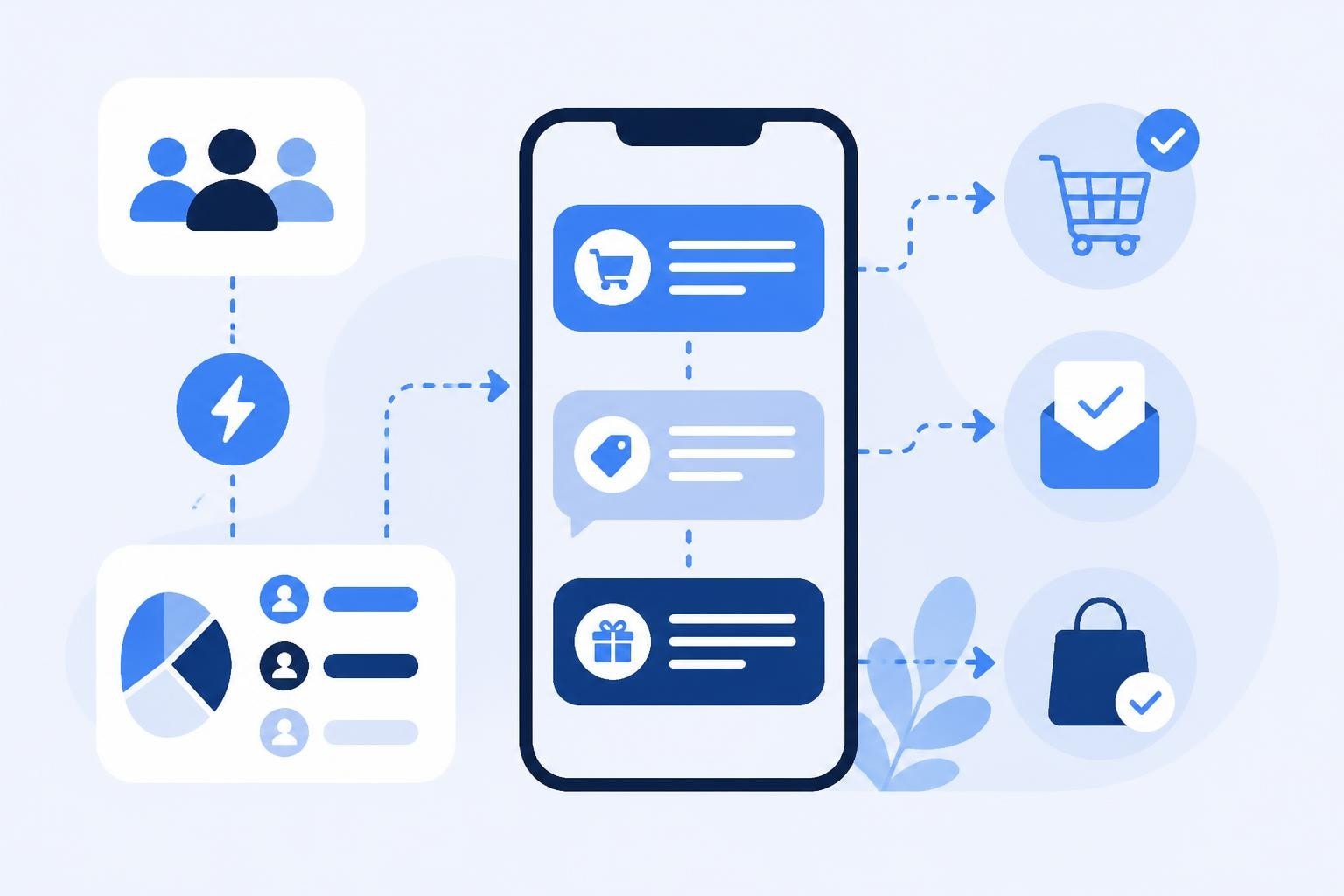
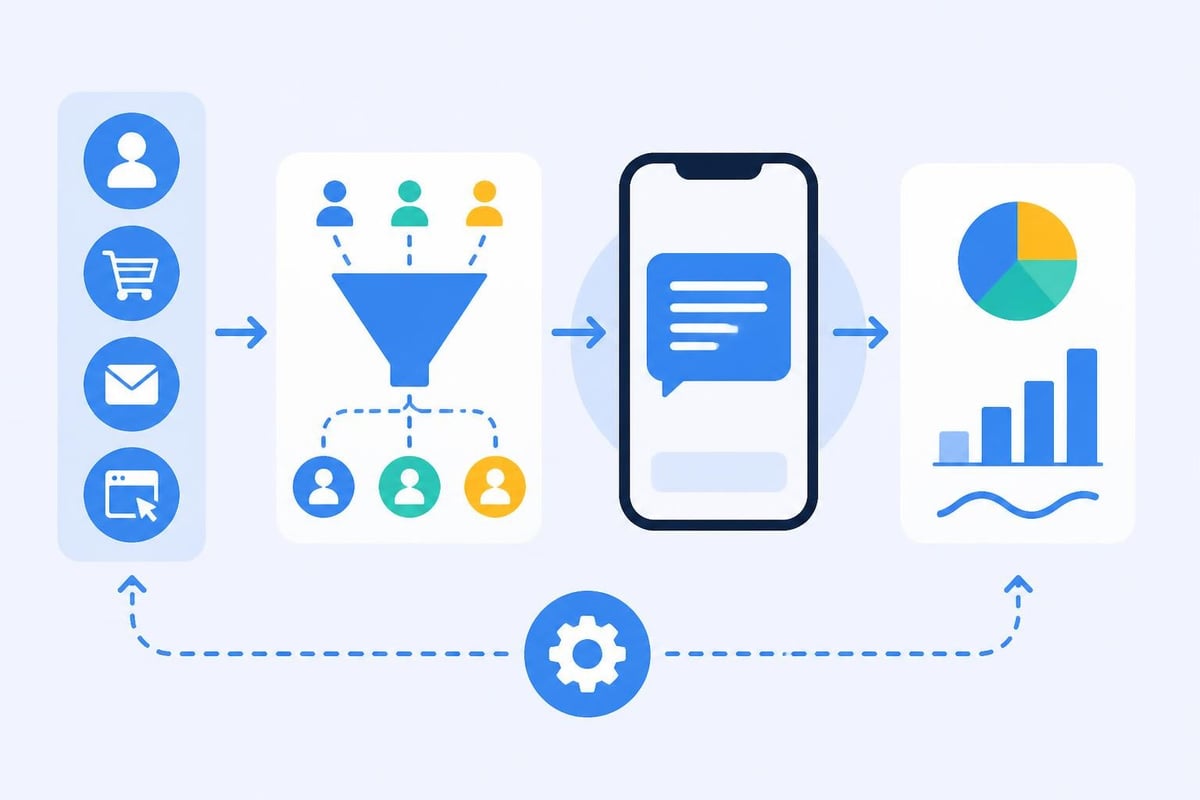
The technology combines customer data platforms, messaging APIs, and rule-based logic to deliver relevant content without constant human intervention. When a customer abandons their shopping cart, signs up for updates, or reaches a specific milestone, automated systems instantly recognize these triggers and respond with appropriate messaging.
Core Components of Automated SMS Systems
Modern sms marketing automation platforms integrate several essential elements that work together seamlessly:
- Trigger mechanisms that identify customer actions or time-based events
- Segmentation engines that group audiences by behavior, demographics, or purchase history
- Message templates with dynamic personalization fields
- Compliance tools ensuring TCPA and carrier regulation adherence
- Analytics dashboards tracking delivery rates, conversions, and revenue attribution
The infrastructure supporting these systems processes millions of messages daily while maintaining deliverability rates above 95%. Message queuing, retry logic, and carrier routing optimization ensure texts reach recipients even during high-volume periods.
Building Effective Automated SMS Campaigns
Successful sms marketing automation begins with strategic campaign design rather than technology selection. The most profitable automated campaigns share common structural elements that maximize engagement while respecting customer preferences.
Welcome Series Automation
New subscriber welcome sequences represent the highest-converting automated SMS campaigns. These multi-message series introduce your brand, set expectations, and drive initial conversions within the first 72 hours of subscription.
A properly structured welcome series includes:
- Immediate confirmation sent within 60 seconds of opt-in
- Brand introduction delivered 24 hours later with exclusive offer
- Product education sent on day three highlighting key features
- Conversion incentive delivered on day seven if no purchase occurred
According to real data-backed SMS marketing best practices, welcome messages achieve conversion rates 3-5 times higher than general promotional texts. The automation ensures consistent delivery regardless of when customers subscribe.
Abandoned Cart Recovery Sequences
Cart abandonment automation converts browsers into buyers by reminding customers about items left behind. These sequences typically deploy three messages over 24 hours, each escalating urgency and sweetening incentives.
| Message | Timing | Content Focus | Average Recovery Rate |
|---|---|---|---|
| Message 1 | 1 hour | Product reminder | 12-15% |
| Message 2 | 6 hours | Social proof + urgency | 8-10% |
| Message 3 | 24 hours | Discount incentive | 5-7% |
The cumulative effect recovers 25-32% of abandoned carts when properly executed. Automation ensures messages deploy at optimal times without requiring manual intervention for each abandonment event.
Personalization Strategies for Maximum Impact
Generic mass texting fails in 2026. Customers expect personalized experiences that acknowledge their individual preferences, behaviors, and purchase history. SMS marketing automation platforms now incorporate sophisticated personalization that extends far beyond inserting first names.
Behavioral Trigger Customization
Advanced automation systems analyze browsing patterns, purchase frequency, and engagement history to customize message content dynamically. A customer who frequently buys athletic shoes receives different product recommendations than someone who primarily purchases formal footwear.
Behavioral personalization examines:
- Browse history to identify product preferences
- Purchase frequency to determine optimal messaging cadence
- Engagement patterns to select ideal send times
- Channel preferences to coordinate SMS with email and push notifications
This level of customization requires robust data integration between your SMS platform and customer data infrastructure. The investment pays dividends through conversion rates that often exceed 40% for highly personalized triggered messages.
Geographic and Temporal Optimization
Location data and time zone awareness ensure automated messages arrive when customers are most receptive. A lunch special promotion triggers at 11:00 AM local time for each subscriber, regardless of their location across different time zones.
Weather-based triggers represent an emerging personalization frontier. Retailers automate messages promoting rain gear when precipitation is forecast in specific regions, or highlight cooling products during heat waves. These contextually aware campaigns achieve engagement rates 60-80% higher than generic promotions.

Compliance and Permission Management
SMS marketing automation operates within strict regulatory frameworks that protect consumers from unwanted messaging. The Telephone Consumer Protection Act (TCPA) and carrier-specific requirements create compliance obligations that automation systems must enforce automatically.
Opt-In and Consent Requirements
Every SMS marketing program requires explicit, documented consent before sending promotional messages. Best practices for obtaining customer consent mandate clear disclosure of message frequency, data rates, and opt-out instructions at the point of subscription.
Automated consent management tracks:
- Initial opt-in source and timestamp
- Consent documentation including exact language presented
- Reconfirmation dates for long-inactive subscribers
- Opt-out requests processed within required timeframes
Sophisticated platforms automatically suppress messaging to anyone who withdraws consent, preventing compliance violations that carry penalties up to $1,500 per message. The automation removes human error from this critical compliance function.
Message Content Standards
Carriers enforce content guidelines that automated systems must respect. Messages cannot contain prohibited content categories, must include identification and opt-out instructions, and should maintain reasonable sending frequency to avoid filtering as spam.
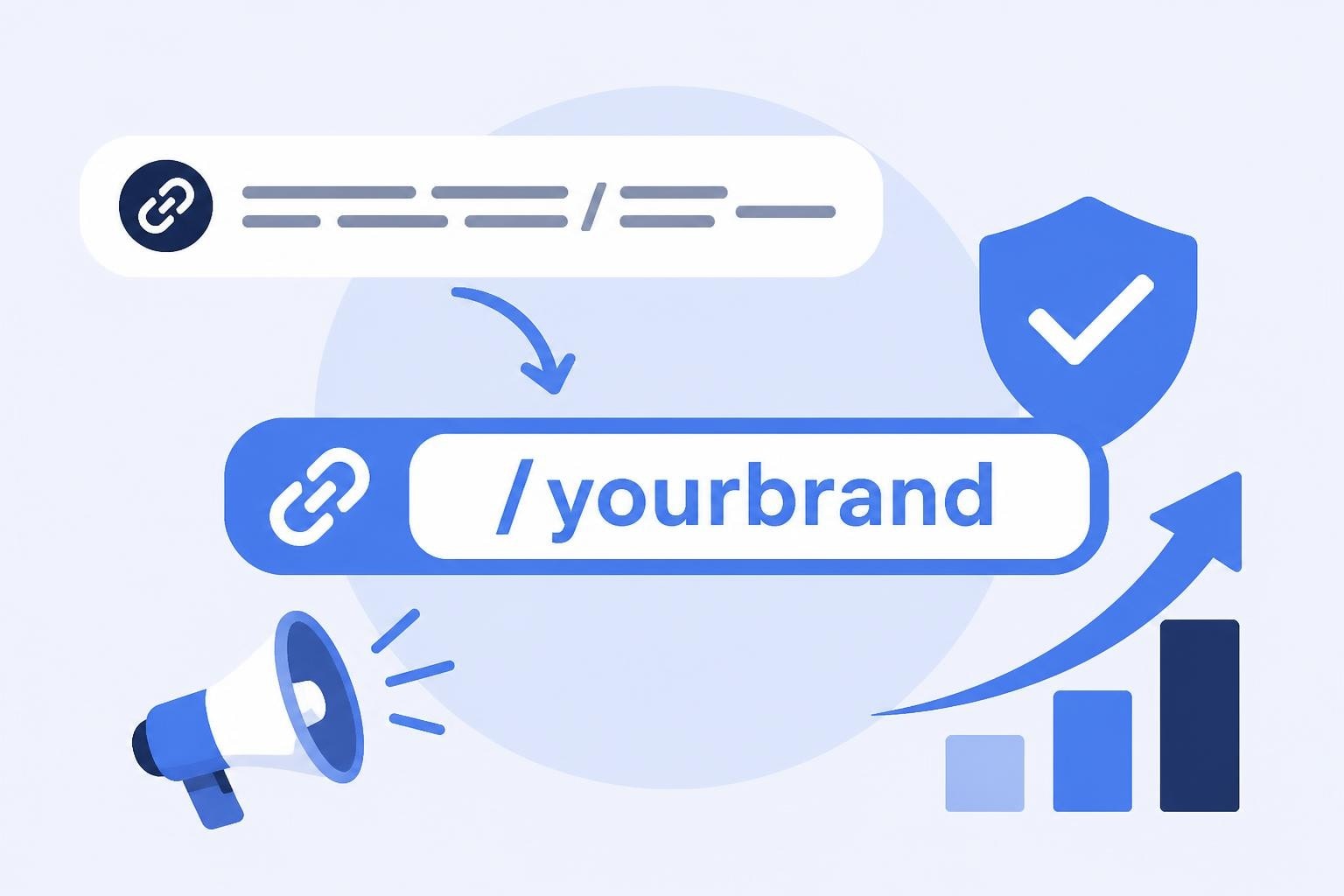
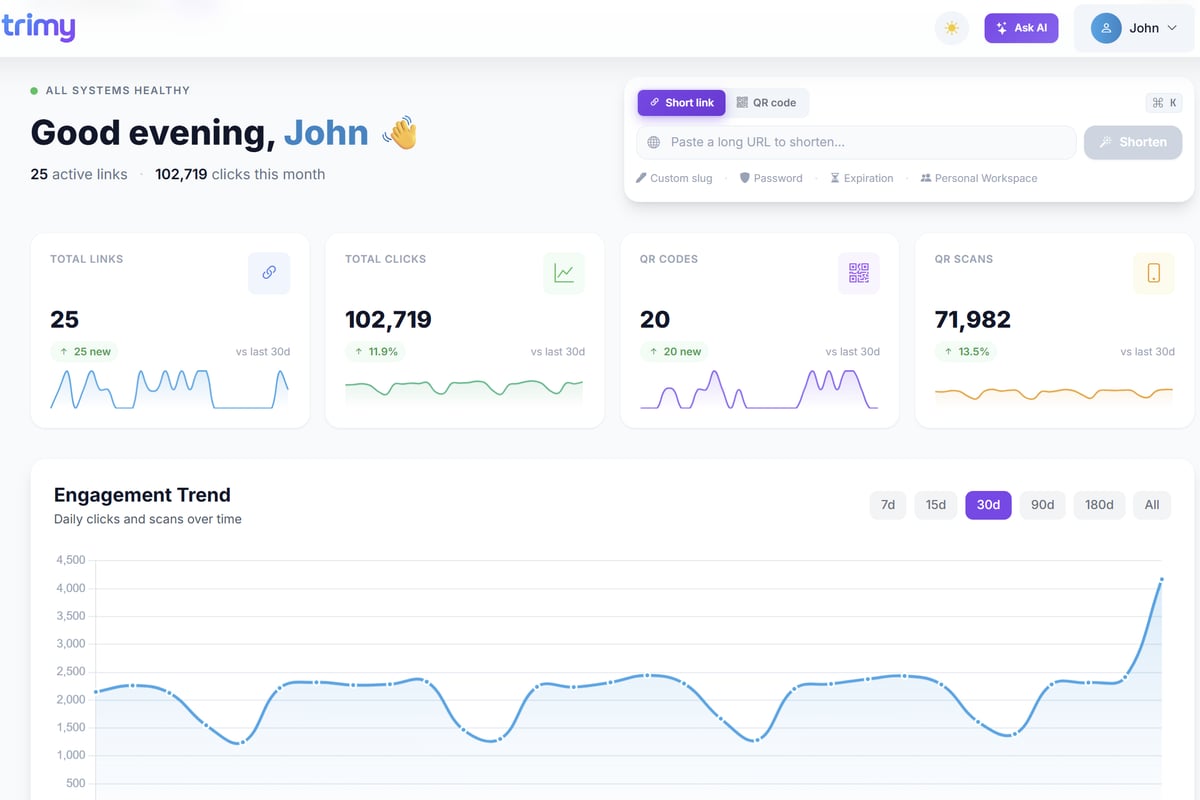
Link management becomes especially important in automated SMS campaigns. When including URLs in text messages, using a reliable link intelligence platform ensures trackability while maintaining message deliverability. Trimy provides branded short links with advanced analytics that help marketers track which automated messages drive conversions while keeping text character counts low.
Integration with Marketing Technology Stack
SMS marketing automation delivers maximum value when integrated with broader marketing systems. Isolated texting platforms create data silos that prevent holistic customer view and coordinated multi-channel experiences.
Customer Data Platform Synchronization
Real-time data synchronization between your CDP and SMS automation platform enables sophisticated segmentation and personalization. When a customer makes a purchase through any channel, that transaction immediately updates their SMS automation profile, triggering appropriate follow-up sequences.
Critical integration points include:
- E-commerce platforms for purchase and browse data
- Email marketing systems for coordinated messaging
- CRM databases for customer service history
- Analytics platforms for attribution modeling
These integrations create closed-loop systems where SMS campaigns influence behavior tracked across all touchpoints. Marketing teams gain complete visibility into how automated texts contribute to customer lifetime value.
Link Analytics and Attribution
Every link included in automated SMS campaigns should provide detailed performance data. URL parameters, UTM codes, and click tracking reveal which specific messages, offers, and triggers generate revenue.
Modern link management platforms enable:
- A/B testing different offers within automated sequences
- Click-through attribution connecting texts to conversions
- Device and location data from link clicks
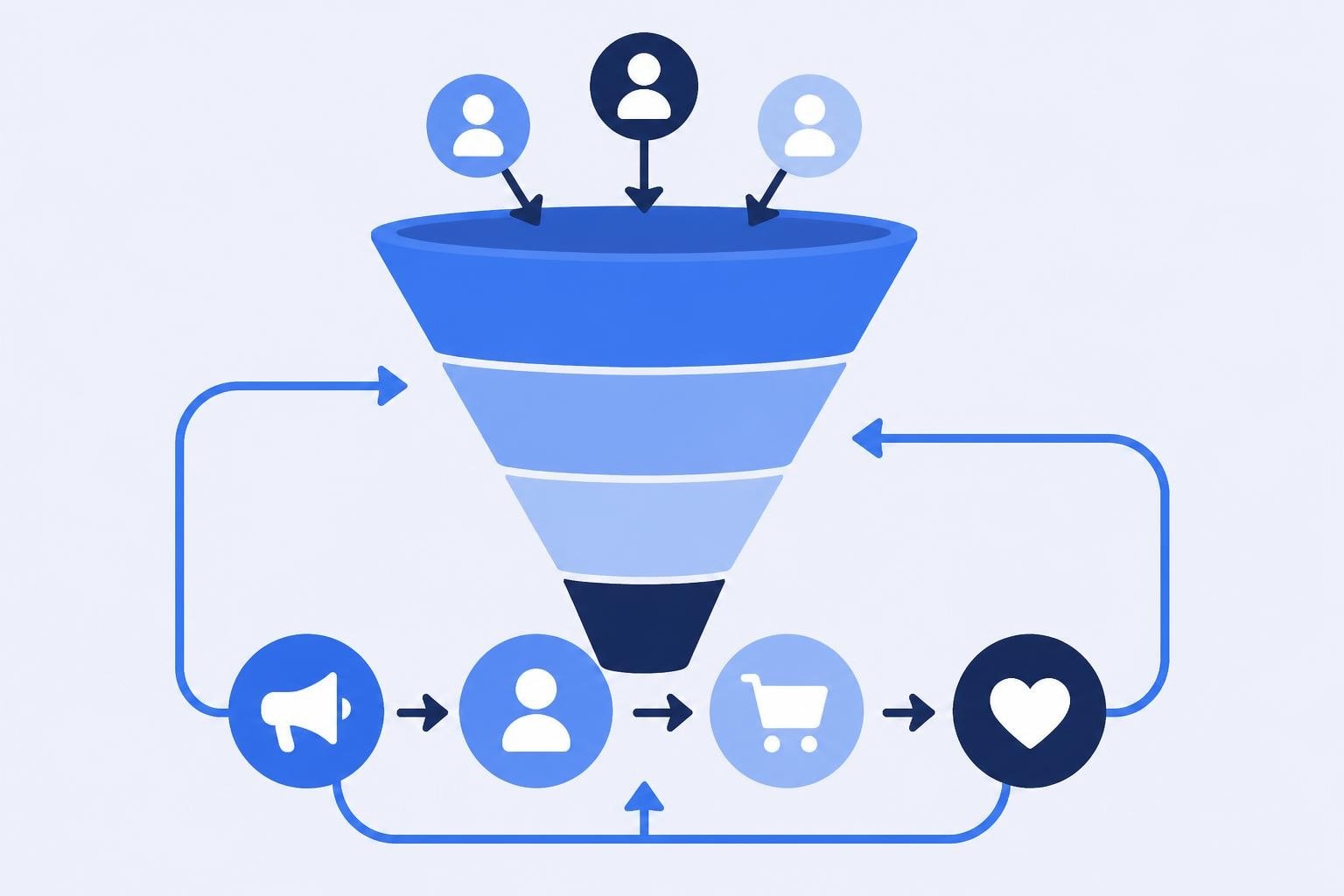
- Funnel analysis tracking customer journey from text to purchase
This granular data transforms sms marketing automation from a broadcast channel into a precision instrument for revenue generation. Marketers identify top-performing automation workflows and continuously optimize underperforming sequences.
Revenue Performance and ROI Measurement
SMS marketing automation justifies investment through measurable revenue contribution and return on investment. Unlike awareness-focused channels, automated texting directly connects to transaction data, enabling precise performance calculation.
Key Performance Indicators
Automated SMS campaigns require monitoring across multiple metrics that collectively reveal program health and revenue impact:
| Metric | Benchmark Target | Strategic Importance |
|---|---|---|
| Delivery rate | 95%+ | Infrastructure quality |
| Opt-out rate | <2% per campaign | Content relevance |
| Click-through rate | 15-25% | Message effectiveness |
| Conversion rate | 10-40% | Offer and targeting quality |
| Revenue per message | $0.50-$3.00 | Overall program ROI |
These benchmarks vary by industry, audience, and automation type. Welcome series typically achieve higher conversion rates than general promotional automation, while win-back campaigns targeting dormant customers show lower but still profitable performance.
Case Study Examples
Real-world performance demonstrates the revenue potential of well-executed sms marketing automation. 310 Nutrition drives over $100K weekly through automated SMS, leveraging product recommendations and abandoned cart sequences that run continuously without manual intervention.
Similarly, FinditParts achieved 54x ROI through personalized SMS automation, demonstrating how behavioral targeting and segmentation multiply campaign effectiveness. These results reflect sophisticated automation that delivers relevant messages at optimal moments throughout the customer lifecycle.

Advanced Automation Workflows
Beyond foundational campaigns, sophisticated marketers deploy complex automation workflows that respond to intricate behavioral patterns and lifecycle stages. These advanced sequences maximize customer lifetime value through strategic timing and content progression.
Predictive Re-engagement
Machine learning algorithms analyze historical engagement patterns to predict when customers risk churning. Automated re-engagement sequences deploy before customers actually lapse, using personalized incentives calibrated to individual price sensitivity and product preferences.
Predictive automation considers:
- Days since last purchase compared to typical buying cycle
- Engagement decline across email and SMS channels
- Browse behavior indicating continued interest
- Competitive signals like price comparison activity
Messages escalate from gentle reminders through increasingly valuable offers, stopping immediately when customers re-engage. This prevents over-messaging active customers while aggressively recapturing those drifting away.
Cross-Sell and Upsell Sequences
Post-purchase automation extends beyond simple thank-you messages to strategic revenue expansion. Smart workflows analyze purchase history to recommend complementary products or premium alternatives at precisely calibrated intervals after initial transactions.
A customer purchasing running shoes receives automated messages about:
- Care products sent three days post-purchase
- Performance apparel delivered one week later
- Upgrade models timed to typical replacement cycles
The automation respects purchase frequency and category preferences while systematically expanding basket size and customer value. Optimizing SMS timing and frequency ensures these sequences enhance rather than annoy the customer experience.
Testing and Optimization Frameworks
Continuous improvement separates high-performing sms marketing automation from mediocre programs. Systematic testing identifies winning message variations, optimal timing windows, and most effective personalization strategies.
A/B Testing Methodology
Automated campaigns enable rigorous testing across message elements including offer value, creative approach, sending time, and personalization depth. Each test isolates a single variable while maintaining consistency across other factors.
Common test variables include:
- Discount depth (10% vs. 15% vs. 20% off)
- Message length (short vs. detailed)
- Personalization level (name only vs. product-specific)
- Call-to-action phrasing (different urgency levels)
Statistical significance requires adequate sample sizes, typically 1,000+ recipients per variation for reliable conclusions. Winning variations automatically become control conditions for subsequent tests, creating iterative performance improvement.
Multivariate Sequence Optimization
Beyond individual message testing, sophisticated programs optimize entire automation sequences. Different message counts, timing intervals, and content progressions compete against each other with winners scaled across the subscriber base.
A three-message abandoned cart sequence might test against four-message and two-message alternatives, measuring total recovery rate and profitability after accounting for increased messaging costs. The data reveals optimal sequence length for specific product categories or customer segments.
Security and Anti-Fraud Considerations
As SMS marketing automation scales, security vulnerabilities and fraud risks require systematic management. Platforms must protect customer data while preventing misuse that damages sender reputation and deliverability.
Phishing and Scam Prevention
Legitimate marketing automation can inadvertently enable phishing if security controls prove insufficient. Modern anti-smishing tools detect suspicious patterns in automated message content, preventing fraudulent texts from reaching customers.
Protection mechanisms include:
- Link validation ensuring URLs match approved domains
- Content filtering blocking suspicious keywords and patterns
- Sending rate limits preventing account compromise exploitation
- Anomaly detection identifying unusual automation behavior
These safeguards protect both customers and brand reputation while maintaining the speed and scale that make automation valuable.
Data Privacy and Storage
Automated systems store extensive customer data including phone numbers, purchase history, behavioral patterns, and message interaction records. Privacy regulations like CCPA and GDPR mandate specific handling, retention, and deletion procedures.
Compliant automation platforms automatically:
- Encrypt stored data both at rest and in transit
- Honor deletion requests within required timeframes
- Limit data retention to operationally necessary periods
- Provide data portability when customers request information
Privacy-conscious implementation builds customer trust while avoiding regulatory penalties that could reach millions of dollars for systematic violations.
Emerging Trends Shaping SMS Automation
The SMS marketing automation landscape continues evolving as new technologies, consumer behaviors, and regulatory developments reshape best practices. Forward-thinking marketers monitor these trends to maintain competitive advantage.
Conversational Automation
Two-way messaging transforms SMS from broadcast channel to conversation platform. Automated responses to customer replies create interactive experiences where subscribers ask questions, browse products, and complete transactions entirely through text messaging.
Conversational automation requires:
- Natural language processing to interpret customer intent
- Dynamic response libraries addressing common questions
- Escalation protocols transferring complex issues to humans
- Transaction capabilities enabling purchases through conversation
These systems maintain automation efficiency while delivering personalized, responsive experiences that customers increasingly expect in 2026.
Rich Communication Services (RCS)
RCS enhances traditional SMS with rich media, interactive buttons, and detailed analytics. As carrier support expands, marketers incorporate images, carousels, and quick-reply options into automated campaigns while maintaining SMS fallback for unsupported devices.
The enhanced format improves engagement rates 20-35% compared to plain text while enabling more sophisticated automation workflows. Product galleries, appointment scheduling, and interactive surveys become possible within the messaging channel itself.
SMS marketing automation represents a proven revenue channel that combines immediacy, personalization, and scalability for businesses committed to customer engagement. By implementing strategic workflows, maintaining rigorous compliance, and continuously optimizing performance, marketers transform simple text messages into sophisticated conversion engines that operate profitably at scale. When you're ready to enhance your automated campaigns with intelligent link tracking and attribution, trimy provides the analytics infrastructure to transform every SMS link into actionable revenue insights that refine your automation strategy.