Social Media Advertising for Small Business: 2026 Guide
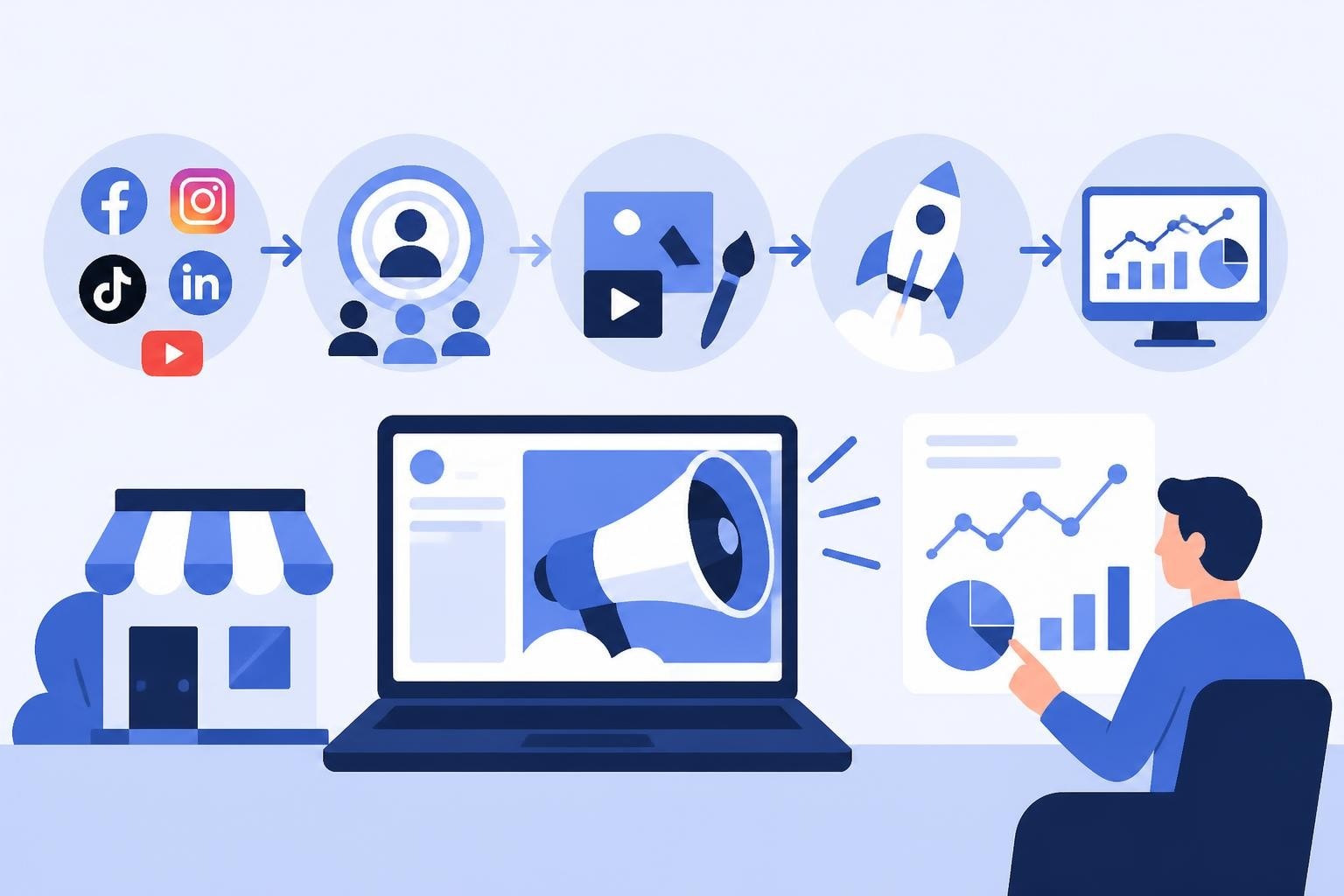
Social media advertising has evolved from an experimental marketing channel into an essential growth driver for small businesses. In 2026, platforms like Facebook, Instagram, TikTok, and LinkedIn offer sophisticated targeting capabilities that were once available only to enterprise brands with massive budgets. For small businesses operating in specialized niches-whether you're managing SaaS tools, e-commerce stores, or professional services-social media advertising for small business provides a direct path to reaching qualified audiences, generating leads, and driving measurable revenue. The challenge isn't whether to advertise on social platforms, but rather how to do it strategically with limited resources while competing against brands with deeper pockets.
Why Social Media Advertising Matters for Small Business Growth
Traditional advertising channels often require substantial upfront investments with uncertain returns. Social media advertising for small business flips this model by offering precise targeting, flexible budgets, and real-time performance data. You can launch campaigns with as little as $5 per day and adjust spending based on immediate results.
The democratization of advertising tools means small businesses can now compete effectively in crowded markets. A local service provider can target homeowners within a five-mile radius, while a B2B SaaS company can reach decision-makers at companies with specific revenue ranges or technologies in use. This level of granularity was impossible with traditional media.
Key advantages include:
- Precise audience targeting based on demographics, interests, behaviors, and custom data
- Budget flexibility with daily or lifetime spending caps you control
- Performance transparency through detailed analytics and conversion tracking
- Creative testing capabilities to identify what resonates with your audience
- Retargeting opportunities to re-engage website visitors and previous customers
According to Pew Research Center's social media usage data, platform adoption varies significantly by age, income, and education level. This research helps small businesses make informed decisions about where their ideal customers spend time online.
Selecting the Right Platforms for Your Small Business
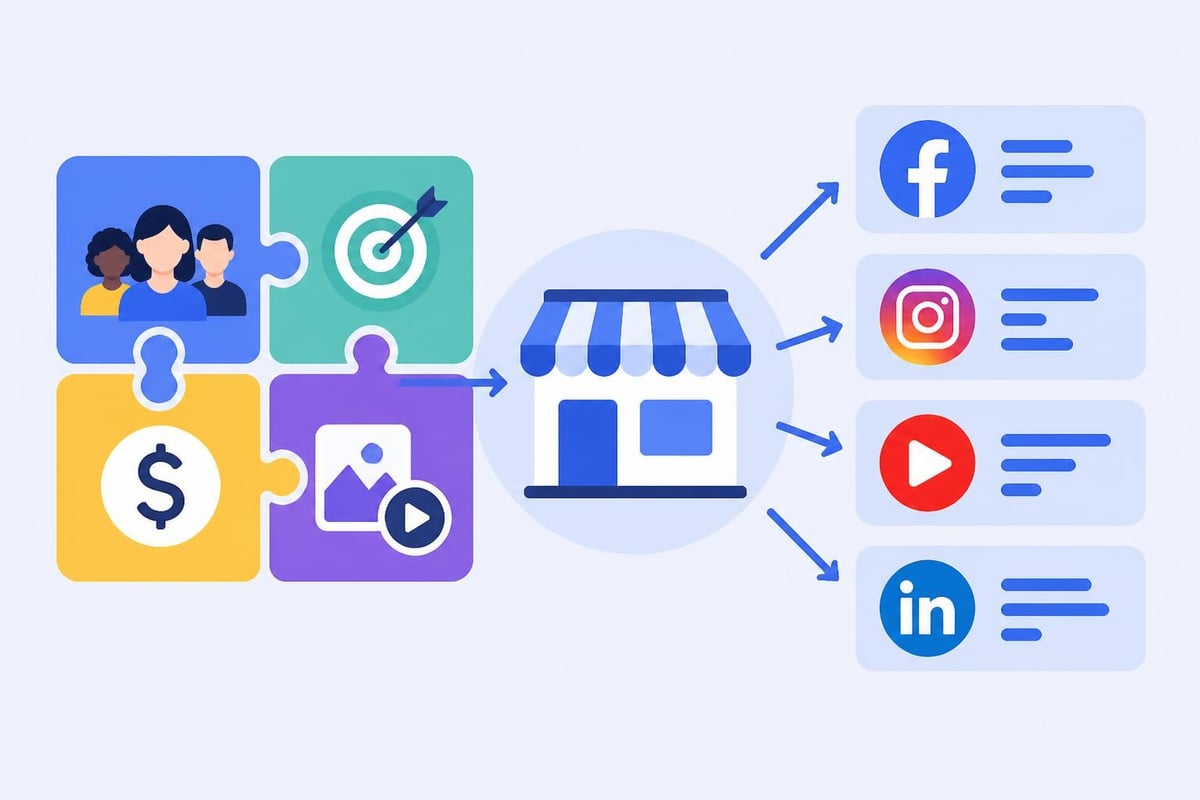
Not all social media platforms deliver equal results for every business type. Your platform selection should align with where your target audience actively engages and what content formats suit your resources.
Facebook and Instagram: Broad Reach and Visual Storytelling
Meta's advertising ecosystem remains the most versatile option for social media advertising for small business campaigns. Facebook's 2.9 billion monthly active users span virtually every demographic, while Instagram skews younger and more visual.
Best for: E-commerce, local services, B2C products, visual brands, community building
Budget considerations: Start with $10-15 per day for testing; scale successful campaigns to $50-100 daily
Meta's official guide to creating Reels ads provides detailed specifications for vertical video content, which dominates user engagement in 2026. Short-form video ads on Reels often achieve 20-30% lower cost-per-click compared to static feed ads.
| Platform | Best Audience | Minimum Budget | Primary Format |
|---|---|---|---|
| 25-65 years, diverse demographics | $5/day | Video, carousel, image | |
| 18-44 years, visual-first users | $5/day | Reels, Stories, feed posts | |
| TikTok | 16-34 years, trend-focused | $20/day | Short-form vertical video |
| B2B professionals, decision-makers | $10/day | Sponsored content, InMail |
TikTok: Emerging Opportunities for Creative Brands
TikTok's advertising platform has matured significantly, offering small businesses access to highly engaged younger audiences. The TikTok Small Business Creative Playbook demonstrates how businesses with modest budgets can create authentic, performance-driven content without production studios.
Best for: Consumer products, food and beverage, fashion, entertainment, brands with personality
The platform rewards creativity over production quality. User-generated content styles often outperform polished corporate videos. TikTok's algorithm can deliver explosive reach even for accounts with zero followers, making it ideal for testing new products or markets.
LinkedIn: B2B and Professional Services
For small businesses targeting other businesses, LinkedIn advertising provides unmatched professional targeting. You can reach users by job title, company size, industry, seniority, and specific skills.
Best for: B2B SaaS, professional services, consulting, recruiting, high-ticket products
LinkedIn's small business advertising resources outline a crawl-walk-run approach that helps businesses scale from initial tests to sophisticated lead generation campaigns. The platform's cost-per-click typically runs 2-3x higher than Facebook, but lead quality often justifies the premium.
Building Your Social Media Advertising Strategy
Effective social media advertising for small business requires more than selecting platforms and setting budgets. You need a structured approach to audience definition, creative development, and performance optimization.
Define Your Campaign Objectives
Start by identifying what you want to accomplish. Social platforms optimize delivery based on your stated objective, so alignment between goals and campaign settings directly impacts performance.
Common objectives for small businesses:
- Brand awareness - Reach new audiences and build recognition
- Traffic generation - Drive visitors to your website or landing pages
- Lead generation - Collect contact information through platform-native forms
- Conversions - Drive purchases, sign-ups, or other valuable actions
- Engagement - Build community through likes, comments, and shares
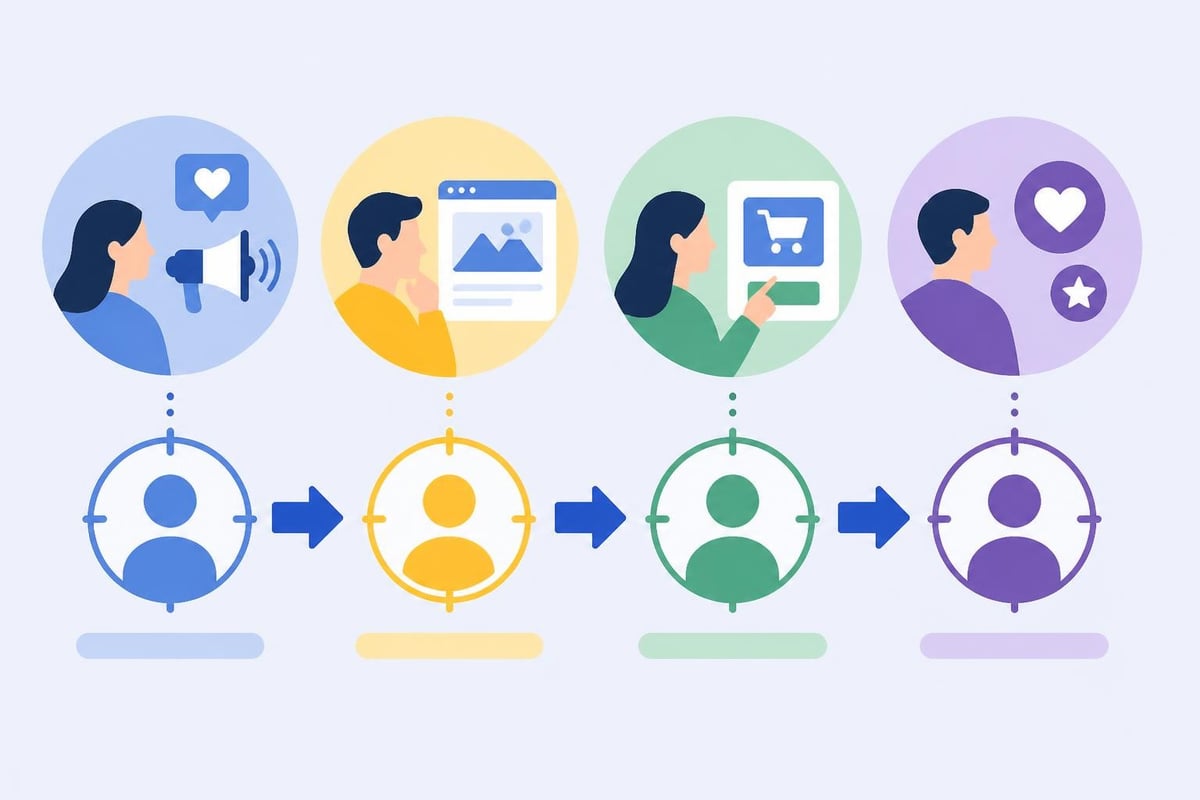
Each objective requires different creative approaches and budget allocation. Awareness campaigns need broader targeting and repetitive exposure, while conversion campaigns benefit from precise audience segmentation and retargeting.
Audience Targeting and Segmentation
The most common mistake in social media advertising for small business is targeting too broadly. Trying to reach "everyone" dilutes your message and wastes budget on unqualified clicks.
Effective targeting strategies:
- Core audiences: Define by location, age, gender, interests, and behaviors
- Custom audiences: Upload customer lists, target website visitors, or engage video viewers
- Lookalike audiences: Let platforms find users similar to your best customers
- Exclusion targeting: Remove existing customers from acquisition campaigns
For link management platforms and marketing tools, targeting should focus on professionals who actively use similar software. Interest categories like "digital marketing," "analytics," and "marketing automation" help identify qualified prospects.
Creative Development and Testing
Social platforms are visual-first environments where creative quality directly correlates with performance. Small businesses don't need expensive agencies-they need strategic thinking and willingness to test.
TikTok's creative best practices emphasize authentic, mobile-first content that fits naturally into feeds. These principles apply across platforms: users scroll past obvious ads but engage with content that provides value or entertainment.
Creative elements to test:
- Headlines and primary text
- Images versus video
- Call-to-action buttons
- Ad formats (carousel, single image, video, Stories)
- Value propositions and messaging angles
- Video length and opening hooks
Run at least 3-4 creative variations simultaneously. Platforms need volume to identify winners, and your intuition about what works often proves wrong when data arrives.
Budget Planning and Resource Allocation
Small businesses face unique constraints when implementing social media advertising for small business initiatives. You're competing against companies with larger budgets while managing limited time and expertise.
Setting Realistic Budgets
The HubSpot marketing budget planning guide recommends allocating 7-12% of revenue to marketing for small businesses, with digital advertising consuming 40-50% of that budget.
Budget framework for small businesses:
- Testing phase: $300-500/month across 2-3 campaigns to identify what works
- Growth phase: $1,000-2,500/month scaling successful campaigns
- Optimization phase: $2,500+/month with sophisticated tracking and multi-platform strategies
| Monthly Budget | Recommended Approach | Expected Outcomes |
|---|---|---|
| $300-500 | Single platform, narrow targeting, limited testing | Learning and validation |
| $500-1,500 | Two platforms, A/B testing, basic retargeting | Early positive ROI |
| $1,500-3,000 | Multi-platform, advanced audiences, creative testing | Scalable customer acquisition |
| $3,000+ | Full-funnel campaigns, video content, sophisticated attribution | Predictable growth engine |
Tracking and Attribution
Without proper tracking, you're flying blind. Every social media advertising campaign for small business needs conversion tracking implemented before spending the first dollar.
Essential tracking components:
- Platform pixels installed on your website (Meta Pixel, TikTok Pixel, LinkedIn Insight Tag)
- UTM parameters on all destination URLs for analytics tracking
- Conversion events configured for key actions (purchases, sign-ups, downloads)
- Custom audiences built from website traffic and engagement
For businesses in the marketing technology space, sophisticated link tracking becomes crucial. When you're driving traffic to landing pages, webinars, or product trials, you need to understand which campaigns, audiences, and creative variations generate qualified leads.
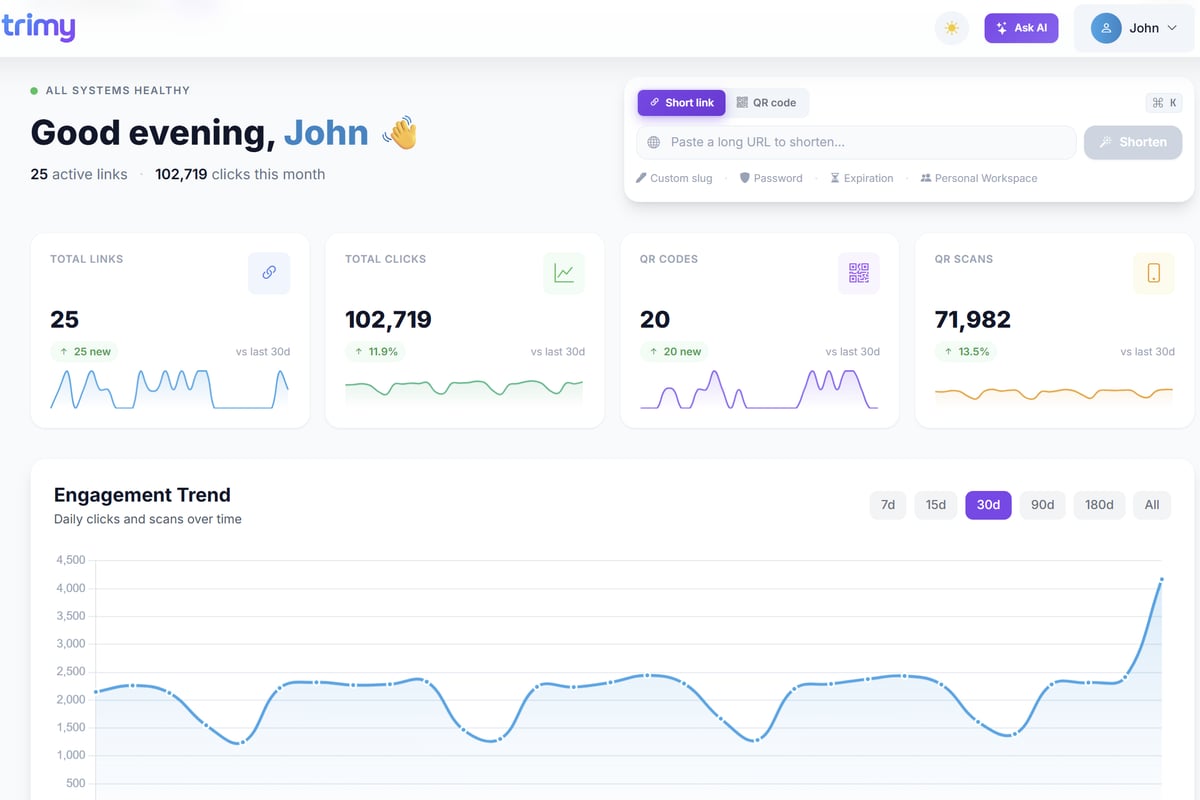
Advanced link management platforms enable you to add retargeting pixels to specific links, run A/B tests on destination URLs, and segment traffic for detailed attribution analysis. Trimy offers these capabilities alongside comprehensive analytics that show exactly which social campaigns drive revenue, not just clicks. This level of intelligence transforms social advertising from a cost center into a measurable growth channel.
The IAB retail media measurement guidelines establish industry standards for cross-platform measurement and attribution, helping small businesses implement professional-grade tracking systems.
Campaign Optimization and Scaling
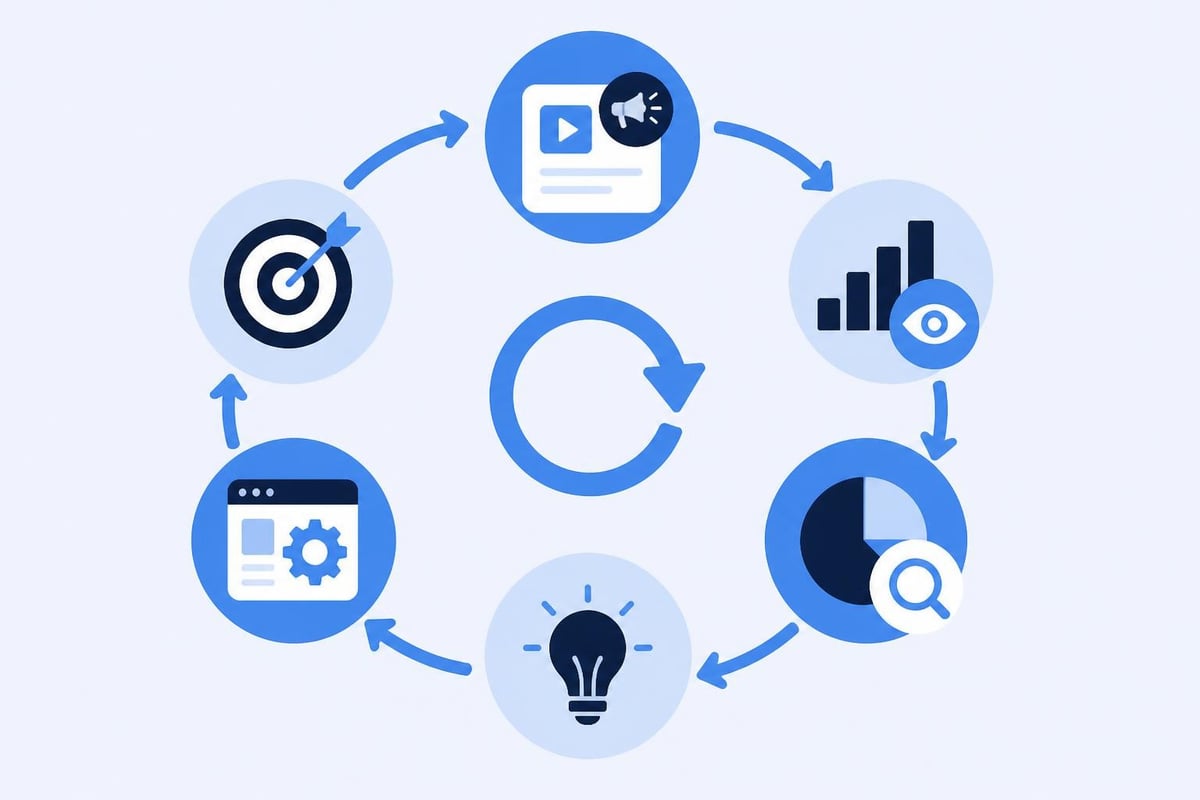
Launching campaigns represents just the beginning. Social media advertising for small business success depends on continuous optimization based on performance data.
Key Metrics to Monitor
Different objectives require different success metrics. Avoid vanity metrics like impressions and focus on business outcomes.
Critical performance indicators:
- Click-through rate (CTR): Measures creative effectiveness and audience relevance
- Cost per click (CPC): Indicates competition level and targeting efficiency
- Conversion rate: Shows landing page and offer quality
- Cost per acquisition (CPA): The ultimate measure of campaign profitability
- Return on ad spend (ROAS): Revenue generated per dollar spent
A healthy CTR varies by platform but generally falls between 0.9% and 2.5% for most small business campaigns. Conversion rates depend heavily on offer complexity-simple email sign-ups might convert at 15-25%, while product purchases typically range from 2-8%.
Testing and Iteration
The LinkedIn ROI Playbook emphasizes systematic testing as the foundation of profitable campaigns. Small businesses should implement structured testing protocols rather than random changes.
Testing hierarchy:
- Audience testing - Test different demographic and interest segments
- Offer testing - Try different value propositions and calls-to-action
- Creative testing - Experiment with formats, imagery, and messaging
- Placement testing - Compare feed, Stories, Reels, and other placements
- Timing testing - Identify optimal days and hours for your audience
Run tests for at least 3-7 days before declaring winners. Statistical significance requires adequate sample size-generally 50-100 conversions per variation.
Common Mistakes and How to Avoid Them
Small businesses make predictable errors when starting social media advertising. Awareness of these pitfalls helps you sidestep expensive learning curves.
Mistake 1: Targeting Too Broadly
Casting a wide net seems logical but generates poor results. A local restaurant targeting "everyone in the city" wastes money on users who'll never visit. Narrow targeting to neighborhoods within 10 minutes' drive and specific cuisine interests performs better.
Mistake 2: Neglecting Mobile Optimization
Over 85% of social media usage happens on mobile devices in 2026. Ads that look perfect on desktop but load slowly or display poorly on phones kill conversion rates. Test every ad and landing page on actual mobile devices before launching.
Mistake 3: Abandoning Campaigns Too Quickly
Platform algorithms need time to optimize delivery. Many small businesses pause campaigns after 2-3 days of poor performance, preventing the learning phase from completing. Give new campaigns at least 7-10 days unless they're completely failing to deliver impressions.
Mistake 4: Ignoring Retargeting
First-time visitors rarely convert immediately. Businesses that rely solely on cold traffic acquisition pay higher costs for fewer conversions. Build retargeting audiences from website visitors, video viewers, and engaged users to capture delayed conversions.
Mistake 5: Missing the Creative Refresh
Ad fatigue sets in after users see the same creative 3-5 times. Performance degrades as frequency increases. Refresh creative every 2-3 weeks to maintain engagement and prevent rising costs.
Advanced Tactics for Competitive Advantages
Once you've mastered fundamental social media advertising for small business strategies, these advanced tactics create competitive separation.
Dynamic product ads automatically show users products they viewed on your website. E-commerce businesses see 2-3x higher conversion rates from dynamic ads compared to static product promotions.
Sequential messaging campaigns tell brand stories across multiple ad exposures. Users see different messages based on previous interactions, creating narrative progression that builds trust.
Messenger and DM campaigns open direct conversations with prospects. Interactive chatbots qualify leads and answer questions, removing friction from the buying process.
Influencer amplification takes organic influencer content and promotes it through paid ads. This hybrid approach combines authentic creator voices with precise targeting.
Cross-platform attribution tracks how users interact with ads across multiple platforms before converting. Understanding these journeys helps you allocate budget more effectively.
Platform-Specific Considerations
Each platform has unique characteristics that influence campaign strategy for social media advertising for small business initiatives.
Facebook/Instagram Nuances
Meta's algorithm prioritizes meaningful social interactions. Ads that generate comments and shares receive lower costs and broader reach. Ask questions, create polls, and design content that sparks conversation.
The platform's advantage lies in its sophisticated targeting options and retargeting capabilities. You can build audiences based on purchase behavior, life events, and specific interests that other platforms can't match.
TikTok Specific Strategies
Success on TikTok requires embracing platform culture. Polished, corporate content fails. Raw, authentic videos that participate in trends and challenges perform better.
TikTok's "Spark Ads" feature lets you promote organic posts, including content from customers or creators. This approach feels less intrusive and typically achieves better engagement than traditional ads.
LinkedIn Best Practices
LinkedIn users engage professionally, not personally. Content should provide business value-industry insights, how-to guides, case studies, and thought leadership.
The platform excels for lead generation through native forms that pre-populate with profile data. Users can submit information without leaving LinkedIn, dramatically improving conversion rates versus landing page redirects.
Social media advertising for small business delivers measurable results when approached strategically with clear objectives, disciplined testing, and commitment to continuous optimization. The platforms, targeting capabilities, and creative formats available in 2026 provide unprecedented opportunities for businesses willing to invest time in learning what resonates with their specific audiences. When you combine effective social campaigns with intelligent link management, you gain the visibility needed to understand exactly which efforts drive business outcomes. Trimy transforms every link in your social ads into a data collection point, providing the analytics, A/B testing, and tracking capabilities that help you optimize campaigns based on revenue, not just clicks. Start small, test relentlessly, and scale what works.