What Is Cost Plus Pricing? Definition, Formula & Examples

Understanding pricing strategies is fundamental to business success, whether you're launching a new product, refining your marketing approach, or optimizing campaign performance. Among the various pricing methodologies available, cost plus pricing stands out as one of the most straightforward approaches to determining how much to charge customers. This strategy has been used across industries for decades, offering businesses a systematic way to ensure profitability while maintaining competitive positioning. For companies managing digital marketing campaigns and tracking performance metrics, understanding what is cost plus pricing provides valuable context for evaluating service providers, software subscriptions, and the true cost of customer acquisition.
Understanding Cost Plus Pricing: The Foundation
Cost plus pricing is a straightforward pricing strategy where businesses calculate the total cost of producing a product or delivering a service, then add a predetermined markup percentage to establish the selling price. This approach ensures that every sale covers costs while generating a specific profit margin.
The basic formula is remarkably simple: Selling Price = Total Cost + (Total Cost × Markup Percentage). The total cost typically includes direct materials, direct labor, and overhead expenses allocated to the product or service. The markup percentage represents the desired profit margin, which varies by industry, competitive landscape, and business objectives.
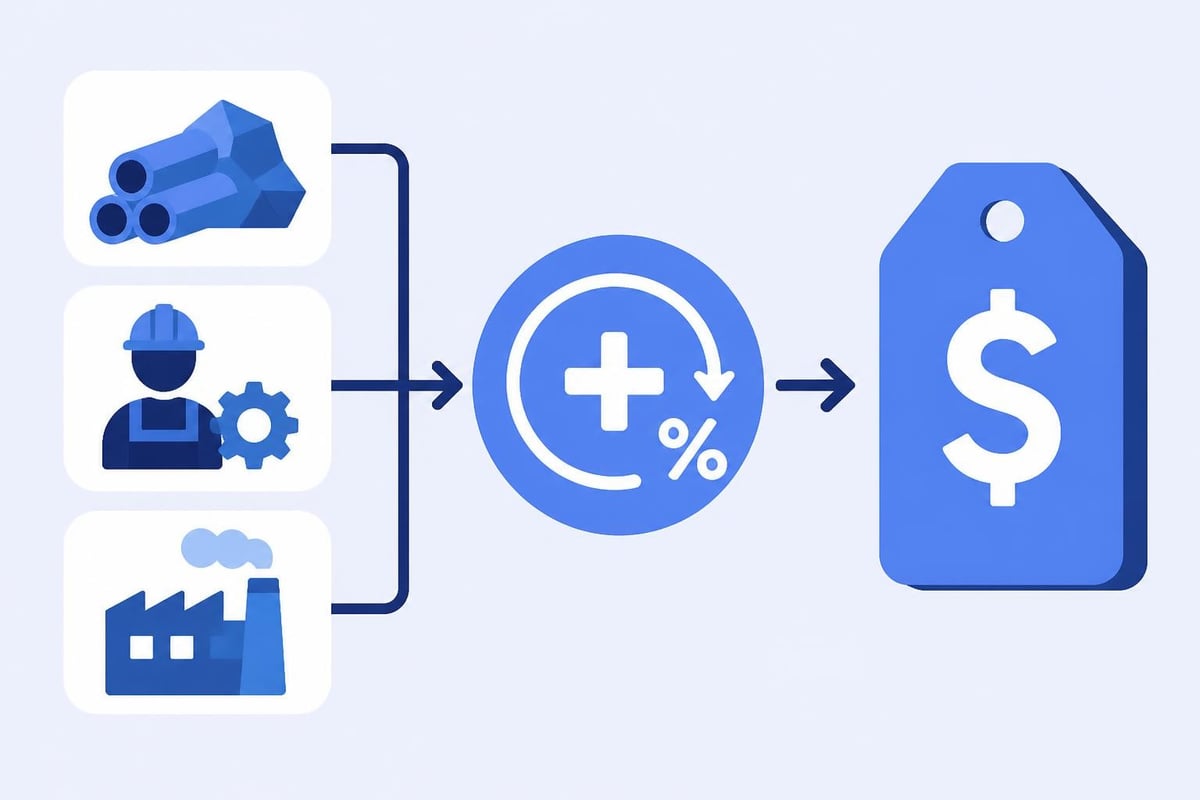
What sets this methodology apart is its internal focus. Unlike value-based pricing, which centers on customer perception and willingness to pay, cost-plus pricing looks inward at production expenses and desired profit margins. This distinction matters significantly when businesses evaluate their pricing strategies.
The Mechanics Behind the Formula
Breaking down what is cost plus pricing requires understanding each component in the equation. Direct costs include materials and labor directly traceable to the product. For a software platform managing link analytics, direct costs might include server infrastructure, API usage fees, and development time allocated to specific features.
Indirect costs or overhead encompass expenses that support overall operations but aren't tied to individual products. These include:
- Administrative salaries and office expenses
- Marketing and advertising costs
- Utilities and facility maintenance
- Insurance and legal fees
- Depreciation on equipment and technology
The markup percentage selection involves strategic considerations. Some businesses use standard industry markups, while others adjust based on competitive positioning, target customer segments, or strategic objectives. A 20% markup means adding one-fifth of the total cost to determine the selling price.
| Cost Component | Example Amount | Percentage of Total |
|---|---|---|
| Direct Materials | $30.00 | 40% |
| Direct Labor | $25.00 | 33% |
| Overhead Allocation | $20.00 | 27% |
| Total Cost | $75.00 | 100% |
| Markup (30%) | $22.50 | 30% of cost |
| Selling Price | $97.50 | 130% of cost |
This table illustrates how different cost elements combine before applying the markup percentage to reach the final selling price.
Cost Plus Pricing Versus Value-Based Pricing
The contrast between what is cost plus pricing and value-based pricing represents fundamentally different philosophies about how prices should be determined. Cost plus pricing asks, "What did this cost us, and what profit margin do we need?" Value-based pricing asks, "What is this worth to the customer?"
Value-based pricing considers customer perception, competitive alternatives, and the specific benefits delivered. A link management platform might charge premium prices not based on server costs but on the revenue optimization and campaign insights provided to marketers. The price reflects the value created rather than the expenses incurred.
When Each Strategy Makes Sense
Cost plus pricing excels in environments with:
- Stable, predictable costs that change slowly over time
- Complex custom projects where scope varies significantly
- Government contracts requiring cost justification and transparency
- Manufacturing settings with established production processes
- Industries with standard markup conventions
Value-based pricing thrives when businesses offer unique solutions, serve markets with varying willingness to pay, or compete primarily on differentiation rather than cost. The cost-plus pricing model becomes less effective when customer value varies widely or when innovation drives competitive advantage.
For marketing technology platforms tracking link performance and campaign attribution, pricing often blends both approaches. Base features might follow cost-plus logic, while advanced analytics capabilities command value-based premiums reflecting their impact on marketing ROI.
Advantages of Cost Plus Pricing Strategy
Understanding what is cost plus pricing includes recognizing why businesses choose this approach despite alternatives. The methodology offers several compelling advantages that make it attractive across diverse industries.
Simplicity and transparency top the list of benefits. Calculating prices requires no complex market research, competitive intelligence gathering, or customer surveys. Finance teams can determine pricing using internal cost accounting data already available. This simplicity accelerates decision-making and reduces the resources needed for pricing analysis.
The approach virtually guarantees profitability when implemented correctly. As full cost-plus pricing ensures, every cost component gets covered in the selling price before adding profit margin. This protection proves valuable for businesses with thin margins or those operating in uncertain environments.
Additional Strategic Benefits
Stakeholders appreciate the justifiable, defensible nature of cost plus pricing. When customers, regulators, or partners question prices, businesses can demonstrate exactly how costs translate into selling prices. This transparency builds trust in industries where pricing scrutiny runs high.
- Predictable profit margins across product lines and time periods
- Easier financial forecasting for budgeting and planning purposes
- Fair compensation for custom work with undefined scope
- Reduced pricing risk during periods of cost volatility
- Simplified pricing adjustments when input costs change
Marketing teams managing campaign performance metrics can apply similar logic when evaluating tools and platforms. Understanding a vendor's cost structure provides insight into pricing sustainability and potential future changes.
Disadvantages and Limitations
No pricing strategy is universally optimal, and understanding what is cost plus pricing requires acknowledging its significant limitations. The methodology's inward focus creates blind spots that can harm competitive positioning and profitability.
Ignoring market demand represents the most critical flaw. Cost-plus pricing disadvantages include setting prices too high when customers won't pay premium amounts or too low when they would gladly spend more. A product costing $50 to produce might sell for $75 with a 50% markup, yet customers might value it at $150. The business leaves $75 per unit on the table.
Conversely, if that $75 price exceeds what customers will pay, inventory accumulates and sales stagnate regardless of cost coverage. The strategy assumes demand remains constant across price points, which rarely reflects reality.
Operational and Strategic Concerns
The lack of cost control incentives creates perverse motivation structures. When markup applies to total costs, higher expenses lead to higher prices and potentially higher absolute profits. This dynamic discourages efficiency improvements and cost reduction initiatives.
| Limitation | Impact | Example Scenario |
|---|---|---|
| Market ignorance | Misaligned pricing | Premium features underpriced relative to value |
| No cost discipline | Inefficiency tolerance | Bloated expenses passed to customers |
| Competitive blindness | Market share loss | Competitors undercut with efficiency gains |
| Value disconnect | Revenue leakage | High-value segments willing to pay more |
Innovation suffers under strict cost plus frameworks. Breakthrough products or services with low production costs but high customer value get underpriced. Incremental improvements that reduce costs actually lower revenue under this model, creating disincentives for operational excellence.
For businesses managing marketing analytics and link intelligence, these limitations highlight why pure cost plus pricing rarely appears in software-as-a-service models. The marginal cost of serving additional users is minimal, making cost-plus calculations misleading.
Industries Where Cost Plus Pricing Thrives
Certain sectors embrace what is cost plus pricing more enthusiastically than others due to industry characteristics, regulatory requirements, and market dynamics. Understanding these applications provides practical context for the strategy's real-world implementation.
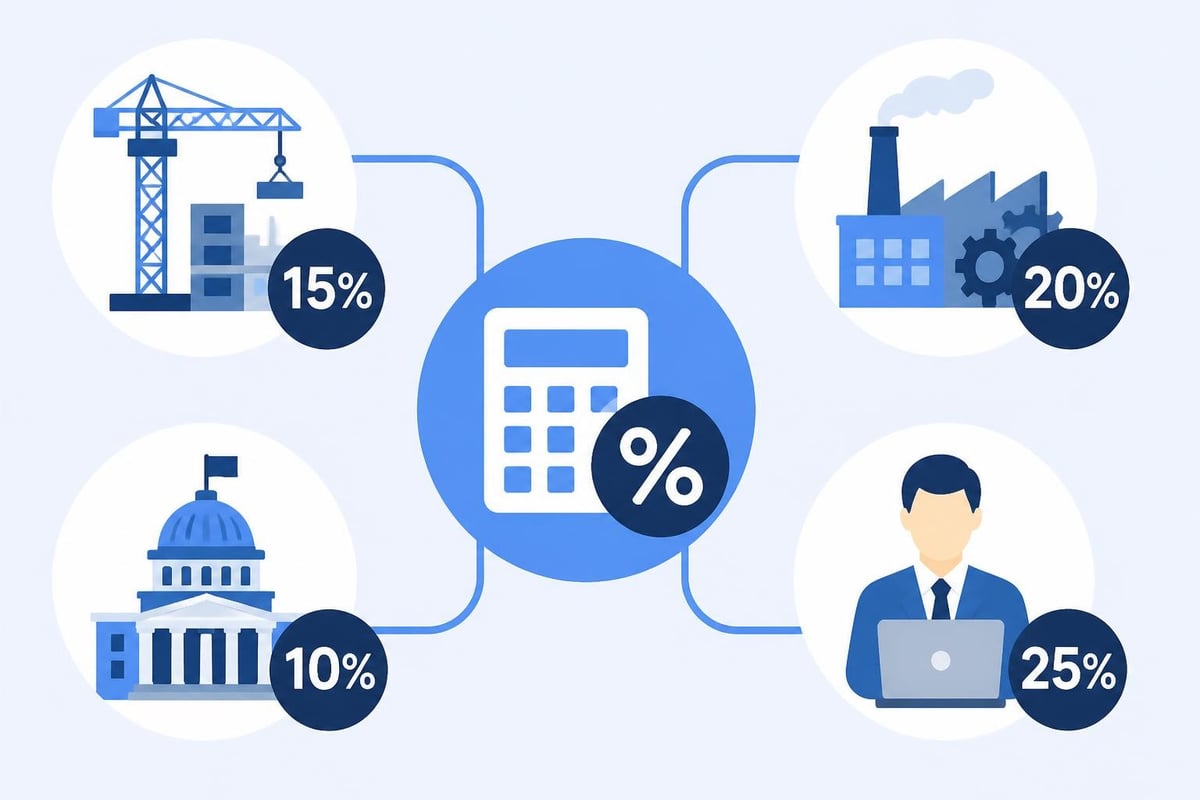
Construction and contracting industries extensively use cost plus pricing, particularly for custom projects where scope uncertainty runs high. Builders calculate material costs, labor hours, equipment rental, and overhead, then add a markup percentage. This protects contractors from cost overruns on complex projects while ensuring transparency with clients.
Manufacturing with established processes frequently employs this approach. When production costs are stable and predictable, manufacturers can confidently calculate expenses and apply consistent markups. Industries producing standardized components, parts, or materials find cost plus pricing particularly suitable.
Government and Regulated Sectors
Government contracting often mandates cost plus pricing or similar approaches. Defense contracts, public infrastructure projects, and other government procurements require detailed cost justification and transparent pricing methodologies. The cost-plus pricing strategy provides the accountability and documentation government agencies demand.
Professional services including legal, consulting, and accounting firms sometimes use hourly billing rates calculated through cost plus logic. The firm determines the cost of employing professionals, allocates overhead, and adds desired profit margins to establish billing rates.
Wholesale and retail operations traditionally used cost plus pricing, though competitive pressures increasingly push these sectors toward value-based approaches. Retailers calculate acquisition costs, add operating expenses, and apply standard markups based on product categories.
For digital marketing platforms and analytics tools, understanding these industry patterns helps when evaluating vendor pricing models and negotiating contracts with service providers using cost plus frameworks.
Calculating Cost Plus Pricing: Practical Steps
Implementing what is cost plus pricing requires systematic cost accounting and strategic markup determination. Following a structured process ensures accurate calculations and sustainable profit margins.
Step 1: Identify all direct costs associated with producing the product or delivering the service. This includes materials purchased specifically for the product and labor hours directly traceable to production. For software platforms, direct costs might include cloud infrastructure allocated to specific features or customer tiers.
Step 2: Calculate overhead allocation by determining indirect costs and distributing them across products. Common allocation methods include labor hours, machine hours, or revenue percentages. A company with $500,000 in annual overhead and 10,000 production hours allocates $50 per production hour to products.
Step 3: Determine total cost by combining direct costs and allocated overhead for each unit. This represents the break-even point before profit considerations.
Setting the Markup Percentage
Strategic markup determination separates successful implementations from problematic ones. Consider these factors:
- Industry standards and typical margin expectations
- Competitive positioning and market price sensitivity
- Volume expectations and economies of scale
- Risk levels associated with cost volatility
- Investment recovery needs for development or equipment
A comprehensive guide to cost-plus pricing emphasizes testing different markup percentages to find the optimal balance between competitiveness and profitability. Starting with industry benchmarks provides a baseline, then adjusting based on specific business circumstances.
Step 4: Apply the markup to total cost using the formula: Selling Price = Total Cost × (1 + Markup Percentage). A product costing $100 with a 40% markup sells for $140.
Step 5: Review and adjust pricing periodically as costs change, competitive dynamics shift, or strategic priorities evolve. Cost plus pricing isn't "set and forget" but requires ongoing monitoring.
Modern Applications and Hybrid Approaches
While understanding what is cost plus pricing involves recognizing its traditional applications, modern businesses increasingly blend this methodology with other strategies to capture benefits while mitigating limitations. These hybrid approaches reflect the complexity of contemporary markets.
Dynamic cost plus pricing adjusts markup percentages based on market conditions, demand levels, or customer segments. During peak demand periods, markups increase to capture value. When competition intensifies, markups compress to maintain market share. This adds market responsiveness while maintaining cost coverage.
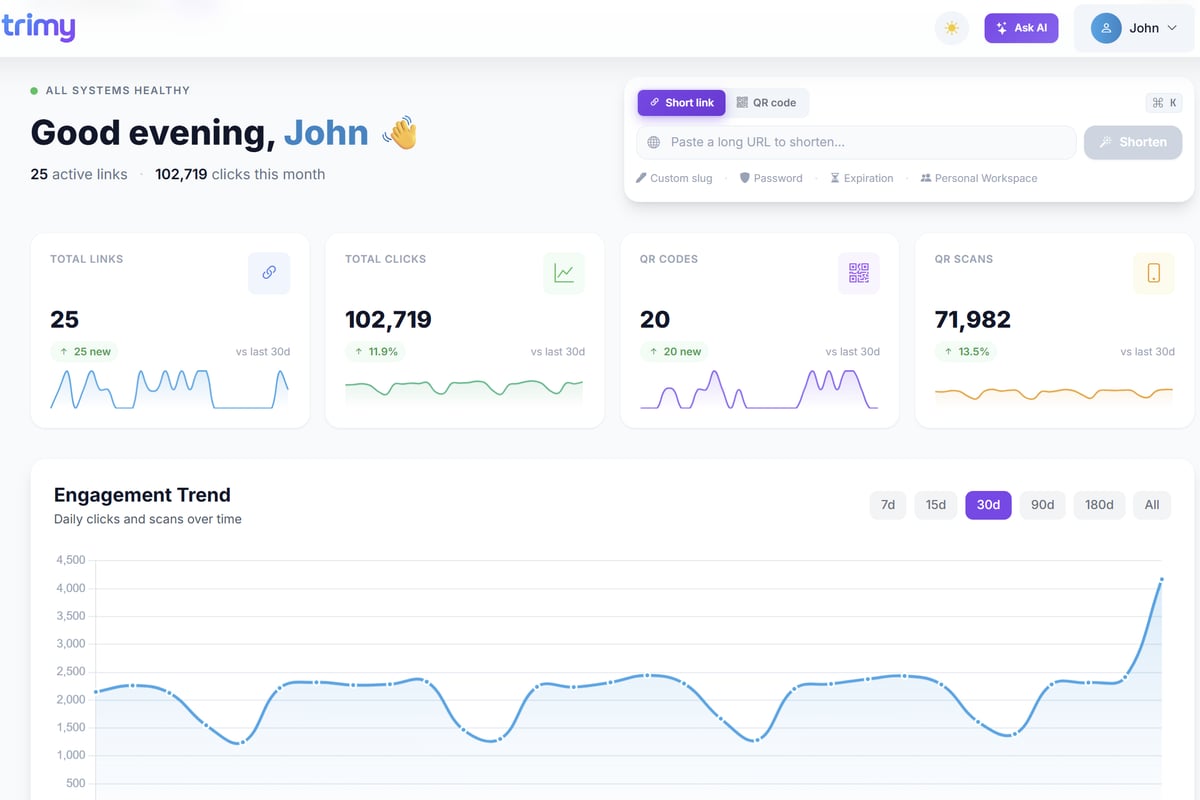
Tiered pricing with cost plus foundations uses cost calculations to establish base pricing tiers, then applies value-based premiums for advanced features or service levels. The entry tier ensures cost recovery and basic profitability, while premium tiers reflect customer value rather than incremental costs.
For marketing technology and analytics platforms, this hybrid approach makes particular sense. Basic link shortening and tracking features might follow cost plus logic, ensuring operational sustainability. Advanced capabilities like A/B testing, smart routing, and deep campaign analytics command value-based pricing reflecting their impact on marketing performance and revenue optimization.
When evaluating tools for campaign management and performance tracking, understanding vendor pricing models helps negotiate fair agreements and predict future cost changes. Platforms using pure cost plus pricing typically adjust prices when infrastructure costs change, while value-based vendors modify pricing based on market positioning and feature evolution.
<image_prompt alt="Hybrid pricing strategy framework">How businesses combine cost plus pricing for base offerings with value-based pricing for premium features creating tiered pricing structures</image_impact>
Cost Allocation Methods and Their Impact
The accuracy of what is cost plus pricing depends heavily on how businesses allocate overhead costs to products or services. Different allocation methods can yield significantly different costs for the same product, affecting final pricing and profitability.
Direct allocation assigns overhead costs to products based on easily measured factors like labor hours, machine hours, or materials consumed. A product requiring 5 labor hours receives five times the overhead allocation of a product requiring 1 hour. This method is simple but may not reflect actual resource consumption.
Activity-based costing (ABC) traces overhead to specific activities, then allocates those activity costs to products based on usage. This sophisticated approach provides more accurate cost information but requires detailed tracking and analysis. For complex products or services, ABC reveals cost drivers that simple allocation methods miss.
Impact on Pricing Decisions
The allocation method chosen directly affects calculated costs and subsequent pricing. Consider a company with two products:
| Product | Direct Costs | Labor Hours | Simple Allocation | ABC Allocation | Price Impact |
|---|---|---|---|---|---|
| Product A | $50 | 2 hours | $20 overhead | $15 overhead | Lower price with ABC |
| Product B | $50 | 2 hours | $20 overhead | $30 overhead | Higher price with ABC |
Product B might consume more support resources, quality inspections, or specialized equipment despite identical labor hours. Activity-based costing captures this difference, leading to more accurate pricing that reflects true resource consumption.
For businesses purchasing software tools and analytics platforms, understanding how vendors allocate costs provides insight into pricing fairness and sustainability. Platforms serving high-maintenance customers at the same price as low-maintenance ones may need pricing adjustments over time.
Special Considerations for Service Businesses
Service businesses face unique challenges when applying what is cost plus pricing compared to product manufacturers. The intangible nature of services, variable delivery costs, and difficulty standardizing "units" require adapted approaches.
Time-based pricing represents the most common service application. Professional service firms calculate the fully loaded cost of employee time (salary, benefits, overhead allocation) and add markup percentages to establish hourly or daily rates. A consultant costing the firm $75 per hour including overhead might bill at $225 per hour with a 200% markup.
Project-based cost plus pricing estimates total project costs including labor, materials, and overhead, then adds markup. This works for defined-scope engagements but requires accurate cost estimation. Underestimating costs leads to reduced margins or losses even with appropriate markups.
The challenge of variable service delivery costs complicates calculations. Some clients require significantly more time and resources than others for the same nominal service. Simple cost plus pricing may underprice complex engagements while overpricing straightforward ones.
Adapting to Service Variability
Sophisticated service businesses use tiered cost plus approaches reflecting complexity levels:
- Standard services receive baseline cost allocation and markup
- Complex engagements include higher overhead allocations reflecting increased resource needs
- Premium services combine cost plus foundations with value-based adjustments
Marketing agencies managing campaign performance and link analytics for clients might price basic reporting using cost plus logic while charging value-based fees for strategic consulting and optimization recommendations that drive significant revenue improvements.
Common Mistakes and How to Avoid Them
Even businesses understanding what is cost plus pricing often stumble during implementation. Recognizing common errors helps avoid costly missteps that undermine profitability or competitive positioning.
Incomplete cost accounting represents the most frequent mistake. Businesses forget to include certain overhead categories, underestimate labor time, or miss indirect costs. This leads to prices that fail to cover actual expenses despite applying appropriate markups. Comprehensive cost accounting systems and periodic audits prevent this error.
Static pricing in dynamic markets occurs when companies fail to adjust pricing as costs or competitive conditions change. Setting prices once based on cost calculations, then never revisiting them, allows costs to outpace prices or competitive gaps to emerge. Regular pricing reviews aligned with cost accounting cycles maintain appropriate margins.
Applying uniform markup percentages across all products or customer segments ignores market realities. Different products face different competitive pressures, customer price sensitivity, and value perceptions. While administrative simplicity favors uniform markups, profitability often demands variation.
Strategic Pricing Errors
The assumption that cost plus pricing eliminates pricing strategy overlooks important considerations:
- Ignoring customer willingness to pay leaves money on the table
- Disregarding competitive pricing invites market share loss
- Failing to segment customers misses optimization opportunities
- Neglecting value creation underprices innovations
Businesses should view cost plus pricing as a floor, not a ceiling. Costs plus desired margins establish minimum viable prices, but market conditions and customer value may support higher pricing. The application in subscription services illustrates how pure cost plus approaches often underperform hybrid strategies.
For marketing professionals evaluating analytics platforms and link management tools, vendor pricing below cost-based thresholds may signal unsustainable business models or aggressive customer acquisition tactics that could lead to future price increases or service disruption.
Integration with Broader Pricing Strategy
Understanding what is cost plus pricing includes recognizing how it fits within comprehensive pricing frameworks rather than viewing it as an isolated methodology. Sophisticated businesses integrate cost plus calculations with market analysis, competitive intelligence, and customer value assessment.
Cost floors from cost plus analysis establish minimum prices below which sales destroy value. This information guides pricing negotiations, promotional strategies, and product discontinuation decisions. Even when using value-based pricing, knowing the cost floor prevents unprofitable deals.
Competitive benchmarking complements cost plus pricing by providing external market context. If cost plus calculations yield prices significantly above or below competitive offerings, businesses investigate the gap. Higher costs may reveal inefficiencies requiring operational improvements. Lower costs might indicate opportunities for premium positioning or margin expansion.
Customer segmentation allows different pricing approaches for different market segments. Large enterprise customers might negotiate cost plus contracts with lower markups based on volume commitments, while small businesses pay value-based prices reflecting the platform's impact on their limited marketing resources.
Marketing technology platforms managing campaign performance through link analytics face diverse customer needs. Startups tracking early campaigns have different requirements and budgets than enterprises managing thousands of URLs across global campaigns. Flexible pricing incorporating cost plus foundations with value-based adjustments serves both segments effectively.
The strategic integration of multiple pricing methodologies creates robust frameworks that ensure profitability while remaining market-responsive. Pure cost plus pricing provides stability and cost coverage, while value-based elements capture additional margin where justifiable. Competitive analysis prevents pricing disconnection from market realities.
Understanding what is cost plus pricing empowers businesses to make informed decisions about when this approach serves their interests and when alternative methodologies deliver superior results. While the strategy offers simplicity and guaranteed cost coverage, its limitations in dynamic markets and value-disconnected pricing require careful consideration. For marketing professionals managing campaign performance, analytics platforms, and link intelligence tools, this pricing knowledge informs vendor evaluation and negotiation strategies. Trimy combines transparent pricing with powerful link management capabilities, delivering advanced analytics, A/B testing, and campaign optimization tools that transform marketing links into actionable revenue signals at competitive rates designed for serious marketers and developers.