What is Psychological Pricing? Tactics & Benefits
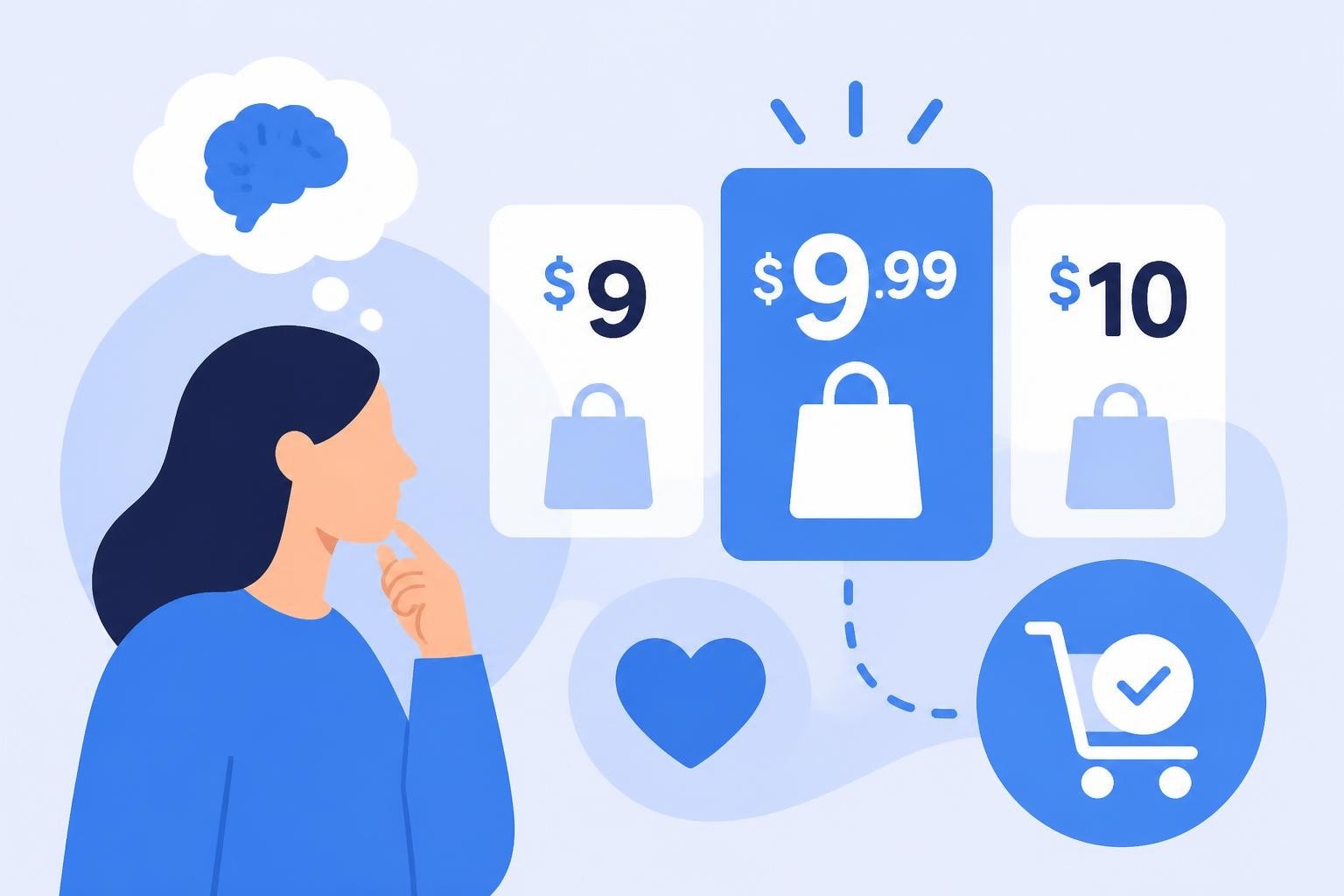
Understanding what is psychological pricing can transform how you present your products and services to customers. This pricing strategy leverages human psychology and emotional responses to influence purchasing decisions, making prices appear more attractive without necessarily lowering your actual margins. For marketers managing campaigns across multiple channels and tracking performance through link analytics, psychological pricing represents a powerful tool to optimize conversion rates and revenue per visitor.
Understanding the Core Concept of Psychological Pricing
Psychological pricing is a pricing strategy that uses the emotional and psychological responses of customers to encourage purchases. Rather than setting prices based solely on costs, competition, or value, this approach considers how customers perceive and react to different price points.
The foundation of what is psychological pricing rests on several key principles from behavioral economics. Consumers don't always make rational purchasing decisions. Instead, they rely on mental shortcuts, emotional triggers, and subjective perceptions of value when evaluating whether a price is fair or attractive.
How Perception Shapes Value
Price perception operates on multiple levels in the human mind. When customers see a price, they don't just process the numerical value; they create associations, compare it to reference points, and make quick judgments about fairness and affordability.
Research shows that the way a price is presented can be just as important as the actual number. A price of $99 feels significantly different from $100 in the consumer's mind, even though the mathematical difference is negligible. This phenomenon occurs because people tend to focus on the leftmost digit when processing prices quickly.
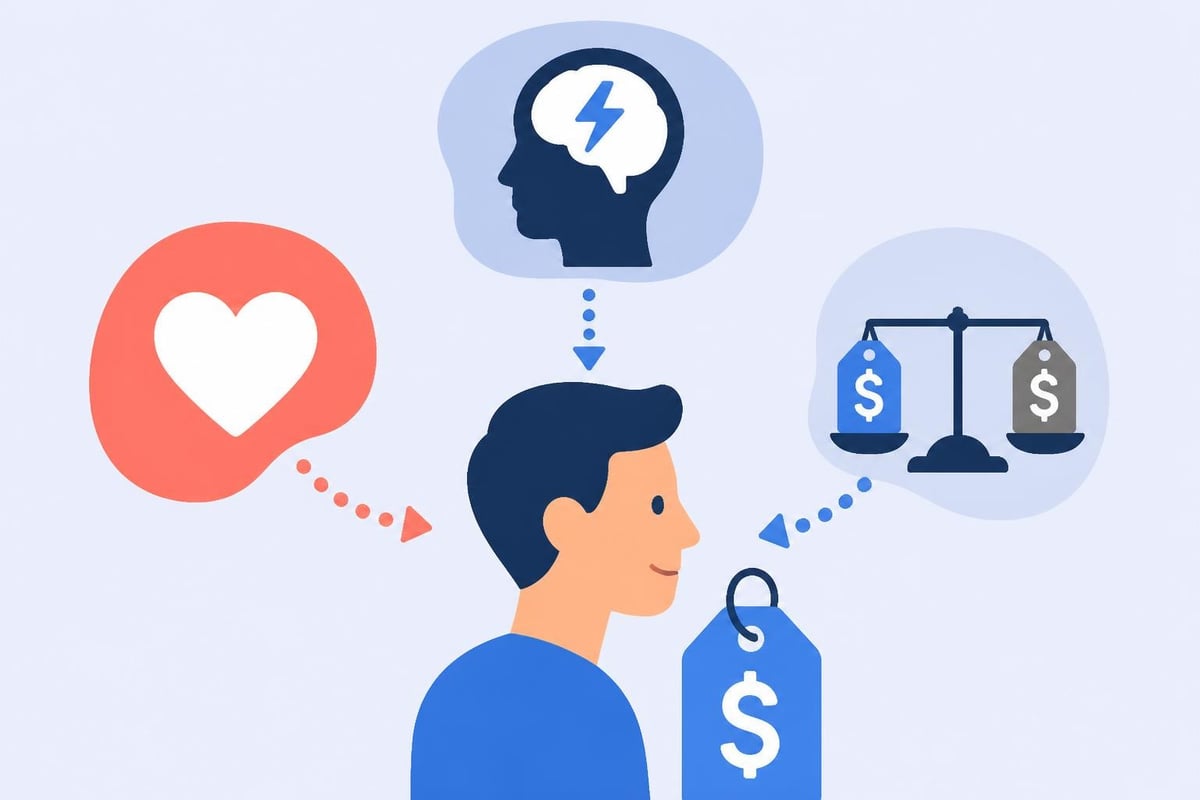
Several psychological factors influence how customers react to pricing:
- Anchoring bias: The first price customers see becomes their reference point for all subsequent prices
- Loss aversion: People feel the pain of losing money more intensely than the pleasure of gaining value
- The left-digit effect: Consumers disproportionately weight the leftmost digit when evaluating prices
- Prestige association: Higher prices can signal superior quality and exclusivity
- Mental accounting: Customers categorize and evaluate purchases differently based on context
According to comprehensive research on psychological pricing tactics, these cognitive biases create predictable patterns in consumer behavior that businesses can leverage strategically.
Key Psychological Pricing Strategies
Charm Pricing: The Power of Nine
Charm pricing involves ending prices with the number 9, such as $19.99 instead of $20.00. This remains one of the most widely used psychological pricing tactics because of its documented effectiveness across industries.
The strategy works because customers tend to round down rather than up. A product priced at $49.99 is perceived as "in the forties" rather than "almost fifty," creating a meaningful psychological distance despite the one-cent difference.
| Price Point | Customer Perception | Psychological Effect |
|---|---|---|
| $50.00 | Round, premium | Signals quality, reduces urgency |
| $49.99 | Bargain, smart deal | Creates value perception, drives action |
| $49.95 | Calculated discount | Suggests precision, genuine reduction |
When to use charm pricing:
- Consumer products with frequent purchases
- Price-sensitive market segments
- Promotional campaigns and limited-time offers
- Entry-level or volume-based products
Prestige Pricing: Signaling Quality Through Cost
Prestige pricing takes the opposite approach by using round numbers to convey luxury, quality, and exclusivity. Premium brands often price products at $100, $500, or $1,000 rather than $99.99 or $499.99.
This strategy leverages the psychological association between higher prices and superior quality. When customers see round numbers, they perceive the product as more sophisticated and less focused on discounting or bargain-hunting.
Luxury watch brands, high-end software services, and premium consulting firms frequently employ prestige pricing. The round numbers suggest confidence in value and attract customers who associate price with quality and status.
Price Anchoring and Reference Points
Understanding price anchoring reveals how the first price customers see influences their perception of all subsequent prices. By strategically presenting a higher-priced option first, you make other options appear more reasonable.
This technique appears frequently in tiered pricing models:
- Premium tier at $299/month (anchor price)
- Professional tier at $149/month (target sale)
- Starter tier at $49/month (entry option)
The premium tier serves as an anchor, making the professional tier appear like the smart middle choice. Most customers gravitate toward middle options when presented with three clearly differentiated tiers.
Advanced Psychological Pricing Techniques
Comparative Pricing and Value Framing
Comparative pricing displays the original price alongside the current price to highlight savings. This technique triggers loss aversion by showing customers what they would miss if they don't take advantage of the current offer.
Effective comparative pricing formats:
- Was $199, Now $149 (direct comparison)
- Save $50 (absolute savings emphasis)
- 25% Off (percentage discount)
- Limited Time: $149 (scarcity element)
The presentation format matters significantly. Research indicates that showing absolute dollar savings works better for higher-priced items, while percentage discounts perform better for lower-priced products.
Bundle Pricing Psychology
Bundle pricing combines multiple products or services at a single price point that appears lower than purchasing items individually. This strategy increases perceived value while boosting average order value.
Customers struggle to calculate the exact value of bundles quickly, so they rely on the overall impression of getting "more for less." The cognitive load of comparing individual prices to the bundle price often works in favor of the bundle option.
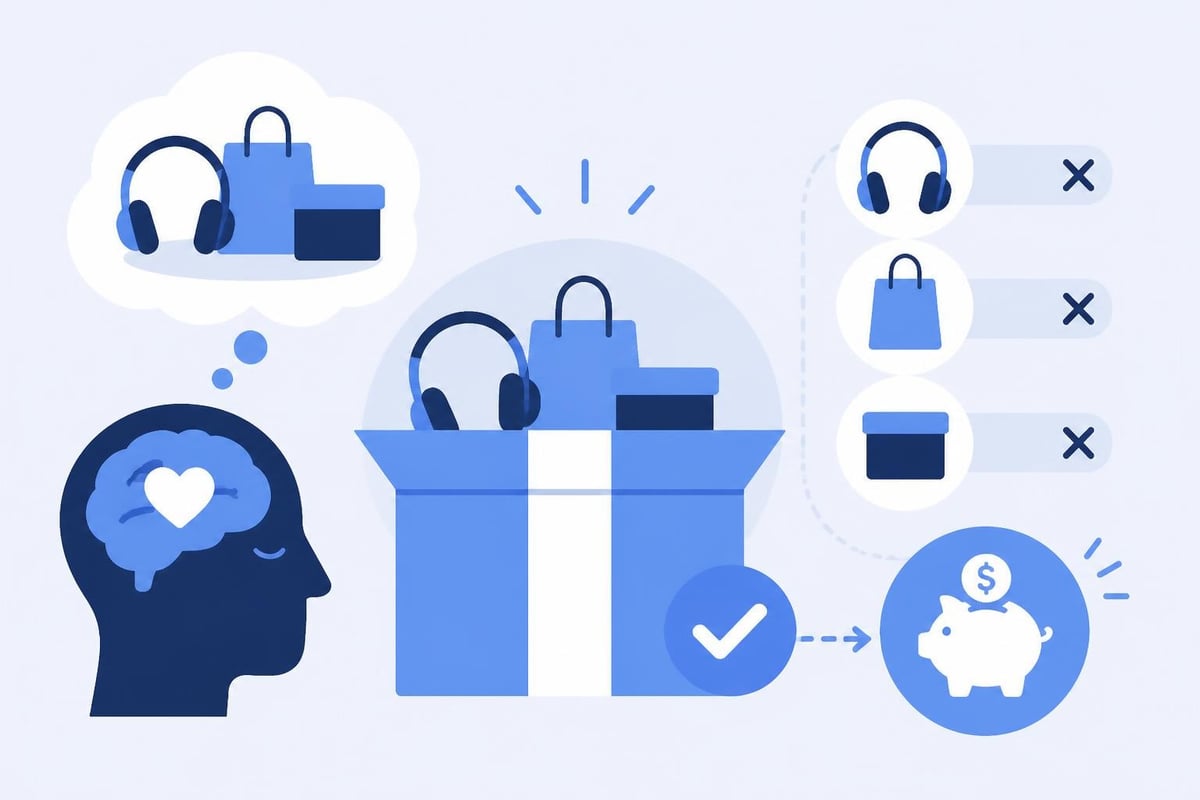
For businesses running marketing campaigns with multiple touchpoints, understanding bundle psychology helps structure service packages effectively. When you offer link analytics, A/B testing, and campaign management together, customers perceive greater value than pricing each feature separately.
Decoy Pricing Strategy
The decoy effect introduces a third option specifically designed to make another option more attractive. This strategically "inferior" choice nudges customers toward the target option.
Consider this pricing structure:
| Plan | Features | Price | Value Perception |
|---|---|---|---|
| Basic | 1,000 links/month | $29/month | Entry point |
| Pro | 10,000 links/month | $79/month | Best value (target) |
| Pro Lite | 5,000 links/month | $69/month | Decoy option |
The Pro Lite plan makes Pro appear significantly more valuable. For just $10 more, customers get double the links, making Pro the obvious choice. The decoy exists primarily to make the target option more appealing.
Implementation Considerations for Digital Marketers
Testing Price Points Through Link Analytics
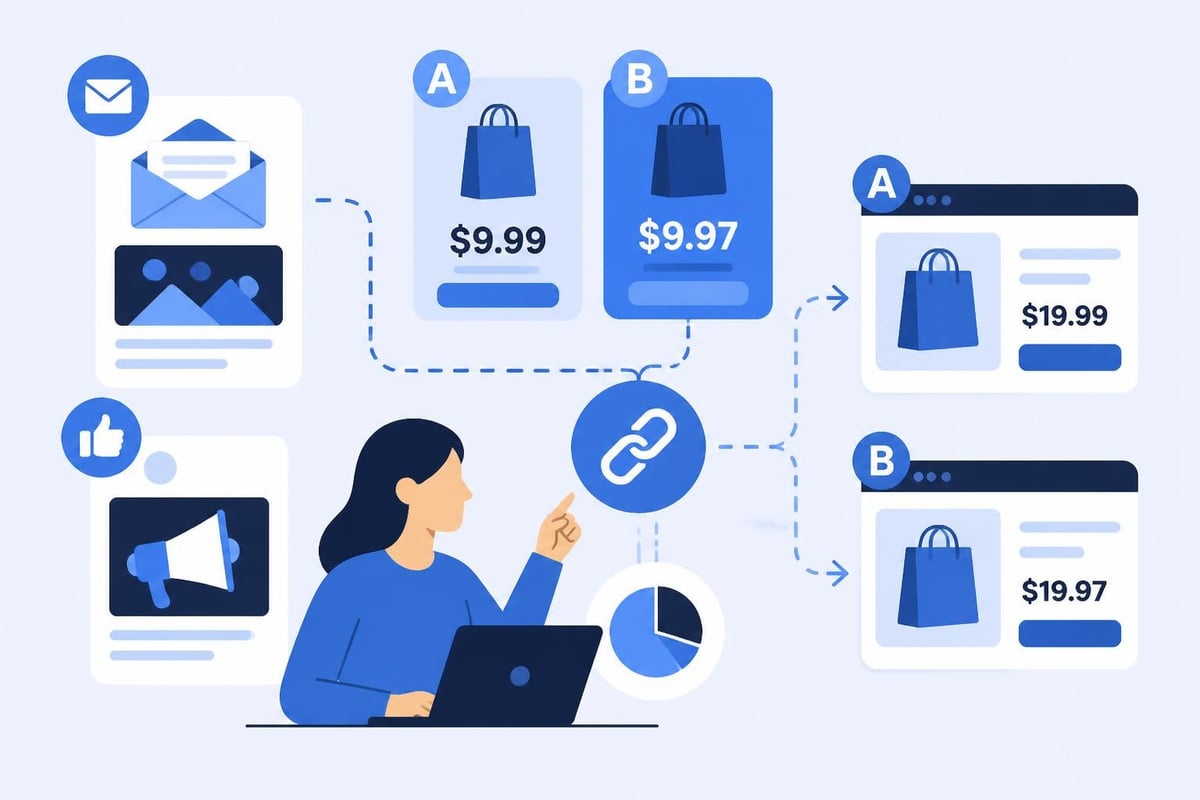
What is psychological pricing without proper testing and measurement? Digital marketers have a distinct advantage in implementing psychological pricing because they can track performance across multiple price points simultaneously.
A/B testing different price presentations allows you to:
- Compare conversion rates between charm pricing and round numbers
- Test various discount presentation formats
- Measure customer response to different anchor prices
- Identify optimal price points for different audience segments
When running campaigns across multiple channels, tracking which price presentations drive the highest conversion rates becomes critical. Link management platforms can segment traffic by source, allowing you to test whether B2B visitors respond differently to pricing than B2C customers.
By implementing proper tracking infrastructure, you transform pricing from guesswork into data-driven optimization. Every link leading to your pricing page can carry unique parameters that identify the traffic source, campaign, and price presentation variation.
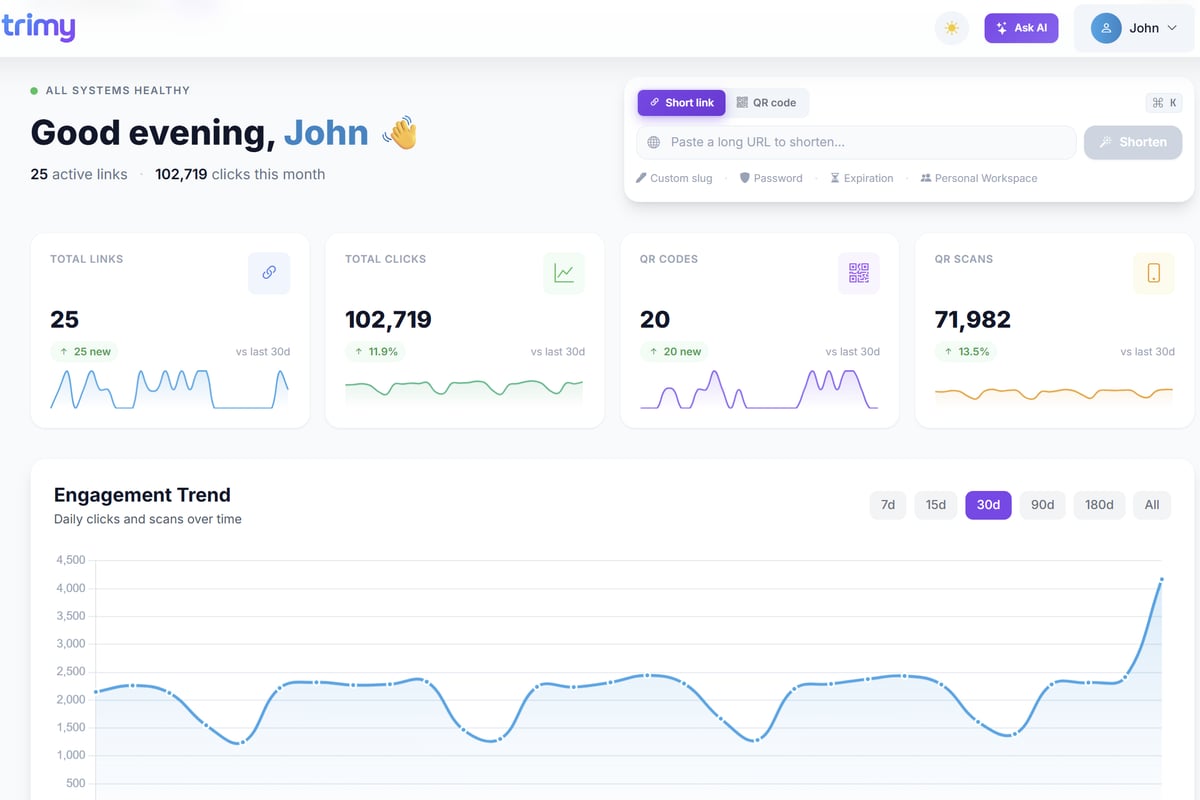
Trimy offers sophisticated A/B testing capabilities that let marketers experiment with different pricing page variations while tracking detailed conversion data. This approach helps identify which psychological pricing tactics resonate most effectively with specific audience segments.
Avoiding Common Psychological Pricing Mistakes
While psychological pricing offers powerful benefits, several common mistakes can undermine its effectiveness or damage brand credibility.
Critical errors to avoid:
- Overusing discount pricing: Constant sales train customers to wait for discounts, eroding full-price purchases
- Inconsistent pricing strategy: Mixing prestige and discount pricing confuses brand positioning
- Ignoring market context: Tactics effective in retail may not work for B2B or professional services
- Neglecting perceived value: Low prices can signal low quality if not balanced with value communication
- Failing to test assumptions: What works for competitors may not work for your specific audience
According to research on psychological pricing strategy, businesses must align pricing tactics with overall brand positioning and customer expectations.
Ethical Considerations and Transparency
The effectiveness of what is psychological pricing raises important questions about ethics and customer trust. While these tactics are legal and widely accepted, they should enhance rather than manipulate the customer relationship.
Transparency builds long-term customer loyalty. Customers who feel deceived by misleading pricing tactics may convert once but are unlikely to become repeat buyers or brand advocates. The goal should be to present genuine value in the most psychologically appealing way, not to trick customers into purchases they'll regret.
Ethical psychological pricing practices include:
- Ensuring discounted prices represent real savings, not inflated original prices
- Maintaining consistent value delivery that justifies the price point
- Being transparent about subscription terms and renewal pricing
- Honoring the value proposition implied by prestige pricing
- Avoiding false scarcity or urgency tactics
Understanding fairness in pricing theory demonstrates that customer perceptions of fairness significantly impact long-term business success and brand reputation.
Sector-Specific Applications
Psychological Pricing for SaaS and Digital Products
Software-as-a-Service companies face unique considerations when implementing psychological pricing. Monthly subscription models, tiered pricing, and per-user costs create multiple opportunities to apply psychological principles.
Common SaaS psychological pricing tactics:
- Annual discount psychology: Offering 2 months free on annual plans creates urgency and improves cash flow
- Per-user threshold pricing: Setting tiers at 5, 10, 25 users rather than continuous pricing creates clear decision points
- Free trial anchoring: Starting with premium features makes downgrading feel like a loss
- Usage-based psychological triggers: Showing how close users are to limits encourages upgrades
For link management and marketing analytics platforms, these principles directly apply to how you structure plan tiers and present feature limitations. The difference between "10,000 tracked clicks" and "unlimited clicks" carries significant psychological weight beyond the practical implications.
E-commerce and Retail Applications
E-commerce platforms leverage psychological pricing through product page design, cart psychology, and checkout optimization.
The digital environment offers unique opportunities:
- Dynamic charm pricing: Automatically adjusting prices to end in .99 or .95
- Scarcity indicators: "Only 3 left in stock" triggers urgency
- Social proof pricing: "1,247 people bought this today" validates the price point
- Shipping threshold psychology: "Add $8 more for free shipping" increases cart value
Cross-channel consistency matters significantly in e-commerce. When customers click from email, social media, or paid ads to your product pages, consistent pricing builds trust while strategic presentation optimizes conversion.
Professional Services and B2B Pricing
Business-to-business transactions often involve longer sales cycles and multiple decision-makers, requiring adapted psychological pricing approaches.
B2B psychological pricing considerations:
- ROI-focused pricing that emphasizes value over cost
- Strategic anchoring through enterprise tiers that make mid-tier solutions attractive
- Customization psychology that makes prospects feel they're receiving tailored solutions
- Annual contract psychology that leverages commitment and consistency principles
Professional services can use psychological pricing to position their expertise effectively. A consultant charging $5,000 for a project signals different expertise than one charging $4,999, despite the minimal actual difference.
Measuring the Impact of Psychological Pricing
Key Performance Indicators
Implementing what is psychological pricing requires measuring its impact on business outcomes. Several metrics help evaluate effectiveness:
| Metric | What It Measures | Target Impact |
|---|---|---|
| Conversion Rate | Percentage of visitors who purchase | 10-30% increase |
| Average Order Value | Mean purchase amount | 15-25% increase |
| Price Sensitivity | How demand changes with price | Reduced sensitivity |
| Customer Lifetime Value | Total revenue per customer | 20-40% increase |
These metrics should be tracked across different customer segments, traffic sources, and campaign types. What works for cold traffic from paid ads might differ from what resonates with warm email subscribers.
Continuous Optimization Through Data
The most successful psychological pricing strategies evolve based on customer response data. Markets change, customer preferences shift, and competitive dynamics influence what pricing tactics remain effective.
Creating a continuous optimization process:
- Establish baseline metrics with current pricing
- Implement psychological pricing variations through A/B tests
- Track performance across all relevant KPIs
- Analyze results by customer segment and traffic source
- Scale winning variations and retire underperformers
- Repeat the cycle quarterly or as market conditions change
This data-driven approach transforms psychological pricing from a one-time decision into an ongoing optimization process. The insights gained from pricing tests often reveal broader patterns about customer behavior and value perception.
Integration with Marketing Campaign Performance
Aligning Pricing Strategy with Campaign Goals
Different marketing campaigns call for different psychological pricing approaches. Awareness campaigns targeting cold audiences may benefit from aggressive charm pricing, while retention campaigns for existing customers might emphasize value and loyalty benefits.
Consider how psychological pricing intersects with campaign objectives:
- Acquisition campaigns: Charm pricing and clear value comparison drive first-time purchases
- Upsell campaigns: Decoy pricing and bundle psychology encourage plan upgrades
- Retention campaigns: Annual discount psychology and loyalty pricing reduce churn
- Reactivation campaigns: Comparative pricing showing old vs. new value propositions
For marketers managing complex campaigns across multiple channels, understanding how psychological pricing influences behavior at each touchpoint enables more sophisticated campaign optimization.
Attribution and Multi-Touch Pricing Analysis
Modern customer journeys rarely involve a single touchpoint before purchase. A customer might see a social media ad, click an email link, visit through organic search, and finally convert through a retargeting campaign.
Sophisticated link tracking reveals which pricing presentations at which stages contribute most effectively to conversions. This attribution insight helps optimize not just final pricing pages but the entire journey's price messaging.
Questions attribution analysis answers:
- Do customers exposed to prestige pricing early show higher lifetime value?
- Does charm pricing in ads improve click-through rates to landing pages?
- Which price presentation in email campaigns drives the highest conversion rates?
- How does pricing message consistency across touchpoints affect conversion?
By tagging links with campaign-specific parameters and tracking user behavior across sessions, marketers can build comprehensive pictures of how pricing psychology influences the complete customer journey.
Understanding what is psychological pricing empowers marketers to present value more effectively and drive stronger conversion rates across all campaigns. By applying these evidence-based tactics thoughtfully and measuring their impact rigorously, you can optimize both immediate sales and long-term customer relationships. When you're ready to implement sophisticated A/B testing for your pricing strategies and track performance across all your marketing campaigns, trimy provides the link intelligence and analytics infrastructure to transform your links into actionable revenue insights.