What Is Indexation and How It Works in 2026

Understanding what is indexation has become increasingly critical for businesses, marketers, and investors as inflation continues to shape economic landscapes in 2026. Indexation serves as a financial mechanism that adjusts monetary values to reflect changes in purchasing power over time, ensuring that your investments, costs, and returns maintain their real-world value despite economic fluctuations. For digital marketers managing campaign budgets and analyzing return on investment, grasping this concept helps contextualize performance metrics against broader economic trends and make smarter allocation decisions.
The Core Definition of Indexation
At its foundation, indexation represents a systematic approach to adjusting financial values in relation to a reference standard or index. This mechanism protects against the erosive effects of inflation by recalibrating the nominal value of assets, incomes, or costs to preserve their real purchasing power.
When you examine what is indexation in practical terms, it functions as an automatic adjustment system. Think of it as a financial recalibration tool that accounts for how much more expensive goods and services have become since an initial transaction or investment. The adjustment typically uses established indices like the Consumer Price Index (CPI) or similar inflation measures that track price changes across basket goods and services.
How the Indexation Process Functions
The mechanics of indexation involve several key components working together:
- Base Year Establishment: A starting point is determined when the original value is recorded
- Index Selection: An appropriate inflation index (CPI, WPI, or sector-specific measures) is chosen
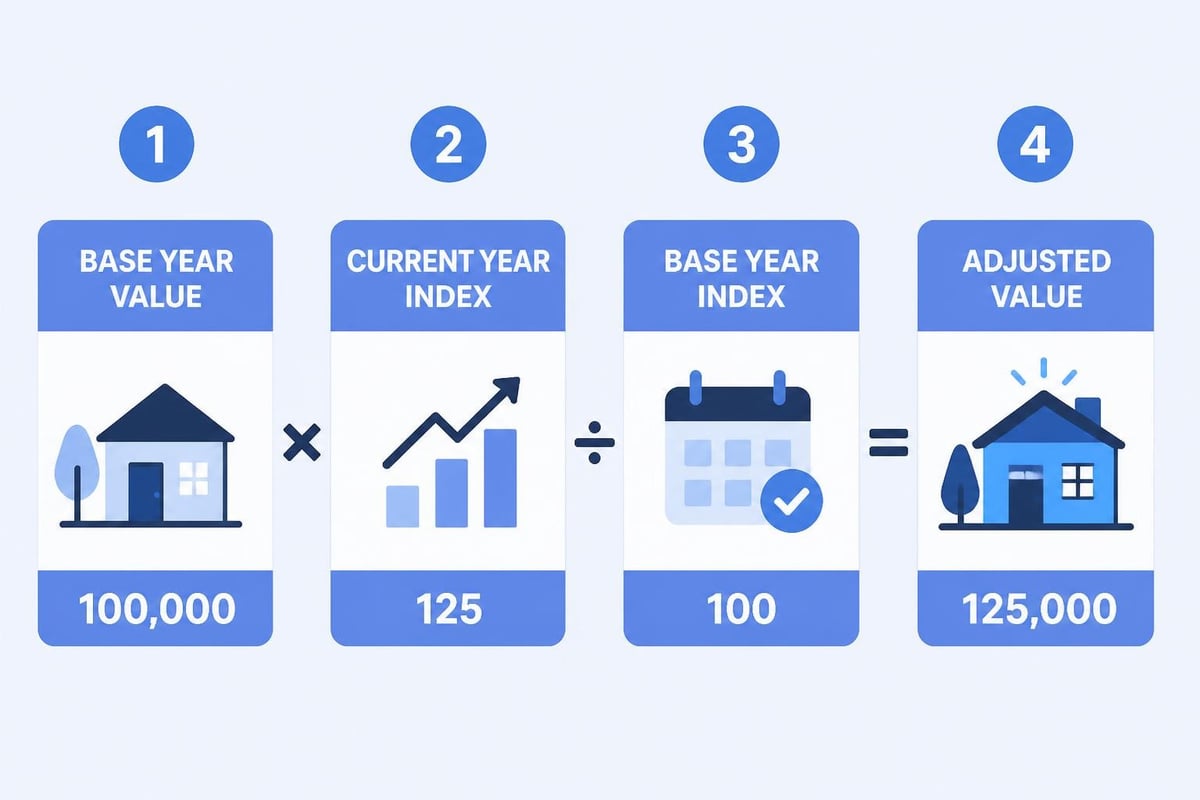
- Regular Adjustment: Values are recalculated periodically using the ratio between current and base year index values
- Application: The adjusted value replaces or supplements the nominal value for calculations
This process ensures that comparisons across different time periods remain meaningful. Without indexation, a marketing budget of $50,000 in 2020 would appear identical to $50,000 in 2026, even though the actual purchasing power has diminished significantly.
Indexation in Investment and Capital Gains
Understanding indexation in financial contexts reveals its powerful impact on investment taxation and returns. When you sell an asset that has appreciated over several years, indexation allows you to adjust the original purchase price upward to reflect inflation before calculating capital gains.
Consider this scenario: You purchased an asset for $100,000 in 2020. By 2026, you sell it for $150,000. Without indexation, your capital gain appears to be $50,000. However, with indexation applied using appropriate inflation indices, your adjusted purchase price might be $125,000, reducing your taxable gain to $25,000.
Tax Benefits Through Indexed Cost Calculation
The tax advantages of what is indexation become particularly evident in long-term holdings:
| Year | Scenario | Purchase Price | Sale Price | Taxable Gain |
|---|---|---|---|---|
| 2020-2026 | Without Indexation | $100,000 | $150,000 | $50,000 |
| 2020-2026 | With Indexation | $125,000 (indexed) | $150,000 | $25,000 |
| 2020-2026 | Tax Savings at 20% | - | - | $5,000 |
This table demonstrates how indexation reduces the tax burden by acknowledging that not all appreciation represents real gains. Some portion merely compensates for general price increases across the economy.
Application in Marketing ROI and Budget Analysis
For marketing professionals and campaign managers, understanding what is indexation provides crucial context for performance evaluation. When you analyze campaign returns across multiple years, failing to account for inflation can distort your understanding of actual performance improvements or declines.
A campaign that generated $200,000 in revenue in 2022 versus $220,000 in 2026 might seem like a 10% improvement. However, when adjusted for inflation, that $220,000 might only represent $195,000 in 2022 dollars, indicating an actual decline in real performance despite nominal growth.
Adjusting Marketing Metrics for Real Performance
Smart marketers apply indexation principles to several key metrics:
- Customer Acquisition Cost (CAC): Index historical CAC to current values for accurate trend analysis
- Customer Lifetime Value (CLV): Adjust projected future revenues to present value terms
- Return on Ad Spend (ROAS): Calculate real returns after accounting for inflation impact
- Budget Allocation: Index past budgets forward to determine appropriate current spending levels
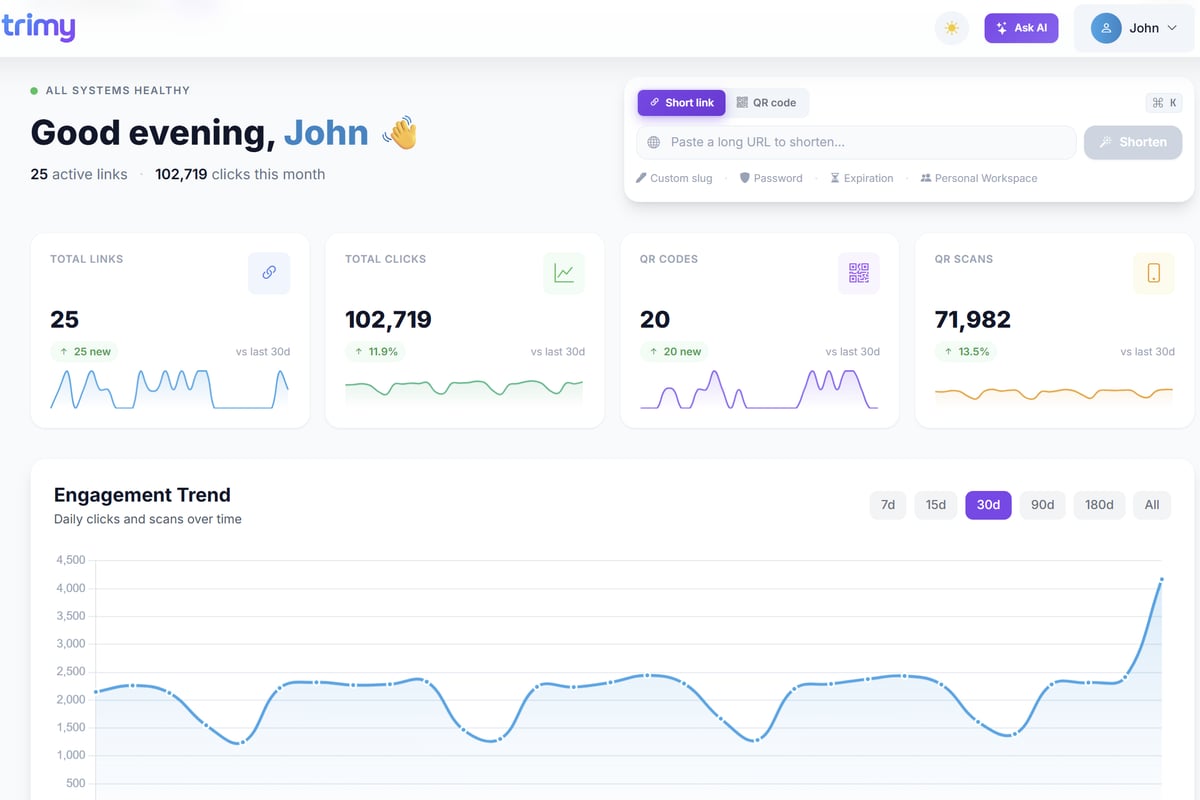
This approach ensures that your strategic decisions rest on real economic value rather than nominal numbers that mask underlying trends. When you track link performance and conversion values through platforms like Trimy, applying indexation principles to your revenue signals helps identify whether conversion value improvements represent actual gains or merely keep pace with inflation.
Indexation in Wage and Salary Adjustments
Compensation structures frequently incorporate indexation to maintain employee purchasing power. This mechanism automatically links salary evolution to reference indices, ensuring that workers don't experience real income declines as living costs rise.
When employers implement indexed wage agreements, they commit to periodic adjustments based on inflation measures. A salary of $75,000 with automatic indexation might increase to $78,000 the following year if the reference index shows 4% inflation, preserving the employee's real compensation level.
Advantages and Challenges of Wage Indexation
Benefits include:
- Predictable purchasing power protection for employees
- Reduced need for contentious annual salary negotiations
- Automatic adjustment to economic conditions
- Fair compensation maintenance without constant intervention
Challenges involve:
- Potential wage-price spirals during high inflation periods
- Reduced flexibility in compensation strategy
- Complex administration across diverse employee groups
- Possible disconnect from individual or company performance
Organizations must balance these factors when deciding whether to implement systematic indexation in their compensation frameworks.
Indexation in Government Programs and Benefits
Social security systems, pensions, and government benefits extensively utilize what is indexation to ensure recipients maintain their standard of living. These programs adjust payment amounts based on cost-of-living indices, preventing the erosion of benefits that fixed payments would suffer.
In 2026, most developed nations automatically adjust retirement benefits, disability payments, and other social support programs annually. This indexation protects vulnerable populations whose incomes depend entirely on these fixed sources, ensuring their benefits keep pace with actual living costs.
Types of Benefit Indexation Methods
Different approaches to benefit indexation include:
| Method | Description | Typical Application |
|---|---|---|
| Full CPI Indexation | 100% adjustment to Consumer Price Index changes | Social Security, federal pensions |
| Partial Indexation | Adjustment less than full inflation rate | Some state benefits, discretionary programs |
| Wage Indexation | Tied to average wage growth rather than prices | Some pension schemes |
| Hybrid Approaches | Combination of price and wage indices | Comprehensive retirement systems |
Each method involves trade-offs between fiscal sustainability and benefit adequacy, with full indexation providing maximum protection at the highest cost to program budgets.
Indexation in Debt Instruments and Bonds
Financial markets offer indexed bonds and debt instruments that adjust principal or interest payments based on inflation measures. These instruments provide investors protection against inflation risk while offering issuers predictable real borrowing costs.
Treasury Inflation-Protected Securities (TIPS) represent the most common indexed debt in the United States. The principal value adjusts with CPI changes, and interest payments calculate based on this adjusted principal, ensuring both return of and return on capital maintain real purchasing power.
Comparing Indexed and Conventional Bonds
Understanding what is indexation in bond markets helps investors choose appropriate instruments:
- Indexed bonds protect against unexpected inflation, maintaining real returns regardless of price changes
- Conventional bonds offer fixed nominal returns that inflation can erode, but typically provide higher initial yields
- Break-even inflation rates indicate the inflation level at which both instruments provide equivalent real returns
- Market expectations for inflation embed themselves in the yield differential between indexed and conventional issues
For businesses managing treasury functions or investment portfolios, this distinction becomes critical when determining appropriate allocation strategies.
Real Estate and Property Indexation
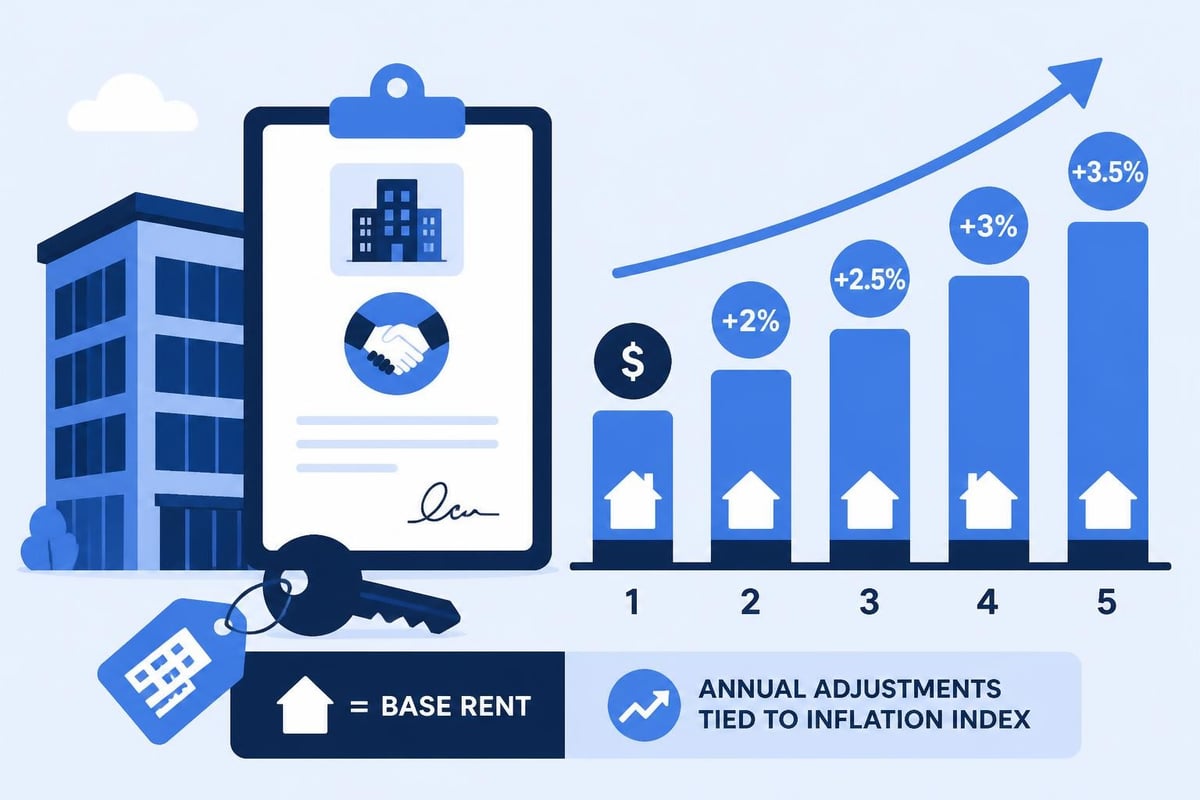
Property leases and real estate agreements frequently incorporate indexation clauses that adjust rental payments periodically. These mechanisms preserve the real value of rental income for property owners while providing tenants with predictable adjustment formulas.
A commercial lease might specify that base rent of $50,000 annually adjusts each year by the lesser of 3% or the CPI increase. This indexation protects the landlord's income stream from inflation while capping tenant exposure to extreme price increases.
Implementing Real Estate Indexation
Effective lease indexation requires careful consideration of:
- Index selection: CPI, local price indices, or custom basket measures
- Adjustment frequency: Annual, quarterly, or other periods
- Base period definition: When the baseline value is established
- Caps and floors: Maximum and minimum adjustment limits
- Compounding methods: How adjustments accumulate over lease terms
These details significantly impact both landlord returns and tenant costs over multi-year agreements, making precise indexation language essential in lease negotiations.
Indexation in Contract Pricing and Procurement
Long-term supply contracts use indexation to manage price risk fairly between buyers and suppliers. When agreements span multiple years, fixing prices creates winners and losers depending on how input costs evolve. Indexation provides a middle path that shares risk appropriately.
A manufacturing contract might index material costs to commodity price indices, labor costs to wage indices, and overhead to general inflation measures. This composite indexation ensures prices adjust fairly as underlying cost structures change, maintaining viable economics for both parties throughout the contract term.
Designing Effective Contract Indexation
Key considerations include:
- Relevant indices: Selecting measures that truly reflect cost drivers for the specific goods or services
- Transparency: Using publicly available, verifiable indices both parties can monitor
- Adjustment mechanisms: Clear formulas for calculating indexed prices at specified intervals
- Dispute resolution: Procedures for addressing disagreements about index application or calculation
Well-designed indexation clauses reduce conflict and renegotiation needs, creating stability in long-term business relationships.
Digital Marketing Attribution and Indexation Principles
Marketing attribution models benefit from applying indexation concepts when evaluating multi-touch customer journeys across extended timeframes. A customer interaction in January contributes differently to a conversion in December, and indexation thinking helps weight these contributions appropriately.
When you analyze link performance across campaigns running for months or years, understanding what is indexation helps you adjust earlier touchpoint values to current terms. This creates more accurate attribution models that don't artificially deflate the value of initial awareness-building efforts simply because they occurred earlier in the customer journey.
Time-Adjusted Attribution Modeling
Apply indexation principles to attribution through:
- Temporal weighting: Adjust touchpoint values based on time elapsed between interaction and conversion
- Inflation adjustment: Account for changes in average order values or customer lifetime values over the analysis period
- Seasonal indexing: Normalize for predictable seasonal variations in conversion values
- Cohort comparison: Index cohorts to common baseline periods for meaningful cross-period analysis
These refinements transform raw attribution data into actionable insights that account for real economic and temporal factors affecting campaign performance.
Common Indexation Mistakes and Misconceptions
Many professionals misunderstand what is indexation or apply it incorrectly, leading to flawed analysis and poor decisions. Index selection matters tremendously, as using inappropriate inflation measures can distort results as badly as ignoring inflation entirely.
Frequent Indexation Errors
Using wrong indices: Applying general CPI to industry-specific costs that inflate differently than consumer basket goods creates systematic bias in adjusted values.
Incorrect base period: Failing to clearly establish when the baseline value is set leads to calculation errors that compound over time.
One-way adjustments: Applying indexation only when it benefits one party rather than consistently following the chosen index up or down.
Ignoring composition changes: Price indices themselves evolve their basket composition, and long-term indexation should account for these methodological shifts.
Nominal-real confusion: Mixing indexed and non-indexed figures in the same analysis without clear differentiation creates meaningless comparisons.
Avoiding these pitfalls requires careful attention to indexation methodology and consistent application of chosen approaches across all relevant calculations.
Advanced Indexation Concepts for Business Analysis
Sophisticated applications of what is indexation extend beyond simple inflation adjustment to create powerful analytical tools. Chain-weighted indices, hedonic indexation, and quality-adjusted measures represent advanced approaches that more accurately capture true value changes in complex scenarios.
Chain-weighting updates the basket composition regularly rather than maintaining a fixed base year, better reflecting how consumption patterns evolve. This prevents the substitution bias that affects fixed-weight indices when relative prices shift dramatically.
Hedonic indexation adjusts for quality improvements in goods and services. A 2026 laptop that costs the same nominal price as a 2020 model but offers significantly better performance represents a real price decline that hedonic methods capture but simple indexation misses.
Building Custom Indexation Models
Businesses can develop proprietary indices tailored to their specific cost structures:
| Component | Weight | Index Source | 2026 Value |
|---|---|---|---|
| Labor | 40% | Regional wage index | 112.4 |
| Materials | 30% | Commodity price index | 125.7 |
| Energy | 15% | Utility price index | 118.9 |
| Technology | 15% | IT services index | 103.2 |
| Composite | 100% | Weighted average | 115.6 |
This custom index provides more accurate cost indexation than generic inflation measures, enabling precise contract pricing, budget planning, and financial forecasting specific to the organization's actual cost drivers.
Indexation in International Business Operations
Cross-border transactions introduce additional complexity to what is indexation, as currency fluctuations interact with local inflation rates to determine real value changes. A contract denominated in euros but serving a U.S. company must account for both eurozone inflation and exchange rate movements to determine real cost evolution.
Multinational businesses typically apply dual indexation, adjusting first for local currency inflation in the country where costs originate, then converting to reporting currency at current exchange rates. This two-step process isolates the separate effects of local price changes and currency valuation shifts.
Managing Multi-Currency Indexation
Effective approaches include:
- Separate tracking: Monitor local currency indexed values and exchange impacts independently
- Hedging integration: Coordinate indexation with currency hedging strategies to manage total exposure
- Reporting consistency: Establish clear protocols for converting indexed local values to consolidated reporting currency
- Index selection: Choose inflation measures appropriate to each operating country's economic characteristics
These practices ensure that global operations maintain accurate financial visibility despite the compounding complexities of inflation and currency movements across multiple jurisdictions.
Understanding what is indexation empowers you to make financial decisions grounded in real economic value rather than nominal figures that obscure true performance and costs. Whether you're evaluating investment returns, negotiating contracts, analyzing marketing campaigns, or planning budgets, applying indexation principles ensures your analysis reflects actual purchasing power changes over time. As you build more sophisticated measurement into your marketing operations, trimy delivers the advanced analytics and deep insights you need to track not just link performance, but the real revenue value those links generate, helping you optimize campaigns based on genuine economic impact rather than surface-level metrics.